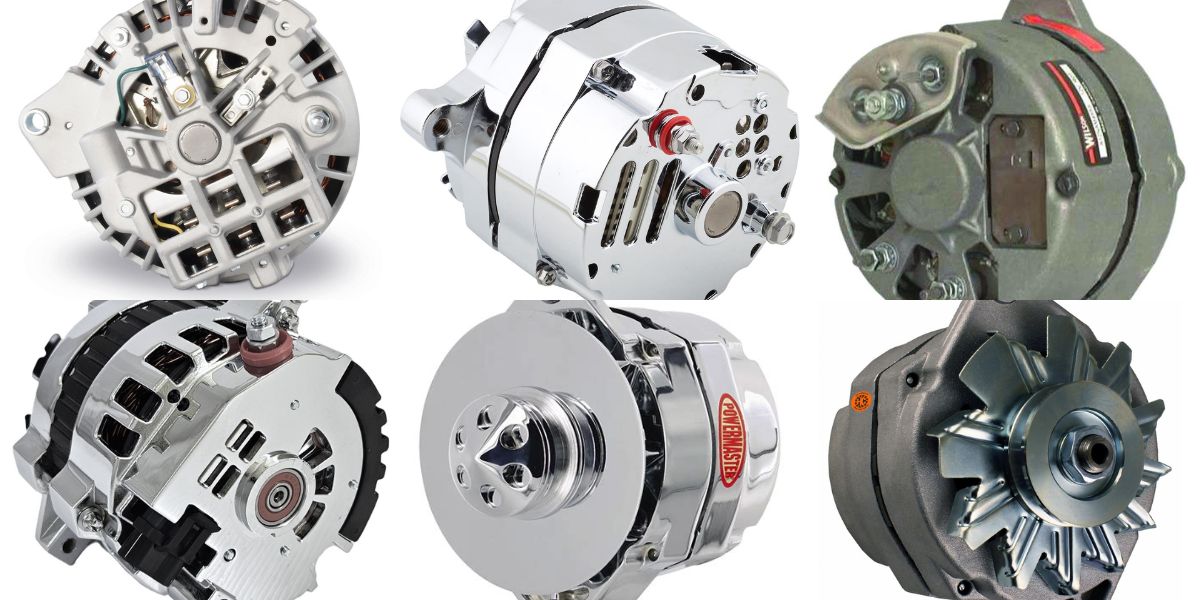
The charging system is one of the most overlooked yet critical components in any classic car.
While engines, transmissions, and styling tend to dominate enthusiast conversations, a reliable alternator and charging setup is what keeps everything functioning, ignition, lighting, gauges, and accessories.
In classic vehicles, especially those from the 1950s through the 1980s, charging systems evolved significantly from generators (dynamos) to modern alternators, bringing major improvements in reliability, output, and serviceability.
For American drivers and collectors, reliability matters not just for daily usability but also for long-distance cruising, car shows, and restomod builds.
A weak or inconsistent charging system can quickly turn an otherwise pristine classic into a frustrating experience.
The following list highlights ten of the most reliable classic alternators and charging systems, selected based on durability, ease of maintenance, parts availability in the U.S., and real-world performance across decades.
1. Delco-Remy 10SI Alternator (GM Workhorse)
The Delco-Remy 10SI alternator stands as one of the most ubiquitous and dependable charging systems ever fitted to American vehicles, earning its place as a benchmark of reliability throughout the 1970s and 1980s.
Introduced by General Motors’ Delco-Remy division in the early 1970s, the 10SI was designed to replace earlier externally regulated alternators with a more compact, efficient, and user-friendly internally regulated unit.
It quickly became standard equipment across a wide range of GM vehicles, from small-block V8-powered sedans and pickups to inline-six applications, and eventually found its way into agricultural machinery, industrial equipment, and countless aftermarket retrofits.
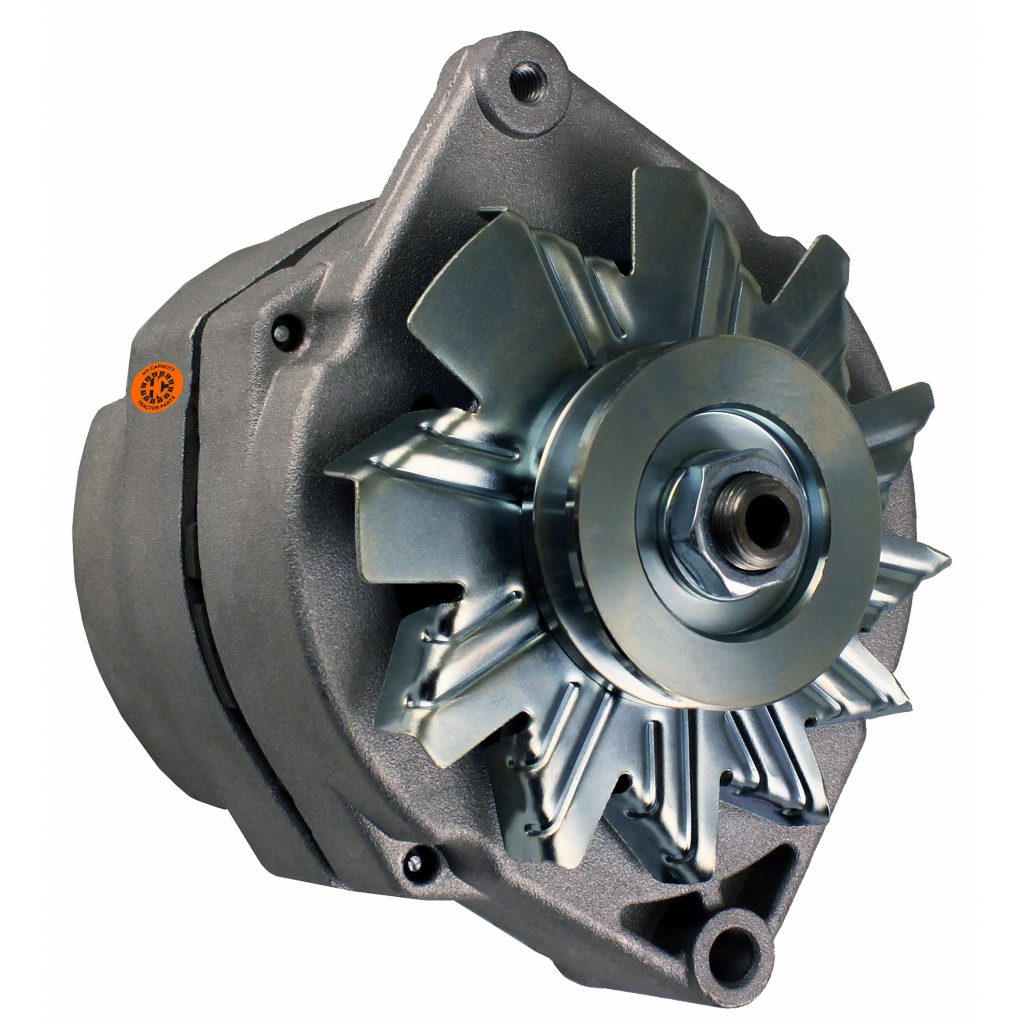
From an engineering standpoint, the 10SI alternator is notable for its simplicity and robustness. It features a three-wire configuration, though it can be adapted to a one-wire setup, making it highly versatile across different engine layouts and drivetrain configurations.
Whether mounted on longitudinal rear-wheel-drive platforms or adapted into custom builds, the alternator integrates seamlessly due to its standardized mounting points and straightforward wiring.
Internally, it uses a silicon diode rectifier and an integrated voltage regulator, eliminating the need for external control modules and reducing potential failure points. Output ratings typically ranged from 37 to 63 amps in factory form, which was sufficient for the relatively modest electrical demands of the era.
2. Delco-Remy 12SI Alternator (Higher Output Evolution)
The Delco-Remy 12SI alternator represents the evolutionary refinement of one of General Motors’ most successful charging system designs, arriving in the late 1970s as a direct successor to the widely adopted 10SI.
Produced through the 1980s and into the early 1990s, the 12SI was engineered to meet the growing electrical demands of modernizing vehicles, which increasingly relied on power-hungry accessories such as improved HVAC systems, electronic ignition modules, and early onboard electronics.
It became a staple across GM’s lineup, supporting everything from small-block and big-block V8 applications to inline-six engines in both passenger cars and light-duty trucks, typically mounted in longitudinal rear-wheel-drive layouts.
At its core, the 12SI retained the proven architecture of the 10SI but introduced meaningful upgrades in output capacity and thermal management. Factory ratings generally ranged from 66 to over 100 amps, a significant increase that allowed it to maintain stable voltage even under heavier electrical loads.
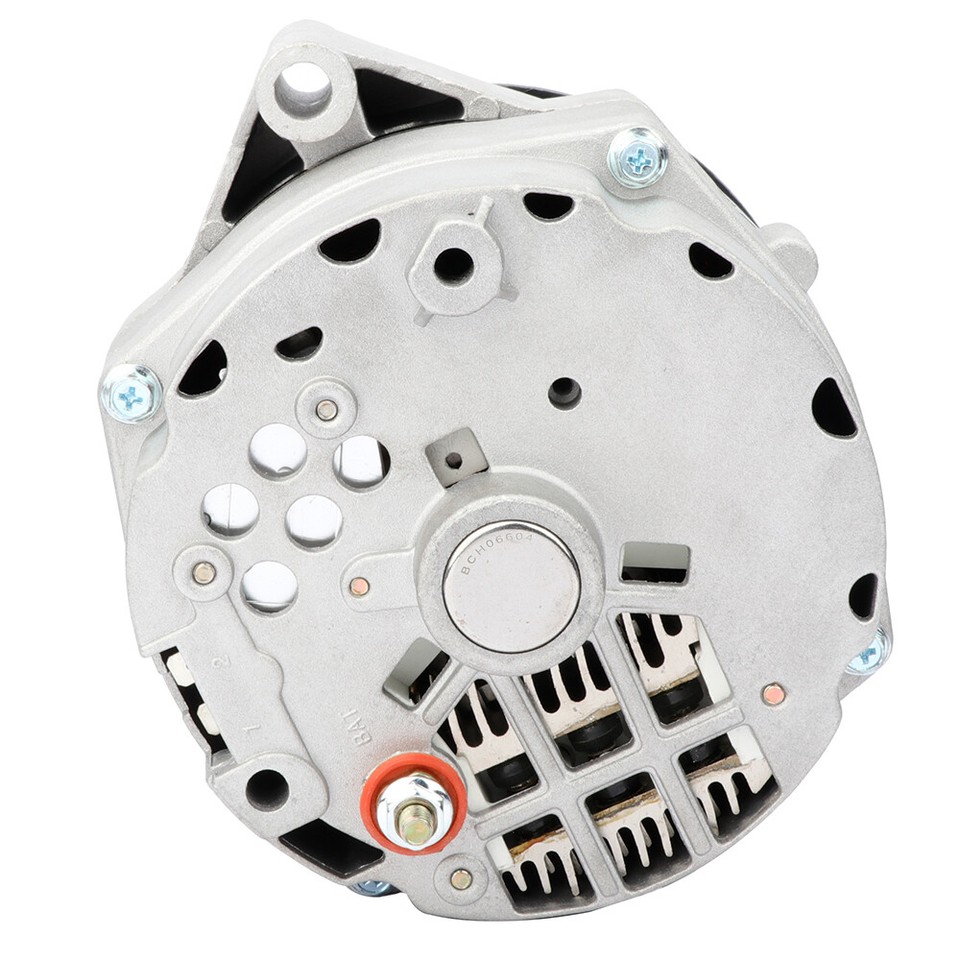
Like its predecessor, it utilized an internal voltage regulator and a three-wire configuration, though it remained compatible with simplified one-wire conversions for aftermarket use. The alternator’s stator and rotor assemblies were redesigned to improve efficiency, while an upgraded diode trio and rectifier bridge enhanced durability under sustained load conditions.
One of the most important engineering advancements in the 12SI was its improved cooling design. The housing incorporated larger ventilation openings and a more effective internal fan configuration, addressing a key limitation of earlier units, heat buildup during prolonged operation.
This enhancement not only extended component life but also ensured more consistent performance in demanding environments, from high-temperature engine bays to heavy-duty usage scenarios. The alternator’s standardized mounting geometry meant it could be easily installed across a wide range of engine configurations, further contributing to its widespread adoption.
3. Ford 1G Alternator (Early Ford Reliability)
Ford’s 1G alternator was widely used in the 1960s and 1970s. While it still relied on an external voltage regulator, it proved to be a dependable system when properly maintained.
The Ford 1G alternator occupies a foundational role in the evolution of Blue Oval charging systems, serving as the company’s primary alternator design from the early 1960s through the mid-1980s.
Introduced as Ford transitioned away from DC generators, the 1G alternator was deployed across a vast range of vehicles, from inline-six-powered Falcons and Mustangs to Windsor and Cleveland V8-equipped full-size sedans, pickups, and commercial platforms.
Typically mounted on longitudinal, rear-wheel-drive engine layouts, the 1G became a familiar component in engine bays spanning compact cars to heavy-duty trucks, reflecting Ford’s need for a scalable and dependable electrical solution during a period of rapid automotive expansion.
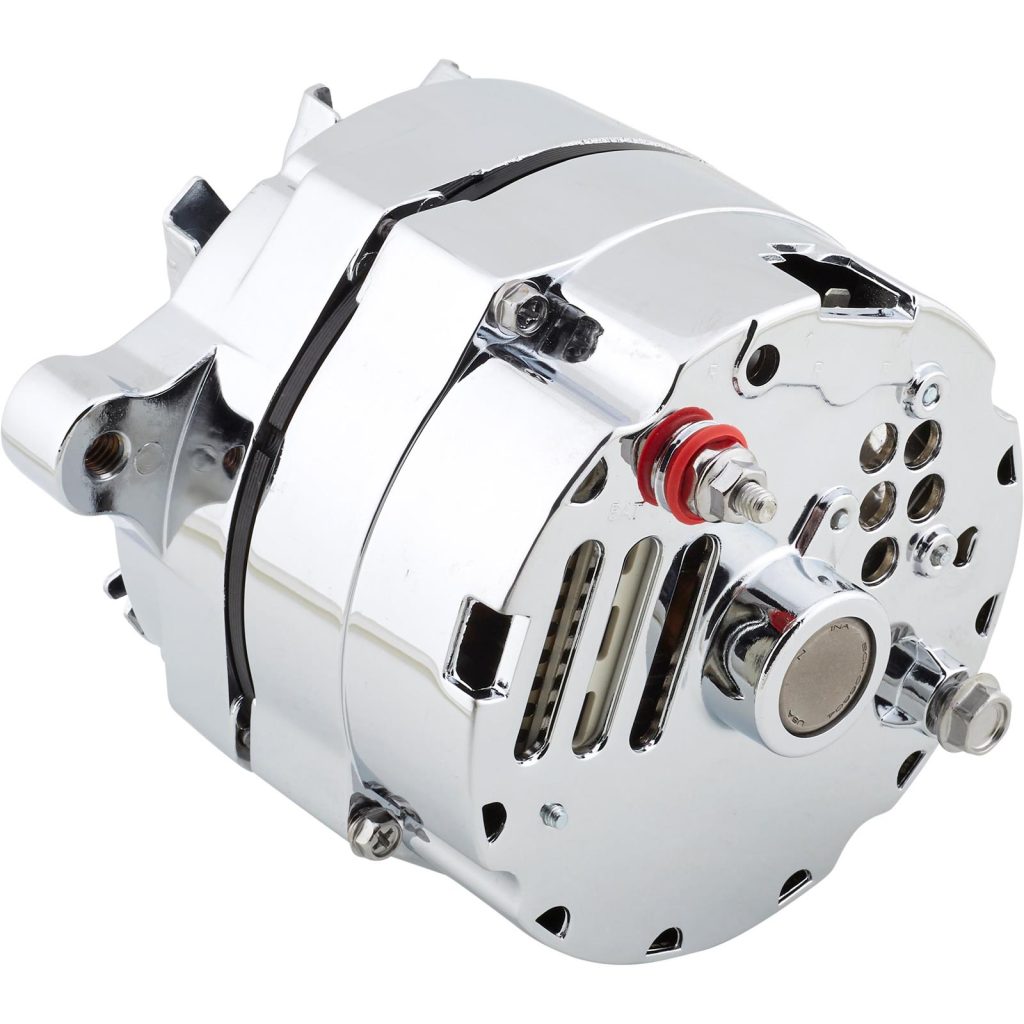
From an engineering perspective, the 1G alternator is defined by its externally regulated design, a hallmark of early alternator systems. Unlike later integrated units, voltage regulation was handled by a separate mechanical or solid-state regulator mounted elsewhere in the engine bay, introducing additional wiring but allowing easier servicing of individual components.
Output ratings generally ranged from around 40 to 65 amps, sufficient for the relatively modest electrical loads of the era, which included basic lighting, ignition systems, and limited accessories. The alternator employed a conventional rotor and stator configuration with a diode rectifier assembly, converting AC to DC current in a straightforward and durable manner.
The design characteristics of the 1G emphasize ruggedness and serviceability. Its steel and aluminum construction was built to endure high engine bay temperatures and extended use, while its modular nature meant that failures in the regulator or alternator could be addressed independently.
This separation, though less efficient than later integrated designs, contributed to its longevity in real-world conditions, particularly in fleet and work-truck applications where ease of repair was a priority. The alternator’s mounting and pulley configurations were adaptable across multiple engine families, further reinforcing its versatility within Ford’s lineup.
4. Ford 3G Alternator (Modern Upgrade Favorite)
The Ford 3G alternator, introduced in the 1990s, has become one of the most popular upgrades for classic Ford vehicles. While not “classic” in origin, it integrates seamlessly into older platforms.
The Ford 3G alternator represents a major advancement in Blue Oval charging system design, introduced in the early 1990s as a direct successor to the less robust 2G unit.
Developed during a period when vehicles were rapidly integrating electronic engine management, improved lighting systems, and higher accessory loads, the 3G was engineered to deliver substantially higher output and improved durability. It quickly became standard across a wide range of Ford, Lincoln, and Mercury vehicles, including models powered by inline-four, V6, and Windsor and Modular V8 engines.
The alternator was designed for both longitudinal rear-wheel-drive layouts, as seen in Mustangs and trucks, and transverse front-wheel-drive platforms, underscoring its flexibility across Ford’s expanding lineup.
From an engineering standpoint, the 3G alternator is defined by its high-output capability and integrated design. Factory ratings typically ranged from 95 to 160 amps, a significant increase over earlier generations, enabling it to support modern electrical demands without voltage drop at idle or under load.
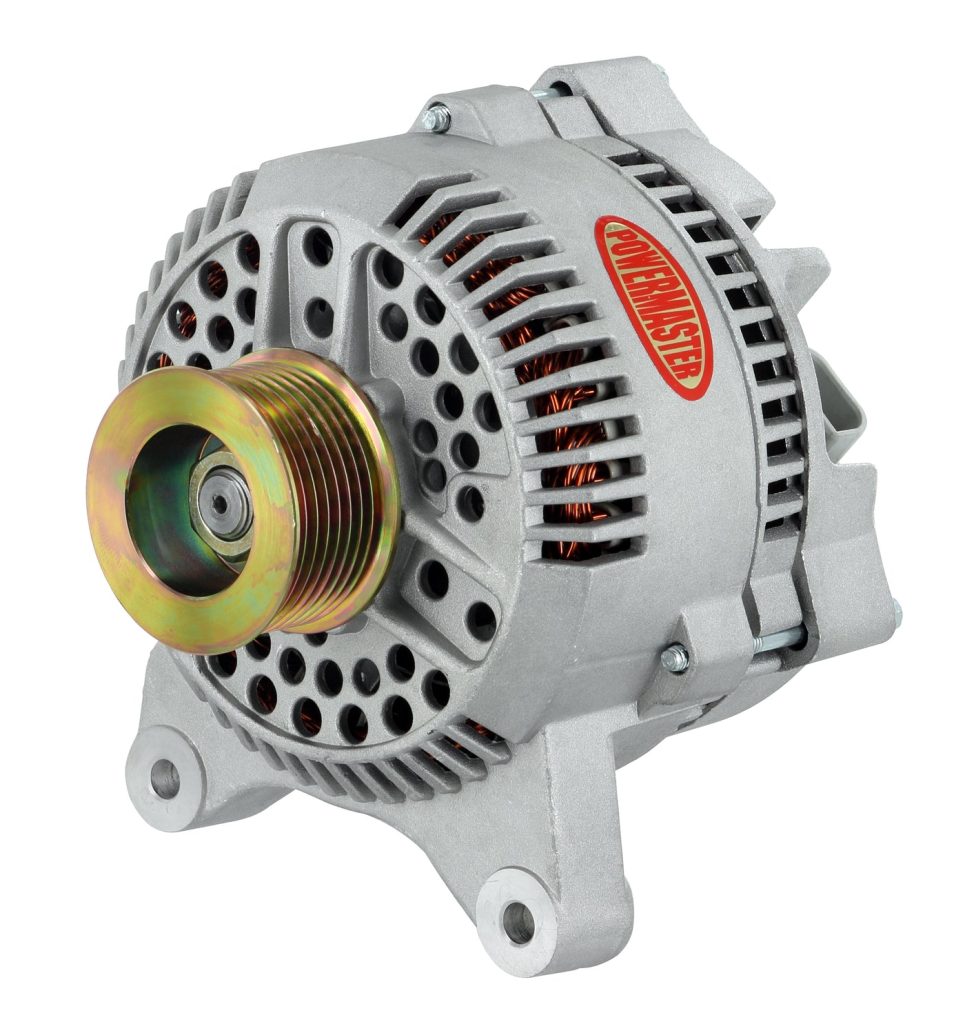
The unit features an internal voltage regulator and a refined stator and rotor assembly, paired with heavy-duty diode rectifiers that improve current handling and long-term reliability. A key innovation was its ability to produce strong output at lower engine speeds, addressing a common limitation in older alternators where charging performance dropped off at idle.
Thermal management was a critical focus in the 3G’s development. The alternator incorporates a large internal cooling fan and an optimized ventilation path within its cast aluminum housing, allowing it to dissipate heat more effectively than its predecessors.
This improvement was particularly important given the higher amperage output, which inherently generates more heat. The result is a unit that maintains consistent performance even in demanding conditions, such as high ambient temperatures or sustained electrical loads.
5. Chrysler Square-Back Alternator
Chrysler’s square-back alternator, used extensively in the 1970s, is known for its rugged construction. It features an external voltage regulator but offers solid performance and long service life.
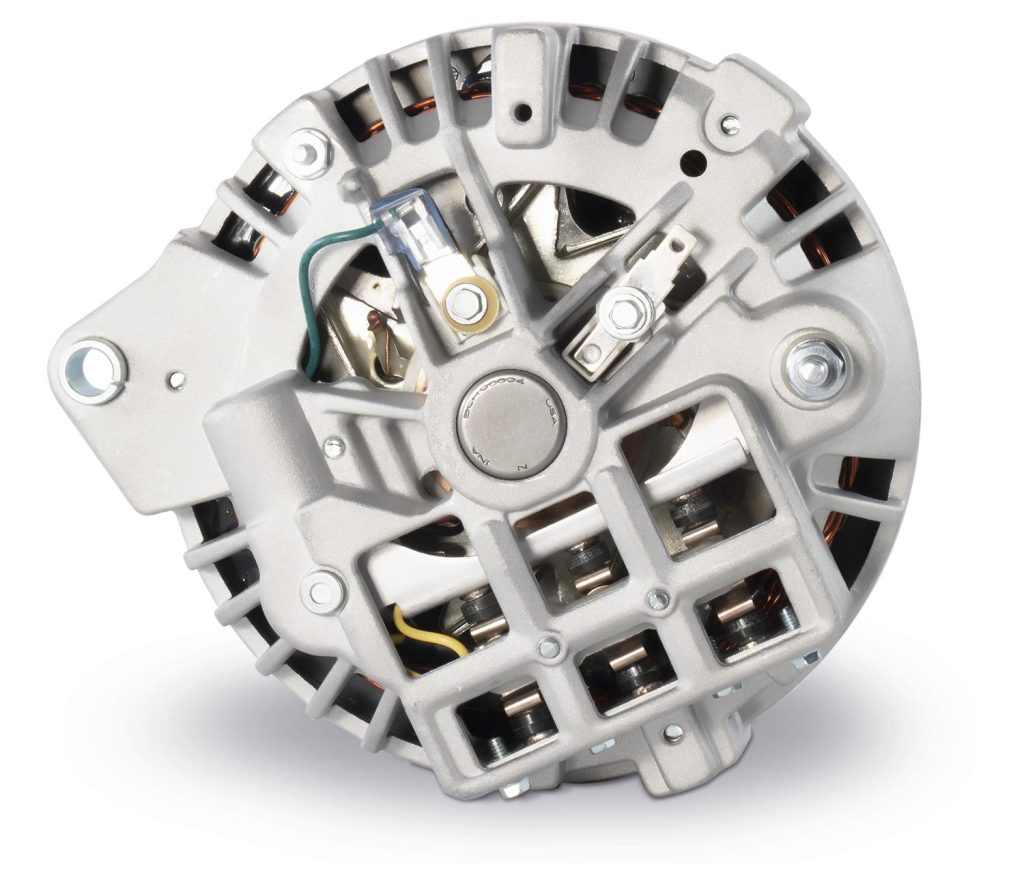
The Chrysler “square-back” alternator is one of the most recognizable and enduring charging systems to emerge from the Mopar ecosystem, widely used from the late 1960s through the 1980s.
Developed as Chrysler Corporation moved away from generators and earlier round-back alternators, the square-back design was introduced to improve electrical output and durability across a growing range of vehicles.
It became standard equipment on everything from Slant Six-powered compacts to small-block and big-block V8-equipped muscle cars, as well as trucks and commercial vehicles. Typically mounted on longitudinal, rear-wheel-drive platforms, it was engineered to integrate seamlessly into Chrysler’s diverse engine bay layouts.
From an engineering standpoint, the square-back alternator is defined by its externally regulated system and robust internal construction. Early versions relied on mechanical voltage regulators, later replaced by more reliable electronic units, but regulation always remained separate from the alternator itself.
Output ratings generally ranged from around 46 to 78 amps depending on application, offering a meaningful step up over earlier designs and supporting increased electrical loads such as higher-output lighting, improved ignition systems, and factory air conditioning. Internally, the alternator utilized a conventional rotor-stator arrangement with a durable diode rectifier assembly, delivering consistent DC output under varying engine speeds.
The defining characteristic of the square-back alternator is its housing design. The “square-back” name comes from the flat, squared-off rear case, which contrasts with the rounded housings of earlier units.
This design was not merely aesthetic; it improved airflow and cooling efficiency, helping the alternator maintain performance under sustained loads and high underhood temperatures. The heavy-duty construction, typically featuring a cast aluminum case and stout internal components, contributed to its reputation for long service life.
6. Chrysler Round-Back Alternator
Preceding the square-back design, the round-back alternator was used in earlier Chrysler vehicles. While slightly less efficient in cooling, it is still considered reliable when maintained correctly.
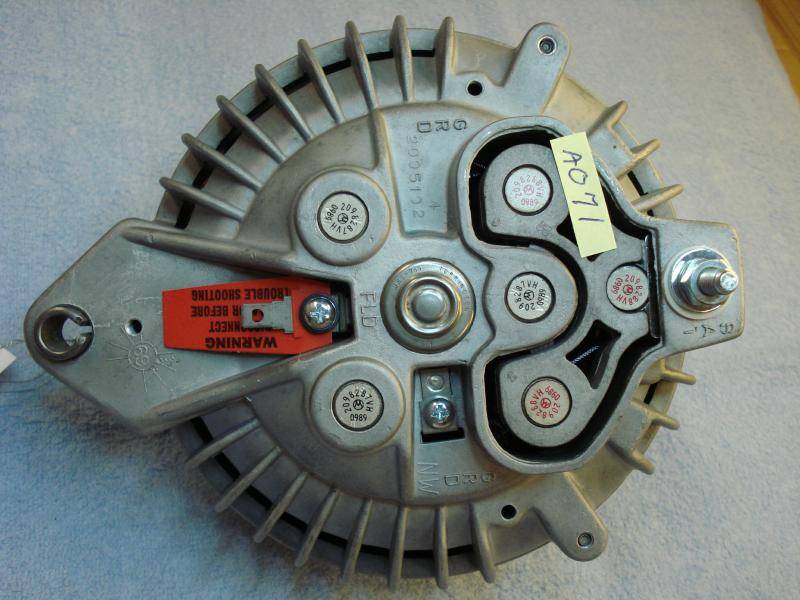
Collectors often prefer this unit for authenticity in 1960s restorations. Despite its age, it continues to perform well in stock applications, especially when paired with a properly functioning voltage regulator.
7. Motorola Alternators (AMC and Jeep Applications)
American Motors Corporation (AMC) and early Jeep models frequently used Motorola alternators. These units are often overlooked but have proven to be highly reliable in rugged conditions.
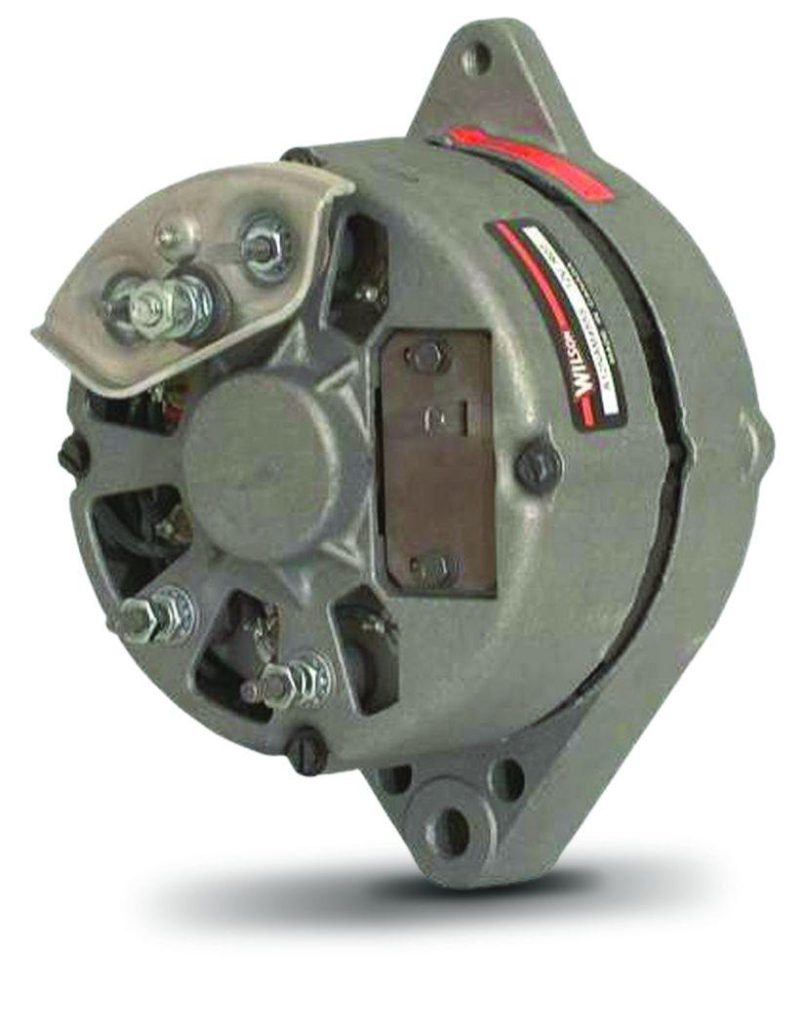
Their durability makes them especially suitable for off-road and utility vehicles. Jeep enthusiasts in the U.S. often retain these alternators in restorations due to their ability to withstand vibration and environmental stress.
8. Bosch Alternators (Imported Reliability in Classics)
Bosch alternators occupy a central position in the history of European automotive electrical systems, representing a standard of precision engineering and long-term durability from the late 1960s through the 1990s.
Developed by Robert Bosch GmbH as part of the industry-wide transition from DC generators to alternators, these units became widely adopted across German manufacturers including Mercedes-Benz, BMW, Volkswagen, and Porsche, as well as numerous other European marques.
Designed to support a broad spectrum of engine configurations, from inline-four and inline-six layouts to V8 applications, Bosch alternators were typically installed in longitudinal and transverse engine bays alike, reflecting their adaptability across both rear-wheel-drive and front-wheel-drive platforms.
From a technical perspective, Bosch alternators were early adopters of internally regulated designs, eliminating the need for separate voltage regulators and reducing wiring complexity. This integration improved reliability by minimizing external failure points and streamlining electrical management.
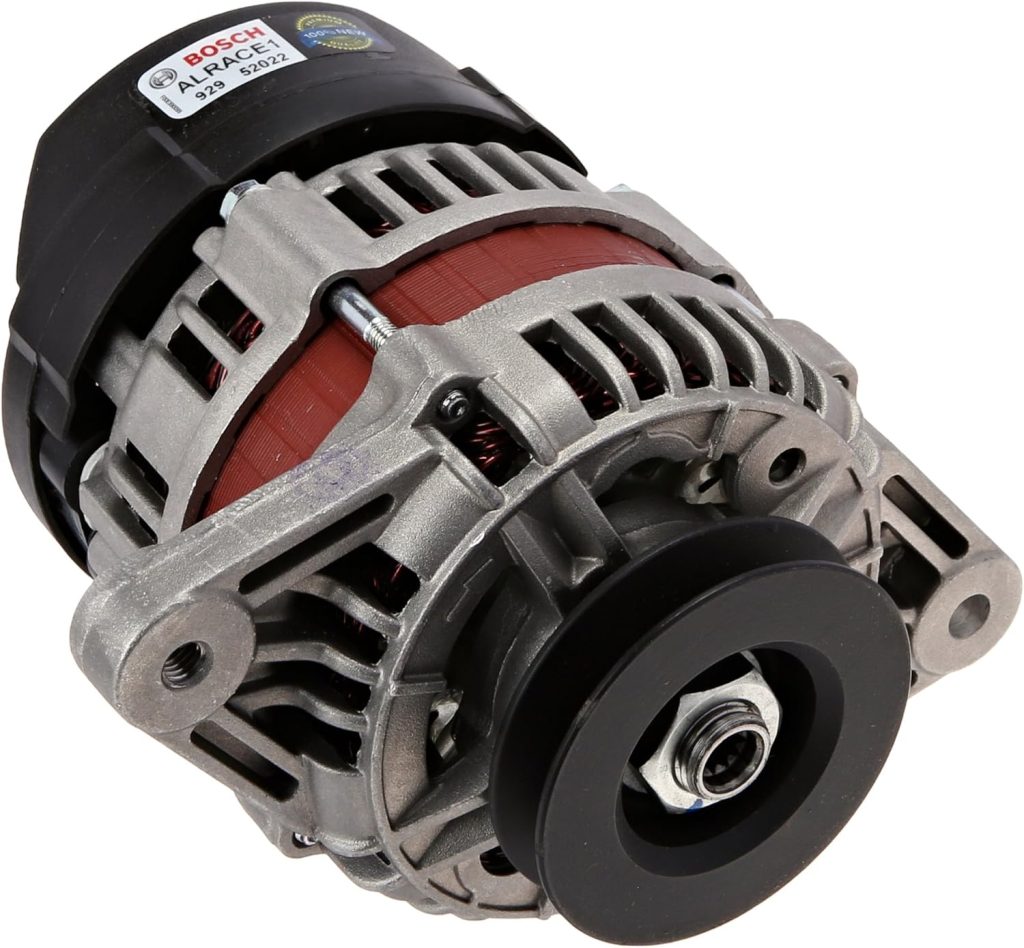
Output ratings varied significantly depending on application, generally ranging from 35 amps in early compact cars to over 90 amps in higher-end luxury and performance models. The alternators utilized a robust rotor-stator assembly paired with high-quality diode rectifiers, ensuring stable DC output even under fluctuating engine speeds and electrical loads.
A defining engineering characteristic of Bosch alternators is their emphasis on efficiency and thermal management. The housings were typically constructed from cast aluminum with carefully designed ventilation pathways and internal fan systems, allowing for effective heat dissipation during sustained operation.
This was particularly important in European vehicles, which often featured tighter engine packaging and higher sustained operating speeds, especially on autobahn driving cycles. Bosch also engineered these alternators with tight manufacturing tolerances, contributing to consistent performance and reduced wear over extended service intervals.
9. GM CS130 Alternator (Compact and Efficient)
The GM CS130 alternator represents a significant leap forward in General Motors’ charging system design, introduced in the mid-1980s as part of the new “Charging System” (CS) family that succeeded the long-running SI series.
Developed during a period when vehicles were rapidly adopting electronic fuel injection, digital dashboards, and more sophisticated onboard electronics, the CS130 was engineered to deliver higher output, improved efficiency, and better packaging.
It quickly became standard across a wide range of GM vehicles, from transverse front-wheel-drive sedans with inline-four and V6 engines to traditional longitudinal rear-wheel-drive platforms using small-block V8s, demonstrating its versatility across multiple drivetrain configurations.
Technically, the CS130 marked a transition to a more compact, high-performance alternator architecture. Despite its smaller physical size compared to the 12SI, it offered substantially higher output, typically ranging from 85 to 105 amps in stock applications. This was achieved through improved stator windings, a more efficient rotor design, and enhanced rectification components.
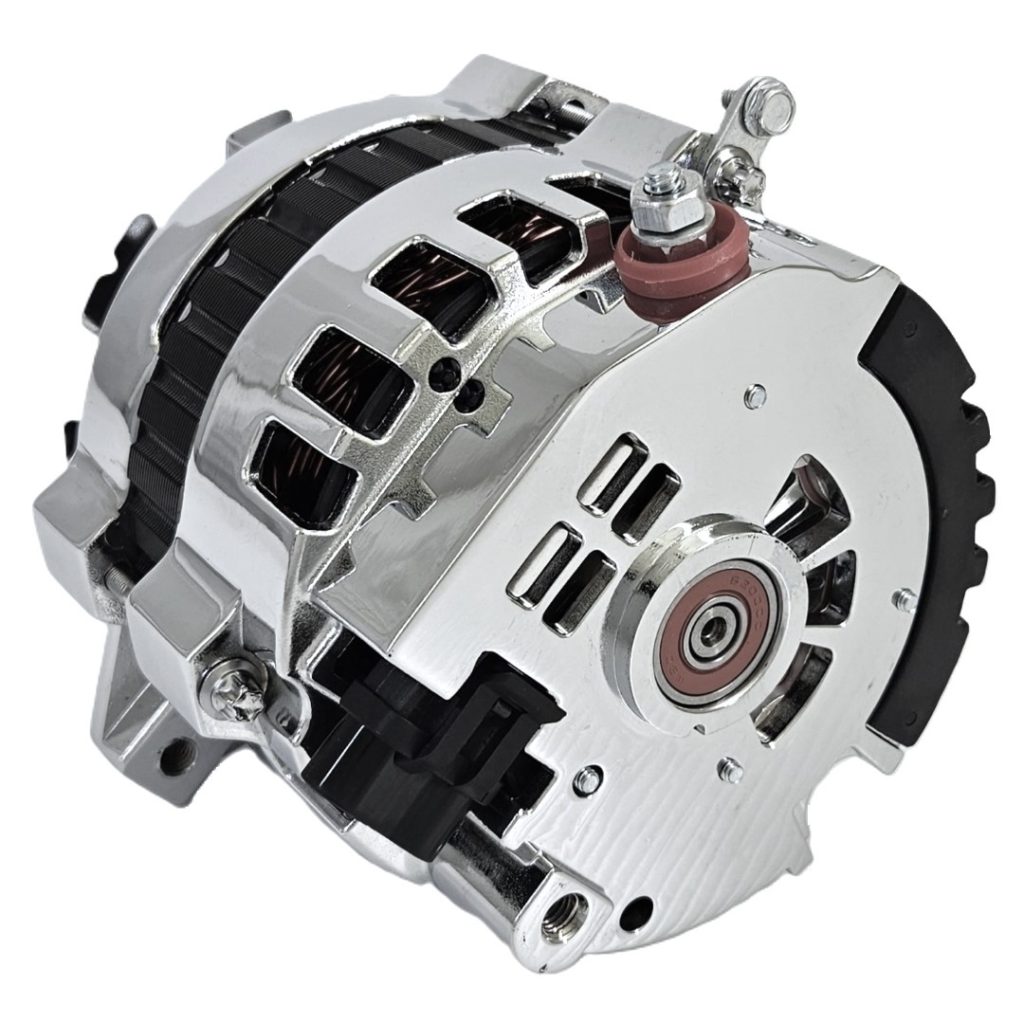
The unit featured an internal voltage regulator, eliminating the need for external control modules and simplifying wiring. It also introduced a multi-pin connector system that allowed better integration with emerging vehicle electronics, including engine control modules that could monitor and influence charging behavior.
One of the defining engineering features of the CS130 is its focus on efficiency and high-speed performance. The alternator was designed to produce strong output even at lower engine speeds while maintaining stability at higher RPMs, a critical requirement for modern driving conditions.
Its compact aluminum housing incorporated internal cooling fans and optimized airflow paths, although early versions gained a reputation for heat-related failures in high-temperature environments. GM addressed these issues through iterative improvements, including upgraded internal components and better ventilation strategies, resulting in a more robust and reliable unit over time.
From a design standpoint, the CS130 reflects a shift toward integration and electronic compatibility. Its reduced size made it easier to package in crowded engine bays, particularly in front-wheel-drive layouts where space was at a premium.
At the same time, its serviceability remained relatively straightforward, with replaceable internal components and widespread parts availability supporting long-term maintenance.
10. Powermaster and Aftermarket High-Output Units
Modern aftermarket manufacturers like Powermaster have developed high-output alternators specifically for classic vehicles. These units often combine vintage aesthetics with modern internals.
For U.S. enthusiasts running heavily modified classics, such as cars with fuel injection, high-powered audio systems, or electric cooling fans, these alternators provide unmatched reliability and performance.
They are designed to bolt directly into classic applications while delivering significantly higher amperage.
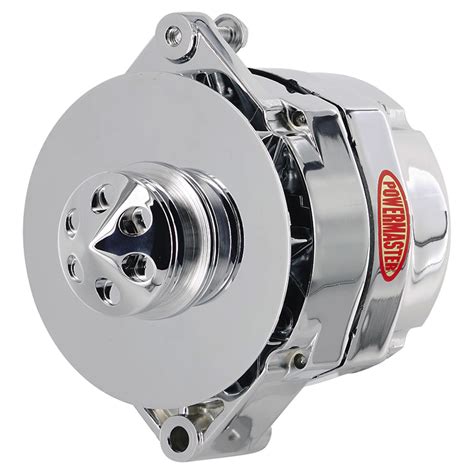
Powermaster and similar aftermarket high-output alternators represent a different but equally important chapter in the evolution of automotive charging systems, emerging prominently in the 1980s and gaining traction through the 1990s as electrical demands began to outpace factory capabilities.
Companies like Powermaster built their reputation by reengineering proven OEM architectures, often based on Delco SI, CS-series, or Ford designs, and enhancing them with modern materials, higher-capacity internals, and improved efficiency. These units were not tied to a single production vehicle but were instead designed to serve a wide spectrum of applications, from classic carbureted V8 muscle cars to heavily modified street machines and dedicated show builds.
From an engineering standpoint, high-output aftermarket alternators typically retain familiar mounting patterns and pulley alignments, allowing them to bolt directly onto engines ranging from small-block Chevrolet and Ford Windsor V8s to inline-six configurations and even modern LS-based swaps. This compatibility across longitudinal rear-wheel-drive and custom drivetrain layouts is a key part of their appeal. Internally, however, they diverge significantly from their OEM counterparts.
Upgraded stators with heavier-gauge windings, high-capacity rotors, and advanced diode rectifiers enable output levels that often exceed 140 to 200 amps, far surpassing the capabilities of most factory alternators from the classic era. Many units also incorporate improved internal voltage regulators for more precise control under varying loads.
Design characteristics of Powermaster and similar units emphasize both performance and durability. Cast aluminum housings are often reworked with enhanced ventilation and more efficient internal fan designs to manage the increased heat generated by higher output levels.
Some models adopt one-wire self-exciting configurations for simplified installation, while others retain multi-wire setups for greater control and compatibility with more complex electrical systems. The emphasis on modular construction and serviceability ensures that these alternators can be maintained or rebuilt as needed, a critical factor for enthusiasts who demand long-term reliability from upgraded components.
Reliable charging systems are foundational to the usability of any classic car. While engines and aesthetics may define a vehicle’s character, the alternator determines whether it can be driven confidently and consistently.
Units like the Delco-Remy 10SI and Ford 3G have earned their reputations through decades of proven performance, while aftermarket solutions continue to push reliability even further.
For American enthusiasts, the advantage lies in the vast ecosystem of parts, knowledge, and support.
Whether preserving originality or upgrading for modern demands, selecting a proven alternator ensures that a classic car remains not just a showpiece, but a machine that can be driven and enjoyed without compromise.