
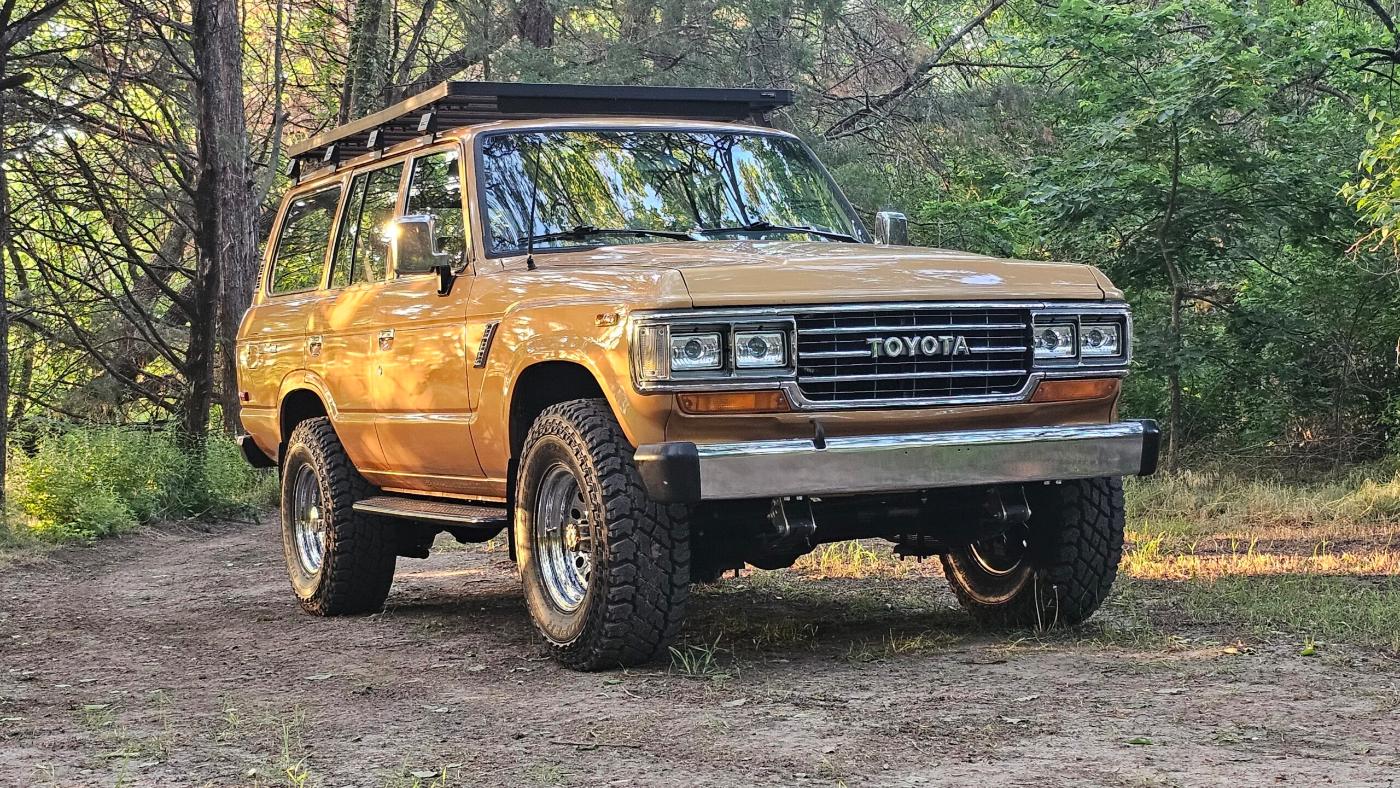
Drum brakes are often viewed as outdated when compared to modern disc brake systems, which offer superior heat dissipation and consistent performance under heavy use.
However, evaluating drum brakes purely through a modern performance lens ignores the context in which many vintage cruisers operate. These vehicles were engineered around lower speeds, softer driving styles, and different expectations of braking performance.
For certain classic cars, particularly those used for relaxed cruising rather than aggressive driving, drum brakes can still be entirely adequate. Their continued relevance is tied to how these vehicles are driven, maintained, and preserved within the collector space.
1. Designed for Lower Speed Operating Conditions
Drum brakes were engineered in an era when sustained high-speed driving was neither common nor expected, and that context is essential to understanding why they remain adequate for certain vintage cruisers today.
Mid-century American cars, particularly those produced through the 1940s, ’50s, and even into the early ’60s, were built around a driving environment defined by lower average speeds, lighter traffic density, and a more relaxed approach to road travel.
In that setting, the fundamental characteristics of drum brake systems, progressive engagement, adequate stopping force, and durability under moderate use, aligned perfectly with real-world demands.
Unlike modern performance-oriented braking systems designed to withstand repeated high-speed deceleration, drum brakes excel in scenarios where braking events are less aggressive and more evenly spaced.
Vintage cruisers typically operate within a narrower speed envelope, often below 60 mph, where aerodynamic drag and engine braking already contribute significantly to slowing the vehicle. Under these conditions, the thermal limitations that can lead to brake fade in drum systems are far less likely to be encountered. The system simply isn’t being pushed to extremes.
Additionally, drum brakes offer a self-energizing effect, where the rotation of the drum helps pull the brake shoes into tighter contact.
This characteristic reduces the amount of pedal effort required during normal driving, which suits the relaxed, comfort-oriented nature of classic cruisers. It’s a mechanical advantage that works best at moderate speeds and steady deceleration rates, exactly the kind of driving these vehicles were designed for.
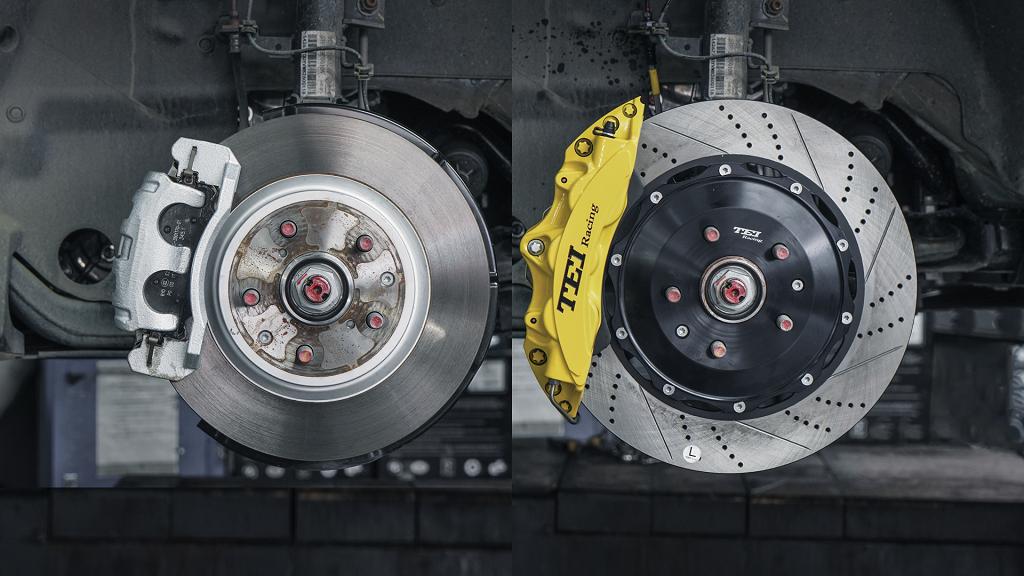
Vehicle weight distribution and tire technology of the period also play a role. Bias-ply tires, common on vintage cars, provide less grip than modern radials, effectively limiting how much braking force can be utilized before wheel lockup occurs.
The ultimate stopping power of disc brakes would not be fully exploitable anyway. Drum brakes, therefore, deliver a level of performance that is well-matched to the available traction and intended use.
When these vehicles are driven as intended, on scenic routes, at modest speeds, and with ample following distance, drum brakes perform reliably and predictably.
They may not offer the fade resistance or wet-weather performance of modern disc systems, but within their original operating parameters, they remain entirely sufficient. For enthusiasts preserving authenticity while enjoying period-correct driving experiences, drum brakes are not a compromise; they are a system working exactly as designed.
2. Adequate Stopping Power for Vehicle Purpose
Adequate stopping power in vintage cruisers is best understood not through modern performance benchmarks, but through the lens of original vehicle intent and engineering priorities. Cars built from the 1930s through the 1960s were not designed for rapid deceleration from highway speeds or repeated hard braking cycles.
Instead, they were engineered for steady, predictable travel, where braking demands were moderate and infrequent. Within that framework, drum brakes delivered exactly the level of stopping force required to safely manage the vehicle’s mass, speed range, and driving conditions.
The relationship between braking capability and vehicle purpose is critical. Full-size American sedans and coupes of the era often featured large displacement engines, but their performance was geared toward smooth acceleration rather than high-speed agility.
These vehicles typically operated in a range where gradual deceleration was the norm, and drum brake systems were sized accordingly, with generous surface area and sufficient mechanical leverage to bring the car to a controlled stop without drama. When properly adjusted and maintained, drum brakes can generate substantial friction, more than enough to lock the wheels if pushed beyond available tire grip.
That last point underscores an often-overlooked reality: braking performance is ultimately limited by traction. Vintage cruisers equipped with bias-ply tires cannot fully utilize the sharper initial bite of modern disc brakes without risking premature lockup.
Drum brakes, by contrast, provide a more progressive application of force, allowing drivers to modulate braking input in a way that matches the tire technology of the period. The result is a balanced system where stopping power and traction are aligned, rather than mismatched.
Brake system design in these vehicles also accounted for weight transfer and chassis dynamics typical of body-on-frame construction. The front drums handled the majority of stopping force, while the rear drums contributed stability under deceleration.
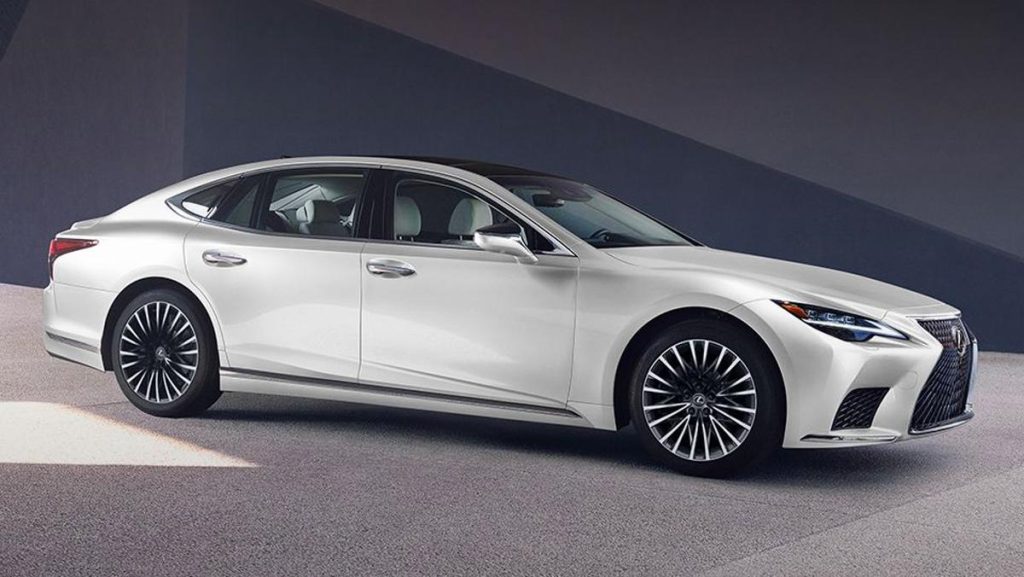
Although these systems lack the fade resistance and cooling efficiency of discs, they were engineered with sufficient thermal capacity for the driving cycles they were expected to endure. Occasional stops from moderate speeds do not generate the sustained heat levels that expose the limitations of drum brakes.
In practical terms, when a vintage cruiser is driven as intended, at moderate speeds, with anticipation and spacing, its drum brake system provides dependable and appropriate stopping performance.
The notion of “adequate” is not a concession but a reflection of engineering alignment between system capability and vehicle use. Within that context, drum brakes fulfill their role effectively, reinforcing the idea that suitability is defined by purpose, not by modern standards alone.
3. Simplicity and Ease of Maintenance
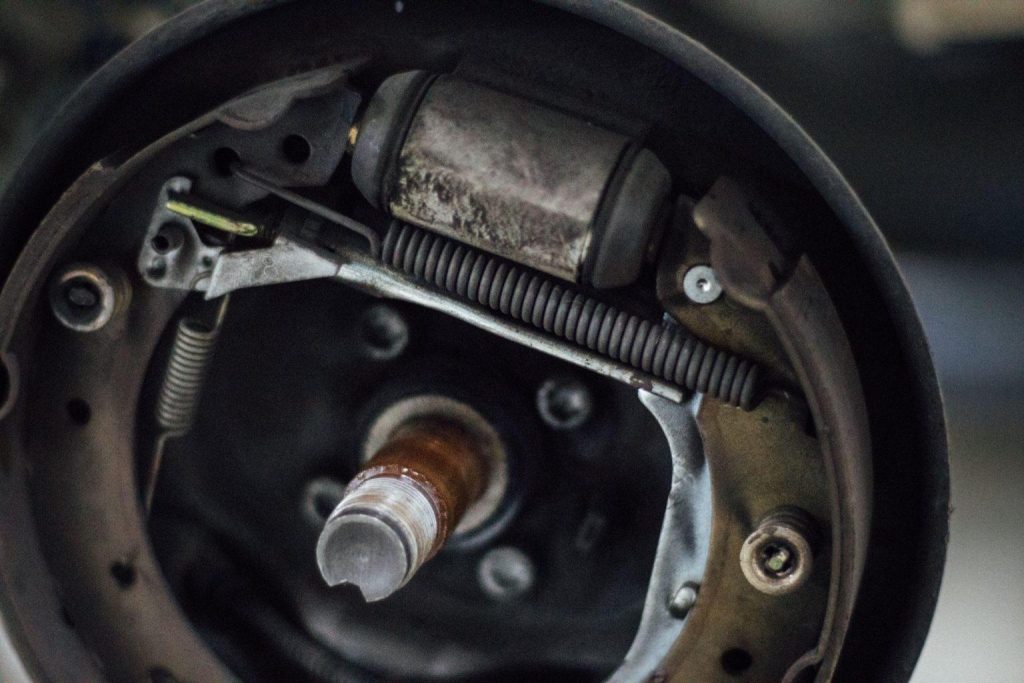
Simplicity is one of the defining virtues of drum brake systems, and it plays a central role in why they remain viable for vintage cruisers decades after their introduction. At a mechanical level, drum brakes rely on a straightforward arrangement of shoes, springs, and a wheel cylinder housed within a sealed drum.
There are no exposed rotors, multi-piston calipers, or complex hydraulic modulation systems to contend with. This restrained design reflects an era when serviceability was a priority, and it translates into a braking system that is both accessible and forgiving to maintain.
For owners of classic vehicles, that accessibility matters. Routine service, such as inspecting linings, cleaning accumulated brake dust, or replacing worn shoes, can often be performed with basic hand tools and a working understanding of the system’s layout.
The components themselves are generally robust and overbuilt relative to the demands placed on them, meaning they wear gradually and predictably. Even adjustments, which are more frequent with drum brakes than with modern self-adjusting disc systems, are mechanically simple and require minimal specialized equipment.
Another advantage lies in the system’s enclosed design. Because the braking components are shielded within the drum, they are less directly exposed to road debris compared to open disc setups.
While heat dissipation is not as efficient, the trade-off is a degree of protection that can extend component life under typical cruising conditions. For vehicles that are driven occasionally and stored carefully, this contributes to long service intervals and reduced maintenance complexity over time.
Parts availability and cost further reinforce the appeal. Replacement shoes, springs, and wheel cylinders are widely reproduced and relatively inexpensive, reflecting both the simplicity of their construction and the scale at which they were originally manufactured. This keeps long-term ownership costs manageable, particularly for enthusiasts who prefer to perform their own maintenance rather than rely on specialized shops.
Equally important is the system’s tolerance for imperfection. Drum brakes do not demand the same level of precision machining or strict tolerances as high-performance disc systems. Minor variations in component wear or adjustment typically result in gradual changes in pedal feel rather than sudden loss of performance. This predictability allows issues to be identified and addressed before they become critical.
In the context of vintage cruisers, vehicles defined by relaxed driving characteristics and mechanical transparency, drum brakes embody a kind of functional honesty.
They are easy to understand, straightforward to service, and durable within their intended operating range. That combination of simplicity and maintainability is not incidental; it is a key reason these systems continue to serve reliably in the environments for which they were designed.
4. Period-Correct Authenticity
Period-correct authenticity is a defining consideration for many vintage cruiser owners, and drum brakes are an integral part of that equation. These systems are not merely functional components; they are artifacts of a specific engineering philosophy that shaped American automobiles through much of the mid-20th century.
Retaining drum brakes preserves the mechanical character of the vehicle as it was originally designed, maintaining continuity between the car’s historical identity and its present-day operation.
During the golden age of American motoring, manufacturers engineered vehicles as cohesive systems, where braking, suspension, tire technology, and chassis dynamics were all calibrated to work in harmony.
Drum brakes were central to that balance. Their progressive engagement, self-energizing behavior, and compatibility with bias-ply tires contributed to a driving experience that was smooth, deliberate, and predictable.
Replacing them with modern disc systems can alter that balance, introducing sharper initial bite and different pedal feel characteristics that were never part of the vehicle’s original design brief.
Authenticity also carries weight in the collector and concours world. Vehicles that retain factory-correct braking systems are often viewed as more faithful representations of their era, particularly when originality extends beyond cosmetic details into mechanical components.
Judges, historians, and serious enthusiasts tend to value cars that reflect how they were built and driven when new, rather than those retrofitted with modern hardware. Drum brakes, in this context, are not seen as outdated—they are seen as correct.
5. Smoother Engagement for Casual Driving
Smoother engagement is a defining characteristic of drum brake systems, and it aligns closely with the relaxed, unhurried nature of vintage cruising. Unlike modern disc brakes, which are engineered for immediate bite and rapid deceleration, drum brakes deliver a more gradual application of stopping force.
This progression is not a limitation, it is a deliberate mechanical trait that complements the driving style these vehicles were built around.
At the core of this behavior is the self-energizing design of drum brakes. As the drum rotates, it helps pull the brake shoes into contact with its inner surface, amplifying braking force in a controlled, progressive manner.
The result is a system that builds stopping power smoothly as pedal pressure increases, rather than responding with an abrupt clamp. For drivers, this translates into a more predictable and easily modulated braking feel, particularly at lower speeds and during light deceleration.
This characteristic is especially well-suited to casual driving environments, scenic routes, urban boulevards, and weekend cruises—where abrupt stops are neither necessary nor desirable.
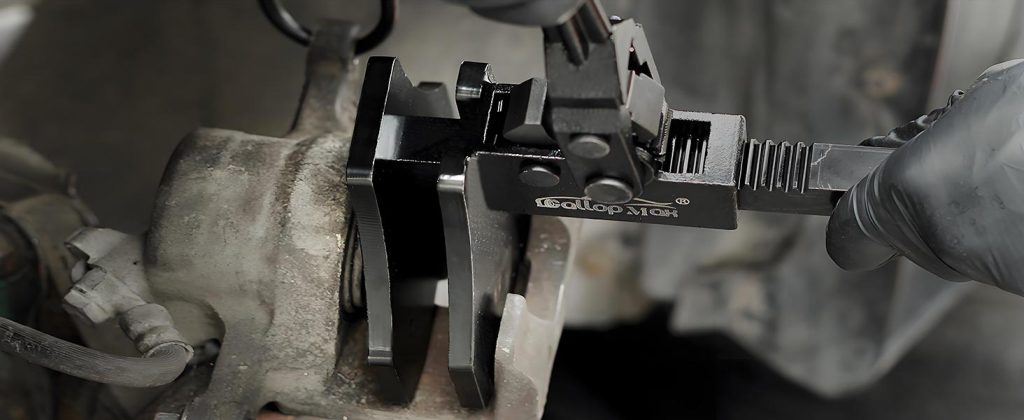
Vintage cruisers are typically driven with an emphasis on comfort and flow, not urgency. In that context, the softer initial response of drum brakes reduces the likelihood of nose dive or passenger discomfort, maintaining the composed ride quality that defined these cars when new.
The interaction between drum brakes and period-correct tire technology further reinforces this smoothness. Bias-ply tires, with their more flexible sidewalls and lower overall grip compared to modern radials, respond better to progressive braking inputs.
A sudden, aggressive application of braking force can more easily overwhelm available traction, leading to wheel lockup. Drum brakes, by contrast, allow the driver to ease into deceleration, keeping the tires within their optimal grip range and preserving directional stability.
Pedal feel also plays a role in the overall experience. Drum brake systems often exhibit longer pedal travel, which provides a wider range over which braking force can be modulated.
While this may feel unfamiliar to drivers accustomed to modern systems, it offers a level of control that suits the measured pace of vintage motoring. Small inputs result in subtle changes, allowing for fine adjustments without abrupt transitions.
In practical terms, smoother engagement reduces driver fatigue and enhances confidence during everyday use. The car responds in a linear, predictable way, reinforcing a sense of mechanical transparency.
For vehicles that are not intended to operate at the limits of performance, this quality is arguably more valuable than outright stopping power. Drum brakes, in this sense, deliver a braking experience that is not only sufficient but well-matched to the character and purpose of vintage cruisers.
6. Cost-Effectiveness Compared to Conversions
Cost-effectiveness is a decisive factor when evaluating whether to retain drum brakes or pursue a disc brake conversion on a vintage cruiser.
While modern disc systems offer clear advantages in high-performance scenarios, the financial and mechanical realities of retrofitting them onto a classic vehicle often outweigh the benefits for owners who drive within period-correct limits. Drum brakes, by contrast, remain an economically rational choice because they align with the vehicle’s original design while minimizing both upfront and long-term expenditures.
A proper disc brake conversion is rarely a simple bolt-on upgrade. It typically involves new spindles or mounting brackets, calipers, rotors, proportioning valves, and often a dual-reservoir master cylinder to ensure safe hydraulic balance. In many cases, wheel fitment becomes an issue, requiring different wheel designs or sizes to clear larger components.
Labor costs can escalate quickly, particularly if modifications to brake lines, suspension geometry, or pedal assemblies are required. What begins as a straightforward upgrade can evolve into a comprehensive system overhaul with significant expense.
By comparison, maintaining a drum brake system is far more cost-contained. Replacement components, brake shoes, return springs, hardware kits, and wheel cylinders, are widely available and relatively inexpensive due to decades of standardized production and aftermarket support.
Even a full system refresh, including resurfaced drums and new hydraulic components, typically costs a fraction of a well-executed disc conversion. For owners who perform their own maintenance, the savings are even more pronounced, as the system’s simplicity reduces both labor time and the need for specialized tools.
There is also an economic argument tied to usage patterns. Vintage cruisers are generally driven less frequently and under less demanding conditions than modern daily drivers. As a result, the performance ceiling offered by disc brakes is rarely utilized in practice. Investing heavily in a conversion may yield marginal real-world benefit if the vehicle is primarily used for low-speed cruising, car shows, or occasional weekend drives. In such cases, the return on investment is limited.
Additionally, retaining drum brakes avoids unintended secondary costs. Insurance valuations, originality considerations, and resale appeal can all be influenced by how closely a vehicle adheres to factory specifications. For certain collectors and buyers, extensive modifications, even well-executed ones, can detract from the car’s perceived authenticity and value.
Viewed through a practical lens, drum brakes offer a balanced equation: sufficient performance for intended use, low acquisition and maintenance costs, and minimal disruption to the vehicle’s original engineering. For many vintage cruiser owners, that combination makes retaining the factory-style system not just a nostalgic choice, but a financially sound one.
Fit for Purpose, Not Obsolete
Labeling drum brakes as obsolete overlooks a more precise assessment: they are fit for purpose within the operational envelope of vintage cruisers. Automotive technology evolves in response to changing performance expectations, regulatory pressures, and driving environments.
What constitutes “outdated” in a modern, high-speed context can remain entirely appropriate when evaluated against the conditions for which a system was originally engineered. Drum brakes exemplify this distinction, delivering functionality that aligns with the intended use of classic vehicles rather than competing with contemporary performance standards.
Vintage cruisers were developed around a cohesive set of assumptions, moderate speeds, predictable traffic patterns, and a driving style that emphasized smoothness over urgency. Within that framework, drum brakes provide sufficient stopping capability, stable modulation, and durability under intermittent use.
Their limitations, particularly in heat dissipation and resistance to fade under repeated hard braking, become relevant only when the system is pushed beyond those original parameters. For typical cruising scenarios, those thresholds are rarely approached.
The broader engineering context reinforces this point. Brake system effectiveness is inseparable from tire technology, suspension geometry, and chassis dynamics. Vehicles equipped with bias-ply tires and soft, compliance-focused suspensions are not designed to exploit the sharper response and higher thermal capacity of modern disc brakes.
Introducing significantly more aggressive braking hardware can create an imbalance, where available stopping force exceeds usable traction or disrupts the vehicle’s intended handling characteristics. Drum brakes, by contrast, operate within a range that complements these limitations, maintaining system harmony.
There is also a durability argument grounded in real-world usage. Drum brake systems, when properly maintained, are capable of long service intervals and consistent performance under light to moderate duty cycles.
Their enclosed design and relatively low component stress contribute to reliability in vehicles that are driven occasionally rather than subjected to daily, high-demand operation. In this context, “fit for purpose” includes not only performance adequacy but also longevity and predictability.
From an ownership perspective, redefining drum brakes as appropriate rather than obsolete reframes the decision-making process. The question shifts from whether they match modern benchmarks to whether they meet the practical needs of the vehicle and its driver. For enthusiasts who operate their cars within historically accurate conditions, the answer is typically affirmative.
Ultimately, drum brakes persist not because of inertia, but because their design continues to satisfy a specific use case. They are a solution optimized for a particular set of constraints, speed, weight, traction, and driving style, and within those constraints, they remain effective.
Judged on their own terms rather than against unrelated modern criteria, drum brakes are not relics; they are purpose-built systems still performing as intended.
