

Towing a trailer on the interstate may seem simple, but even experienced drivers can make mistakes that quickly lead to dangerous situations. The guide “10 Common Towing Mistakes That Can Flip Your Trailer on the Interstate” highlights the most critical errors that can cause rollovers.
These include improper weight distribution, incorrect tongue weight, excessive speed, poor tire maintenance, unsecured hitches, and inadequate braking. High speeds, sudden steering corrections, or environmental factors such as strong crosswinds can turn small instabilities into catastrophic accidents.
Many of these mistakes compromise the balance, traction, or control of the towing setup, creating a pendulum-like effect that is difficult to manage at highway speeds. Understanding these risks and following proper towing practices, including correct load placement, tire care, balanced tongue weight, and careful braking, is essential for preventing accidents and keeping both driver and cargo safe on busy highways.
1. Proper Weight Distribution Is Crucial To Prevent Trailer Sway And Rollovers
One of the most common causes of trailer accidents is improper front-to-rear weight distribution. The “60/40 rule” is the gold standard: 60% of the cargo weight should be positioned in the front half of the trailer, ahead of the axle, while the remaining 40% goes toward the rear.
This setup ensures adequate downward force on the hitch, known as tongue weight, keeping the trailer stable and tracking correctly behind the tow vehicle.
When heavy items are loaded behind the axle, the trailer becomes rear-heavy, creating a pendulum effect. At low speeds, this may go unnoticed, but once highway speeds are reached, the trailer gains momentum at the back, causing uncontrolled side-to-side oscillation called trailer sway.
The sway amplifies with each movement, which can lift the rear of the tow vehicle, reduce traction on the tires, and ultimately lead to jackknifing or rollover accidents.
Key risks of a rear-heavy load include reduced tongue weight, loss of steering control, and amplification of instability due to speed, crosswinds, or passing large vehicles. This makes high-speed travel particularly dangerous if the trailer is improperly loaded.
The solution is straightforward: load 60% of the trailer’s weight toward the front, keeping heavy items low and over the axle, and 40% toward the rear. Proper loading restores balance, maintains steering control, and minimizes sway, drastically reducing the risk of accidents on the interstate. Following this guideline is essential for safe towing, especially at high speeds.
2. Driving Too Fast for a trailer load and Tires Significantly Increases Accident Risk
Speed is one of the most dangerous factors when towing a trailer, as it magnifies nearly every other mistake. Many drivers assume their trailer can handle interstate speeds of 70 or 75 mph, but most ST (Special Trailer) tires are rated for a maximum of 65 mph.
Driving faster than the tire rating causes excessive flexing, generating heat that the tires cannot dissipate. This can lead to catastrophic tire blowouts, causing the trailer to drop to one side and pull the tow vehicle violently off course.
High speeds also worsen trailer sway, a self-amplifying oscillation commonly known as fishtailing. Lateral forces from wind, lane changes, or debris can make the trailer swing uncontrollably, often overwhelming electronic stability systems. The “crack-the-whip” effect intensifies, and high-profile trailers act like sails, increasing the risk of rollovers.
Excessive speed reduces braking and handling capability, making it difficult to correct swaying or avoid collisions. It also amplifies instability from improper weight distribution or overloading, especially if the trailer is rear-heavy.
To tow safely, drivers should observe speed limits based on tire ratings, regularly check tire pressure, ensure proper load balance with 60% of the weight in the front, and maintain 10–15% tongue weight. Reducing speed in strong winds is crucial to prevent sway. By managing speed relative to load and tire capacity, drivers can drastically reduce the risk of blowouts, fishtailing, and rollovers.
3. Proper Tongue Weight Is Essential for Safe Trailer Towing
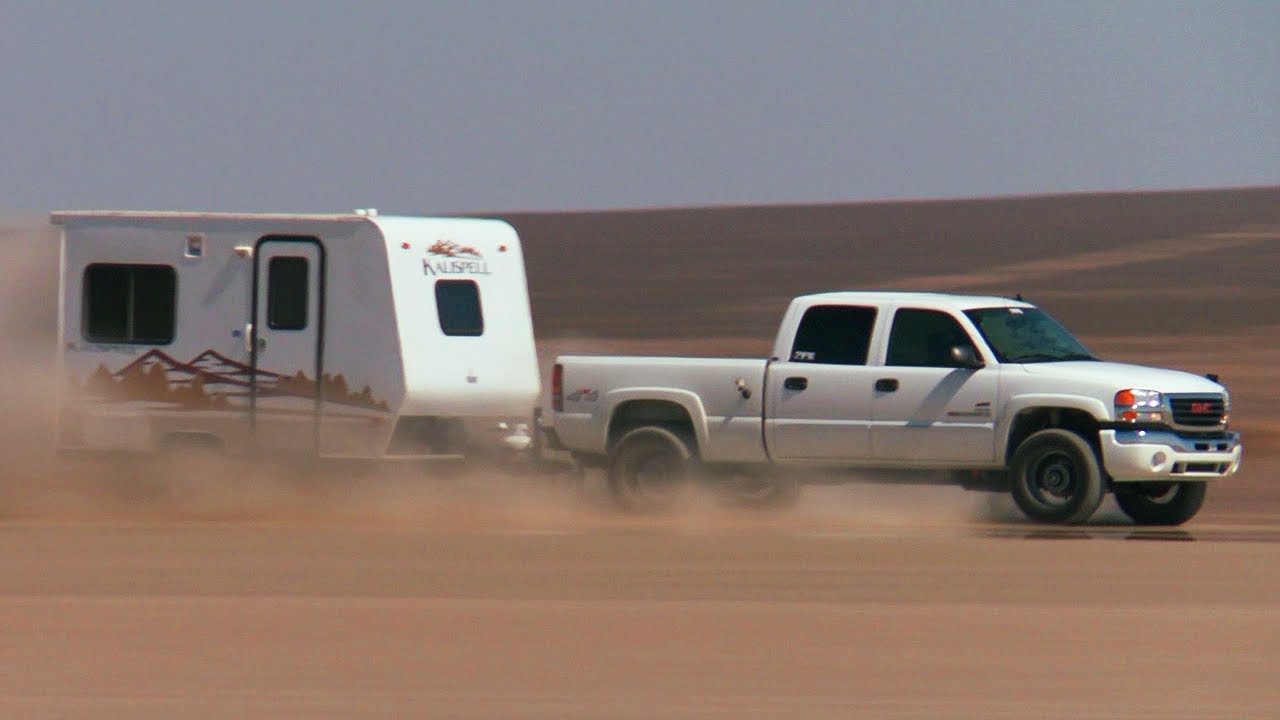
Tongue weight is the downward pressure that the trailer coupler exerts on a vehicle’s hitch and is critical for stable towing. It should account for 10 to 15 percent of the trailer’s total loaded weight. Neglecting this balance is a leading cause of trailer accidents because it directly affects how the trailer and tow vehicle respond to road conditions.
If tongue weight is too light, the trailer’s center of mass shifts toward the rear, causing the hitch to act like a pivot. This creates a pendulum effect where the trailer sways uncontrollably at highway speeds, especially when encountering bumps or air pressure from passing trucks. The rear of the tow vehicle lifts, reducing traction and making the rig prone to fishtailing or flipping.
Excessive tongue weight is equally dangerous. Too much downward force pushes the rear of the tow vehicle down, lifting the front tires and reducing steering and braking effectiveness. This increases stopping distances, makes emergency maneuvers difficult, and can overload the rear tires and suspension, increasing the risk of blowouts or mechanical failure.
Following the 60/40 loading rule, with 60 percent of cargo in the front half and 40 percent in the rear, ensures proper tongue weight. Using a scale or a hitch scale can help verify the correct distribution. Maintaining 10 to 15 percent tongue weight stabilizes the trailer, minimizes sway, and preserves steering and braking control for safer towing.
4. Abrupt Steering and Overcorrecting Can Cause Dangerous Trailer Rollovers
Abrupt steering and overcorrecting are major causes of trailer flips on the interstate. At high speeds, even small steering inputs create large lateral forces due to the trailer’s mass and high center of gravity. When a driver makes a sudden move to avoid an obstacle or lane hazard, the trailer reacts with a delayed, whip-like motion.
Overcorrecting by steering sharply in the opposite direction amplifies this momentum, creating a self-reinforcing pendulum effect. Each successive swing increases the trailer’s side-to-side motion, which can pull the tow vehicle off course.
This violent sway can exceed the traction limits of the vehicle’s tires, causing the rear to lose control and the trailer to pivot aggressively. High-profile trailers or those with unsecured cargo are particularly vulnerable, as shifting weight raises the risk of flipping. Even hitches and sway control devices can be overwhelmed by abrupt, forceful maneuvers, rendering them ineffective at preventing rollovers.
Industry experts advise drivers to remain calm if sway begins. The safest response is to keep the steering wheel steady, gradually reduce speed, and, if equipped, gently apply trailer brakes.
Sudden jerky movements or slamming the brakes can worsen the situation and trigger a catastrophic rollover. Proper awareness, calm reactions, and gradual corrective measures are essential to maintain stability and prevent high-speed trailer accidents.
This highlights that sudden steering inputs, compounded by overcorrection, are a top contributor to uncontrollable pendulum swings that frequently result in trailer accidents.
5. Improper Tire Pressure and Maintenance Significantly Increase Trailer Rollover Risks
Tire failure is a leading cause of trailer rollovers, often resulting from neglect and improper maintenance. Many trailers sit unused for months, causing dry rot and flat spots that are not visible to the naked eye. Under-inflated tires are particularly dangerous because their larger footprint generates excessive heat as the sidewalls flex while driving at highway speeds.
This heat weakens the tire structure, eventually causing catastrophic blowouts. A sudden tire failure at high speeds can cause the trailer to drop on one side, creating violent sway and pulling the towing vehicle toward the blown tire, often resulting in jackknifing or a rollover.
Low tire pressure also reduces trailer stability and handling. Soft, under-inflated tires make the trailer feel sluggish and unresponsive, increasing the likelihood of uncontrollable sway from wind or passing vehicles. Even anti-sway hitches cannot compensate for improper tire pressure. Overinflation, while less common, can stiffen the ride and make tires more susceptible to road damage.
Neglecting tire maintenance accelerates aging. Dry rot, uneven wear, or hidden internal damage can cause sudden tire failure even if the tread appears fine. Overloading the trailer further increases stress on weak tires, particularly if weight is unevenly distributed, amplifying pendulum-like sway and the risk of overturning.
To prevent these dangers, always check tire pressure when cold, follow the manufacturer’s recommended psi, replace tires every three to five years, and avoid exceeding load limits. Proper tire care is critical for maintaining stability and preventing catastrophic trailer accidents on the interstate.
Also read: 5 Cars With Simple Interiors That Age Well vs 5 With Too Much Fragile Plastic
6. Mismatched or Unsecured Hitch Equipment Can Trigger Trailer Rollovers
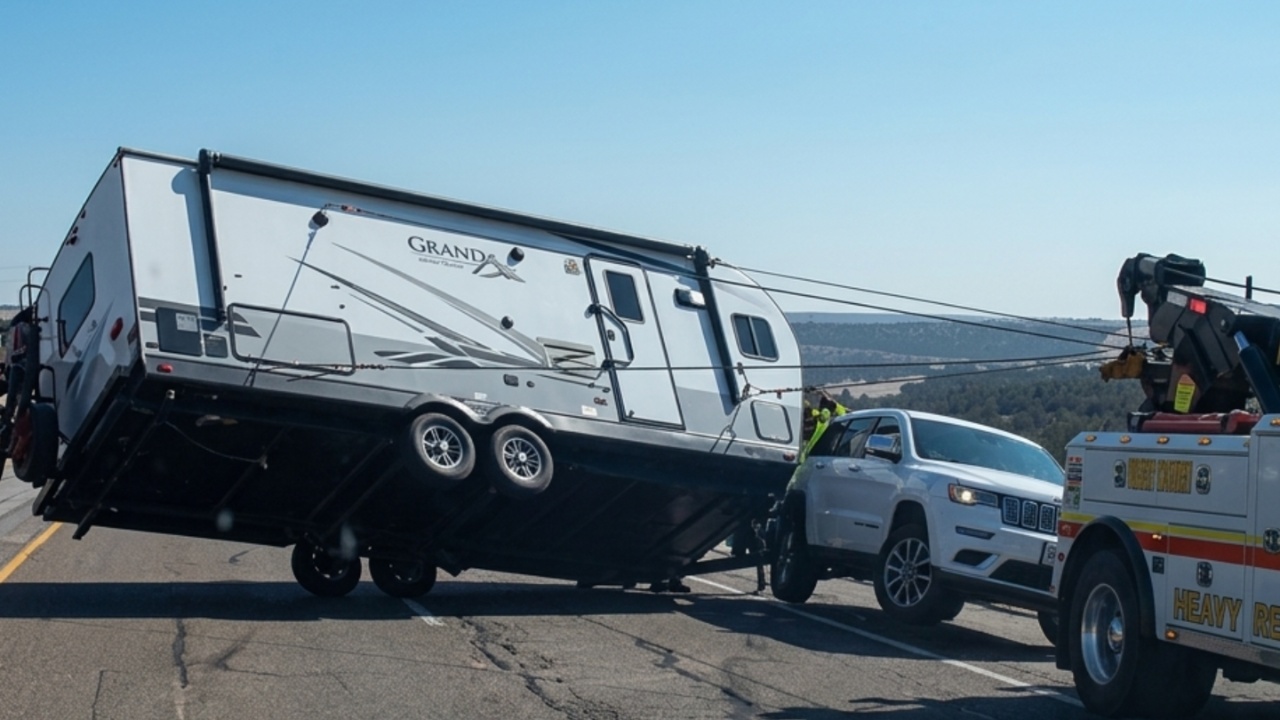
Trailer rollovers are frequently caused by issues at the hitch, the critical connection between the tow vehicle and trailer. Using the wrong ball size, an improperly rated hitch, or unsecured equipment can destabilize the entire towing setup.
For example, a 2-inch ball in a 2-5/16-inch coupler may appear secure at low speeds, but at highway speeds, the trailer can bounce on the hitch, sending shockwaves through both vehicles.
Incorrect hitch height prevents the trailer from sitting level, shifting the center of gravity and causing a “nose-high” trailer that reduces tongue weight and makes the rear prone to wandering. If the hitch fails or uncouples, safety chains may be the only line of defense. However, improperly crossed or overly long chains can cause the trailer tongue to dig into the pavement, flipping the trailer over the tow vehicle.
Mismatched or unsecured equipment disrupts handling, reduces steering control, and can result in jackknifing. Unlatched couplers or insufficient safety chain use can lead to sudden detachment, creating a runaway trailer that endangers surrounding vehicles. Poor weight distribution or rear-heavy loads further amplify sway, and friction-based sway controls can fail under strong wind or turbulence.
To prevent these dangers, ensure the trailer is level, the coupler is securely locked, safety chains are properly crossed and tensioned, and the load is balanced with roughly 60 percent of the weight over the front of the axle. Proper hitch selection, installation, and securing are essential for safe towing at highway speeds.
7. Overloading and Exceeding GVWR: A Major Cause of Trailer Rollovers
Exceeding a trailer’s Gross Vehicle Weight Rating (GVWR) is a silent but deadly risk. A trailer may appear normal when stationary, yet once on the interstate, every component faces extreme stress. Overloading strains axles, suspension, and leaf springs, causing them to flex or bottom out on highway dips.
Excessive weight overwhelms braking systems, whether surge or electric, leading to brake fade. In emergencies, an overloaded trailer’s momentum can overpower the tow vehicle, making steering and stopping nearly impossible.
High-speed maneuvers or sudden swerves create top-heavy forces that the suspension cannot counter, increasing the likelihood of tire blowouts, beading, or structural failure, which can result in a rollover that drags the towing vehicle along.
Overloading increases trailer sway, particularly when the weight is positioned too far back, creating a “pendulum effect.” The trailer may push the tow vehicle, a phenomenon known as “wagging the dog,” reducing control and amplifying rollover risk.
Critical components like tires and axles can fail under excessive weight, while braking efficiency is drastically reduced. A high center of gravity from improperly loaded cargo further decreases stability, making the trailer prone to tipping even in moderate turns or lane changes.
To prevent these dangers, always verify that the total loaded weight is below the GVWR, distribute roughly 60 percent of the weight in the front half of the trailer, and ensure heavy items are packed low. Proper loading and weight management are essential for safe towing on highways and interstates.
8. Poor Side-to-Side Weight Distribution: A Hidden Rollover Risk
While front-to-back loading is widely discussed, side-to-side weight distribution is equally critical for trailer safety. Uneven loading, such as placing all heavy cargo, water tanks, or appliances on one side, creates a lopsided center of gravity. On straight roads, this may cause only a slight pull, but the danger increases dramatically on interstate curves or off-ramps.
During turns at high speeds, centrifugal force pushes the trailer toward the outside of the curve. If that side is already overloaded, the suspension compresses fully, and tires on the lighter side can lift off the ground. Once wheels leave the pavement, the high center of gravity can carry the trailer over, especially in tall campers or enclosed trailers, where wind and large sail areas exacerbate instability.
Poor side-to-side distribution generates lateral forces that act like a pendulum, amplifying sway until the trailer becomes uncontrollable.
The heavier side bears excessive tire and suspension stress, while the lighter side may lose traction, increasing the risk of tire blowouts and leaning toward the overloaded side. External factors like crosswinds or passing semi-trucks can trigger violent sway, lowering the speed threshold for rollovers.
To prevent this, the weight should be centered over the trailer floor or evenly split between left and right wheels. Follow the 60/40 rule by placing roughly 60 percent of the weight in the front half and 40 percent in the rear, and keep heavy items low and over the axle.
Proper side-to-side balance ensures all tires remain planted, reducing sway, maintaining traction, and dramatically increasing stability during high-speed maneuvers on highways.
9. Inadequate or Improper Braking Technique: A Leading Cause of Trailer Flips
Many interstate trailer rollovers result from improper braking rather than the initial problem itself. When a trailer begins to sway or fishtail, a driver’s instinct is often to slam on the tow vehicle’s brakes. This action is extremely dangerous because slowing the truck while the trailer continues forward pushes the rear of the vehicle sideways, often causing a jackknife.
Proper technique requires using the manual override on the trailer brake controller to apply the trailer brakes independently. This action “stretches” the rig back into alignment, stabilizing the trailer and tow vehicle. Failing to calibrate the brake controller can result in insufficient braking or wheel lockup. Locked-up trailer wheels lose lateral grip, and if traction suddenly returns, the trailer can flip instantly.
Improper braking initiates a pendulum effect, where the trailer’s mass swings from side to side, amplifying sway and increasing the risk of a rollover. Hard braking on the tow vehicle alone often leads to jackknifing, where the trailer pivots sharply and may flip the tow vehicle at high speeds.
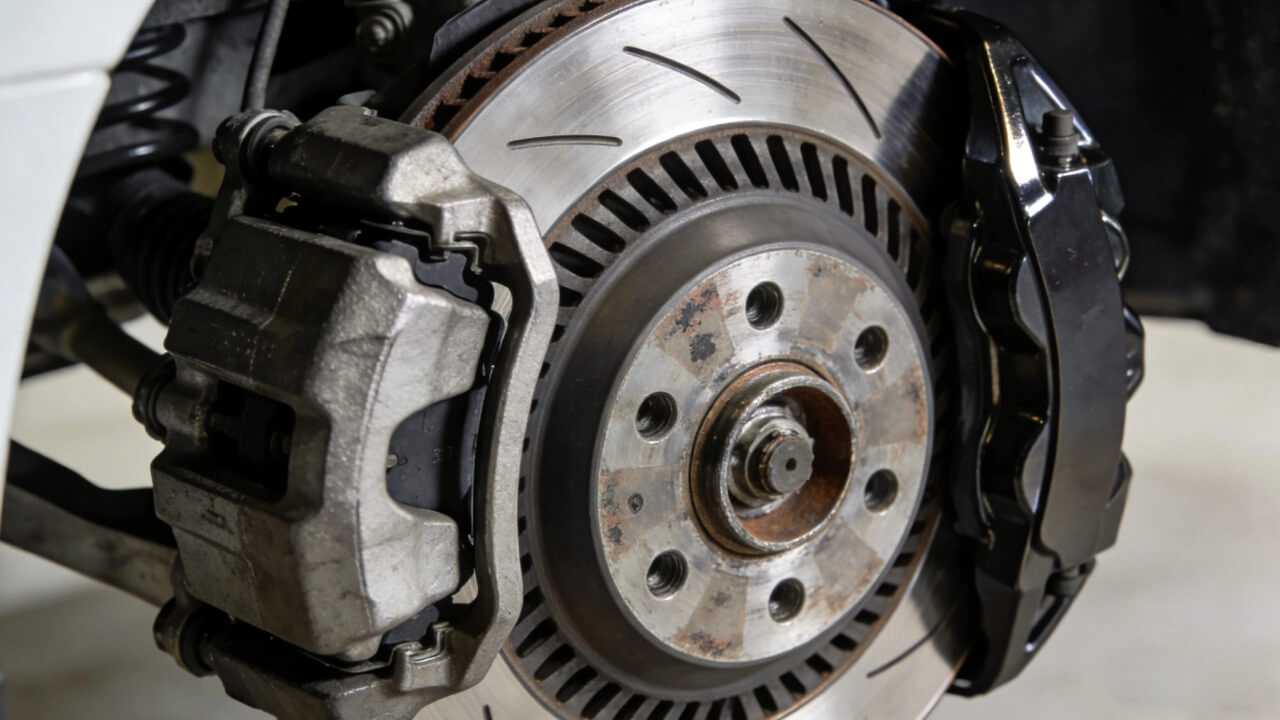
Additionally, riding the brakes generates extreme heat, causing brake fade or total system failure, leaving the driver unable to slow the rig safely. Overly sensitive trailer brakes can also lock up, creating sudden lateral movement and instability.
To prevent accidents, drivers should brake smoothly and early, anticipate stops, and use the trailer brake controller to gently slow the trailer. During sway, avoid slamming the brakes, keep the steering wheel steady, and ease off the gas. Proper gain adjustment and independent braking are essential for maintaining stability and preventing catastrophic rollovers on highways.
10. Ignoring Environmental Factors and Wind: A Major Cause of Trailer Rollovers
High-profile trailers, such as RVs or horse trailers, are particularly vulnerable to wind because their large side surfaces act like sails. Sudden crosswinds or the “bow wave” of air from passing semi-trucks can shove a trailer 12 to 18 inches in an instant. This abrupt lateral force can initiate sway that quickly escalates into a rollover.
The vacuum created between two large vehicles can pull the trailer toward the other vehicle and then push it back violently, creating uncontrollable pendulum-like motion. Ignoring weather conditions, such as high-wind advisories, exposes drivers to extreme risk, even with properly loaded trailers, because a strong gust can exceed the trailer’s stability threshold.
Wind gusts at interstate speeds can lift the tires on the windward side of a trailer, reducing traction and amplifying sway. Sudden gusts and turbulence from passing trucks create a whip-like effect, causing the trailer to swing side-to-side.
The faster the speed, the greater the aerodynamic forces, making it difficult for drivers to correct or counter the movement. Environmental hazards like open bridges, plains, or gaps in tree lines can expose trailers to stronger gusts than expected, often catching drivers off guard.
Ignoring wind becomes especially dangerous when combined with other factors like poor weight distribution or speeding. Trailers can jackknife or roll over before the driver has time to respond. Experts recommend proactively reducing speed to under 65 mph in windy conditions and pulling over safely if gusts exceed 40 mph.
Steering into gusts and anticipating turbulence from passing vehicles are essential to maintain control and prevent catastrophic rollovers. Proper awareness of environmental factors is as critical as correct loading and braking techniques.
Preventing trailer rollovers requires careful preparation, constant attention, and knowledge of safe towing practices. The 10 mistakes discussed in this guide show how easily stability can be lost on the interstate. Safe towing depends on managing load balance, tire health, hitch security, and braking performance while controlling speed and responding to environmental factors.
Following these best practices allows drivers to maintain control, minimize sway, and prevent jackknifing or rollovers. Awareness, deliberate handling, and regular maintenance make towing predictable and safe.
By addressing weight distribution, speed, tire condition, braking technique, and environmental hazards, drivers can significantly reduce the risk of accidents. Applying these principles ensures the trailer and tow vehicle remain stable, giving drivers confidence and safety while traveling at high speeds on the interstate.
Also read: 10 Cars in 2026 With the Most Reliable Hybrid Systems
