
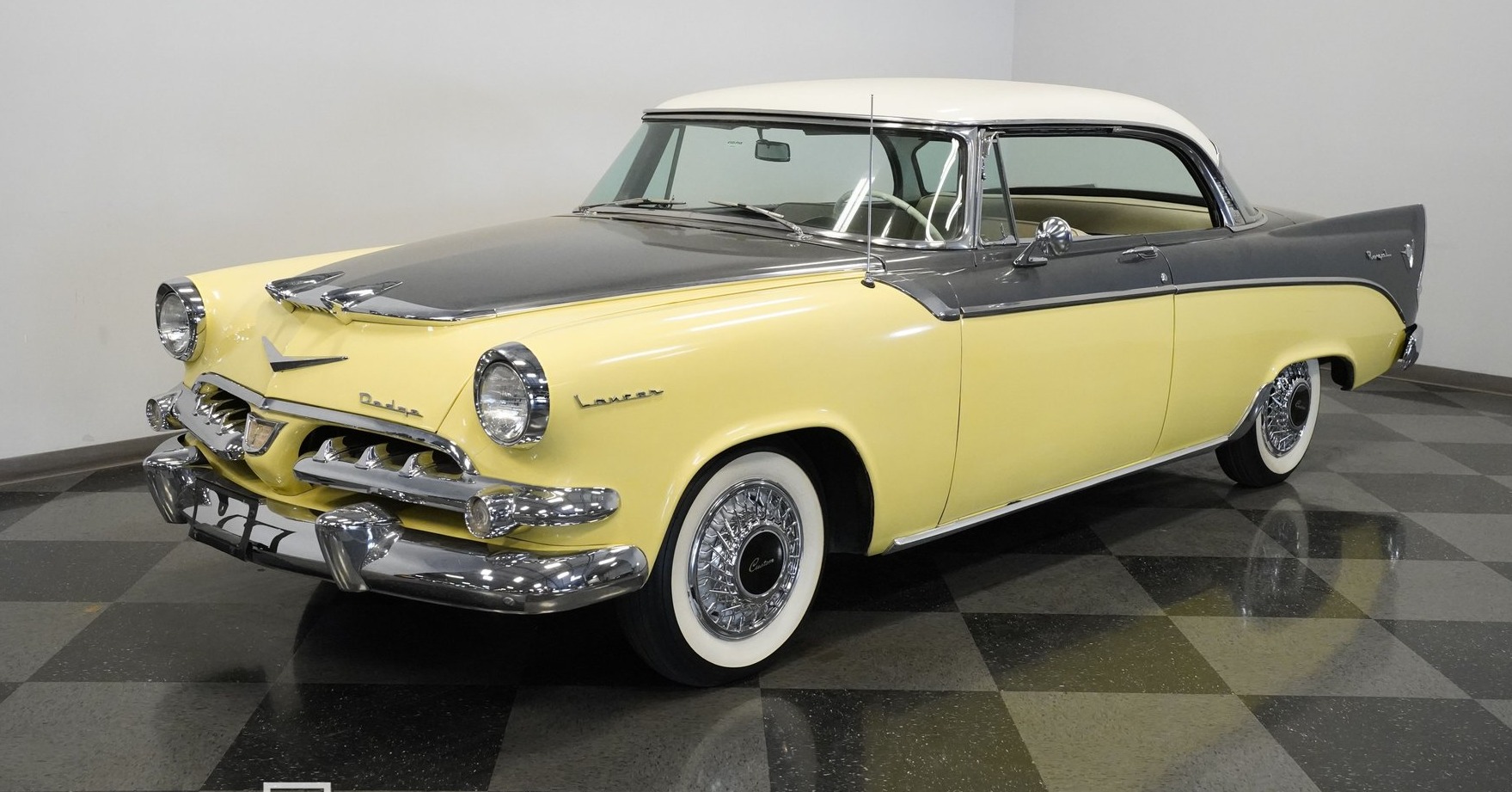
Step into the 1950s, and one thing becomes immediately clear: cars were no longer just transportation. They were statements of style, personality, and optimism. Postwar America embraced bold design, and automakers responded with vibrant colors, sweeping chrome, and perhaps most memorable of all, striking two-tone paint schemes.
These combinations turned everyday vehicles into rolling works of art, with contrasting hues highlighting body lines and adding visual excitement from every angle. During this decade, the rise of suburbia, growing highway systems, and increased consumer confidence created the perfect environment for experimentation in automotive design.
Manufacturers competed not only on performance and comfort but also on appearance. A well-chosen two-tone finish could make a car feel longer, lower, and more luxurious, even before a single mile was driven.
What made these paint jobs so special was how they complemented the sculpted shapes of the era. Designers used color breaks to emphasize fins, accent curves, and draw attention to chrome trim. Each combination told a story, whether it leaned toward elegance, sportiness, or pure fun.
This page highlights eight classic vehicles whose two-tone finishes helped define the decade’s visual identity. These cars did more than follow trends. They set them. From elegant cruisers to bold statement pieces, each model captured the spirit of its time in a way that still turns heads today.
1. 1955 Chevrolet Bel Air Hardtop Coupe
Estimated Price: $40,000 – $80,000
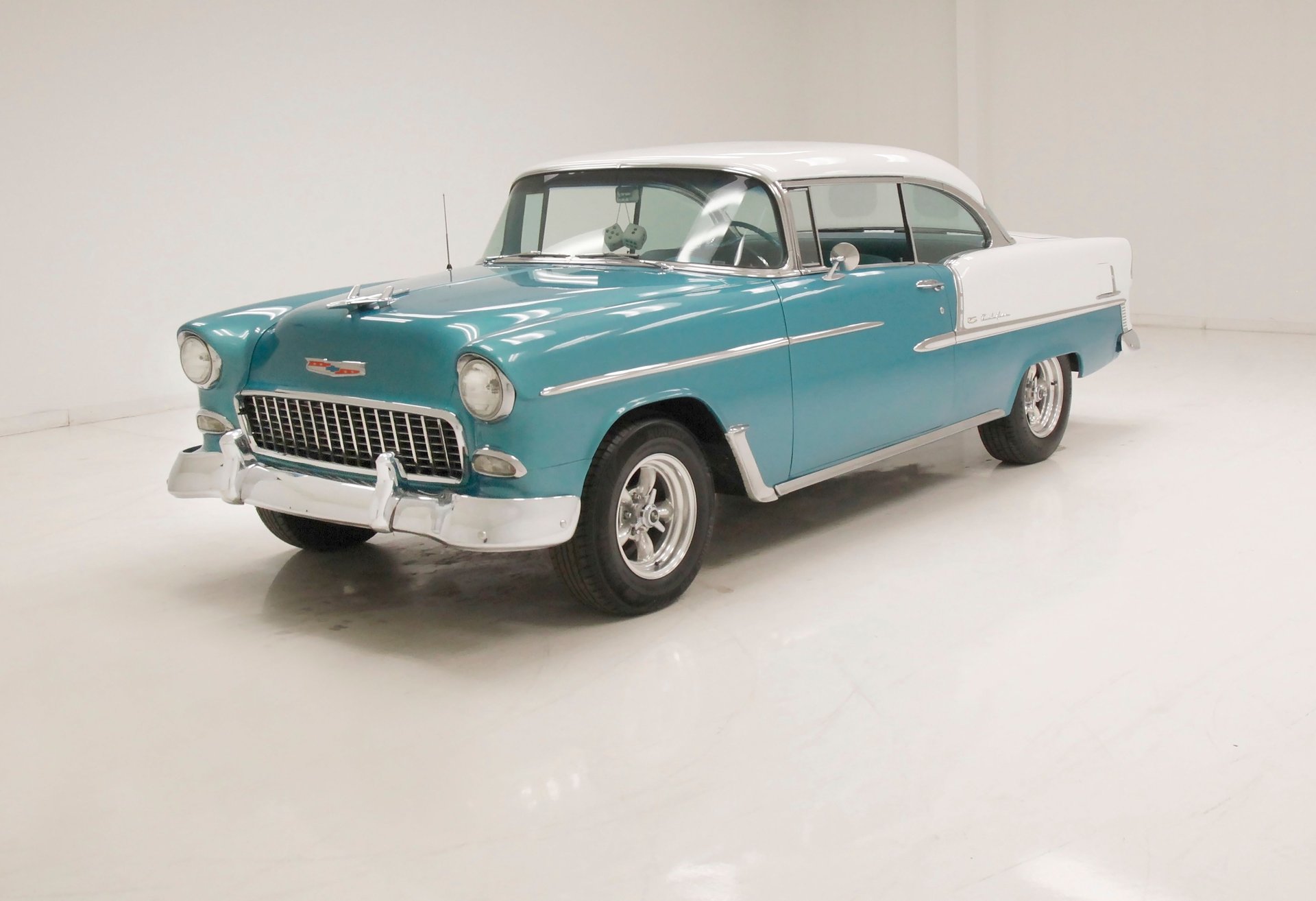
The 1955 Chevrolet Bel Air Hardtop Coupe remains one of the clearest expressions of mid-twentieth-century American automotive styling, particularly when presented in its well-known two-tone paint arrangements. Chevrolet successfully combined affordability with visual appeal, ensuring that this model attracted buyers who desired both practicality and aesthetic distinction.
A Bel Air finished in turquoise and white immediately conveys the lively character associated with the 1950s. The pairing reflects a period marked by optimism and a willingness to embrace colour in everyday life. Designers carefully incorporated a sweeping chrome side trim that separated the two tones, forming a continuous line that extended from the front fender to the rear section.
This arrangement was not merely decorative; it introduced a visual rhythm that suggested motion even when the vehicle remained stationary. Closer examination reveals a thoughtful use of materials and finishes. Chrome detailing interacts with the contrasting paint surfaces, producing reflections that enhance the car’s presence.
In many configurations, the roof carries a different colour from the main body, which introduces a layered appearance. This approach gives the vehicle added depth and reinforces the perception of careful craftsmanship.
Beyond its outward appearance, the Bel Air delivered meaningful mechanical advancement. Chevrolet introduced its small-block V8 engine during this period, providing improved performance and reliability. This development strengthened the model’s appeal, as buyers could enjoy both visual elegance and dependable engineering in a single package.
Attention must also be given to how the two-tone scheme contributes to the vehicle’s proportions. A lighter shade applied to the upper section creates the impression of a lower roofline, while a darker lower portion establishes visual stability.
This deliberate use of colour enhances the entire balance of the design without creating unnecessary distraction. Collectors and historians continue to regard the 1955 Bel Air as a benchmark for tasteful automotive styling.
The choice of colour combination often determines how the vehicle is perceived, with some pairings presenting a reserved character and others expressing greater boldness. Each variation reflects the preferences of its original owner while remaining consistent with the design principles of the era.
The enduring appeal of this model lies in its ability to harmonise form, colour, and engineering. Its two-tone finishes serve not only as decoration but as an integral component of its identity, ensuring that the Bel Air remains a lasting symbol of 1950s automotive design.
2. 1957 Ford Fairlane 500 Skyliner
Estimated Price: $50,000 – $90,000
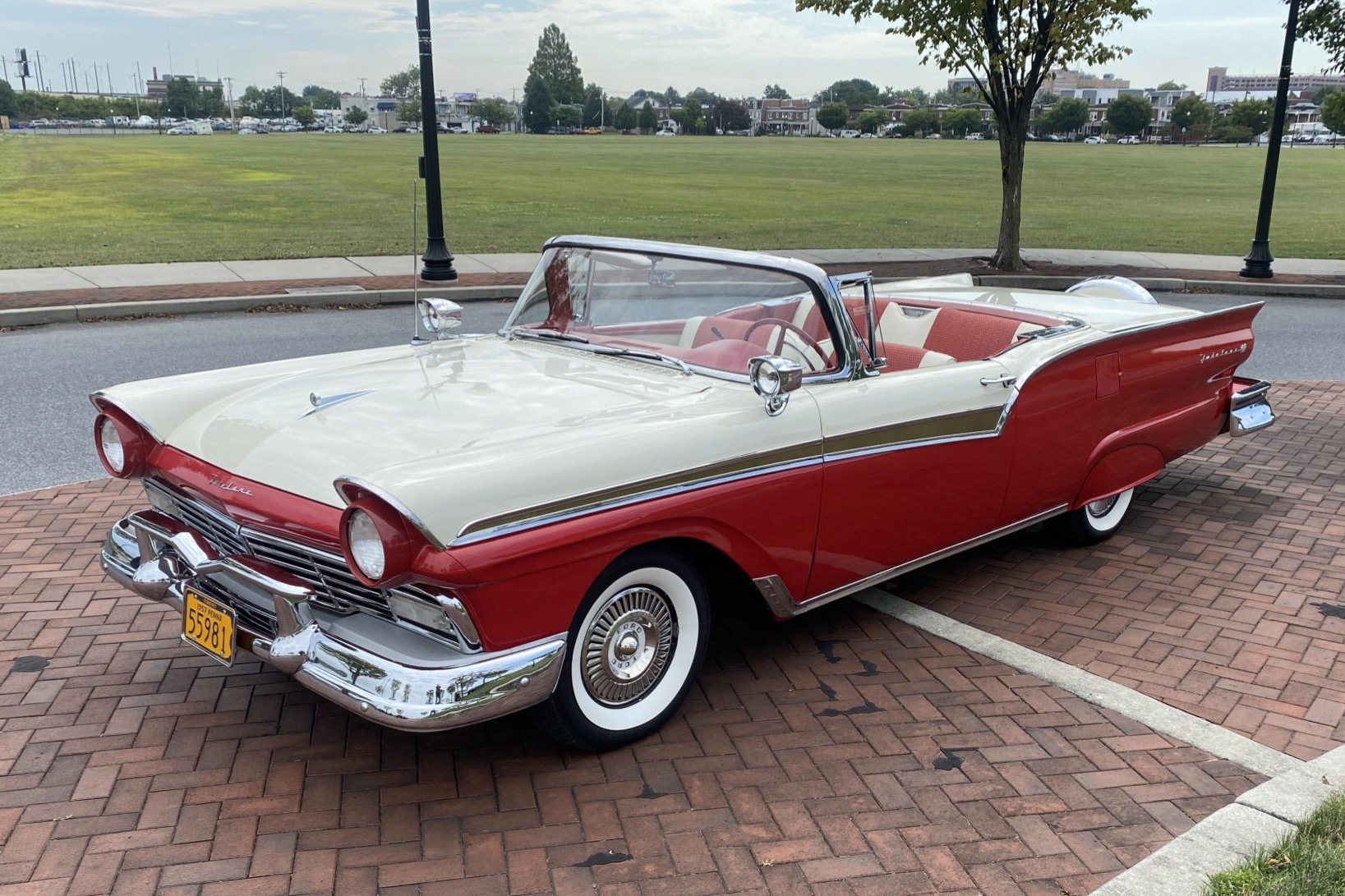
The 1957 Ford Fairlane 500 Skyliner stands as a remarkable example of innovation combined with expressive styling. Its retractable metal roof distinguished it from other vehicles of its time, while its carefully executed two-tone paint schemes reinforced its strong visual presence.
Observation of the Skyliner in motion presents a striking image, particularly when finished in red and white. The transformation of the roof as it retracts into the rear compartment adds a sense of spectacle, complemented by the contrasting colours that emphasise the car’s structure. The division between the tones follows the contours of the body, ensuring that the design appears cohesive rather than fragmented.
Colour selection for this model was intentionally varied. Buyers could choose from combinations that conveyed restraint or boldness, depending on personal preference. The generous dimensions of the Skyliner provided an expansive surface for these colour treatments, allowing designers to create visually engaging compositions without compromising balance.
Interior design received equal attention. Upholstery and trim were often coordinated with the exterior paint, producing a unified appearance throughout the vehicle. This consistency reflects a disciplined approach to design, where each element contributes to a singular visual identity. Owners experienced a sense of completeness, as both interior and exterior communicated the same aesthetic intention.
From a structural standpoint, the two-tone arrangement served a practical purpose. By dividing the body into distinct sections, the design reduced the vehicle’s visual weight. This made the Skyliner appear more refined and proportionate despite its substantial size. Such use of colour demonstrates a clear understanding of visual perception within automotive design.
Mechanical ingenuity also defines the Skyliner. The retractable roof system required precise engineering, involving multiple components working in coordination. This feature alone set the vehicle apart in a competitive market, attracting attention from buyers who valued innovation.
Collectors frequently regard the Skyliner as a representation of ambition within the automotive industry. Its combination of advanced engineering and carefully considered styling reflects a period when manufacturers pursued new ideas with confidence.
The two-tone paint schemes remain central to its identity, reinforcing the connection between technical achievement and visual expression.
Also Read: Top 10 Most Famous Classic Cars From Television History
3. 1956 Oldsmobile Ninety-Eight Holiday Coupe
Estimated Price: $35,000 – $70,000
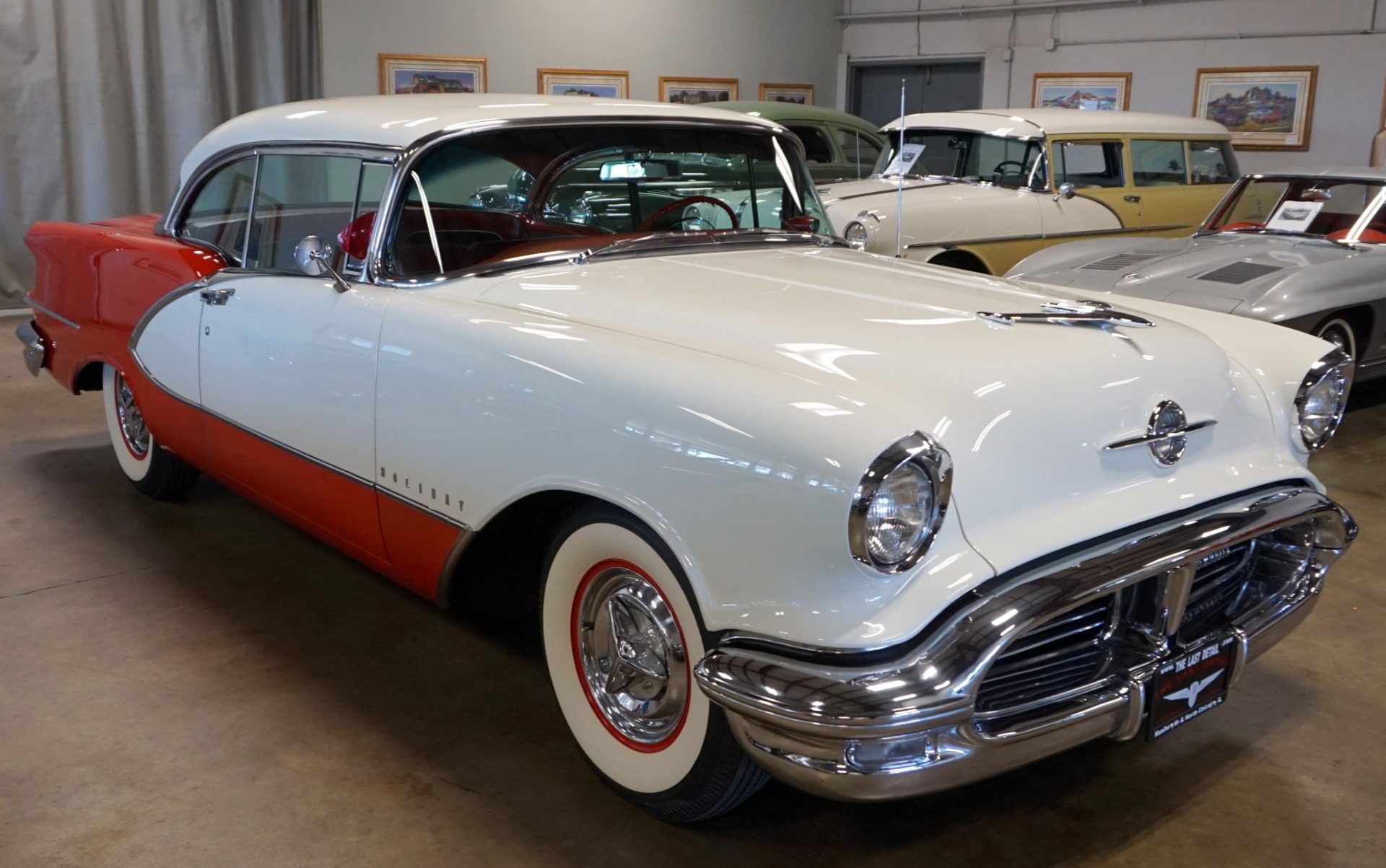
The 1956 Oldsmobile Ninety-Eight Holiday Coupe represents a refined interpretation of mid-century automotive luxury, combining advanced comfort with a carefully executed visual identity. Its two-tone paint treatment was central to its appeal, serving as more than a decorative feature and contributing directly to its distinguished character.
A common and highly regarded colour arrangement involved a deep black body paired with a soft ivory roof. This combination projected a sense of quiet sophistication while still reflecting the lively design culture of the 1950s. Designers at Oldsmobile employed polished chrome trim to mark the boundary between the two colours, producing a clean division that enhanced clarity without interrupting the natural flow of the body.
Attention naturally follows the vehicle’s elongated profile. The two-tone application accentuates its sweeping lines, guiding the observer’s eye from the front fascia through to the rear section. This deliberate emphasis on continuity gives the car an elegant presence, demonstrating a disciplined approach to styling.
Material selection and craftsmanship become evident upon closer inspection. The paint finish interacts with chrome detailing to produce subtle reflections, adding depth to the entire appearance. Each surface appears carefully considered, ensuring that the visual composition remains balanced and coherent.
Within the cabin, the commitment to luxury continues. Upholstery materials are selected to complement the exterior colours, often reflecting similar tones and textures. This coordination establishes a sense of unity, allowing occupants to experience a consistent design theme throughout the vehicle. Seating comfort, combined with thoughtful interior layout, reinforces the car’s status as a premium offering.
Mechanical performance also contributes to the model’s reputation. Equipped with a capable V8 engine, the Ninety-Eight Holiday Coupe delivers smooth and reliable operation. This ensures that the vehicle’s visual appeal is supported by a driving experience that meets expectations for refinement and capability.
Collectors and automotive historians frequently highlight the importance of the two-tone finish in defining this model. Rather than relying solely on bright or dramatic colours, the design uses measured variation to achieve visual interest. The interplay between light and dark tones establishes balance, allowing the car to present itself with confidence and restraint.
The enduring appreciation for this Oldsmobile lies in its ability to combine elegance with thoughtful engineering. Its two-tone paint scheme remains an essential aspect of its identity, reflecting a period when careful design decisions shaped vehicles that continue to command respect many decades later.
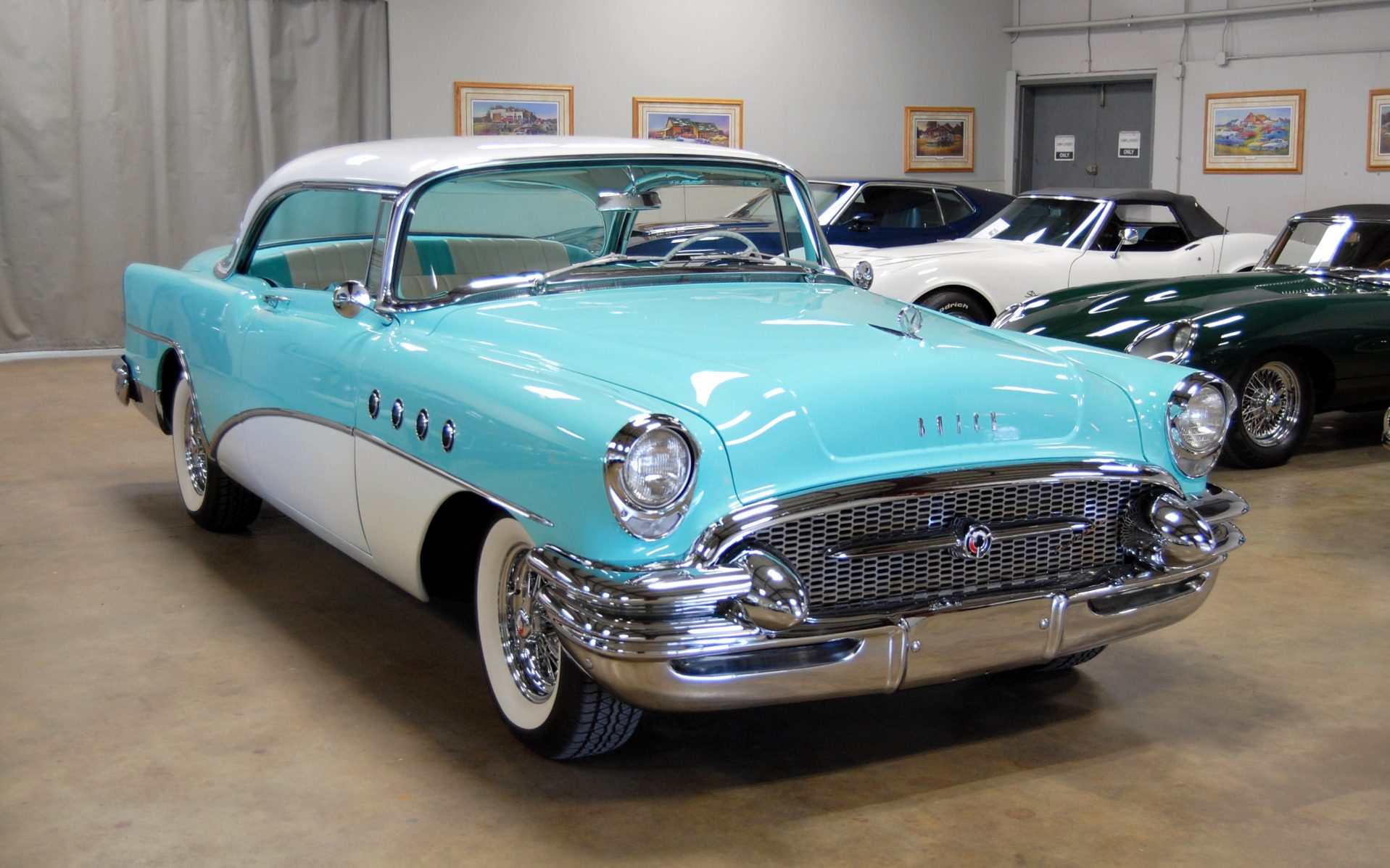
4. 1955 Buick Roadmaster Riviera Coupe
Estimated Price: $45,000 – $85,000
The 1955 Buick Roadmaster Riviera Coupe stands as a compelling example of mid-century American automotive design, distinguished by its commanding presence and carefully structured styling. Its two-tone paint arrangements played a decisive role in shaping its visual identity, enhancing both form and proportion.
A typical presentation might feature a rich green body combined with a lighter upper section. This pairing directs attention to the vehicle’s sweeping roofline while emphasising its sculpted surfaces. Buick designers demonstrated a clear understanding of how colour could be applied to reinforce structural elements, ensuring that each component contributed to a unified appearance.
Movement around the vehicle reveals a deliberate relationship between paint and form. The line separating the two colours follows the natural contours of the body, creating a seamless transition from front to rear. This approach avoids unnecessary visual interruption, allowing the design to maintain clarity while still presenting a strong impression.
Chrome detailing serves as an important unifying element. Carefully positioned trim outlines the colour divisions and introduces brightness that complements the paintwork. Each piece appears intentionally placed, supporting the entire composition without creating excess.
Close observation highlights the interaction between light and surface. The contrasting tones respond differently to changing lighting conditions, adding dimension to the vehicle’s profile. This effect enhances the Roadmaster’s presence, giving it a sense of depth that remains engaging from various angles.
Within the interior, attention to comfort and coordination is evident. Spacious seating arrangements provide ease for occupants, while materials and finishes reflect the exterior palette. This continuity ensures that the design remains consistent throughout the vehicle, reinforcing its identity as a cohesive whole.
Engineering considerations also support the Roadmaster’s appeal. Its construction and mechanical systems were developed to deliver reliable performance alongside visual distinction. This balance ensures that the car meets expectations beyond appearance alone.
From the perspective of collectors, the two-tone finish is integral to the Roadmaster’s lasting appeal. It transforms an already substantial vehicle into a memorable representation of its era. The careful combination of size, colour, and detailing reflects a disciplined approach to automotive design, demonstrating how thoughtful execution can produce a lasting impression.
The Buick Roadmaster Riviera Coupe remains a strong example of how colour and form can be harmonised effectively. Its two-tone schemes continue to be admired as expressions of creativity and precision, preserving its place within the history of automotive design.
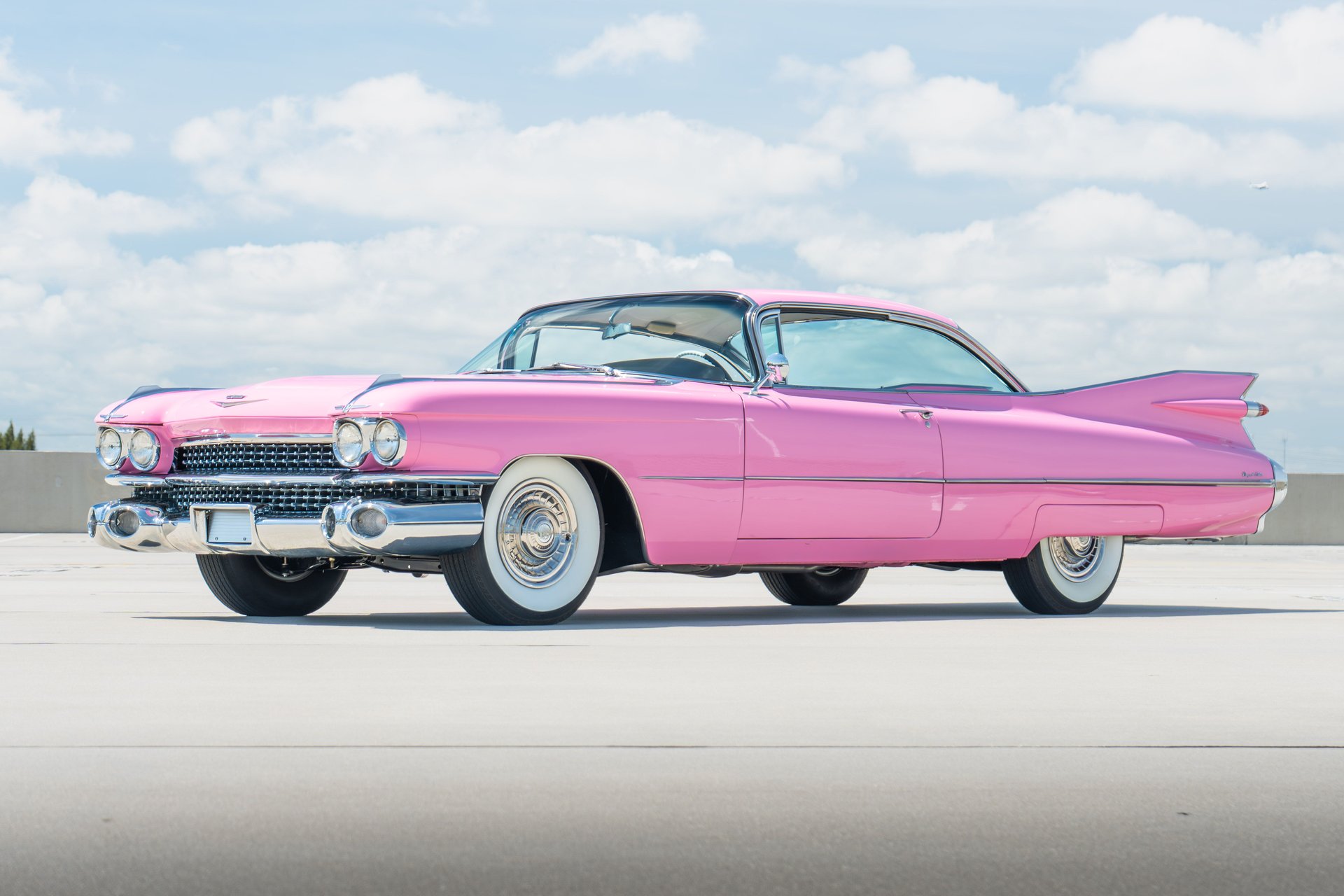
5. 1959 Cadillac Coupe de Ville
Estimated Price: $60,000 – $120,000
The 1959 Cadillac Coupe de Ville stands as a powerful representation of late-1950s automotive styling, distinguished by its confident use of form, scale, and colour. Its dramatic tailfins and elongated body lines already ensured a commanding presence, yet the introduction of carefully arranged two-tone paint schemes elevated its visual impact to an even higher level.
A typical configuration might present a soft pink body combined with a clean white roof. This pairing reflects the optimism and creative direction associated with the period, offering a refined yet expressive appearance.
Cadillac designers applied polished chrome strips to separate the colours, ensuring a clear boundary that preserved harmony across the entire structure. Each shade retained its identity while contributing to a balanced composition.
Every section of the Coupe de Ville benefits from this thoughtful arrangement. The lighter tone applied to the upper portion draws attention upward, reinforcing the height and prominence of the tailfins. At the same time, the deeper colour along the lower body establishes a sense of stability, grounding the vehicle visually. This distribution of tones creates a poised stance that feels both elegant and assertive.
Closer inspection reveals the relationship between paint and detailing. Chrome accents trace the contours of the body, reflecting light and enhancing the vehicle’s dimensional quality. The separation between colours follows the natural lines of the design, ensuring that the transition appears deliberate and well integrated rather than arbitrary.
Within the cabin, the same level of attention is evident. Seating materials, trim elements, and colour choices align with the exterior scheme, creating a unified environment. Passengers experience a sense of refinement that extends beyond appearance, supported by thoughtful arrangement and quality materials. Cadillac intended to provide not merely transportation but a complete expression of comfort and prestige.
From a mechanical perspective, the Coupe de Ville delivered dependable performance consistent with its status. Its engineering complemented its visual appeal, ensuring that the driving experience matched expectations set by its exterior presentation.
Collectors continue to value the two-tone configurations associated with this model, as they define its identity in a manner that single-colour finishes cannot achieve. The careful pairing of hues transforms the vehicle into a striking representation of its era.
Through its combination of bold styling and disciplined execution, the 1959 Coupe de Ville remains a lasting example of how colour and form can work together to produce a memorable automotive design.
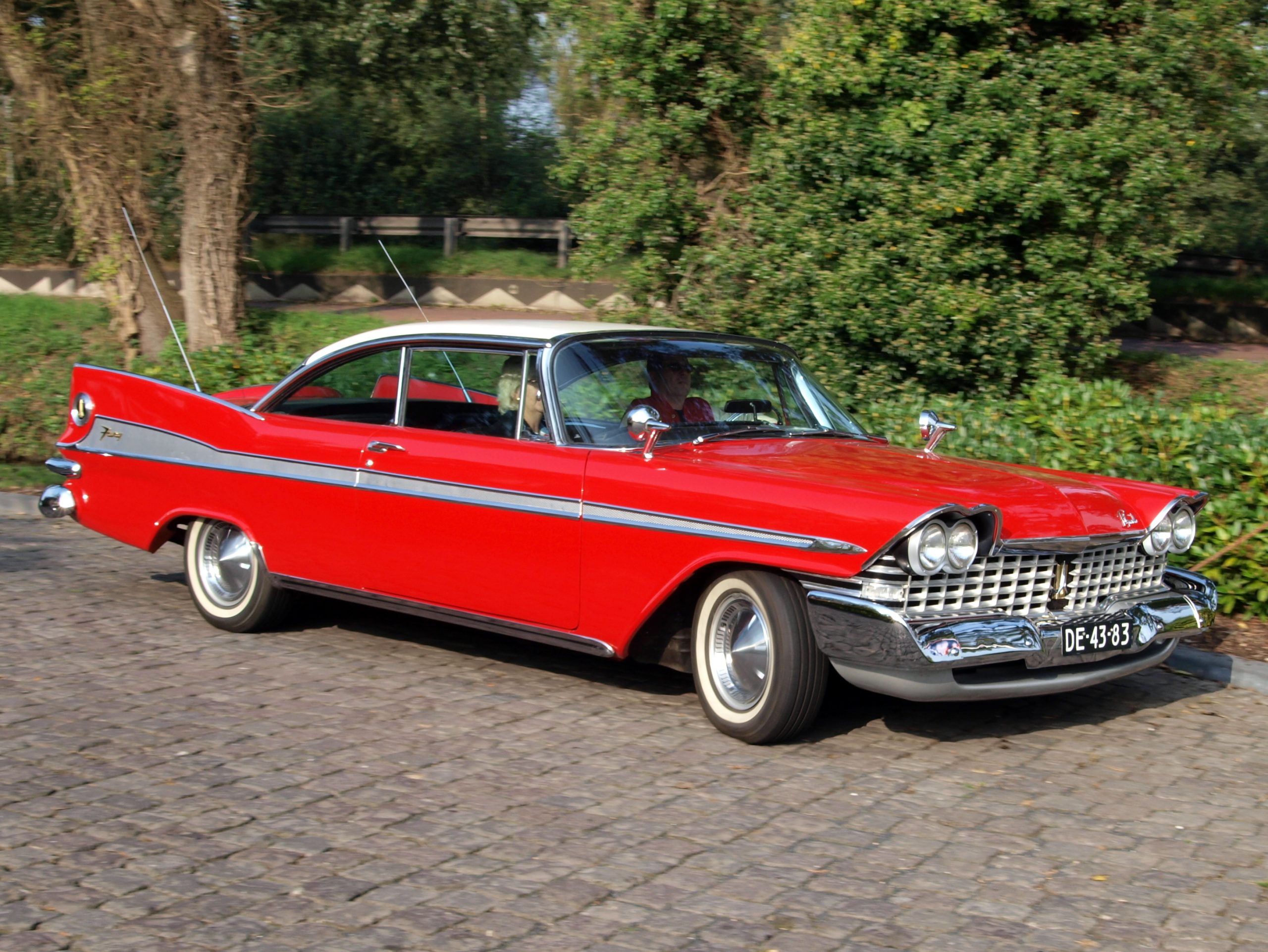
6. 1958 Plymouth Fury
Estimated Price: $70,000 – $150,000
The 1958 Plymouth Fury offers a distinctive interpretation of 1950s automotive styling, combining performance capability with a carefully restrained visual approach. Its two-tone paint scheme played an essential role in establishing its identity, setting it apart from other vehicles that relied on brighter and more varied colour combinations.
A widely recognised presentation features a cream-coloured body accented by gold detailing. This pairing conveys a sense of refinement while still reflecting the creative direction of the decade. Plymouth selected this arrangement with intention, providing the Fury with a character that balanced elegance and individuality without resorting to excessive ornamentation.
Gold accents are central to the vehicle’s appearance. They trace the body lines and emphasise its proportions, drawing attention to the car’s structure in a measured manner. Rather than overwhelming the design, these accents enhance clarity, demonstrating a disciplined approach to styling that prioritises balance.
Observation from a side profile reveals the effectiveness of this strategy. The vehicle’s clean lines are allowed to remain prominent, supported by the subtle interplay between the primary colour and its accents. This results in a presentation that feels composed and refined, offering an alternative to more elaborate designs of the period.
Interior treatment follows the same philosophy. Materials and finishes reflect the exterior palette, ensuring continuity throughout the vehicle. Seating surfaces, trim, and detailing are coordinated to create a cohesive environment that aligns with the car’s entire identity. This consistency contributes to a sense of completeness that enhances the ownership experience.
Performance characteristics also contribute to the Fury’s appeal. Equipped with a capable engine, the car delivers strong acceleration and reliable operation. This ensures that its visual qualities are matched by functional capability, providing a well-rounded driving experience.
Enthusiasts and collectors often recognise the value of the Fury’s restrained two-tone approach. It demonstrates that visual impact can be achieved through careful selection and placement of colour rather than reliance on bold or excessive combinations. The balance between subtlety and expression allows the vehicle to maintain a distinct presence while preserving a sense of refinement.
The 1958 Plymouth Fury remains an important example of how thoughtful design can produce lasting appeal. Its two-tone scheme, defined by precision and restraint, continues to be appreciated as a reflection of disciplined styling within a period known for creative expression.
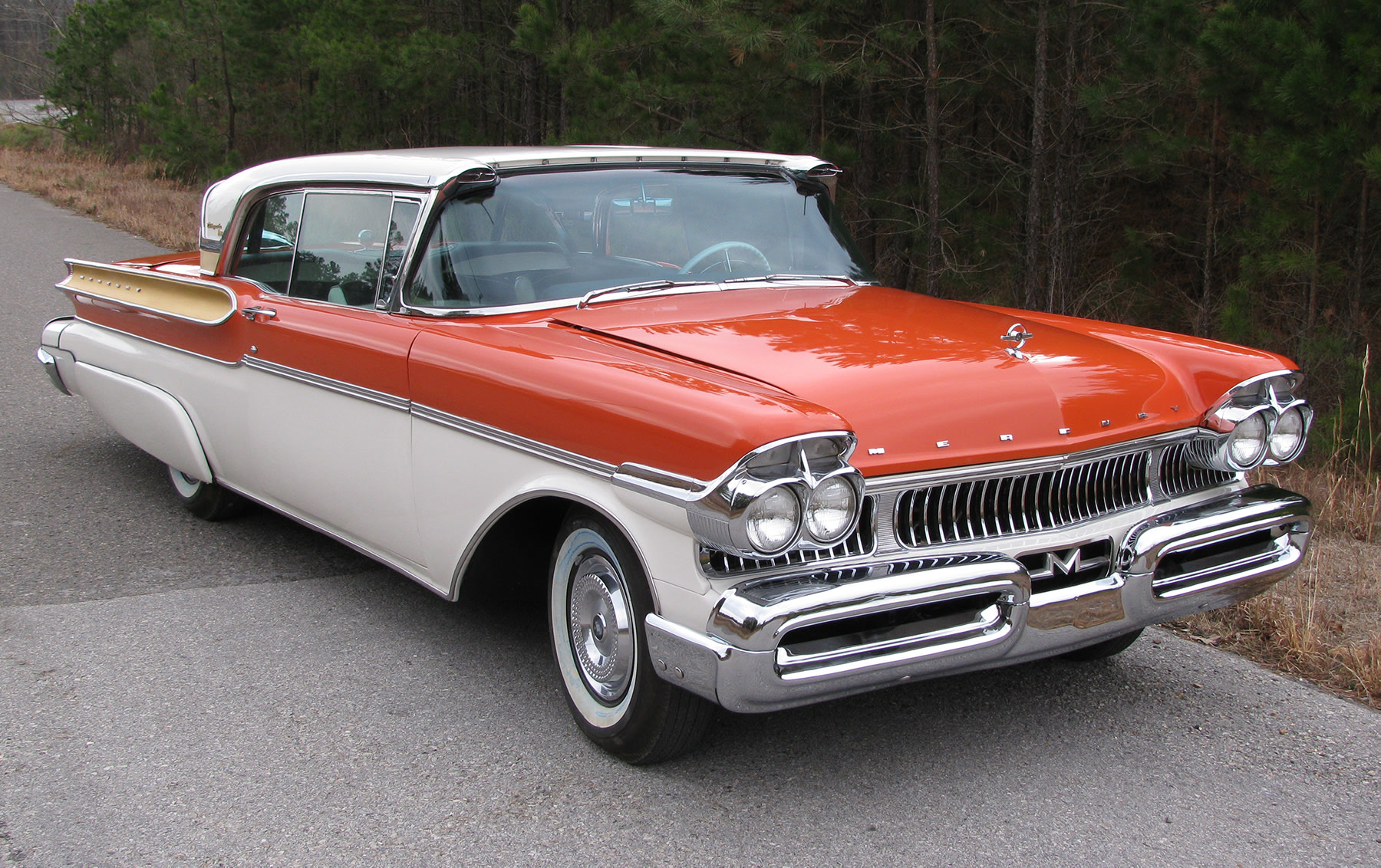
7. 1957 Mercury Turnpike Cruiser
Estimated Price: $30,000 – $65,000
The 1957 Mercury Turnpike Cruiser represents a distinctive blend of technical innovation and expressive styling within the late 1950s automotive industry. Its design incorporated advanced features alongside carefully executed visual elements, with the two-tone paint scheme serving as a central component of its identity.
A common and effective colour arrangement features a deep blue lower body combined with a lighter roof section. This pairing emphasises the vehicle’s elongated silhouette while introducing a sense of visual movement. Mercury designers applied chrome trim to define the boundary between the colours, ensuring that the separation remained precise and orderly. The result is a structured appearance that reinforces the vehicle’s proportions.
Attention is naturally drawn to the Turnpike Cruiser’s unique design features, including its breezeway rear window and sweeping body lines. The two-tone finish enhances these characteristics by guiding the observer’s eye along the vehicle’s profile. Each colour is selected and positioned with purpose, contributing to a coherent and well-resolved composition.
Observation from different angles reveals how light interacts with the painted surfaces. The two tones respond differently to changing illumination, creating subtle variation that adds depth to the entire presentation. This effect ensures that the vehicle maintains visual interest whether in motion or at rest, giving it a presence that feels dynamic without requiring excessive ornamentation.
Interior design reflects the same level of consideration. The cabin provides generous seating space and incorporates details intended to improve comfort during extended travel. Materials and finishes are often coordinated with the exterior colour scheme, reinforcing a consistent design language throughout the vehicle. This continuity strengthens the connection between external appearance and internal environment.
Engineering considerations also contribute to the model’s appeal. The Turnpike Cruiser was developed with features aimed at improving driving convenience and passenger comfort, reflecting Mercury’s commitment to innovation during this period. These attributes complement the visual design, ensuring that the vehicle delivers both functional and aesthetic value.
From a collector’s perspective, the Turnpike Cruiser is appreciated for its individuality. Its two-tone paint schemes are not merely decorative additions but integral elements that define its character. The careful relationship between colour, form, and detail ensures that the vehicle remains recognisable and respected many years after its introduction.
The enduring appeal of this model lies in its ability to combine inventive engineering with disciplined styling. Its two-tone presentation continues to be regarded as a thoughtful expression of mid-century automotive design, demonstrating how colour can be used effectively to enhance both structure and identity.
Also Read: Top 10 Classic Cars That Look Best in Bright Primary Colors
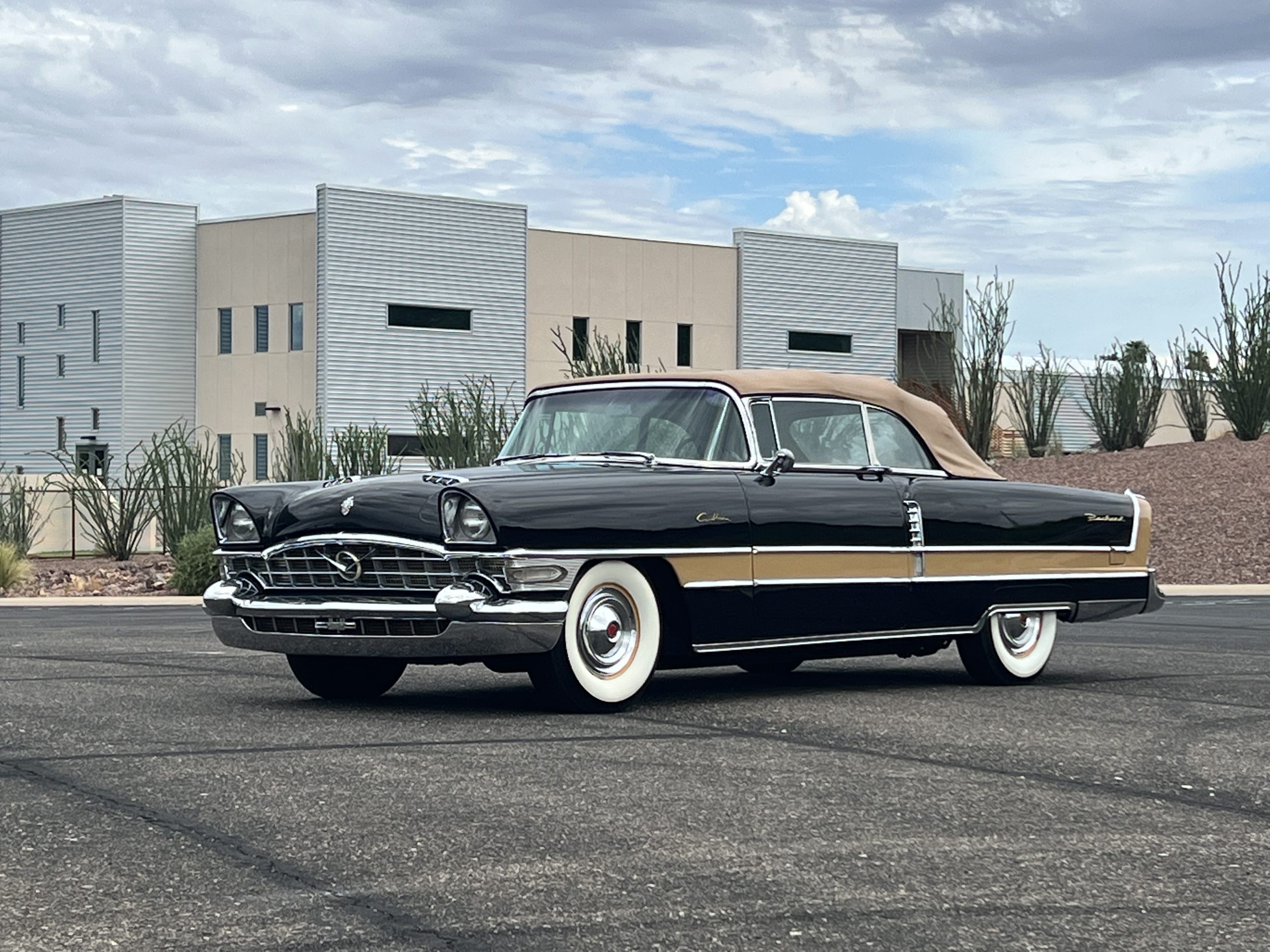
8. 1956 Packard Caribbean Convertible
Estimated Price: $90,000 – $180,000
The 1956 Packard Caribbean Convertible stands as a refined example of luxury automotive craftsmanship, distinguished by its confident use of colour and attention to detail. While the model is widely associated with three-tone finishes, its two-tone variations remain equally compelling, offering a balanced approach to visual expression.
A typical configuration might present a deep blue body paired with a lighter complementary section. This arrangement highlights the vehicle’s graceful lines while introducing variation that enhances its entire appearance. Packard designers approached colour placement with precision, ensuring that each tone contributed to a harmonious composition.
Close observation reveals the role of chrome detailing in defining the paint scheme. Trim elements outline the boundaries between colours, adding clarity and brightness. These features do not appear excessive; rather, they are carefully integrated into the design, supporting the relationship between colour and form.
Viewed from certain perspectives, the Caribbean Convertible takes on a sculptural quality. The interaction between light and the painted surfaces emphasises its curves, giving the vehicle a refined yet confident presence. This effect reflects the level of planning involved in its design, where each element is considered in relation to the whole.
The interior continues the theme of coordinated luxury. High-quality materials are selected to complement the exterior palette, creating a cohesive environment for occupants. Seating, trim, and detailing work together to provide comfort while maintaining visual consistency. This unified approach reinforces the vehicle’s identity as a carefully crafted product.
Mechanical capability also supports the model’s reputation. The Caribbean Convertible was equipped with features intended to deliver smooth and reliable performance, ensuring that its visual appeal is matched by practical functionality. This combination of style and engineering contributes to its lasting recognition.
Collectors often value this model for its confident approach to colour application. The two-tone schemes provide a balance between elegance and expressive design, allowing the vehicle to stand out without relying on excessive variation. Each combination reflects a thoughtful selection process, demonstrating how colour can enhance proportion and character.
The Packard Caribbean Convertible remains a respected example of mid-century automotive design. Its two-tone finishes serve as a reminder of a period when manufacturers invested considerable effort in achieving harmony between visual presentation and mechanical excellence. Through its careful execution, the model continues to hold a place of distinction among classic automobiles.
