
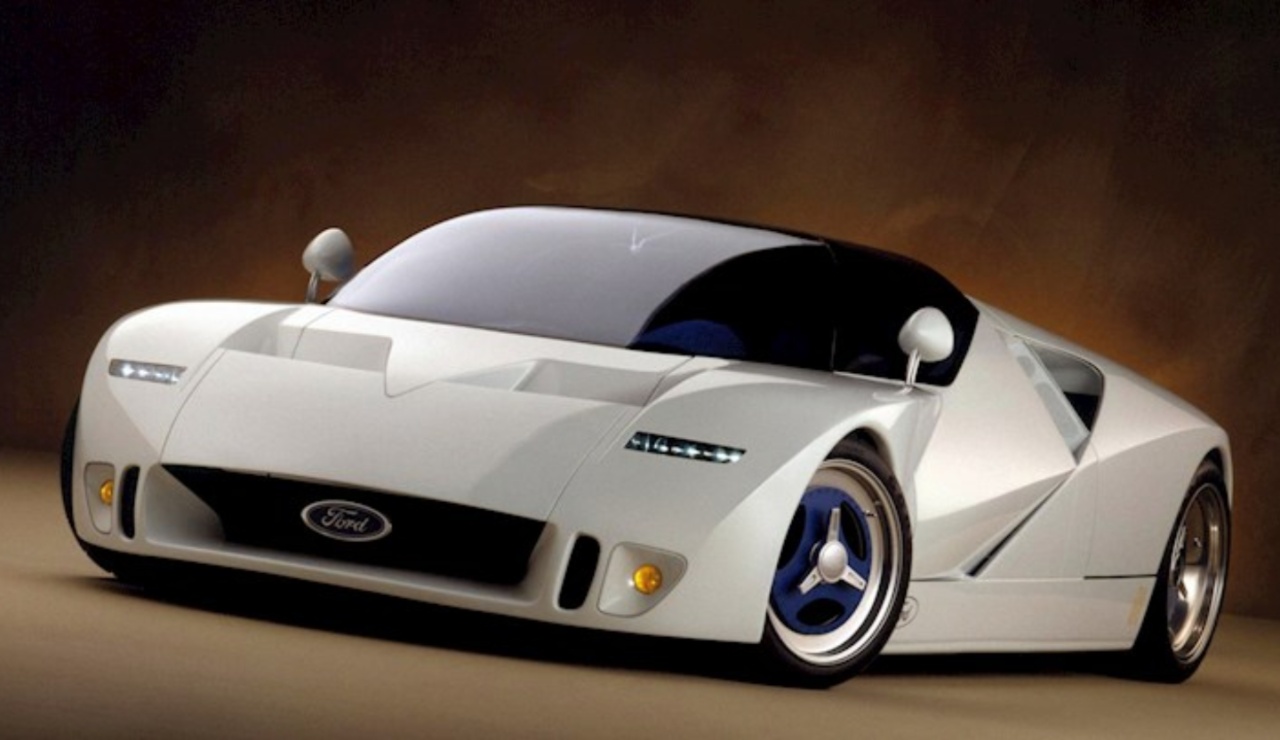
The 1990s marked a bold chapter in automotive history, where imagination and engineering collided to create some of the most ambitious concept cars ever built. In “10 Concept Cars From the 1990s That Should Have Reached Production,” we explore machines that pushed limits but never reached the road.
At the forefront is the Ford GT90, an extraordinary creation from Ford that showcased radical styling and immense quad-turbo V12 power. These vehicles were not simple showpieces. They were fully operational prototypes packed with forward-thinking technology, advanced materials, and daring design philosophies.
Each one represented a serious attempt to redefine performance and innovation during a rapidly evolving decade. Although business realities ultimately kept them from production, their influence continues to echo through modern automotive design, proving that even unrealized projects can shape the direction of future cars.
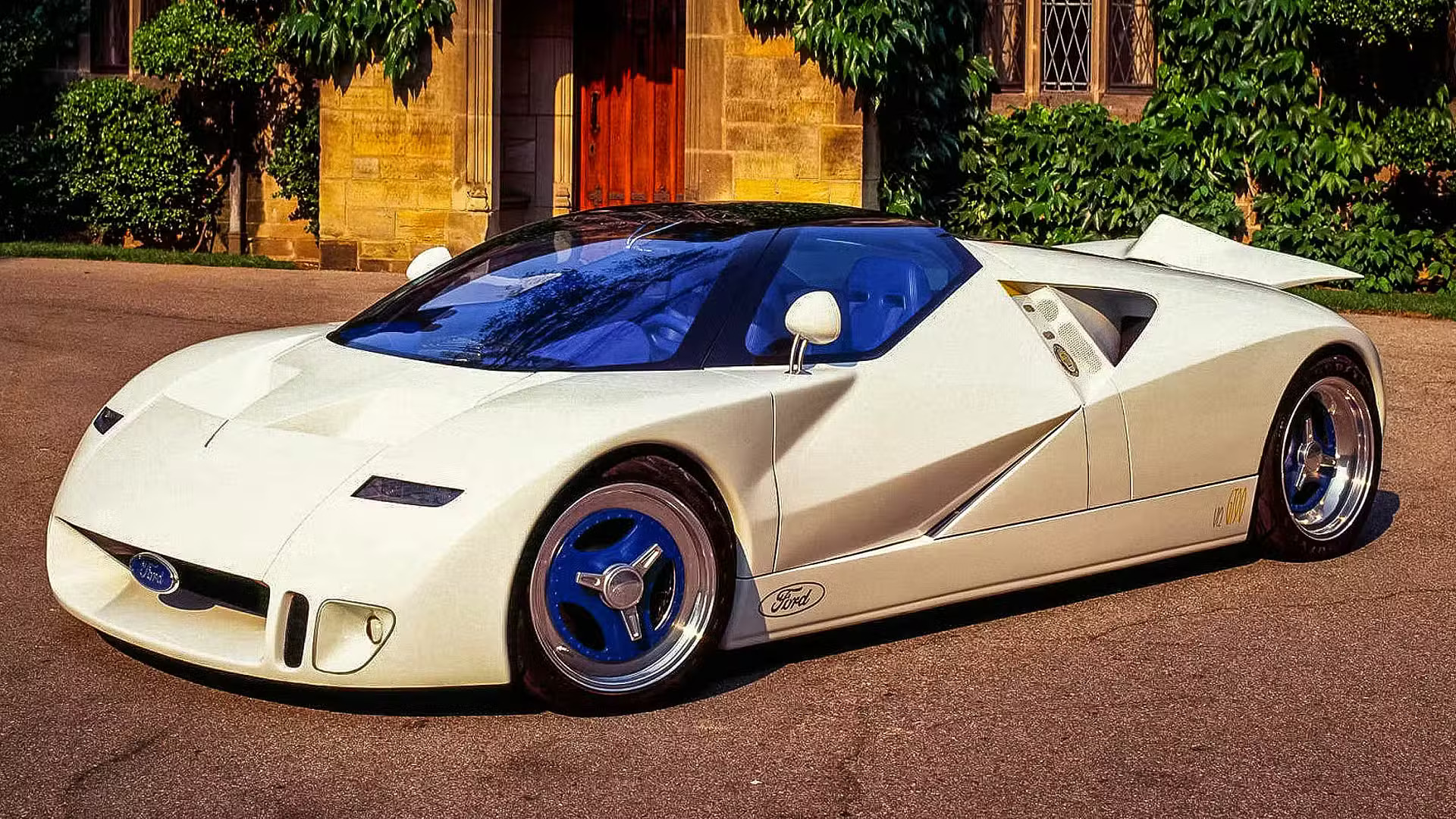
1. Ford GT90 (1995): Radical Design, Quad-Turbo Power, and a Dream Supercar
The 1995 Ford GT90 was an audacious concept supercar, designed to showcase Ford’s engineering prowess and futuristic styling. Painted in stark white and blue, the GT90 embodied the company’s “New Edge” design philosophy, characterized by sharp angles, triangular motifs, and bold geometric lines, a style later echoed in the Ford Focus and Ka.
Underneath its striking exterior lay a 6.0-liter quad-turbo V12 engine, producing a projected 720 horsepower and 660 lb-ft of torque, capable of a theoretical top speed of 253 mph. The car featured a carbon-fiber monocoque chassis and a mid-engine layout, making it a fully functional, high-performance prototype rather than a static showpiece.
Despite its advanced engineering, including ceramic heat-resistant tiles borrowed from Space Shuttle technology, the GT90 remained a one-off. Its creation stemmed from Ford’s Special Vehicle Operations as a “design and engineering study,” intended to explore what the company could achieve with cutting-edge materials and powertrain technology.
The V12 engine was an evolution of Ford’s Modular series, built by welding two V6 blocks together and enhanced with a complex four-turbo, twin-intercooler system, designed by veteran engineers including Jack Roush and Ron DeVergilio. Even though it was capable of producing nearly 900 horsepower at big boost, the car was deliberately restrained during testing for safety and durability reasons.
On the road, the GT90 proved both thrilling and challenging. Its cockpit, surprisingly spacious for a supercar, featured exposed gear linkages and a narrow sill for easy entry, but visibility was limited and the non-functional air conditioning turned the glass-encased cabin into a sauna during summer drives.
Acceleration was impressive but restrained in early tests, with a 0–60 mph time estimated at 3.1 seconds and a 0–100 mph sprint in 6.2 seconds. Handling was precise thanks to a modified Jaguar XJ220 suspension, AP vented brakes, and a well-balanced monocoque, though the steering required significant effort without power assistance.
Although the GT90 never reached production due to prohibitive costs and its role as a prototype, it left a lasting legacy. Its design innovations, engineering experiments, and extreme performance set the stage for the 2000s Ford GT.
Beyond its role as a “what-if” dream car, the GT90 demonstrated Ford’s potential to create world-class supercars, bridging the gap between visionary concept and practical engineering lessons that continue to influence the brand today.
2. Mercedes-Benz C112 (1991): Gullwing Heritage, Active Aerodynamics, and Technological Marvel
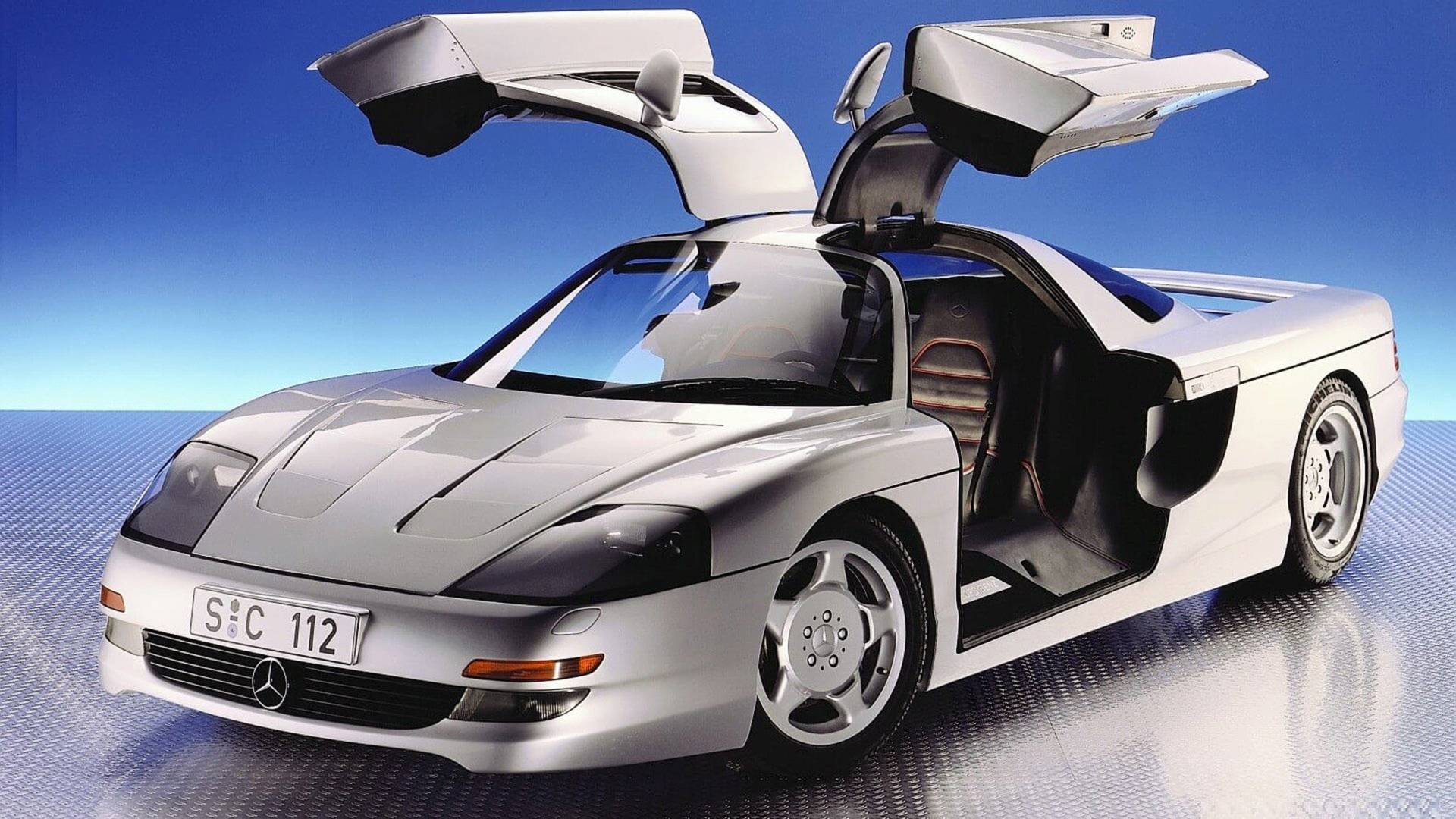
The 1991 Mercedes-Benz C112 was a groundbreaking supercar concept, designed as the street-legal counterpart to Mercedes’ Sauber C11 Group C race car.
With its mid-mounted 6.0-liter V12 engine producing 408 horsepower and 580 Nm of torque, the C112 could accelerate from 0–60 mph in roughly 4.9 seconds and reach a top speed of 192.6 mph. Beyond raw performance, it served as a rolling laboratory for advanced automotive technology that was years ahead of its time.
One of the C112’s most remarkable innovations was its Active Body Control (ABC) suspension system, which minimized body roll and pitch for unparalleled handling.
Complementing this was active aerodynamics, including a rear spoiler that functioned as an airbrake and an adjustable front spoiler, along with rear-wheel steering that enhanced stability. Safety and driver assistance were also advanced for 1991, featuring ABS and an early iteration of radar-assisted cruise control.
The car’s design paid homage to Mercedes-Benz’s heritage while embracing futuristic efficiency. Iconic gullwing doors, inspired by the legendary 300 SL, combined with low-drag, aerodynamic bodywork (0.3 drag coefficient) to create a striking balance of style and performance. Its mid-engine layout further enhanced balance and handling, making it a true driver-focused supercar.
Despite its technological prowess and high public interest, over 700 deposits were received, but the C112 never reached production. Corporate caution, concerns about the economic climate, and high production costs led management to cancel the project. Nevertheless, many of its innovations, particularly Active Body Control and advanced aerodynamics, eventually made their way into production Mercedes-Benz vehicles in later years.
The C112 is now remembered as a “what-if” icon, a fully functional prototype that married race-proven engineering with luxury and everyday usability. It offered the thrill of a supercar while incorporating technological innovations that were decades ahead of mainstream automotive capabilities.
With its combination of performance, futuristic systems, and gullwing styling, the Mercedes-Benz C112 stands as a forgotten technological marvel of the early 1990s, demonstrating what might have been if Mercedes-Benz had pushed forward with production.
3. BMW Nazca C2 (1991): Carbon-Fiber Engineering, Alpina V12, and a “What If” Supercar
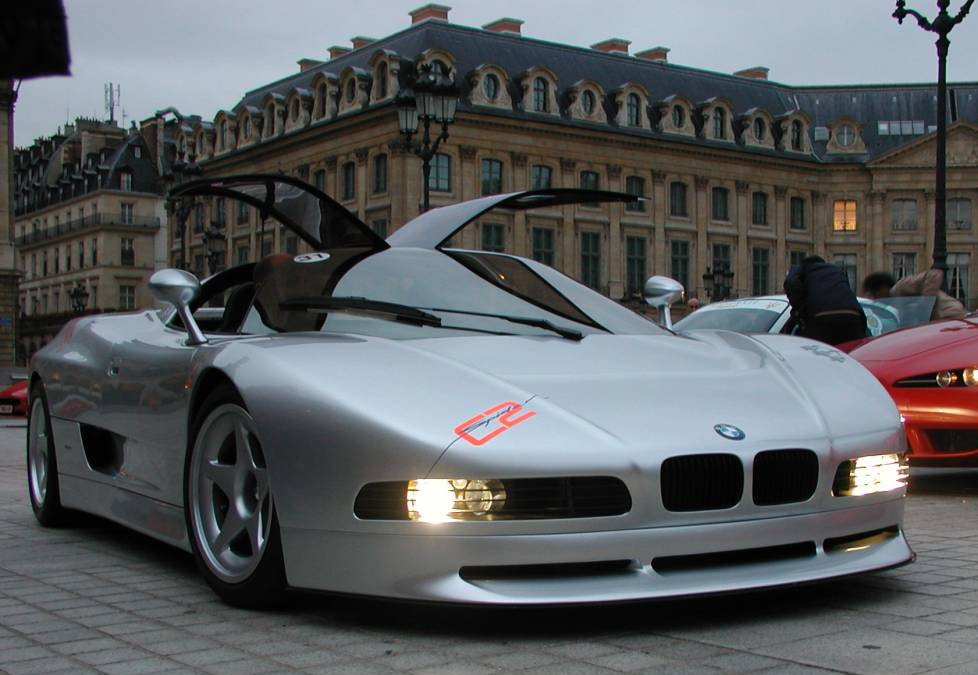
The 1991 BMW Nazca C2 was a futuristic supercar concept designed by Giorgetto Giugiaro at Italdesign and intended as a successor to the BMW M1. Built with a full carbon-fiber monocoque chassis, the Nazca C2 weighed approximately 2,400 pounds, making it exceptionally light and agile for its time.
It was powered by an Alpina-tuned 5.0-liter V12 engine producing around 350 horsepower. This allowed the car to accelerate from 0 to 62 miles per hour in about 4.1 seconds and achieve a top speed close to 193 miles per hour. With a mid-engine layout and race-inspired design, the Nazca C2 was a functional high-performance machine rather than a static concept.
The car featured a unique glass-panel canopy with semi-gullwing windows that opened separately from the conventional doors, providing excellent 360-degree visibility and a futuristic look. Aerodynamic efficiency was a major focus, with a low drag coefficient of 0.26, a front splitter, and multi-part rear spoilers to enhance stability and performance.
Magnesium wheels and lightweight construction further contributed to its agility. The design successfully combined Italian styling flair with German engineering precision, creating a prototype that could have rivaled supercars such as the Ferrari F50.
Despite strong public interest and critical acclaim at the 1992 Geneva Motor Show, BMW decided not to put the Nazca C2 into production. Economic uncertainty in the early 1990s and the high projected price of $200,000 to $300,000 made the project risky.
BMW also chose to focus on other strategic priorities, including the development of the McLaren F1 engine. Only three prototypes were built, including the Nazca M12, C2, and C2 Spider, making the Nazca a rare and highly collectible “what if” supercar.
The BMW Nazca C2 remains one of the most ambitious and forgotten supercar projects of the 1990s. It combined advanced carbon-fiber construction, powerful Alpina-tuned V12 performance, and revolutionary design in a way that was ahead of its time.
While it never reached production, the Nazca C2 is remembered as a visionary concept that demonstrated BMW’s potential in the exotic supercar market. Its legacy continues to influence lightweight construction and mid-engine performance in BMW sports cars.
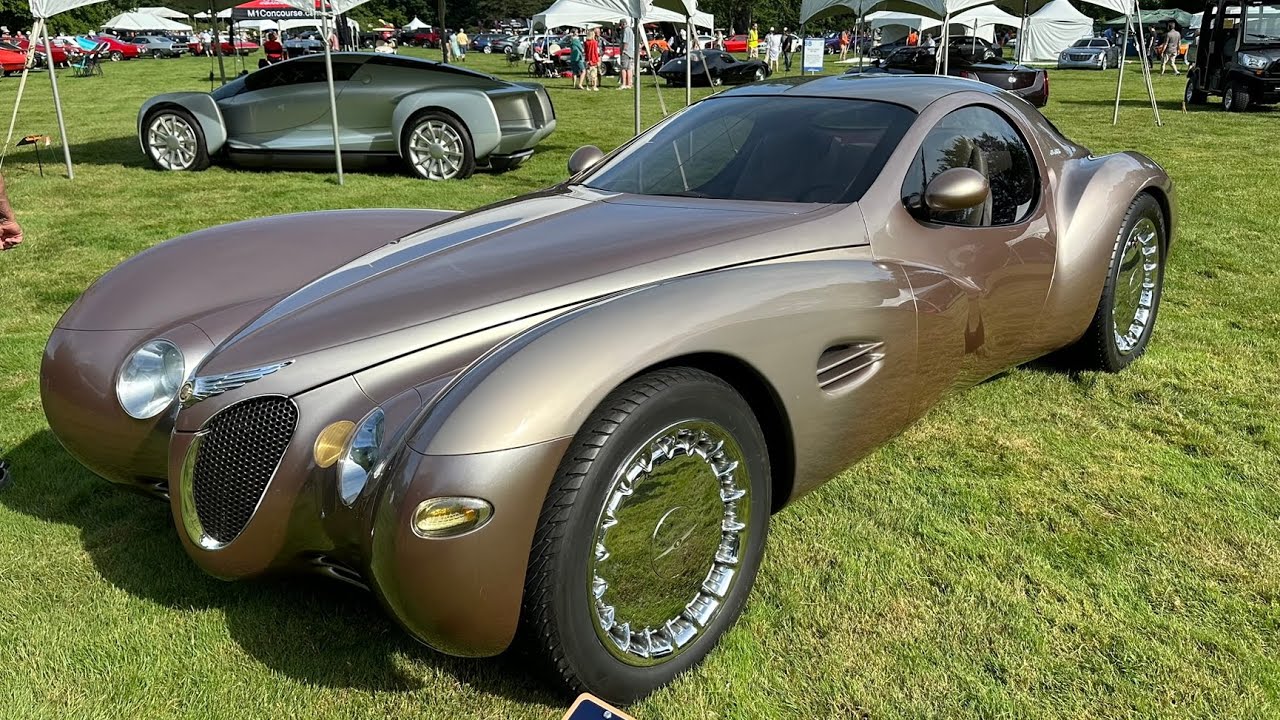
4. Chrysler Atlantic (1995): Art Deco Styling, Straight-Eight Engineering, and a Neo-Retro Masterpiece
The 1995 Chrysler Atlantic was a striking concept car that celebrated 1930s Art Deco design, paying homage to the Bugatti Type 57S Atlantique. Designed by Bob Hubbach under Tom Gale and conceived from a sketch by Bob Lutz, the Atlantic was massive, measuring nearly 200 inches long while standing just over 51 inches tall.
Its long, low profile, split windshield, pontoon fenders, and central spine running the length of the car gave it a bold, timeless presence. Painted in a shimmering gold or liquid silver finish, the Atlantic blended retro elegance with modern concept car technology.
Under the hood, the Atlantic housed a unique 4.0-liter straight-eight engine created by joining two Chrysler Neon four-cylinder engines.
Tuned to produce approximately 325 to 360 horsepower, the engine was paired with a four-speed automatic transmission and allowed the car to perform as a fully drivable, high-performance prototype. Despite its extravagant styling, Chrysler officials considered it nearly production-ready, making it one of the more realistic and functional concept cars of the 1990s.
The interior emphasized luxury and craftsmanship, with cream leather seats, hand-painted Art Deco gauges, and a central crease running through the cockpit. Details such as butterfly knife headlights and a flowing central spine highlighted the Atlantic’s fusion of retro style and futuristic design cues. Its enormous 21- and 22-inch wheels and sleek aerodynamics reinforced its road presence and performance potential.
Although the Atlantic never reached production due to high manufacturing costs and the complexity of its custom components, it remains an iconic piece of automotive design.
It was widely praised on the auto show circuit and helped signal Chrysler’s design renaissance during the 1990s. The car also anticipated the neo-retro luxury trend of the early 2000s and remains a crown jewel in the Stellantis historical vehicle collection.
The Chrysler Atlantic is remembered as a “what if” masterpiece that married high-style retro design with functional engineering. It showcased Chrysler’s ability to blend heritage inspiration, innovation, and luxury into a fully drivable supercar concept. Its enduring legacy lies in its bold Art Deco aesthetic and inventive engineering, making it one of the most celebrated concept cars of the decade.
5. Volkswagen W12 Syncro (1997): W12 Engineering, Record-Breaking Performance, and a Supercar Vision
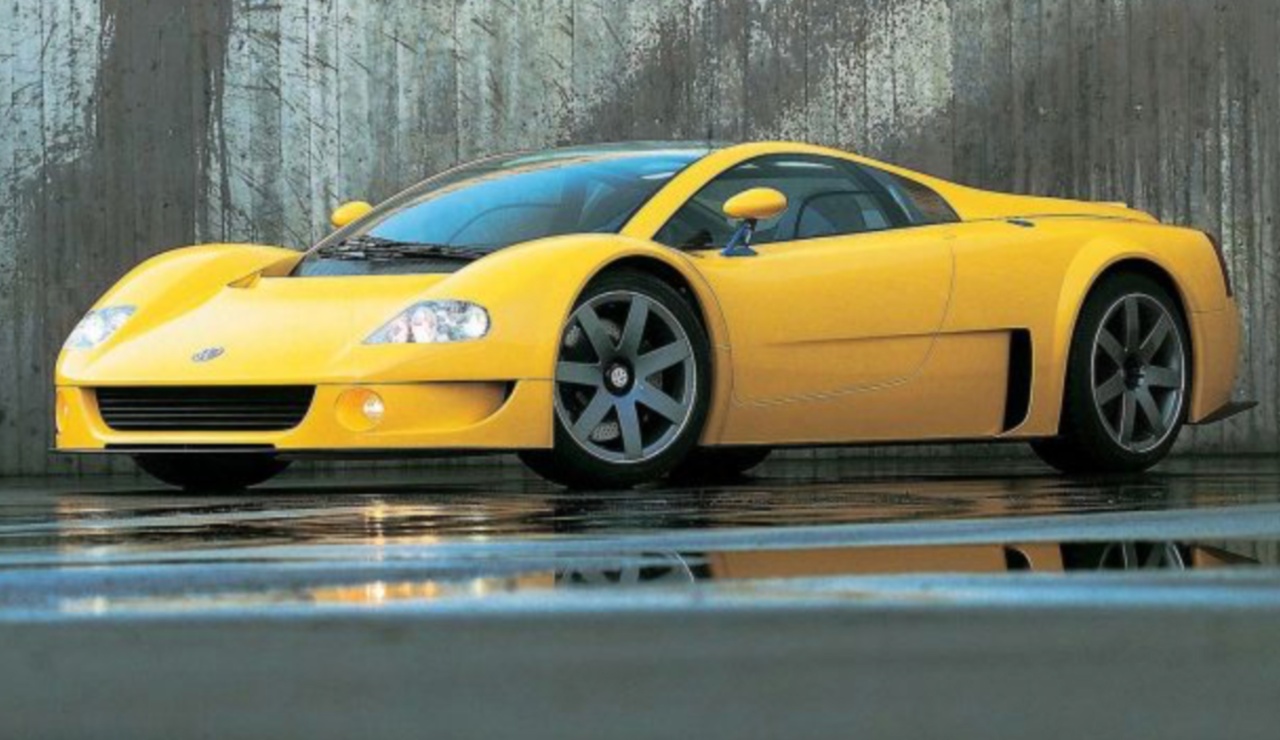
The 1997 Volkswagen W12 Syncro, also known as the Nardò, was a groundbreaking supercar concept that demonstrated Volkswagen’s ability to create extreme performance vehicles. Conceived under Ferdinand Piëch and designed by Giorgetto Giugiaro at Italdesign, the W12 Syncro combined sleek, low-slung styling with revolutionary engineering.
Its mid-mounted W12 engine, created by pairing two VR6 engines on a single crankshaft, produced 414 horsepower in the original 1997 prototype and later reached over 591 horsepower in the Nardò endurance version. The compact engine allowed for a lightweight, low-profile chassis and enabled top speeds exceeding 300 km/h.
Unlike many show-only concepts, the W12 Syncro proved its reliability on the track. In 2002, a prototype completed 24 hours at the Nardò Ring in Italy, averaging over 200 mph and setting multiple world records for endurance and top-speed consistency. This demonstrated that Volkswagen’s W12 technology could combine high performance with real-world reliability, a key factor that would influence future luxury and exotic vehicles.
The car featured Volkswagen’s innovative Syncro all-wheel-drive system, a precursor to the modern 4Motion, which provided exceptional traction and stability, making the car usable as well as fast.
It was paired with a six-speed sequential gearbox in the original prototype, with later versions optimized for extreme high-speed performance. Butterfly-style upward-hinged doors and a wide, low stance gave the W12 Syncro an unmistakably modern and timeless appearance.
Although the W12 Syncro never reached production, its legacy is profound. The W12 engine went on to power the Bentley Continental GT, Volkswagen Phaeton, and Audi A8, while the pursuit of high-speed engineering eventually influenced the W16 engine of the Bugatti Veyron.
The concept also marked Volkswagen’s entry into the supercar and luxury performance arena, signaling that the brand could produce exotic, world-class engineering without compromise.
Today, the W12 Syncro is remembered as both a functional engineering demonstrator and a design icon. It combined record-breaking performance, advanced all-wheel-drive dynamics, and Italdesign styling in a package that remains influential in the evolution of Volkswagen Group’s high-performance and luxury vehicles. It is celebrated as one of the most important concept supercars of the late 1990s.
Also read: 5 Cars With Simple Mechanical Cooling vs 5 With Fragile Electric Fans
6. Lamborghini Calà (1995): Affordable V10 Vision, Everyday Usability, and a Lost Predecessor
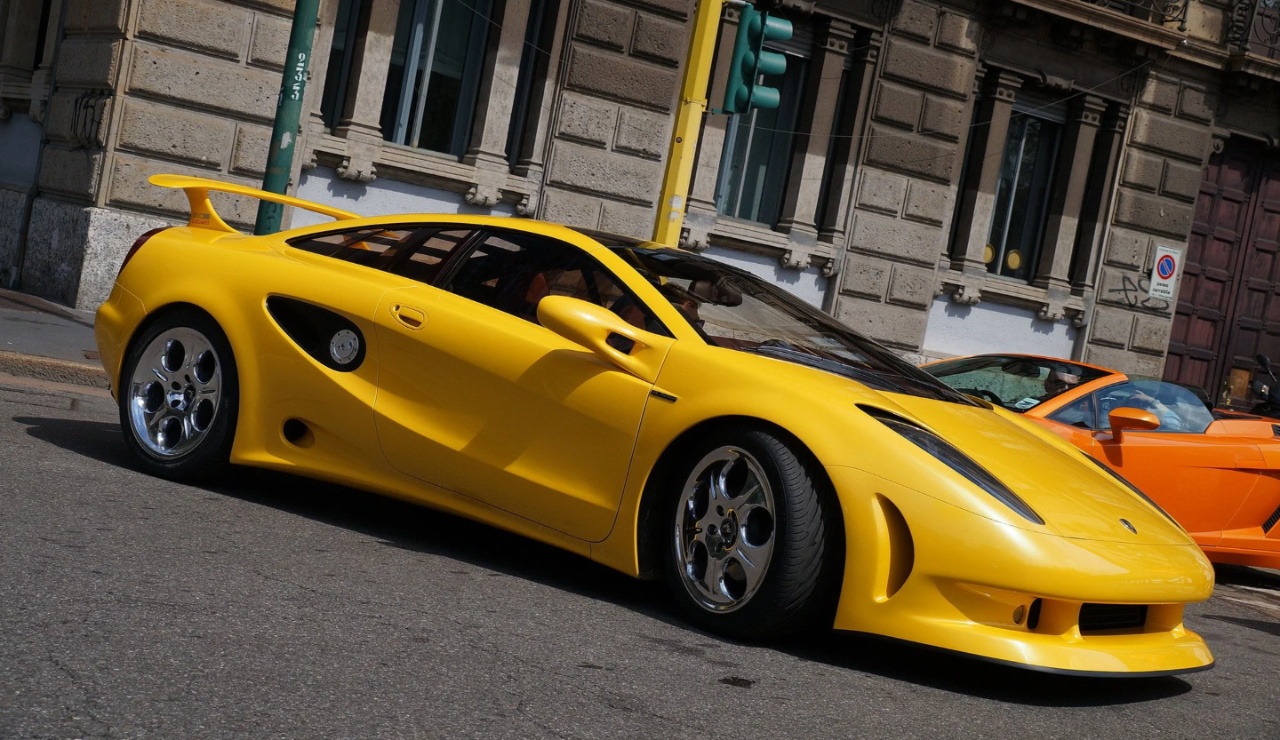
The 1995 Lamborghini Calà was a forward-thinking concept car designed by Italdesign to serve as a more accessible entry point into the Lamborghini lineup. Intended as a successor to the Jalpa, the Calà combined supercar performance with improved usability, making it one of the most production-ready concepts of the 1990s.
At its heart was a mid-mounted 3.9-liter V10 engine producing around 400 horsepower, paired with a six-speed manual gearbox. This setup enabled the car to accelerate from 0 to 60 mph in under five seconds and reach a top speed of approximately 180 mph.
Unlike the aggressive and extreme styling of the Lamborghini Diablo, the Calà featured a smoother, more approachable design. Its curvy bodywork, aerodynamic profile, and removable targa-style roof gave it a modern yet distinctive appearance.
Built on a lightweight aluminum chassis with a carbon-fiber body, the car weighed under 1,300 kilograms, contributing to its agility and balanced handling. The interior emphasized comfort and practicality, with a well-designed cabin that could accommodate everyday driving, a rare trait for Lamborghini models of that era.
The Calà stood out not only for its design but also for its practicality. It was engineered to be more user-friendly than previous Lamborghinis, offering better visibility, improved ergonomics, and even a 2+2 seating layout suitable for extra passengers or luggage. This focus on usability made it a strong candidate for production and a potential game-changer for the brand’s direction.
Despite its readiness and positive reception, the Calà never reached showrooms. Financial instability at Lamborghini and the company’s acquisition by Audi in 1998 led to the project’s cancellation. Audi chose to develop its own vision for a smaller Lamborghini, resulting in a more refined and aggressively engineered successor.
Although it was never produced, the Calà’s influence lived on. Its V10 concept and accessible supercar philosophy directly inspired the development of the Lamborghini Gallardo, which became the brand’s best-selling model. Today, the Calà is remembered as a crucial stepping stone in Lamborghini’s evolution, representing a missed opportunity that helped shape the future of the company’s lineup.
7. Mazda RX-01 (1995): Lightweight Rotary Revival, Balanced Design, and a Missed Opportunity
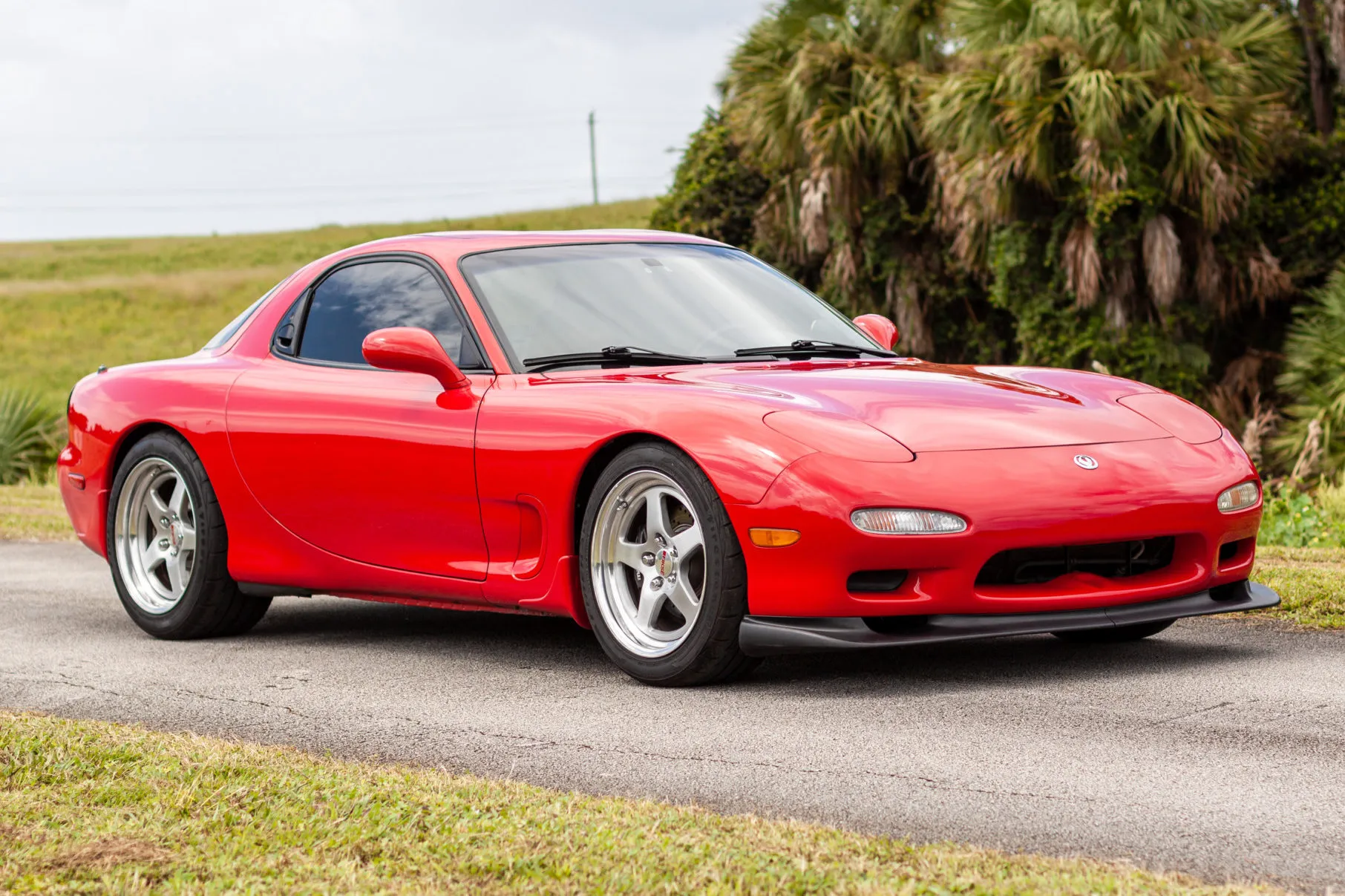
The 1995 Mazda RX-01 was a back-to-basics sports car concept that aimed to revive the simplicity and driving purity of earlier rotary models. Developed as a successor to the increasingly complex and expensive RX-7, the RX-01 focused on lightweight construction, balanced handling, and everyday usability.
It featured a front-midship engine layout, which placed the engine behind the front axle for near-perfect weight distribution, enhancing agility and control.
At the heart of the RX-01 was a next-generation 1.3-liter naturally aspirated rotary engine, later known as the Renesis design. Producing around 220 horsepower and revving up to 8,500 rpm, the engine introduced side exhaust ports that improved fuel efficiency, emissions, and torque compared to earlier rotary designs.
This innovation made the RX-01 not only a performance car but also a more practical and refined alternative to previous rotary-powered vehicles.
The RX-01’s lightweight philosophy was central to its appeal. With a target weight of under 2,000 pounds, it promised exceptional handling and a strong power-to-weight ratio, delivering a raw and engaging driving experience.
Its compact dimensions, aggressive front styling, and integrated aerodynamic elements gave it a modern yet purposeful appearance. Inside, the car featured a minimalist 2+2 layout, offering more practicality than the two-seat RX-7 while maintaining a driver-focused cockpit.
Mazda intended the RX-01 to be a more affordable sports car, broadening the appeal of rotary performance to a wider audience. However, despite its promise and positive reception, the project was never realized. Financial difficulties following the collapse of Japan’s bubble economy forced Mazda to cancel the program and shift focus away from niche sports cars.
Although it never reached production, the RX-01 had a lasting impact. Its engine technology and design philosophy directly influenced the later Mazda RX-8, which adopted the Renesis rotary engine and a more practical layout.
Today, the RX-01 is remembered as a “what if” icon that combined lightweight engineering, innovative rotary performance, and everyday usability, representing a missed opportunity to redefine the affordable sports car segment in the 1990s.
8. Audi Avus Quattro (1991): Aluminum Innovation, W12 Vision, and a Futuristic Statement
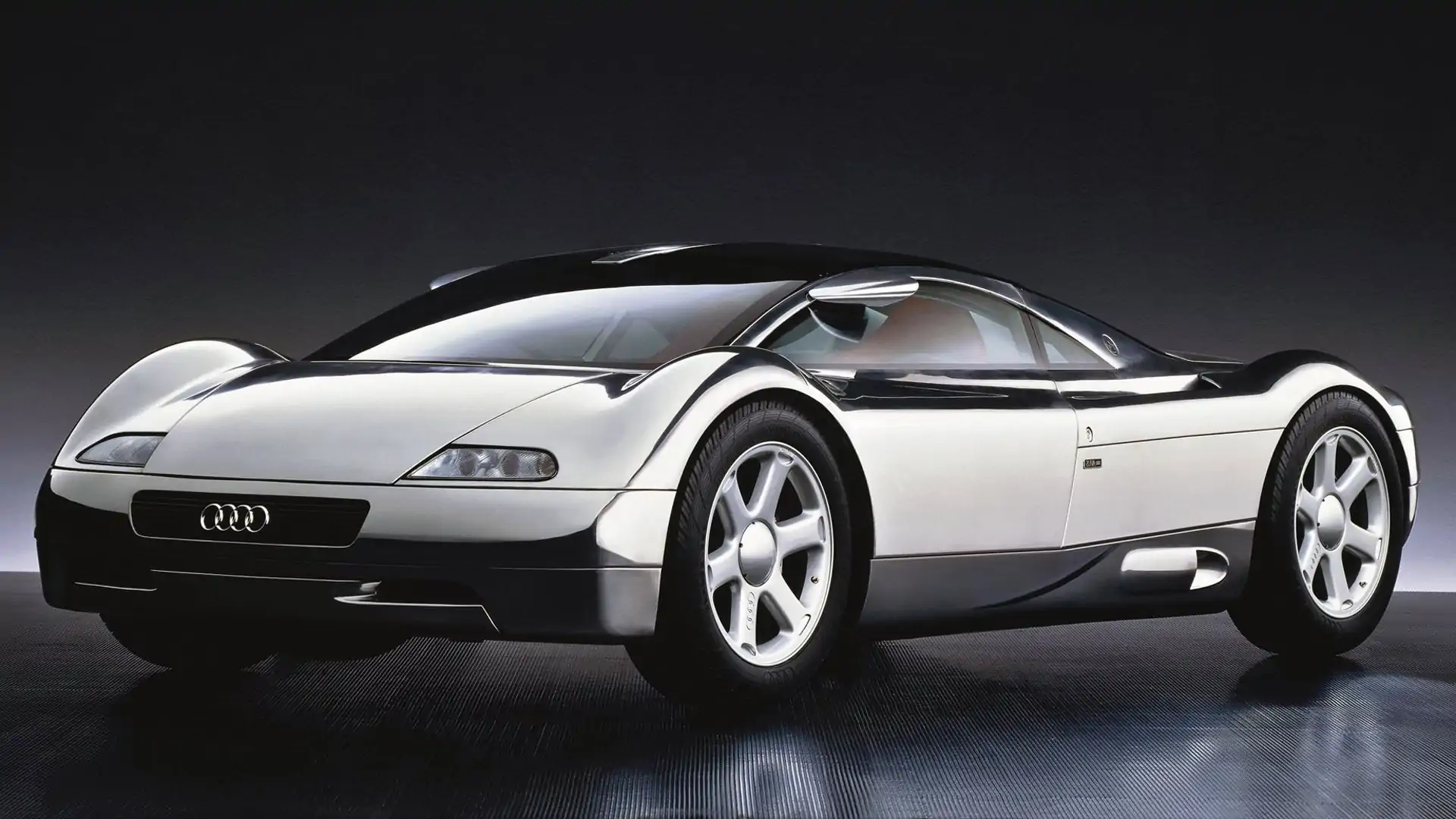
The 1991 Audi Avus Quattro was a striking concept car that redefined Audi’s image as a leader in advanced engineering and luxury performance. Named after the historic German race track, the Avus featured a dramatic, low-slung design inspired by the 1930s Auto Union “Silver Arrows.”
Its most distinctive feature was its polished, unpainted aluminum body, hand-formed to showcase Audi’s revolutionary Space Frame construction. This lightweight structure used aluminum panels just 1.5 millimeters thick, demonstrating a new approach to reducing weight while maintaining strength.
At the time of its debut, the Avus was designed to house a 6.0-liter W12 engine projected to produce over 500 horsepower. However, the actual engine was still under development, so the concept featured a wooden mock-up instead.
Despite this, Audi claimed impressive theoretical performance figures, including a 0 to 62 mph time of around three seconds and a top speed exceeding 210 mph. Combined with Audi’s signature quattro all-wheel-drive system and a six-speed manual transmission, the Avus promised supercar-level performance that rivaled the best of its era.
Inside, the Avus Quattro featured a minimalist, driver-focused cockpit with red leather bucket seats and aviation-inspired controls. Its design emphasized visibility and simplicity, complementing the car’s futuristic yet purposeful aesthetic. Exterior details such as large 20-inch wheels and a roof-mounted air intake further reinforced its high-performance identity.
Although the Avus never reached production due to high development costs and the incomplete engine program, it achieved its primary goal as a design and engineering showcase. It successfully repositioned Audi as a forward-thinking brand capable of competing in the high-performance luxury segment.
The technologies and ideas introduced by the Avus, particularly aluminum space frame construction and W12 engine development, later appeared in production models such as the Audi A8 and influenced future supercars like the Audi R8.
Today, the Audi Avus Quattro is remembered as a visionary concept that blended futuristic styling with groundbreaking engineering. It stands as a symbol of Audi’s transformation in the 1990s and a key milestone in the evolution of modern high-performance luxury vehicles.
9. Dodge Copperhead (1997): Affordable Roadster Vision, Agile Handling, and a Lost Opportunity
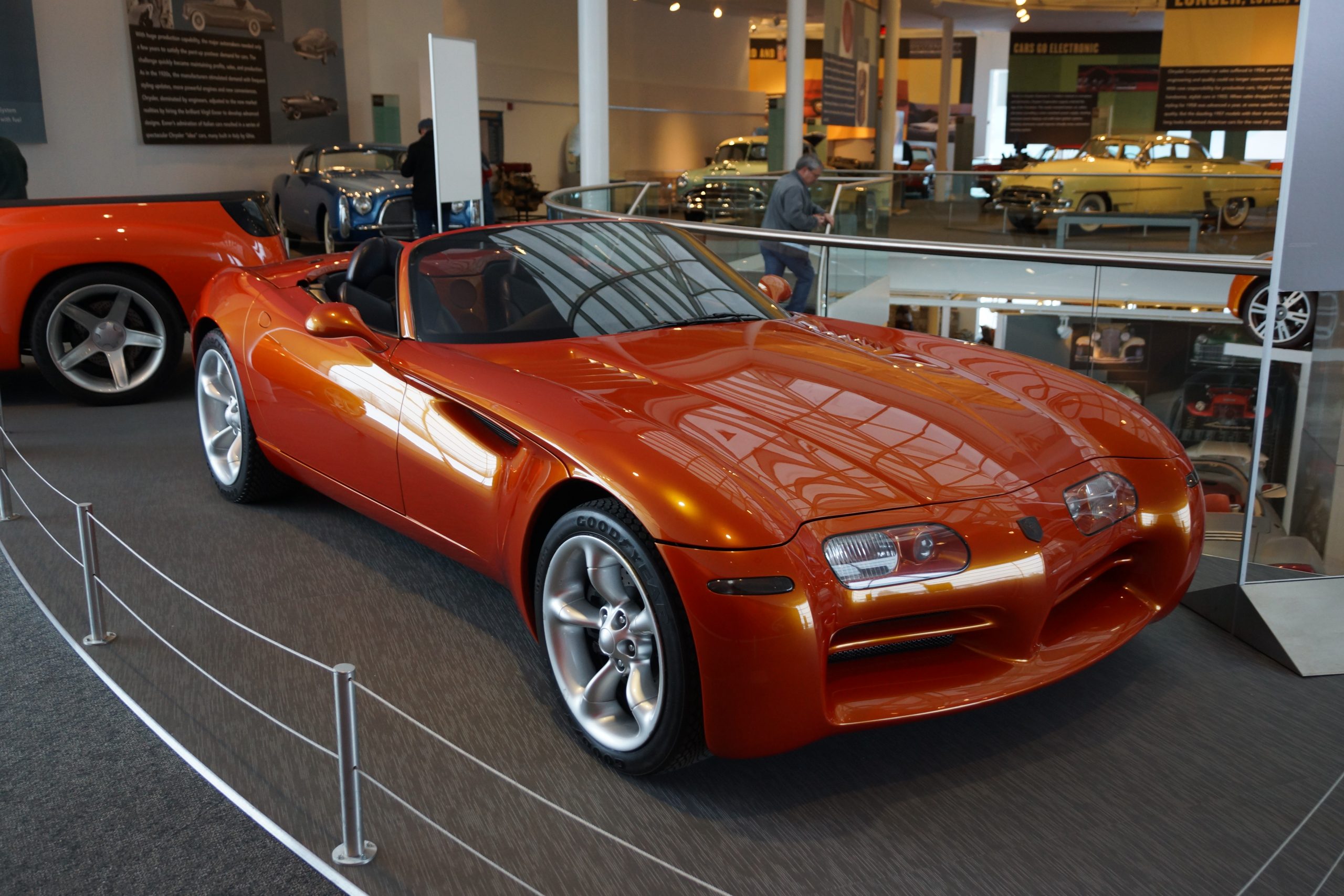
The 1997 Dodge Copperhead was a bold concept car designed as a more accessible and driver-friendly alternative to the powerful but demanding Dodge Viper. While the Viper focused on raw performance with its V10 engine, the Copperhead emphasized balance, handling, and everyday usability.
Powered by a 2.7-liter DOHC V6 engine producing around 220 horsepower, it delivered a lively yet manageable driving experience. Paired with a five-speed manual transmission, the car prioritized road feel and driver engagement over outright speed.
The Copperhead’s design was one of its most distinctive features. Finished in a vibrant “Copper Fire Orange” paint, it stood out with smooth, flowing lines and wide front fenders. Its low-slung stance and extended wheelbase, with wheels pushed toward the corners, improved stability and handling.
The car’s proportions and styling positioned it as a serious competitor to affordable sports cars like the Porsche Boxster and Mazda Miata, while maintaining a unique identity within Dodge’s lineup.
Inside, the Copperhead continued its serpentine theme with a highly stylized interior. The dashboard and center console resembled the head of a snake, complete with a centrally mounted circular speedometer and a unique gauge layout. The cabin combined creativity with functionality, reinforcing the car’s identity as a fun yet practical sports roadster.
One of the Copperhead’s strongest selling points was its targeted affordability. With an estimated price of around $30,000, it aimed to bring sports car excitement to a broader audience. This made it a potential game-changer, offering performance and style at a significantly lower cost than high-end rivals.
Despite its promise and positive reception, the Copperhead never reached production. A combination of factors led to its cancellation, including a trademark dispute over its name, internal competition from vehicles like the Plymouth Prowler, and shifting market trends toward SUVs. Corporate changes following the Daimler-Benz merger also influenced the decision to abandon the project.
Today, the Dodge Copperhead is remembered as a compelling “what if” concept. It successfully blended affordability, distinctive design, and engaging driving dynamics, representing a missed opportunity to create a modern, accessible American sports car.
10. Alfa Romeo Scighera (1997): Futuristic Design, Twin-Turbo Power, and a Race-Bred Concept
The 1997 Alfa Romeo Scighera was a bold and futuristic concept car that blended advanced engineering with Alfa Romeo’s rich racing heritage. Designed by Fabrizio Giugiaro at Italdesign, the Scighera was based on the Alfa Romeo 164 platform and incorporated a four-wheel-drive system derived from the Alfa Romeo 155 race car.
At its core was a twin-turbocharged 3.0-liter Busso V6 engine producing around 400 horsepower, enabling impressive performance figures such as 0 to 60 mph in approximately 3.7 seconds and a top speed nearing 186 mph.
The Scighera’s construction emphasized lightweight performance, utilizing a combination of aluminum and carbon fiber for its chassis and body.
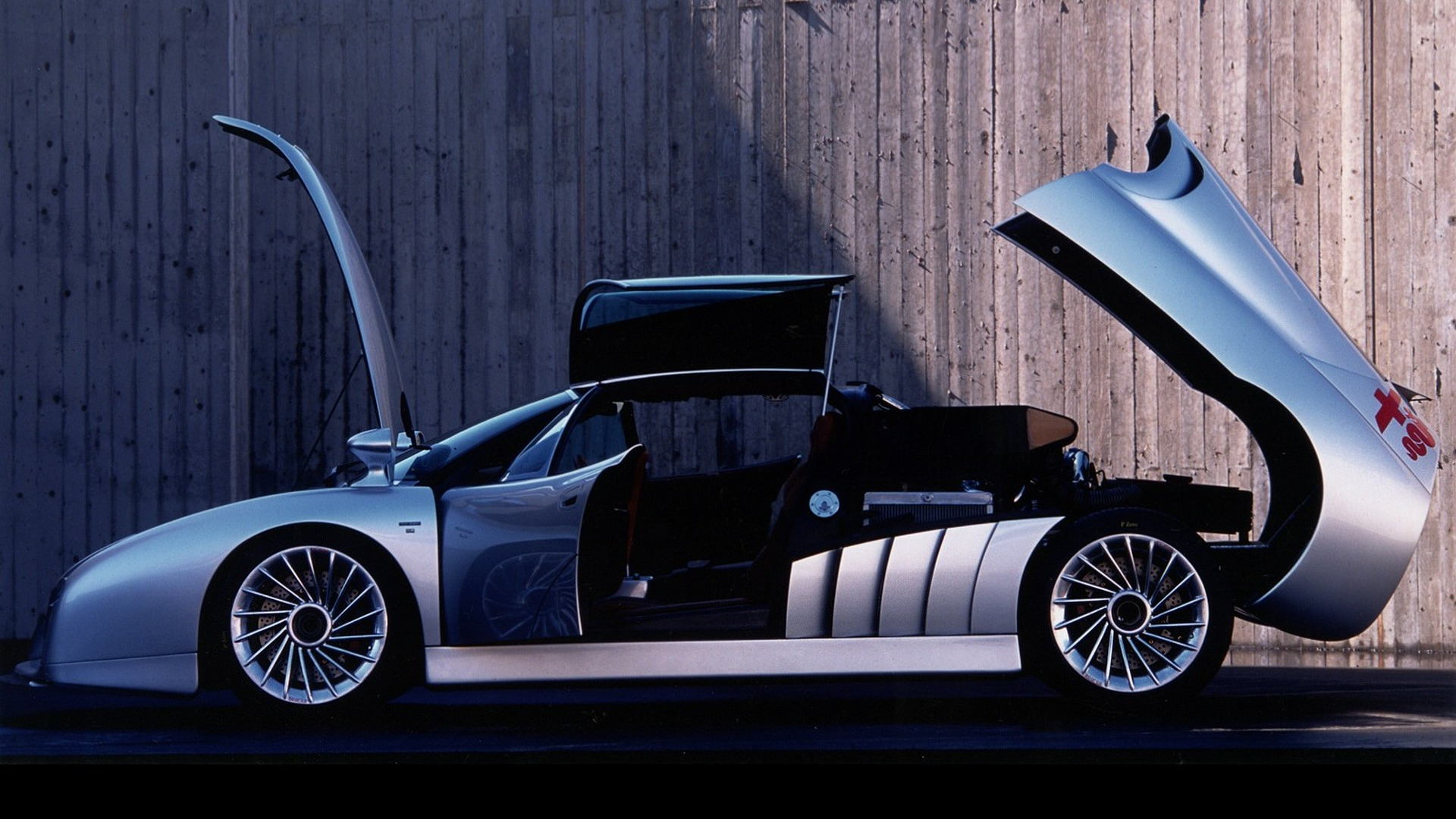
This advanced structure contributed to its agility and high-speed stability, making it a true road-legal race car concept. Aerodynamic features included a large rear clamshell with an integrated wing, a retractable rear spoiler, and a distinctive front bonnet that doubled as an aerodynamic aid.
One of the most striking aspects of the Scighera was its unconventional design. The car featured unique “clown-eye” headlights and a dramatic canopy system in which the windshield and side windows lifted upward, similar to a fighter jet.
Meanwhile, the doors opened conventionally, and the removable gullwing-style windows allowed the car to transform into an open-top roadster. Inside, the cockpit was equally distinctive, with the gearbox positioned between the seats and wrapped in leather, reinforcing its race-inspired character.
The Scighera was envisioned not only as a road-going supercar but also as the basis for a one-make racing series. Italdesign even explored the possibility of limited production, highlighting the car’s potential beyond concept status. However, Alfa Romeo ultimately declined to support the project, citing financial and strategic limitations, which prevented it from reaching the production stage.
Today, the Alfa Romeo Scighera is remembered as one of the most exotic and ambitious concept cars of the 1990s. It combined innovative design, race-derived technology, and high-performance engineering in a way that was far ahead of its time. As a result, it remains a celebrated “what if” supercar that continues to captivate enthusiasts and showcase Alfa Romeo’s potential for cutting-edge performance vehicles.
These remarkable concept cars remain lasting symbols of ambition, creativity, and technical excellence. From the raw power of the Ford GT90 to the innovation of the Mercedes-Benz C112 and the forward-thinking design of the Audi Avus Quattro, each model carried ideas that were ahead of its time.
Even without reaching production, their impact is clear in the evolution of performance, safety, and design across the automotive industry. These cars continue to capture the imagination of enthusiasts, serving as reminders of what could have been achieved under different circumstances.
Their rarity adds to their appeal, turning them into legends defined by innovation rather than sales numbers. The 1990s proved that bold experimentation can leave a meaningful legacy, even when the final product never reaches the showroom floor.
Also read: 10 Cars With Such High Resale Value That Buying Used Is a Mistake
