For collectors, a car’s factory paint can be just as important as its engine or performance. Certain finishes reflect innovation, daring design choices, and even technical challenges, making them highly desirable decades later. Some colors were produced in extremely limited numbers, turning them into prized collector items.
From the chameleon-like Nissan Skyline GT-R R34 in Midnight Purple II to the bold pink of the 1970 Plymouth AAR ‘Cuda in Moulin Rouge, these unique finishes capture attention and admiration. Other examples, such as Viola Ophelia on the Lamborghini Diablo VT 6.0 or Copper Metallic on the 1986 Chevrolet Corvette C4, stand out for extreme scarcity and historical significance.
These rare paints highlight a car’s design lines and can even complement interior details. Today, vehicles with such distinctive factory colors often command premiums over standard models, making them both visually striking and highly valuable to collectors.
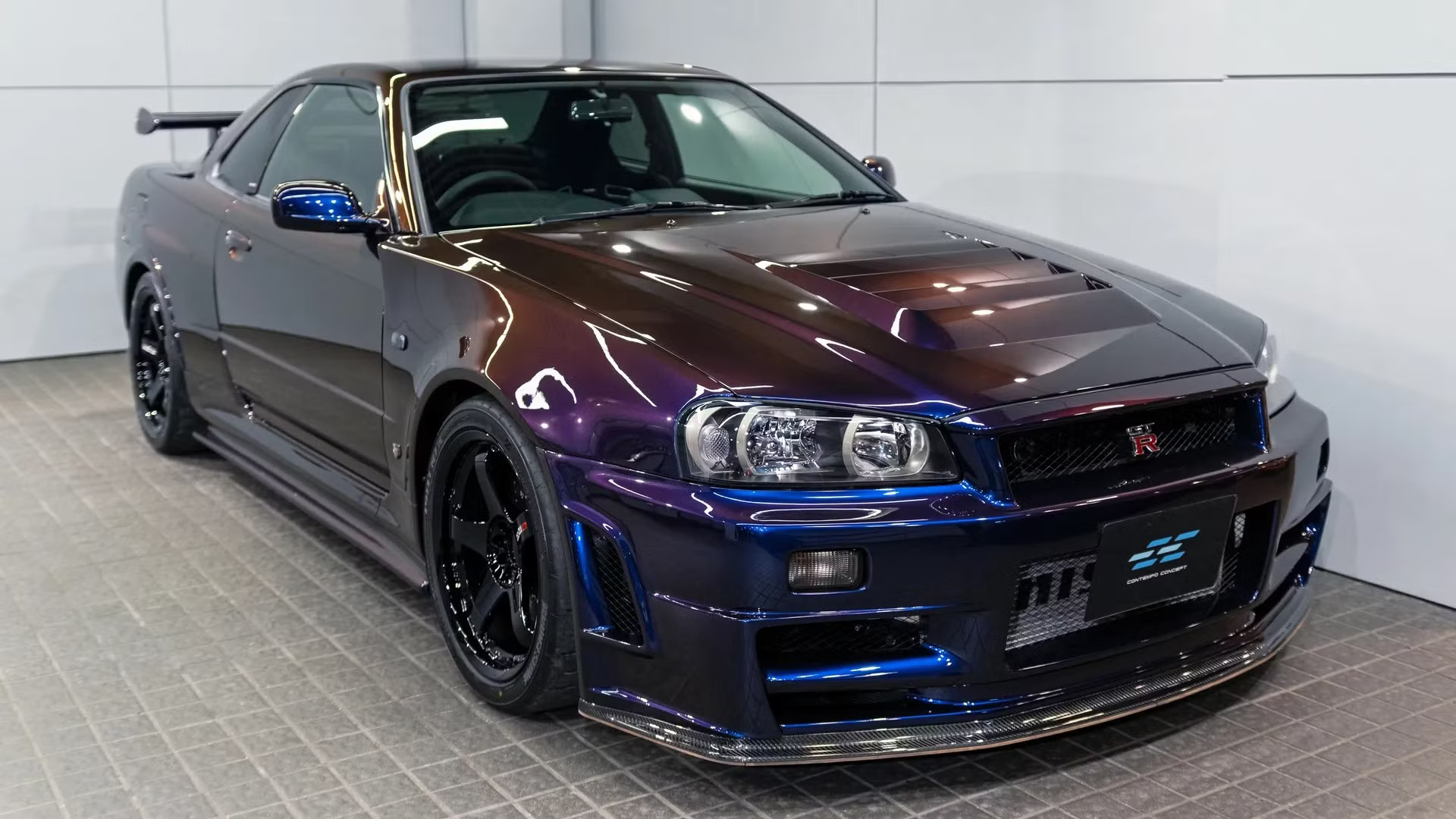
1. Midnight Purple II: A Rare and Iconic R34 Finish
Midnight Purple II (LV4) is one of the most celebrated factory paint options ever offered on the Nissan Skyline GT-R R34. Introduced in 1999 for the V-Spec variant, it represents a major advancement in automotive paint technology. The finish uses complex multi-layered mica pigments that create a striking color-shifting effect.
Depending on lighting and angle, the car can appear deep violet, metallic green, or even show subtle bronze tones, giving it a constantly changing appearance.
Its extreme rarity is a key reason for its value. Only 282 units were produced with this paint, making it one of the rarest official R34 color options. Because of this limited production, Midnight Purple II models are highly sought after by collectors and enthusiasts worldwide. The exclusivity is further amplified by the already legendary reputation of the R34 GT-R platform.
The color also holds strong cultural significance within the JDM scene. It reflects the experimental spirit of late 1990s Japanese car design and helped popularize chameleon-style finishes that later became common in aftermarket tuning. For many enthusiasts, it symbolizes the peak of early 2000s tuner culture.
Today, demand continues to rise while supply remains fixed. As a result, these cars often command significant premiums at auctions compared to standard colors. Midnight Purple II is now considered both a collector’s centerpiece and a strong automotive investment.
2. Giallo Fly: The Connoisseur’s Ferrari Color
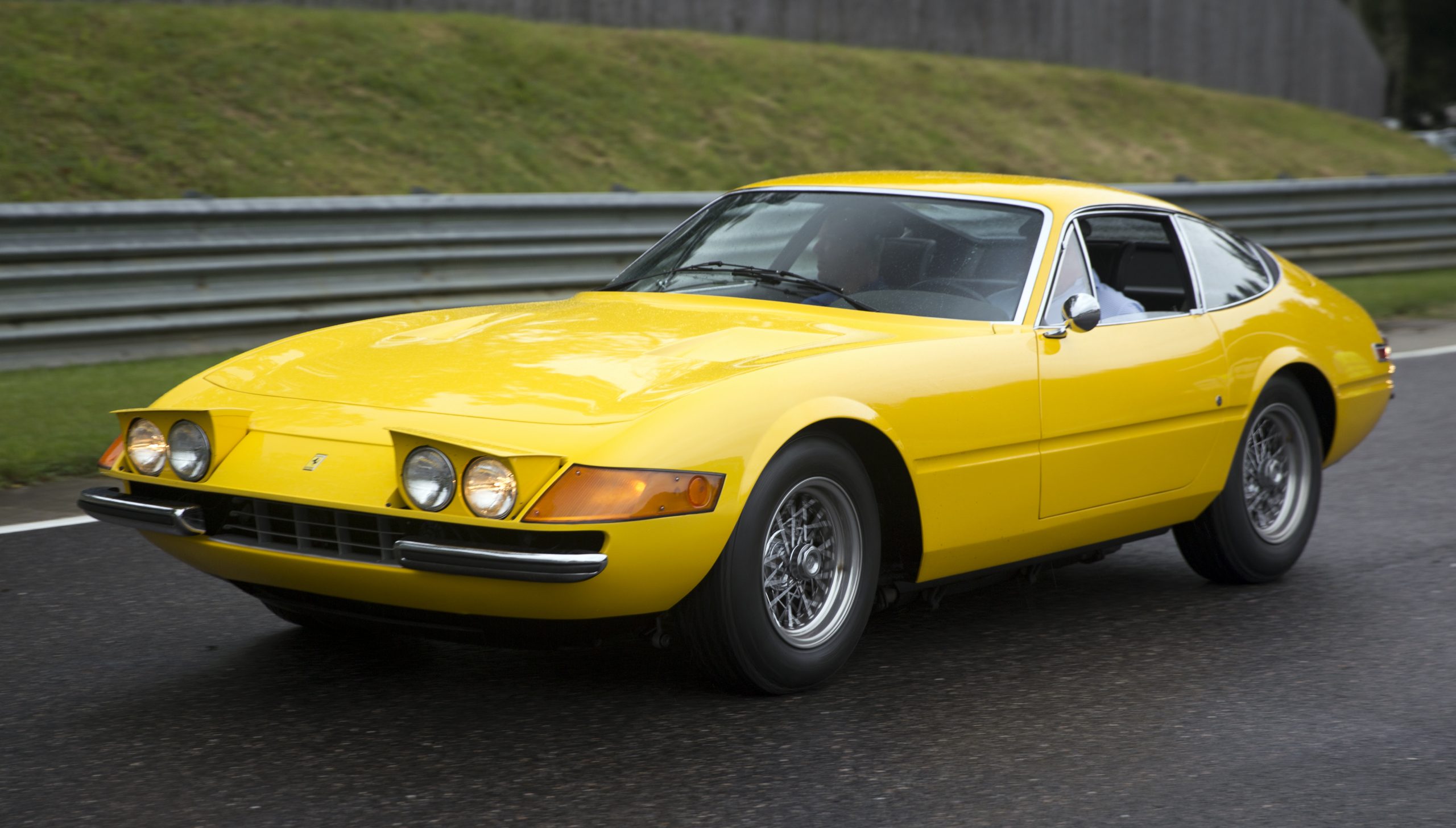
Giallo Fly, a vibrant non-metallic yellow, is one of the most distinctive and desirable factory colors offered on the Ferrari 365 GTB/4 Daytona. While Rosso Corsa is traditionally associated with Ferrari, Giallo Fly represents a more refined and individualistic choice favored by seasoned collectors. It reflects the idea that true enthusiasts move beyond the expected and seek something rarer and more expressive.
Introduced during the late 1960s and early 1970s, this bold yellow finish stood out dramatically in an era dominated by subdued tones such as silver and blue. On the sharply styled Daytona, Giallo Fly enhanced the car’s aggressive lines and made a clear visual statement of performance and exclusivity.
Its rarity further elevates its appeal. Out of more than 1,200 Daytona models produced, only a small number were finished in this color, with some estimates suggesting just a few dozen examples for certain markets.
This scarcity has given Giallo Fly a near “unicorn” status among Ferrari collectors. A factory-documented example is especially prized, as originality and provenance are critical factors in the classic car market. Unlike the more common red models, a Giallo Fly Daytona often commands a significant premium at auctions, sometimes reaching 20 to 30 percent higher values.
Giallo Fly represents more than a color choice. It symbolizes exclusivity, bold taste, and the desire to stand apart, making it one of the most iconic and valuable finishes in Ferrari history.
3. Mystichrome: The Color-Shifting Masterpiece of the SVT Cobra
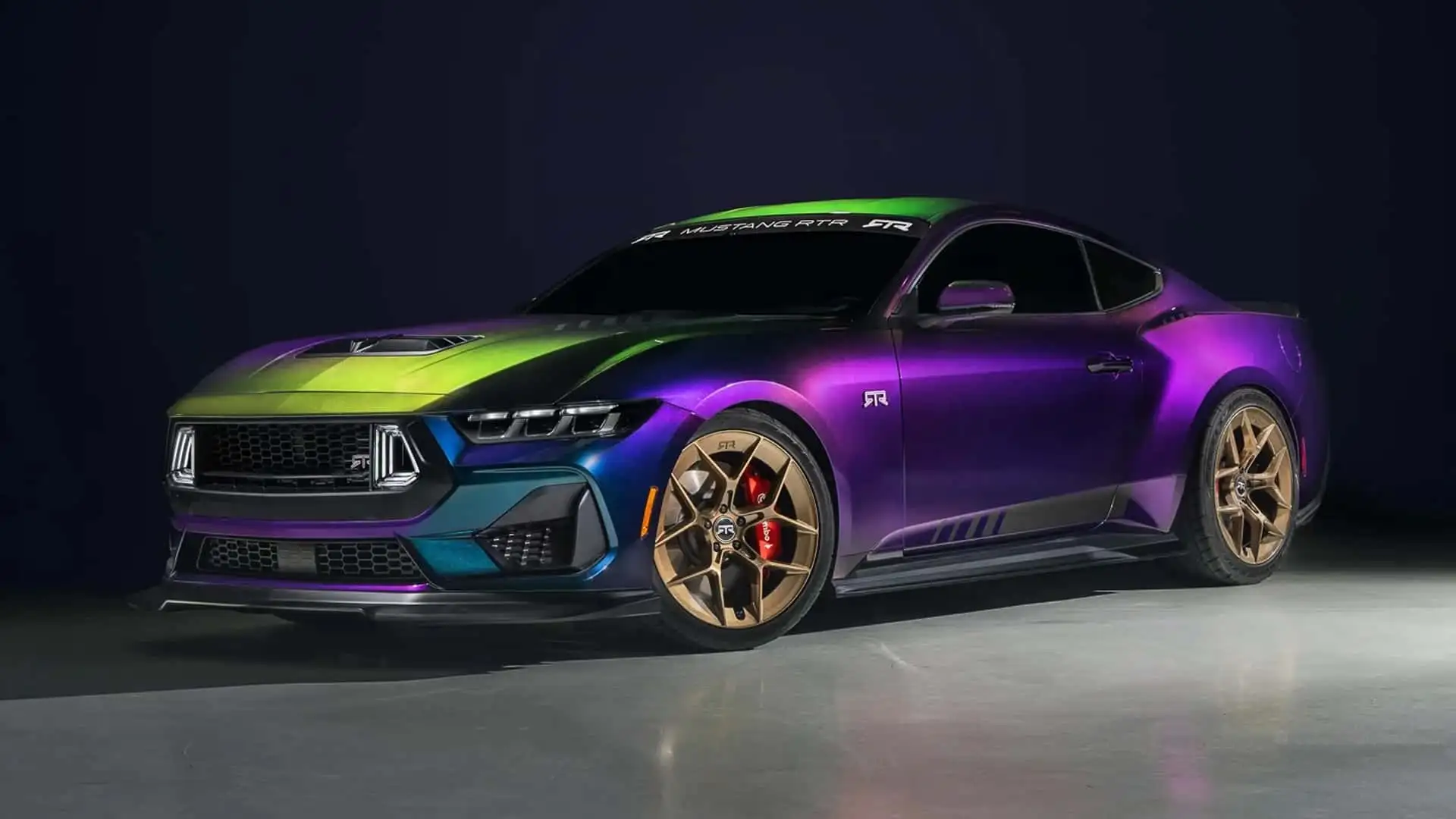
Mystichrome is widely regarded as one of the most technologically advanced and visually striking paint finishes ever applied to an American muscle car. Developed for the 2004 Ford Mustang SVT Cobra, it features BASF ChromaFlair pigments, the same color-shifting technology used in security inks for currency.
The paint seamlessly transitions through multiple hues, including topaz, violet, cobalt blue, teal, and even gold, depending on the light and angle. This dramatic effect was extended to the interior, with specially dyed leather seat inserts and steering wheel accents matching the exterior’s color-shifting properties.
Mystichrome’s rarity further elevates its collector appeal. Only 1,010 units were produced across coupes and convertibles, making it one of the most exclusive options in the “New Edge” Mustang era.
The paint required tightly controlled application, with body shops previously needing a Ford representative present to mix and apply it. Its high original cost of $3,650, combined with the complexity of matching a repaired finish, makes well-preserved examples exceptionally valuable today.
Beyond its technical innovation, Mystichrome is tied to the legendary “Terminator” Cobra, a supercharged 390-horsepower Mustang renowned for performance and handling.
This combination of rarity, advanced color-shifting technology, and iconic status has made Mystichrome Cobras highly sought after by collectors. Original, pristine examples are often treated like rolling works of art and command significant premiums over standard 2004 Cobras.
In the modern collector market, Mystichrome represents a perfect fusion of high performance, innovative design, and extreme visual flair, securing its place as one of the most desirable Mustang colors of all time.
4. Moulin Rouge: The Rare Pink Icon of the AAR ‘Cuda
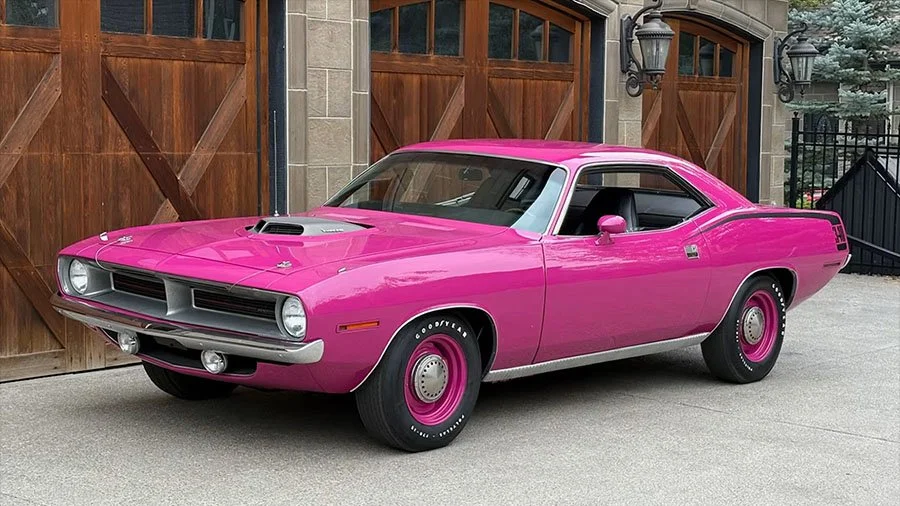
Moulin Rouge (paint code FM3) is one of the most striking and sought-after factory colors for the 1970 Plymouth AAR ‘Cuda. Part of Chrysler’s bold “High Impact” palette, this vibrant pink challenged the traditional macho image of muscle cars during the early 1970s.
While many buyers favored conventional reds, blues, or blacks, only a handful embraced this daring hue, making it one of the rarest Mopar colors ever produced. Today, a factory-documented Moulin Rouge AAR ‘Cuda is considered a true “unicorn” and commands exceptional prices in the collector market.
Its rarity is remarkable. Out of 2,724 AAR ‘Cudas built in 1970, estimates suggest that only seven to 47 were finished in Moulin Rouge. The color was introduced mid-year as part of a “Spring Special” release, limiting availability even further. Originally, the pink shade was perceived as unconventional or feminine, contributing to low adoption rates and making surviving examples exceedingly rare.
Beyond rarity, Moulin Rouge exemplifies the era’s high-impact, eye-catching design philosophy. The 1970 AAR ‘Cuda was already a performance icon, built for SCCA Trans-Am racing with a 340-cubic-inch “Six-Pack” V8, matte black fiberglass hood, and strobe stripes. The vivid pink paint against the blacked-out components creates a striking visual contrast, emphasizing both speed and style.
Collectors prize Moulin Rouge AAR ‘Cudas not just for their scarcity but for their bold statement in automotive history. Once overlooked, the color has become a highly valuable and iconic symbol of 1970s muscle car culture, with examples selling for over $300,000, highlighting its lasting appeal and status as a standout classic.
Also read: 5 Cars With Simple Mechanical Cooling vs 5 With Fragile Electric Fans
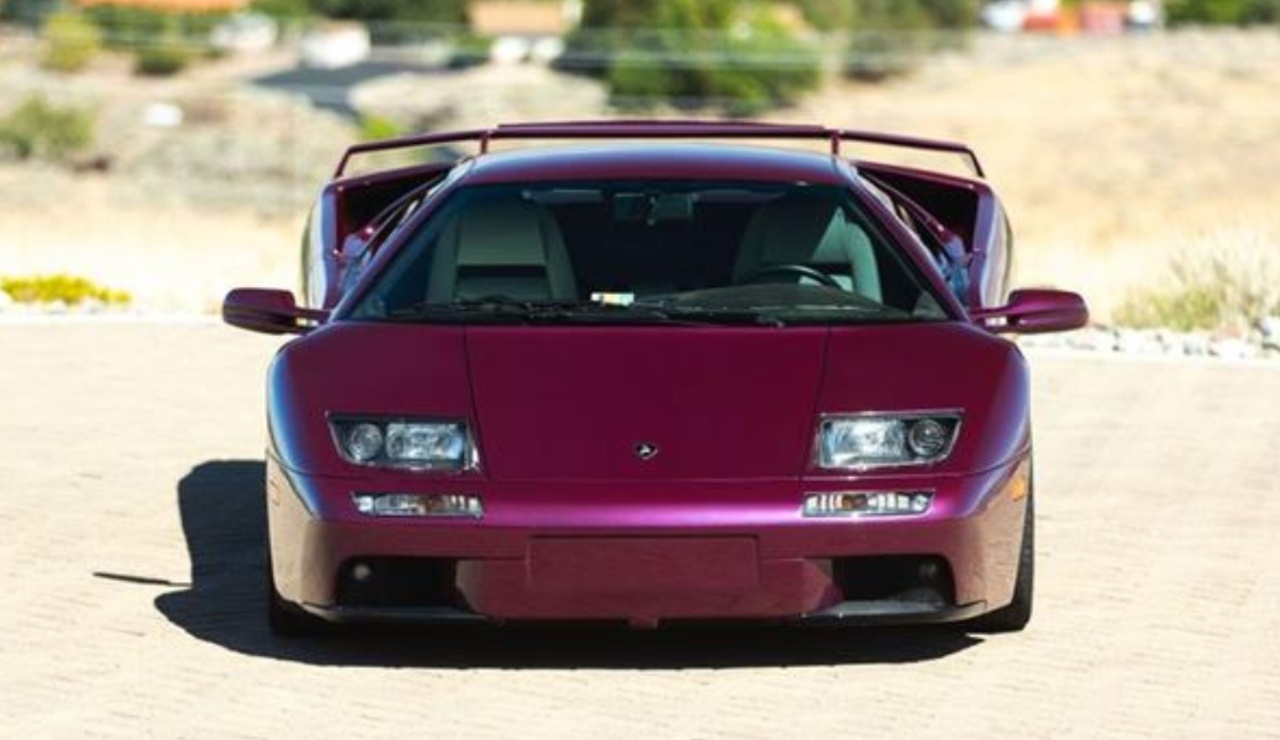
5. Viola Ophelia: The Final Diablo’s Regal Purple
Viola Ophelia is one of the rarest and most visually striking factory colors offered on the Lamborghini Diablo VT 6.0. Applied to the final iteration of the Diablo, this deep metallic magenta-purple epitomizes Lamborghini’s flair for bold, exotic finishes.
It combines pearlescent, light-shifting pigments that change subtly depending on viewing angle and lighting, enhancing the car’s dramatic scissor doors and wide, aggressive bodywork. The color is widely regarded as the ultimate statement of the model’s “poster car” status and marks the end of an era for Lamborghini’s classic Italian V12 supercars.
Viola Ophelia’s extreme rarity is a major factor in its desirability. Of the 334 Diablo VT 6.0s produced, reports suggest only two to five were finished in this color. This low number, coupled with its role as a flagship color for the final Diablo, makes it one of the most coveted options among collectors.
Its legacy is also tied to Lamborghini’s historic use of purple shades, notably launched on the 30th Anniversary SE30 Diablo, reinforcing its iconic status within the brand’s color heritage.
Beyond rarity, Viola Ophelia exemplifies the Diablo VT 6.0’s blend of old-school Italian chaos and modern refinement under the Audi era. The combination of low production, exotic appeal, and historical significance drives record values, with well-preserved examples often commanding $600,000 to $700,000 at auction.
Viola Ophelia represents the perfect mix of visual drama, brand identity, and scarcity, solidifying its place as one of the highest-value modern classic Lamborghini colors.
6. Emerald Green Metallic: The Sophisticated Gen 1 Viper
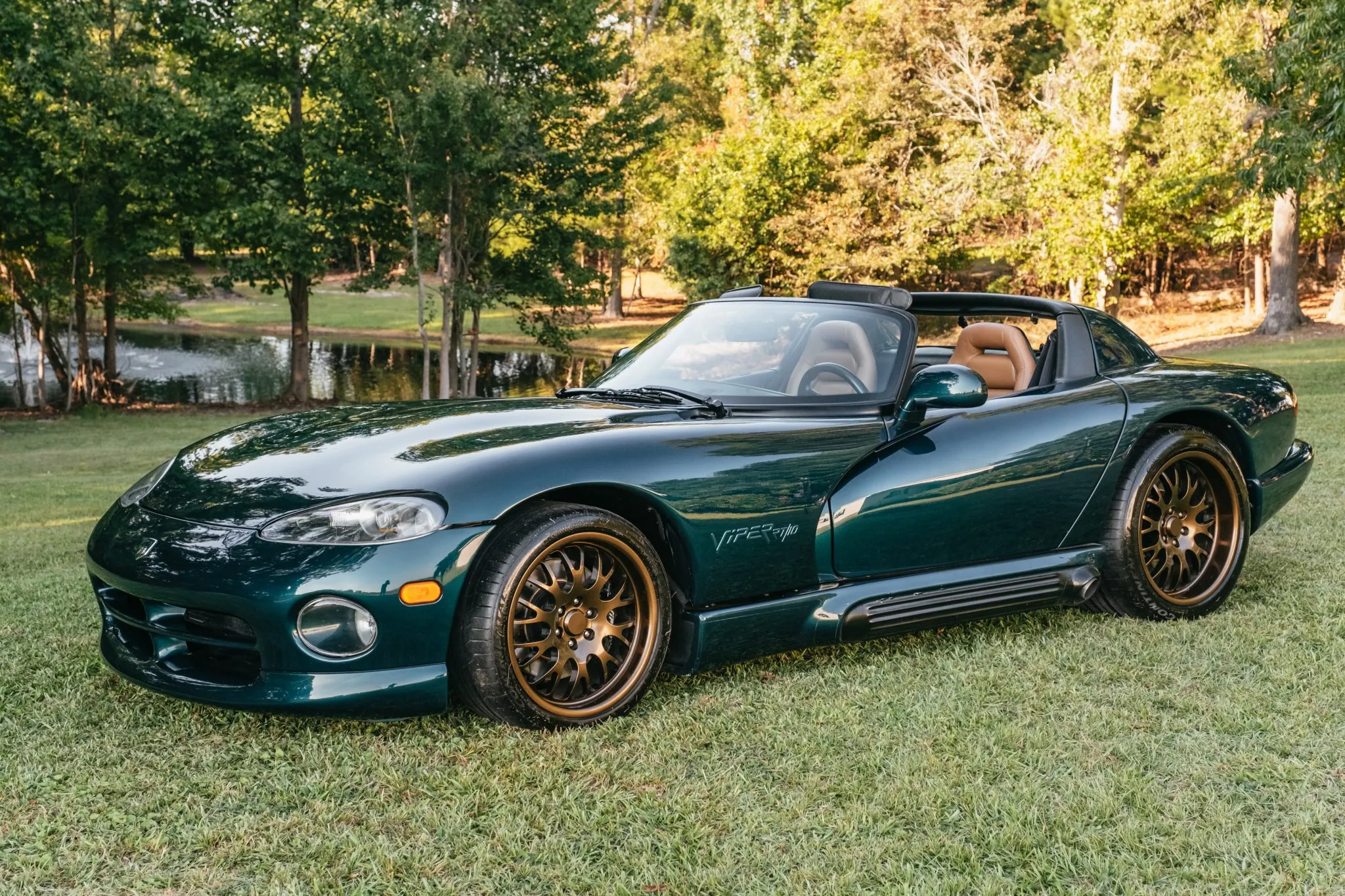
Emerald Green Metallic is one of the rarest and most refined factory colors offered on the first-generation Dodge Viper RT/10. Introduced in 1994 and 1995 as part of Dodge’s attempt to expand the Viper palette beyond the signature red, this deep metallic green provided a more understated, British GT-inspired aesthetic.
When paired with the optional tan leather interior and yellow “sneaky snake” badging, it created a sophisticated contrast to the aggressive, raw styling of the Viper. Because most buyers preferred bold, flashy colors, Emerald Green units were produced in extremely low numbers, with roughly 300 examples built, making it the rarest of the early Vipers.
The color’s rarity and elegance have made it highly desirable among collectors. Unlike standard red or black Vipers, Emerald Green stands out for its timeless appeal and subtle sophistication, offering a “sleeper” quality that rewards those seeking something different in a Gen 1 Viper. The 1995 model year is particularly prized, as it represents a peak in production quality before major updates in the second generation.
Collectors also value the combination of Emerald Green and tan leather interiors, which is significantly rarer than the standard gray, further increasing the car’s desirability. Condition remains a critical factor, with well-preserved, original-paint examples with low mileage and functioning original options commanding premium prices.
Today, Emerald Green Metallic Vipers are highly sought-after for their scarcity, refined visual appeal, and status as a unique twist on one of America’s most aggressive sports cars. Their rarity and elegance have cemented them as blue-chip classics within the Gen 1 Viper collector market.
7. Lava Orange: The Fiery Icon of the 991 GT3 RS
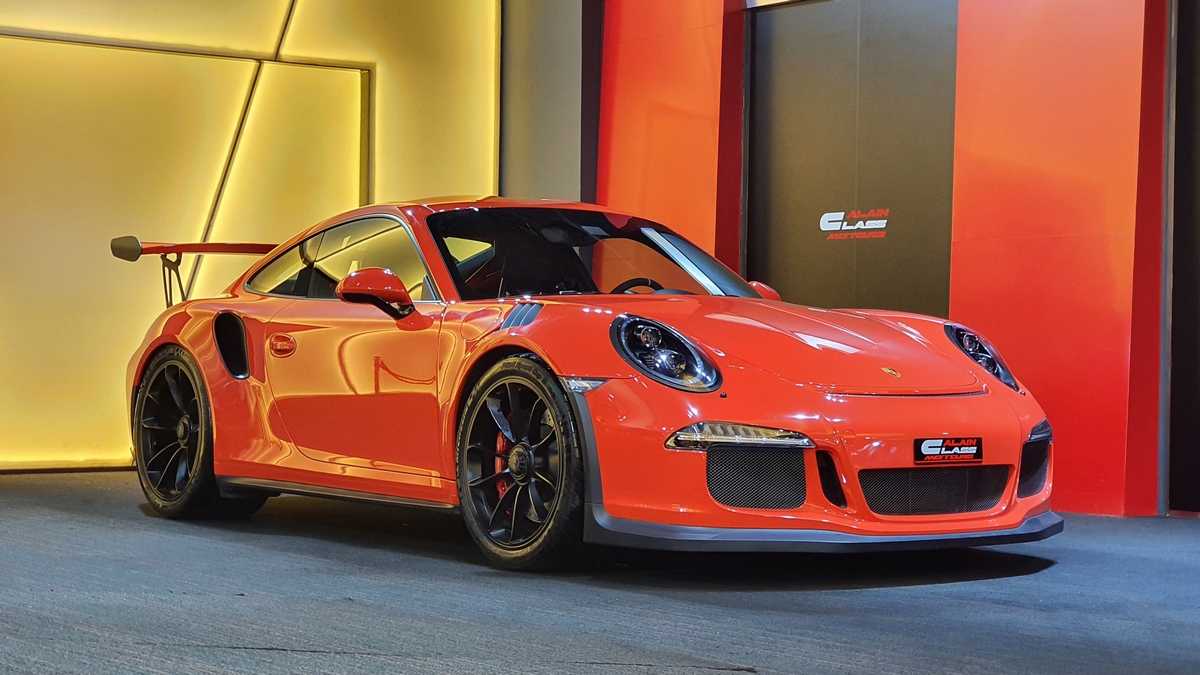
Lava Orange is one of the most celebrated factory colors for the Porsche 911 GT3 RS. Introduced on the 2015 991.1 GT3 RS, this vibrant, non-metallic orange revives a historic Porsche racing color, marking the end of a 20-year “orange famine” in the brand’s lineup.
Designed to emphasize the car’s wide track, carbon-fiber wings, and aggressive aero components, Lava Orange is both visually striking and emblematic of the GT3 RS’s 500-horsepower performance.
Its rarity enhances its appeal. While Lava Orange was a factory option, many buyers opted for more conservative shades like white or silver, making the bright, high-contrast orange relatively scarce. This limited production, combined with the bold aesthetic, has made it a sought-after color in the pre-owned market, often commanding significant premiums over standard finishes.
Beyond scarcity, Lava Orange carries a strong heritage appeal. It connects to Porsche’s motorsport history and is regarded by enthusiasts as a joyful, energetic color that perfectly complements the GT3 RS’s dynamic character. Its solid, vivid hue contrasts dramatically with black aero parts, creating a distinctive, attention-grabbing appearance that stands out in any collection.
Collectors also value Lava Orange for its status as a “special” factory option, bridging the gap between standard colors and the bespoke Paint to Sample program.
Its combination of heritage, rarity, and visual impact has solidified Lava Orange as one of the defining modern Porsche colors. Today, a 991 GT3 RS in Lava Orange is widely recognized as a modern classic and a must-have for enthusiasts who appreciate both performance and personality.
8. Copper Metallic: The Ultra-Rare 1986 Corvette
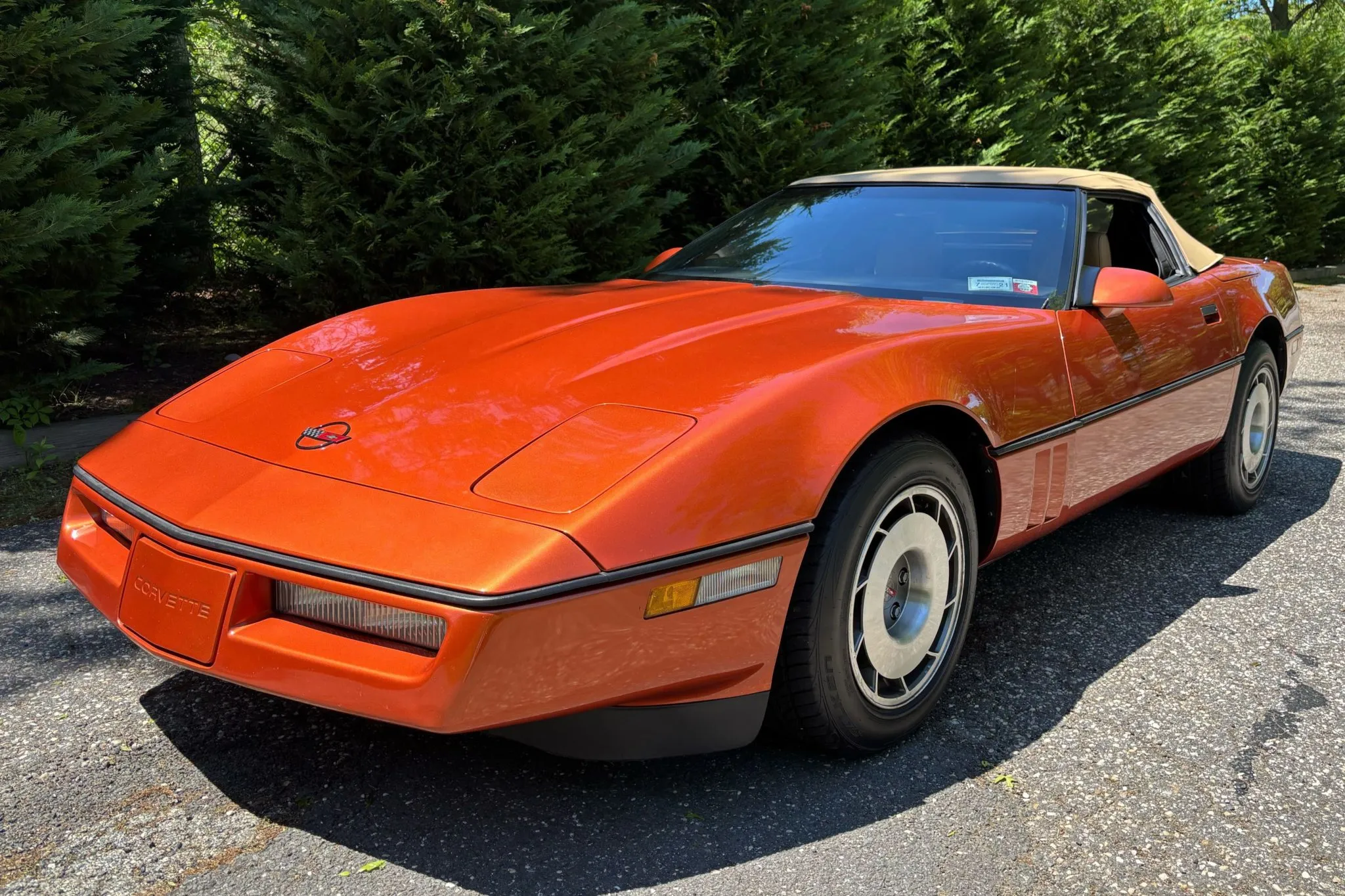
The 1986 Chevrolet Corvette C4 in Copper Metallic is one of the rarest and most legendary factory colors in Corvette history. Originally intended as a standard option, the metallic paint proved nearly impossible to apply correctly on the Corvette’s fiberglass and composite panels.
The metallic flakes failed to lie flat, resulting in inconsistent and unsatisfactory finishes. Due to these production challenges, Chevrolet discontinued the color after only four units were completed, instantly creating a “factory error” that has become a coveted collector’s legend.
This extreme scarcity drives the car’s extraordinary value today. With only four original Copper Metallic Corvettes ever produced, most enthusiasts have never seen one in person. If one of these rare examples were to appear at a major auction, it could shatter price records for C4 Corvettes, with potential six-figure valuations.
The short-lived production, coupled with the technical difficulty of applying the color, gives Copper Metallic a mythical status among collectors and Corvette aficionados.
Collector demand is fueled not only by rarity but by the story behind the car. The color’s failure on the assembly line and immediate discontinuation make it a unique piece of automotive history, a “what could have been” scenario that adds intrigue and prestige. Even compared to the 1987 follow-up Corvettes in similar shades, the 1986 models remain far more desirable due to their extreme scarcity.
For collectors fortunate enough to own one, maintaining original condition is crucial. Copper Metallic C4 Corvettes embody an intersection of rarity, historical curiosity, and aesthetic allure, securing their place as one of the most exclusive and valuable Corvettes ever produced.
The appeal of rare factory paint comes from a combination of scarcity, visual impact, and historical relevance. Colors such as Emerald Green Metallic on the first-generation Dodge Viper RT/10 or Lava Orange on the Porsche 911 GT3 RS transform cars into iconic examples of their models.
Collectors prize these finishes not only for rarity but for the way they make a vehicle stand out among peers. Through technical innovation, bold aesthetics, and cultural significance, rare factory colors continue to increase desirability and market value, securing their status as must-have options for enthusiasts and investors alike.
Also read: 10 Cars With Such High Resale Value That Buying Used Is a Mistake