

Buying a used performance car feels exciting for a reason. The idea of serious power, sharp handling, and premium engineering at a lower price can turn an ordinary search into something personal.
At the same time, performance vehicles carry higher risks than standard commuter cars. Hard driving, skipped servicing, and poorly done upgrades can hide behind glossy paint and confident sellers. A thrilling test drive does not always tell the full story.
Smart buyers approach this process with curiosity and restraint. Speed and sound should never override careful evaluation. Each decision needs to be guided by preparation rather than impulse. A used performance car can deliver years of enjoyment when chosen carefully, yet the wrong example can drain finances and patience faster than expected. The difference usually comes down to knowledge, not luck.
This guide breaks the process into eight focused tips designed to protect your money and your peace of mind. Each section uses real performance cars as examples, showing how certain models highlight specific risks and smart buying strategies.
The goal is not to discourage ambition, but to sharpen judgment. When you know what to look for and how to verify it, performance ownership becomes rewarding instead of stressful.
What follows is a practical roadmap built for enthusiasts who want excitement without regret. Every tip addresses a real issue that appears again and again in the used performance market. With the right approach, buying used can feel just as satisfying as driving fast on an open road.

1. Start With Proven Reliability Records Before Falling for Horsepower
Horsepower figures often dominate first impressions, yet durability determines whether ownership remains enjoyable or becomes stressful. A disciplined buyer begins by examining reliability history long before focusing on acceleration or top speed.
Performance cars operate under higher mechanical stress, which means design philosophy and build quality matter as much as output. Selecting models with established dependability reduces exposure to unexpected repair bills and repeated downtime.
Long-term ownership data offers valuable insight. Patterns found in owner reports, extended road tests, and independent reliability studies reveal how cars age beyond showroom conditions. Some performance vehicles deliver excitement while maintaining conservative engineering standards. These models may not chase headline statistics, yet they reward owners with consistency and lower maintenance frequency.
The Lexus IS F 2010 Sedan stands as a strong example of restrained engineering paired with performance intent. Its naturally aspirated V8 avoids extreme tuning, relying instead on robust internal components and proven systems. Owners frequently describe steady operation even when driven enthusiastically. That track record reassures used buyers, particularly when alternatives demand constant mechanical attention.
European performance cars also benefit from careful evaluation. The Porsche 911 Carrera S 2009 Coupe represents a generation shaped by incremental refinement rather than experimental design. Known issues exist, yet they are well documented and understood. Buyers can inspect specific areas with clarity rather than uncertainty. Access to established service solutions and specialist knowledge lowers ownership risk.
Avoid vehicles with reputations built solely on peak output or marketing claims. Certain models achieve impressive numbers through aggressive tuning that sacrifices longevity. Repeated reports of similar failures across many owners often indicate structural weaknesses rather than isolated misuse. Paying attention to these patterns prevents disappointment masked by early excitement.
Reliability does not imply dullness. Balanced engineering delivers consistent performance without constant intervention. Cars built with durability in mind allow drivers to enjoy them frequently rather than reserving use for fear of failure. That consistency also supports stronger resale prospects, since dependable models attract wider interest in secondary markets.
Beginning the search with reliable data sets a clear foundation. It shapes expectations, narrows options, and strengthens negotiation position. Power can impress during a brief drive, yet dependability defines ownership quality across years. Buyers who prioritize proven records place themselves in control before emotion enters the equation.

2. Demand Full Service Documentation and Learn How to Read It Properly
Documentation tells a story that no advertisement can replace. Service records reveal how a performance car was treated during periods of heavy use, high stress, and long-term ownership. Buyers who skip this step rely on assumptions rather than evidence, increasing exposure to hidden problems that surface after purchase.
Complete records indicate discipline. Regular servicing suggests an owner who respected mechanical limits and addressed issues early. Performance vehicles require attentive care, making documentation more than a formality. It becomes proof of responsibility. Without it, even a low-mileage example carries unanswered questions.
The BMW M3 2011 Coupe demonstrates how documentation separates good examples from risky ones. This model rewards proper servicing yet reacts poorly to neglect. Records showing consistent oil changes, inspection schedules, and completed recalls point toward stable ownership. Missing entries or vague descriptions raise concerns that deserve scrutiny.
High-output American performance cars share similar requirements. The Chevrolet Corvette Z06 2008 Coupe relies on precise servicing due to its engine design and performance focus. Documentation from recognized dealers or specialists carries weight. Professional records imply correct procedures, appropriate tools, and adherence to manufacturer guidelines.
Reading records requires careful attention. Mileage should progress logically without unexplained gaps. Major services should appear at recommended intervals. Look beyond basic maintenance and confirm care for performance-specific components such as braking systems, suspension elements, and driveline parts. Records should reflect proactive maintenance rather than reactive repair.
Seller hesitation around documentation often signals uncertainty. Owners who maintain their cars properly usually present records with confidence. Transparency simplifies negotiation, while missing paperwork justifies cautious pricing. Buyers can use verified care history to support fair offers grounded in evidence rather than assumptions.
Documentation also supports future ownership planning. Knowing what has been replaced and when helps predict upcoming expenses. That foresight reduces surprises and allows informed budgeting. Performance cars reward preparation, and paperwork provides the clearest preparation tool available.
Trust written history more than verbal assurance. Receipts and service logs represent accountability. For performance vehicles, this evidence separates enjoyable ownership from avoidable frustration.
Also Read: 8 Tips for Maintaining Your Vehicle Paint Without Professional Help
3. Inspect for Modifications With a Critical Eye, Not Automatic Fear
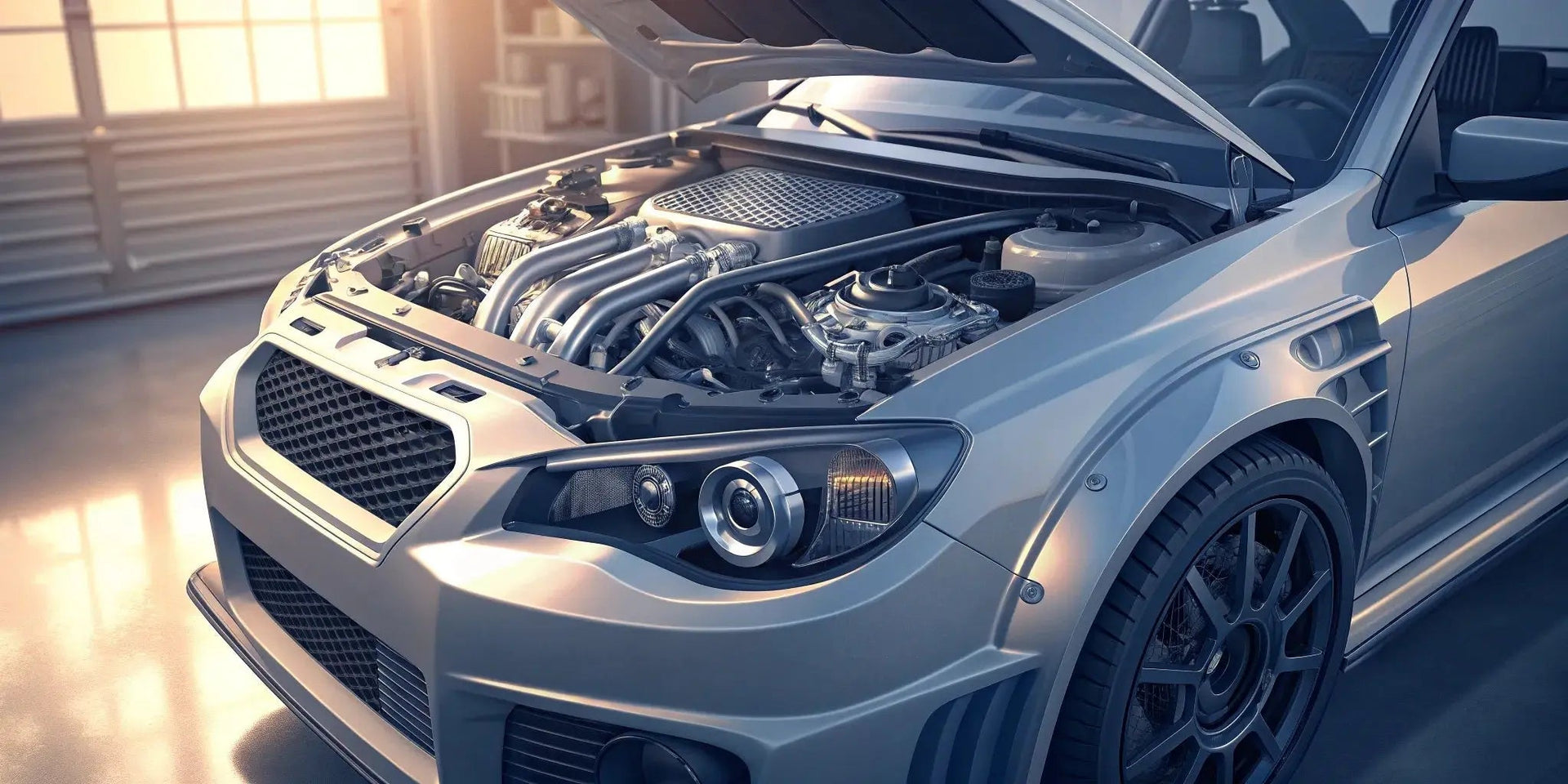
Performance cars frequently attract owners who wish to enhance appearance, sound, or power. Exhaust systems, suspension kits, engine tuning, and cosmetic upgrades are common in the used market. Such modifications are not inherently harmful; their impact depends on quality, installation, and intent.
The task of a careful buyer is to separate thoughtful changes from reckless experimentation, ensuring that enhancements do not hide underlying issues. Consider the Subaru WRX STI 2016 Sedan. This model often sees early modifications aimed at improving acceleration, handling, or aesthetic appeal.
When owners select reputable brands and employ professional installation, upgrades can enhance driving enjoyment without compromising reliability. Complete documentation of modifications receipts, service records, and tuning logs serves as evidence that changes were conducted responsibly. Absence of documentation raises uncertainty and warrants closer scrutiny.
Examine the Audi RS5 2014 Coupe. Delivered with a carefully engineered balance between power and handling, this car does not require extensive modifications. Aggressive changes to extract more horsepower without upgrading supporting systems can strain brakes, transmission, and suspension.
Observing whether reinforcement or supporting improvements accompany modifications is crucial. A car altered only for peak performance may indicate a focus on numbers rather than the entire usability or longevity. Physical inspection should include detailed visual checks and professional assessment. Wiring should be organized and secured, mounts must be stable, and modifications should show planning.
Avoid vehicles with evidence of hurried installations, inconsistent components, or repeated removal and reinstallation, as these point to trial-and-error alterations rather than long-term planning. Scratches, improper fasteners, or mismatched materials often reveal attempts to implement upgrades without consideration for durability.
Communication with the seller provides further insight. Inquire about the purpose of modifications, the environments where the car was driven, and whether factory components are retained. Original parts retained alongside upgrades indicate foresight and flexibility for future buyers.
Modifications designed for everyday enjoyment differ from those created for track use, where performance stress is higher and risks of wear multiply. Evaluating modifications critically allows buyers to make informed decisions rather than reacting to fear or assumptions. Cars with well-considered changes can offer enhanced performance and enjoyment without increased risk.
Recognizing quality work, professional installation, and thoughtful reasoning behind modifications ensures that the purchase remains a wise investment rather than a source of unforeseen problems. Understanding these differences between careful enhancement and careless alteration safeguards both the buyer and the vehicle.

4. Arrange a Pre-Purchase Inspection With a Specialist Who Knows the Model
A pre-purchase inspection conducted by an experienced specialist is essential when evaluating high-performance vehicles. Performance cars endure higher stress, tighter tolerances, and advanced engineering systems that general inspections may overlook.
A trained professional identifies subtle problems that influence safety, reliability, and long-term satisfaction. Investing in expert assessment prevents costly surprises after purchase and strengthens confidence during negotiation. The Mercedes-Benz C63 AMG 2012 Sedan demonstrates why this step is critical.
Specialists familiar with this model understand where mechanical wear appears first and which components warrant close examination. They can assess engine behavior, transmission response, suspension alignment, and brake system integrity with insight that exceeds a standard checklist. Such evaluations reveal issues that a casual inspection could easily miss.
Consider the Nissan GT-R 2013 Coupe. Its sophisticated drivetrain, dual-clutch transmission, and electronic performance systems demand specialized knowledge. A general mechanic may overlook subtle problems in turbochargers, control units, or cooling systems.
Expert evaluation identifies potential weak points and provides clarity on maintenance history. Costs associated with the inspection are minor compared to repairing overlooked faults later. A comprehensive inspection should cover mechanical, electronic, and structural systems.
Compression testing, suspension integrity assessment, and brake performance evaluation offer objective metrics. Specialists also check the underbody condition for corrosion, past repairs, or stress damage. A thorough report documents findings, supporting informed decision-making and providing leverage during price discussions.
Selecting the right inspector matters as much as selecting the car itself. Professionals with direct experience on the specific model bring focused knowledge, recognizing patterns that indicate wear or abuse. Asking about previous inspections performed and common findings builds trust in the process. Experience translates to informed recommendations, mitigating risk while identifying genuine value.
Skipping a professional inspection may save time initially, but it increases exposure to mechanical failures, hidden repairs, or overlooked modifications. Performance cars reward patience and diligence. A specialist’s insight bridges the gap between appearance and reality, ensuring that the buyer acquires a vehicle in condition consistent with expectations and long-term enjoyment.

5. Evaluate Ownership History Through Behavior Patterns, Not Just Owner Count
Examining ownership history goes beyond counting titles. Each owner leaves an imprint, and the habits that shaped the car’s life reveal much more than a simple number. One inattentive driver can impose long-lasting damage, whereas several cautious owners may leave the vehicle in remarkable condition.
The Ford Mustang Shelby GT350 2017 Coupe offers a clear example. Known for spirited driving potential, this model emphasizes the need to understand prior usage. Maintenance intervals, brake and tire replacement, and documented servicing patterns indicate responsible operation. A car with timely brake changes and tires replaced at proper intervals suggests enthusiastic yet controlled use.
Performance sedans often see mixed use, combining daily commuting with spirited driving sessions. The Alfa Romeo Giulia Quadrifoglio 2018 Sedan illustrates this. A vehicle showing steady mileage accumulation alongside consistent servicing records implies routine use rather than neglect. Long periods of inactivity, even for low-mileage cars, can lead to dried seals, electronic glitches, and fluid degradation. Buyers must recognize that low mileage alone does not guarantee sound condition.
Communication with sellers provides crucial context. Questions about past driving habits, storage conditions, and routine maintenance reveal patterns not found in vehicle reports. Transparent owners supply clear answers with specific dates, documented services, and observable reasoning.
Hesitant or defensive replies may indicate hidden problems or attempts to gloss over abuse. Understanding how previous owners treated their vehicles enhances buyer confidence and supports informed decision-making. Vehicle history reports supply structural data but rarely illustrate the intensity of use. Cross-referencing documentation, physical condition, and owner statements fills that gap.
Observing behavioral indicators allows evaluation of performance cars in their natural state, how they were driven, maintained, and cherished. Cars that have been treated with knowledge and respect retain more of their mechanical integrity, offering owners a smoother and safer experience after purchase.
Prioritizing behavioral insight over superficial metrics gives buyers an advantage. Instead of relying solely on numerical records or title counts, analyzing patterns creates a realistic picture of what ownership has demanded from previous drivers. This perspective protects against acquiring a machine that looks desirable on paper but suffers from hidden neglect, ensuring enjoyment and long-term value.

6. Budget Beyond Purchase Price to Protect Ownership Satisfaction
Acquiring a performance car involves more than settling on a purchase price. Maintenance, insurance, fuel, and wear items quickly contribute to the total cost of ownership. Ignoring these factors can transform excitement into frustration, so careful planning is essential to preserve satisfaction. Buyers who anticipate expenses manage both the financial and mechanical demands of a high-performance machine with confidence.
The Audi R8 V10 2015 Coupe illustrates the importance of budgeting. While the purchase price may appear appealing, ongoing servicing remains premium. Tires, brakes, oil changes, and scheduled inspections often cost far more than routine maintenance for standard vehicles. Preparing for these costs ensures owners maintain mechanical health while enjoying the car as intended.
The Chevrolet Camaro ZL1 2019 Coupe provides another example. High-performance components wear rapidly, particularly under spirited driving conditions. Tires deteriorate faster, brake pads and rotors require frequent replacement, and fluids must be monitored diligently. Accounting for these items in a financial plan avoids unwelcome interruptions to ownership and reduces stress during everyday use.
Insurance considerations are equally important. Performance cars typically fall into higher risk categories, impacting premiums. Obtaining quotes before committing to a purchase allows buyers to make informed decisions and avoid surprises. Fuel consumption also adds to costs, especially with high-output engines optimized for performance rather than efficiency. Proper planning prevents financial strain from overshadowing the driving experience.
Well-structured budgeting transforms ownership from reactive to proactive. Adequate funds allow timely maintenance, preserving vehicle condition and safety.
Owners can address issues immediately rather than delaying repairs, which could exacerbate problems and accelerate component wear. This approach maintains the driving pleasure that drew buyers to performance cars in the first place.
Stretching finances to acquire a vehicle without accounting for its operational demands often results in compromises. Mechanical neglect or deferred servicing diminishes performance, reduces longevity, and increases repair costs.
Buyers who prepare realistic budgets maintain both the health of the vehicle and their own enjoyment, ensuring that each drive remains an experience rather than a financial concern.
Strategic financial planning complements inspection and documentation review. By combining these practices, buyers approach acquisition holistically, reducing risk while maintaining the thrill and freedom of owning a performance car.

7. Study Market Pricing Trends to Avoid Emotional Overpayment
Emotional excitement often defines the early stages of shopping for a used performance car. Engine sound, acceleration figures, and exterior styling can easily influence judgment before financial sense has a chance to speak. Pricing research serves as a stabilising tool, allowing buyers to separate desire from reason.
A clear understanding of market behaviour protects against inflated prices driven by urgency, seller pressure, or temporary popularity. Market awareness begins with patience. Performance vehicles tend to experience sharp price movements influenced by demand cycles, media attention, and seasonal buying habits.
Observing listings over several weeks provides insight into realistic selling ranges rather than advertised expectations. Sellers frequently test higher prices, especially when a model receives renewed attention online. Buyers who wait often see those same cars relisted at reduced figures.
The Toyota Supra 2021 Coupe illustrates this pattern clearly. Initial availability generated intense demand, pushing asking prices well above manufacturer-suggested levels. Buyers who examined completed transactions rather than headlines noticed gradual price normalisation. Those individuals avoided paying early premiums by recognising that supply would eventually stabilise. This approach rewards discipline rather than impulse.
Regional pricing differences also matter. Vehicles such as the Dodge Challenger SRT Hellcat 2018 Coupe appear in larger numbers in certain markets. Sellers in lower supply areas often justify higher prices using scarcity arguments that do not reflect wider availability. Comparing listings across multiple locations reveals these discrepancies and provides negotiation leverage.
Reliable pricing assessment requires more than browsing popular websites. Online listings reflect ambition, not agreement. Auction outcomes, dealership sales records, and verified private transactions give stronger indicators of real value. Mileage, condition, service history, and originality should guide comparisons. A modified example cannot be priced the same as a factory specification vehicle, regardless of the added parts cost.
Resisting urgency remains essential. Sellers frequently emphasise immediate interest from other buyers to provoke rushed decisions. Performance cars rarely disappear permanently. Another example usually appears with time, often in better condition or at a fairer price. Calm evaluation strengthens bargaining position without sacrificing opportunity.
Understanding pricing behaviour also supports future resale planning. Purchasing at a sensible market level preserves flexibility should ownership circumstances change. Overpayment restricts options and extends recovery time. Pricing knowledge transforms buying from reaction into calculated decision-making, protecting both enjoyment and financial balance.
Also Read: 8 Tips for Organizing a Truck Bed to Maximize Your Daily Utility

8. Test Drive With Purpose Instead of Chasing Thrill Alone
A test drive should function as an evaluation exercise rather than an emotional reward. Performance cars impress quickly, which can distract buyers from subtle mechanical or usability concerns. Approaching this stage with intention allows meaningful assessment of condition, comfort, and long-term suitability.
Preparation matters before the engine starts. Adjust seating position, mirrors, and steering wheel to ensure proper driving posture. A car that feels uncomfortable at this stage may become tiring during extended use. Performance should enhance enjoyment, not demand physical compromise.
The Porsche Panamera GTS 2016 Sedan provides a useful example. Acceleration feels smooth and controlled, yet attention should focus on transmission behaviour during low-speed movement. Hesitation, delayed engagement, or harsh moves often appear during gentle driving rather than aggressive acceleration. Suspension response over uneven surfaces also reveals wear that spirited driving can hide.
Sound evaluation requires restraint. Excessive throttle masks drivetrain noise, vibration, and irregular operation. Gradual input allows detection of rattles, drivetrain shudder, or inconsistent power delivery. Braking response should feel linear and predictable without vibration through the pedal or steering wheel.
Interior assessment deserves equal focus. The Lexus RC F 2019 Coupe demonstrates how cabin refinement contributes to ownership satisfaction. Check climate controls, infotainment response, seat adjustment, and visibility. Electrical faults often present themselves during routine operation rather than performance driving. Ignoring these details leads to frustration after purchase.
Varied driving conditions provide better insight. Urban speeds highlight clutch engagement quality, steering effort, and ride comfort. Highway driving reveals alignment issues, wind noise, and stability. If possible, allow the car to reach operating temperature and observe cooling system behaviour under normal use.
Bringing a neutral companion adds value. Another observer often notices issues overlooked during personal excitement. Silence during parts of the drive helps identify mechanical sounds without distraction. Post-drive discussion clarifies impressions while details remain fresh.
A focused test drive builds confidence grounded in evidence. Treating this step as an inspection rather than entertainment reduces risk. Performance cars reward informed ownership, and disciplined evaluation ensures that enjoyment begins on a solid foundation rather than hope.
