

The automobile has always been a canvas for human ingenuity. Engineers and designers have constantly pushed the boundaries of what a car can look and feel like.
Among the most visible expressions of this creativity is the humble car door. It seems simple at first glance, yet it has inspired some of the most daring and unconventional engineering solutions in history.
Most people are familiar with the standard hinged door that swings outward. It works, it’s reliable, and it has stood the test of time. But throughout automotive history, countless inventors and manufacturers dared to ask a different question. What if there was a better way?
From doors that slid upward like elevator panels to mechanisms that spun and rotated in ways that defied logic, these innovations captured imaginations worldwide. Some were born from genuine safety concerns. Others were purely about style and showmanship.
Yet despite their brilliance, none of these mechanisms became mainstream. They faded into the footnotes of automotive history. Each one carries a fascinating story of ambition, engineering, and the hard truth that innovation alone is never enough. Here are eight of the most remarkable door mechanisms that automotive history chose to leave behind.
1. Gullwing Doors
Gullwing doors are perhaps the most romantically named mechanism in all of automotive design. They open upward from a hinge at the roofline, sweeping dramatically into the air like the wings of a bird in flight. The visual impact is immediate and unforgettable. Even today, seeing a gullwing door open stops people in their tracks.
The story of the gullwing door begins with one of the most celebrated racing cars ever built. Mercedes-Benz introduced the mechanism on its legendary 300 SL in 1954. The reason was entirely practical at first. The car’s tubular spaceframe chassis sat so high on the sides that conventional doors simply could not be fitted. Engineers solved the problem by hinging the doors at the roof instead.
The result was accidental brilliance. The 300 SL became one of the most desired and visually striking cars of its era.
Celebrities, royalty, and racing drivers all wanted one. The gullwing door transformed from an engineering compromise into a symbol of aspirational luxury.
However, the practical problems were very real. Getting in and out required a specific technique that not every driver could master. Taller passengers often found the experience genuinely uncomfortable. In hot weather, the enclosed cabin trapped heat with surprising intensity.

Safety concerns also emerged quickly. In the event of a rollover, the doors could become impossible to open. The weight of the car pressing down on the roof frame would jam them completely shut. This was not a theoretical worry. It was a genuine life-threatening hazard that engineers struggled to address.
Mercedes-Benz did not offer the mechanism on road cars again for decades. When it finally returned on the SLS AMG in 2010, the company had to engineer special pyrotechnic hinges. These explosive bolts could blow the doors off in a rollover situation. It was a remarkable solution to a problem the design itself had created.
Later, DeLorean made the gullwing door famous all over again with the DMC-12 in 1981. The car’s stainless steel body and upward-opening doors became cultural icons.
They appeared in Back to the Future and lodged themselves permanently in popular memory. Yet the DeLorean also suffered from all the same practical problems that plagued the original design.
The gullwing mechanism demands more vertical clearance than most parking garages allow. Underground car parks become a genuine obstacle.
Rain and wind can make entry a miserable experience. The doors are also significantly heavier than conventional ones, adding stress to the roof structure over time.
Despite all this, gullwing doors remain deeply beloved. They appear on concept cars and limited-edition supercars regularly. The Mercedes SLS, the Tesla Model X in modified form, and various one-off creations have kept the dream alive.
Yet none have managed to make the mechanism genuinely practical for everyday driving. The gullwing door is automotive theatre at its finest. It is breathtaking to witness and deeply impractical to live with.
2. Scissor Doors
Scissor doors open vertically, rotating upward and forward from a hinge at the front of the door frame. They are sometimes called Lambo doors for obvious reasons. Lamborghini introduced the mechanism on the Countach in 1974 and never looked back. The visual effect is aggressive, theatrical, and unmistakably Italian.
The original purpose of scissor doors on the Countach was partly practical. The car’s extremely wide body and low roofline made conventional doors awkward. A door that swung outward would have required an enormous amount of clearance. The vertical rotation solved this problem neatly while creating a signature visual moment.
Lamborghini’s designers understood immediately what they had created. The act of a scissor door opening became part of the ownership experience. Photographers and onlookers would gather just to watch the mechanism in action. It turned the simple act of getting into a car into a performance. No other manufacturer had achieved quite this level of theatrical drama.
The Countach was followed by the Diablo, the Murcielago, and the Aventador. Every single one of these cars used scissor doors as a defining feature.
The mechanism became so associated with Lamborghini’s identity that dropping it seemed almost unthinkable. It is one of the most successful branding exercises in automotive design history.

Yet the problems are significant. Scissor doors require substantial vertical clearance to open fully. Underground parking garages often have ceilings too low to allow the doors to reach their proper position. This forces drivers to slide awkwardly into the car at an angle that is neither comfortable nor dignified.
Rain is another serious issue. When a scissor door is open, the entire inside of the car faces upward. A sudden shower can soak the seat, the controls, and the driver in seconds. There is very little a driver can do to prevent this happening. Umbrellas become essential accessories rather than optional extras.
The sill height on most scissor-door cars is also considerable. Climbing over a high sill while bending under a low roofline is challenging for most people. For older drivers or those with mobility issues, it can be genuinely impossible. The car demands that the driver adapt to it rather than the other way around.
Aftermarket companies have made fortunes selling scissor door conversion kits for ordinary cars. This speaks to the mechanism’s enduring appeal. Yet these conversions often create new problems including compromised door seals, increased wind noise, and weakened structural integrity. The scissor door is spectacular in controlled environments. It is a liability in the real world.
3. Suicide Doors
Suicide doors are hinged at the rear of the door frame rather than the front. They open in the opposite direction to conventional doors. The name itself is dramatic and unsettling. It speaks to a very real danger that eventually killed the mechanism’s mainstream popularity.
The rear-hinged door was common in the early days of motoring. Before car bodies had central pillars between front and rear doors, the configuration made practical sense.
Passengers could step elegantly into the vehicle from the rear. Chauffeur-driven cars particularly favored this arrangement. It gave passengers easy, dignified access to the rear seat.
The danger became apparent as cars grew faster and more common. If a rear-hinged door opened while the car was in motion, the airflow would catch it instantly. The door would be ripped open violently and fully. A passenger could be thrown out of the vehicle with catastrophic consequences. The laws of aerodynamics worked directly against the mechanism at speed.
Lincoln took the suicide door concept and transformed it into a luxury statement. The Continental of the 1960s used rear-hinged rear doors as a deliberate design choice. It looked impossibly elegant and sophisticated. The car became one of the most visually beautiful American automobiles of the twentieth century.
However, Lincoln addressed safety by making the doors impossible to open unless the car was stationary. This electronic interlock reduced the danger significantly. It also demonstrated that the industry knew the mechanism was inherently problematic. The solution was a workaround rather than a fix.
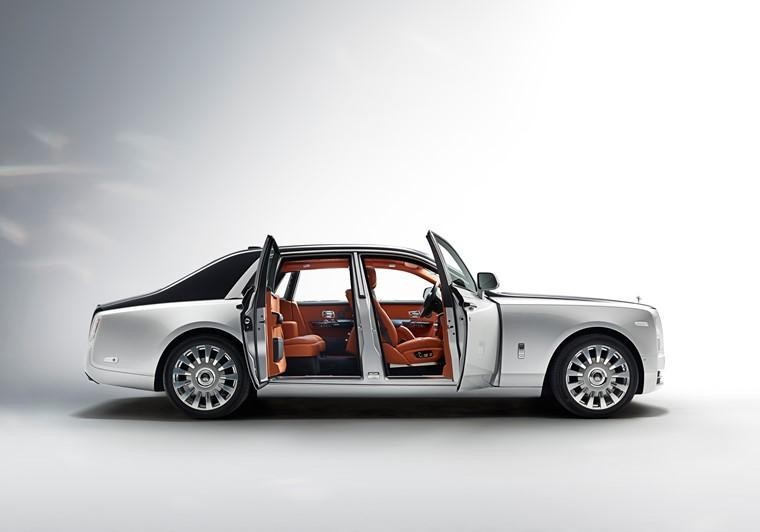
Modern reinterpretations of the suicide door have appeared on vehicles like the Rolls-Royce Ghost and Phantom. Rolls-Royce calls them coach doors with characteristic understatement.
The brand argues that the rear-hinged configuration allows passengers to exit more gracefully. It is a compelling argument in the context of a car that costs several hundred thousand pounds.
Mazda introduced a version of the concept on the RX-8 in 2003. The rear doors were smaller and could only be opened once the front doors were already open.
This pillarless design looked extraordinary when all four doors were open simultaneously. But the rear doors were so small and awkwardly placed that rear passengers still struggled considerably.
The suicide door refuses to fully disappear. It appears periodically on concept cars and luxury vehicles as a reminder of a more elegant motoring era. Yet its fundamental safety compromise means it will never return to mainstream use. The physics of an accidentally opened door at speed remain unchanged regardless of how beautiful the car looks.
4. Sliding Doors
Sliding doors move horizontally along a track, disappearing behind the rear bodywork rather than swinging outward. They are the defining feature of the modern minivan. Every school pickup line features the unmistakable rumble of a sliding door rolling open. The mechanism is practical, safe, and deeply, profoundly unglamorous.
Chrysler popularized the sliding rear door on passenger vehicles with the introduction of the minivan in 1983. The concept was borrowed directly from commercial vans. Chrysler recognized that young families needed easy access to rear seats without doors swinging dangerously into traffic or onto other parked cars. The sliding door solved this problem completely.
The mechanism works brilliantly for its intended purpose. Children can open sliding doors without the risk of denting adjacent vehicles. The doors cannot be caught by wind and slammed back onto passengers. The wide opening they create makes loading children, car seats, and groceries far easier than any conventional door can manage.
Several manufacturers have attempted to bring the sliding door into more prestigious vehicle segments. The Honda Element used sliding rear doors on a small crossover.

The Mazda5 applied the concept to a compact people carrier. Both were genuinely clever vehicles that never quite found their audience. The sliding door carried too much minivan DNA to be considered cool.
The mechanical complexity of a sliding door system is considerable. The track must be perfectly aligned to prevent sticking and rattling. Over time, dirt and debris accumulate in the track channels. This can cause the door to slide unevenly or require more force to operate. Electric sliding doors add motors, sensors, and control modules that all represent additional failure points.
In cold weather, sliding door tracks can freeze solid. This leaves passengers stranded outside the vehicle in precisely the conditions when getting inside quickly matters most. Warming the tracks with de-icer takes time and effort. It is a fundamental weakness that conventional hinged doors do not share.
The sealing of a sliding door is also more complex than a hinged equivalent. The door must seal against the body at multiple points as it moves along the track. This makes achieving the same level of wind noise suppression significantly harder. Luxury vehicle buyers will not accept any compromise in cabin quietness. This alone largely excludes sliding doors from premium segments.
Despite all this, the sliding door is arguably the most genuinely useful door mechanism ever invented for family transport. It is simply shackled to an image it cannot escape. Until someone finds a way to make a sliding door feel sophisticated, it will remain the exclusive domain of the practical and the sensible.
Also Read: 12 Heavy Duty Work Vans Preferred by Electricians and Plumbers in the US
5. Canopy Doors
Canopy doors treat the entire upper portion of the car body as a single opening section. Like the cockpit of a fighter jet, the roof, windshield, and sometimes the side glass all lift together as one piece. The driver and passengers are revealed as if being presented to the world. The drama is absolute and total.
Several concept cars have explored this configuration over the decades. BMW presented various canopy-style opening concepts at motor shows throughout the 1990s and 2000s. The visual effect in a well-lit exhibition hall is extraordinary. Crowds gather, cameras flash, and automotive journalists run out of superlatives. The concept car becomes the star of the entire show.
The Mazda Autozam AZ-550 of 1992 used a canopy-style door on a tiny sports car concept. The entire front of the vehicle hinged upward, allowing access to a small two-seat cockpit.
It looked like a vehicle from a science fiction film. It was bold, inventive, and utterly impractical for any real-world application.
The fundamental engineering challenge is enormous. A canopy door must incorporate the windshield, which is a structural safety component in any modern car.
It must also house the wiper mechanism, the defroster elements, and potentially the airbag systems. Integrating all of these into a moving panel adds extraordinary complexity and weight.

Weather sealing presents another insurmountable challenge. A conventional door seals against a fixed frame on four sides. A canopy door must seal across a much larger surface area as a single moving unit.
Achieving consistent, reliable weather sealing across that entire perimeter is enormously difficult. Any failure means rain, wind, and road noise entering the cabin.
Structural rigidity suffers dramatically when the entire upper section of the car is made into a moving panel. Modern cars derive a significant portion of their torsional stiffness from the roof structure.
Remove that structure from the equation and the car body becomes considerably more flexible. This affects handling, noise, and the ability of the car to protect occupants in a crash.
The rollover safety problem is even more severe than with gullwing doors. If a canopy-door car rolls over, the occupants are enclosed in a structure with no fixed roof above them. The canopy itself is likely to deform under the weight of the vehicle. The consequences for occupant protection are deeply troubling.
Canopy doors remain a concept car staple precisely because they never have to face these real-world challenges. In the controlled environment of a motor show, the mechanism is pure magic. In a traffic jam on a rainy Tuesday morning, it would be an unmitigated disaster.
6. Butterfly Doors
Butterfly doors combine elements of both gullwing and conventional door movements. They hinge at the front like a regular door but also rotate upward as they open.
The result is a movement that sweeps the door both outward and skyward simultaneously. The effect is elegant and distinctive without being as extreme as a pure gullwing.
The McLaren F1 of 1992 used butterfly doors and set the benchmark for the mechanism. Gordon Murray’s design team chose the configuration specifically to allow easier access to the central driving seat.
The car’s unusual three-seat layout placed the driver in the middle with passengers on either side. Butterfly doors allowed all occupants to enter and exit without climbing over each other.
Ferrari adopted the butterfly door configuration for the Enzo in 2002. The Enzo was designed to evoke a Formula One car for the road. Its butterfly doors reinforced this connection beautifully. Opening the door felt like a pre-race ritual. Every aspect of the experience was designed to make the driver feel like a racing professional.
The mechanism offers genuine advantages over pure gullwing doors. Because the door moves both outward and upward, less vertical clearance is required. The driver can access the car in spaces where a gullwing would be completely impossible. This makes the butterfly door marginally more practical without sacrificing the visual drama entirely.

However, the sealing and weatherproofing challenges remain substantial. The complex movement of the door means the seal must accommodate motion in two planes simultaneously.
Achieving a consistent, reliable seal across that movement is significantly harder than with a conventional door. Wind noise and water ingress are persistent concerns on poorly maintained examples.
The hinge mechanism itself is a work of considerable engineering complexity. It must be strong enough to support the weight of the door repeatedly over many years.
It must also be smooth and precise enough to maintain the premium feel expected by buyers spending enormous sums of money. When these hinges wear or corrode, repair costs can be astonishing.
For most buyers, butterfly doors are primarily a status symbol. They announce arrival at any destination with unmistakable authority. Valet parking attendants photograph them. Passersby stop and stare. The car becomes a moving piece of performance art every time a door is opened.
Yet the butterfly door has never moved beyond the highest tier of the supercar market. The engineering cost, the sealing complexity, and the structural compromises involved make it entirely unsuitable for mainstream application. It remains a spectacular luxury reserved for those who can afford to pay for beauty regardless of practicality.
7. Revolving Doors
Some of the most unusual door mechanisms in automotive history were inspired not by other cars but by buildings. The revolving door concept, borrowed directly from hotel and department store architecture, appeared on at least one extraordinary concept vehicle. The idea was to create a seamless entry experience that eliminated the conventional door entirely.
The concept appeared most notably on various dream car show vehicles from American manufacturers during the 1950s and 1960s. This was the golden age of concept car extravagance.
Designers were given enormous budgets and almost total creative freedom. The objective was to astonish visitors at motor shows and generate headlines in newspapers and magazines worldwide.
A rotating entry system allowed the driver or passenger to approach the side of the vehicle. A section of the body would then revolve, presenting an opening.
The occupant would step into the rotating section, which would then complete its rotation, seating them inside the vehicle. The door itself effectively became part of the car’s body, invisible when closed.
The visual elegance of this concept was undeniable. There were no visible door handles, no gaps in the bodywork, no disruption to the flowing lines that 1950s designers loved so passionately.
The car looked like a single, unbroken sculpture from the outside. It represented the ultimate expression of the era’s obsession with futurism and technological optimism.
The mechanism also requires a completely flat, even surface for the door to rotate against. Road cars operate in environments where mud, gravel, and debris constantly contaminate every surface.
Any foreign material caught in the rotation gap could jam the mechanism completely. The occupant would then be trapped inside the car with no means of exit.
The revolving car door was never anything more than a show car fantasy. It borrowed prestige from the grand hotels of the era without understanding why revolving doors work in architecture.
In a building, the door operates on a fixed, controlled surface. In a car, nothing is fixed and nothing is controlled. The concept was beautiful, impossible, and completely irresistible to the dreamers of the jet age.
8. Inward-Folding Doors
Inward-folding doors represent one of the most logical responses to an obvious problem. In dense urban environments, the space required to open a conventional car door is significant. Parking spaces are tight.
Traffic passes close by. Opening a door into the path of a cyclist or another vehicle can cause serious injury. The inward-folding door promised to eliminate this hazard entirely.
The concept works by hinging the door so that it folds inward into the cabin space rather than swinging outward. The door effectively collapses against the interior of the car. This requires the occupant to step out through the resulting opening before the door has reached the bodywork. In theory, the car becomes possible to enter and exit without intruding into adjacent space at all.
Various inventors and designers presented inward-folding door concepts throughout the twentieth century. The EV1 concept era of the 1990s produced several urban vehicle designs that incorporated this thinking.
As cities grew denser and parking spaces smaller, the problem the inward-folding door addressed became increasingly urgent. The solution seemed logical and well-timed.
The ergonomic challenge proved fatal to the concept. When a door folds inward, it enters the space that the occupant needs to use in order to exit the car. The door and the person are trying to occupy the same space simultaneously. This creates a ballet of awkward movements that becomes more difficult to choreograph the larger the occupant happens to be.

Interior trim and upholstery suffer severely with an inward-folding mechanism. The inside face of the door regularly contacts the seat, the floor, and other interior surfaces.
Wear and damage accumulate rapidly. The car’s interior begins to look tired and battered far sooner than with a conventional door. Luxury buyers find this entirely unacceptable.
The structural requirements of a door that folds inward are also significantly different from a conventional one. The hinge must be positioned differently and must withstand forces in a completely different direction.
Crash safety requirements demand that doors resist lateral intrusion from external impacts. A door designed to fold inward works in direct opposition to this requirement.
Window mechanisms become extraordinarily complex when the door folds inward. The glass must either be fixed permanently or removed before entry and exit.
A winding or electric window mechanism must survive the folding action without failure. No manufacturer has ever produced a fully satisfying solution to this problem at an acceptable cost.
The inward-folding door remains the great unresolved promise of automotive door design. It addresses a real problem that gets more serious as urban populations grow. Yet every attempted solution has created a new set of problems that outweigh the original benefit.
The conventional outward-swinging door, for all its frustrating demands on space, has proven stubbornly superior in almost every practical measure. The inward-folding door is the idea that makes perfect sense until the moment you actually try to use it.
Also Read: 8 Pickups With Composite Beds That Never Rust vs 8 With Steel Beds
