
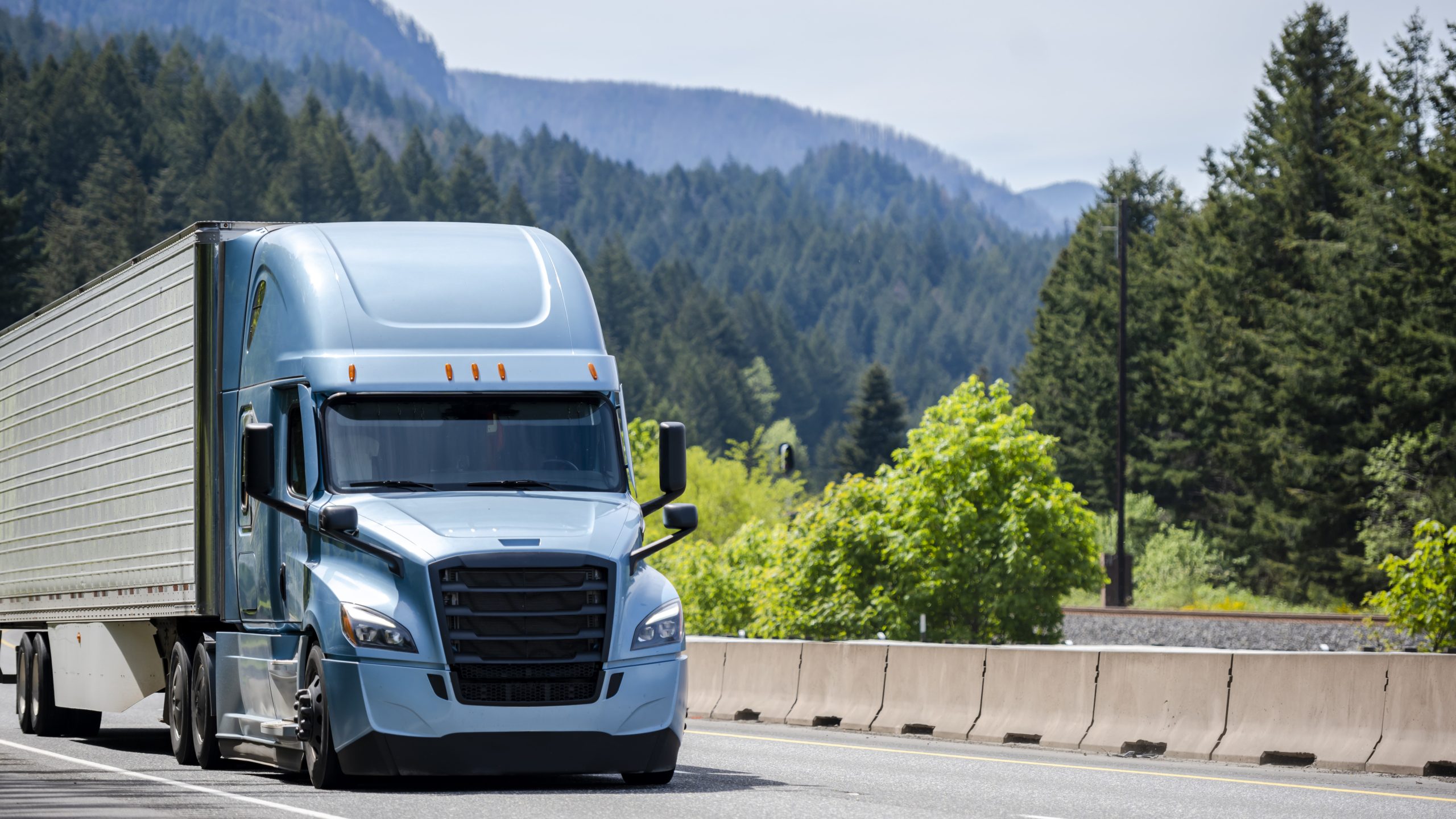
Sharing the highway with large semi trucks is something every driver does regularly, and most people give it less thought than it deserves. Semi trucks are not simply large cars.
They operate under completely different physical laws, have dramatically different visibility limitations, require much longer stopping distances, and create aerodynamic forces that can affect nearby vehicles in ways that surprise drivers who have never experienced them before.
Statistically, crashes involving large commercial trucks are disproportionately severe compared to collisions between passenger vehicles. A loaded semi truck can weigh 80,000 pounds or more at the legal maximum capacity. Most passenger cars weigh between 3,000 and 5,000 pounds.
When these two objects meet at highway speed, the physics of that encounter are not favorable to the occupants of the lighter vehicle. Understanding this reality is not meant to create anxiety about highway driving. It is meant to give you an accurate picture of why adjusting your driving behavior around semi trucks is genuinely worth the attention and habit-building it requires.
Professional truck drivers are, on the whole, among the most skilled operators on the road. They receive specific training for hazardous conditions; they understand their vehicles’ limitations better than most passenger car drivers understand their own; and they genuinely do not want to be involved in accidents that disrupt their schedules, endanger their livelihoods, and could cause serious injury.
Working with truck drivers rather than against them, giving them the space they need, and understanding what they can and cannot see from their cab position makes the highway safer for everyone.
Eight practical, specific tips follow. Each one addresses a real-world situation that highway drivers encounter regularly around semi trucks. Read through all eight, apply what resonates with your driving habits, and make the adjustments that turn these tips from information into actual behavior change. That behavior change is where the safety benefit lives.
1. Understand and Respect the Four Blind Spots Around Every Semi Truck
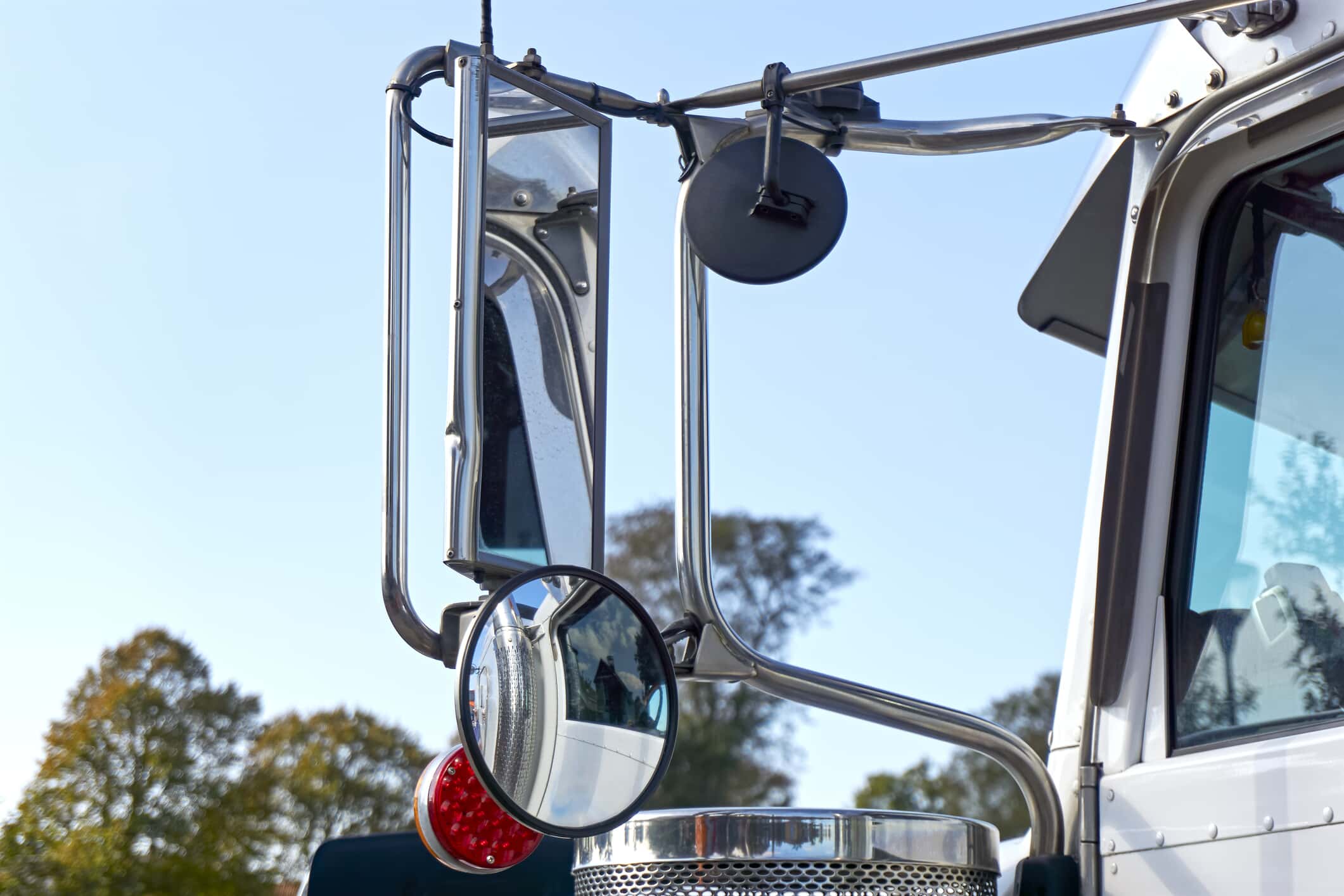
Every piece of driving advice about semi-trucks begins here, because blind-spot awareness is the foundation on which every other safe practice around large trucks builds. A semi truck has four substantial blind zones that its mirrors cannot cover, and these zones are large enough to contain entire passenger vehicles without the truck driver having any awareness that those vehicles are there.
Starting at the front: directly ahead of the cab within approximately 20 feet, a truck driver cannot see a car that has stopped, slowed, or pulled in too closely.
This front blind spot matters most during city driving and during braking situations where a passenger car cuts in front of a truck and then slows, but it also applies on the highway when drivers pass trucks and then immediately merge back into the lane ahead of the truck without leaving adequate distance.
Moving to the right side: a semi truck’s right-side blind zone extends from the front axle position backward along the entire length of the trailer on the passenger side, covering approximately two full lanes of width.
This is the largest and most dangerous blind spot on the truck, because drivers approaching from the right rear often assume the truck driver can see them when the truck driver absolutely cannot.
Never pace alongside the right side of a semi truck at highway speed. If the truck needs to move right, for a lane change or to exit, it will move regardless of your presence because the driver does not know you are there. Left-side blind zones are smaller than right-side zones but still extend significantly behind the driver’s door.
Passing on the left is always preferable to the right side, but even on the left, spending extended time alongside the trailer in the middle of its length means you are operating in a zone where the truck driver’s extended mirrors cannot pick up your vehicle’s position.
Rear blind spots extend approximately 30 feet directly behind the trailer. Following a semi truck at this distance or closer means the truck driver cannot see your vehicle, and it also means you cannot see road conditions ahead of the truck, approaching stopped traffic, or debris that the truck is about to drive over and potentially throw backward toward your vehicle.
2. Never Cut in Front of a Loaded Semi Truck at Highway Speed
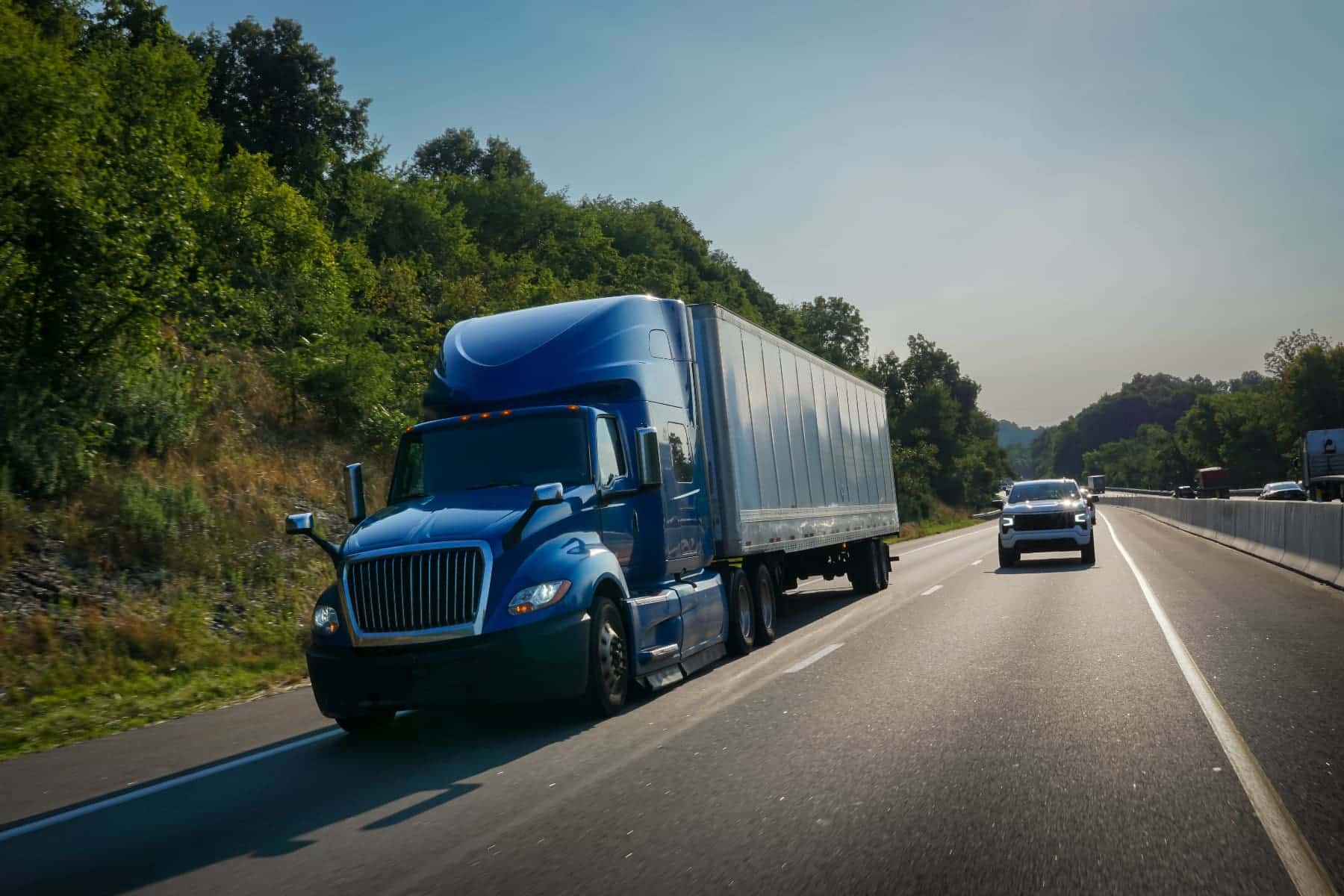
Stopping distance is a critical factor when driving near heavy trucks on highways. Many drivers of passenger cars do not fully appreciate the distance required for a fully loaded semi truck to come to a complete stop.
A truck weighing up to 80,000 pounds and travelling at about 65 miles per hour may require close to 525 feet to stop under normal conditions with effective brakes and dry road surfaces. This distance is far greater than what is required for smaller vehicles.
By comparison, a standard passenger car travelling at the same speed can stop in roughly 300 feet. The difference of more than 200 feet creates a serious safety concern when a driver moves into a truck’s lane without leaving enough space.
If a car suddenly appears in front of a truck within that limited distance and then reduces speed, the truck driver may not have sufficient time or distance to prevent a collision.
When overtaking a semi truck and returning to the lane ahead of it, drivers should rely on more than instinct or a quick mirror check. A widely accepted guideline is to wait until the entire front of the truck is visible in the rearview mirror before merging back into the lane.
This visual reference provides a reasonable indication that there is enough space between the two vehicles. Allowing additional distance beyond this minimum improves safety and reduces pressure on the truck driver.
Road and weather conditions also influence stopping distances. Wet roads can increase the stopping distance of a truck by up to forty percent. Conditions such as heavy rain or poor drainage reduce tyre grip and extend braking time.
In colder regions, icy or snowy roads may increase stopping distance even further. Entering a truck’s lane without adjusting for these conditions ignores basic physical limitations and increases the risk of avoidable accidents.
Maintaining discipline in this area reflects an understanding of shared road responsibility. Highway driving involves cooperation between different types of vehicles, each with its own limitations. Allowing sufficient space when merging ahead of a truck respects those limitations and reduces the likelihood of collisions that could have been avoided through better judgment.
Also Read: 8 Tips for Buying a Used Performance Car Without Getting a Lemon
3. Pass Semi Trucks Smoothly, Quickly, and With a Plan Before You Start
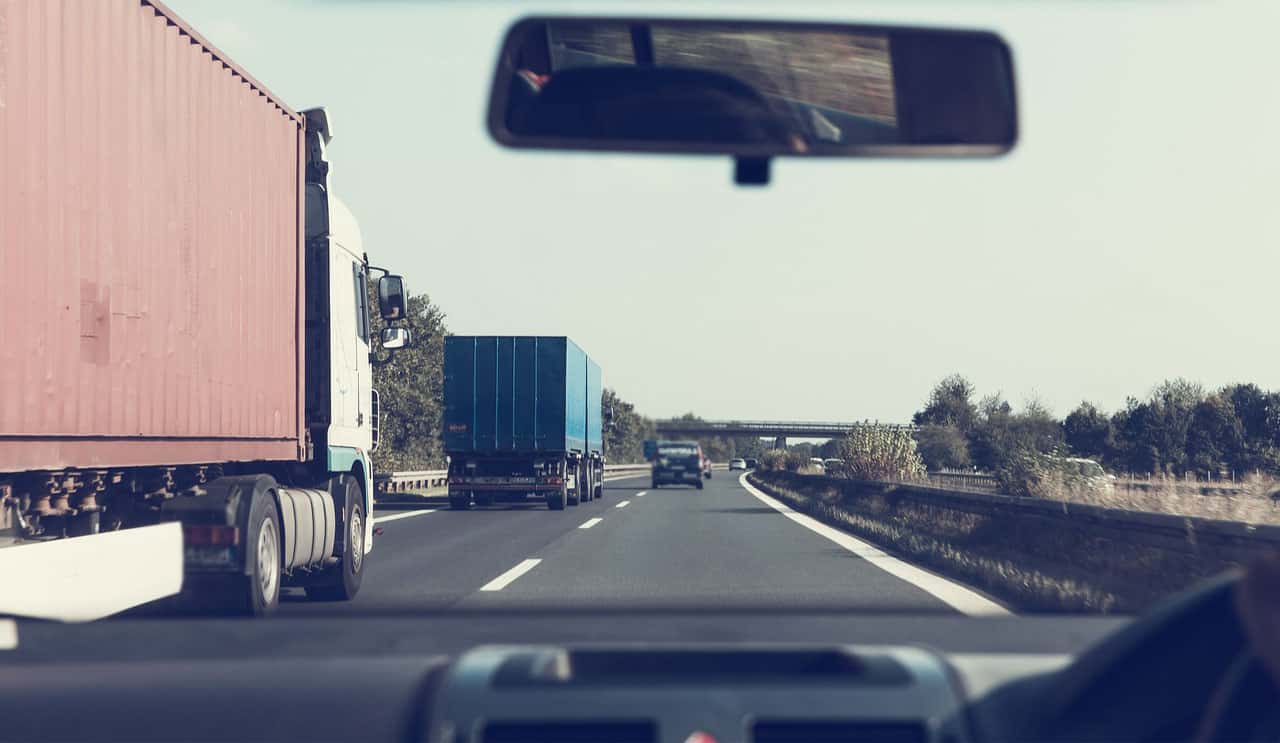
Passing a semi truck on a highway requires careful judgment and a structured approach. Drivers who prepare properly before attempting to overtake are more likely to complete the manoeuvre safely. Acting without proper assessment may leave a vehicle in a vulnerable position beside the truck for longer than necessary.
Preparation begins while still in the original lane. A driver should examine traffic conditions ahead in the overtaking lane to ensure that there is enough open space to complete the pass without interruption.
Moving alongside a truck and then encountering slower traffic ahead may force the driver to remain beside the truck’s trailer, an area where visibility for the truck driver is limited. This situation should be avoided by committing to a pass only when the path ahead is clearly sufficient.
Before changing lanes, the driver should signal early to indicate intention. A steady and controlled lane change is preferable to a sudden movement.
Abrupt actions near large trucks can create uncertainty, especially if the truck driver has not yet noticed the approaching vehicle. Early signalling allows the truck driver to recognise the intended movement and maintain a steady course while the pass is carried out.
Once in the overtaking lane, maintaining a consistent speed is important. Drivers should avoid unnecessary speed changes during the pass. Slowing down or accelerating unpredictably while beside a truck increases the amount of time spent within areas of limited visibility.
It also exposes the vehicle to air turbulence generated by the truck, which can affect stability. A steady pace allows the driver to move past the truck efficiently and return to a safer position ahead.
After completing the pass, the driver should not immediately return to the original lane. Adequate distance must be established before merging back. A practical guideline is to wait until the entire front section of the truck is visible in the rearview mirror. This indicates that there is enough space to re-enter the lane without forcing the truck driver to adjust speed abruptly.
Signalling before merging back into the lane remains an important part of the process. Even if it appears that the truck driver may not see the signal, maintaining the habit of proper indication supports consistent and responsible driving behaviour.
Passing large trucks is a routine part of highway travel, yet it demands attention and discipline. A well-planned approach reduces uncertainty and allows both drivers to maintain control of their vehicles. Careful execution of each step ensures that the manoeuvre is completed safely and without unnecessary risk.
4. Give Extra Following Distance Behind Semi Trucks in All Conditions
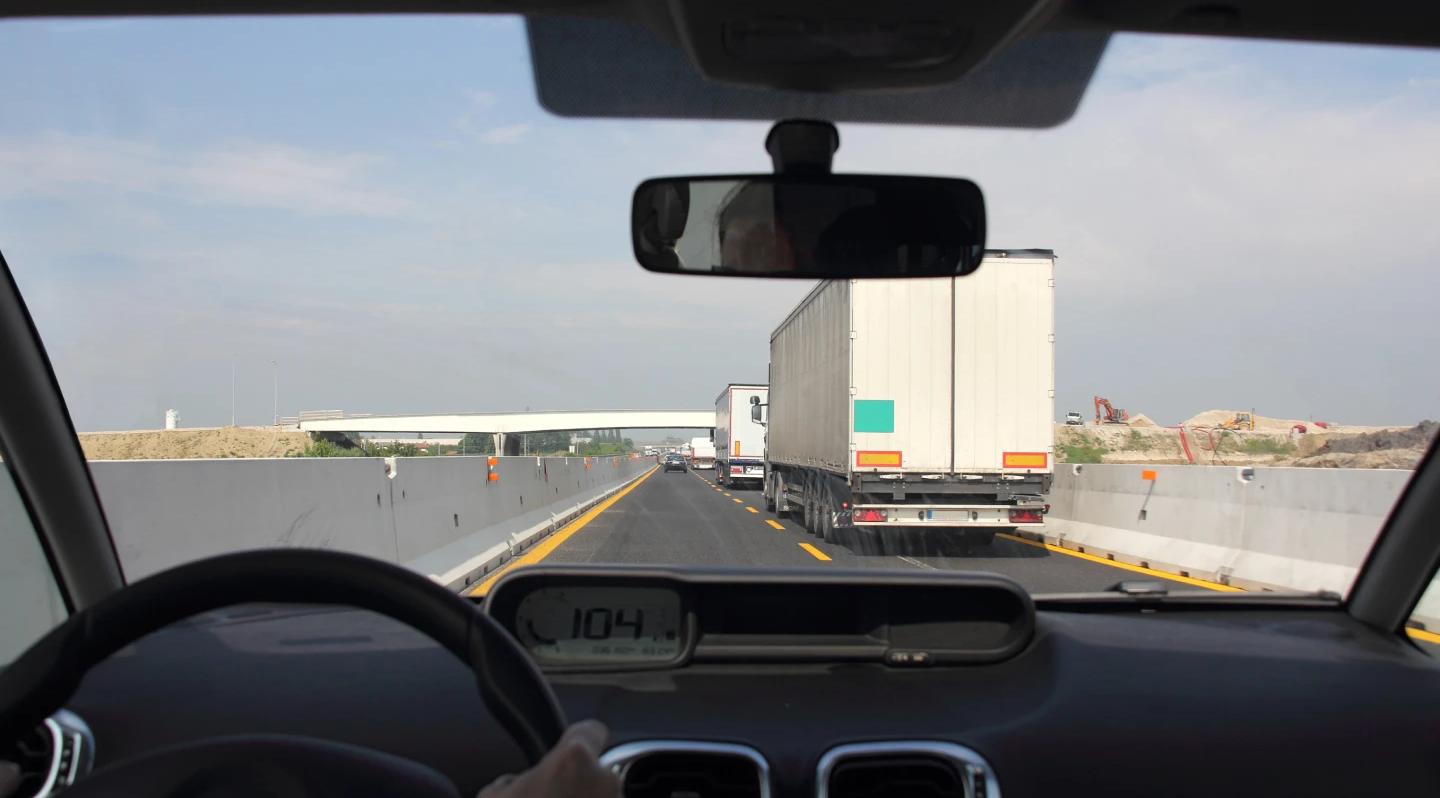
Following behind a semi truck at the same distance you would follow another passenger car is one of the most common and most consequential errors that highway drivers make around large commercial vehicles.
A reasonable following distance behind a passenger car at highway speeds is three to four seconds of time gap. Behind a fully loaded semi truck, doubling that minimum to six to eight seconds of time gap is the starting point, not the ideal.
Visibility is the first reason for this additional distance. Following closely behind a semi truck’s trailer eliminates your ability to see road conditions ahead of the truck, including stopped traffic, road debris, construction zone transitions, and sudden hazards that the truck itself will respond to.
At highway speed, the time between a situation appearing and your ability to respond to it shrinks dramatically when you are following closely behind a large vehicle that completely blocks your forward sight line. Distance behind the truck translates directly to warning time before you need to react.
Spraying in wet conditions reduces your visibility dramatically when following close behind a semi truck in rain. At highway speed, a truck throws a substantial wake of spray from its rear axle tires that saturates the windshield of a closely following vehicle faster than most wiper systems can clear it.
Dropping back to a following distance where this spray is not overwhelming is both a visibility management strategy and a good reason to keep your following distance generous whenever precipitation is present.
Owners of the 2021 Subaru Legacy Sport 2.4T and the 2019 Ford Fusion Titanium 2.0T both benefit from eyeSight or adaptive cruise control systems that maintain following distance automatically in certain conditions, but these systems have limitations around large trucks and should not be relied upon exclusively to manage following distance in the way that active, deliberate driver judgment does.
5. Anticipate Wide Turns and Never Squeeze Inside a Turning Truck
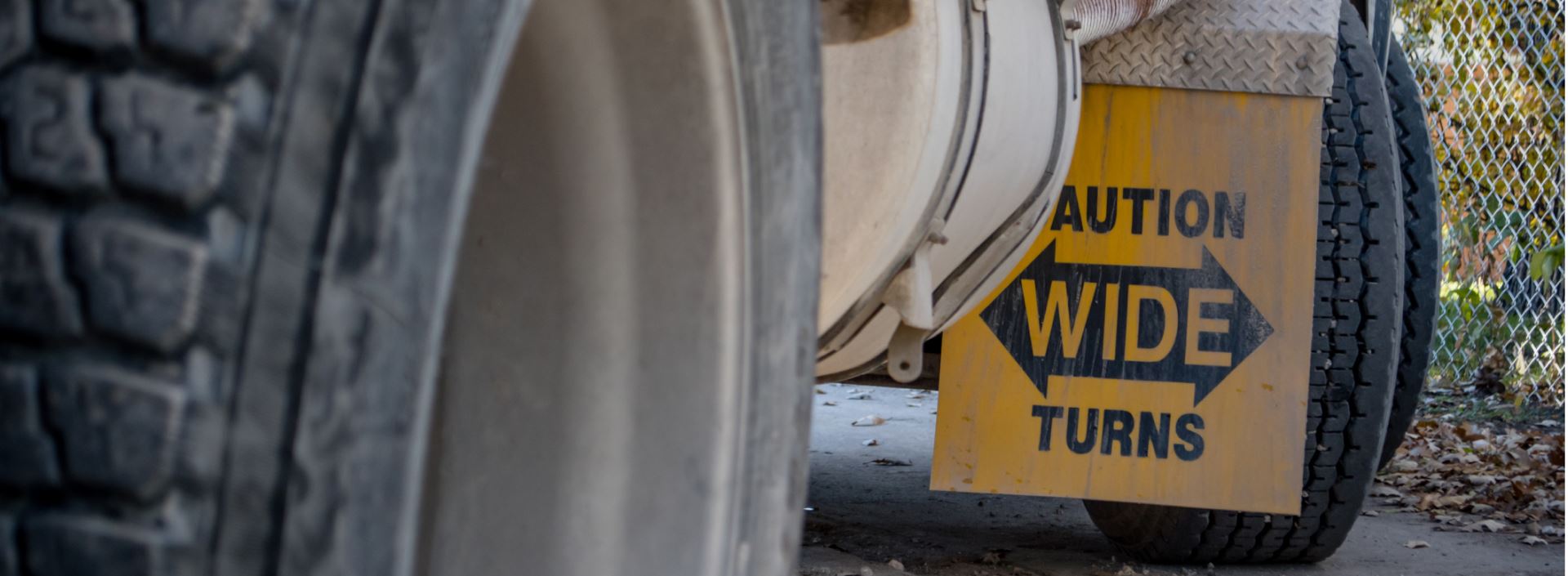
Right turns executed by semi trucks look different from right turns made by passenger cars, and misunderstanding what a truck is doing during a wide right turn has caused accidents that were entirely preventable with basic awareness of how commercial vehicles manage turns at intersections and on-ramp transitions.
Semi trucks with 53-foot trailers cannot turn right from the rightmost lane without first swinging left to create the arc room their trailer needs to track around the corner without mounting the curb or entering opposing lanes. This left swing before a right turn is not a poor driving technique. It is a physical necessity dictated by the relationship between the tractor’s wheelbase, the trailer’s length, and the geometry of the turn.
Drivers who see a truck swinging left at an intersection and decide to pull up on the truck’s right side to pass while the truck turns have placed themselves in a position where the truck’s trailer is going to swing directly through their location.
Interstate on-ramps and off-ramps present similar situations. Trucks taking a curved ramp at low speed sometimes track wide through the curve as trailer geometry demands, and passenger cars that accelerate up an on-ramp faster than they expected and find themselves beside the trailer of a merging truck in a curve need to fall back rather than hold their position.
A trailer that must track through a specific arc to follow the tractor will track through that arc regardless of what is positioned next to it if the driver cannot see your vehicle. Warning signs that a truck is preparing for a wide turn include right turn signals activated early, the truck slowing significantly before a turn entry, and the truck moving slightly left before the turn begins.
These are not accidental behaviors. They are deliberate preparations for the geometry of the upcoming maneuver, and recognizing them allows you to create appropriate space before the turn begins rather than reacting to the truck’s movement after it starts.
Maintaining the habit of never squeezing alongside the right side of a truck near any turn or curve eliminates the most common mechanism by which passenger vehicles end up in the path of a truck’s trailer swing. Stay back, let the truck complete its turn, and proceed after the trailer has tracked through the arc fully.

6. Be Extra Cautious During High Wind Conditions Near Semi Trucks
Wind effects on large semi trucks are a highway hazard that most passenger car drivers underestimate until they experience a gusty crosswind event that pushes a truck into an adjacent lane or watch a truck ahead of them visibly lean through a wind gust. Understanding how wind affects trucks and adjusting your position relative to trucks during windy conditions is a safety practice that requires no special skill beyond awareness and appropriate caution.
Semi truck trailers present an enormous flat surface area to crosswind forces, acting essentially as large sails. In strong crosswind conditions, particularly on open stretches of highway without natural wind breaks, trucks can be pushed laterally by several feet in a single strong gust.
Professional truck drivers learn to manage this through anticipatory steering corrections, but during unusually strong gusts, even experienced drivers experience moments of lateral movement that affects adjacent lanes briefly. Positioning your vehicle beside a truck’s trailer during sustained crosswind conditions is the highest-risk placement during windy weather.
If a gust pushes the truck laterally, your vehicle is directly in the path of that movement. Falling back to a following distance where you are behind the truck rather than alongside it, or completing a pass quickly to get ahead of the truck entirely, removes you from the zone of exposure during the period of elevated wind conditions.
Vehicles like the 2021 Toyota Corolla SE CVT and the 2023 Nissan Sentra SR 2.0L are lighter vehicles where crosswind sensitivity at highway speed is more pronounced than in heavier vehicles, and drivers of these platforms benefit particularly from awareness of the wind shadow exit effect when passing trucks during windy conditions.
Planning passes during momentary lulls in gusts rather than during sustained gusts, and maintaining a firm and attentive grip on the steering wheel during the final phase of passing when exiting the truck’s wind shadow, addresses this hazard directly.
7. Use Your Headlights Strategically During Nighttime Interstate Driving Near Trucks
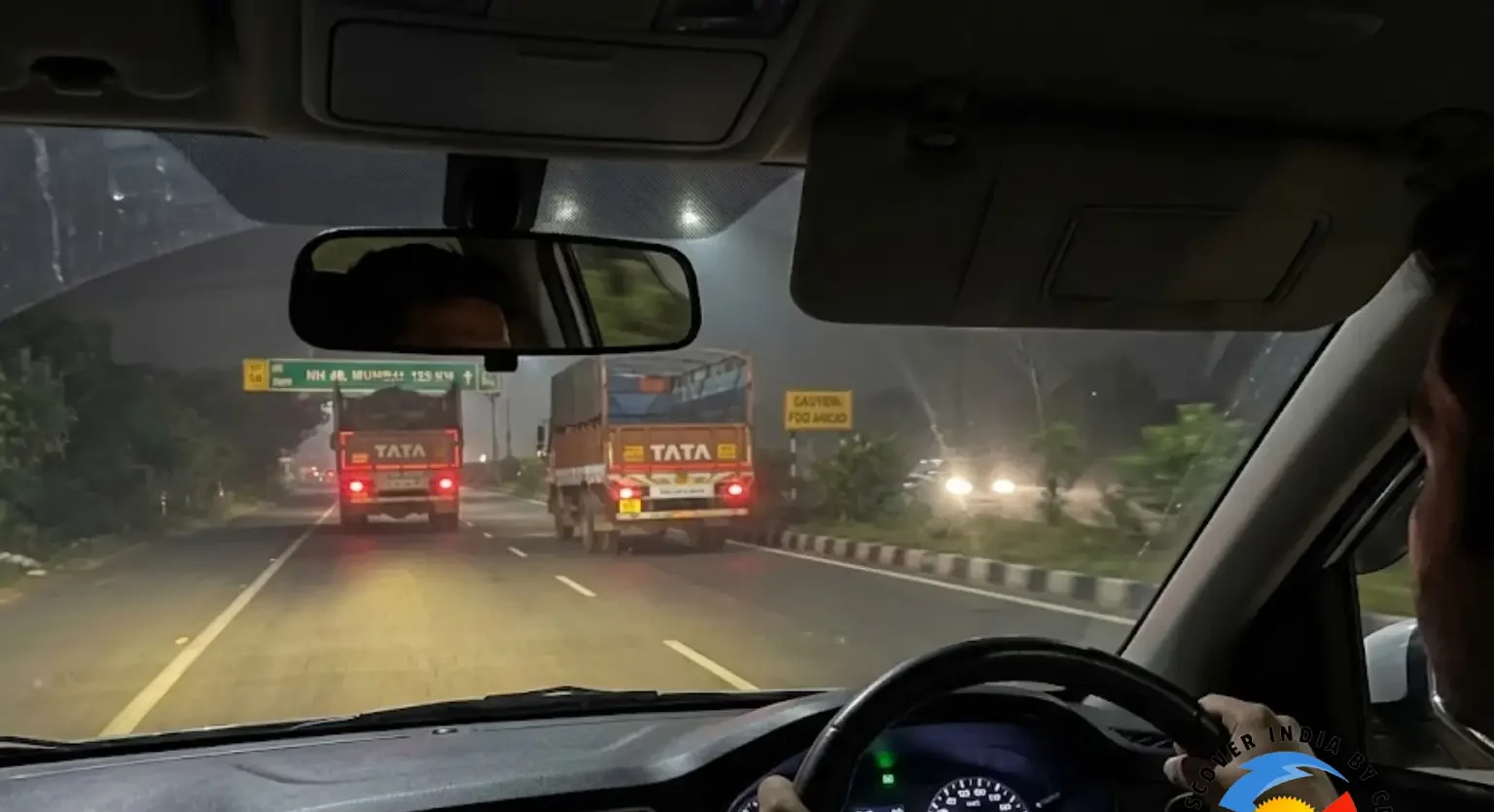
Driving at night around heavy-duty trucks requires deliberate control of your headlights and careful positioning of your vehicle. Visibility is reduced after dark, and this affects both what you can see ahead and how clearly truck drivers can detect your presence. Proper headlight use is therefore not just a routine action but a necessary safety measure when sharing the road with large commercial vehicles.
High-beam headlights provide extended illumination compared to low beams, allowing drivers to see further ahead on unlit highways. When there is no oncoming traffic and no vehicle directly ahead, activating high beams can help you better observe the road, including the rear reflectors and movement of a truck in front of you. This improved visibility helps you judge distance more accurately and detect early signs of braking or changes in speed.
However, it is important to switch back to low beams before your headlights reach the truck’s mirrors. The large mirrors on trucks are positioned to capture wide angles, and high beams reflecting off them can create intense glare.
This glare may affect your vision and also disturb the truck driver, reducing their ability to monitor surrounding traffic effectively. Managing this transition from high to low beams at the right moment prevents unnecessary visual disturbance for both parties.
Your vehicle’s rear lighting also plays a role in safety. When following a truck at night, maintaining an adequate distance ensures that your braking actions are visible to vehicles behind you. This spacing provides sufficient reaction time for other drivers and reduces the risk of rear-end collisions. Safe following distance is especially important when trucks slow down suddenly, as their braking patterns may differ from those of smaller vehicles.
Drivers of vehicles such as the 2022 Chevrolet Malibu RS 1.5T and the 2019 Buick LaCrosse Preferred 2.5L should be particularly mindful when travelling on poorly lit rural highways. Reduced ambient lighting in such areas increases reliance on headlights and demands greater attention to spacing and reaction time.
Special care is also required near rest stops, weigh stations, and entry ramps. Trucks may be accelerating or decelerating in these areas, and judging their speed at night can be difficult. Reduced lighting, road spray, or partially functioning trailer lights can further complicate visibility. Allowing extra space both laterally and longitudinally in these situations helps reduce uncertainty and supports safer driving decisions.
Also Read: 8 Tips for Maintaining Your Vehicle Paint Without Professional Help
8. Stay Alert, Stay Patient, and Never Drive Aggressively Around Commercial Trucks
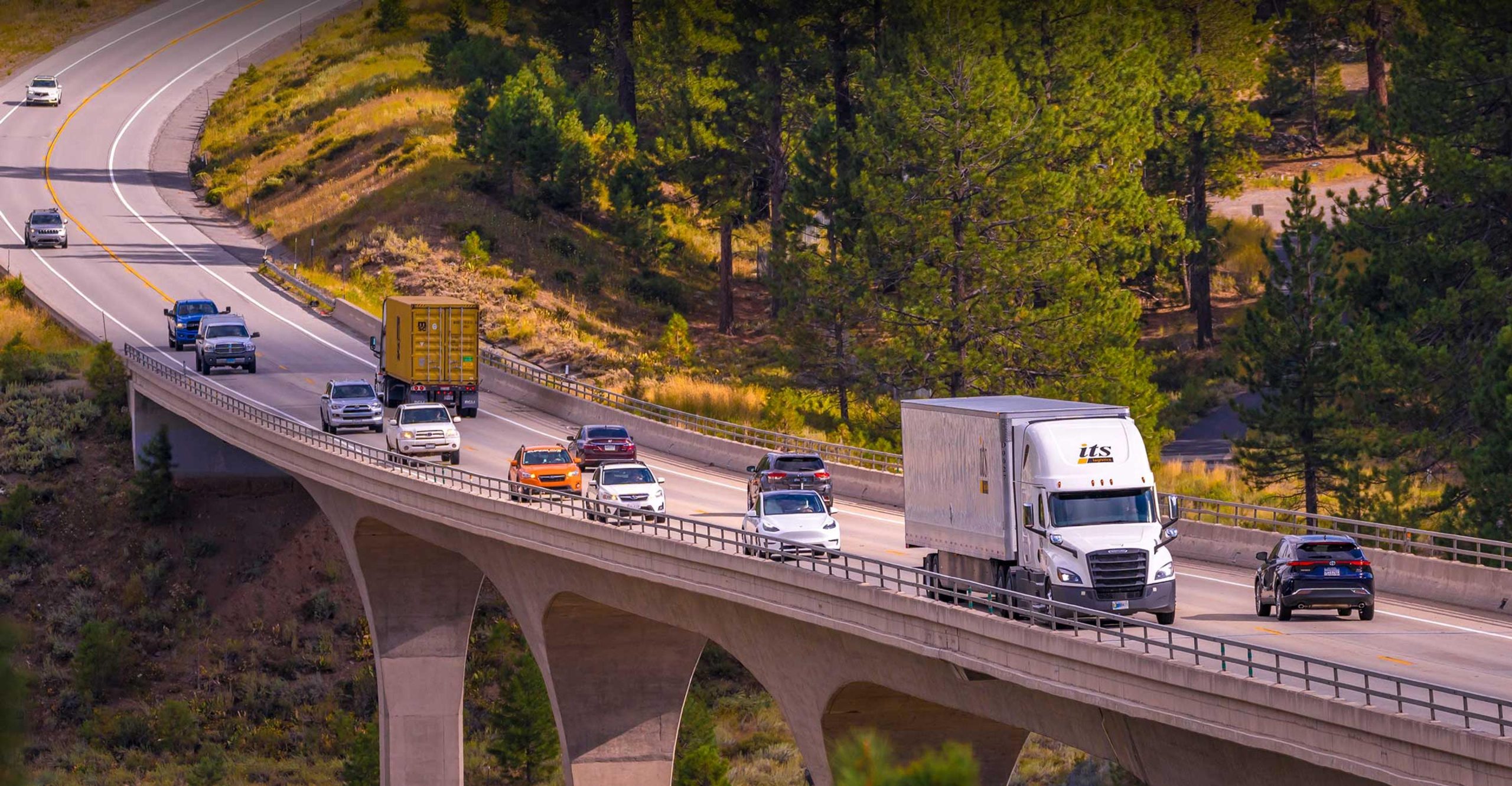
Driving alongside commercial trucks on highways often tests a driver’s patience. Situations such as slow-moving trucks on inclines, delayed acceleration after toll points, and reduced speeds in construction zones can create frustration. Despite this, maintaining composure and avoiding aggressive behaviour is essential for safety.
Aggressive driving near trucks introduces unnecessary risk. Actions such as making sudden lane changes into blind spots, following too closely in an attempt to pressure a truck driver, or overtaking from the right side increase the likelihood of accidents.
These behaviours do not produce the intended outcome, as professional truck drivers are trained to maintain steady control and will not alter their driving abruptly in response to impatience from other road users.
Inclined sections of highways present a common challenge. Trucks carrying heavy loads often lose speed while climbing, which can be frustrating for drivers of smaller vehicles.
Accepting this limitation and maintaining a safe following distance is the responsible approach. Attempting to overtake without sufficient space or rushing a manoeuvre can lead to dangerous situations. Waiting for a clear and adequate opportunity to pass ensures that the action is completed safely.
Construction zones require even greater caution. Narrowed lanes and the presence of barriers reduce the margin for error, making precise vehicle control essential.
Trucks and smaller vehicles must share limited space, often at reduced speeds. Maintaining a steady pace, avoiding unnecessary lane changes, and adhering strictly to posted speed limits help prevent collisions in these confined areas.
Patience is not merely a matter of comfort; it is a practical safety skill. By remaining calm and making deliberate decisions, drivers reduce exposure to avoidable risks. This approach is particularly important for individuals who spend long hours on highways.
Drivers of vehicles such as the 2020 Jeep Cherokee Limited 2.0T and the 2023 Nissan Rogue SL AWD 1.5T, who frequently travel long distances, encounter these situations regularly. For such drivers, consistent application of safe driving habits is necessary. Rather than reacting differently in each situation, maintaining a steady pattern of careful driving ensures better long-term outcomes.
Developing discipline behind the wheel helps reduce errors and promotes safer interactions with large vehicles. Patience, awareness, and controlled decision-making remain essential elements of responsible highway driving.
