

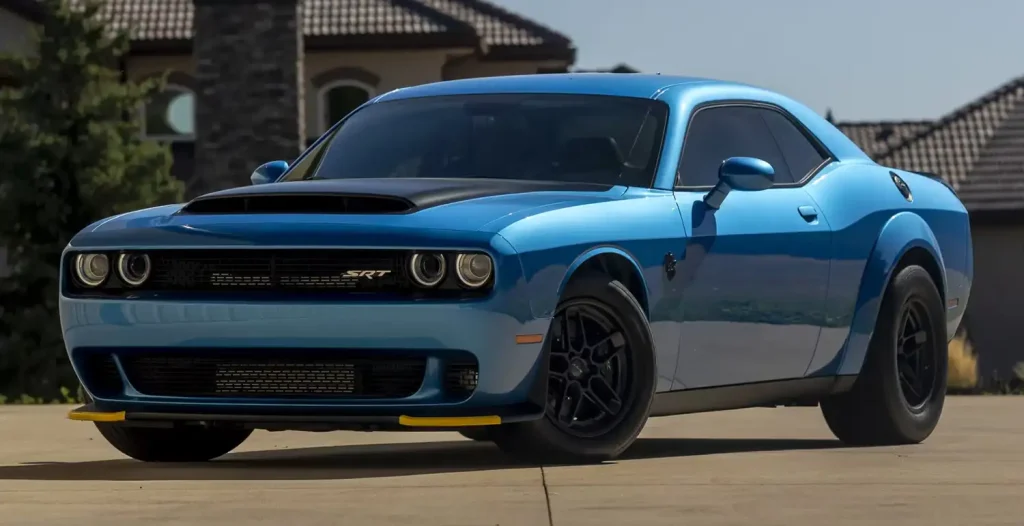
The Dodge Demon is not just another performance car; it’s an engineering marvel created with drag strips in mind and a power output that still shocks enthusiasts years after its release.
With its supercharged HEMI V8 pushing out unimaginable horsepower, it earned its reputation as the most extreme modern muscle car ever produced. Owning one is like holding a piece of American automotive history.
But with such raw strength under the hood, ownership comes with responsibility. Unfortunately, many drivers unintentionally shorten the life of their Demon by developing habits that pile on wear and tear long before the odometer ever reaches 50,000 miles.
What makes the Dodge Demon unique also makes it fragile if handled carelessly. Its massive torque doesn’t forgive negligence, and its finely tuned mechanics demand respect.
Owners often underestimate how quickly poor driving practices, lack of proper maintenance, and careless modifications chip away at the car’s potential lifespan.
Unlike a family sedan designed to cruise for hundreds of thousands of miles with little trouble, the Demon is more specialized, meaning improper use magnifies problems sooner.
This guide will highlight seven habits that eat away at the Demon’s mechanical health. They might not sound dramatic when done once or twice, but when repeated consistently, they create a perfect recipe for breakdowns, expensive repairs, and declining performance.
From ignoring warm-up cycles to abusing launch control, each mistake silently strips away reliability.
If treated correctly, the Dodge Demon can last well beyond expectations while still delivering spine-tingling acceleration and track-ready thrills.
If neglected, it can be left gasping much earlier than you’d imagine. Whether you own a Demon today or dream of having one in your garage, understanding what not to do could be the factor that preserves this monster of a car for the long haul.
Also Read: 7 Driving Habits That Destroy a Subaru Legacy Faster Than You Think
Habit 1: Skipping the Engine Warm-Up
One of the most overlooked aspects of performance car ownership is the importance of letting the engine warm up before pushing it hard.
With ordinary cars, many drivers get away with hopping in, firing up the engine, and racing off to work without consequences. But when it comes to the Dodge Demon, treating it this way is mechanical neglect that can dramatically shorten its lifespan.
The 6.2-liter supercharged HEMI under the hood isn’t just any engine. It runs with extremely high tolerances, meaning the difference in performance or wear between a cold start and a warmed-up state is huge.
When you start the car from cold, the engine oil is thick and sluggish. This means that key components are not receiving adequate lubrication during those first few minutes.
Push the throttle too soon, and metal parts scrape harder against each other, accelerating wear in the pistons, cylinders, and bearings. Over time, this habit can lead to noisy startup rattles, poor compression, and eventually, expensive rebuilds.
Another problem lies in the supercharger itself. This component spins at extreme speeds to deliver that outrageous horsepower figure. During a cold start, oil in the bearings hasn’t yet circulated evenly.
Hammering the throttle before the blower reaches proper operating temperature stresses the unit prematurely, leading to whining noises or even catastrophic failure.
Considering that replacement costs for a Dodge Demon supercharger are sky-high, this mistake can empty an owner’s wallet faster than expected.
A proper warm-up doesn’t require long idling sessions either. The best practice is to start the car, let it idle for around 30–60 seconds, then drive gently at low RPM until the temperature gauge creeps to normal. This ensures the fluids have thinned out and circulated properly throughout the engine and transmission.
It’s tempting to hear that roar and immediately stomp on the gas, especially with a machine as wild as the Demon.
But consistently skipping the warm-up process practically guarantees that the engine won’t make it anywhere near the 50,000-mile mark without developing painful issues. Patience during those first crucial minutes pays off in the form of reliability and longevity.
Habit 2: Abusing Launch Control Every Chance You Get
The Dodge Demon’s launch control system is one of its most thrilling features. After all, it was designed with drag racing in mind, able to deliver jaw-dropping quarter-mile times with blistering acceleration.
But as tempting as it is to line up at every stoplight or parking lot exit just to feel that neck-snapping thrust, treating launch control like an everyday toy has dire consequences.
Every use of launch control subjects the car to an enormous amount of stress. The drivetrain is holding back massive torque until just the right second, then unleashing it in one explosive shot.
This provides that rocket-like start, but it’s also punishing on the transmission, driveshaft, differential, and even the rear tires. Overuse leads to transmission fluid breakdown, clutch fatigue, and premature wear of driveline components.
The other major risk lies in heat buildup. Aggressive launches generate tremendous thermal stress, particularly in the transmission and differential.
If you repeat it excessively without proper cool-down intervals, fluid temperatures spike, reducing lubrication effectiveness and potentially damaging seals. Components built to withstand bursts of brutality aren’t designed for repetitive abuse without recovery.
While Dodge engineered the Demon for short stints of maximum performance, it isn’t indestructible. Repeated hard launches can cause stress fractures that don’t show up immediately but surface as grinding noises, slipping gears, or failed differentials later on.

Factor in the price of replacing drivetrain parts, and suddenly, that “fun habit” has drained tens of thousands in repair costs.
Launch control should be reserved for controlled conditions like actual drag strips, where the car can do what it was born for with minimal risk.
For street driving, you’ll save the car’s health (and your tires, which wear down in record time under this abuse) by keeping things restrained.
In short, leaving launch control for the right moments ensures your Demon still delivers thrills past 50,000 miles without leaving you stranded with a dead transmission.
Habit 3: Ignoring Tire and Suspension Care
The Demon’s reputation largely comes from its grip off the line, and that grip depends heavily on its specialized tires and suspension setup. Yet many owners overlook routine tire and suspension care, vastly shortening the usable life of the car.
The factory-fit Nitto drag radials, for instance, aren’t normal long-life tires. They’re soft and sticky by design, which means they wear out faster, especially if used on daily commutes or rough road surfaces.
Ignoring rotations, pressure checks, and timely replacements puts the Demon at risk of traction loss during launches a recipe for wheel spin and even drivetrain shock.
Tire neglect also affects safety. Drag radials, when worn thin, struggle in wet conditions and can hydroplane dangerously. Many owners try stretching their life by avoiding replacements, but that just compromises handling and puts both the driver and the car at risk.
Proper care means frequent inspections, checking tread depth, and maintaining correct air pressure (since under-inflated drag radials deteriorate even faster).
Suspension upkeep is equally important. The Demon uses specifically tuned components designed to work with its drag-focused setup. Rough roads, potholes, and curb strikes can quickly knock these parts out of alignment.
Once the suspension geometry is compromised, uneven tire wear develops and stress on chassis components increases. Over time, ball joints, control arms, and shocks degrade prematurely.
When combined with neglect of tire health, suspension problems compound. The end result is poor handling, slower quarter-mile times, and vibrations that make the Demon feel worn well before its time. For a car built on precision and performance, anything less than attentive care here is sabotage.
Regular alignment checks, shock inspections, and timely replacement of worn suspension parts preserve not only the driving experience but also the longevity of surrounding components.
Treating the suspension and tires as consumables rather than permanent fixtures is the mindset needed to keep a Dodge Demon running strong far beyond 50,000 miles.
Habit 4: Cheap Fuel and Poor Fueling Habits
The Dodge Demon was not designed with gas-station budget saving in mind. With a supercharged 6.2-liter HEMI pumping out 840 horsepower on race fuel, this car demands nothing short of high-quality premium fuel.
Yet some owners, in an effort to reduce costs or through lack of awareness, run the car on lower-octane fuel. This habit creates long-term damage that shows up far sooner than expected.
The issue lies in detonation. Lower-octane fuel is more prone to pre-ignition (commonly called “knock”), where the air-fuel mixture explodes prematurely inside the combustion chamber.
Under the extreme pressures in the Demon’s engine, knock can cause piston damage, scored cylinder walls, and even cracked connecting rods.
Modern knock sensors attempt to protect the engine by adjusting timing, but this also reduces power output, counteracting the very reason people buy a Demon in the first place.
Another fueling mistake is letting the tank constantly run low. The Demon’s fuel pump works more efficiently when submerged in gasoline, which acts as a coolant. Running low too often overheats the pump and shortens its lifespan.
Given the high demands this engine places on fuel delivery, a failing pump can quickly lead to lean conditions and catastrophic failure.
Ethanol-heavy blends can also accelerate wear if used carelessly. While the Demon can handle certain blends, not all stations maintain consistent quality, and poor fuel can carry contaminants into vital components like injectors and filters.
The smart approach is to always use high-octane fuel from reputable stations, avoid running the tank bone-dry, and consider periodic use of fuel system cleaners to keep injectors in top form.
High performance doesn’t come cheap, and skimping on fueling habits is perhaps the quickest way to make sure your Dodge Demon will not stay healthy much past 50,000 miles.
Habit 5: Neglecting Transmission and Differential Fluids
When people talk about car maintenance, engine oil usually takes center stage, but for a monster like the Dodge Demon, transmission and differential fluids are equally crucial.
These components bear the brunt of all that torque, especially under hard acceleration, yet many owners overlook them until it’s too late.
The Demon’s 8-speed automatic transmission is engineered to handle staggeringly high output, but it relies heavily on fresh, high-quality fluid to operate smoothly. That fluid does more than just lubricate; it provides hydraulic pressure that enables precise gear changes.
As it ages, it loses viscosity and collects contaminants from clutch wear. This breakdown leads to harsher shifts, slipping under load, and eventually complete transmission failure. For a car this specialized, a rebuild can cost upward of five figures.
The rear differential faces equal punishment. Every time the Demon launches, the differential absorbs violent torque loads, and its gears require protection from extreme heat.
Fresh fluid helps reject that heat and prevents metal-to-metal contact inside. Neglecting fluid changes leads to whines, grinding, and worn bearings. Once these symptoms show up, damage has already reached expensive levels.
Sadly, many owners assume factory fluid intervals are enough without accounting for how the car is driven. Frequent drag runs, hard street use, and repeated launches demand earlier fluid changes compared to casual highway cruising. Ignoring this reality ensures wear arrives long before 50,000 miles.
The solution is simple: follow a strict schedule tailored to usage. If the Demon sees regular track use, fluids should be changed far earlier than OEM recommendations. A few hundred dollars in preventative care protects against failures that cost exponentially more.
For a car where power is delivered through every link in the driveline, keeping those links well-lubricated is crucial to longevity. Failing to maintain them is as dangerous to its lifespan as never changing engine oil.
Habit 6: Overheating and Ignoring Cooling System Maintenance
Heat is one of the greatest enemies of high-performance engines, and the Dodge Demon produces plenty of it.
Between the supercharger compressing intake air, the engine combustion under maximum load, and the stress of repeated wide-open-throttle runs, cooling efficiency is absolutely critical.
Unfortunately, many owners neglect their coolant system or underestimate how quickly neglect can destroy parts.
The Demon uses advanced cooling technology, including after-run chiller systems that cool the intake air even after shutdown. But owners sometimes ignore coolant changes, forget to inspect hoses, or fail to monitor coolant levels.
Over time, coolant itself degrades and loses its ability to prevent corrosion inside the radiator and engine passages. Corroded coolant passages reduce efficiency and put the car at risk of overheating.
Superchargers, in particular, hate excess heat. Elevated intake air temperatures reduce efficiency, leading to power drops and increased detonation risk.
Long-term overheating incidents can warp cylinder heads, blow head gaskets, and crack performance components that were never designed to handle heat stress over extended periods.
Even small habits like pushing the car hard in stop-and-go traffic without letting the cooling system catch up add strain. Some drivers also mistakenly shut off the car immediately after heavy runs, forgetting that the heat soak continues even after the engine isn’t spinning.

That’s exactly why the after-run systems exist, but they can’t function properly if the owner isn’t giving the car time to stabilize.
Regular coolant flushes, hose inspections, radiator checks, and ensuring fans operate correctly are all preventative measures that extend drivetrain life.
Heat problems don’t usually cause immediate breakdowns but accumulate damage silently until the engine gives up far earlier than the 50,000-mile mark. Proper attention ensures the HEMI breathes comfortably rather than burning itself out.
Habit 7: Over-Modifying Without Proper Tuning
Modifications are part of car culture, and with a platform as powerful as the Dodge Demon, it’s understandable that many owners chase even more performance. Cold air intakes, pulley swaps, upgraded injectors, or ECU re-flashes are all popular.
But the danger lies in over-modifying without ensuring the tune matches the parts installed. Doing so is one of the fastest ways to send a Demon into early mechanical retirement.
Every factory Demon is tested with a specific tune designed to balance immense power with reliability. When parts are swapped without recalibrating the ECU, the results include lean mixtures, misfires, and dangerously high cylinder pressures.
All of these place immense strain on pistons, rods, and the crankshaft. In some cases, poorly managed modifications can lead to complete engine failure in a fraction of the miles it should have lasted.
Transmission and driveline health also suffer because uncalibrated mods increase stress loads. Owners often underestimate how much precision goes into distributing torque across systems like traction control and stability management.
Altering power delivery without properly tuning everything else throws the car’s balance into chaos.
Even cosmetic-style changes, like fitting larger wheels without accounting for differences in rolling diameter, can upset gear ratios and overwork the drivetrain.
The Demon is a precisely engineered package, and overconfidence in bolt-on power tricks shortens its life considerably.
None of this means modifications are inherently dangerous. When done properly with professional tuning and quality parts, enhancements can even add longevity by optimizing efficiency.
The mistake is cutting corners, going cheap with parts, or running stock ECU maps for non-stock hardware. Instead of boosting pride of ownership, this approach usually leads to engine lights, poor driveability, and catastrophic bills.
Owners need to respect the careful balance Dodge engineered into the Demon. Jumping in with endless add-ons without matching calibration is simply a countdown clock to a motor that fails long before 50,000 miles.
The Dodge Demon stands as one of the most extreme muscle cars ever built, combining a supercharged 6.2-liter HEMI V8 with technology designed for drag-strip domination. With more than 800 horsepower on tap, it can embarrass supercars costing three times as much.
But with great power comes equally great responsibility. While the Demon is engineered for performance, careless habits can cause it to fall apart long before hitting even 50,000 miles. This summary outlines seven common mistakes that significantly reduce its reliability and lifespan.
Skipping engine warm-up is one of the fastest ways to inflict early wear. The Demon’s massive powertrain relies on proper lubrication, and neglecting warm-up cycles results in metal-on-metal friction within the engine and supercharger. This accelerates deterioration and leads to costly failures.
Abusing launch control is another culprit. The system was designed for occasional use but subjecting the drivetrain to repeated violent launches stresses the transmission, differential, and tires.

Overuse quickly snowballs into overheating, slipping gears, and cracked components, particularly if cooldown intervals are ignored.
Neglecting tire and suspension care is equally damaging. The factory drag radials wear quickly and need more attention than ordinary tires.
If ignored, grip disappears, handling worsens, and suspension parts wear prematurely due to misalignment caused by potholes or hard use.
Fuel quality makes or breaks this car. Using cheap fuel or poor fueling habits leads to detonation, which can ruin pistons, valves, and connecting rods.
Allowing the tank to constantly run low also burns out the fuel pump, creating lean conditions that damage the engine beyond repair.
While owners remember oil changes, many forget about transmission and differential fluids. These parts endure monumental torque loads and rely on fresh fluids for cooling and lubrication. Ignoring them can bring on catastrophic failures much earlier than anticipated, wiping out driveline health.
Heat management is another overlooked area. Overheating and ignoring the cooling system allows coolant to break down, intake temperatures to soar, and gasket failures to emerge. Without consistent coolant flushes, hose checks, and fan maintenance, the Demon slowly cooks itself.
Lastly, over-modifying without proper tuning is a self-inflicted wound by many enthusiasts. Swapping pulleys, adding intakes, or fitting larger wheels without recalibrating the ECU leads to lean conditions, balance issues, and broken components. Professional tuning prevents this, while neglecting it guarantees long-term damage.
In short, the Dodge Demon isn’t indestructible despite its reputation. It thrives when treated with precision care but crumbles when owners cut corners.
Avoiding these seven habits doesn’t just protect a rare and powerful machine it ensures that it continues to deliver record-breaking thrills well beyond its first 50,000 miles.
Owners who respect this balance will enjoy a car that lasts far longer than those who use it recklessly. Treat it casually, and the Demon quickly becomes nothing more than a broken giant with an expensive repair bill.
Also Read: 7 Pro Tips That Keep a Subaru Outback Winter-Ready for Life
