
The golden age of the automobile was a period of fearless experimentation, when engineers weren’t afraid to challenge convention in pursuit of performance, balance, or sheer mechanical curiosity.
Long before standardized platforms and efficiency targets narrowed design choices, classic cars often served as rolling laboratories for inventive powertrain ideas. From unusual cylinder counts to unconventional placements and configurations, these machines showcased engine layouts that were as bold as they were distinctive.
In this article, we highlight 10 classic cars that stand apart not for their styling alone, but for the genuinely unique engine layouts hiding beneath their hoods. These vehicles represent moments when creativity trumped conformity, leaving behind mechanical solutions that remain fascinating decades later.
1) Volkswagen Beetle
The Volkswagen Beetle is one of the most famous cars ever built. It became popular because of its simple design and reliable engine. Its rear-mounted, air-cooled flat-four engine made it different from most other cars of its time.
Unlike most cars with engines in the front, the Beetle’s engine was placed in the back. This rear-mounted layout helped improve traction, especially on wet or slippery roads. The weight over the rear wheels gave better grip during driving.
The Beetle used an air-cooled engine instead of a water-cooled system. This meant it did not need a radiator, coolant, or complex hoses. The simple design reduced maintenance needs and made repairs easier for everyday owners.
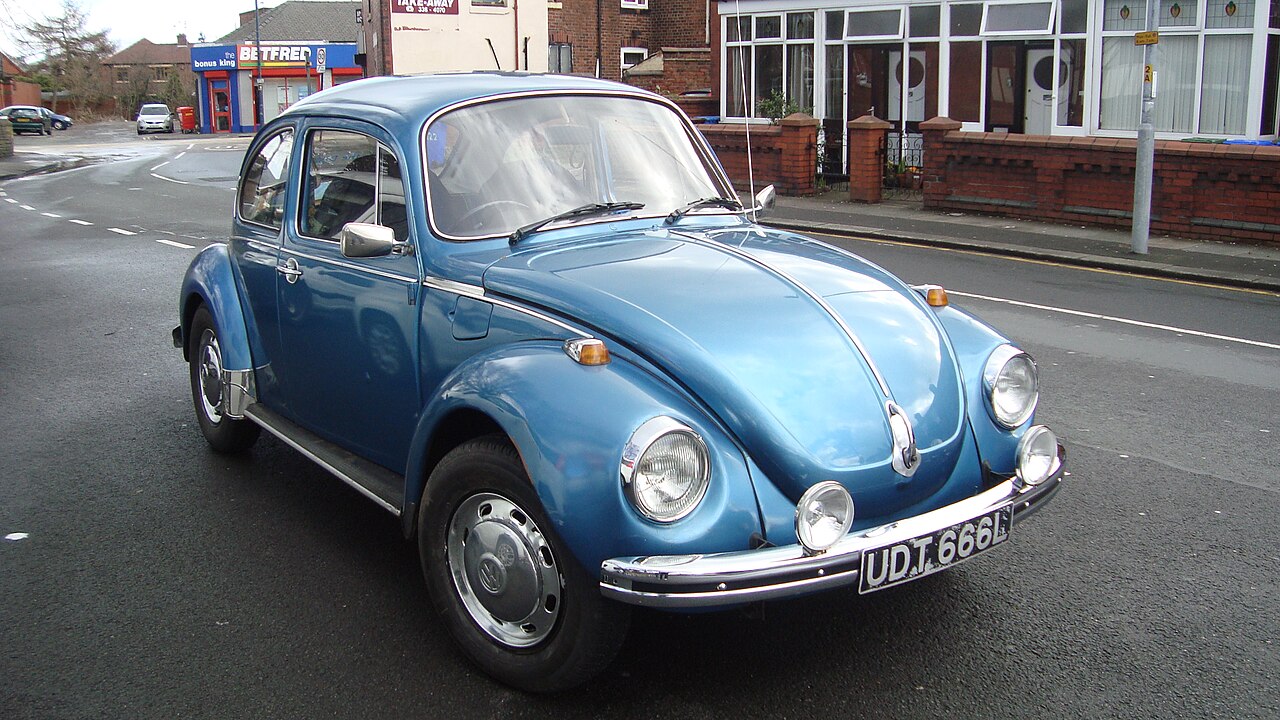
The flat-four engine design also kept the car compact. The cylinders were placed horizontally, which lowered the center of gravity. This improved stability and balance, making the Beetle feel steady and comfortable on regular roads.
Because the engine was in the rear, the front trunk had extra storage space. Owners could use this space for luggage or groceries. Even though the Beetle was small, it offered practical storage for daily use.
The engine was not very powerful, but it was dependable. It provided enough power for city driving and highway cruising. Its simple mechanical parts helped the Beetle last many years with proper care and basic maintenance.
The Beetle was first produced in large numbers after World War II. It quickly became popular in Europe and later in the United States. People appreciated its low price, fuel efficiency, and easy ownership experience.
Over time, the Beetle became a cultural symbol. It was loved by students, families, and travelers. Its friendly shape and unique engine sound made it easy to recognize anywhere in the world.
2) Porsche 911
The Porsche 911 is one of the most famous sports cars ever built. It is known for its unique rear-mounted flat-six engine. This unusual layout has defined the car’s character and performance for more than sixty years.
Unlike most sports cars with engines in the front or middle, the Porsche 911 places its engine behind the rear axle. This design gives the car strong traction, especially during acceleration. The weight over the rear wheels helps the tires grip the road.
The flat-six engine design keeps the engine low and wide. The cylinders are placed horizontally, which lowers the center of gravity. This helps improve balance and stability, even though the engine sits at the back.
Early Porsche 911 models used air-cooled engines. These engines were simple and produced a unique sound. The air-cooling system reduced weight and complexity, making the car lighter and easier to maintain compared to many rivals.
However, the rear-engine layout also created challenges. Because most of the weight sits in the back, the car can feel different when turning quickly. Skilled drivers enjoy this special handling, but it requires practice and control.

Over time, Porsche improved the 911’s suspension and engineering. These updates helped make the car safer and more stable at high speeds. Modern versions still keep the rear-engine layout but offer better control and advanced technology.
The engine produces strong and smooth power. The flat-six design allows high revving and quick acceleration. Many drivers love the distinctive engine sound, which has become a key part of the 911’s identity.
The Porsche 911 has been successful in racing as well. Its rear-engine design helped it perform well in many competitions. This racing history added to the car’s reputation for durability and performance.
Despite many changes over the years, Porsche has kept the same basic engine layout. This consistency has made the 911 stand out in the sports car world. It proves that a bold engineering idea can succeed long term.
Today, the Porsche 911 remains a symbol of performance and tradition. Its rear-mounted flat-six engine continues to make it special. Few cars have stayed true to their original design while improving generation after generation.
3) Chevrolet Corvair
The Chevrolet Corvair was a very different American car when it was introduced in 1960. At that time, most American cars were large and had front-mounted V8 engines. The Corvair surprised everyone with its rear-mounted, air-cooled flat-six engine.
Instead of placing the engine in the front, Chevrolet installed it in the rear. This unusual layout made the Corvair look and feel different from other cars on the road. It also gave the car better weight balance over the rear wheels.
The Corvair used an air-cooled engine, which meant it did not need a radiator or liquid coolant. This reduced the number of parts under the hood. The design helped keep the car simple and lighter than many competitors.
The flat-six engine had horizontally placed cylinders. This layout kept the engine low, improving the car’s center of gravity. As a result, the Corvair felt stable during normal driving and provided smooth power delivery.
Because there was no large engine in the front, the Corvair had extra space for luggage. The rear engine placement allowed for creative interior and storage design. It was smaller than typical American sedans, making it easier to handle.
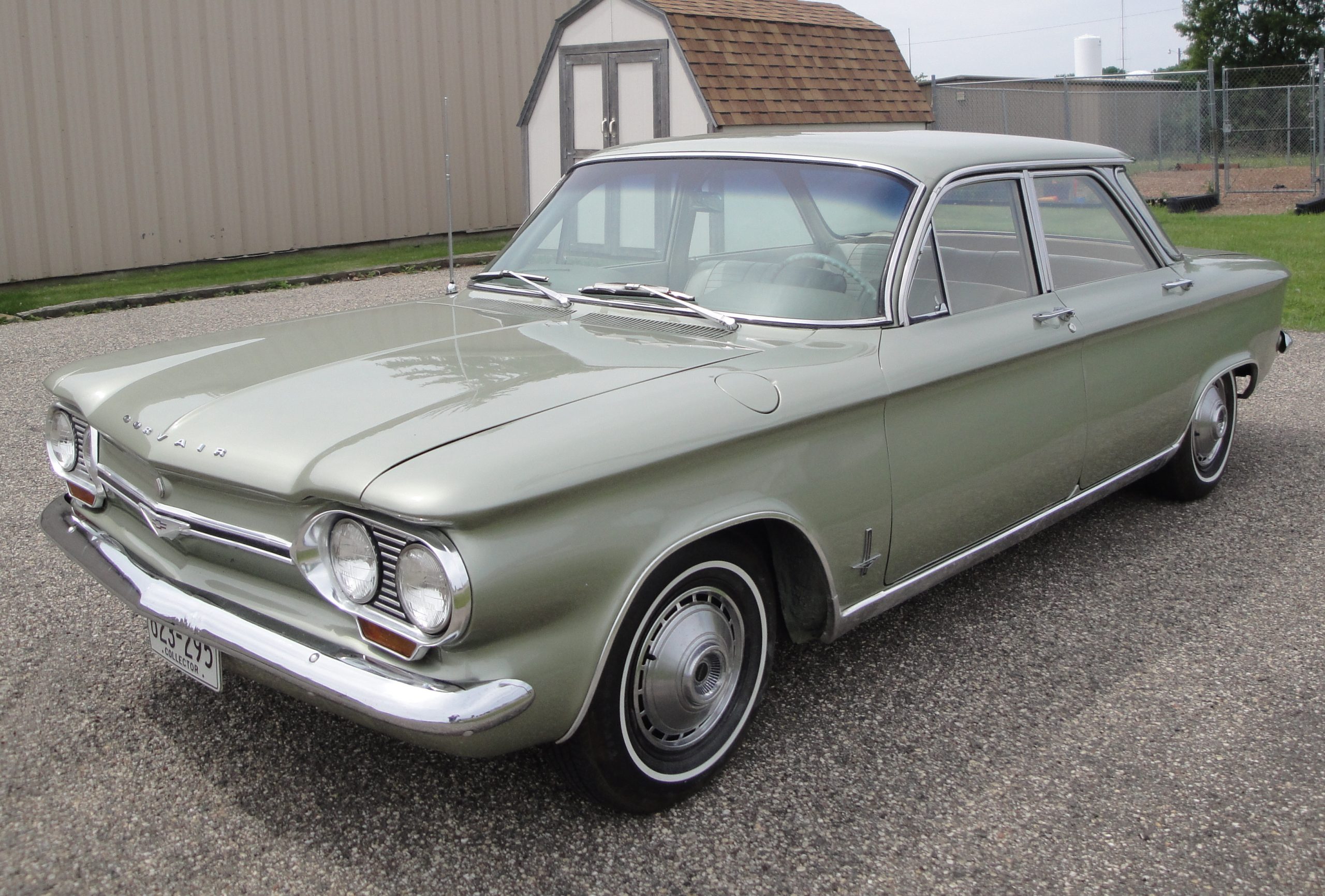
However, the rear-engine layout also created handling challenges. Early models had suspension designs that could feel unstable during sharp turns. Drivers needed to understand the car’s limits to drive it safely.
The Corvair later became part of a national safety debate. A book called “Unsafe at Any Speed” criticized its design. This brought attention to vehicle safety standards and changed how car companies approached engineering.
Despite the controversy, many owners appreciated the Corvair’s smooth ride and simple engine. It offered good fuel economy for its time. Some versions even came with turbocharged engines, adding more power and excitement.
The Chevrolet Corvair remained in production until 1969. Although it did not last as long as other models, it left a strong mark on automotive history. It showed that American companies could experiment with bold designs.
4) Citroën DS
The Citroën DS was introduced in 1955 and immediately looked different from every other car. Its smooth shape and advanced engineering shocked the world. While many noticed its suspension, its engine layout was also unusual for its time.
The DS used a front-mounted engine with front-wheel drive. During the 1950s, most large cars sent power to the rear wheels. By driving the front wheels, the DS improved traction and made the car more stable in bad weather.
The engine was placed far forward in the body. This allowed more interior space for passengers. It also helped create the car’s low hood design, which improved aerodynamics and gave it a futuristic appearance.
Because the engine drove the front wheels, there was no large driveshaft running to the back. This allowed a flat floor inside the cabin. Passengers enjoyed more comfort and legroom compared to many traditional sedans.
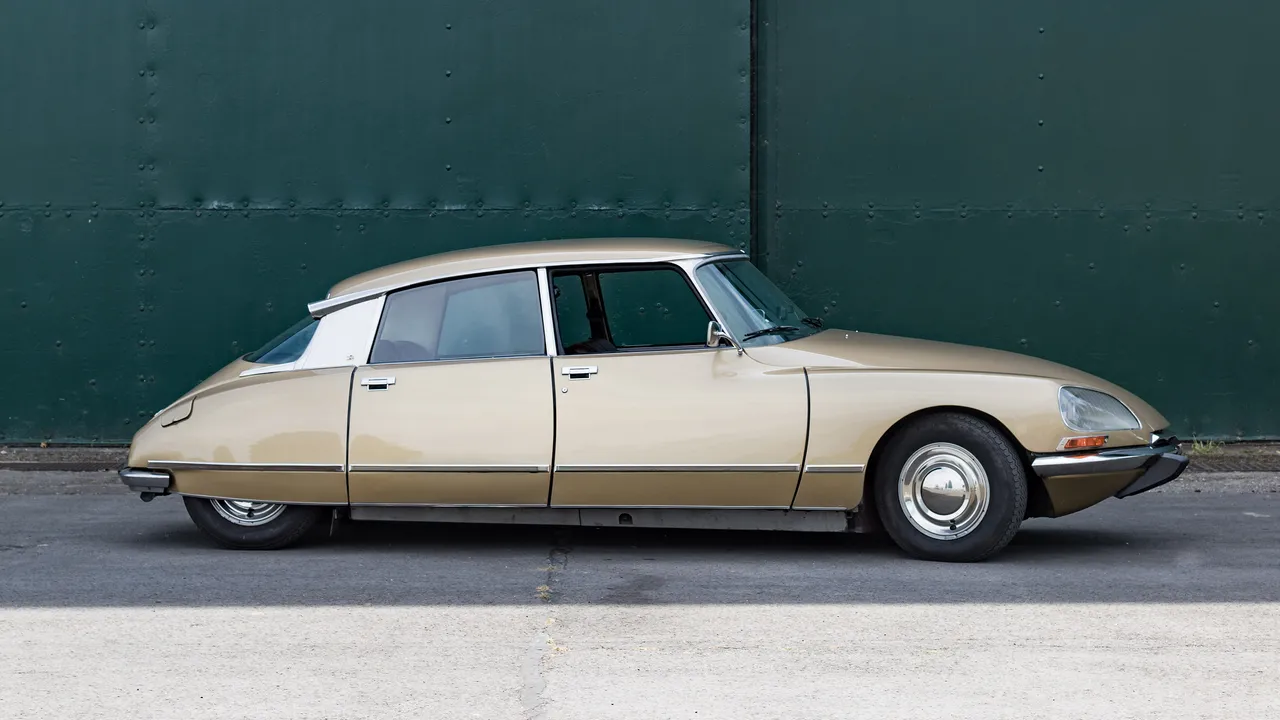
The Citroën DS also featured an advanced hydropneumatic suspension system. While not part of the engine itself, this system worked closely with the car’s layout. It allowed the car to stay level and smooth over rough roads.
The engine itself was not extremely powerful, but it was dependable. It delivered smooth performance for everyday driving. Later versions offered improved power and fuel efficiency while keeping the same basic layout.
This unique engineering helped the DS handle corners with confidence. The weight distribution and front-wheel drive setup made it feel steady, even at higher speeds. Drivers appreciated its comfortable yet controlled ride.
The DS was also innovative in safety. Its design allowed better braking stability because the weight shifted forward during stops. The front-wheel drive layout helped keep the car straight under heavy braking.
For nearly twenty years, the Citroën DS remained in production. It became a symbol of French creativity and advanced thinking. Its unusual engine placement and front-wheel drive system influenced many future car designs.
Today, the Citroën DS is remembered as one of the most innovative classic cars ever built. Its bold engine layout and engineering ideas were far ahead of their time. It proved that creativity could change the direction of automotive design.
5) Lamborghini Miura
The Lamborghini Miura changed the sports car world when it appeared in 1966. At that time, most powerful cars had engines in the front. The Miura introduced a bold mid-mounted V12 engine layout.
The engine was placed behind the driver and passenger but in front of the rear wheels. This is known as a mid-engine layout. It helped improve weight balance and made the car handle better at high speeds.
Unlike many other cars, the Miura’s V12 engine was mounted sideways, or transversely. This was unusual for such a large engine. The clever design saved space and allowed the car to remain low and compact.
The mid-engine placement improved cornering performance. With the weight centered in the car, it felt more stable in sharp turns. Drivers experienced quicker responses and better control compared to front-engine sports cars.
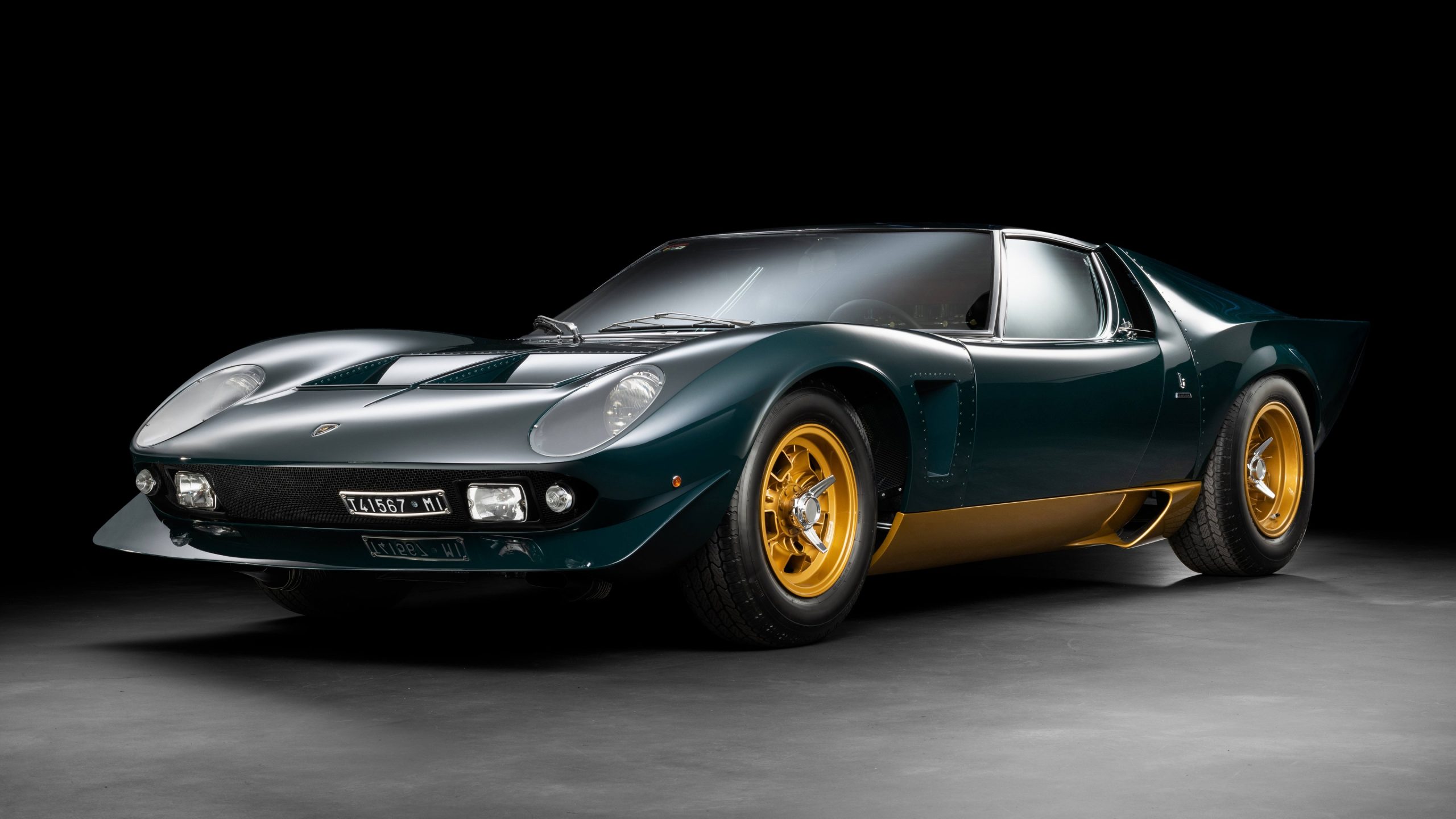
The V12 engine produced strong power and an exciting sound. It allowed the Miura to reach very high speeds for its time. This made it one of the fastest production cars in the world during the late 1960s.
However, the complex engine placement also created heat management challenges. Early models required careful maintenance. Even so, the performance benefits made the design worth the effort for many enthusiasts.
The Miura’s layout became a model for future supercars. Many modern high-performance cars now use a mid-engine design. Lamborghini helped set this trend with the Miura’s bold engineering approach.
Beyond performance, the engine placement allowed for a sleek body shape. The low hood and wide rear gave the car a dramatic appearance. Its design matched the advanced engineering underneath.
The Lamborghini Miura was produced for only a few years, but it left a lasting impact. It proved that mid-engine layouts were ideal for high-performance road cars, not just racing machines.
Today, the Miura is considered one of the most important classic supercars. Its unique transverse mid-mounted V12 engine helped redefine sports car design. It remains a symbol of innovation and performance in automotive history.
6) Oldsmobile Toronado
The Oldsmobile Toronado was introduced in 1966 as a bold and modern American coupe. What made it truly special was its unusual engine layout. It combined a large V8 engine with a front-wheel-drive system.
At that time, most powerful American cars sent power to the rear wheels. The Toronado was different. Its 7.0-liter V8 engine drove the front wheels, which was very rare for a big and heavy car.
To make this possible, engineers created a special transmission setup called the Unitized Power Package. This compact system allowed the large engine to fit in the front while still powering the front wheels efficiently.
Because there was no driveshaft running to the rear, the floor inside the car was flatter. This gave passengers more interior space and comfort. It also allowed for a lower and wider body design.
The front-wheel-drive layout improved traction in bad weather. Since the engine’s weight was over the front wheels, the car had better grip on wet or snowy roads. This made it practical for everyday driving.
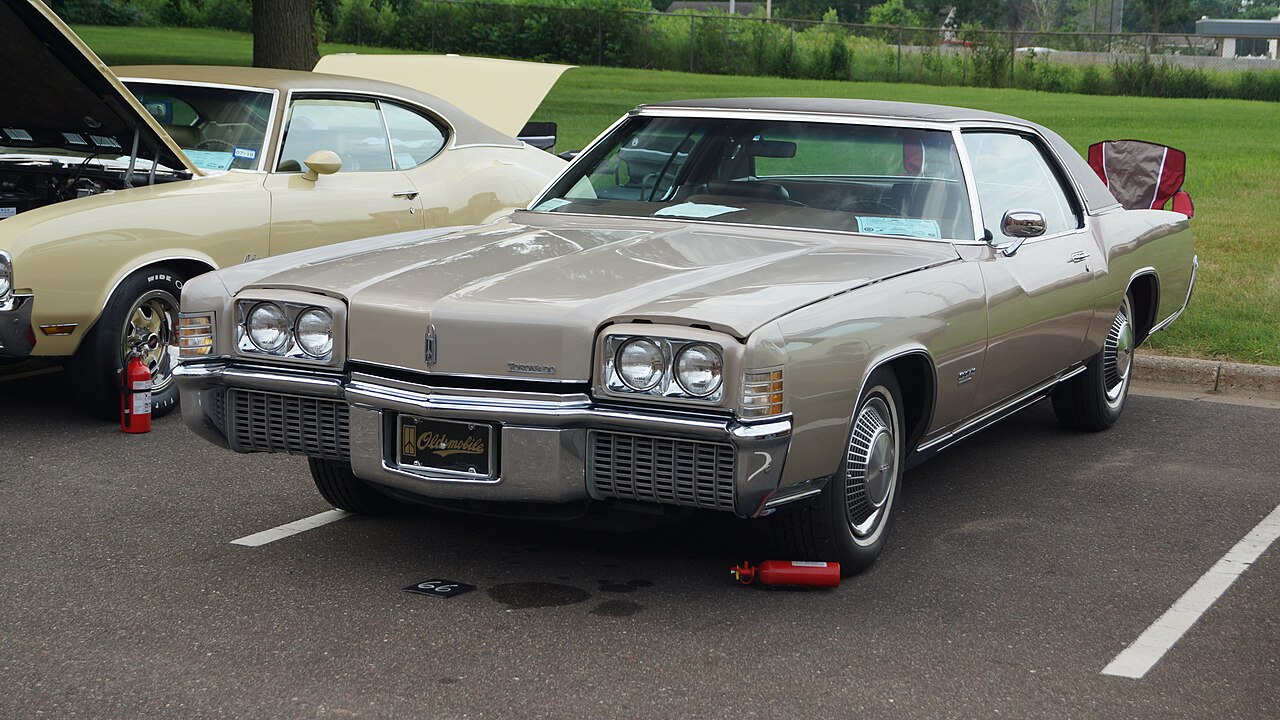
Even though it was a large luxury coupe, the Toronado delivered strong performance. The powerful V8 engine produced smooth acceleration and impressive highway speed. It proved that front-wheel drive could handle serious power.
The Toronado’s engine layout also influenced other General Motors vehicles later. It showed that American companies could experiment with new engineering ideas while keeping comfort and style.
However, the system was complex compared to traditional rear-wheel-drive designs. Maintenance could be more challenging. Still, many owners appreciated the car’s innovation and unique driving feel.
The Oldsmobile Toronado remained in production for several years and became a respected classic. Its bold engineering made it stand out among 1960s American cars.
Today, the Toronado is remembered as a pioneer. Its front-mounted V8 engine powering the front wheels was a daring move. It proved that unusual engine layouts could succeed in large, powerful vehicles.
7) Mazda Cosmo
The Mazda Cosmo, introduced in 1967, was a small sports car with a very unusual engine. Instead of using normal pistons like most cars, it used a rotary engine. This design made it stand out immediately.
A rotary engine works differently from a traditional engine. Instead of pistons moving up and down, it uses spinning triangular rotors. This allowed the engine to be smaller, lighter, and smoother than many piston engines.
Because the rotary engine was compact, engineers could mount it low and far back in the front of the car. This improved weight balance and handling. The Cosmo felt stable and agile on winding roads.
The small size of the engine also allowed for a sleek and low body design. The car looked modern and sporty. Its clean shape matched the advanced technology hidden under the hood.
The rotary engine could rev very high compared to many engines of that time. This gave the Cosmo lively acceleration and a unique engine sound. Drivers enjoyed its smooth power delivery and responsive feel.
However, early rotary engines also had challenges. Fuel economy was not as good as small piston engines. Maintenance required special knowledge, especially during the early years of development.
Even with these challenges, the Mazda Cosmo proved that rotary technology could work in real-world driving. It showed that innovation could come from smaller car companies willing to take risks.
The Cosmo was produced in limited numbers, making it rare today. However, it helped build Mazda’s reputation for creative engineering. The company continued developing rotary engines in later models.
The rotary layout became a key part of Mazda’s identity for many years. Cars like the RX-7 later carried forward the same engine idea. It all started with the bold decision behind the Cosmo.
Today, the Mazda Cosmo is remembered as a pioneer. Its rotary engine layout was truly different from anything else at the time. It remains an important classic in automotive history for its unique engineering vision.
8) Cord 810
The Cord 810 was introduced in 1936 and quickly became one of the most advanced cars of its time. Its design looked futuristic, but what truly made it special was its unusual engine and drivetrain layout.
Unlike most cars of the 1930s, the Cord 810 used front-wheel drive. At that time, almost every car sent power to the rear wheels. This bold engineering choice helped the Cord stand out from competitors.
The engine was mounted in the front, but instead of connecting to a rear driveshaft, it powered the front wheels directly. This allowed engineers to remove the large transmission tunnel found in many older cars.
Because there was no driveshaft running to the back, the Cord could sit lower to the ground. This gave it a sleek, streamlined body shape. The low hood and hidden headlights made it look years ahead of its time.
Some versions of the Cord 810 even featured a supercharged engine. This added more power and improved performance. The combination of front-wheel drive and forced induction was very advanced for the 1930s.
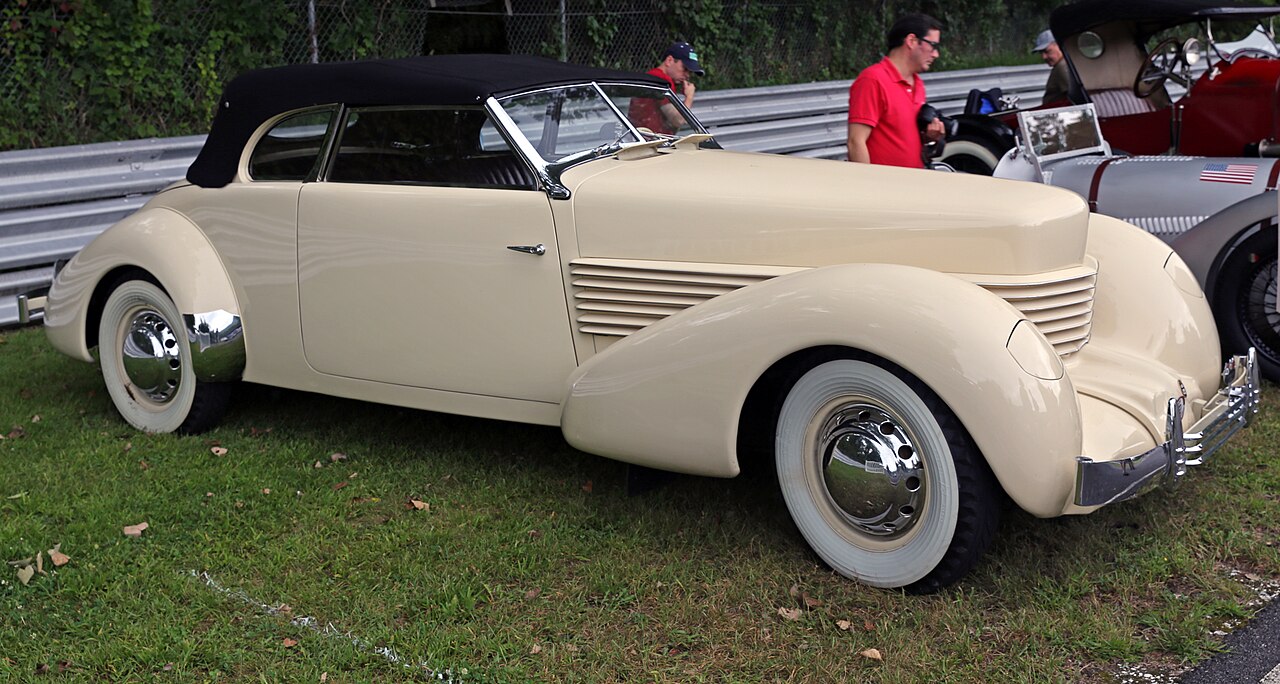
The front-wheel-drive layout also improved traction. With the engine weight over the front wheels, the car had better grip on slippery surfaces. This made driving more stable in poor weather conditions.
However, the complex system was expensive and sometimes difficult to maintain. Technology at the time was not as refined as today. Still, the Cord 810 showed what was possible with creative engineering ideas.
Production lasted only a few years, but the Cord left a lasting impression. Its unique layout influenced later designs and proved that front-wheel drive could work in larger passenger cars.
The Cord 810 combined innovation with bold styling. It was not just a car, but a statement about the future of automotive design and technology.
Today, the Cord 810 is remembered as a groundbreaking classic. Its front-mounted engine and front-wheel-drive system were far ahead of their era, making it one of the most unique cars in automotive history.
9) Ferrari Dino 246
The Ferrari Dino 246 was introduced in the late 1960s as a smaller and lighter sports car. Unlike most Ferraris of that time, it did not use a large V12 engine. Instead, it featured a mid-mounted V6 engine.
The engine was placed behind the seats but ahead of the rear wheels. This mid-engine layout improved balance and handling. With the weight centered in the car, it felt stable and controlled during sharp turns.
The V6 engine was smaller than Ferrari’s traditional V12 engines, but it still delivered strong performance. It allowed the Dino to feel lighter and more agile. Drivers enjoyed its quick response and smooth acceleration.
Because of the mid-engine placement, the car had a low and sleek body shape. The design was both beautiful and practical. The engine layout helped create perfect proportions and excellent road grip.
The Dino 246 also benefited from improved weight distribution. With the engine in the center, the car handled corners more precisely. This made it enjoyable to drive on winding roads and racetracks.
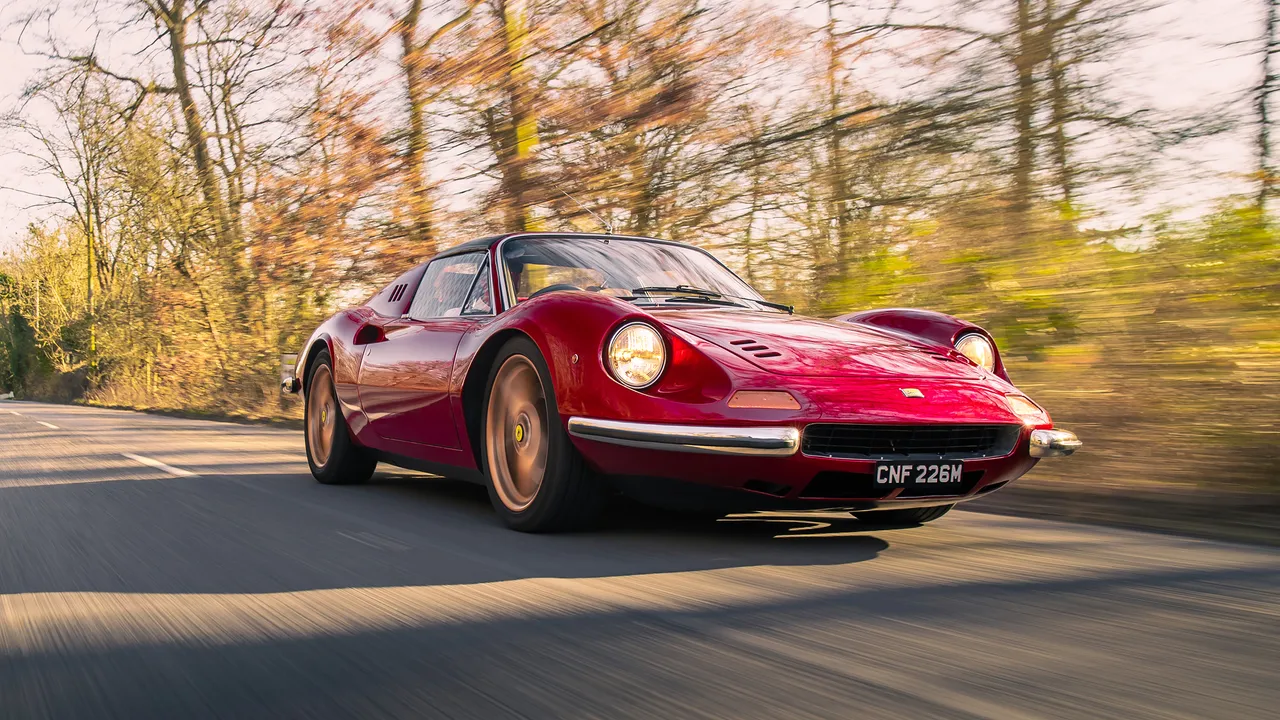
Although some traditional Ferrari fans were unsure about the smaller engine, the Dino proved itself through performance. It showed that balance and smart engineering could be just as important as raw power.
The mid-engine design also influenced future Ferrari models. Many later sports cars from the brand adopted similar layouts. The Dino helped set a new direction for Ferrari’s engineering philosophy.
The car was named after Enzo Ferrari’s son, Alfredo “Dino” Ferrari. This gave the model emotional significance in addition to its technical innovation.
Production lasted for several years, and the Dino became highly respected among enthusiasts. Its unique engine layout played a major role in shaping modern sports car design.
Today, the Ferrari Dino 246 is considered one of the most beautiful and balanced classic sports cars. Its mid-mounted V6 engine helped prove that smart design could redefine performance and driving pleasure.
10) Tucker 48
The Tucker 48 was introduced in 1948 as one of the most ambitious American cars ever built. It was designed to be safe, modern, and different. One of its most unusual features was its rear-mounted engine layout.
At a time when almost all American sedans had front-mounted engines, the Tucker placed its engine in the rear. This bold choice improved weight balance and allowed for a smoother ride on highways.
The car used a flat-six engine mounted at the back. This design helped lower the center of gravity. It also reduced vibration inside the cabin, making the ride more comfortable for passengers.
Because the engine was in the rear, the front of the car could be designed differently. Tucker used this space to create a safer front structure. The design aimed to protect passengers during accidents.
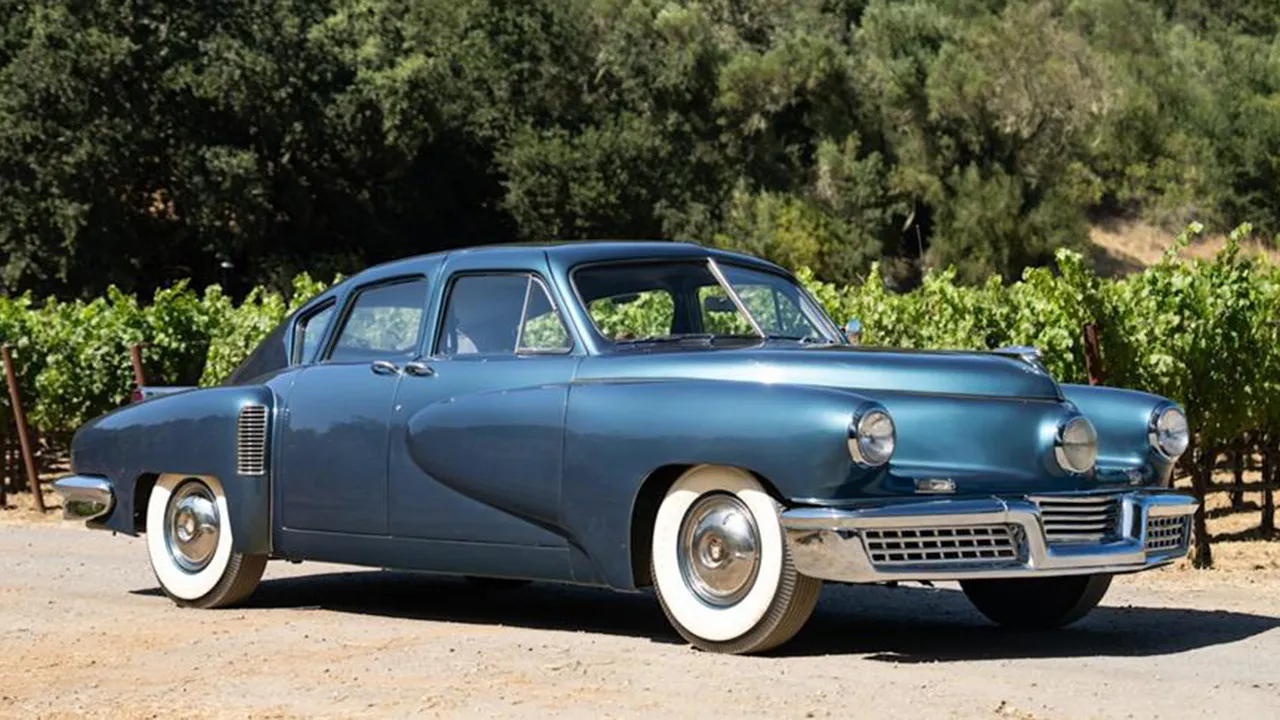
The rear-engine layout also improved traction. With the weight over the rear wheels, the Tucker had better grip when accelerating. This helped the large sedan move smoothly and confidently.
In addition to its engine design, the Tucker 48 included many safety innovations. It had a padded dashboard, a reinforced passenger area, and a center headlight that turned with the steering wheel.
Despite its advanced ideas, the company faced financial and legal challenges. Production stopped after only fifty-one cars were built. Even so, the Tucker became a legend in automotive history.
The unusual engine placement required creative engineering solutions. While it was advanced, it also made repairs more complex compared to traditional layouts. Still, the innovation impressed many experts.