
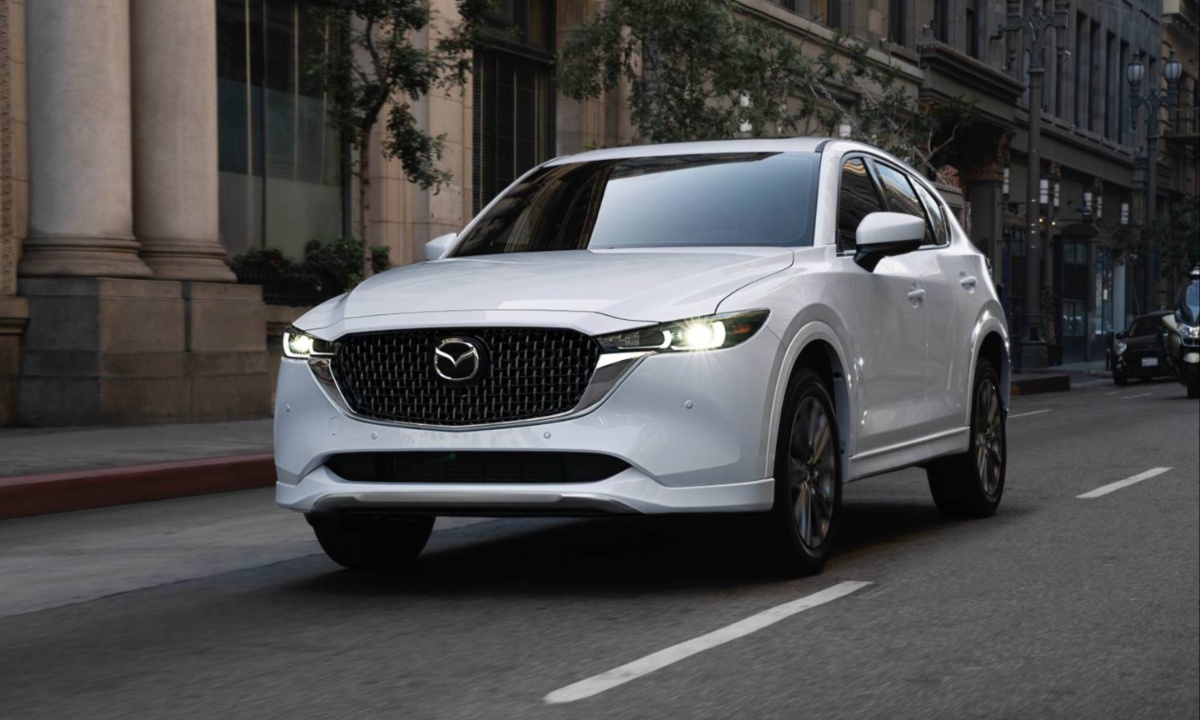
The automotive world has become increasingly dominated by SUVs and crossovers, with manufacturers flooding the market with countless options that promise versatility, capability, and style.
However, not all vehicles in this crowded segment deliver on their promises. While marketing campaigns and brand recognition often drive consumer attention toward certain models, some of the most compelling options remain hidden in plain sight, overshadowed by flashier competitors that fail to live up to their hype.
In today’s market, the distinction between compact SUVs and crossovers has become increasingly blurred, yet significant differences remain in terms of capability, value proposition, and real-world performance.
Many consumers find themselves drawn to popular crossovers based on brand prestige or aggressive marketing campaigns, only to discover that these vehicles prioritize style over substance, delivering disappointing ownership experiences characterized by reliability issues, poor value retention, or subpar driving dynamics.
Meanwhile, several compact SUVs continue to fly under the radar despite offering exceptional value, superior build quality, and genuine utility that far exceeds their more popular counterparts.
These underrated gems often come from manufacturers that prioritize engineering excellence over marketing flash, resulting in vehicles that deliver consistently superior ownership experiences at competitive price points.
The modern car buyer faces an overwhelming array of choices, with social media influence and online reviews sometimes creating artificial demand for vehicles that don’t necessarily deserve their raised status.
Conversely, some of the most competent and reliable options in the segment receive minimal attention simply because they lack the marketing budget or brand cachet of their more visible competitors. This disparity between perception and reality has created significant opportunities for savvy consumers willing to look beyond the obvious choices.
Understanding which vehicles truly deliver on their promises versus those that disappoint requires looking beyond surface-level attributes like styling and brand reputation.
Factors such as long-term reliability, real-world fuel economy, interior space efficiency, driving dynamics, and total cost of ownership paint a very different picture than what’s often portrayed in glossy advertisements or influencer endorsements.
The 5 Most Underrated Compact SUVs
These overlooked vehicles deliver exceptional value through proven reliability, practical cargo space, and genuine capability that surpasses their modest price points and understated marketing presence in today’s crowded crossover marketplace.
Their solid engineering incorporates durable powertrains, thoughtful interior packaging, and real-world functionality that provides years of dependable service without the premium pricing or flashy features that dominate competitor advertising campaigns.
The combination of reasonable maintenance costs, strong resale values, and genuine utility makes these hidden gems ideal choices for buyers seeking substance over style in their daily driving companions.
From reliable brands with proven track records to practical models with excellent warranties, these vehicles offer superior ownership experiences through honest engineering that prioritizes dependability and value over trendy styling or unnecessary complexity.
1. Mazda CX-5
The Mazda CX-5 represents everything right about automotive engineering when function follows form without sacrificing either. While other manufacturers chase trends and gimmicks, Mazda has consistently refined the CX-5 into a masterpiece of balanced design that delivers premium experiences at mainstream prices.
The CX-50 Turbo Premium Plus variant demonstrates impressive performance capabilities with its 256-hp turbocharged inline 4 engine achieving 60 mph in just 6.4 seconds, showcasing the brand’s commitment to driving dynamics across its SUV lineup.
What makes the CX-5 truly exceptional is its unwavering focus on the fundamentals that matter most to long-term ownership satisfaction. The interior materials rival those found in luxury vehicles, costing significantly more, with soft-touch surfaces, precise fit and finish, and an intuitive control layout that prioritizes usability over flashy technology.
The infotainment system, while not the largest in its class, responds quickly and integrates seamlessly with smartphone connectivity without the lag and glitches that plague many competitors.
From a driving perspective, the CX-5 stands alone in its segment for delivering genuinely engaging dynamics without compromising comfort or practicality.
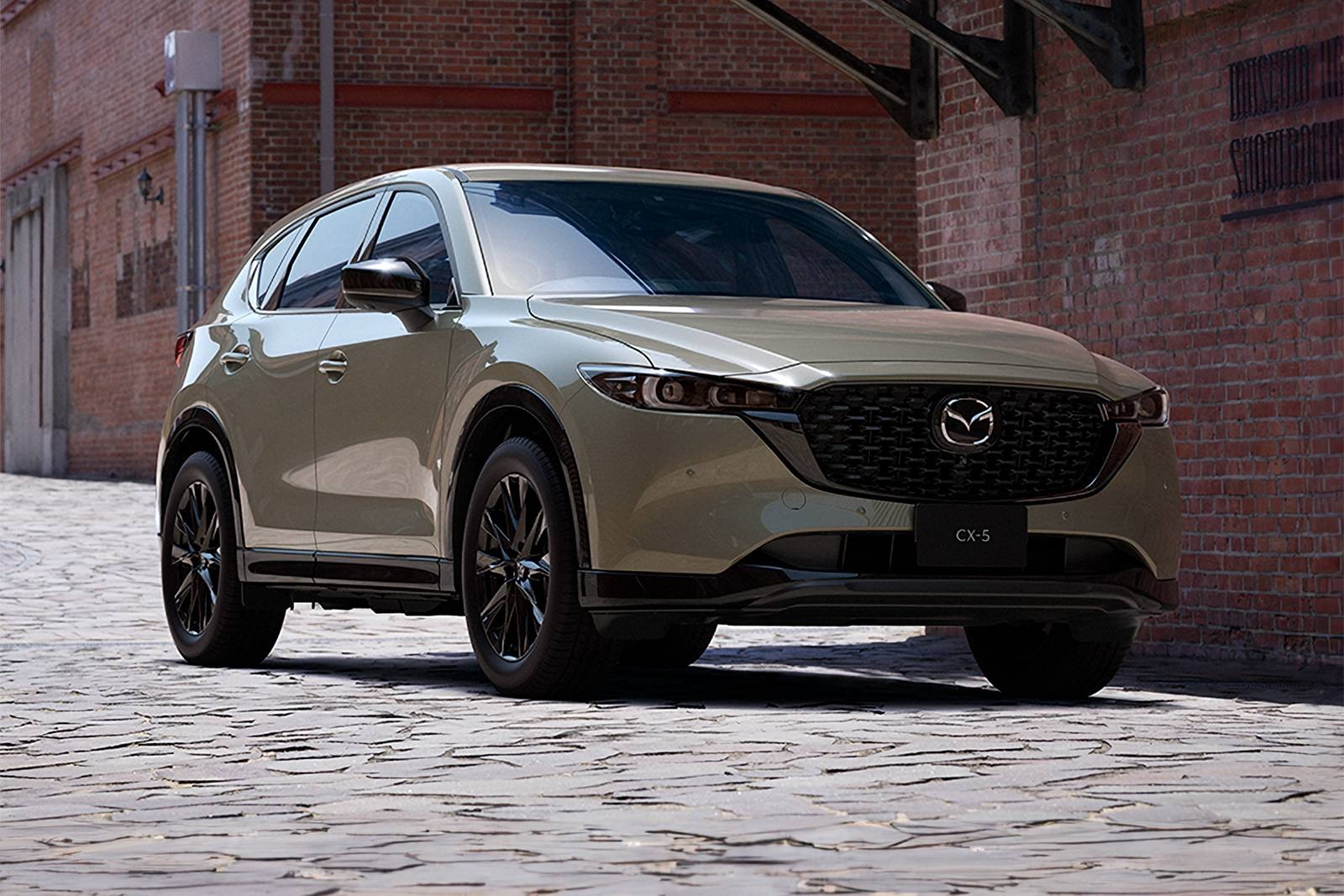
The steering provides actual feedback and precision, the suspension manages to be both comfortable for daily commuting and composed when pushed through corners, and the available turbocharged engine delivers smooth, linear power that makes highway merging and passing effortless.
Unlike many crossovers that feel disconnected and numb, the CX-5 maintains a connection between driver and machine that makes every journey more enjoyable.
Reliability statistics consistently place Mazda among the top tier of automotive brands, with the CX-5 specifically earning praise for its mechanical durability and low maintenance costs.
While other manufacturers struggle with transmission issues, electronic failures, and premature wear of critical components, CX-5 owners report consistently trouble-free ownership experiences that extend well beyond the warranty period.
This reliability translates directly into lower total cost of ownership and higher resale values that offset the slightly higher initial purchase price compared to some competitors.
The CX-5’s cargo capacity and interior space efficiency also deserve recognition, as Mazda’s engineers have maximized usability within the vehicle’s dimensions without resorting to awkward proportions or compromised aesthetics.
The rear seats offer genuine adult accommodation, the cargo area features a low load floor and wide opening, and the cabin design creates an airy, premium atmosphere that belies its mainstream pricing. Despite these obvious strengths, the CX-5 remains overshadowed by competitors that prioritize marketing over engineering excellence.
2. Subaru Forester
The Subaru Forester continues to embody the brand’s core philosophy of putting capability before flash, resulting in a compact SUV that excels in real-world conditions where many competitors falter.
The 2025 Subaru Forester Sport ranks fifth in Cars.com’s comprehensive compact SUV evaluation, demonstrating its competence even as it remains underappreciated by mainstream buyers who prioritize style over substance.
Standard all-wheel drive sets the Forester apart from competitors that offer it as an expensive option or omit it entirely, providing genuine four-season capability that transforms winter driving from a white-knuckle experience into confident, controlled transportation.
The symmetrical all-wheel-drive system doesn’t just activate when slippage is detected; it continuously distributes power between all four wheels, providing proactive traction that prevents loss of control before it occurs. This fundamental engineering advantage becomes apparent during the first snowfall or unexpected rainstorm when other vehicles struggle for grip.
Interior space represents another area where the Forester’s practical design philosophy shines through traditional measurements and into real-world usability.
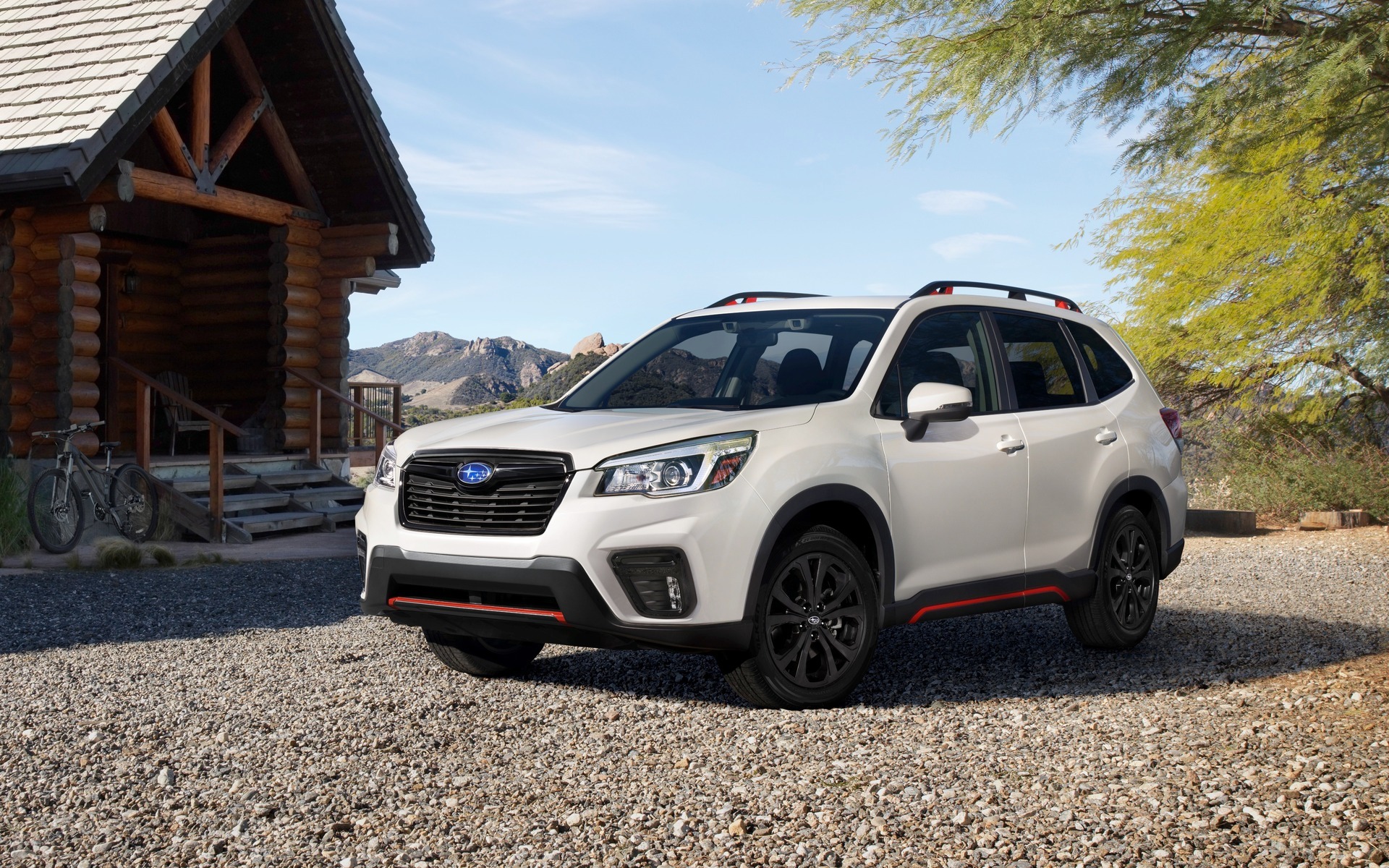
The upright seating position provides excellent visibility in all directions, crucial for both safety and confidence during daily driving. Rear-seat passengers enjoy generous legroom and headroom that rivals larger, more expensive SUVs, while the cargo area’s square shape and low load height make it genuinely useful for everything from grocery shopping to weekend camping gear.
The Forester’s approach to technology integration emphasizes functionality over flashiness, resulting in systems that work reliably without constant software updates or frustrating interface quirks.
The standard EyeSight driver assistance suite has earned consistent praise from safety organizations and owners alike for its unobtrusive operation and genuine effectiveness at preventing accidents.
Unlike some competitors’ systems that feel intrusive or unreliable, EyeSight enhances safety without making drivers feel like passengers in their vehicles.
Long-term ownership costs remain remarkably low thanks to Subaru’s conservative engineering approach and extensive dealer network trained specifically on the brand’s unique horizontally-opposed engine architecture.
While some competitors require expensive specialized service or suffer from premature component failures, Forester owners consistently report trouble-free operation and reasonable maintenance expenses that make the total cost of ownership highly competitive with vehicles that cost thousands less initially but require more frequent repairs and depreciate more rapidly.
3. Kia Seltos
The Kia Seltos arrived in the North American market without the fanfare typically associated with segment game-changers, yet it quietly delivers a combination of features, warranty coverage, and build quality that embarrasses many higher-profile competitors.
In a segment where manufacturers often force buyers to choose between affordability and capability, the Seltos provides both without the compromises that typically define budget-oriented vehicles.
Kia’s transformation from budget brand to legitimate mainstream competitor becomes immediately apparent upon entering the Seltos cabin, where soft-touch materials, logical control placement, and generous standard equipment create an environment that feels far more expensive than the window sticker suggests.
The infotainment system responds quickly to inputs, integrates seamlessly with smartphones, and provides the connectivity features that modern buyers expect without the complexity and unreliability that plague some competitors’ more advanced systems.
Performance capabilities extend well beyond what the relatively modest engine specifications might suggest, with the available turbocharged engine providing smooth, confident acceleration that makes highway driving relaxed and merging stress-free.
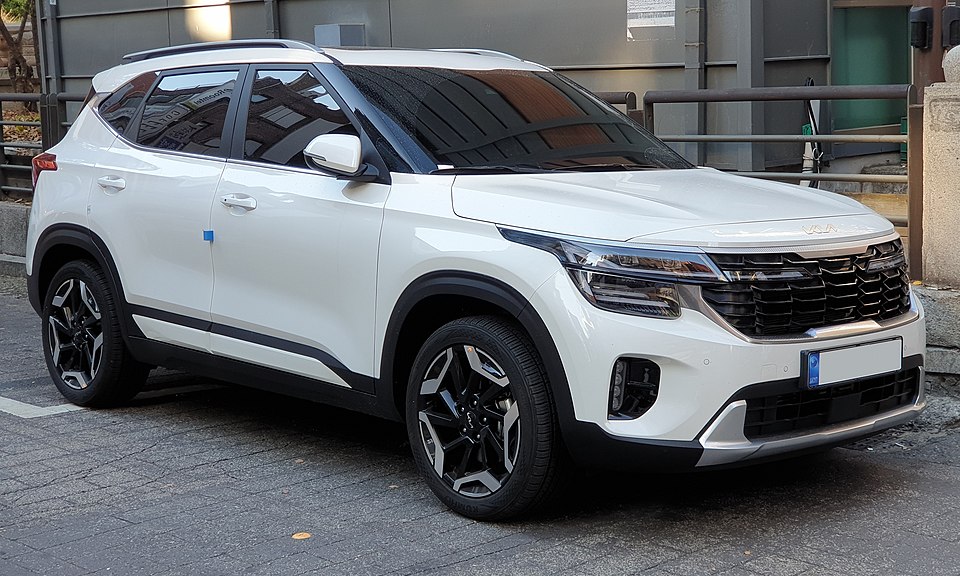
The transmission programming emphasizes smoothness over sport, resulting in seamless power delivery that contributes to the refinement that defines the Seltos ownership experience.
Fuel economy remains competitive with hybrid competitors while providing the simplicity and reliability advantages of conventional powertrain technology.
The Seltos’ warranty coverage represents perhaps the most compelling aspect of the ownership proposition, with Kia’s industry-leading 10-year, 100,000-mile powertrain coverage providing peace of mind that few competitors can match.
This warranty reflects the manufacturer’s confidence in their product quality while protecting owners from the catastrophic repair costs that can turn automotive ownership from a pleasure into a financial burden.
The comprehensive coverage extends beyond just the powertrain to include roadside assistance and other services that demonstrate Kia’s commitment to customer satisfaction.
Interior space efficiency rivals that of significantly larger vehicles, with clever design details that maximize usability within the compact footprint. The rear seats provide genuine adult accommodation for shorter trips while folding completely flat to create a surprisingly large cargo area when maximum hauling capacity is needed.
Storage compartments throughout the cabin provide practical solutions for daily necessities without cluttering the design aesthetic. Despite these obvious advantages and competitive pricing, the Seltos remains overshadowed by competitors with stronger brand recognition but inferior actual capabilities.
4. Hyundai Tucson
The current-generation Hyundai Tucson represents a dramatic departure from the conservative designs that previously characterized the Korean manufacturer’s approach to the compact SUV segment.
Bold, angular styling that genuinely stands out in parking lots filled with increasingly homogeneous crossovers might suggest that form has taken precedence over function, yet the Tucson delivers substantive improvements in every measurable category that matters to daily ownership satisfaction.
The 2025 Hyundai Tucson Hybrid Limited achieved third place in Cars.com’s comprehensive compact SUV rankings, demonstrating that the combination of striking design and engineering competence has created a vehicle that succeeds on multiple levels without forcing buyers to prioritize one over the other.
Powertrain options range from efficient naturally aspirated engines to hybrid systems that deliver both performance and exceptional fuel economy, providing buyers with choices that align with their specific priorities rather than forcing compromises that characterize many competitors.
The hybrid variant particularly impresses with its seamless integration of electric and gasoline power, delivering smooth acceleration and remarkable fuel economy without the range anxiety or charging complications associated with pure electric vehicles.
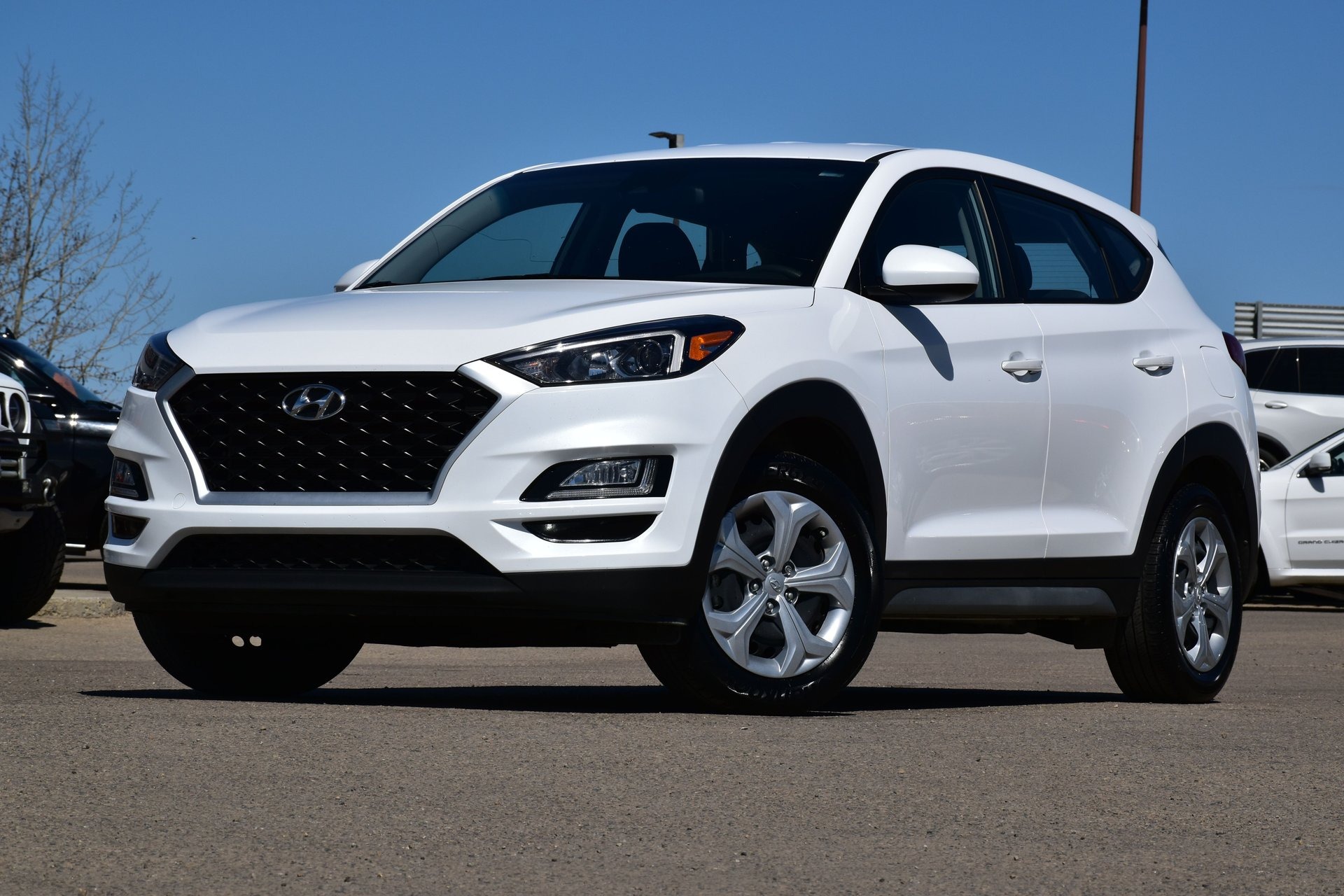
Interior design continues the exterior’s bold aesthetic while prioritizing the ergonomic considerations that determine long-term satisfaction with daily operation.
The dashboard layout places primary controls within easy reach while providing clear sightlines to essential information displays. Material quality throughout the cabin exceeds expectations for the price point, with soft-touch surfaces and attractive trim pieces creating a premium atmosphere that rivals more expensive competitors.
The infotainment system provides comprehensive connectivity without the complexity that makes some advanced systems frustrating to operate. Safety technology implementation demonstrates Hyundai’s commitment to protecting occupants without creating intrusive systems that interfere with normal driving enjoyment.
The standard suite of driver assistance features operates smoothly and effectively, providing genuine accident prevention capabilities while remaining unobtrusive during normal driving conditions.
Crash test ratings consistently earn top marks from safety organizations, providing confidence that the Tucson will protect occupants in the unfortunate event of an accident.
The comprehensive warranty coverage mirrors that of its Kia corporate sibling, providing industry-leading protection that reflects the manufacturer’s confidence in product quality while protecting owners from unexpected repair costs.
Combined with competitive pricing and generous standard equipment levels, the Tucson delivers exceptional value that becomes even more apparent as competitors require expensive option packages to match its standard feature content.
Also Read: 5 Vehicles With Convenient Service Intervals vs 5 With Frequent Maintenance Needs
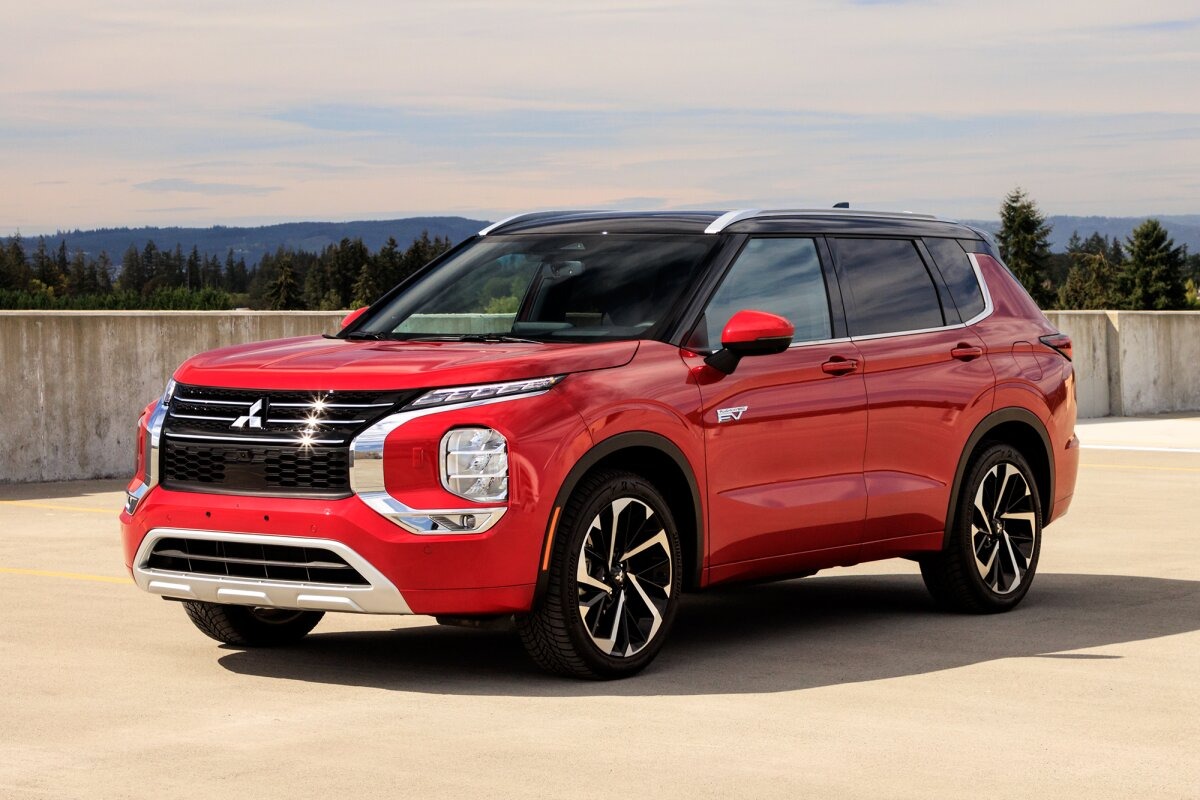
5. Mitsubishi Outlander
The Mitsubishi Outlander occupies a unique position in the compact SUV segment by providing genuine three-row seating capability at a price point where most competitors offer only two-row configurations or charge significant premiums for additional passenger capacity.
While the third row may not accommodate full-size adults for extended journeys, it provides valuable flexibility for growing families or occasional passenger needs that would otherwise require upgrading to a significantly larger and more expensive vehicle.
With a base price of $26,545, the 2025 Mitsubishi Eclipse Cross represents the most affordable option in the compact SUV segment, though the Outlander maintains similar value positioning while providing the additional utility of three-row seating that sets it apart from similarly priced alternatives.
Recent redesign efforts have transformed the Outlander from a dated, forgettable option into a genuinely competitive choice that deserves consideration from buyers seeking maximum space and utility within a constrained budget.
The exterior styling adopts Mitsubishi’s current design language without resorting to the extreme angles or controversial elements that might limit its appeal to conservative buyers.
Interior materials and build quality represent significant improvements over previous generations while maintaining the price advantages that make Mitsubishi compelling for budget-conscious consumers.
The standard warranty coverage provides exceptional protection that rivals industry leaders, with 10-year, 100,000-mile powertrain coverage and comprehensive bumper-to-bumper protection that demonstrates the manufacturer’s confidence in product quality.
This warranty becomes particularly valuable given Mitsubishi’s limited dealer network, as it assures that owners won’t face prohibitive repair costs even if service locations are less convenient than mainstream alternatives.
Fuel economy remains competitive with two-row competitors despite the additional weight and complexity associated with three-row seating, making the Outlander’s size advantages practically free from an operating cost perspective.
The continuously variable transmission provides smooth operation while maximizing efficiency, though it may not satisfy buyers seeking sporty driving characteristics. For families prioritizing practicality over performance, the Outlander’s powertrain strikes an appropriate balance between capability and economy.
Cargo capacity with all seats in use remains limited, as expected with any compact three-row vehicle, but the flexibility to fold seats in various configurations creates significant utility for buyers willing to adapt their loading strategy to accommodate both passengers and cargo as needs change.
The low load floor and wide opening facilitate easy loading of bulky items, while numerous storage compartments throughout the cabin provide practical solutions for daily necessities that larger families generate.
The 5 Most Overrated Crossovers That Disappoint
These heavily marketed vehicles fail to deliver on their ambitious promises, offering poor reliability, cramped interiors, and underwhelming performance despite premium pricing and extensive advertising campaigns that create unrealistic buyer expectations.
Their flashy styling masks fundamental engineering compromises, cheap interior materials, and problematic powertrains that generate expensive repair bills and frustrated ownership experiences far below their marketed capabilities.
The combination of inflated pricing, frequent recalls, and disappointing real-world performance creates buyer’s remorse as owners discover that attractive showroom appearances don’t translate into satisfying daily use or long-term dependability.
From trendy brands with style-over-substance approaches to overhyped models with known reliability issues, these vehicles prove that marketing budgets cannot compensate for poor engineering decisions that compromise fundamental vehicle quality and owner satisfaction.
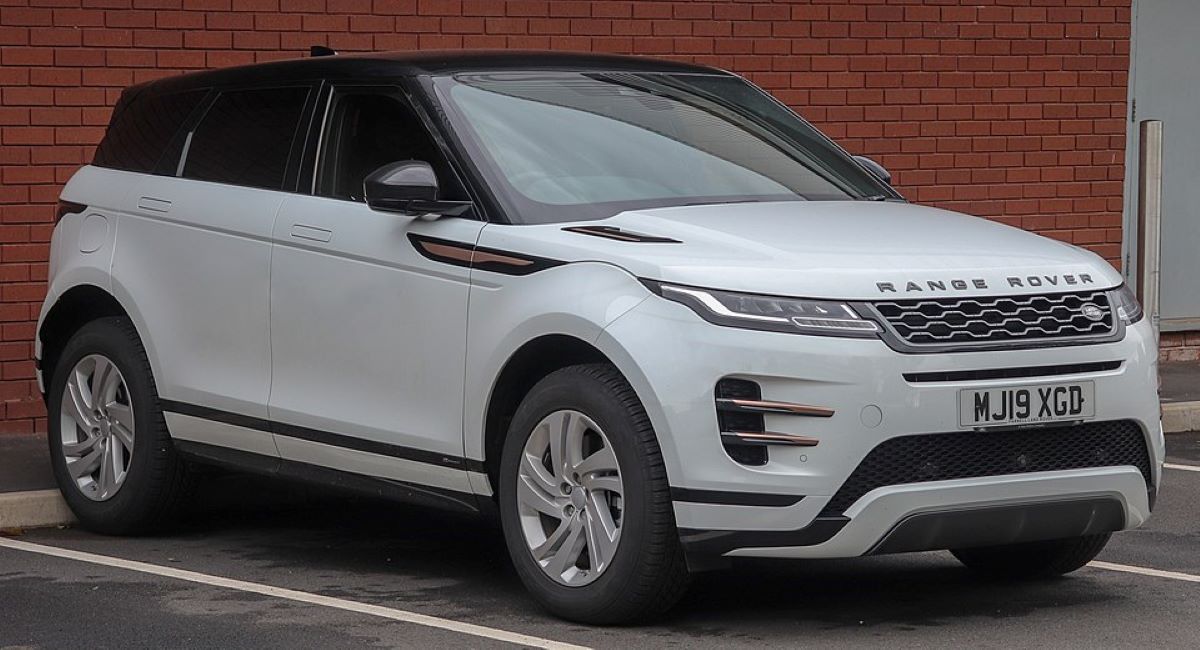
1. Range Rover Evoque
The Range Rover Evoque represents perhaps the most egregious example of automotive marketing triumph over engineering competence, as its undeniable visual appeal masks fundamental flaws that make ownership a frustrating and expensive proposition.
While the coupe-like silhouette and distinctive styling elements create showroom appeal that attracts buyers seeking to make a statement, the compromises required to achieve this aesthetic result in a vehicle that fails to deliver on the practical promises that define the SUV segment.
Interior space represents the most obvious casualty of the Evoque’s design-first philosophy, with rear-seat accommodations that struggle to provide adequate headroom and legroom for average-height adults.
The dramatically sloped roofline that creates the vehicle’s distinctive profile also severely compromises cargo capacity, resulting in a loading area that’s significantly smaller than competitors with more conventional proportions.
The narrow rear window created by the coupe design restricts visibility and creates blind spots that make parking and maneuvering unnecessarily challenging.
Reliability statistics paint a concerning picture of ownership satisfaction, with the Evoque consistently ranking among the least reliable vehicles in numerous automotive surveys.
Electronic systems failures, engine problems, and transmission issues appear with alarming frequency, often resulting in extended dealer visits and expensive repairs that aren’t fully covered by warranty provisions.
The complexity of modern Land Rover systems means that even minor malfunctions can result in significant repair bills and prolonged downtime that disrupts daily transportation needs.
The driving experience fails to justify the premium pricing, with steering that provides little feedback, suspension tuning that prioritizes appearance over comfort, and powertrains that struggle to deliver smooth, confident performance.
The turbocharged engines suffer from lag and inconsistent power delivery, while the nine-speed automatic transmission exhibits hesitation and rough shifting that makes daily driving less refined than significantly less expensive competitors. Road noise and wind noise intrude into the cabin despite the luxury positioning and premium pricing.
Off-road capability, traditionally a Land Rover strength, has been largely sacrificed in favor of on-road styling considerations. The low ground clearance, limited suspension travel, and delicate bodywork make the Evoque unsuitable for anything more challenging than well-maintained gravel roads.
The advanced terrain management systems create an illusion of capability while highlighting the vehicle’s limitations when confronted with genuine off-road conditions that less expensive competitors handle with ease.
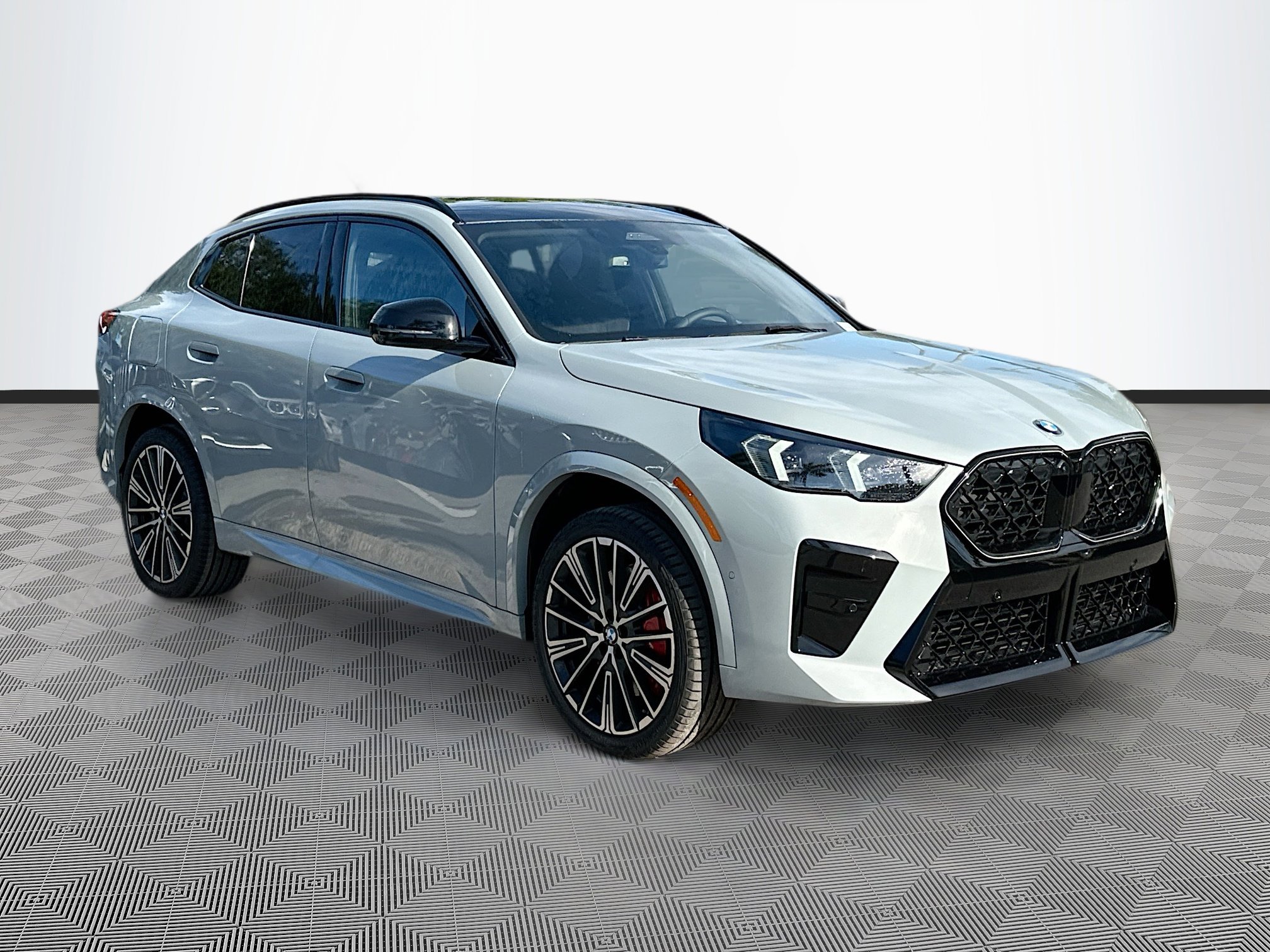
2. BMW X2
The BMW X2 exemplifies the unfortunate trend of established luxury manufacturers prioritizing market segmentation over engineering excellence, resulting in a vehicle that carries prestigious badging while delivering an ownership experience that fails to justify its premium pricing.
The aggressive styling and coupe-like proportions may attract buyers seeking to differentiate themselves from mainstream crossover purchases, yet the compromises required to achieve this distinctive appearance create practical limitations that become increasingly frustrating during daily ownership.
Interior space efficiency suffers dramatically compared to more conventionally proportioned competitors, with rear-seat passengers experiencing significantly reduced headroom and cargo capacity that makes the X2 impractical for many real-world scenarios that define SUV utility.
The sporting pretensions suggested by the exterior design don’t translate into genuinely engaging driving dynamics, as the suspension tuning prioritizes appearance over both comfort and performance, resulting in a harsh ride that fails to provide the handling rewards that might justify the comfort sacrifices.
The complexity of BMW’s electronic systems creates numerous opportunities for malfunctions that require expensive dealer servicing and often result in extended repair periods during which owners must arrange alternative transportation.
The iDrive infotainment system, while feature-rich, suffers from unnecessary complexity that makes simple tasks frustrating and distracts from driving attention. Updates and modifications require dealer visits and expensive programming procedures that increase ownership costs beyond the already premium purchase price.
Maintenance costs escalate rapidly as the vehicle ages, with routine services requiring specialized procedures and expensive parts that make ownership prohibitively expensive for many buyers who could comfortably afford the initial purchase price.
The turbocharged engines require premium fuel and frequent servicing to maintain reliability, while the sophisticated all-wheel-drive system and electronic components create additional potential failure points that can result in catastrophic repair bills.
Performance capabilities fail to match the sporty styling cues and premium positioning, with acceleration that feels sluggish compared to similarly priced competitors and handling characteristics that prioritize comfort over engagement.
The available engine options struggle to provide adequate power for confident highway driving while returning fuel economy figures that lag behind more practical alternatives.
The sport-tuned suspension creates a harsh ride quality that becomes tiresome during daily commuting without providing the handling benefits that might justify the comfort sacrifices.
3. Infiniti QX50
The Infiniti QX50 represents a cautionary tale about the dangers of prioritizing technological innovation over proven reliability, as its variable compression ratio engine technology creates more problems than it solves while failing to deliver the promised benefits that justified its development.
While the concept of an engine that can adjust its compression ratio to optimize performance and efficiency represents genuine engineering innovation, the real-world implementation suffers from complexity issues that make ownership a frustrating and expensive proposition.
The VC-Turbo engine’s variable compression technology sounds impressive in marketing materials, but creates numerous opportunities for mechanical failures that require specialized diagnostic equipment and expensive repairs.
The complex linkage systems and electronic controls necessary to enable compression ratio changes introduce additional components that can malfunction, often resulting in the need for complete engine replacement rather than economical repairs.
Dealer service departments often lack the specialized knowledge and equipment necessary to properly diagnose and repair these systems, leading to extended repair periods and repeated service visits.
Interior design prioritizes style over functionality, with touch-sensitive controls that frequently respond incorrectly to inputs and create frustration during routine operations.
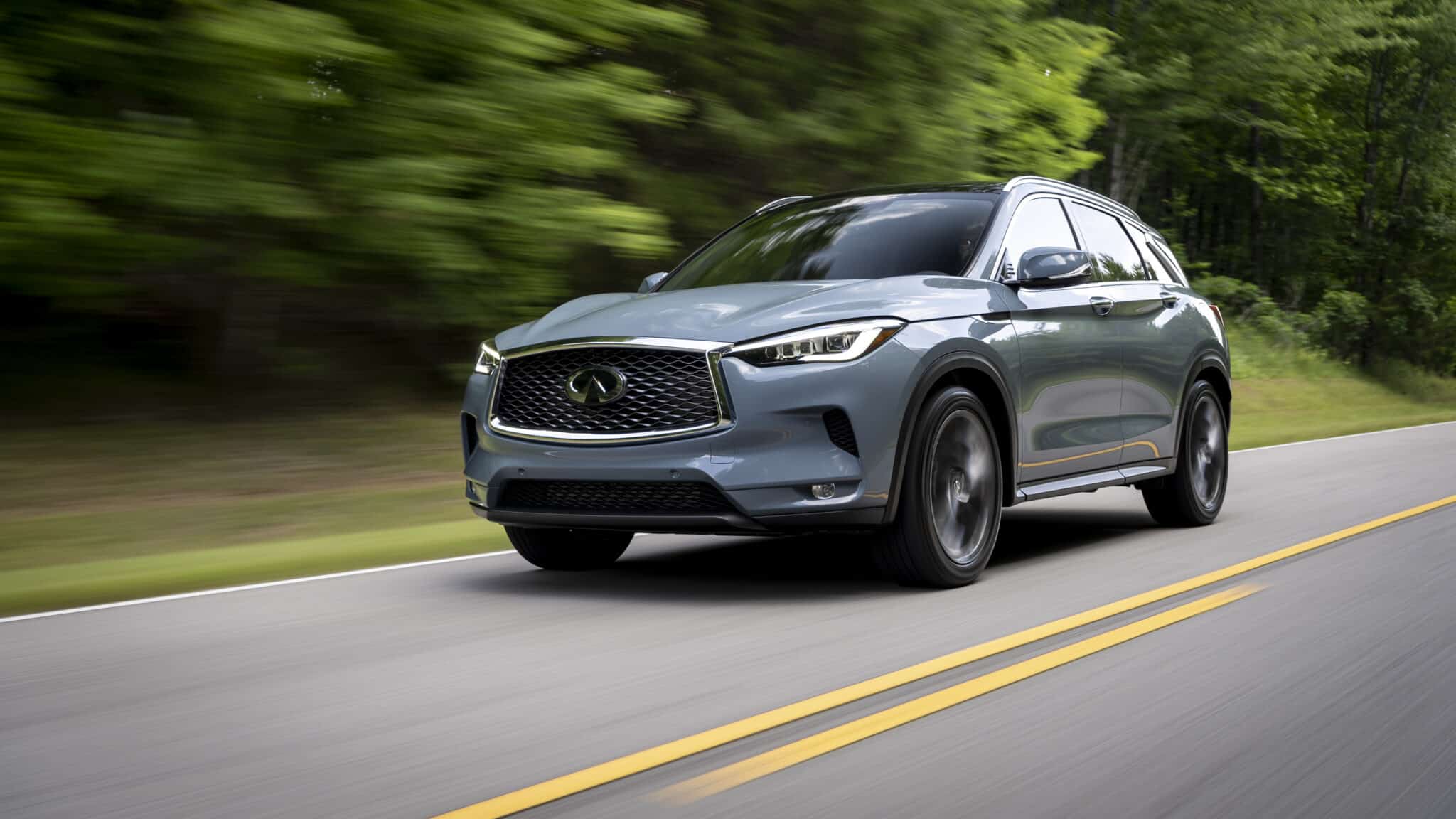
The dual-screen infotainment system appears impressive but suffers from lag, occasional freezing, and unintuitive menu structures that make simple tasks unnecessarily complicated.
Climate control adjustments require multiple screen interactions instead of simple knob or button operations, creating distraction and annoyance during daily driving.
Reliability statistics consistently place the QX50 among the most problematic vehicles in its segment, with owners reporting frequent electronic malfunctions, engine problems, and transmission issues that result in extended dealer visits and expensive repairs not fully covered by warranty provisions.
The complexity of the vehicle’s systems means that even minor problems often require major component replacements rather than simple repairs, dramatically increasing ownership costs and reducing long-term value retention.
Fuel economy figures fail to justify the engine complexity, with real-world consumption often exceeding EPA estimates by significant margins, particularly during city driving, where the variable compression system should theoretically provide maximum benefits.
The premium fuel requirement further increases operating costs while the sophisticated engine management systems create sensitivity to fuel quality that can result in performance problems with lower-grade gasoline that other vehicles handle without issue.
The CVT transmission compounds the engine’s problems by providing inconsistent power delivery and artificial shift points that create a disconnected driving experience. The combination of the variable compression engine and CVT results in unpredictable power delivery that makes merging and passing maneuvers less confident than they should be in a vehicle with this performance positioning and premium pricing.
4. Cadillac XT4
The Cadillac XT4 represents General Motors’ attempt to compete in the luxury compact crossover segment, yet it delivers an ownership experience that fails to justify its premium positioning while highlighting the shortcomings that have plagued American luxury efforts for decades.
While the exterior styling successfully communicates luxury aspirations and the interior features expensive-looking materials, the fundamental engineering and execution fall short of the standards established by German and Japanese competitors at similar price points.
Build quality issues manifest themselves immediately upon delivery, with panel gaps, interior trim pieces that don’t align properly, and electronic systems that exhibit glitches from the first day of ownership.
The sophisticated infotainment system appears impressive during brief dealer demonstrations but suffers from frequent freezing, slow response times, and connectivity issues that make smartphone integration unreliable. These problems typically worsen over time rather than resolving themselves through software updates.
The turbocharged engine provides adequate acceleration but suffers from inconsistent power delivery and premature wear issues that result in expensive repairs shortly after warranty expiration.
The sophisticated nine-speed automatic transmission exhibits harsh shifting, hesitation during acceleration, and programming that seems confused about optimal gear selection for various driving conditions.
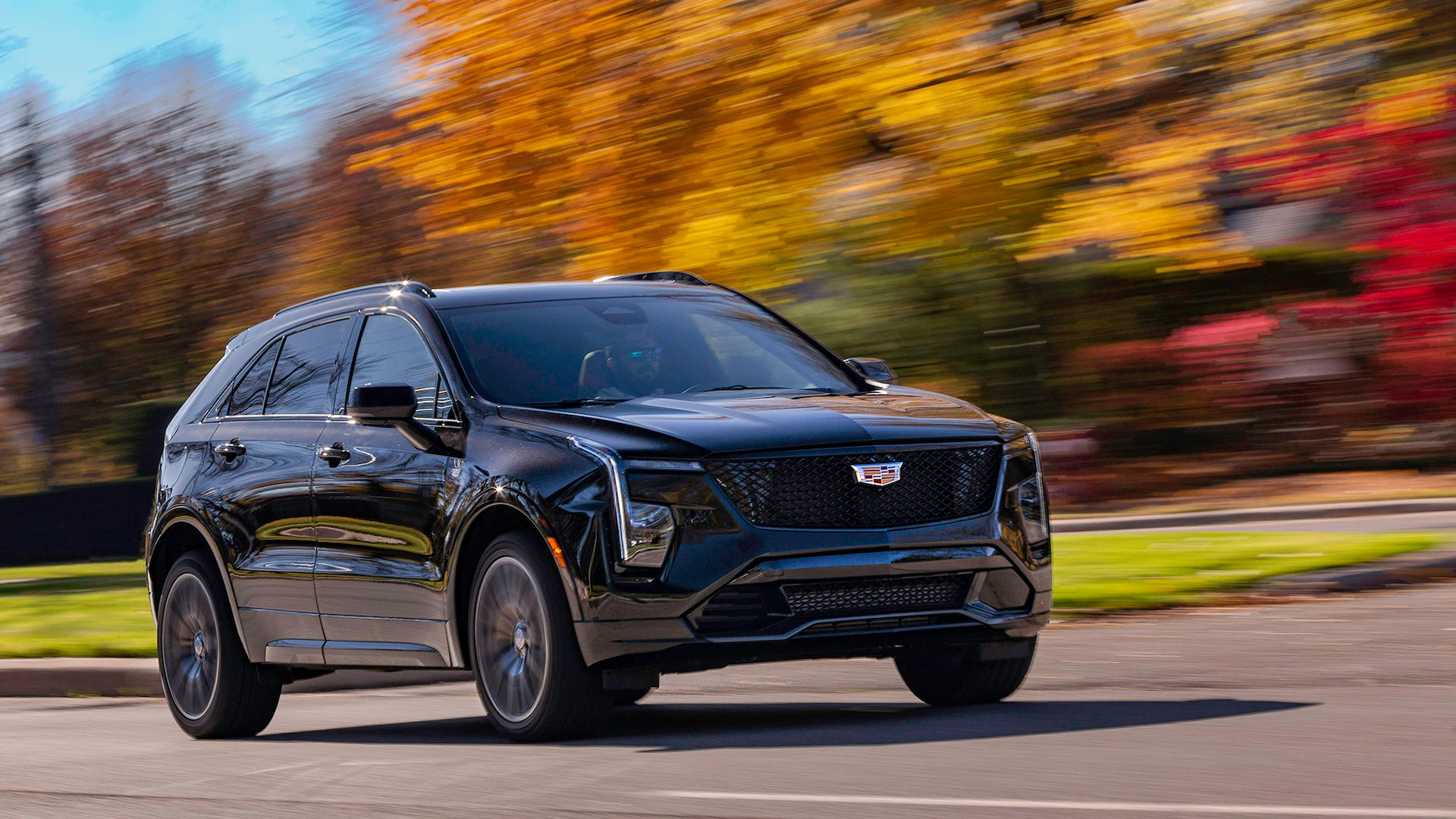
Combined with the engine’s turbocharger lag, the powertrain creates a driving experience that feels less refined than significantly less expensive competitors.
Fuel economy falls short of EPA estimates in real-world driving, particularly during city operation, where the sophisticated start-stop system and cylinder deactivation technology should theoretically provide maximum benefits.
The premium fuel requirement increases operating costs while the complex engine management systems create sensitivity to maintenance intervals that can result in expensive problems if service schedules aren’t followed precisely according to manufacturer specifications.
Interior space utilization disappoints compared to competitors with similar exterior dimensions, with rear-seat passengers experiencing limited legroom and headroom that makes the XT4 unsuitable for regular adult passenger duty.
Cargo capacity lags behind more practically designed alternatives, while the cargo area’s irregular shape and high load floor make loading bulky items unnecessarily difficult. Storage compartments throughout the cabin are poorly designed and inadequately sized for daily necessities.
The Cadillac brand’s dealer network and service reputation create additional ownership challenges, with many service departments lacking the specialized knowledge necessary to properly maintain and repair the XT4’s complex systems.
Warranty coverage, while comprehensive on paper, often involves disputes over coverage interpretation that leave owners responsible for expensive repairs they reasonably expected to be covered under warranty provisions.
5. Lincoln Corsair
The Lincoln Corsair exemplifies the fundamental flaws inherent in badge-engineering approaches to luxury vehicle development, as its Ford Escape platform origins become apparent through numerous cost-cutting measures and engineering compromises that undermine its premium positioning.
While Lincoln has invested significant effort in differentiating the Corsair’s styling and interior appointments from its mainstream sibling, the shared fundamental architecture creates limitations that no amount of luxury trim can fully overcome.
Interior materials create an initial impression of luxury quality, yet closer inspection reveals cost-cutting measures that become increasingly apparent during daily ownership.
Plastic components disguised with soft-touch coatings begin showing wear patterns quickly, while leather surfaces exhibit premature cracking and fading that suggests lower-grade materials than competitors provide at similar price points.
The seat construction prioritizes initial comfort over long-term durability, with cushions losing support and showing wear patterns after relatively modest mileage accumulation.
The sophisticated electronic systems suffer from the reliability issues that plague Ford’s corporate technology, with the SYNC infotainment system exhibiting frequent glitches, connectivity problems, and slow response times that create frustration during routine operations.
The digital instrument cluster occasionally displays incorrect information or freezes completely, requiring system restarts that temporarily disable important vehicle functions. Over-the-air updates often create new problems rather than resolving existing issues.
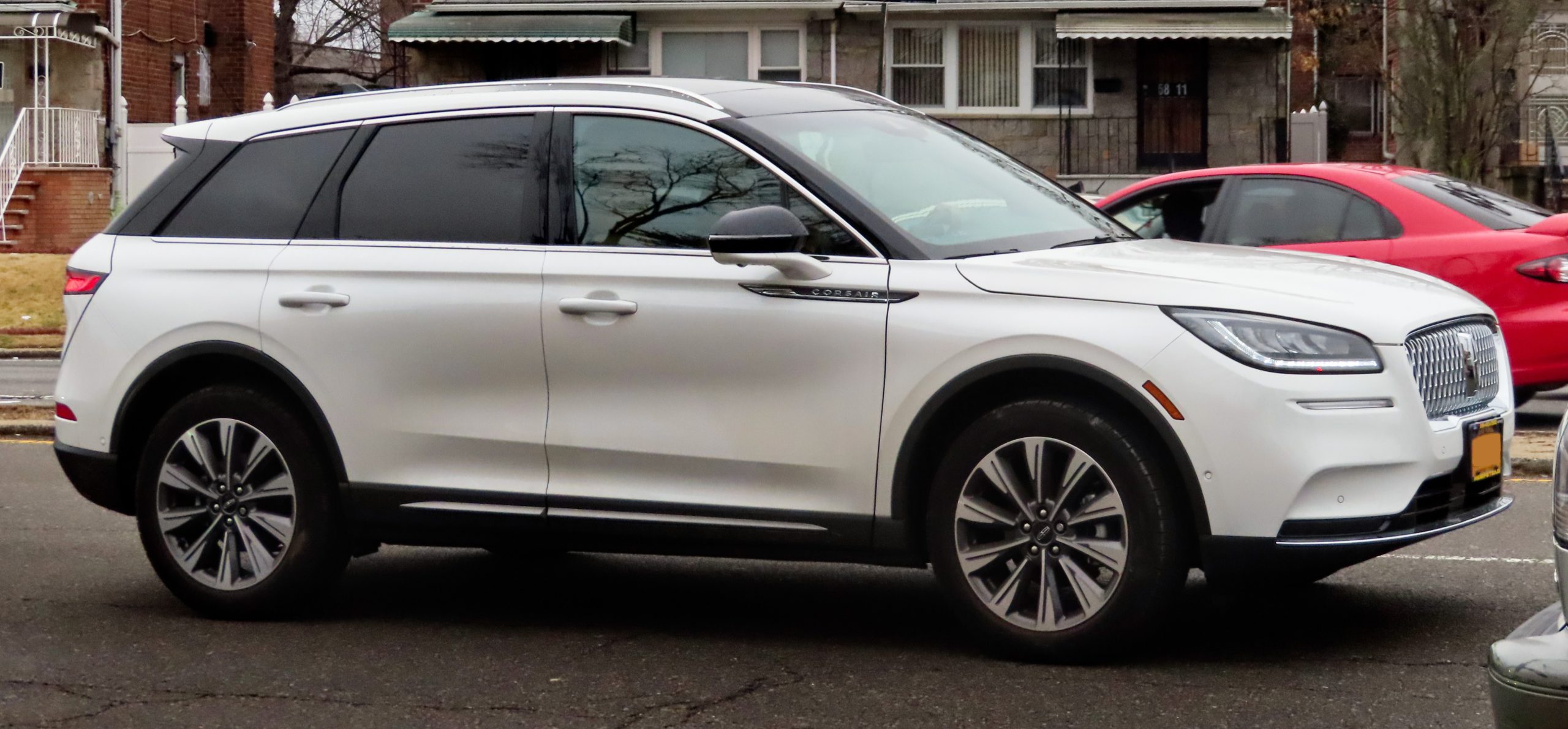
Engine options provide adequate performance but suffer from the refinement issues that betray the vehicle’s mainstream origins, with the turbocharged four-cylinder exhibiting noticeable lag and inconsistent power delivery that makes acceleration less smooth than luxury buyers expect.
The eight-speed automatic transmission programming prioritizes fuel economy over smooth operation, resulting in harsh shifts and hesitation that become increasingly noticeable as the vehicle accumulates mileage.
Reliability statistics consistently place Lincoln among the least reliable luxury brands, with the Corsair specifically suffering from electronic malfunctions, engine problems, and transmission issues that result in frequent dealer visits and expensive repairs.
The complexity of the vehicle’s systems means that minor problems often require major component replacements, while the limited Lincoln dealer network creates scheduling difficulties that can result in extended repair periods.
The suspension tuning attempts to provide luxury ride quality but results in a disconnected driving experience that lacks both comfort and handling precision.
Road noise and wind noise intrude into the cabin despite extensive sound deadening efforts, while the steering provides no feedback and creates an artificial, over-assisted feel that makes parking and low-speed maneuvering unnecessarily difficult.
The braking system exhibits inconsistent pedal feel and premature wear that increases maintenance costs beyond typical luxury vehicle expectations.
Also Read: 5 Cars With Reliable Traditional Mirrors vs 5 With Unreliable Auto-Dimming
