
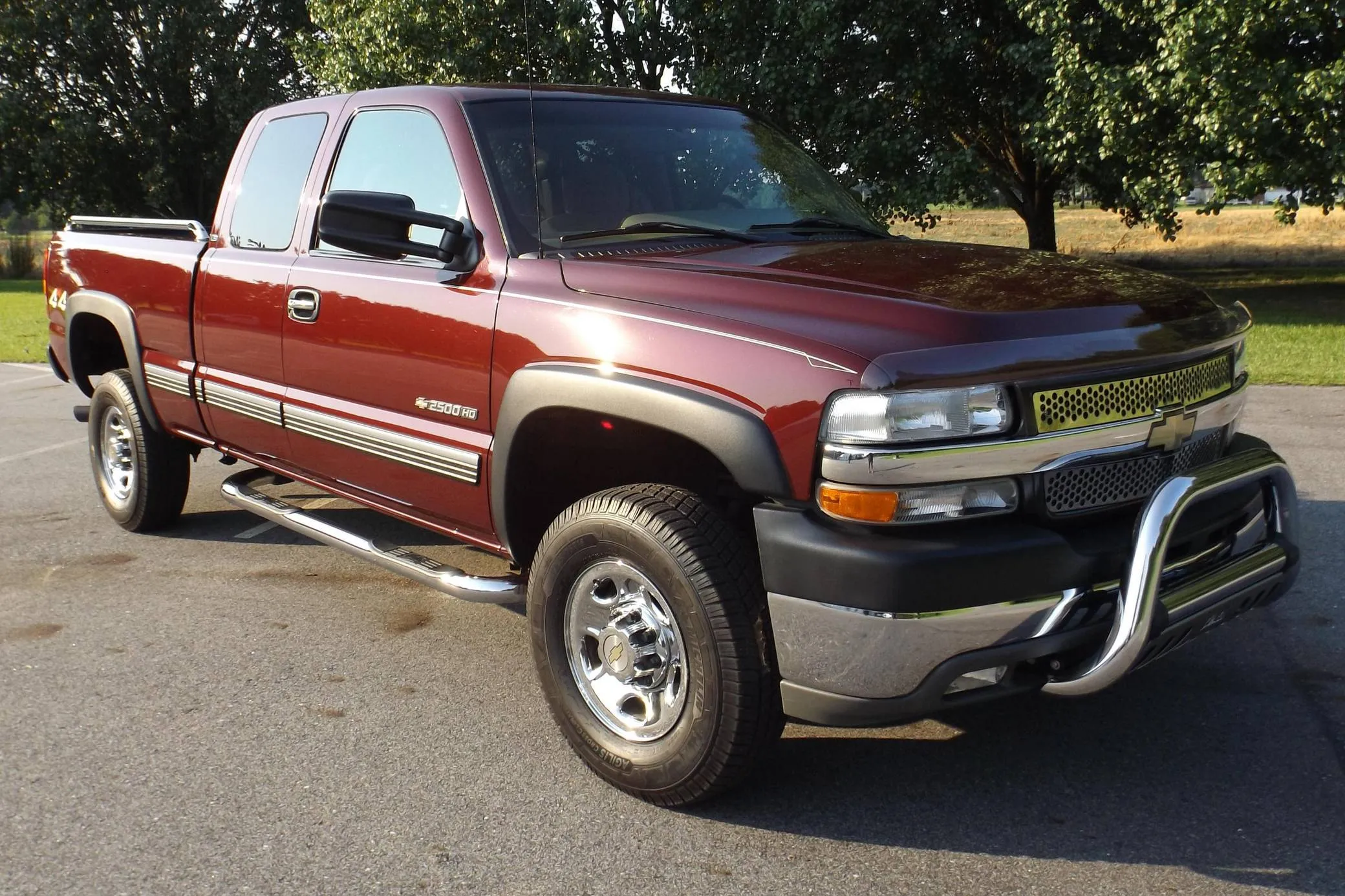
When it comes to farming, a reliable truck isn’t just a vehicle it’s a lifeline. From hauling heavy equipment and livestock to going through the muddy fields and pulling loaded trailers across rough terrain, a farmer’s truck needs to be tough, dependable, and built to last.
For generations, farmers have put their trust in certain truck models that have proven themselves season after season, while learning to steer clear of others that simply couldn’t handle the demanding realities of agricultural life.
The relationship between a farmer and their truck is deeply personal and practical. Unlike urban drivers who might prioritize comfort or fuel efficiency above all else, farmers need workhorses that can handle extreme conditions without breaking down during critical harvest times or planting seasons.
A breakdown during peak season doesn’t just mean an inconvenient trip to the mechanic it can mean lost crops, missed opportunities, and significant financial setbacks.
This is why farmers tend to be incredibly discerning when it comes to their vehicle choices, often relying on word-of-mouth recommendations from fellow farmers who have put these trucks through the ultimate real-world testing.
In this comprehensive guide, we’ll explore both ends of the spectrum. We’ll examine five truck models that have earned farmers’ unwavering loyalty through proven performance, reliability, and durability.
Then we’ll look at five trucks that have consistently let farmers down, examining the specific issues that make them poor choices for agricultural work.
Whether you’re a seasoned farmer looking to replace your current truck or someone new to agricultural life trying to make an informed purchase decision, understanding which trucks stand the test of time and which ones don’t is essential knowledge that can save you thousands of dollars and countless headaches down the road.
5 Trucks That Farmers Trust for Life
These exceptionally engineered vehicles feature simple mechanical systems that owners can diagnose and repair themselves, robust frames handling constant heavy loads without structural failures, and powertrains designed with generous durability margins enabling decades of demanding agricultural service.
Their thoughtful engineering includes manually controlled transmissions avoiding complex electronics, diesel engines with straightforward fuel injection systems that tolerate biodiesel and extended service intervals, and body-on-frame construction that survives rough field conditions and corrosive fertilizer exposure.
From hauling maximum payloads on muddy farm tracks to serving as mobile workshops and generator platforms, these remarkable trucks continue operating reliably without requiring dealer-only diagnostic equipment or unavailable proprietary parts.
1. Ford F-250/F-350 Super Duty (1999-Present)
The Ford Super Duty line has become synonymous with farm work across America, and for excellent reasons that go far beyond marketing hype.
Since its introduction in 1999 as a distinct platform separate from the F-150, the Super Duty has been engineered specifically for the kind of heavy-duty work that defines agricultural life.
Walk through any rural farming community, and you’ll quickly notice that Ford Super Duty trucks dominate the world, often outnumbering competitors by significant margins.
What makes the Super Duty so beloved among farmers is its exceptional towing and payload capacity combined with legendary powertrain durability.
The available Power Stroke diesel engines, particularly the 7.3L (1999-2003) and the 6.7L (2011-present), have proven themselves capable of pulling massive loads day after day without complaint. Farmers regularly report these diesel engines surpassing 300,000 miles with nothing more than routine maintenance.
The 7.3L Power Stroke, in particular, has achieved almost mythical status in farming circles, with many farmers refusing to part with their early 2000s models because they know these engines are virtually indestructible.
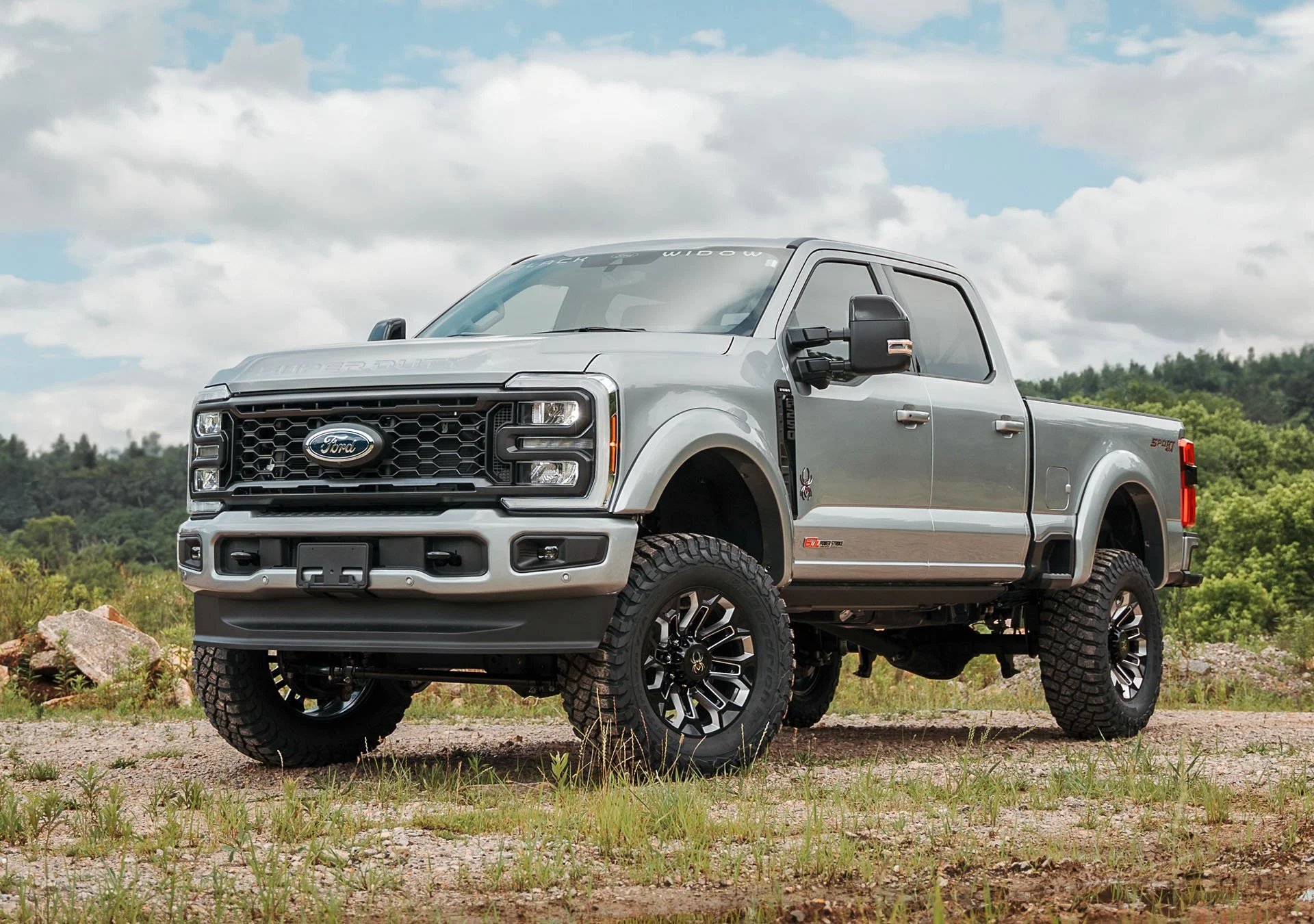
Beyond the powertrain, the Super Duty’s chassis and suspension are built to handle punishment. The frame is fully boxed and significantly stronger than light-duty alternatives, allowing farmers to load their beds with feed, fertilizer, or equipment without worrying about structural integrity.
The available dual rear wheels on F-350 models provide additional stability when hauling heavy trailers or driving across uneven terrain.
The truck’s ground clearance and approach angles enable it to navigate muddy fields, cross shallow streams, and handle rough farm roads that would stop lesser vehicles.
The parts availability and service network for Super Duty trucks is another major advantage. Because these trucks are so popular, virtually every rural mechanic knows how to work on them, and parts are readily available even in remote areas.
This means less downtime when repairs are needed and lower costs for maintenance over the truck’s lifetime. Farmers appreciate that they can often find used parts from other Super Duty trucks, making repairs even more economical.
2. Chevrolet Silverado 2500HD/3500HD (2001-Present)
The Chevrolet Silverado heavy-duty lineup has earned deep respect in farming communities through its combination of powerful engines, robust construction, and exceptional reliability.
When GM redesigned their heavy-duty trucks for 2001, moving them to a dedicated platform separate from the light-duty Silverado, they created a work truck that could genuinely compete with Ford’s dominance in the agricultural sector.
Today, the Silverado HD is often the truck of choice for farmers who value smooth ride quality alongside serious capability. The Duramax diesel engine deserves much of the credit for the Silverado HD’s stellar reputation among farmers.
Introduced in 2001 through a partnership between GM and Isuzu, the Duramax brought a level of refinement to diesel truck engines that was previously uncommon.
The original 6.6L LB7 Duramax produced impressive power and torque figures, but it’s the later iterations particularly the LBZ (2006-2007), LMM (2007.5-2010), and L5P (2017-present) that have truly won farmers over.
These engines deliver outstanding pulling power, excellent fuel economy for their size, and remarkable longevity when maintained properly. Farmers routinely report Duramax engines running strong well past 400,000 miles, with many continuing to work daily on farms across the country.
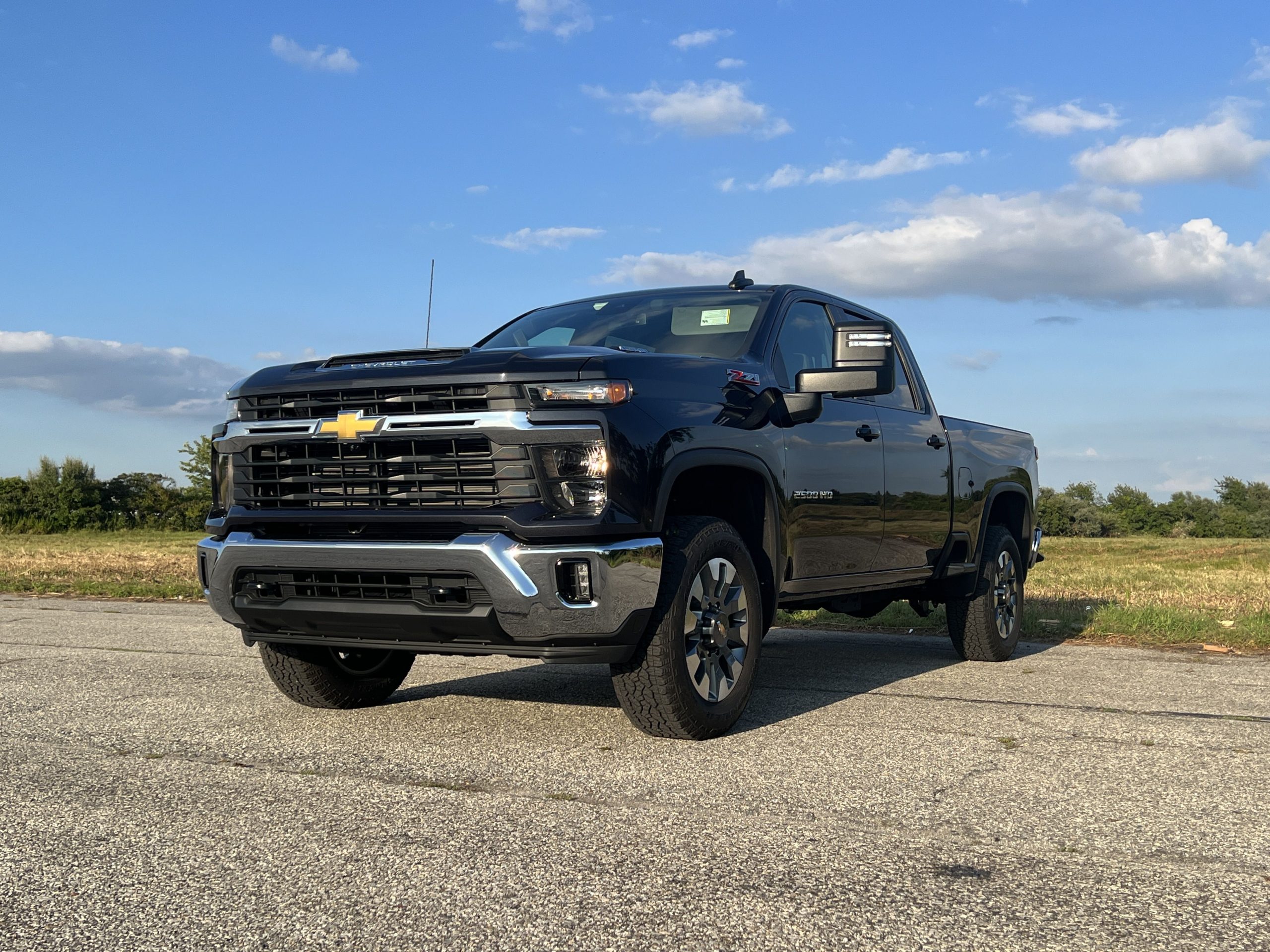
What sets the Silverado HD apart from some competitors is its ride quality. Chevrolet engineers have managed to create a truck that works brutally hard during the week but is comfortable enough for long highway drives when needed.
The independent front suspension (used until 2011) provided a noticeably smoother ride than solid-axle competitors, though GM switched to a solid front axle for increased durability and payload capacity in later models.
Even with this change, the Silverado HD remains one of the more comfortable heavy-duty trucks available, something farmers appreciate during long days moving between fields or making trips to distant markets.
The Allison transmission paired with Duramax engines is another major selling point. The Allison 1000, a heavy-duty six-speed automatic transmission originally designed for commercial vehicles, is incredibly robust and well-suited to the demands of farm work.
The bed is designed with function in mind, featuring strong tie-down points, available spray-in bedliners, and optional work lighting.
Modern Silverado HD trucks include helpful towing technologies like integrated trailer backup systems and engine brake functionality that makes controlling heavy loads on downhill grades much safer and easier.
3. Ram 2500/3500 Heavy Duty (2010-Present)
When Chrysler redesigned the Ram heavy-duty trucks for 2010, they created something special that immediately caught the attention of farmers nationwide.
The fourth-generation Ram HD represented a significant departure from previous models, bringing a level of refinement, capability, and innovative engineering that changed expectations for what a work truck could be.
Today, Ram HD trucks are increasingly common on farms, particularly among younger farmers who appreciate the combination of serious work capability and genuine comfort.
The standout feature that draws many farmers to Ram trucks is the available Cummins turbodiesel engine. The Cummins name carries enormous weight in agricultural circles, as Cummins engines have powered everything from irrigation pumps to tractors to commercial trucks for decades.
The 6.7L Cummins inline-six diesel used in Ram HD trucks is a direct descendant of these proven industrial engines, and it brings that same legendary durability to pickup truck form.
Farmers love that the Cummins is a relatively simple, understressed engine design that’s built to run for extraordinary mileages. Reports of Cummins-powered Rams exceeding 500,000 miles are not uncommon, and the engine’s straightforward design makes it relatively easy to maintain and repair.
The torque output of the Cummins engine is particularly impressive, with modern versions producing over 1,000 lb-ft of torque in high-output configurations.
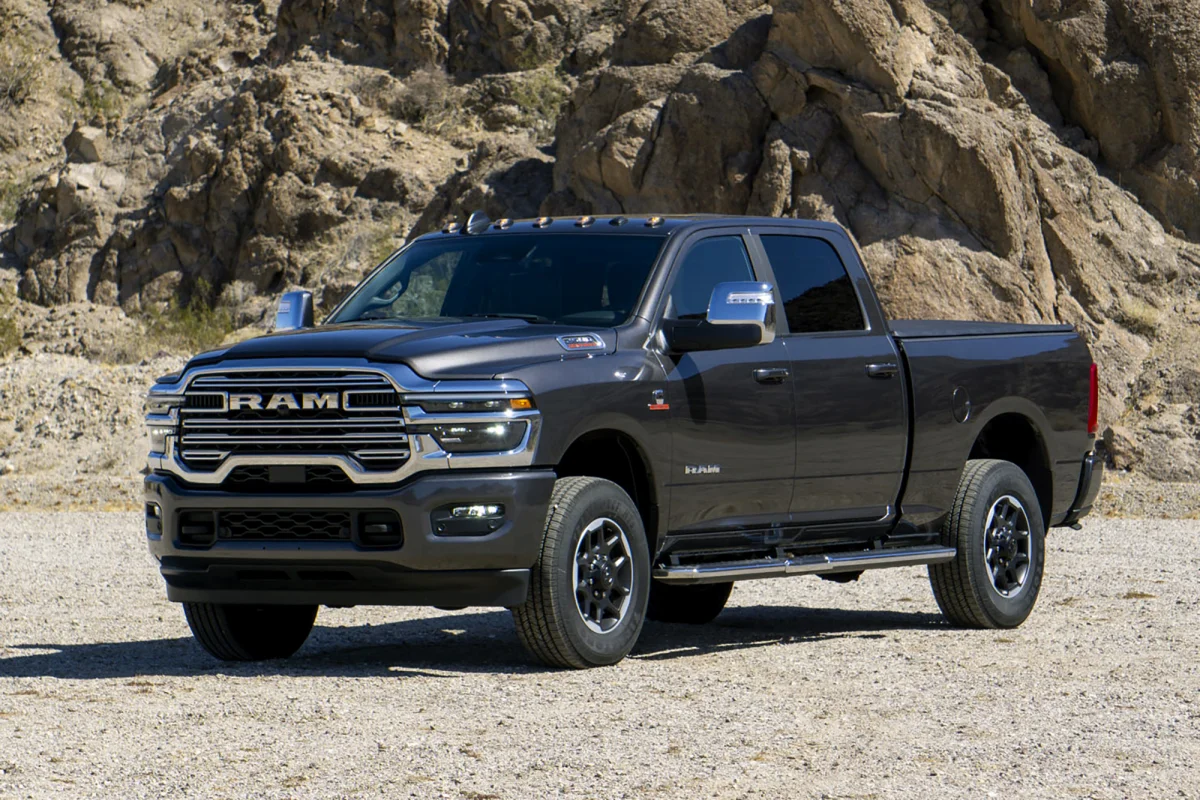
This massive torque figure translates directly to real-world capability the ability to pull loaded livestock trailers up steep grades without slowing down, to move heavy equipment trailers without strain, and to power through deep mud or snow when necessary.
Farmers quickly discover that the Cummins has power in reserve even under maximum load, providing a confidence that’s invaluable during critical work periods.
Ram’s coil-spring rear suspension, introduced with the 2010 redesign, was initially met with skepticism by some traditional farmers who wondered if coil springs could handle serious work.
Those doubts have been thoroughly dispelled by years of hard use. The coil-spring suspension provides an exceptionally smooth ride when the truck is unloaded, making it practical for daily driving, while still offering excellent load-carrying capacity and stability when working.
The system has proven durable in farm environments, handling the weight of loaded beds and trailers without the sagging or harsh ride quality associated with some competitor trucks.
The interior of Ram HD trucks is notably upscale compared to most competitors, featuring high-quality materials, thoughtful design, and impressive attention to detail.
While some old-school farmers might dismiss interior quality as unnecessary luxury, many discover that a comfortable, well-designed cabin makes long days in the truck far less fatiguing.
The available 12-inch touchscreen, excellent sound insulation, and comfortable seating mean the Ram HD can serve equally well as a work truck during the week and a family vehicle on weekends. This versatility is increasingly important to farmers who need one vehicle to handle multiple roles.
4. Toyota Tundra (2007-Present)
The Toyota Tundra occupies a unique position in farming communities, particularly among farmers who operate smaller farms, run specialized agricultural operations, or need a dependable truck for lighter-duty farm tasks.
While not a heavy-duty truck in the traditional sense, the Tundra has earned remarkable loyalty among farmers who value Toyota’s legendary reliability above all else.
The truck’s reputation for starting every time, running for extraordinary mileages without major repairs, and holding its value better than almost any competitor makes it a smart choice for many agricultural applications.
Toyota’s approach to the Tundra reflects the company’s broader philosophy of conservative engineering and extensive testing before bringing vehicles to market.
The second-generation Tundra, introduced for 2007, was designed specifically to compete in the full-size American truck market, and Toyota engineers studied exactly what American truck buyers including farmers needed.
The result is a truck that might not have the highest towing capacity or the most advanced features, but absolutely excels at dependability and longevity.
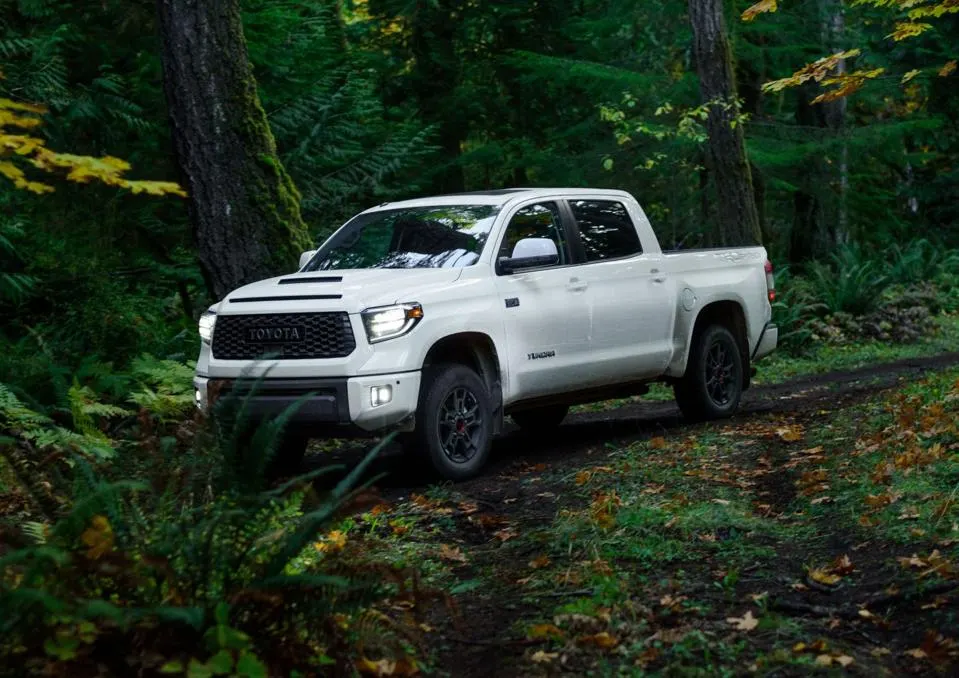
The heart of the Tundra’s appeal is its engine options, particularly the legendary 5.7L V8. This engine produces strong power and torque figures (381 horsepower and 401 lb-ft of torque), but more importantly, it’s built to Toyota’s famously exacting standards.
The 5.7L V8 is known for running smoothly and reliably for 300,000, 400,000, or even 500,000 miles with proper maintenance. Farmers who own Tundras consistently report that the trucks simply don’t break down.
They start in extreme cold, run strong in extreme heat, and continue performing year after year with minimal issues beyond routine maintenance like oil changes and brake pads.
The Tundra’s frame is another point of pride for Toyota. The fully boxed frame is constructed from high-strength steel and is famously robust.
Toyota even offers a bed made from a composite material that won’t rust a significant advantage in farming environments where moisture, manure, and chemicals can accelerate corrosion in traditional steel beds.
While some farmers prefer steel beds for their ability to be welded and repaired, others appreciate the Tundra’s composite bed for its durability in harsh conditions.
For farmers running smaller operations, the Tundra offers a sweet spot of capability. It can tow up to 10,200 pounds when properly equipped, which is sufficient for many agricultural trailers including livestock trailers with a few animals, equipment trailers with smaller tractors or ATVs, and supply trailers.
The payload capacity, while not matching heavy-duty trucks, is adequate for hauling feed, fertilizer, tools, and general farm supplies. Many farmers find the Tundra provides all the capability they actually need for daily farm work while being more maneuverable and easier to drive than larger heavy-duty trucks.
Also Read: 12 Reputued Pickup Trucks With the Fewest Known Recalls
5. GMC Sierra 2500HD/3500HD (2001-Present)
The GMC Sierra heavy-duty lineup shares its fundamental engineering with the Chevrolet Silverado HD, but has cultivated a distinct identity that appeals to farmers who appreciate upscale features and professional-grade capability.
While some might dismiss the Sierra as simply a badge-engineered Silverado, farmers who own Sierra HD trucks often develop strong brand loyalty, appreciating GMC’s focus on refinement and the truck’s distinctive styling and features.
In many farming communities, driving a Sierra HD is seen as a mark of professional success a work truck that doesn’t sacrifice capability for comfort. Like its Silverado sibling, the Sierra HD benefits from the exceptional Duramax diesel engine and Allison transmission combination.
This powertrain has proven itself repeatedly in agricultural applications, delivering the consistent power and reliability that farmers demand.
The Duramax’s strong fuel economy, relative to its capability, is particularly appreciated by farmers who cover significant distances between fields, make regular trips to livestock auctions, or haul products to distant markets.
The ability to achieve 15-20 miles per gallon while towing heavy loads represents substantial cost savings over the life of the truck. What distinguishes the Sierra HD from the Silverado is often found in the details and available trim levels.
GMC has positioned the Sierra as a more premium offering, and this is reflected in higher-quality interior materials, more advanced feature availability, and distinctive exterior styling.
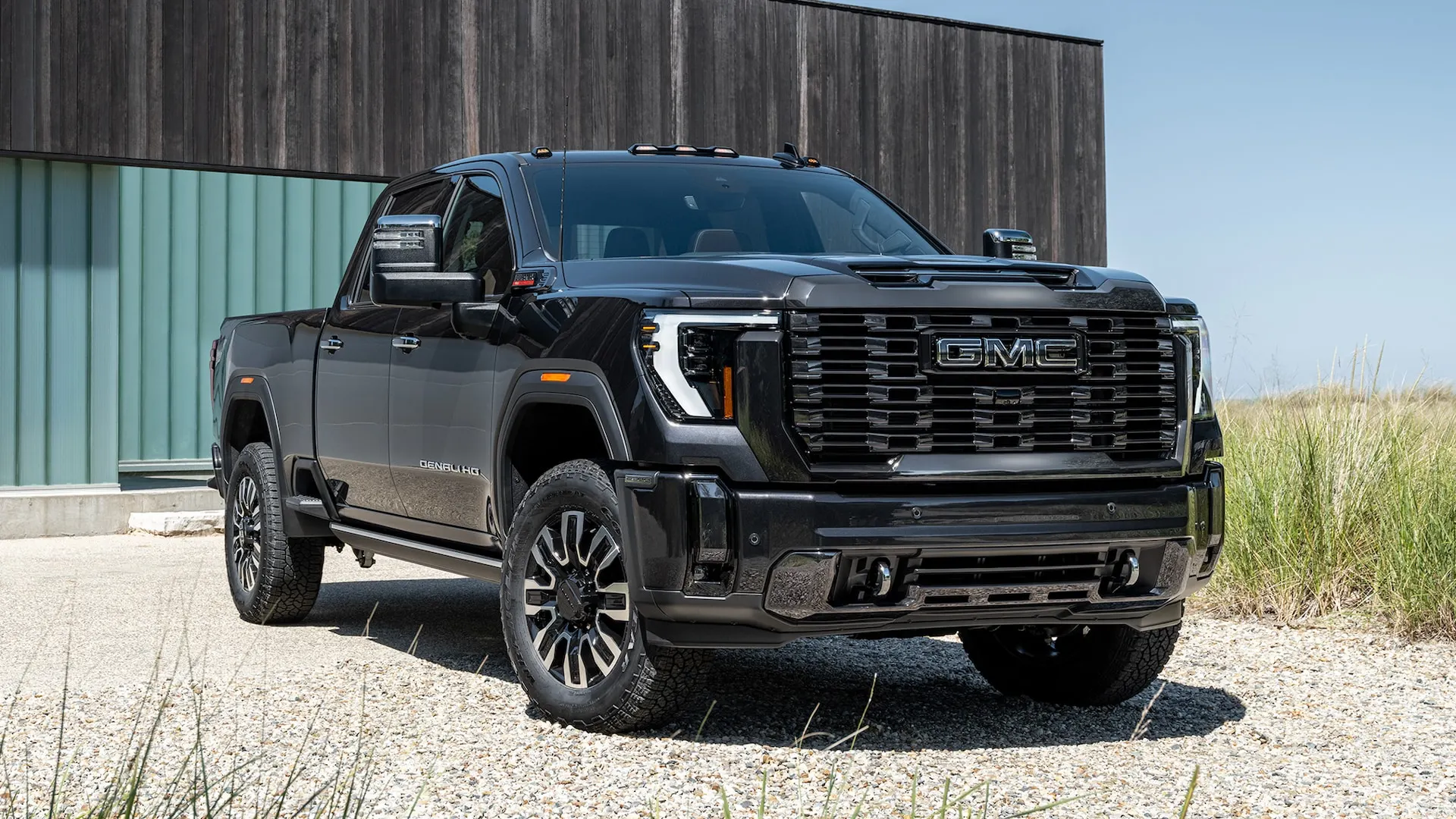
The Sierra Denali trim, in particular, has become popular among successful farmers who want a truck that works hard all week but presents well when attending farm bureau meetings, livestock auctions, or community events.
The Denali offers leather seating, advanced technology features, and upscale finishes while maintaining the fundamental work truck capability underneath.
GMC has also introduced innovative features that appeal to farmers through its Sierra HD lineup. The MultiPro tailgate, available on newer Sierra models, provides six different configurations that make loading and unloading easier, create a standing workspace, and offer multiple step positions for accessing the bed.
While some traditional farmers might view such features as unnecessary complexity, many discover that the MultiPro tailgate genuinely improves functionality during daily farm tasks.
The ability to configure the tailgate as a worksurface when making repairs in the field or as an easier step when climbing into the bed multiple times per day adds real practical value.
The Sierra HD’s build quality and attention to detail often win over farmers who might have initially considered other brands. The truck feels solidly constructed, with doors that close with a reassuring thunk, interior components that don’t rattle on rough roads, and paint finishes that resist chips and scratches better than some competitors.
These qualities might seem minor compared to towing capacity or engine power, but farmers who spend hours in their trucks every day come to appreciate the difference that quality construction makes in long-term satisfaction and durability. The Sierra HD holds up well to the rigors of farm life, maintaining its appearance and functionality even after years of hard use.
5 Trucks That Farmers Avoid
These problematic vehicles suffer from overcomplicated electronic systems requiring dealer diagnostic equipment unavailable in rural areas, aluminum body panels that corrode when exposed to agricultural chemicals, and turbocharged engines demanding frequent maintenance incompatible with extended service intervals that farming operations require.
Their flawed engineering includes transmissions controlled by modules that fail catastrophically, diesel exhaust fluid systems that malfunction in cold weather and enter limp mode during critical harvest periods, and proprietary software limiting owner repair capabilities while forcing expensive dealer visits for minor issues.
From electronic parking brakes that fail without manual release options to start-stop systems that wear starter motors prematurely, these troublesome trucks create operational nightmares.
1. Nissan Titan (2004-Present)
The Nissan Titan entered the full-size truck market with considerable fanfare in 2004, promising to challenge the domestic dominance of Ford, GM, and Ram with Japanese reliability and competitive capability.
However, the Titan has largely failed to gain traction among farmers, and for reasons that become clear when examining the truck’s real-world performance in agricultural applications.
While the Titan might work adequately for suburban drivers with occasional towing needs, it falls significantly short of what serious farmers require from a work truck.
The fundamental problem with the Titan is its lack of a genuine heavy-duty offering. Unlike Ford, GM, and Ram, which all produce dedicated heavy-duty truck lines with substantially reinforced frames, stronger axles, and more capable powertrains, Nissan has never developed a true HD-class truck.
The standard Titan competes in the light-duty half-ton segment, while the Titan XD (introduced in 2016) attempts to occupy a space between light-duty and heavy-duty trucks but fails to match the capability of true HD models.
For farmers who regularly haul heavy loads, tow large trailers, or work their trucks hard day after day, the Titan’s limited capability is a dealbreaker.
The Titan’s towing capacity, while adequate for recreational use, simply isn’t sufficient for many farming operations. Even the Titan XD with its available Cummins diesel engine (discontinued after 2019) could only tow around 12,300 pounds respectable for a light-duty truck but far below the 20,000-30,000+ pound capacities of true heavy-duty competitors.
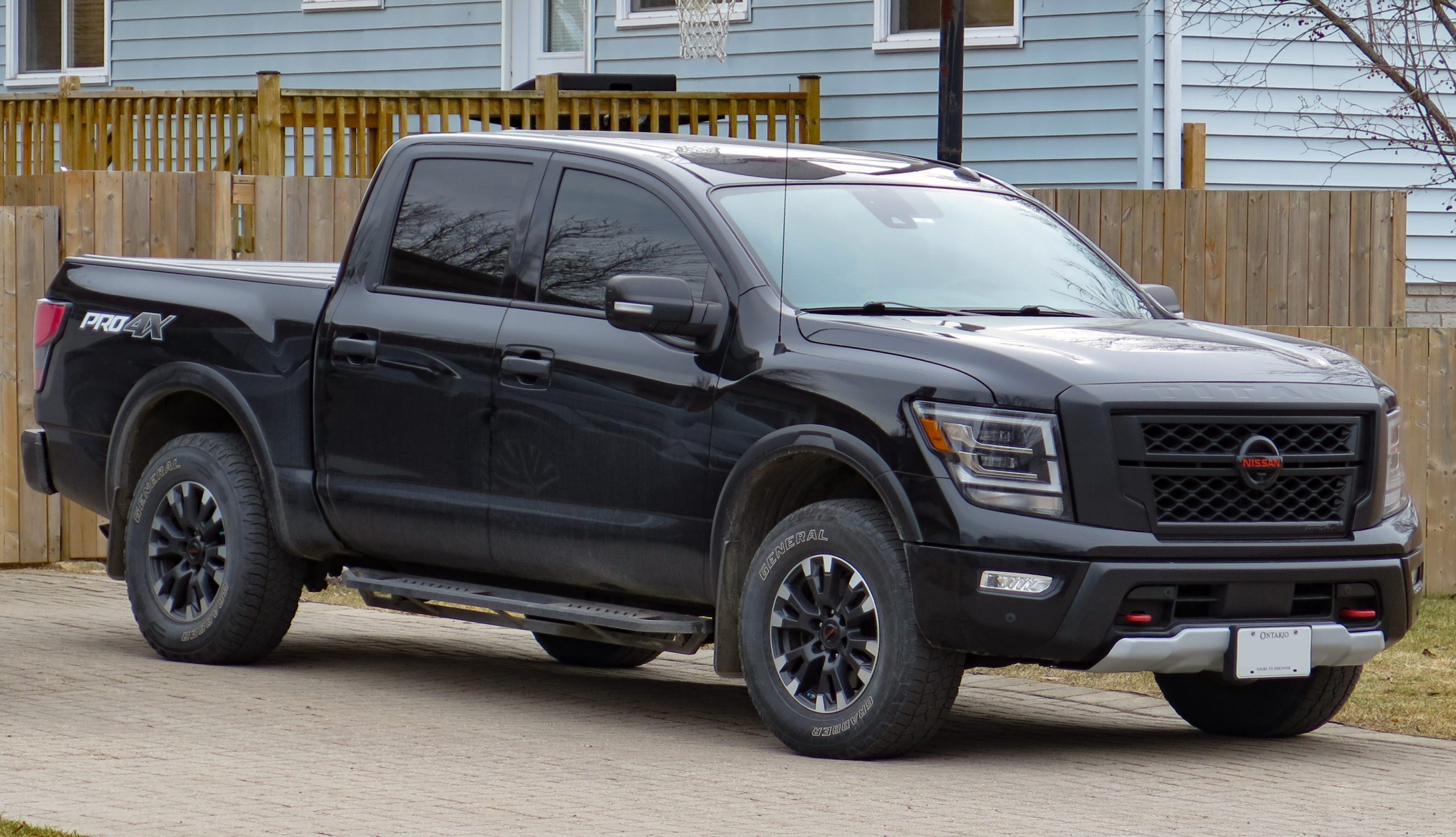
Farmers moving loaded livestock trailers, equipment trailers with tractors or combines, or large hay wagons quickly discover that the Titan is working at or beyond its limits when competitors would still have substantial capability in reserve.
This not only affects performance but also raises concerns about accelerated wear and potential component failure when operating near maximum capacity regularly.
Beyond capability limitations, the Titan suffers from poor parts availability and service network issues in rural areas. Nissan’s dealer network is heavily concentrated in urban and suburban markets, meaning many farmers live hours away from the nearest Nissan dealership.
When repairs are needed and repairs will be needed on any work truck eventually farmers with Titans often face extended downtime waiting for parts that aren’t stocked locally or must travel significant distances to reach qualified service centers.
Independent mechanics in rural areas are generally far less familiar with Nissan trucks compared to domestic brands, making repairs more complicated and potentially more expensive.
2. RAM 1500 EcoDiesel (2014-2023)
The RAM 1500 with the EcoDiesel engine seemed like a promising option when it was introduced, offering the appeal of diesel fuel economy in a comfortable, capable light-duty truck.
Many farmers were initially intrigued by the prospect of diesel efficiency without the expense and size of a heavy-duty truck. However, the EcoDiesel has proven to be a problematic choice for farmers, plagued by reliability issues, expensive repairs, and real-world performance that fails to live up to the marketing promises.
The most significant problem with the EcoDiesel is its poor reliability record. The 3.0L V6 diesel engine, built by VM Motori in Italy, has experienced numerous well-documented issues including EGR cooler failures, fuel system problems, emissions system malfunctions, and premature engine wear.
Farmers who purchased EcoDiesel Rams expecting the legendary durability associated with Cummins diesels in RAM’s heavy-duty trucks have been sorely disappointed.
Reports of EcoDiesel engines requiring major repairs or complete replacement at relatively low mileages (sometimes under 100,000 miles) are disturbingly common.
For farmers who depend on their trucks for critical work during planting and harvest seasons, such unreliability is completely unacceptable. The emissions control systems on the EcoDiesel have been particularly problematic.
Modern diesel engines require complex emissions equipment including diesel particulate filters (DPF), selective catalytic reduction (SCR) systems, and exhaust gas recirculation (EGR) systems to meet environmental regulations.

While all diesel trucks use similar technology, the EcoDiesel’s implementation has proven especially troublesome. Farmers report frequent check engine lights related to emissions systems, reduced power modes that leave them stranded, and expensive repairs to emissions components.
These issues are exacerbated in farm environments where trucks may idle frequently, operate at low speeds, or encounter dusty conditions all situations that can cause problems with sensitive emissions equipment.
The cost of repairing EcoDiesel engines represents another major concern. When major components fail, repair bills frequently exceed $5,000-$10,000, and complete engine replacements can cost $15,000 or more.
When factoring in diesel fuel’s typically higher cost per gallon, the premium price paid for the EcoDiesel option, and the increased maintenance costs associated with diesel emissions systems, the economic argument for choosing the EcoDiesel over a gasoline-powered RAM 1500 or a more capable heavy-duty truck largely evaporates.
3. Ford F-150 EcoBoost (2011-Present)
The Ford F-150 with EcoBoost engines represents one of the most controversial topics in farming circles. While the EcoBoost technology has found success in many applications and the F-150 remains America’s best-selling truck, many farmers have learned to avoid EcoBoost-powered F-150s for farm work, preferring naturally aspirated engines or diesel-powered Super Duty trucks instead.
The problems aren’t universal plenty of EcoBoost F-150s serve adequately in less demanding roles but for serious agricultural work, the EcoBoost’s weaknesses become apparent.
The core issue with EcoBoost engines in farm applications is their complexity and the resulting reliability concerns when worked hard consistently.
EcoBoost engines use twin turbochargers, direct fuel injection, variable valve timing, and sophisticated engine management systems to extract impressive power from relatively small displacement engines.
The 3.5L EcoBoost V6, for example, produces power and torque figures that rival or exceed traditional V8 engines. However, this performance comes at the cost of increased complexity, and more components mean more potential failure points.
Farmers who work their trucks hard day after day have experienced various EcoBoost-related problems including turbocharger failures, timing chain issues, carbon buildup on valves, and cooling system problems.
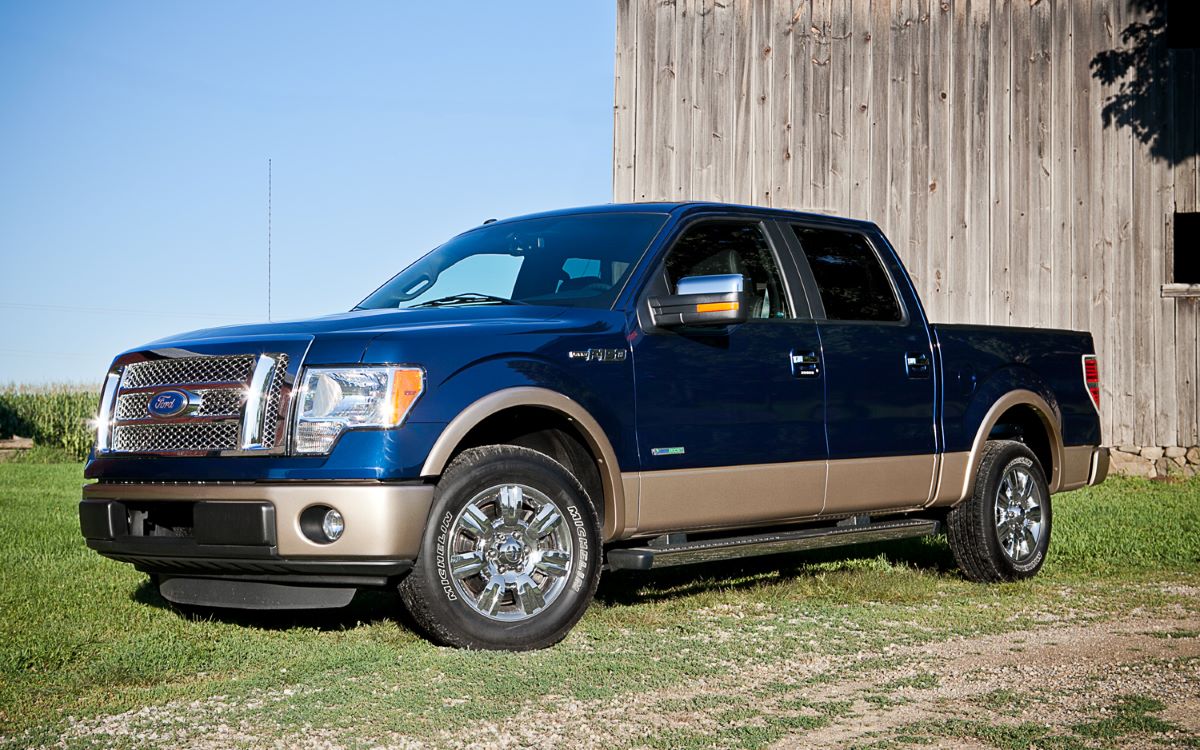
Turbocharger failures are particularly concerning for farmers. While turbochargers are generally reliable in modern engines, they can be stressed by the demanding duty cycles common in agricultural work frequent towing at maximum capacity, extended periods of high load, and operation in dusty environments.
When turbochargers fail, repairs are expensive, often costing $2,000-$4,000 or more depending on the specific issue. For farmers, this represents not just the direct cost of repair but also the lost productivity during downtime. A failed turbocharger during harvest season can have cascading financial impacts that far exceed the repair bill itself.
Fuel economy, often cited as a key advantage of EcoBoost engines, frequently disappoints farmers in real-world use. While EcoBoost F-150s can deliver impressive MPG numbers in ideal conditions, farmers who regularly tow heavy trailers or haul maximum payloads report fuel economy that’s only marginally better than traditional V8 engines and sometimes worse.
The turbocharged engines work harder under load, consuming more fuel as the turbos force more air (and thus more fuel) into the cylinders. For farmers, the promised fuel savings often fail to materialize when the truck is working hard, which is most of the time.
4. Chevrolet Colorado/GMC Canyon (2004-Present)
The Chevrolet Colorado and GMC Canyon mid-size trucks have their place in the automotive market, offering a smaller, more maneuverable alternative to full-size trucks.
However, farmers have generally learned to avoid these trucks for serious agricultural work, finding them underpowered, lacking in capability, and insufficiently durable for the demands of farm life.
While they might work adequately for hobby farms or as secondary vehicles, the Colorado and Canyon simply can’t replace a proper full-size truck on a working farm.
The most obvious limitation is towing and payload capacity. Even in their most capable configurations, the Colorado and Canyon max out around 7,700 pounds of towing capacity barely half what a properly equipped full-size light-duty truck can handle, and a fraction of heavy-duty truck capabilities.
For farmers, this limited capacity is severely restrictive. A medium-sized livestock trailer with a few cattle or horses can easily approach or exceed the Colorado’s towing limits, and that’s before factoring in the weight of the trailer itself, feed, water, and other supplies. Equipment trailers carrying tractors, ATVs, or implements quickly max out the truck’s capability.
Farmers discover that the Colorado/Canyon is constantly working at its limits when a full-size truck would still have substantial reserve capacity.
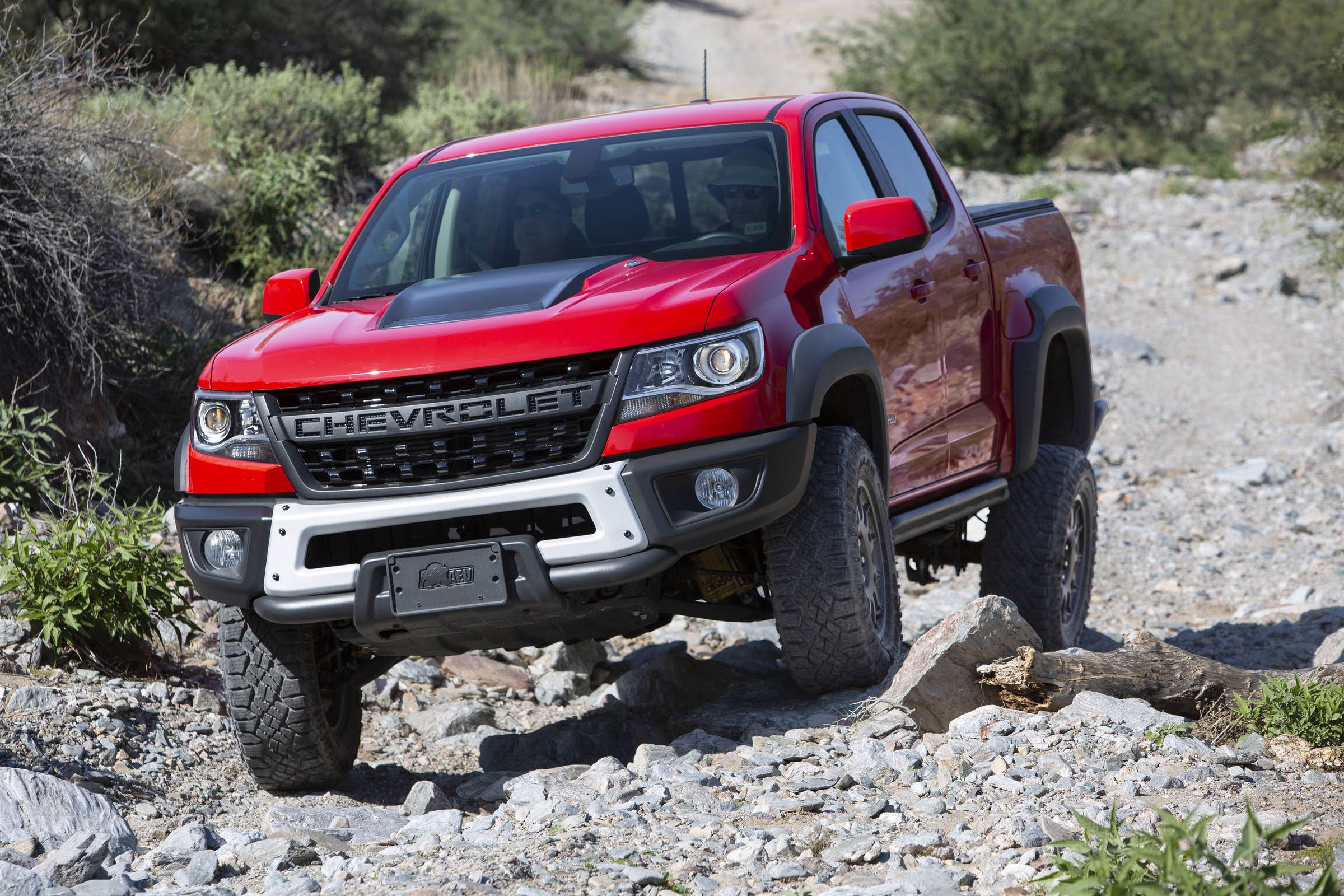
The truck’s frame and suspension, while adequate for its class, aren’t built for sustained hard use in agricultural environments. Farmers who have attempted to use Colorados or Canyons as primary work trucks report premature wear to suspension components, sagging leaf springs, and frame stress from repeated heavy loading.
These trucks are fundamentally designed for lighter-duty use weekend camping trips, daily commuting, and occasional hauling rather than the day-in, day-out demands of farm work.
The smaller brake systems also generate more heat and experience faster wear when regularly stopping heavy loads compared to the robust braking systems on full-size trucks.
Perhaps most significantly, the fuel economy advantage that mid-size trucks supposedly offer often fails to justify their capability limitations.
While a Colorado or Canyon might achieve slightly better MPG than a comparable full-size truck in unloaded highway driving, the difference typically amounts to only 2-4 MPG in real-world mixed driving. When towing or hauling, the smaller engines work harder and fuel economy differences shrink further.
Farmers calculating the total cost of ownership quickly realize that the modest fuel savings don’t offset the Colorado/Canyon’s limitations in capability, durability, and versatility. For only slightly more fuel consumption, a full-size truck provides dramatically more utility and longevity for agricultural work.
5. Honda Ridgeline (2006-Present)
The Honda Ridgeline occupies a unique position in the truck market as a unibody, crossover-based pickup that prioritizes car-like ride quality and fuel efficiency over traditional truck ruggedness.
While the Ridgeline has found a devoted following among suburban buyers who want a truck for weekend projects and occasional light hauling, it has been almost universally rejected by farmers who recognize it as fundamentally unsuited for serious agricultural work.
The Ridgeline’s design philosophy runs counter to everything farmers need from a work truck. The most fundamental problem with the Ridgeline for farm use is its unibody construction.
Unlike body-on-frame trucks like the Ford F-Series, Silverado, or Ram, which feature separate frames that can handle twisting forces and heavy loads independently from the body, the Ridgeline’s unibody structure integrates the frame and body into a single unit.
While this design provides benefits for ride quality and handling, it’s far less suitable for the sustained heavy loads and towing that characterize farm work.
Farmers who have attempted to use Ridgelines for agricultural purposes report concerning flex and structural stress when loading heavy equipment or supplies in the bed, and the truck simply doesn’t inspire confidence when pulling loaded trailers over rough terrain.
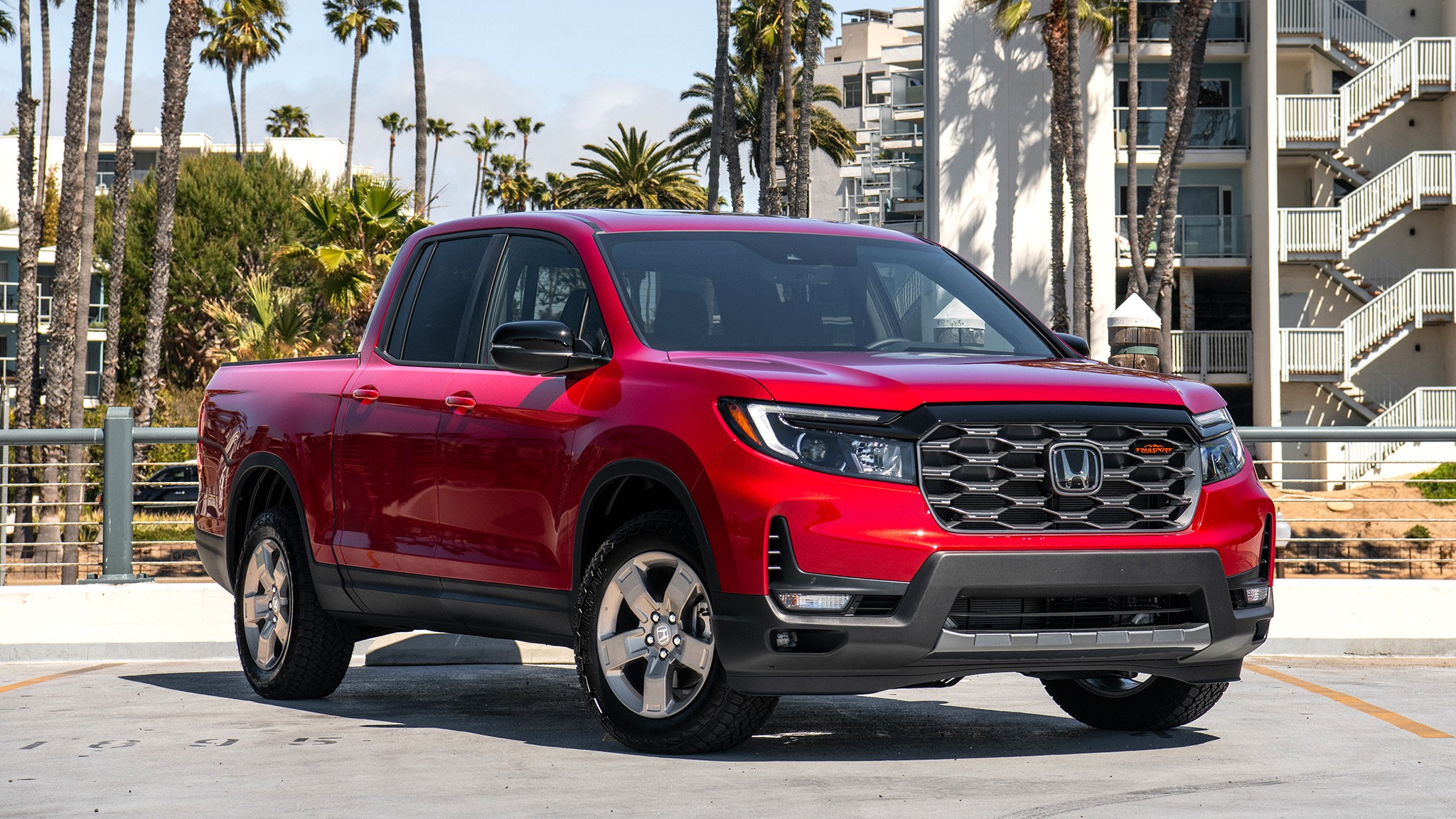
The Ridgeline’s capability numbers confirm what its design suggests it’s not built for serious work. Maximum towing capacity is limited to around 5,000 pounds, barely adequate for a small boat or camper but wholly insufficient for most agricultural trailers. Livestock trailers, equipment trailers, and hay wagons regularly exceed this limit, often substantially.
The payload capacity is similarly limited compared to traditional trucks, meaning farmers can’t safely load the bed with as much feed, fertilizer, fencing materials, or tools. For a working farm, these limitations are dealbreakers that eliminate the Ridgeline from consideration regardless of its other qualities.
Farmers need trucks that can handle punishment year after year while maintaining value and reliability, and the Ridgeline, despite its Honda reliability heritage, simply wasn’t designed for that mission.
The parts availability and service considerations also work against the Ridgeline in rural areas, where Honda dealers are less common than domestic brand dealers and local mechanics have limited experience working on these unique vehicles.
Also Read: 10 Cars With the Cheapest Replacement Parts
