
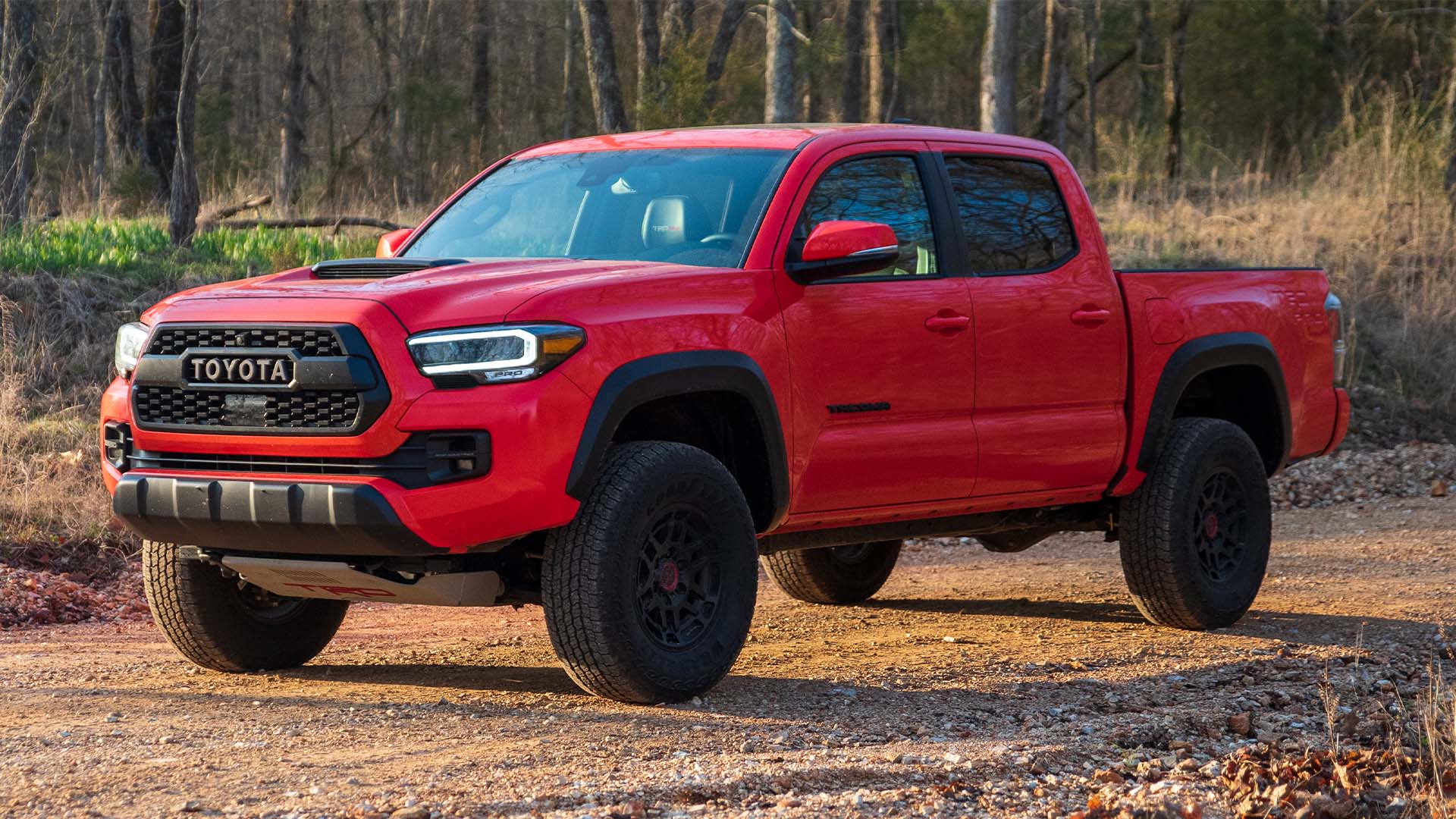
When shopping for a used truck, reliability isn’t just about how well it performs for the first owner it’s about whether that vehicle will continue delivering dependable service through second, third, and even fourth ownership cycles.
The trucks that truly earn their reputation as workhorses are those that maintain their structural integrity, mechanical reliability, and functional capability even after accumulating hundreds of thousands of miles and passing through multiple hands.
The best trucks for multi-owner reliability share several key characteristics. They’re built on proven platforms with robust engineering that prioritizes durability over complexity.
Their engines are designed for longevity, often featuring simpler designs that are easier and less expensive to maintain and repair. These vehicles typically have strong aftermarket support, meaning parts remain readily available and affordable even as the trucks age.
They also tend to have passionate communities of owners who share maintenance tips, troubleshooting advice, and modification ideas that help keep these trucks running long past their expected lifespans.
Another critical factor in multi-owner reliability is the truck’s resistance to common failure points. The vehicles on this list generally avoid complex electronic systems that can become obsolete or expensive to repair, favor mechanical components over electronic ones where possible, and use time-tested drivetrains that mechanics across the country know how to service.
They’re the trucks that small business owners depend on, that contractors trust for daily job site duty, and that families pass down through generations. These are the vehicles that define what it truly means to be reliable across multiple owners.
1. Toyota Tacoma (2005-2015)
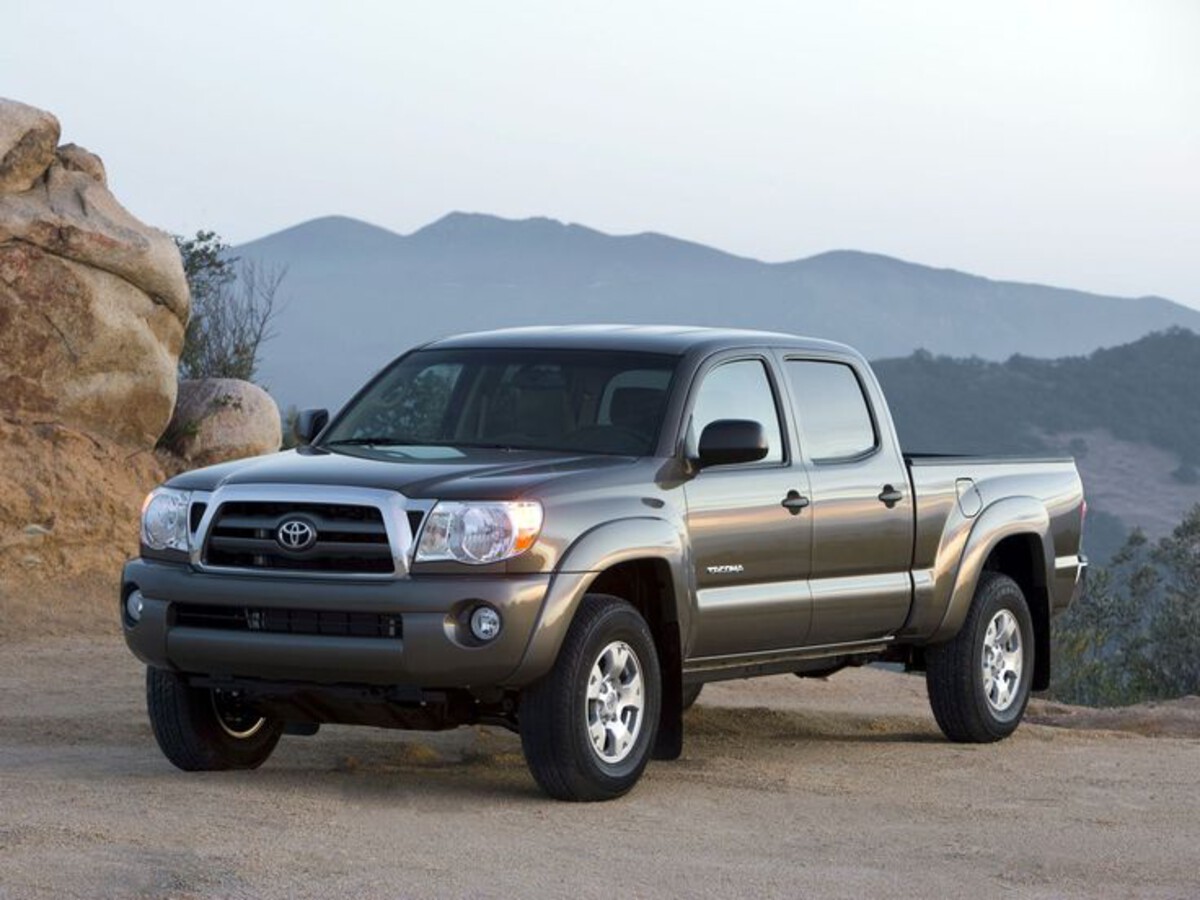
The Toyota Tacoma has become legendary in the used truck market, with second and third-generation models particularly renowned for their ability to deliver reliable service across multiple ownership cycles.
These mid-size trucks have established themselves as benchmark vehicles for longevity, regularly exceeding 200,000 miles with minimal major repairs when properly maintained.
The secret to the Tacoma’s multi-owner reliability lies in Toyota’s conservative engineering approach, which prioritizes proven technology over cutting-edge features that might fail prematurely.
The 4.0-liter V6 engine available in these Tacomas is particularly noteworthy for its durability. This powerplant uses a relatively simple design without complex variable valve timing systems that can cause problems in other manufacturers’ engines.
The transmission options both the five-speed automatic and six-speed manual are robust units that can handle significant abuse without failing.
Owners report these drivetrains regularly reaching 300,000 miles with only routine maintenance like fluid changes and occasional clutch replacements on manual models.
The Tacoma’s frame, while subject to a recall for rust issues in certain regions and model years, is otherwise exceptionally durable. The truck’s body-on-frame construction means that even when cosmetic rust appears, the structural integrity often remains intact.
This design also makes repairs more straightforward, as damaged body panels can be replaced without affecting the truck’s fundamental structure.
The suspension components are known for lasting well beyond 100,000 miles, even when the truck is used for off-roading or carrying heavy loads regularly.
The Tacoma’s legendary reliability has created strong resale values, but this also means third and fourth owners can buy a high-mileage example knowing they’re still getting significant remaining life.
The truck’s ability to maintain reliability across owners is also supported by its forgiving nature it doesn’t require obsessive maintenance schedules to stay healthy.
Regular oil changes, basic fluid services, and attention to obvious issues are generally sufficient to keep these trucks running. This reliability across varied maintenance approaches makes the Tacoma exceptionally suitable for the used market, where maintenance history can be spotty.
2. Ford F-150 (2009-2014)
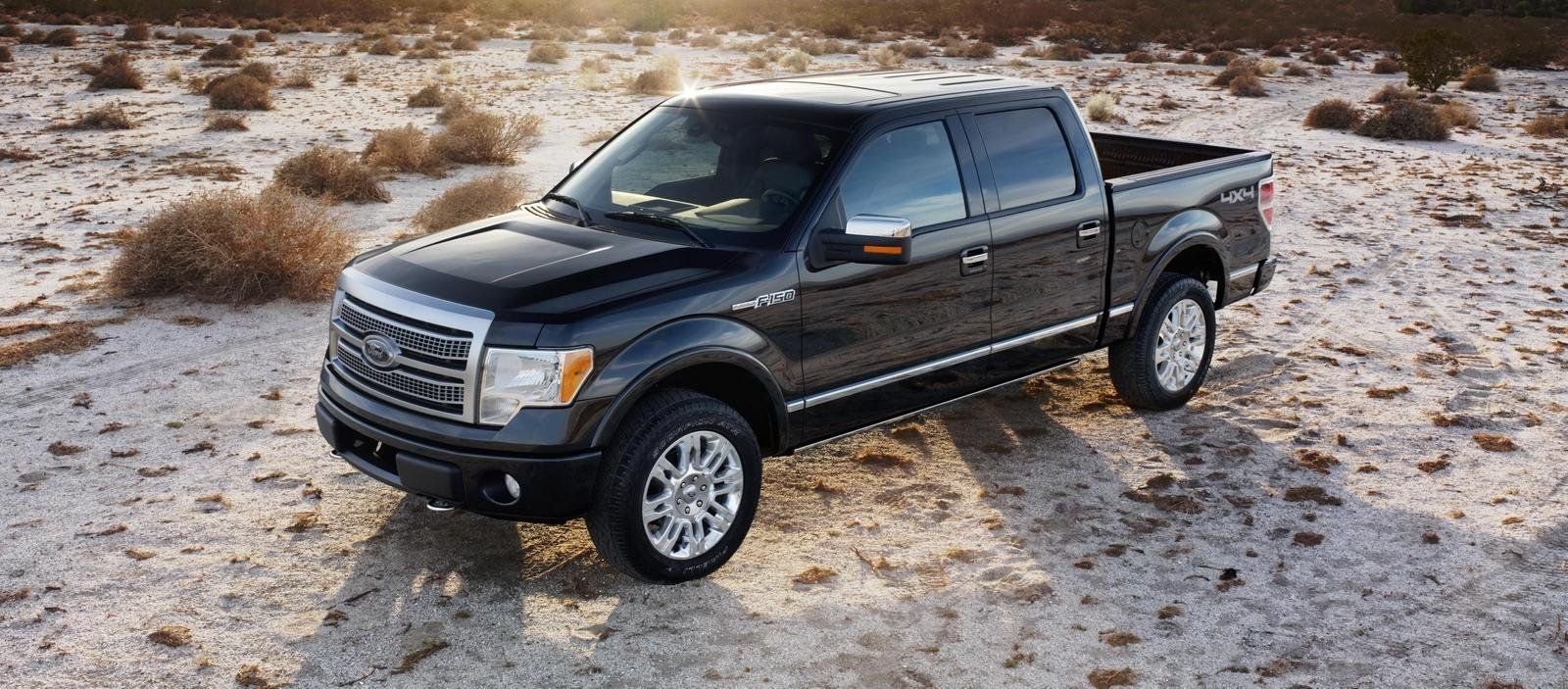
The twelfth-generation Ford F-150, particularly models from 2011-2014 after early production issues were resolved, represents one of the most reliable full-size trucks available in the used market.
These trucks combine Ford’s decades of truck-building experience with proven powertrains that deliver exceptional longevity across multiple owners.
The 5.0-liter Coyote V8 and 3.7-liter V6 engines are particularly notable for their durability, with many examples easily surpassing 200,000 miles without major engine work.
The Coyote V8, introduced in 2011, brought modern technology like variable valve timing while maintaining fundamental reliability. This engine’s robust construction includes forged steel crankshafts and strong connecting rods that handle high mileage without failing.
The six-speed automatic transmission paired with these engines is a mature, well-debugged unit that holds up to heavy towing and commercial use.
While the transmission requires regular fluid changes to achieve maximum longevity, those who maintain it properly report trouble-free operation well past 250,000 miles.
Ford’s commitment to this generation’s build quality shows in the truck’s structural durability. The fully boxed frame resists flexing and twisting, maintaining tight body panel gaps and door alignment even after years of hard use.
The suspension components, including ball joints, tie rod ends, and control arm bushings, are robust and reasonably priced to replace when they eventually wear out.
The four-wheel-drive system, when properly maintained with regular differential and transfer case fluid changes, proves remarkably durable across multiple owners.
These F-150s benefit from Ford’s massive parts supply network. As the best-selling vehicle in America for decades, replacement parts are ubiquitous and competitively priced. Independent mechanics are intimately familiar with these trucks, meaning repairs don’t require expensive dealer visits.
The truck’s diagnostic systems use standard OBD-II protocols that any scan tool can read, making troubleshooting straightforward and affordable. This accessibility to parts and service expertise significantly reduces the total cost of ownership for second and third owners.
The truck’s capability remains impressive even at high mileage. The towing capacity doesn’t diminish significantly as long as the drivetrain is maintained, and the payload capability stays robust as long as the suspension hasn’t been neglected.
These F-150s handle both work truck duty and family transportation roles equally well, making them versatile choices for diverse owner needs.
Whether purchased by a contractor for job site duty or a family for weekend adventures, these trucks adapt to different use cases while maintaining their reliability, making them ideal candidates for multiple ownership cycles.
3. Chevrolet Silverado 1500 (2007-2013)
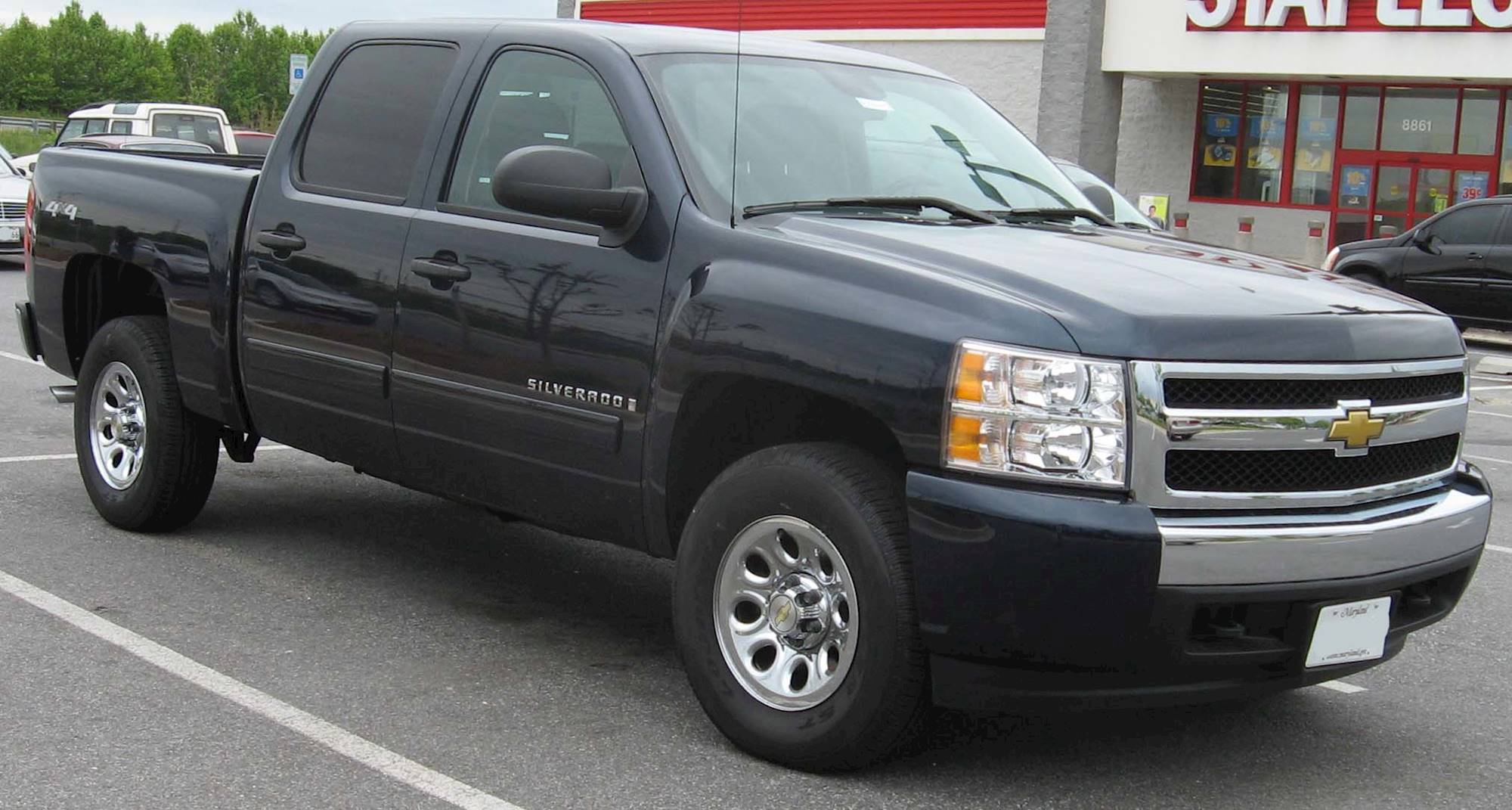
The second-generation GMT900 Chevrolet Silverado 1500 stands as one of General Motors’ most reliable full-size truck offerings, with build quality and durability that supports decades of service across multiple owners.
These trucks benefited from GM’s renewed focus on quality control and engineering refinement, resulting in vehicles that regularly achieve 200,000 to 300,000 miles with proper maintenance.
The combination of proven powertrains, robust construction, and widespread parts availability makes these Silverados excellent choices for budget-conscious used truck buyers.
The 5.3-liter Vortec V8 engine is the heart of this truck’s reliability story. This powerplant uses Active Fuel Management (cylinder deactivation) in most configurations, and while this system can develop issues, the engine itself is fundamentally robust.
Many high-mileage examples run strong with nothing more than regular oil changes and occasional replacement of wear items like spark plugs and ignition coils.
The engine’s iron block construction provides excellent durability, and its relatively simple overhead valve design is straightforward to service.
The six-speed automatic transmission, when maintained with regular fluid changes, proves exceptionally durable, with many examples surpassing 250,000 miles on the original unit.
The Silverado’s fully boxed frame provides exceptional rigidity and durability. This construction method, where the frame rails are completely enclosed rather than C-channel, significantly increases structural strength.
The result is a truck that maintains tight body panel alignment and door fit even after years of hauling and towing. The frame rarely develops cracks or significant rust issues except in harsh winter climates where road salt is heavily used.
The body panels themselves are thick enough to resist minor damage, and the paint quality, particularly from 2009 onward, holds up well to environmental exposure.
Suspension durability is another strong point for these Silverados. The independent front suspension uses robust control arms and ball joints that regularly last 100,000 miles or more, even when the truck is used for towing or off-road applications.
The rear leaf springs maintain their load-carrying capability over time, though the rear shocks typically need replacement every 80,000 to 100,000 miles. The steering components, including the rack-and-pinion steering gear, prove reliable and maintain precise feel even at high mileage.
The electrical systems in these Silverados are generally reliable, though some specific issues like the notorious instrument cluster failure can occur.
However, these problems are well-documented with available fixes, including aftermarket replacement clusters and repair services that rebuild the original units.
The truck’s computer systems are robust and don’t typically develop the mysterious gremlins that plague some competitors. The onboard diagnostics are straightforward, using standard protocols that any scan tool can access.
4. Toyota Tundra (2007-2013)
The second-generation Toyota Tundra represents the Japanese automaker’s commitment to building a full-size truck that matches American competitors in capability while exceeding them in reliability.
These trucks have developed a deserved reputation for exceptional longevity, with numerous documented examples exceeding 500,000 miles with minimal major repairs.
The Tundra’s multi-owner reliability stems from Toyota’s engineering philosophy that prioritizes proven technology and robust construction over cutting-edge features that might compromise long-term durability.
The 5.7-liter V8 engine, known internally as the 3UR-FE, is a masterpiece of durable engine design. This powerplant features an iron block and aluminum heads, combining strength with reasonable weight.
The engine uses a conservative state of tune that doesn’t stress components excessively, contributing to its legendary longevity. The dual independent variable valve timing system is more reliable than similar systems from competitors, rarely causing problems even at high mileage.
The six-speed automatic transmission is equally robust, with many examples reaching 300,000 miles on the original unit with nothing more than regular fluid changes.
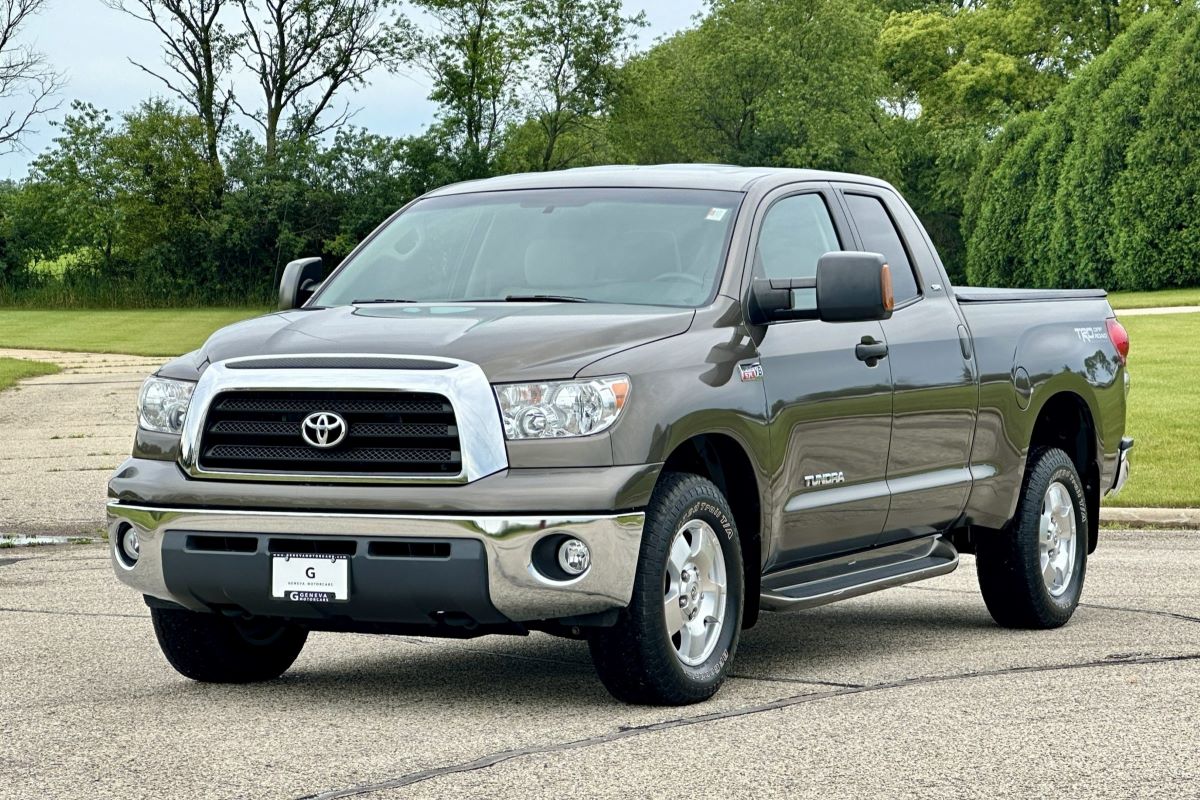
The Tundra’s frame is exceptionally rigid and durable, constructed from high-strength steel with excellent corrosion resistance. Unlike some competitors that have experienced frame rust issues, the Tundra’s frame rarely develops structural problems even in harsh climates.
The fully boxed design provides rigidity that prevents body flex and maintains door and panel alignment over time. The suspension components are overbuilt for the truck’s class, with robust ball joints, control arm bushings, and steering components that regularly exceed 100,000 miles before requiring replacement.
The Tundra’s simplicity is a significant advantage in the used market. These trucks don’t have complex electronic systems that become obsolete or expensive to repair.
The four-wheel-drive system is straightforward and reliable, the differential locks are simple mechanical units, and the suspension is conventional rather than using complex electronic adjustments.
This simplicity means that any competent mechanic can service these trucks, and diagnostic issues are typically straightforward to resolve.
Also Read: 5 Cars That Rarely Stall vs 5 That Constantly Leave You Stranded
5. Honda Ridgeline (2006-2014)
The first-generation Honda Ridgeline takes a unique approach to truck design, and while it doesn’t fit the traditional truck mold, its multi-owner reliability is exceptional.
Built on a modified version of Honda’s SUV platform, the Ridgeline brings car-like reliability to the truck segment. These vehicles regularly achieve 200,000 to 300,000 miles with minimal major repairs, making them excellent choices for buyers who prioritize dependability over hardcore towing capability or traditional truck styling.
The 3.5-liter V6 engine used in the Ridgeline is a proven powerplant borrowed from Honda’s SUV lineup. This engine features Honda’s legendary build quality and conservative engineering approach.
The timing belt is the only major maintenance item, requiring replacement every 105,000 miles, but this is a well-documented service that any Honda mechanic can perform.
Beyond this, the engine needs nothing more than regular oil changes and occasional spark plug replacements to deliver reliable service.
The five-speed automatic transmission is equally robust, a mature design that handles the Ridgeline’s modest power without stress. Transmission fluid changes every 50,000 miles, ensuring this unit easily reaches 200,000 miles or more.
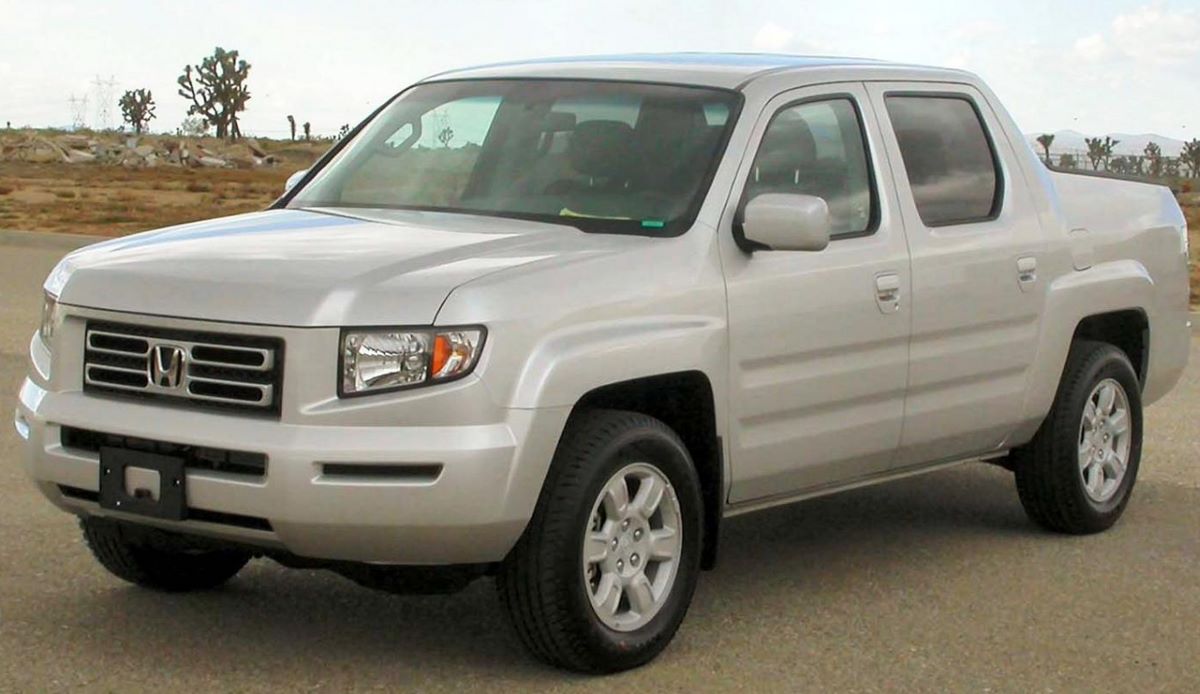
The Ridgeline’s unibody construction differs from traditional body-on-frame trucks, but this design provides exceptional durability in its own right.
The integrated frame doesn’t separate from the body, eliminating many common sources of creaks, rattles, and misalignment that plague older body-on-frame trucks.
The structure resists flexing exceptionally well, maintaining tight panel gaps and precise door alignment even after extensive use. The independent rear suspension provides a smooth ride while proving durable enough for normal truck duties.
While this suspension isn’t designed for extreme off-roading or heavy payload work, it handles typical truck use without problems. The all-wheel-drive system in the Ridgeline is a sophisticated torque-vectoring setup that proves exceptionally reliable.
This system requires minimal maintenance just periodic fluid changes for the rear differential and rarely develops problems. The system provides excellent traction in adverse weather while operating transparently in normal conditions.
For second and third owners, this means all-weather capability without the maintenance headaches of traditional four-wheel-drive systems with transfer cases and locking hubs.
6. Ford Ranger (1998-2011)
The final generation of the original Ford Ranger, produced from 1998 through 2011, represents compact truck reliability at its finest. These trucks soldiered on with minimal changes for over a decade, and this design maturity translated into exceptional reliability across multiple owners.
The Ranger’s simplicity, proven mechanicals, and widespread parts availability make it an outstanding choice for budget-conscious buyers seeking dependable transportation or a basic work truck.
The engine options in these Rangers are legendary for durability. The 2.3-liter four-cylinder, while underpowered, proves virtually indestructible with basic maintenance.
This Lima-family engine uses a simple overhead cam design with a timing chain rather than a belt, eliminating one major maintenance item. Regular oil changes are essentially all this engine needs to deliver 200,000 miles or more of reliable service.
The 3.0-liter V6 is equally robust, though it suffers from some cylinder head gasket issues in early examples. The 4.0-liter SOHC V6, available from 2001 onward, is the most powerful option and proves remarkably durable despite some timing chain guide issues in higher-mileage examples.
The manual transmissions used in these Rangers are virtually bulletproof, while the automatic transmissions, though less refined than modern units, deliver reliable service with regular fluid changes.
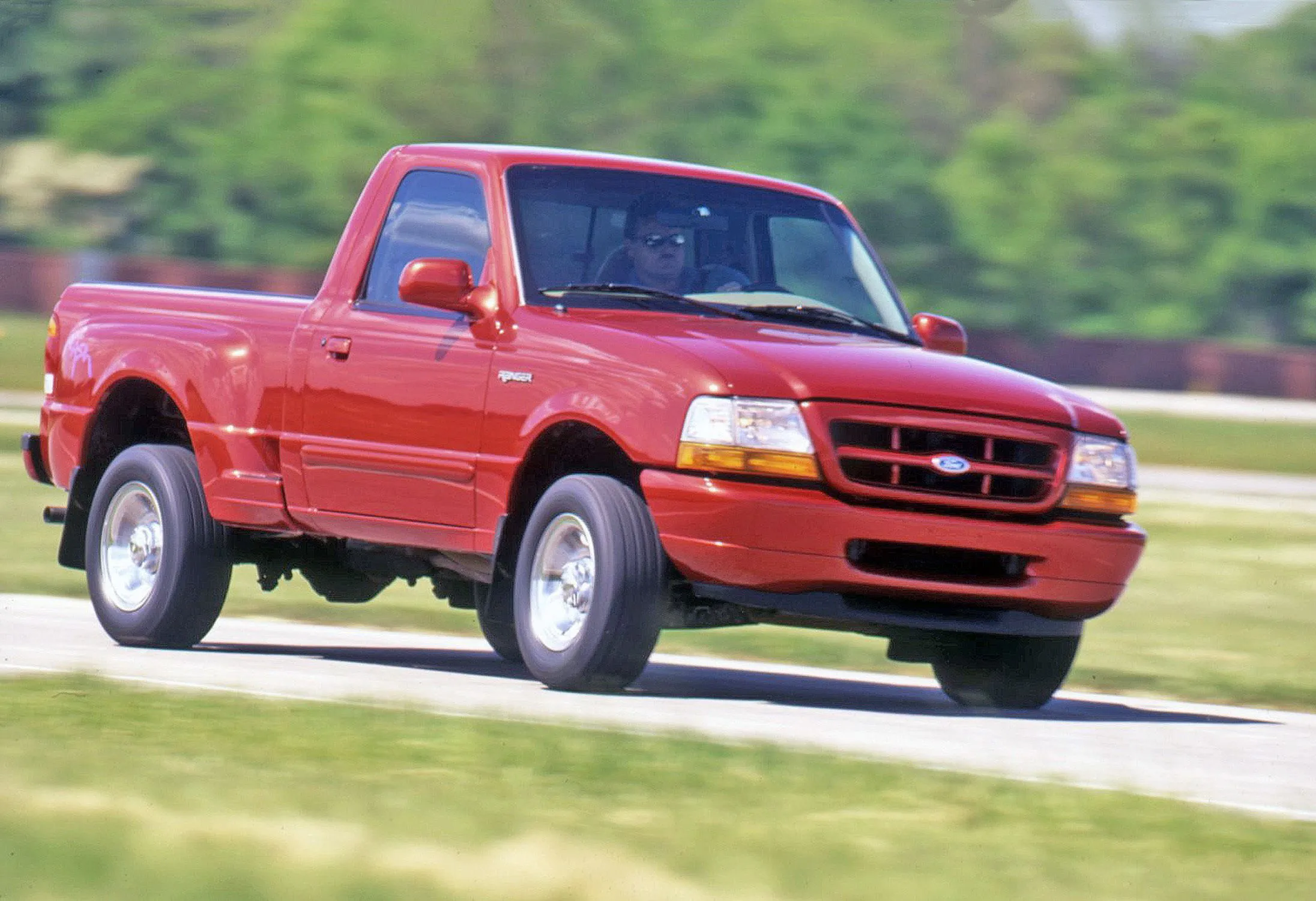
The Ranger’s body-on-frame construction uses a steel ladder frame that resists rust reasonably well except in harsh salt-belt environments.
The simple frame design makes inspection straightforward, allowing potential buyers to easily assess structural condition. The body panels are relatively thick steel that handles minor contact without significant damage.
The paint quality varies by year and trim level, but these trucks generally resist oxidation reasonably well. The bed, while prone to rust in harsh climates, is easily repairable or replaceable at reasonable cost.
The suspension design is basic but effective, using simple components that last well and cost little to replace. The twin I-beam front suspension on 4×2 models and the independent front suspension on 4×4 models both prove durable, though the twin I-beam design requires more frequent alignment.
The rear leaf springs maintain their load capacity over time, and replacement is straightforward and affordable. The steering components, including the steering gear box on 4×2 models and rack-and-pinion on 4x4s, regularly exceed 150,000 miles before needing replacement.
The Ranger’s electrical systems are straightforward and generally reliable. While some window regulators and door lock actuators eventually fail, replacements are inexpensive and installation is straightforward.
The trucks don’t have complex body control modules or electronic systems that develop mysterious problems. This electrical simplicity means that even mechanically inclined owners can troubleshoot and repair most electrical issues without expensive dealer visits.
7. GMC Sierra 1500 (2007-2013)
The GMC Sierra 1500 from this generation is essentially a Chevrolet Silverado with upgraded styling and trim, sharing the same fundamental engineering and reliability characteristics.
These trucks offer the same exceptional durability as their Chevrolet siblings while appealing to buyers who prefer GMC’s slightly more upscale positioning.
The Sierra’s multi-owner reliability stems from the proven GMT900 platform, robust powertrains, and build quality that supports hundreds of thousands of miles of service.
The powertrain options mirror those in the Silverado, with the 5.3-liter Vortec V8 being the most common and reliable choice. This engine’s Active Fuel Management system can develop issues, but the underlying engine is fundamentally sound.
The six-speed automatic transmission proves durable with proper maintenance, regularly achieving 200,000 miles or more. The four-wheel-drive system, when properly serviced, delivers reliable performance across multiple owners.
The transfer case is a robust unit that rarely develops problems if the fluid is changed periodically. The front and rear differentials are equally durable, capable of handling significant towing loads over extended periods.
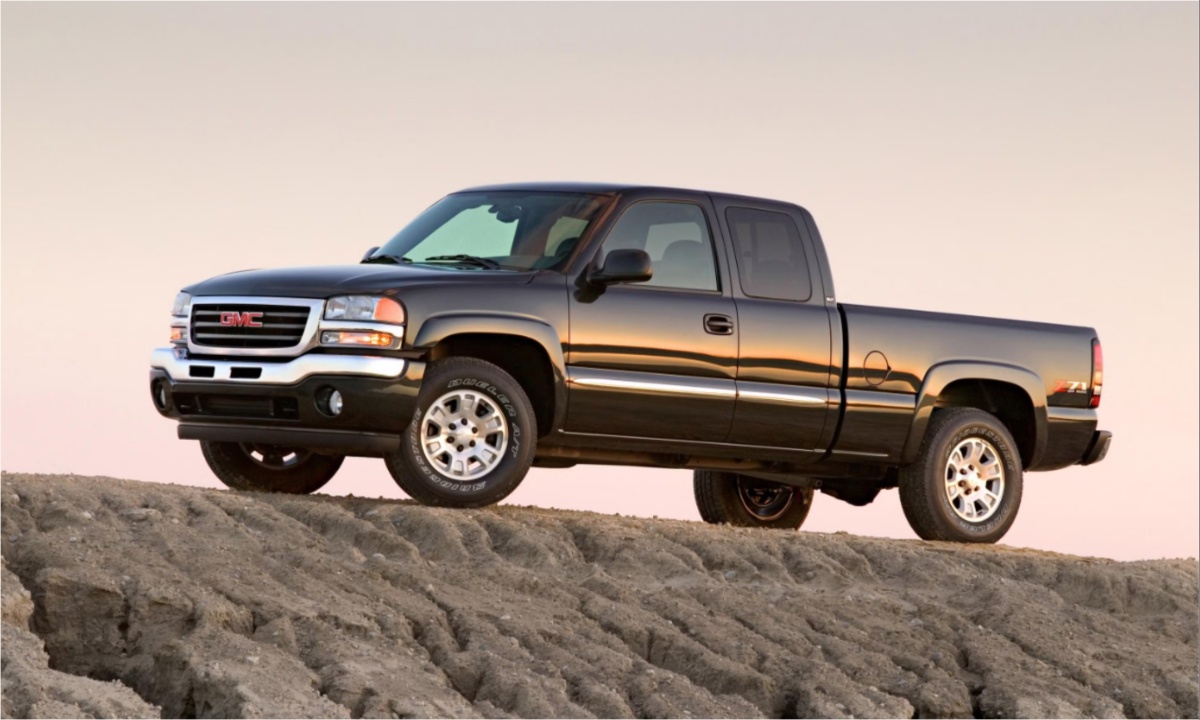
The Sierra’s build quality slightly exceeds the equivalent Silverado in terms of interior materials and sound insulation. The cabin uses softer plastics on contact surfaces, and higher trim levels feature genuine wood accents that hold up well over time.
The seats, particularly in SLT and Denali trims, offer better support and more durable upholstery than base Silverado models. This upgraded interior quality means that high-mileage Sierras often present better than equivalent Silverados, maintaining a more upscale feel even after years of service.
The truck’s capability in work environments is exceptional across its lifespan. The bed maintains its load capacity, the tie-down points remain secure, and the tailgate continues functioning smoothly.
The cargo lighting, where equipped, stays functional, and the spray-in bedliners available on many models protect the bed surface indefinitely.
For commercial users purchasing these trucks as second or third owners, this durability means the Sierra continues delivering value long after initial depreciation.
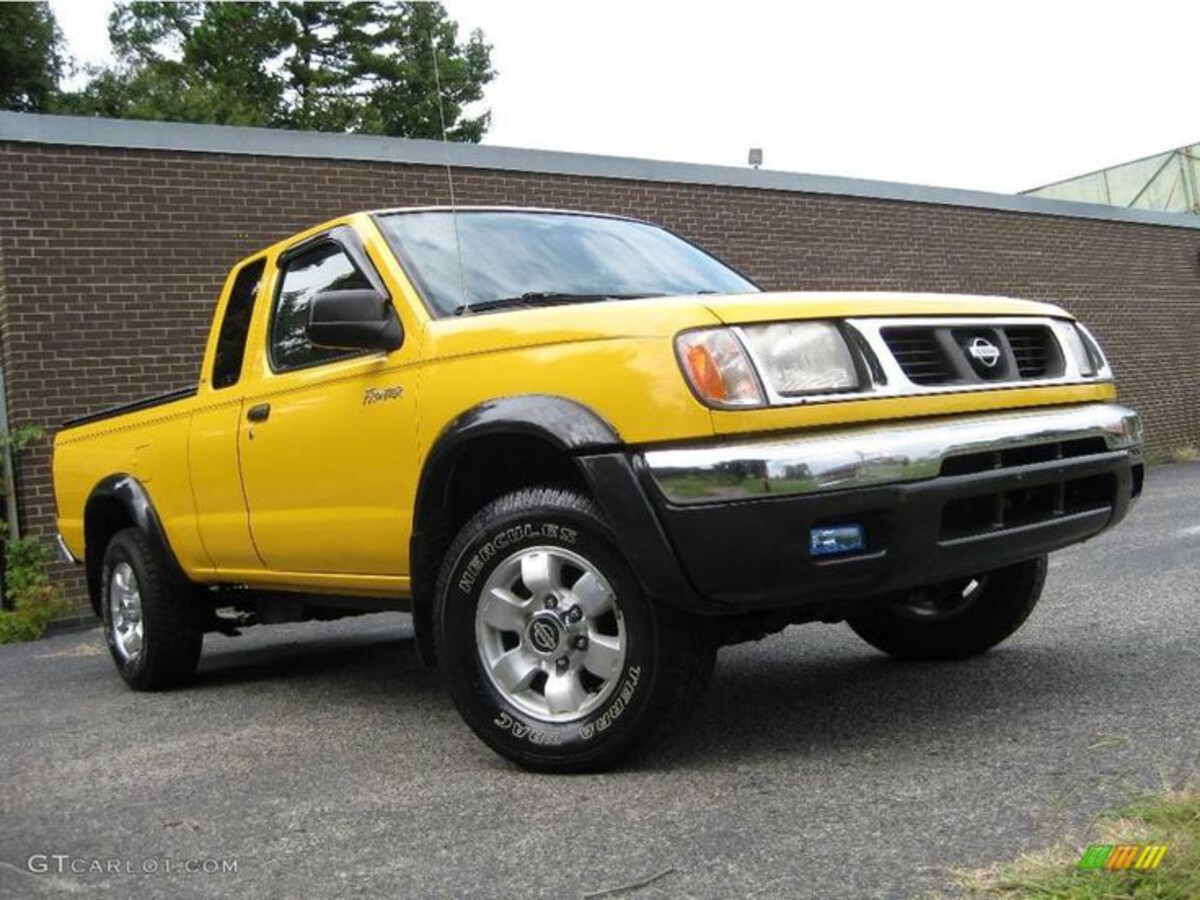
8. Nissan Frontier (2005-2021)
The second-generation Nissan Frontier had an remarkably long production run with minimal changes, and this design stability translated into well-understood reliability characteristics.
These mid-size trucks prove exceptionally durable across multiple owners, regularly achieving 200,000 miles with routine maintenance.
The Frontier’s conservative engineering, proven powertrains, and straightforward design make it an excellent choice for buyers seeking dependable transportation without complexity.
The 4.0-liter V6 engine is the heart of the Frontier’s reliability story. This powerplant uses a timing chain rather than a belt, eliminating one major maintenance item.
The engine features a robust iron block construction and conservative state of tune that doesn’t stress components excessively. Oil consumption can increase in higher-mileage examples, but this rarely leads to catastrophic failure as long as owners monitor oil levels.
The engine regularly achieves 250,000 miles or more with nothing more than regular oil changes and occasional replacement of wear items like spark plugs and ignition coils.
The five-speed automatic transmission, when maintained with regular fluid changes, proves remarkably durable. The six-speed manual transmission is equally robust, with clutch life often exceeding 150,000 miles even in commercial use.
The interior quality is decent but not exceptional. The materials are durable rather than luxurious, holding up well to heavy use without falling apart.
The seats maintain their support to high mileage, though the fabric can show wear. The dashboard plastics resist cracking reasonably well, and the controls remain functional. The climate control system rarely fails, and the basic audio systems continue working reliably.
These trucks don’t have complex infotainment systems that become obsolete, which actually becomes an advantage as they age. The Frontier’s electrical systems are generally reliable, though some window regulators and door lock actuators eventually require replacement.
The truck’s computer systems are robust and don’t develop mysterious problems. The body control module rarely fails, and the wiring harnesses maintain integrity in most climates. This electrical reliability means high-mileage Frontiers typically have fully functional power accessories.
9. Ram 1500 (2009-2012)
The fourth-generation Ram 1500, particularly 2009-2012 models with the 5.7-liter Hemi V8, represents Chrysler’s most reliable modern full-size truck offering.
These trucks benefited from significant quality improvements implemented after Chrysler’s partnership with Mercedes-Benz and show durability that supports multiple ownership cycles.
While not quite matching Toyota or Honda reliability, these Rams regularly achieve 200,000 miles with proper maintenance, making them solid used truck choices.
The 5.7-liter Hemi V8 is a proven powerplant with roots stretching back decades. This engine features robust construction with an iron block and aluminum heads.
The Multi-Displacement System (cylinder deactivation) can develop issues, but the core engine is fundamentally sound. Regular oil changes with quality oil are essential these engines are sensitive to oil quality and don’t tolerate extended drain intervals well. When properly maintained, the Hemi regularly exceeds 200,000 miles.
The six-speed automatic transmission proves durable when the fluid is changed every 60,000 miles, though earlier fluid changes are recommended for trucks used for heavy towing.
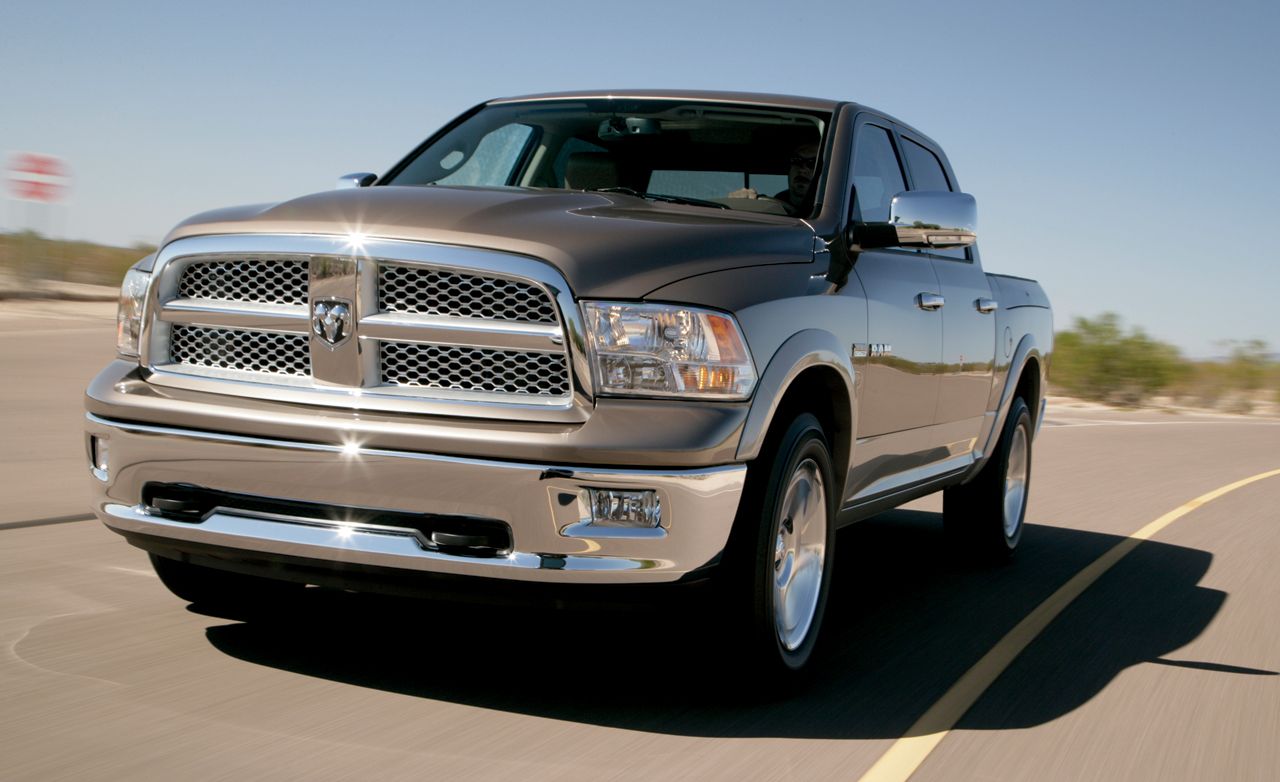
The Ram’s frame is fully boxed for rigidity, providing excellent structural strength. The frame rarely develops cracks or significant rust except in harsh salt-belt climates where regular washing is neglected.
The coil-spring rear suspension, a unique feature in the full-size truck segment at the time, provides excellent ride quality while proving durable.
The springs rarely sag, and the rear shock absorbers are straightforward to replace when needed. The independent front suspension uses robust control arms and ball joints that regularly reach 100,000 miles before requiring replacement.
These Rams handle work truck duty effectively across their lifespan. The bed maintains its load capacity, the tie-down system stays secure, and the spray-in bedliners protect the bed surface well.
The RamBox storage system, available on some models, proves durable with drains that rarely clog and locks that continue functioning.
For commercial buyers purchasing these trucks used, the combination of capability and reasonable reliability makes them viable choices at attractive price points.
10. Chevrolet Colorado/GMC Canyon (2004-2012)
The first-generation Chevrolet Colorado and GMC Canyon represent GM’s successful entry into the compact truck market, offering reliability that exceeded expectations for domestic compact trucks.
These twins share identical mechanical components and similar build quality, delivering durable service across multiple owners. While they don’t quite match Toyota Tacoma reliability, properly maintained examples regularly achieve 200,000 miles, making them solid used truck values.
The engine options in these trucks vary in reliability, with the 3.7-liter inline-five being the most durable choice. This unusual five-cylinder configuration provides a good balance of power and fuel economy while proving robust with proper maintenance.
The engine uses a timing chain rather than a belt, eliminating one major maintenance item. Regular oil changes and occasional replacement of spark plugs and ignition coils keep this engine running reliably.
The four-speed automatic transmission is the weak point, requiring diligent fluid changes every 50,000 miles to achieve maximum longevity. The five-speed manual transmission is more durable, with clutches often lasting 150,000 miles or more.
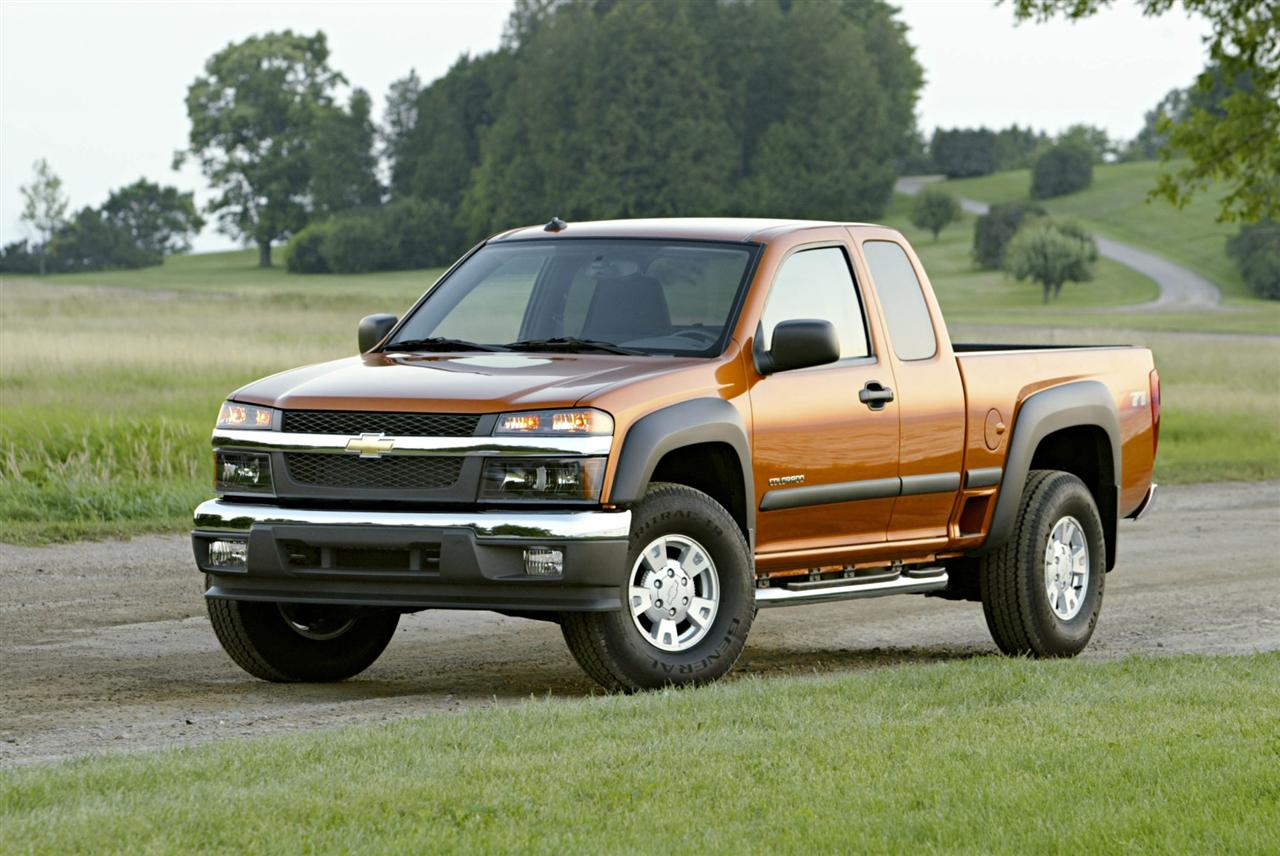
The frame construction is robust, using fully boxed sections for enhanced rigidity. The frame resists rust reasonably well except in severe salt-belt environments.
The body panels are relatively thick steel that handles minor contact without severe damage. The bed, while prone to rust in harsh climates, is reasonably durable and can be protected with drop-in liners or spray-in bedliners.
The paint quality improved through the production run, with later models showing better resistance to fading and oxidation. The suspension design uses independent front suspension on all models, providing good ride quality and acceptable durability.
The control arms and ball joints typically require replacement around 100,000 miles, but parts are reasonably priced and installation is straightforward.
The rear leaf springs maintain their load capacity over time, though the rear shocks need replacement more frequently than other components.
The steering rack proves reliable, maintaining precise feel to high mileage. The four-wheel-drive system is straightforward and durable, using a traditional part-time transfer case that’s simple to service.
The fuel economy of these trucks, particularly with the five-cylinder engine, provides a significant advantage over full-size competitors.
Combined fuel economy of 18-20 mpg is achievable even with higher-mileage examples, making these trucks economical to operate as work vehicles.
This fuel efficiency, combined with lower purchase prices in the used market compared to Tacomas, makes them attractive options for budget-conscious buyers who need truck capability without full-size dimensions or operating costs.
11. Dodge Dakota (2005-2011)
The third-generation Dodge Dakota occupies a unique position in the mid-size truck market, offering more capability than compact competitors while maintaining better maneuverability than full-size trucks.
These trucks prove more reliable than earlier Dakota generations, with properly maintained examples regularly achieving 175,000 to 200,000 miles. While they require more attention to maintenance than Toyota or Honda products, they offer substantial capability at attractive used prices.
The 3.7-liter V6 is the base engine option and proves reasonably durable with diligent maintenance. This engine uses a single overhead cam design with aluminum heads and an iron block.
The timing chain requires no scheduled replacement, but the water pump typically needs attention around 100,000 miles. More desirable is the 4.7-liter V8, which provides significantly more power and proves equally reliable when properly maintained.
Both engines require regular oil changes with quality oil these Chrysler engines don’t tolerate extended drain intervals or low-quality lubricants.
The four-speed automatic transmission is adequate but not exceptional, requiring fluid changes every 50,000 miles to achieve maximum longevity.
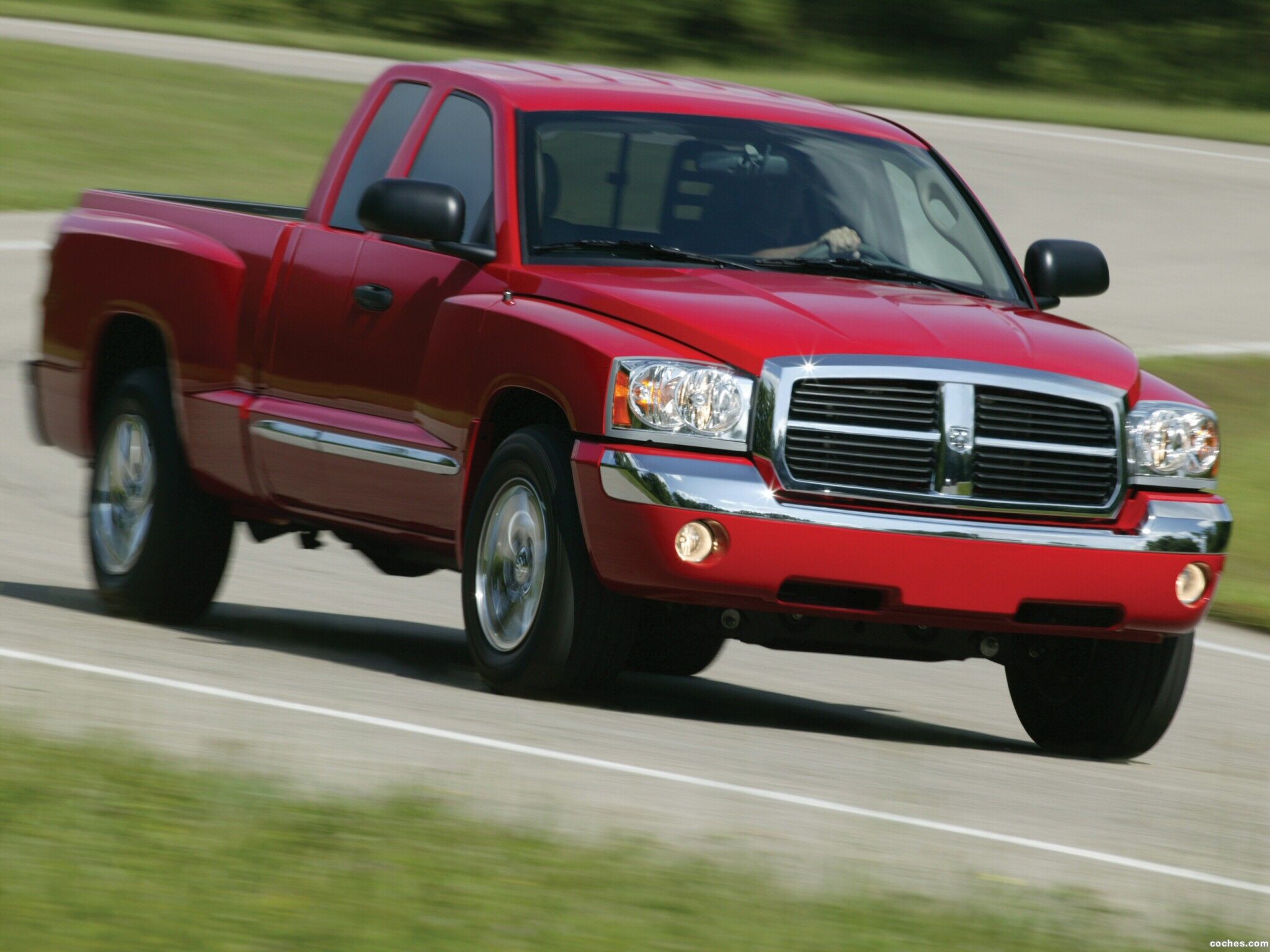
The Dakota’s frame is a fully boxed design that provides good rigidity and durability. The frame construction resists flexing well, maintaining body panel alignment over time.
Rust resistance is adequate in moderate climates but requires attention in harsh salt-belt environments. The body panels are thick enough to handle minor contact without severe damage, and the paint quality, while not exceptional, resists fading reasonably well.
The bed is durable but prone to rust in harsh climates if not protected with a liner. The Dakota’s capability remains impressive across multiple owners.
The towing capacity of up to 6,500 pounds when properly equipped exceeds most mid-size competitors, making these trucks suitable for larger trailers and boats.
The payload capacity is substantial, and the bed provides good cargo space. The available crew cab configuration offers genuine seating for five adults, making the Dakota a viable family vehicle that can handle truck duties when needed.
12. Ford F-250/F-350 Super Duty (1999-2007)
The first two generations of Ford’s Super Duty trucks, particularly the 7.3-liter Power Stroke diesel models from 1999-2003 and later gas models, represent some of the most durable heavy-duty trucks ever produced.
These trucks are legendary for their ability to accumulate massive mileages 300,000 to 500,000 miles is common with proper maintenance while continuing to perform demanding work.
For buyers seeking a truck that will survive multiple owners while handling serious towing and hauling, these Super Duty trucks are exceptional choices. The 7.3-liter Power Stroke diesel engine is legendary in truck circles for its durability and simplicity.
This engine uses a mechanical fuel injection system rather than the complex high-pressure common rail systems found in later diesels, eliminating many potential failure points.
The engine’s robust construction includes forged internals and conservative power output that doesn’t stress components excessively.
With regular oil changes using quality diesel-rated oil, fuel filter changes every 10,000 to 15,000 miles, and occasional injector O-ring replacement, these engines regularly exceed 400,000 miles.
The only significant weaknesses are the under-valve-cover wiring harnesses, which can deteriorate and cause running issues, and the turbocharger, which typically requires replacement around 200,000 to 250,000 miles.
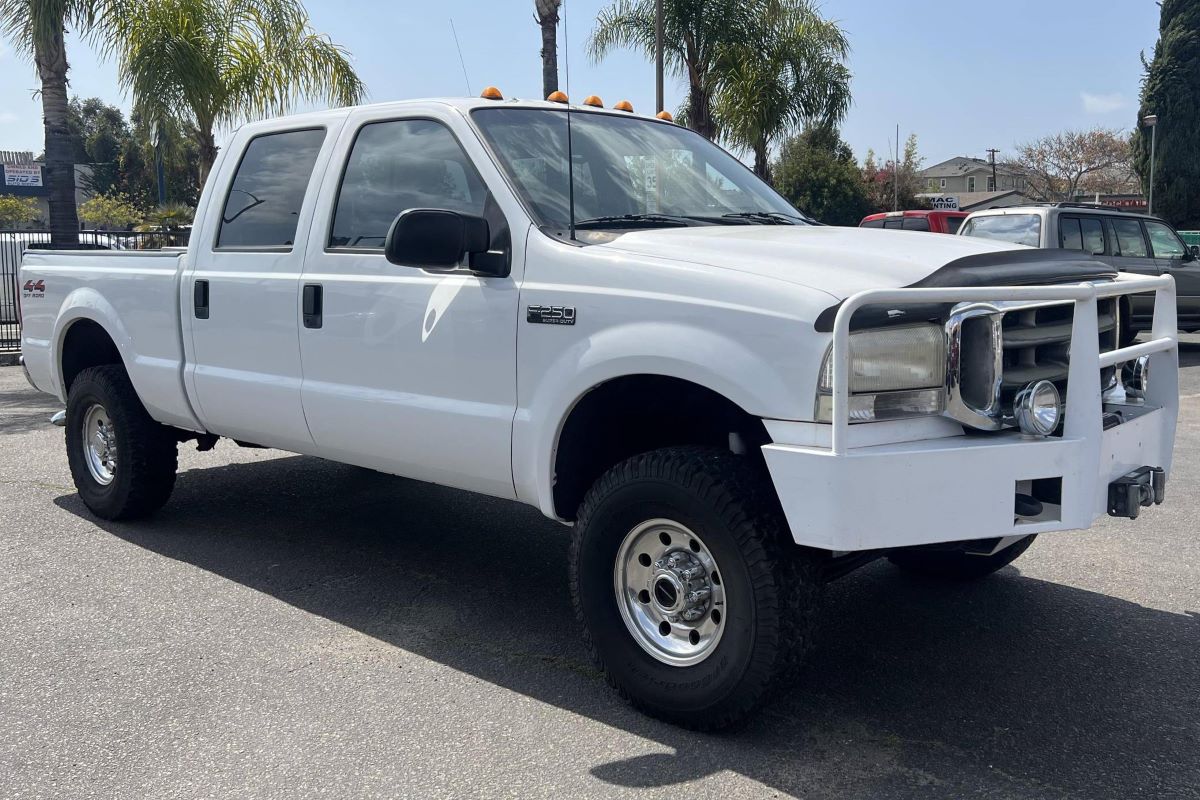
The gasoline engine options, particularly the 5.4-liter Triton V8 and 6.8-liter Triton V10, also prove durable despite some well-documented issues.
The 5.4-liter engine suffered from spark plug ejection problems in early examples and difficult spark plug removal in later versions, but the core engine is fundamentally sound.
The V10 is essentially bulletproof, capable of massive mileage with routine maintenance. Both engines require regular maintenance, including timely spark plug changes, but they deliver reliable service across multiple owners.
The transmissions 4R100 four-speed automatic in early models and TorqShift five-speed in later versions prove durable with regular fluid changes and occasionally require attention to torque converter issues.
The Super Duty’s capability remains undiminished across multiple owners. The towing capacity up to 15,000 pounds when properly equipped supports serious commercial applications including large construction trailers, heavy equipment haulers, and large RVs.
The payload capacity handles substantial loads in the bed, and the chassis remains rigid under maximum loads. For commercial buyers purchasing these trucks as second or third owners, the combination of massive capability, proven reliability, and affordable operating costs makes them outstanding long-term values.
These trucks continue earning their keep decades after initial purchase, making them true investments rather than just depreciating assets.
Also Read: 5 Engines That Don’t Mind Cheap Gas vs 5 That Fail Without Premium
