
The automotive world stands at a crossroads, where raw mechanical excellence meets cutting-edge technology, creating machines that will undoubtedly be remembered as icons for generations to come.
As we go through an era of unprecedented innovation in the sports car segment, certain vehicles are emerging that transcend their role as mere transportation they represent the pinnacle of automotive engineering, design philosophy, and driving purity that will cement their status as future classics.
The truly iconic machines combine multiple elements: groundbreaking performance that redefines what’s possible, distinctive styling that captures the imagination, innovative technology that pushes boundaries, and that intangible quality, the ability to stir emotions and create lasting memories.
The legends of tomorrow are being forged today in the workshops of manufacturers who understand that creating something special requires more than impressive specification sheets.
The ten sports cars featured in this collection represent diverse approaches to excellence. From mid-engine masterpieces that honor decades of racing heritage to front-engine GT cars that blend continent-crushing comfort with track-ready performance, each vehicle brings something unique to the table.
These are the machines that enthusiasts will seek out decades from now, the cars that will command premium prices at auctions, and the vehicles that will inspire future generations of designers and engineers. Let’s explore these future legends and understand what makes each one destined for greatness.
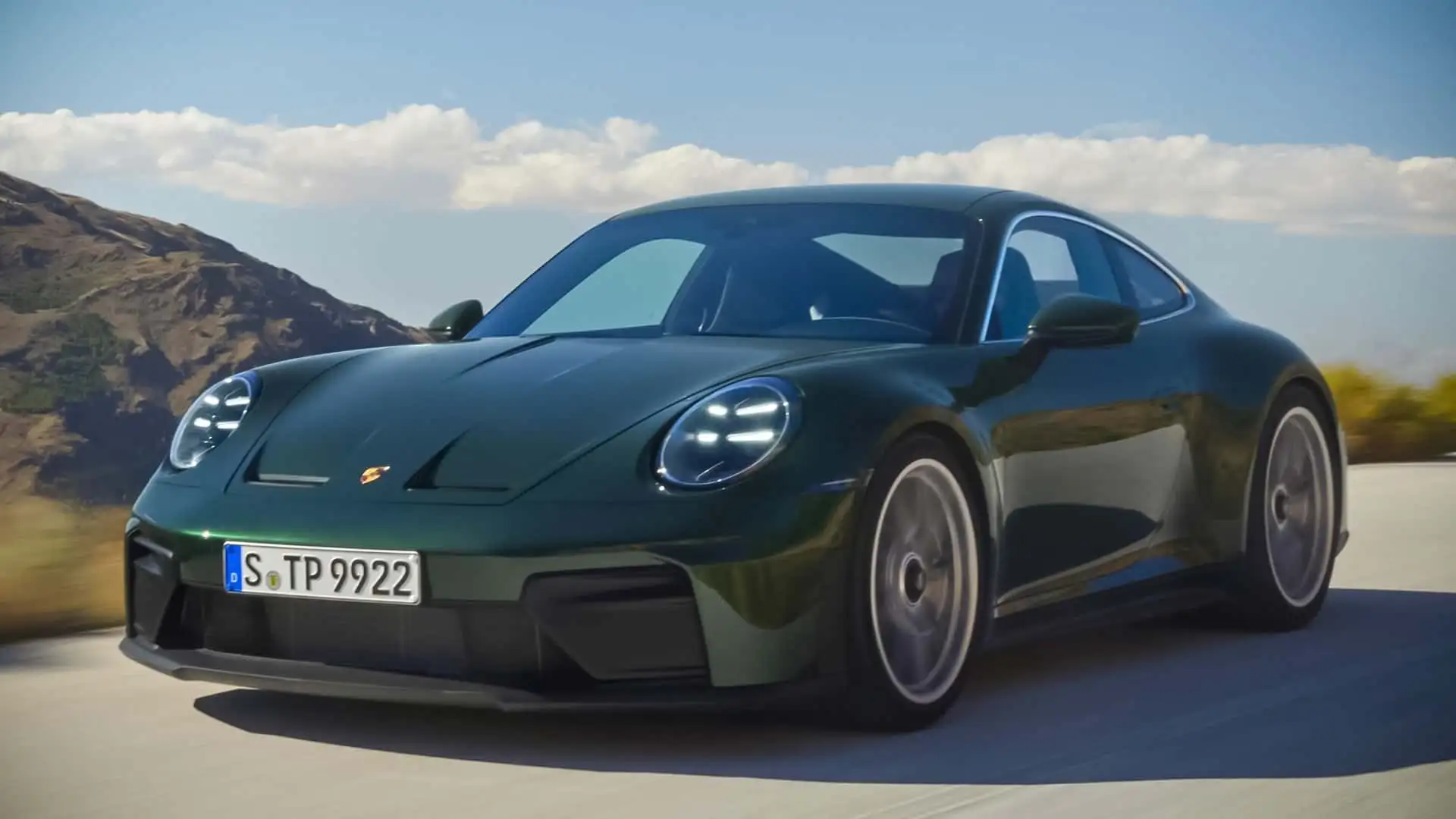
1. Porsche 911 GT3 RS
The Porsche 911 GT3 RS represents the absolute zenith of what can be achieved when decades of racing experience meet uncompromising engineering philosophy.
This isn’t simply another variant in Porsche’s extensive 911 lineup it’s a homologation special that brings GT3 racing technology directly to the street, creating a machine that blurs the line between road car and race car more effectively than almost anything else available today.
At the heart of this beast lies a masterpiece of internal combustion engineering: a 4.0-liter naturally-aspirated flat-six engine that revs to an astonishing 9,000 rpm.
In an era where turbocharging has become nearly ubiquitous, Porsche’s commitment to natural aspiration in the GT3 RS is both admirable and increasingly rare.
This engine produces 518 horsepower, but the numbers barely tell the story. The real magic lies in the delivery linear, predictable, and accompanied by a mechanical symphony that stirs the soul.
The throttle response is immediate, with no turbo lag to manage, creating an intimate connection between the driver’s right foot and the rear wheels that turbocharged engines simply cannot replicate.
The aerodynamics of the GT3 RS are nothing short of extraordinary. Every surface has been optimized for downforce and cooling, resulting in a car that looks purposeful and aggressive from every angle.
The massive rear wing, aggressive front splitter, and intricate underbody aerodynamics combine to generate significant downforce without excessive drag.
The innovative drag reduction system (DRS) allows the rear wing to flatten on straights, improving top speed while maintaining stability.
Perhaps most impressive are the aerodynamic elements integrated into the bodywork itself vents, louvers, and channels that manage airflow with precision that would have been impossible just a generation ago.
The chassis and suspension represent the culmination of Porsche’s racing knowledge. The GT3 RS utilizes a sophisticated double-wishbone front suspension, departing from the MacPherson struts found in lesser 911 models.
This setup provides greater control over camber and geometry, allowing for more precise tuning and better tire contact during aggressive cornering.
The GT3 RS’s future legendary status is virtually guaranteed. As one of the last naturally-aspirated, high-revving sports cars from a manufacturer with unparalleled racing heritage, it represents a pinnacle of analog engagement in an increasingly digital world.
Porsche’s racing success with the GT3 platform lends credibility and desirability that few cars can match. The limited production numbers ensure exclusivity, while the driving experience creates devoted enthusiasts who will preserve and cherish these cars for decades. In fifty years, the 992-generation GT3 RS will be remembered as one of the finest driver’s cars ever created.
2. Ferrari SF90 Stradale
The Ferrari SF90 Stradale marks a revolutionary moment in Maranello’s storied history it’s the first series-production plug-in hybrid from Ferrari, combining a twin-turbocharged V8 with three electric motors to create the most powerful road car Ferrari has ever produced.
This isn’t a tentative step into electrification; it’s a full-throated embrace of hybrid technology in pursuit of ultimate performance, resulting in a machine that delivers 986 horsepower and redefines what a Ferrari supercar can be.
The powertrain architecture is fascinatingly complex. A 4.0-liter twin-turbocharged V8 mounted behind the cockpit produces 769 horsepower on its own already sufficient for supercar status.
But Ferrari engineers added three electric motors: one integrated with the gearbox driving the rear wheels, and two independent motors powering each front wheel.
What makes the SF90 particularly special is how seamlessly the hybrid system integrates into the driving experience. Rather than feeling like an engine with electric assistance tacked on, the powertrain operates as a unified whole.
The electric motors fill in any gaps in power delivery, eliminating turbo lag entirely and providing instantaneous throttle response. In pure electric mode, the SF90 can travel up to 15 miles silently, allowing for emission-free urban driving.
But engage the manettino dial through its various modes, and the character transforms completely. The Qualify mode unleashes full power, creating acceleration that pushes the boundaries of what’s physically manageable on public roads.
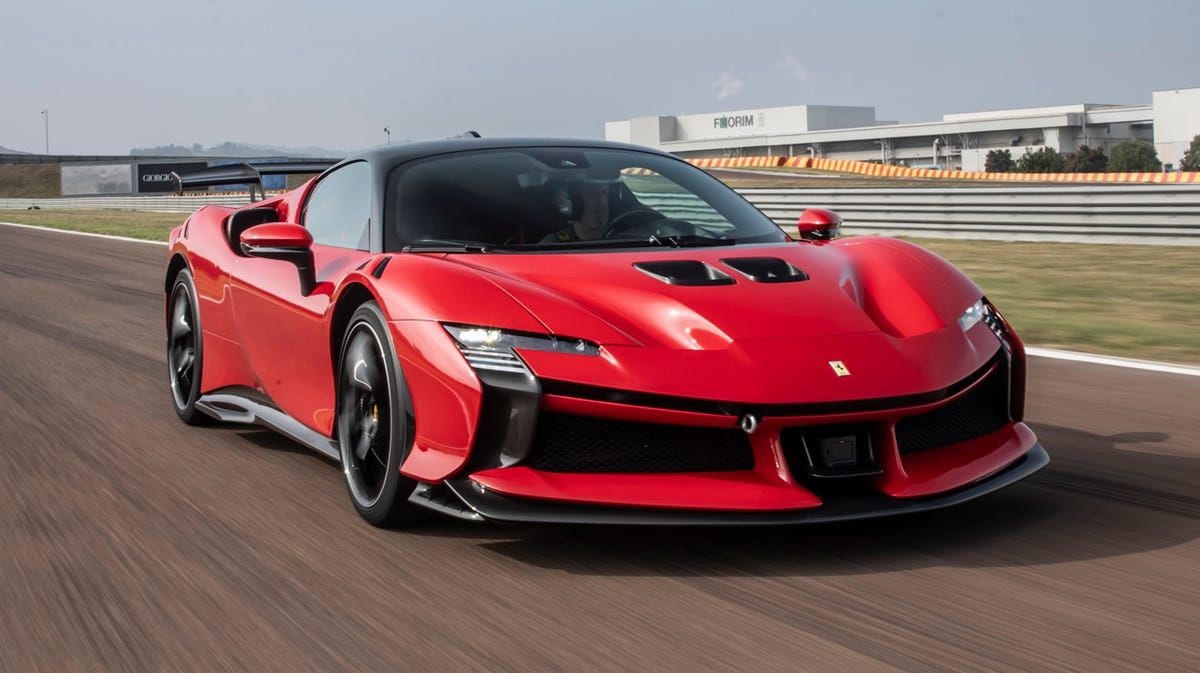
The chassis and aerodynamics showcase Ferrari’s Formula 1 expertise. Active aerodynamic elements constantly adjust to balance downforce and drag based on driving conditions.
The front fascia incorporates shut-off Gurney flaps that remain closed during straight-line driving to reduce drag, then deploy during cornering to increase front downforce.
A massive rear diffuser works in concert with the active rear spoiler to manage airflow and generate significant downforce at high speeds. The result is a car that feels glued to the road, with grip levels that seem to defy physics.
The SF90’s significance extends beyond its impressive specifications. It represents Ferrari’s vision for the future of supercars—one where electrification enhances rather than compromises the driving experience.
The knowledge gained from developing the SF90 will inform Ferrari’s future models as the entire industry transitions toward electrification.
As the first of its kind from Maranello, the SF90 Stradale will be remembered as a pivotal model that proved Ferrari could embrace new technology while maintaining the emotional engagement and performance excellence that defines the brand. Collectors recognize this historical importance, ensuring the SF90’s status as a future legend is already secure.
3. Chevrolet Corvette Z06
The C8 Corvette Z06 represents one of the most significant transformations in American automotive history. When Chevrolet moved the Corvette’s engine behind the driver for the eighth generation, enthusiasts wondered how the legendary Z06 variant would evolve.
The answer exceeded even optimistic expectations: a naturally-aspirated 5.5-liter flat-plane-crank V8 that revs to 8,600 rpm, produces 670 horsepower, and delivers a soundtrack that rivals the finest Italian exotics all for a fraction of the price you’d pay for European competitors.
The LT6 engine is the crown jewel of the Z06 package. This is no ordinary American V8 it’s the most powerful naturally-aspirated V8 ever fitted to a production car.
The flat-plane crankshaft design, typically associated with Ferrari and other exotic manufacturers, allows for higher engine speeds and a distinctive exhaust note that screams rather than rumbles.
The engineering challenges of building such an engine were substantial. High-revving engines generate extreme internal stresses, requiring exotic materials and precise manufacturing.
Titanium connecting rods, forged aluminum pistons, and a dry-sump lubrication system enable the LT6 to withstand the punishment of track use while maintaining reliability for street driving.
The chassis modifications for the Z06 are comprehensive. Chevrolet widened the bodywork significantly to accommodate wider tires and improved aerodynamics.
The front track increases by 1.4 inches while the rear grows by 1.6 inches, providing a broader stance that enhances stability and cornering capability.
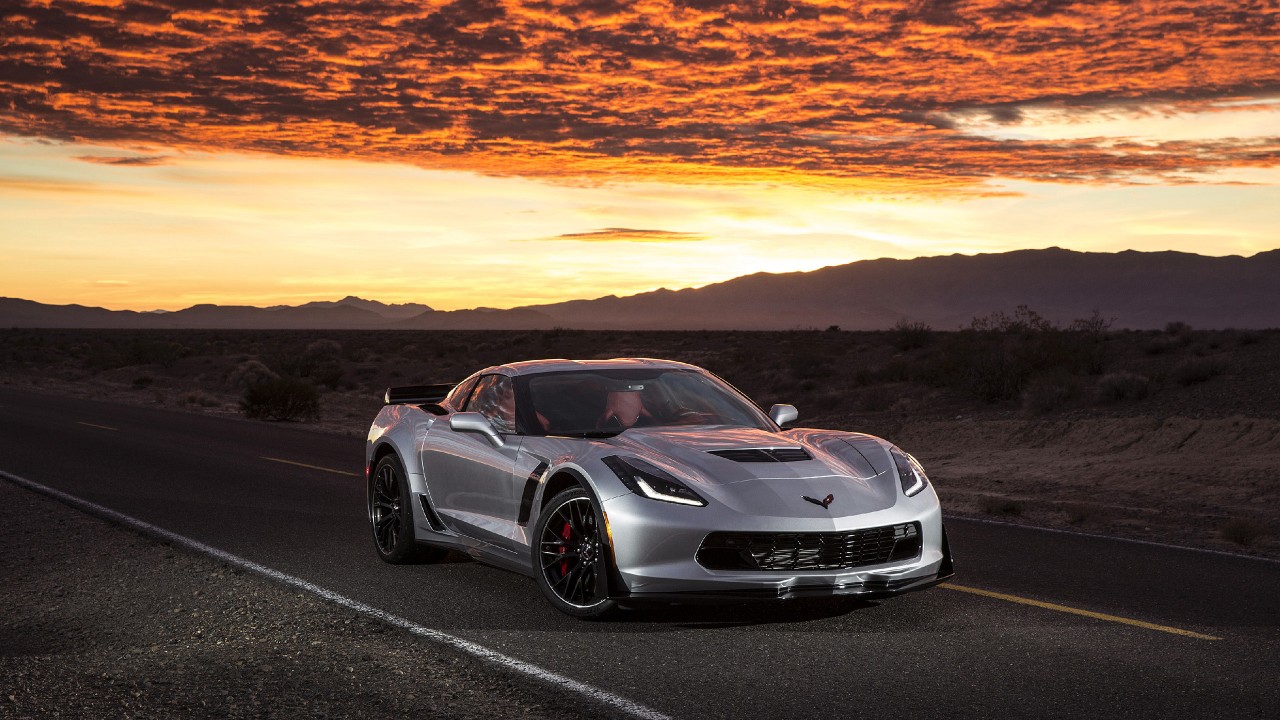
The suspension receives track-focused tuning with Magnetic Ride Control 4.0, representing the fourth generation of GM’s adaptive damping system.
The electronic limited-slip differential and traction management systems allow for precise control over power delivery, enabling drivers to explore the performance envelope with confidence.
Aerodynamic development for the Z06 drew heavily from Corvette Racing’s experience in endurance competition. Multiple aerodynamic packages are available, with the top-tier Z07 Performance Package incorporating an aggressive front splitter, dive planes, and a massive rear wing that generates significant downforce.
Wind tunnel testing and computational fluid dynamics ensured that these elements work harmoniously, generating downforce without excessive drag.
The result is a car capable of generating over 700 pounds of downforce at top speed, pressing the Z06 onto the track surface and enabling cornering speeds that would have been unthinkable just a generation ago.
The memories created, the track days conquered, and the road trips undertaken will forge emotional connections that ensure these cars are treasured and preserved.
In decades to come, the C8 Z06 will be recognized as the moment American sports cars definitively proved they could compete with and even surpass the finest European offerings in engineering sophistication, performance, and driver engagement.
4. McLaren 765LT
The McLaren 765LT continues McLaren’s proud tradition of “Longtail” models track-focused, limited-production variants that represent the ultimate evolution of their respective model lines.
The LT designation traces back to the legendary F1 GTR Longtail race car, and every vehicle bearing these letters must justify the heritage through uncompromising performance and engineering excellence.
The 765LT succeeds magnificently, creating a supercar that feels genuinely special even in a segment crowded with exceptional machines.
The heart of the 765LT is a heavily modified version of McLaren’s twin-turbocharged 4.0-liter V8. Power climbs to 755 horsepower (765 PS, hence the numerical designation), with torque reaching 590 lb-ft. But the raw numbers only begin to tell the story.
McLaren’s engineers focused intensively on throttle response and power delivery, reducing turbo lag to barely perceptible levels and creating an engine that responds to inputs with immediacy that feels almost naturally aspirated.
The aerodynamic package is comprehensive and aggressive. The extended front splitter and larger front diffusers generate increased downforce while improving brake cooling.
The sides feature larger air intakes and extended sills that manage airflow along the body. The rear wing the defining visual element of any Longtail sits higher and extends further rearward than standard models, generating significant downforce while maintaining aerodynamic efficiency.
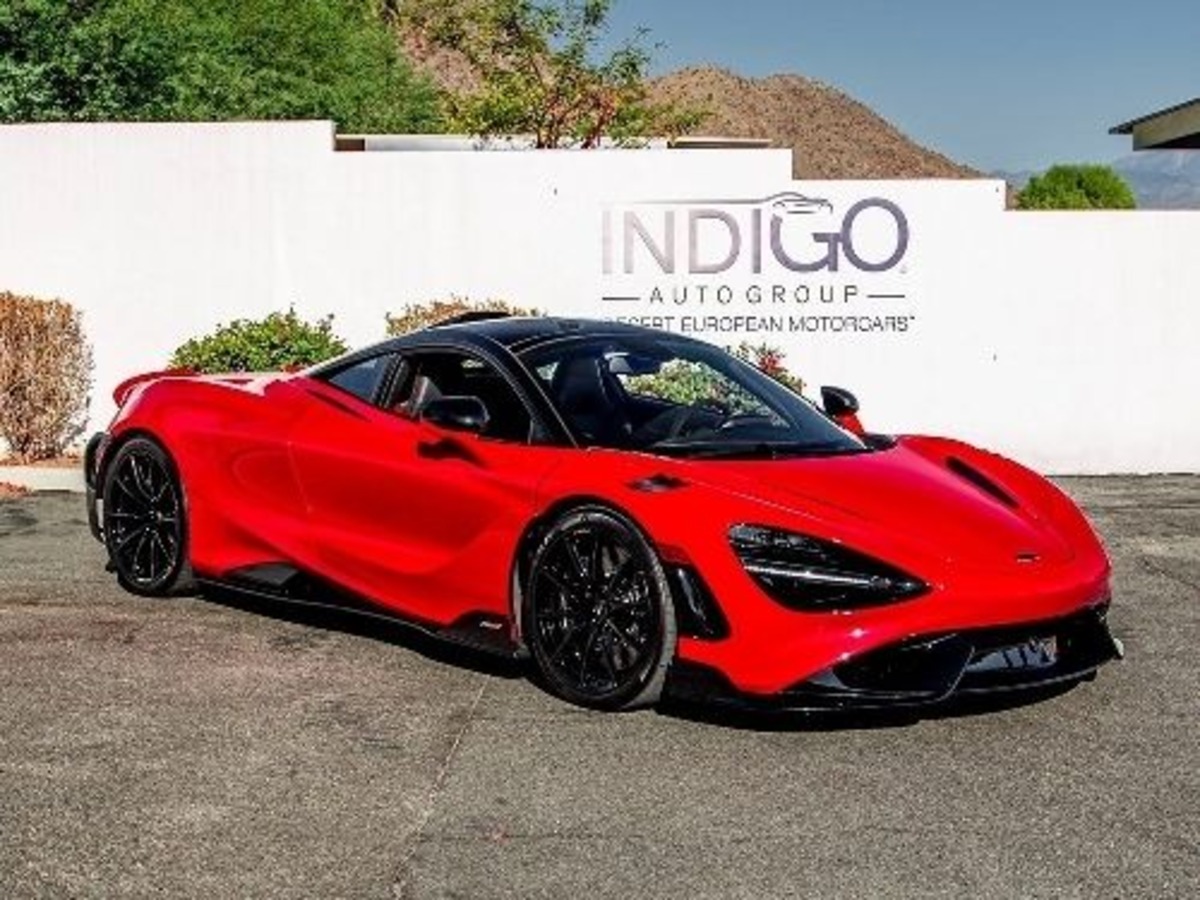
Active aerodynamic elements adjust based on driving mode, balancing downforce and drag for optimal performance in various conditions. The downforce figure increases by 25% compared to the 720S, providing tangible benefits in high-speed stability and cornering grip.
McLaren’s carbon fiber monocoque chassis, dubbed MonoCage II, provides exceptional rigidity while contributing minimal weight. This immensely stiff structure forms the basis for the suspension’s precision.
The hydraulically interconnected suspension system, a McLaren hallmark, provides adaptive damping that can be firm and responsive for track work or surprisingly compliant for road driving.
The system also reduces pitch during braking and acceleration while minimizing roll during cornering, keeping the chassis level and maintaining optimal tire contact. The result is handling that feels incredibly natural and intuitive, allowing drivers to place the car with precision and confidence.
The 765LT’s future legendary status rests on multiple factors. Limited production just 765 units worldwide ensures exclusivity and collectability.
The Longtail heritage connects it to McLaren’s racing history and previous LT models that have already appreciated significantly. The execution represents a peak for internal combustion supercars before electrification fundamentally changes the segment.
Most importantly, the driving experience is so compelling that owners and journalists consistently rank it among the very best modern supercars.
This combination of heritage, performance, exclusivity, and driving engagement virtually guarantees the 765LT will be coveted and celebrated for decades to come.
Also Read: 5 Cars That Rarely Need Alternators vs 5 That Burn Through Them
5. Lamborghini Huracán STO
The Lamborghini Huracán STO (Super Trofeo Omologata) represents Sant’Agata Bolognese’s purest expression of track-focused performance derived directly from their racing programs.
This isn’t merely a cosmetically enhanced Huracán with a few track-oriented options it’s a fundamentally re-engineered machine that incorporates lessons learned from the Super Trofeo one-make racing series and the GT3 competition program.
The result is a road-legal Lamborghini that delivers racing car performance and engagement while remaining surprisingly usable on public roads.
The naturally-aspirated 5.2-liter V10 has been tuned to produce 631 horsepower, making the STO the most powerful rear-wheel-drive Huracán variant.
While all-wheel drive has become increasingly common in high-performance vehicles, Lamborghini deliberately chose rear-wheel drive for the STO to maximize driver engagement and steering precision.
Weight reduction permeates every aspect of the STO’s design. Extensive use of carbon fiber includes the hood, roof, rear wing, and numerous body panels.
The rear window has been replaced with a lightweight polycarbonate unit that showcases the magnificent V10 engine. The exhaust system is titanium, trimming both weight and enriching the exhaust note.
Interior components are pared to essentials, with lightweight seats, reduced sound deadening, and minimal acoustic insulation. The cumulative effect is a weight reduction of over 95 pounds compared to the Huracán Performante, with that mass removed from positions that improve the car’s polar moment of inertia and handling characteristics.
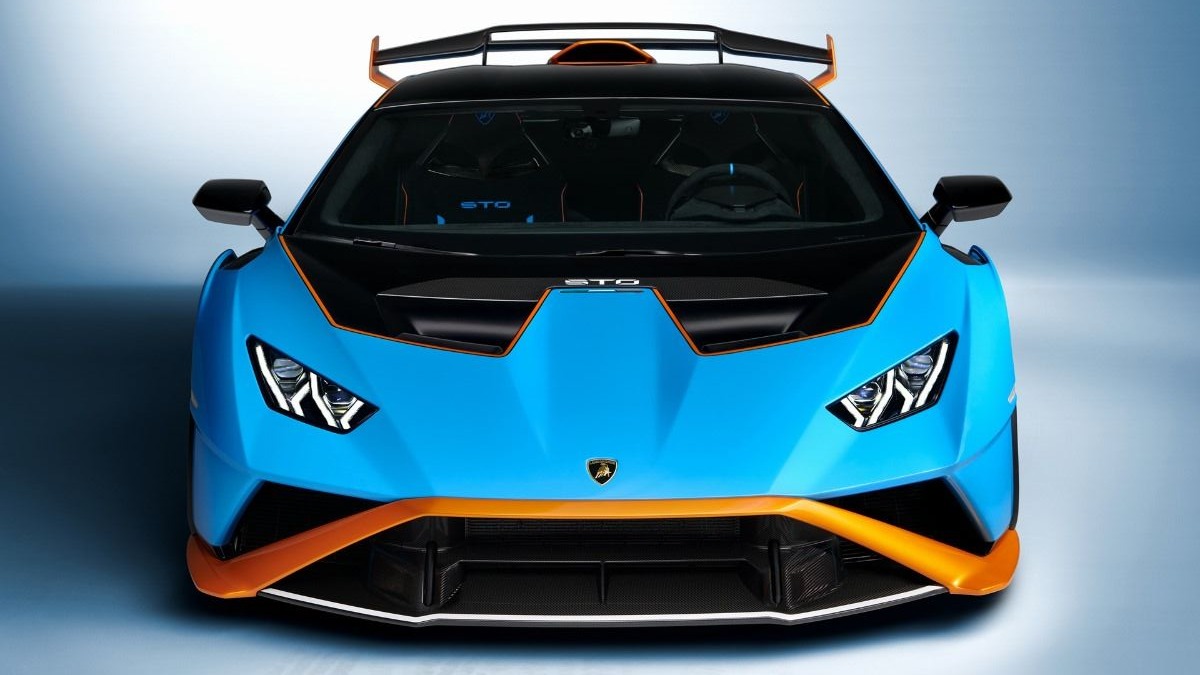
The aerodynamics are perhaps the most visually striking aspect of the STO. The front end features a completely redesigned bumper with integrated air ducts that channel cooling air to the brakes and radiators while generating downforce.
The hood incorporates a large central air intake that feeds the engine while reducing front-end lift. Along the flanks, “cofango” elements integrated fenders and doors inspired by the Super Trofeo and GT3 race cars improve airflow management and reduce turbulence.
The rear features a massive manually adjustable wing that generates substantial downforce, working in concert with a sophisticated underbody diffuser.
The total downforce production is 53% greater than the Huracán Performante, providing significantly improved high-speed stability and cornering grip.
The STO’s future collectability is assured by multiple factors. As likely the final evolution of the naturally-aspirated V10 Huracán platform, it represents the culmination of more than a decade of development and refinement.
The direct connection to Lamborghini’s racing programs provides authenticity and desirability. Limited production numbers ensure exclusivity, while the dramatic styling ensures it will be instantly recognizable decades from now.
Most crucially, the driving experience is so compelling that enthusiasts consistently rank it among the very best modern supercars, creating passionate advocates who will preserve and celebrate these machines for generations.
6. Aston Martin Valkyrie
The Aston Martin Valkyrie exists in a category virtually unto itself a Formula 1-derived hypercar designed in collaboration with Red Bull Racing’s legendary aerodynamicist Adrian Newey.
This isn’t merely a road car with racing influence; it’s a machine where the fundamental architecture, aerodynamics, and engineering principles come directly from Grand Prix racing.
The result is perhaps the most extreme performance car ever designed for street legality, a vehicle that redefines what’s possible when racing technology meets road-going requirements.
The powertrain is a masterpiece of high-performance engineering. A Cosworth-developed 6.5-liter naturally-aspirated V12 produces 1,000 horsepower on its own, revving to an astronomical 11,100 rpm. Complementing this is a hybrid system providing an additional 160 horsepower, bringing total output to 1,160 horsepower.
More remarkably, the entire powertrain weighs just 450 pounds, an astonishing achievement given the power output and complexity.
The V12’s specific output exceeds 150 horsepower per liter, rivaling the most advanced Formula 1 engines. The sound at full throttle is described by those fortunate enough to experience it as transcendent a howl that represents the pinnacle of internal combustion engineering.
The chassis construction pushes material science to its limits. The carbon fiber monocoque is incredibly light yet immensely strong, with the entire structure weighing just 220 pounds.
This provides the foundation for a total vehicle weight target of under 2,300 pounds extraordinarily light for a modern vehicle packed with safety systems, hybrid technology, and road-going amenities.
Every component has been obsessively weight-optimized, from the titanium suspension components to the carbon fiber body panels. Even fasteners and electrical components received scrutiny to eliminate unnecessary mass.
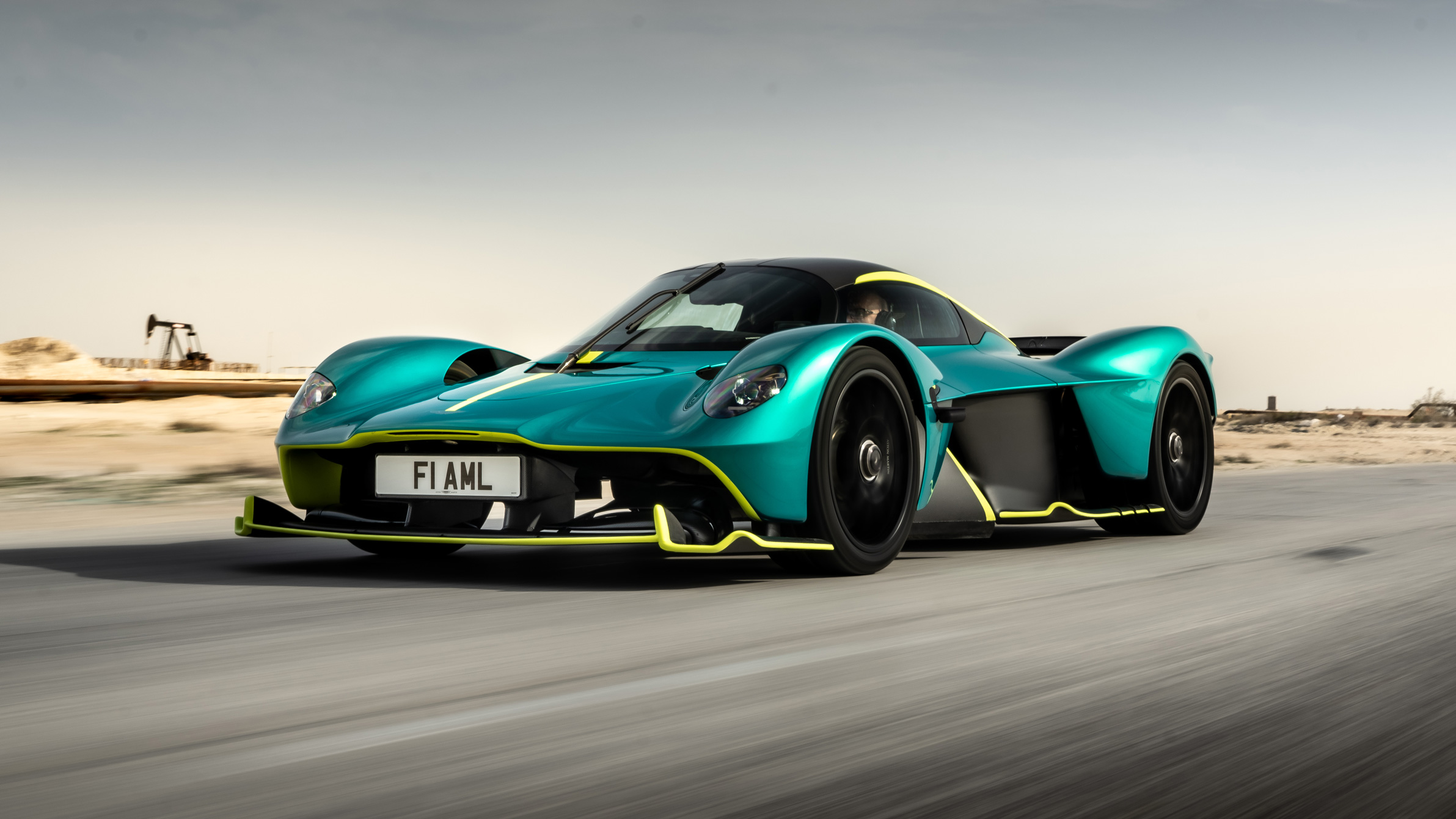
Adrian Newey’s aerodynamic genius is evident in every surface and element. Rather than relying primarily on wings and spoilers for downforce, the Valkyrie generates massive aerodynamic forces through underbody venturi tunnels.
The entire underside of the car is sculpted to accelerate airflow, creating low pressure underneath that literally sucks the car toward the road surface.
This ground-effect approach generates tremendous downforce approximately 4,000 pounds at 150 mph without the drag penalties of traditional wing-based systems.
The result is a car that becomes increasingly stable and capable as speeds rise, with handling characteristics that blur the line between race car and road car.
The driving position is utterly unique among road cars. Occupants recline dramatically, with feet positioned higher than hips in a Le Mans prototype-style seating position.
This allows Newey to minimize frontal area while maintaining adequate headroom. The steering wheel is F1-inspired, incorporating essential controls and a digital display.
Visibility is surprisingly good despite the extreme proportions, with carefully positioned windows and mirrors providing adequate sightlines. The cabin is sparse and purposeful, with every element serving a functional purpose and no concessions to conventional luxury.
The limited production, extreme performance, racing pedigree, and association with figures like Adrian Newey combine to create a hypercar that will be studied, admired, and coveted for generations.
In fifty years, automotive historians will point to the Valkyrie as one of the most significant and capable cars ever created, a machine that pushed the boundaries of what was thought possible.
7. Porsche Taycan Turbo S
The Porsche Taycan Turbo S represents a pivotal moment in automotive historythe point where electric performance cars genuinely matched and, in many respects, exceeded their internal combustion counterparts.
As Porsche’s first fully electric sports car, the Taycan carried enormous expectations. Could the company that perfected the sports car over seven decades create an electric vehicle that delivered genuine Porsche character and engagement? The answer is a resounding yes, with the Turbo S variant representing the pinnacle of what Porsche has achieved in electric performance.
The powertrain architecture is sophisticated and powerful. Dual electric motors one at each axle provide all-wheel drive and a combined output that peaks at 750 horsepower with Launch Control activated.
The immediately available torque from electric motors creates acceleration that defies logic: 0-60 mph arrives in just 2.6 seconds, with thrust that feels genuinely violent even by supercar standards. But raw acceleration numbers don’t fully convey the experience.
The 93.4-kWh battery pack is positioned low in the chassis, creating an extremely low center of gravity that fundamentally benefits handling dynamics.
Porsche’s 800-volt electrical architecture twice the voltage of most electric vehicles enables significantly faster charging rates. Under ideal conditions with a suitable charger, the Taycan can recover from 5% to 80% charge in approximately 22 minutes, making long-distance travel more practical than in most electric vehicles.
The range, while not matching some competitors, is adequate for most real-world use, and Porsche prioritized performance over maximum range, a decision befitting a true sports car.
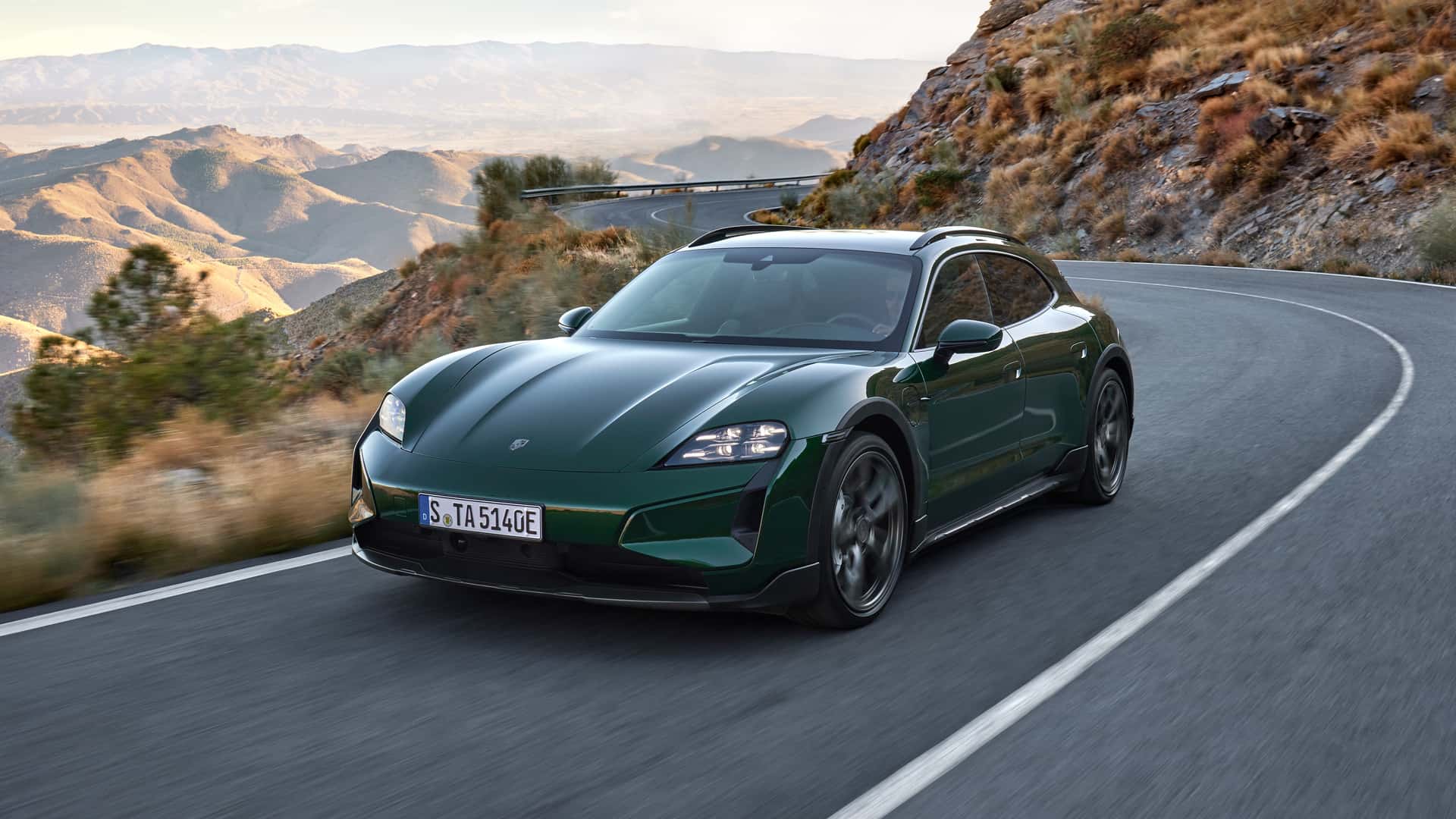
The chassis development demonstrates Porsche’s depth of engineering expertise. Three-chamber air suspension provides a remarkable range of capability, from comfortable cruising to track-ready firmness.
Rear-wheel steering improves both low-speed maneuverability and high-speed stability. The electric all-wheel-drive system distributes torque between axles with precision impossible in mechanical systems, optimizing traction and handling in all conditions.
Porsche Dynamic Chassis Control Sport reduces body roll during cornering while maintaining ride quality. The result is handling that feels distinctly Porsche precise, predictable, and engaging despite the considerable weight inherent to battery-electric vehicles.
The Taycan demonstrates that electrification doesn’t require sacrificing handling precision, build quality, or brand character. As the automotive industry completes its transition to electrification over the coming decades, the Taycan will be remembered as a pioneering achievement the electric sports car that got everything right and showed other manufacturers what was possible.
Early examples are already becoming collectible, particularly in Turbo S specification with desirable options. In the future, enthusiasts will seek out these first-generation Taycans as significant pieces of automotive history, the car that ushered in electric performance and proved it could be every bit as engaging as traditional sports cars.
8. Mercedes-AMG GT Black Series
The Mercedes-AMG GT Black Series represents the absolute pinnacle of what AMG’s engineers can achieve when unleashed from normal constraints.
Following in the tradition of previous Black Series models limited production, track-focused variants that push performance to extremes this latest iteration takes the AMG GT platform and raise it to hypercar levels of capability.
This is AMG at its most uncompromising, creating a machine that delivers race car performance in a street-legal package. The engine is a hand-built masterpiece.
The twin-turbocharged 4.0-liter V8 has been extensively modified, with a flat-plane crankshaft replacing the traditional cross-plane design.
This allows for higher engine speeds and improved throttle response, while generating a distinctive exhaust note that’s sharper and more aggressive than typical V8s.
The aerodynamic development is comprehensive and aggressive. AMG engineers subjected the Black Series to extensive wind tunnel testing and track validation, developing aerodynamic elements that generate significant downforce while maintaining reasonable drag coefficients.
The front splitter and dive planes direct airflow while generating front downforce. The sides feature massive air intakes feeding the engine and cooling systems.
The rear is dominated by a huge manually-adjustable carbon fiber wing that can be set in two positions a more moderate street configuration and an aggressive track setup. The rear diffuser works in concert with the wing to manage airflow exiting underneath the car.
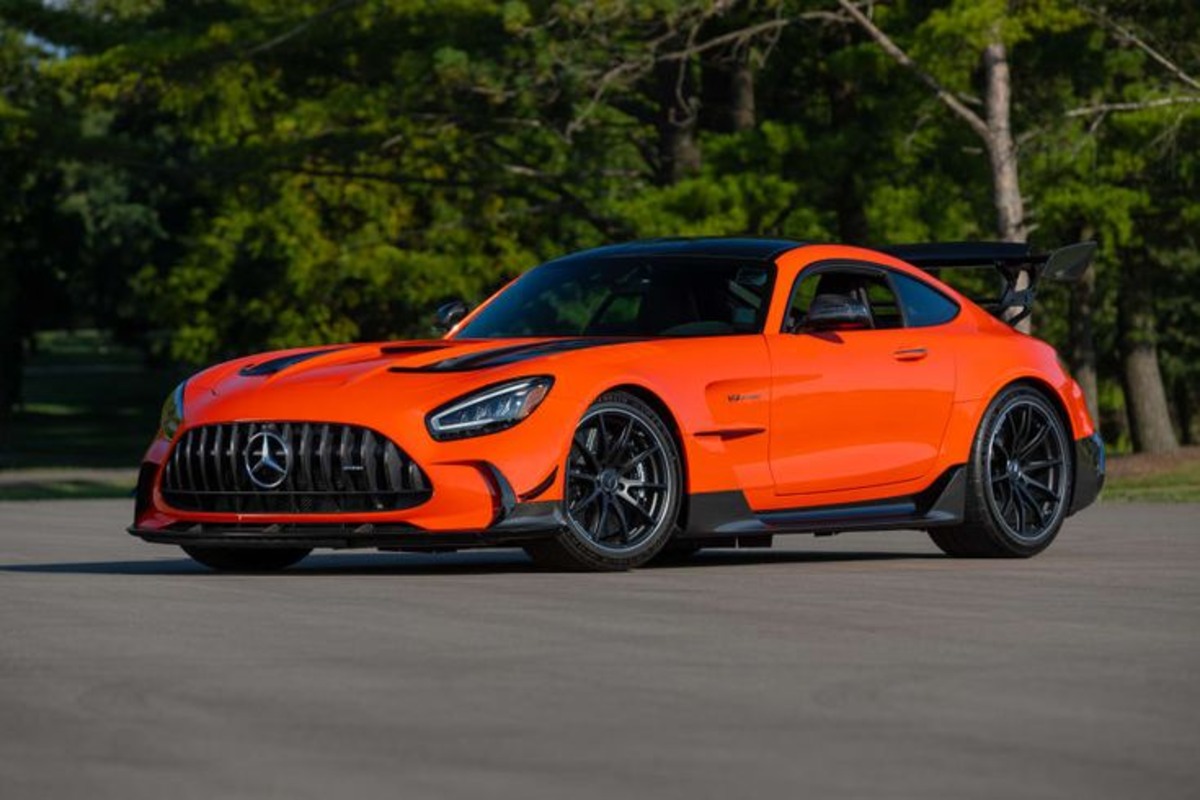
The combined effect is downforce production exceeding 880 pounds at top speed, pressing the Black Series onto the road surface and enabling cornering speeds that seem to defy physics.
Weight reduction receives obsessive attention. Carbon fiber components proliferate throughout the structure, from body panels to suspension components.
The hood incorporates two large vents that reduce front lift while providing heat extraction these vents are derived directly from GT3 and GT4 race cars.
The roof is carbon fiber, lowering the center of gravity. Interior components are pared to essentials, with lightweight seats, minimal sound deadening, and purpose-focused trim.
Despite these efforts, the Black Series still weighs over 3,600 pounds, but the power-to-weight ratio remains impressive thanks to the engine’s prodigious output.
Most importantly, this likely represents the final naturally-aspirated, non-hybridized Black Series as regulations and market forces push toward electrification.
In decades to come, the AMG GT Black Series will be remembered as the ultimate expression of AMG’s engineering philosophy before the electric transition fundamentally changed the brand’s character.
9. Lotus Emira V6
The Lotus Emira represents both an ending and a beginning for the legendary British sports car manufacturer. It’s the final Lotus to be powered exclusively by an internal combustion engine before the brand transitions to an all-electric future, but it’s also the most refined and accessible Lotus ever created.
The Emira, particularly in V6 First Edition specification, combines the raw driving engagement that has always defined Lotus with a level of refinement and quality previously unseen from Hethel.
This combination makes it a future legend the last of one era and a monument to everything Lotus learned over decades of building focused driver’s cars.
The engine options tell an interesting story. The V6 variant utilizes Toyota’s supercharged 3.5-liter V6, the same engine that powered the Lotus Evora in various forms.
In the Emira, it produces 400 horsepower, providing strong acceleration and a characterful soundtrack. The supercharger provides immediate throttle response without turbo lag, creating a linear power delivery that rewards smooth driving technique.
The chassis represents everything Lotus has learned about handling dynamics over its long history. The bonded aluminum architecture is both incredibly rigid and remarkably light, providing the foundation for exceptional handling precision.
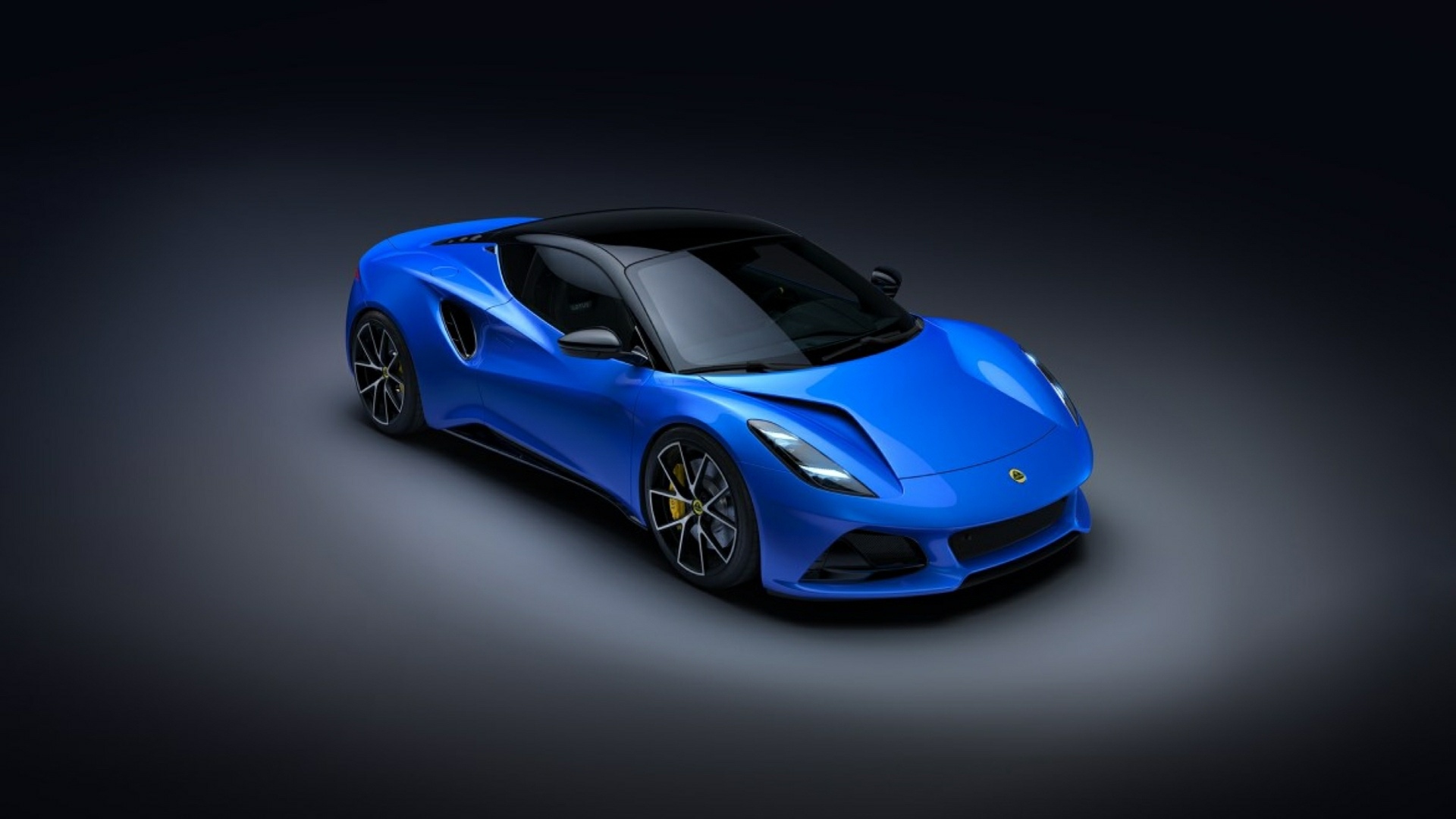
The suspension geometry has been carefully optimized, with double wishbones at all four corners providing excellent control over wheel movement and tire contact.
Bilstein dampers, specially developed for the Emira, provide superb body control without harshness. The electric power steering a point of concern for purists has been carefully tuned to provide excellent feedback and weighting, maintaining the communicative character Lotus is known for despite the electronic assistance.
The Emira’s design marks a significant departure from previous Lotus models. While retaining the mid-engine proportions and purposeful stance that define the layout, the styling is more sophisticated and refined than earlier cars.
Every surface has been carefully sculpted, with flowing lines and carefully integrated aerodynamic elements creating a cohesive and attractive design.
The combination of engaging dynamics, beautiful design, improved refinement, and historical significance ensures the Emira, particularly early V6 manual examples, will be sought after and celebrated for generations.
This is the Lotus that got everything right, proving the company’s philosophy of lightweight, driver-focused engineering remains relevant and compelling even as the industry transforms around it.
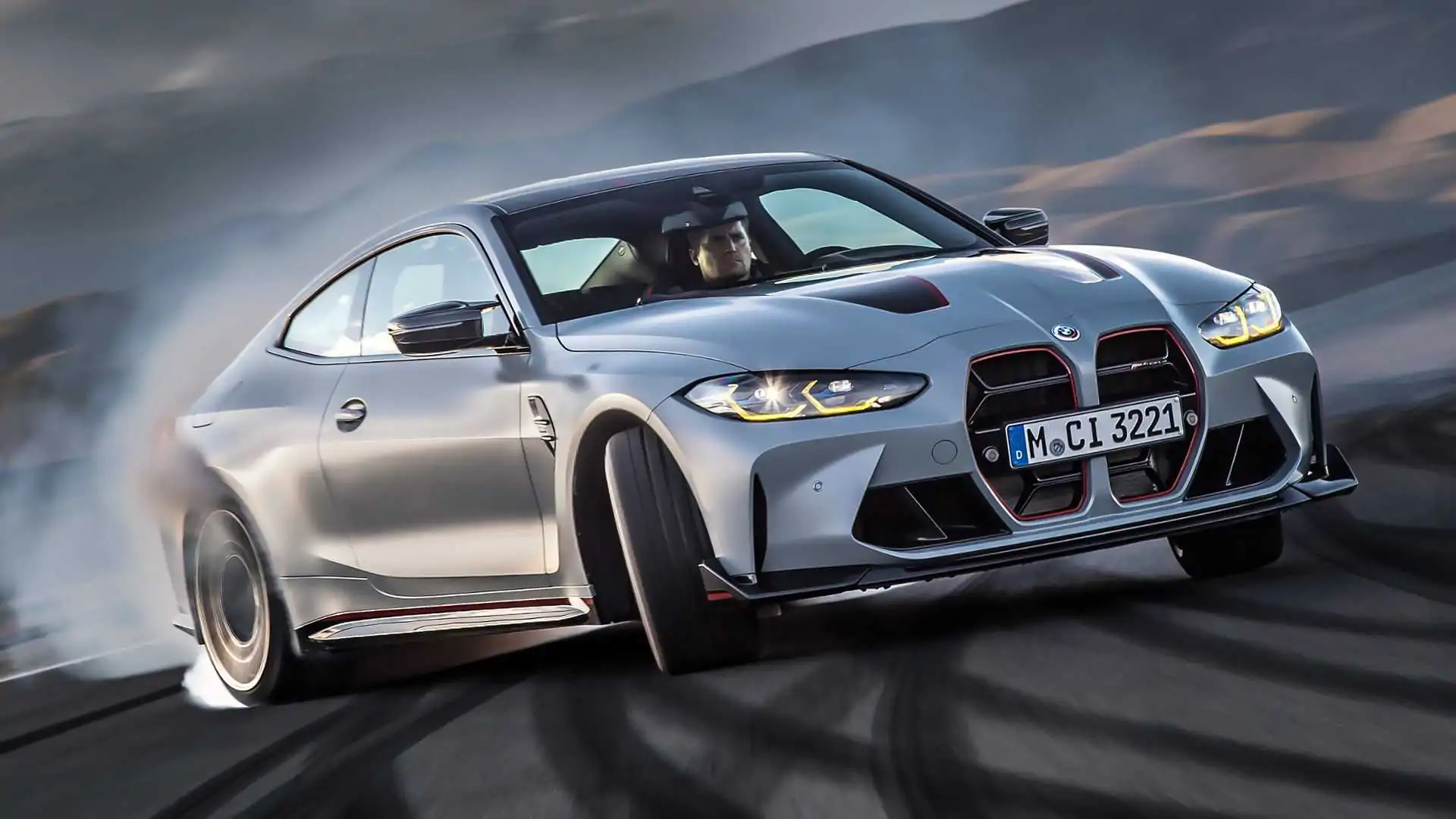
10. BMW M4 CSL
The BMW M4 CSL revives one of the most significant designations in BMW’s performance history. CSL standing for Coupe, Sport, Lightweight traces back to the legendary E9 3.0 CSL of the 1970s, a homologation special that dominated touring car racing and established BMW’s motorsport credentials.
Every subsequent CSL has carried the weight of this heritage, and the latest M4 CSL proves worthy of the letters it wears. This is BMW M Division at its absolute best, creating a driver’s car that prioritizes engagement and purity over numbers and convenience.
The engine is a masterpiece of turbocharged performance. The twin-turbocharged 3.0-liter inline-six produces 543 horsepower, making it the most powerful production six-cylinder BMW has ever built.
But power alone doesn’t tell the full story. BMW’s engineers focused intensively on throttle response and power delivery, reducing turbo lag and creating an engine that responds to inputs with impressive immediacy for a forced-induction unit.
The redline sits at 7,200 rpm high for a turbocharged engine and the inline-six pulls strongly throughout the rev range. The exhaust system has been specially developed for the CSL, with titanium construction saving weight while producing a more aggressive, motorsport-inspired soundtrack that emphasizes the mechanical drama.
Weight reduction permeates every aspect of the CSL’s design. Carbon fiber components include the hood, roof, rear diffuser, and various interior pieces.
The rear seats have been completely removed, with a structural carbon fiber brace reinforcing the rear bulkhead while saving weight.
The door panels feature lightweight construction with fabric pull straps instead of conventional handles. Sound deadening has been reduced to minimum levels.
The battery is lighter than standard, and even the center console is pared down to essentials. The wheels are forged and lighter than standard M4 components.
The cumulative effect is a weight saving of approximately 240 pounds compared to the M4 Competition, bringing the CSL’s weight down to a relatively svelte 3,640 pounds.
The aerodynamics are purposeful and aggressive. The front splitter and dive planes generate front downforce while directing cooling air to the brakes and engine.
A unique hood with functional vents extracts heat from the engine bay while reducing front lift. The sides feature unique air breathers that improve airflow management around the front wheels.
The focus on driving engagement and purity in an era where performance cars increasingly prioritize numbers over feel makes it special.
As likely the final inline-six CSL before electrification fundamentally changes BMW’s M Division, it represents the culmination of decades of development and refinement.
In the future, the M4 CSL will be recognized as one of the finest driver’s cars BMW ever created, a machine that perfectly balanced performance, engagement, and usability while honoring a legendary heritage.
Collectors and enthusiasts already recognize its significance, ensuring these cars will be preserved and celebrated for generations to come.
Also Read: 5 Cars That Rarely Stall vs 5 That Constantly Leave You Stranded
