
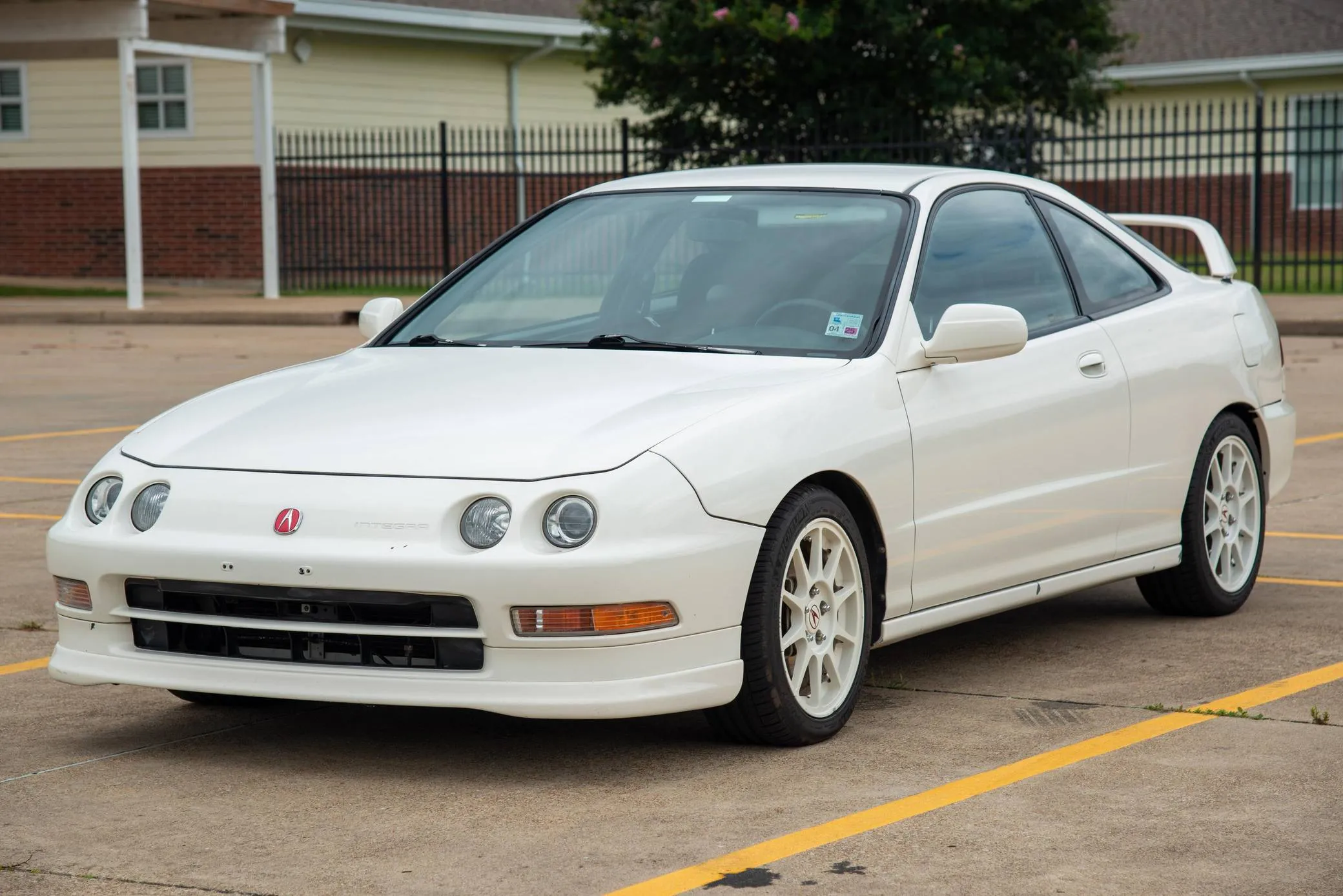
The 1990s stand as a golden era in automotive history, a decade that delivered some of the most iconic and influential performance cars ever created.
This was a transformative period when analog engineering reached its zenith before giving way to the digital age, producing machines that combined raw mechanical excellence with increasingly sophisticated technology.
The 90s bridged the gap between the muscle-bound excess of the 80s and the refined, computer-controlled precision of the 2000s, creating a unique blend of visceral driving experiences and emerging technological innovation.
This decade witnessed Japanese manufacturers reaching the peak of their performance car development, unleashing legends like the Skyline GT-R, Supra, and NSX that would dominate both streets and circuits worldwide.
European exotics evolved beyond their temperamental reputations, with brands like Ferrari and Porsche refining their craft to produce more reliable yet equally thrilling supercars.
Meanwhile, American muscle experienced a renaissance, with the Dodge Viper embodying pure, unapologetic power that harked back to the golden age of American performance.
The 90s performance car scene was defined by several key technological advancements. Turbocharged engines became more refined and powerful, with sophisticated boost control systems delivering explosive acceleration.
All-wheel-drive systems transformed from rally-bred technology into street-legal performance enhancers, fundamentally changing how power could be deployed.
Variable valve timing emerged as a game-changer, allowing engines to deliver both low-end torque and high-rev power. Active aerodynamics, once the domain of Formula 1, trickled down to production cars, while anti-lock braking systems and early traction control started appearing even on performance models.
Today, 90s performance cars have achieved legendary status, with pristine examples commanding prices that would have seemed impossible just a decade ago.
They represent the last hurrah of purely mechanical performance engineering before electronics took over, making them increasingly cherished by collectors and enthusiasts.
These twelve cars exemplify everything that made 90s performance special the raw power, innovative engineering, timeless design, and pure driving joy that defined an unforgettable automotive decade.
1. Nissan Skyline GT-R R32 (1989-1994)
The Nissan Skyline GT-R R32 earned its “Godzilla” nickname through sheer dominance on the racetrack and technological supremacy on the street.
When Nissan resurrected the GT-R badge in 1989 after a sixteen-year hiatus, they created something that would reshape performance car expectations worldwide.
The R32 wasn’t just fast it was intelligently fast, combining raw power with sophisticated all-wheel-drive technology that made it virtually unbeatable in the right hands.
At the heart of the R32 GT-R sat the legendary RB26DETT engine, a 2.6-liter twin-turbocharged inline-six that officially produced 280 horsepower.
This figure was famously conservative, as Japanese manufacturers adhered to a gentlemen’s agreement limiting advertised power to 280 PS. In reality, most R32s delivered closer to 300 horsepower from the factory, and the engine’s robust construction meant it could handle significantly more power with relatively simple modifications.
The RB26 became a tuner’s dream, capable of producing 500, 600, or even 1000+ horsepower with appropriate upgrades. The real magic of the R32 lay in its ATTESA E-TS all-wheel-drive system.
Unlike simple permanent four-wheel-drive setups, ATTESA was rear-biased, sending power to the front wheels only when sensors detected rear wheelspin. This gave the GT-R the handling characteristics of a rear-wheel-drive car under normal conditions while providing the traction advantages of all-wheel-drive when needed.
Combined with the Super-HICAS four-wheel steering system, which subtly angled the rear wheels to improve cornering response, the R32 delivered handling that felt almost supernatural.
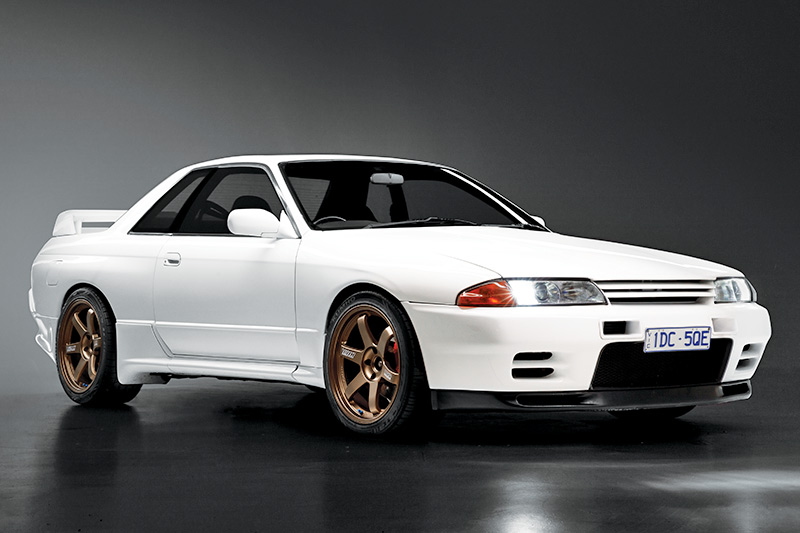
On the racetrack, the R32 GT-R achieved legendary status by dominating the Japanese Touring Car Championship, winning 29 races in a row and securing four consecutive championship titles between 1990 and 1993.
This unprecedented success led to rule changes specifically designed to reduce the GT-R’s advantage. In Australia, where it competed in the famous Bathurst 1000, the R32 won the race in 1991 and 1992, prompting organizers to eventually ban it from competition.
The R32’s influence on car culture cannot be overstated. It became the star of Gran Turismo video games, appeared in countless automotive magazines, and inspired an entire generation of enthusiasts.
The car’s relatively understated appearance, especially in base Skyline GTS-t form, meant that GT-Rs could fly under the radar until their turbos spooled and their advanced technology deployed.
The R32 GT-R set the template for all GT-Rs that followed, establishing the formula of turbocharged power, advanced all-wheel-drive, and track-focused engineering that continues in today’s R35.
It represents 90s performance at its finest technologically advanced yet mechanically connected, powerful yet sophisticated, and utterly devastating in the hands of a skilled driver.
2. Honda NSX (1990-2005)
When Honda reveiled the NSX in 1990, they fundamentally challenged what a supercar could be. While European exotics of the era were notoriously temperamental, uncomfortable, and difficult to drive, Honda approached the supercar formula with their legendary reliability and human-centered engineering philosophy.
The result was a revelation a mid-engine exotic that you could drive daily, service affordably, and enjoy without fear of constant breakdowns. The NSX proved that supercar performance didn’t require supercar compromises. Developed with input from Formula 1 legend Ayrton Senna, the NSX prioritized driving experience over raw specifications.
Its naturally aspirated 3.0-liter V6 produced a modest-by-supercar-standards 270 horsepower initially, later increased to 290 horsepower in 3.2-liter form. These numbers paled compared to Ferrari’s V8s and V12s, yet the NSX felt every bit as fast in real-world driving.
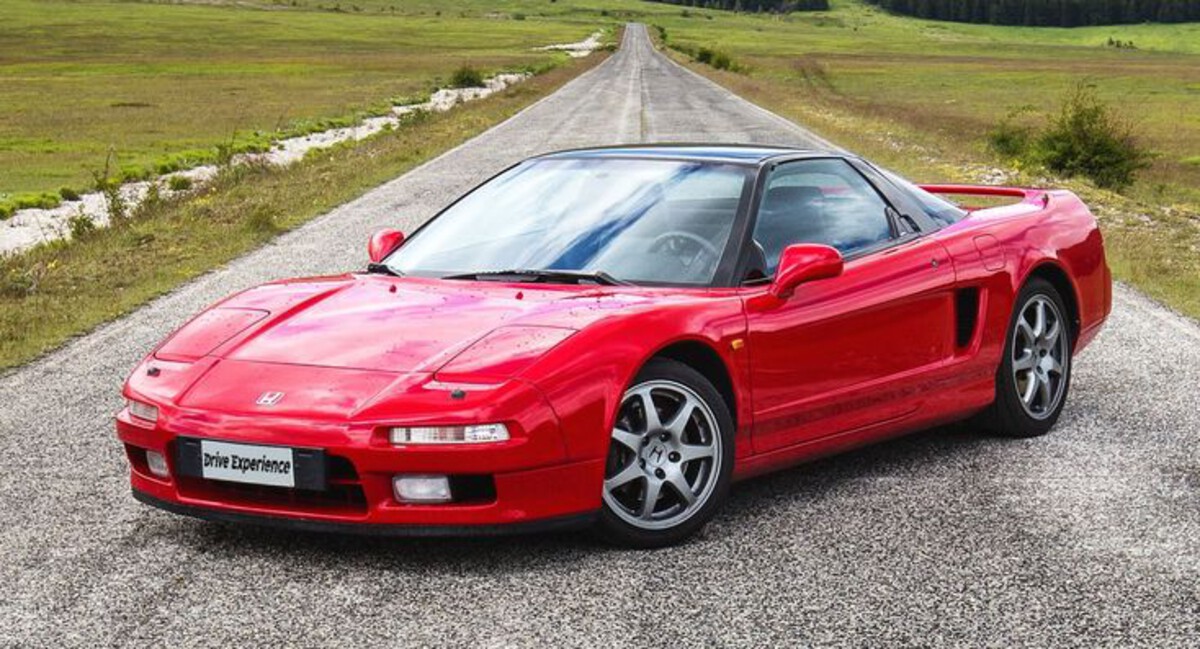
The engine featured Honda’s VTEC variable valve timing technology, which transformed the power delivery dramatically at 5,800 RPM, creating an intoxicating rush to the 8,000 RPM redline.
The engine’s titanium connecting rods were a motorsport-derived touch that allowed for this high-revving character. What truly set the NSX apart was its construction and chassis dynamics.
Honda became the first production car manufacturer to use an all-aluminum monocoque body, which reduced weight while maintaining rigidity. At approximately 3,000 pounds, the NSX was significantly lighter than contemporary supercars.
This weight advantage, combined with near-perfect weight distribution and Honda’s meticulous suspension tuning, created handling that remains breathtaking today. The steering provided pure, uncorrupted feedback no power assist until 1995 connecting the driver directly to the road surface.
Today, the NSX has achieved icon status, with values steadily appreciating as enthusiasts recognize its significance. It represents the pinnacle of 90s Japanese engineering a supercar that democratized exotic performance, proving that precision engineering and driver focus mattered more than raw horsepower figures or prestigious badges. The NSX was 90s performance perfected through refinement rather than excess.
3. Mazda RX-7 FD (1992-2002)
The third-generation Mazda RX-7, known internally as the FD, represents one of the purest expressions of sports car design to emerge from the 1990s.
When Mazda reveiled it in 1992, automotive journalists struggled for adequate superlatives. Its achingly beautiful bodywork, penned by Mazda designers under the philosophy of “organic design,” featured curves that seemed to flow like liquid.
No straight lines interrupted the sensuous surfaces that wrapped around the compact chassis, creating a shape that remains stunning decades later.
The FD’s aesthetic beauty was matched by its unique mechanical heart the 13B-REW twin-turbocharged rotary engine. While most manufacturers relied on conventional piston engines, Mazda remained committed to Felix Wankel’s rotary design, refining it to unprecedented levels of performance and reliability.
The 1.3-liter twin-rotor engine produced 255 horsepower initially, with later Japanese-market models reaching 280 horsepower. The sequential twin-turbo system was a masterpiece of 90s engineering a smaller primary turbo provided boost from low RPMs, while a larger secondary turbo came online at higher engine speeds, virtually eliminating turbo lag while delivering explosive top-end power.
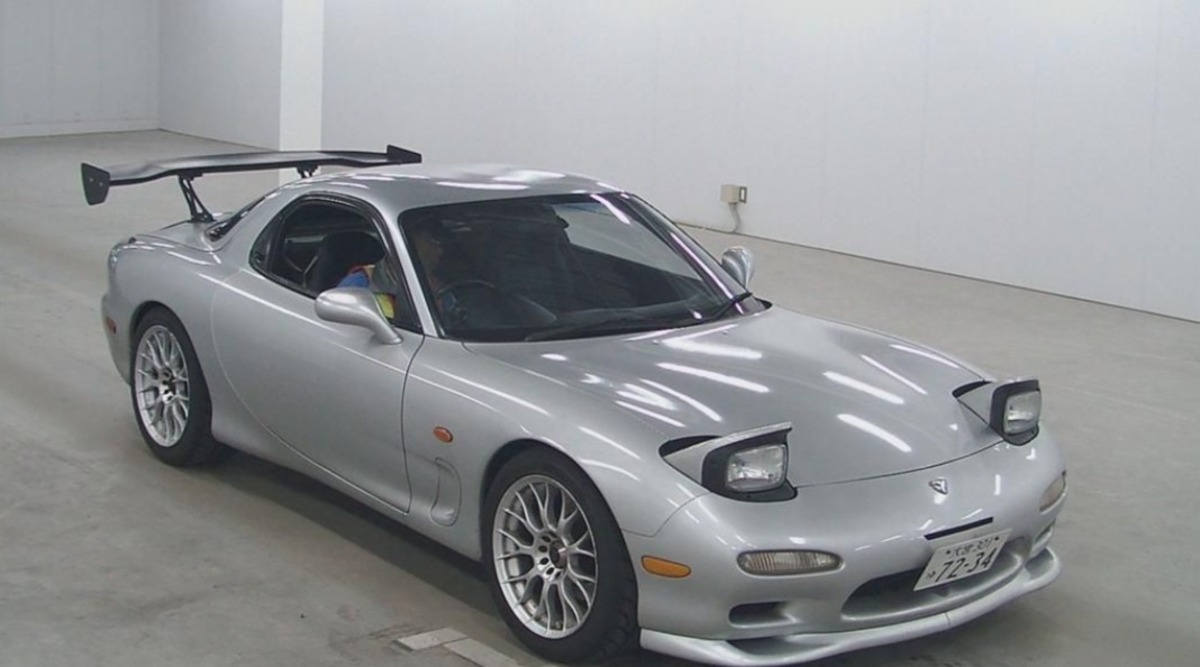
The rotary engine’s compact dimensions and light weight enabled the FD’s perfect 50/50 weight distribution, contributing to handling that ranks among the best of any production car from the era.
Weighing just 2,800 pounds, the FD felt nimble and responsive, with razor-sharp steering that communicated every nuance of the road surface.
The front-midship engine placement, with the engine mounted behind the front axle, further enhanced balance. Mazda’s suspension tuning achieved the difficult balance between compliance and control, making the FD comfortable enough for daily driving yet capable of astonishing precision on challenging roads.
Today, clean FD RX-7s command strong prices in the collector market, with pristine examples and rare variants like the Spirit R reaching six figures in some cases.
The FD represents 90s performance car design at its absolute peak where engineering excellence, aesthetic beauty, and driving purity converged to create something truly special. It remains a testament to Mazda’s willingness to pursue a unique technical path in service of driving passion.
4. Toyota Supra Mk IV (1993-2002)
The fourth-generation Toyota Supra, particularly the twin-turbocharged version, achieved legendary status that has only grown with time.
When Toyota launched the A80 Supra in 1993, they created what would become perhaps the most tunable production car ever built.
The Supra wasn’t just fast from the factory it was an engineering marvel designed with headroom for massive power increases, making it the ultimate canvas for performance enthusiasts.
Under the Supra’s long, muscular hood sat the 2JZ-GTE engine, a 3.0-liter inline-six with sequential twin-turbochargers that produced 320 horsepower and 315 lb-ft of torque.
These conservative factory figures barely hinted at the engine’s true potential. The 2JZ-GTE’s iron block and forged internals provided legendary strength that allowed the engine to handle double, triple, or even quadruple its stock power output with appropriate upgrades.
Stories of Supras making 800, 1000, or even 1500+ horsepower became common in tuning circles, cementing the 2JZ’s reputation as perhaps the greatest tuner engine ever produced.
The Supra’s design philosophy prioritized high-speed stability and grand touring capability over lightweight agility. Tipping the scales at approximately 3,400 pounds, the Supra was heavier than its Japanese competitors, but this mass contributed to planted highway stability and confident high-speed handling.
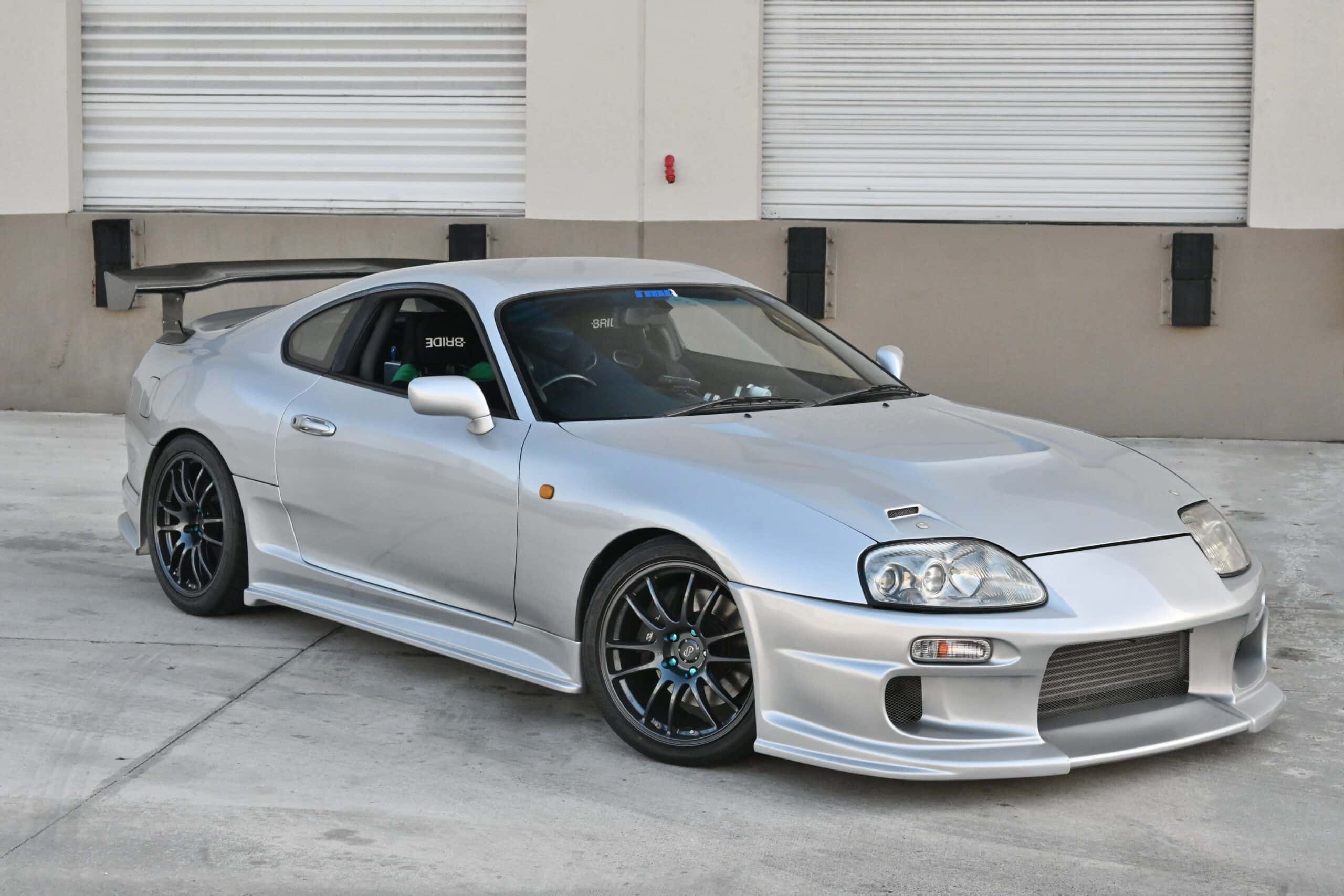
The chassis felt solid and reassuring, with sophisticated double-wishbone suspension at all four corners providing excellent control. Optional features like a six-speed manual transmission with perfectly spaced ratios, a limited-slip differential, and powerful brakes created a complete performance package.
Toyota’s sequential twin-turbo system represented cutting-edge technology for its time. A smaller turbo provided boost from around 1,800 RPM, virtually eliminating low-end lag, while a larger turbo seamlessly took over at 4,000 RPM, delivering strong mid-range and top-end power.
This setup provided excellent drivability in normal situations while offering explosive acceleration when the throttle was buried. The intake and exhaust systems produced a distinctive sound, especially when the wastegates opened during aggressive driving, creating an auditory signature that Supra enthusiasts cherish.
The Mk IV Supra represents the pinnacle of 90s tuner culture a car that combined solid factory engineering with nearly limitless modification potential.
Its legendary status continues growing, representing an era when Japanese manufacturers built performance cars with bulletproof mechanicals and enormous headroom for enthusiast development.
Also Read: 5 Trucks That Farmers Trust for Life vs 5 They Avoid
5. Dodge Viper RT/10 (1992-1995)
The original Dodge Viper RT/10 was America’s middle finger to sophistication, electronics, and common sense and it was absolutely glorious.
When Chrysler CEO Bob Lutz greenlit the Viper concept for production in the early 90s, he unleashed one of the most raw, visceral, and unapologetically excessive performance cars ever built.
The Viper represented American muscle in its purest form massive engine, minimal equipment, and no apologies for being completely impractical.
At the heart of every Viper sat an 8.0-liter V10 engine, essentially two Chrysler LA V8s joined at a common crankshaft, though extensively reworked.
This aluminum behemoth produced 400 horsepower and 465 lb-ft of torque initially staggering figures for 1992. Unlike Japanese turbocharged engines that required high RPMs to produce power, the Viper’s V10 delivered massive torque from idle, creating thrust that felt relentless and overwhelming.
The exhaust note a deep, thunderous roar that rattled windows and turned heads became as much a part of the Viper’s identity as its dramatic styling.
Everything about the Viper’s design prioritized performance over comfort. The RT/10 initially launched without exterior door handles, side windows, or a proper roof just a removable soft top that leaked and flapped at speed.
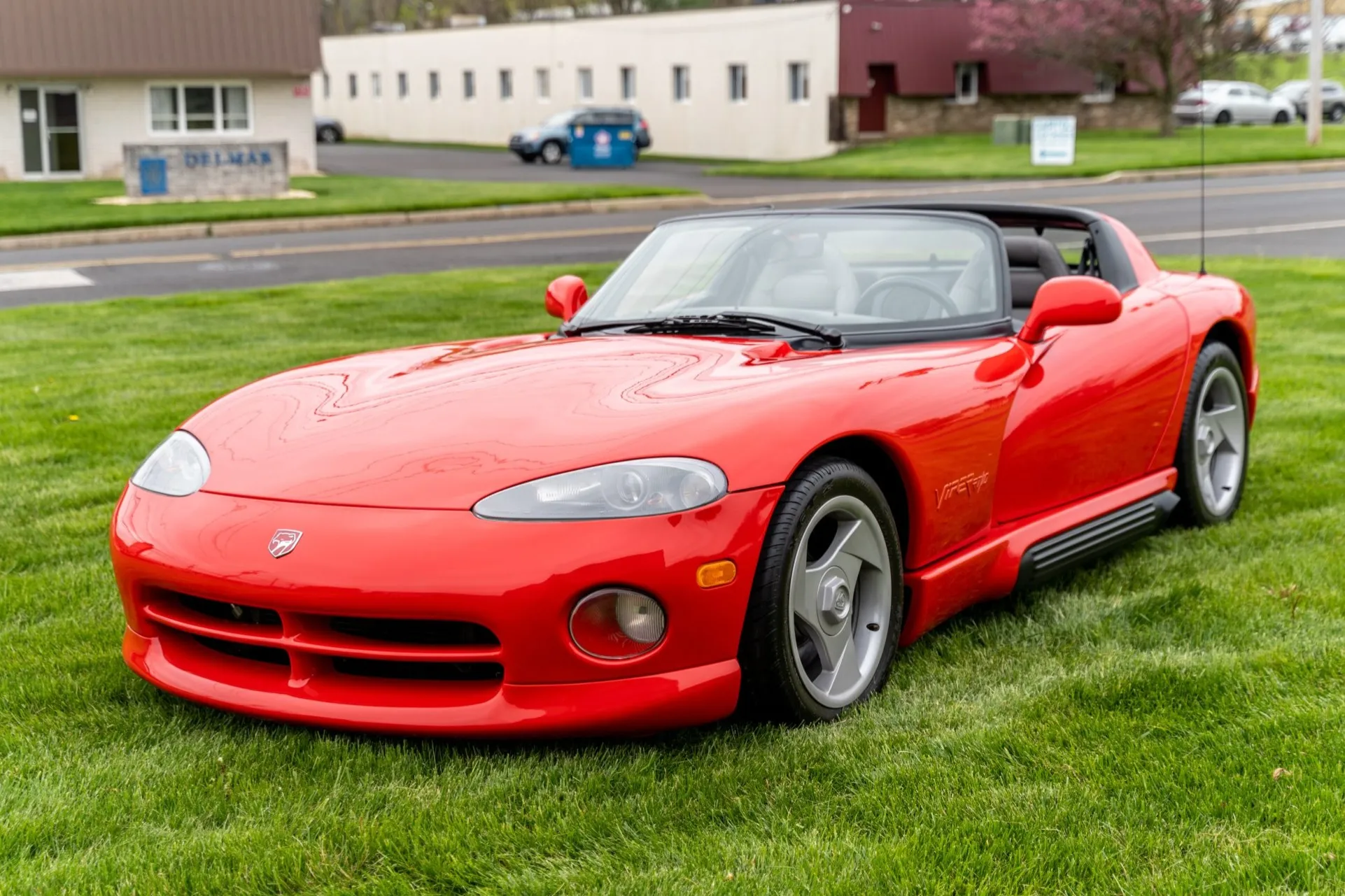
Air conditioning and anti-lock brakes were optional. The cabin temperature could become unbearable as heat radiated from the massive engine and side-mounted exhaust pipes that ran just inches from occupants’ legs.
Getting in required stepping over wide door sills. The six-speed manual transmission was the only option, with a clutch pedal that required serious leg strength.
The Viper’s chassis matched its engine’s intensity. Weighing around 3,300 pounds, remarkably light given its size and featuring a long hood and short rear deck, the Viper had classic sports car proportions.
The front-engine, rear-wheel-drive layout with massive 335mm rear tires provided abundant grip, but the Viper’s power and relatively rudimentary suspension technology meant it demanded respect.
Early Vipers lacked traction control or stability systems, making them genuinely dangerous in inexperienced hands. Lift-off oversteer could catch out unwary drivers, and the car’s power could overwhelm the rear tires in virtually any gear.
The original RT/10 Viper represents 90s American performance at its most extreme, excessive, unrefined, powerful beyond reason, and completely unapologetic about its nature.
It proved that not all performance cars needed to be sophisticated to be special, that visceral thrills could trump technical excellence, and that sometimes the best automotive experiences come from machines that challenge rather than coddle their drivers.
6. Porsche 911 Turbo (993) (1995-1998)
The Porsche 911 Turbo, based on the 993 generation, represented the culmination of air-cooled 911 development and remains one of the most coveted Porsches ever built.
When Porsche introduced it in 1995, the 993 Turbo combined decades of refinement with cutting-edge technology, creating what many enthusiasts consider the definitive 911.
It was the last air-cooled 911 Turbo, making it historically significant as the end of an era, but it was also the best air-cooled 911 ever produced.
Under the distinctive rear spoiler the famous “whale tail” or “tea tray”, depending on specification sat a twin-turbocharged 3.6-liter flat-six engine producing 408 horsepower.
This represented a massive power increase over the previous 964 Turbo, achieved through sophisticated twin-turbo technology that improved throttle response while delivering explosive acceleration.
The 993 Turbo could accelerate from 0-60 mph in approximately 4.0 seconds, remarkable for the mid-90s, with a top speed exceeding 180 mph.
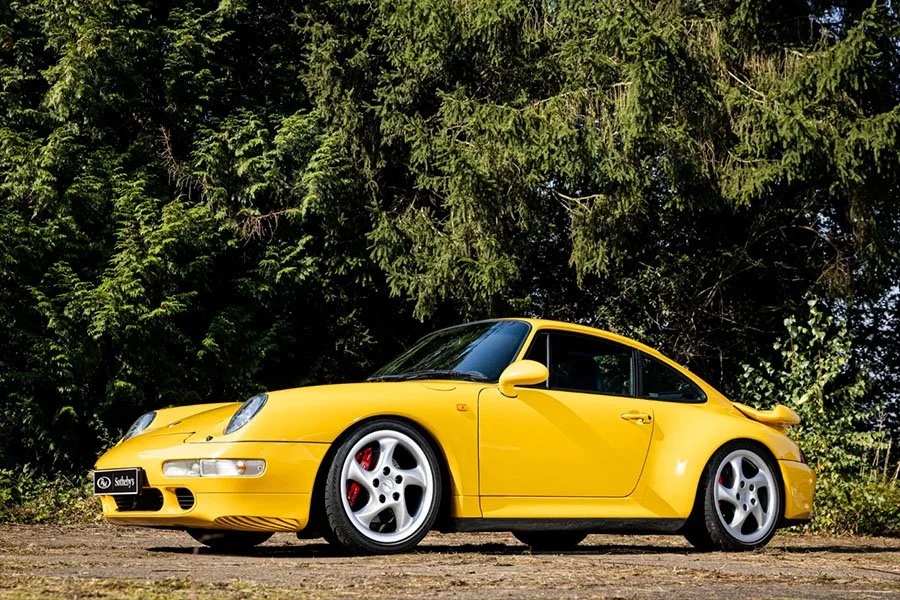
What truly raised the 993 Turbo beyond its predecessors was its refined chassis and all-wheel-drive system. While earlier 911 Turbos were notoriously challenging to drive quickly with massive turbo lag, frightening snap oversteer, and rear-weight bias that punished mistakes, the 993 Turbo was civilized and accessible.
Porsche’s intelligent all-wheel-drive system distributed power between front and rear axles, dramatically improving traction and stability.
Combined with revised suspension geometry, the 993 Turbo could be driven hard with confidence, no longer requiring the expert throttle control and steering corrections of its predecessors.
The 993 Turbo represents 90s performance car development at its finest, taking established formulas and refining them to near-perfection.
It proved that performance cars could be both devastatingly fast and genuinely usable, that modern technology could enhance rather than dilute the driving experience, and that evolution sometimes produces greater results than revolution.
7. Mitsubishi 3000GT VR-4 (1991-1999)
The Mitsubishi 3000GT VR-4 arrived as a technological tour de force, showcasing virtually every advanced feature available to automotive engineers in the early 1990s.
Mitsubishi’s flagship grand tourer sold as the GTO in Japan represented the company’s ambition to compete directly with established sports cars through sheer technological superiority.
The VR-4 packed all-wheel-drive, all-wheel-steering, adaptive suspension, active aerodynamics, twin-turbochargers, and more into a striking body, creating one of the most complex production cars of the decade.
Power came from a 3.0-liter twin-turbocharged V6 producing 300 horsepower and 307 lb-ft of torque, making the 3000GT VR-4 the most powerful Japanese car available in US markets when it launched.
The engine featured DOHC heads with four valves per cylinder and a sophisticated sequential twin-turbo system that minimized lag while delivering strong acceleration across the RPM range.
This powertrain provided genuine high-performance capability, with 0-60 mph times around 5 seconds and quarter-mile runs in the low 13-second range.
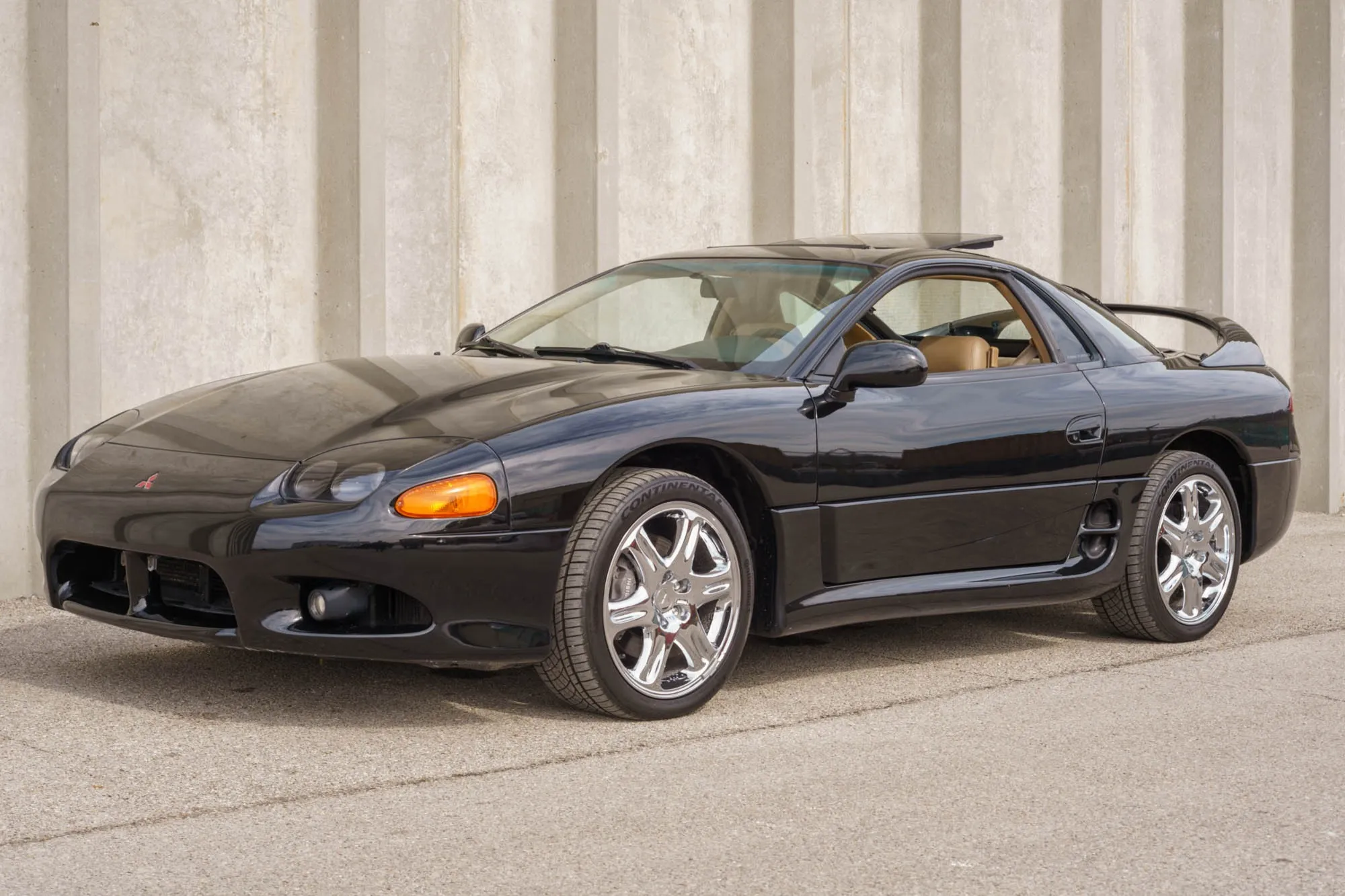
The VR-4’s all-wheel-drive system worked in conjunction with active aerodynamics automatically adjustable front air dam and pop-up rear spoiler to manage stability at speed.
The electronically controlled suspension featured three modes, allowing drivers to select between comfort-oriented soft settings and firmer sport configurations.
Four-wheel steering subtly angled the rear wheels to improve handling response and stability. These systems worked together creating a sophisticated platform that managed the considerable performance potential while remaining accessible to average drivers.
Visually, the 3000GT made a dramatic statement with its low, wide stance and flowing bodywork. The steeply raked windshield, prominent fenders, and aggressive front fascia created road presence that turned heads.
Pop-up headlights, already falling out of favor by the mid-90,s added to the exotic appearance. The interior featured a cockpit-style design with the dashboard angled toward the driver, though build quality and materials didn’t quite match the car’s premium price point.
The 3000GT VR-4 represents an interesting road not taken in performance car development, the belief that more technology automatically creates better driving experiences.
While subsequent generations of performance cars did incorporate many of the 3000GT’s features, they learned to implement them more judiciously.
The 3000GT remains a fascinating time capsule of early-90s technological optimism and Mitsubishi’s ambitious attempt to out-engineer the competition.
8. Ferrari F355 (1994-1999)
The Ferrari F355 marked a turning point for the Italian supercar manufacturer, representing the moment when Ferrari finally reconciled exotic performance with genuine reliability and usability.
When it replaced the 348 in 1994, the F355 addressed virtually every criticism leveled at its predecessor while pushing Ferrari’s naturally aspirated V8 technology to new heights.
Many enthusiasts and journalists consider it the last “pure” Ferrari V8 before electronics and turbos transformed the character of Ferrari’s mid-engine sports cars.
Under the F355’s elegantly sculpted body sat a 3.5-liter V8 producing 375 horsepower, achieved through technological sophistication rather than forced induction.
The engine featured five valves per cylinder three intake, two exhaust which was cutting-edge technology for production cars. This configuration improved breathing efficiency, allowing the engine to spin freely to its 8,500 RPM redline while producing 103 horsepower per liter, an impressive figure for a naturally aspirated engine.
The soundtrack was pure Ferrari a rising crescendo from a purposeful burble at low revs to an intoxicating scream at high RPMs that many consider one of the greatest exhaust notes ever produced.
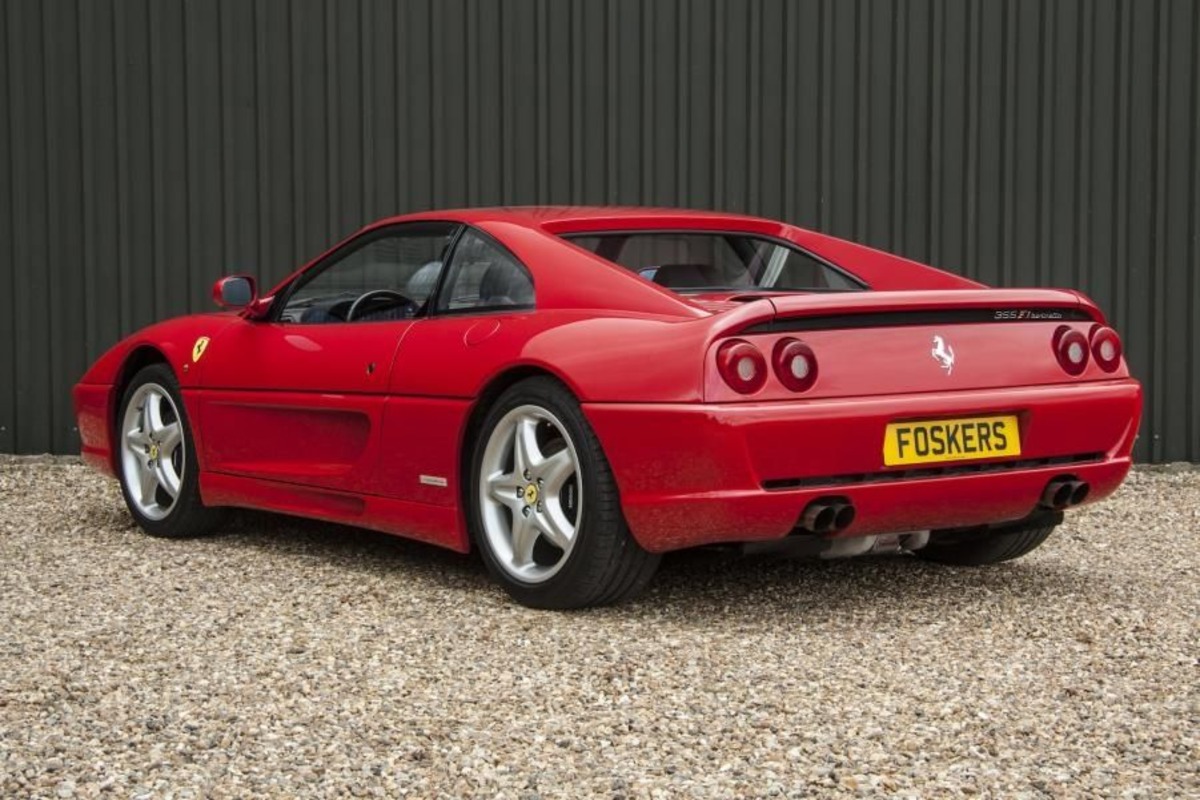
The F355’s chassis and suspension represented significant improvements over the 348. Double-wishbone suspension at all four corners, revised geometry, and improved weight distribution created handling that felt balanced and confidence-inspiring.
The electronic differential improved traction out of corners. Power steering a first for Ferrari’s mid-engine V8s made low-speed maneuvering manageable while retaining sufficient feedback for spirited driving. These refinements made the F355 genuinely enjoyable to drive at all speeds, not just when pushing hard.
Three body styles catered to different preferences: the Berlinetta coupe offered maximum chassis rigidity, the Spider convertible provided open-air thrills with minimal structural compromise, and the GTS featured a removable targa panel as a middle ground.
Ferrari’s design language under Pininfarina created timeless proportions low nose, dramatic side strakes, and the famous pop-up headlights (in their last appearance on a Ferrari), combined to create presence without excess.
The F355 represents 90s supercar development at a crucial transition point sophisticated enough to be genuinely usable, yet analog enough to provide unfiltered driving thrills.
It proved Ferrari could build reliable, drivable exotics without sacrificing the passion and performance that defined the brand. For many enthusiasts, it remains the perfect Ferrar,i fast enough to thrill, beautiful enough to admire, and engaging enough to create genuine driver connection.
The F355 showed that evolution and refinement could enhance rather than dilute the supercar experience, setting standards that influenced Ferrari’s development for decades.
9. BMW M3 (E36) (1992-1999)
The E36-generation BMW M3 redefined the sport sedan category by proving that everyday usability and serious performance capabilities weren’t mutually exclusive.
When BMW reveiled the E36 M3 in 1992, they created a car that could navigate urban traffic comfortably, transport a family in relative comfort, and then transform into a precision instrument on twisty roads or race circuits. This versatility made it perhaps the most complete performance car of the 1990s.
Under the hood sat a naturally aspirated inline-six engine that represented BMW’s engineering philosophy at its finest. European models received a 3.0-liter unit producing 286 horsepower, while US-market cars initially got a 240-horsepower version before receiving a 3.2-liter with 240 horsepower in 1996.
Though these figures seem modest compared to turbocharged competitors, the engine’s character made it special. Power delivery was linear and progressive, building smoothly from low revs to the 7,000+ RPM redline.
The soundtrack a mechanical, soulful howl became one of the most celebrated engine notes in automotive history, encouraging drivers to explore the upper reaches of the rev range repeatedly.
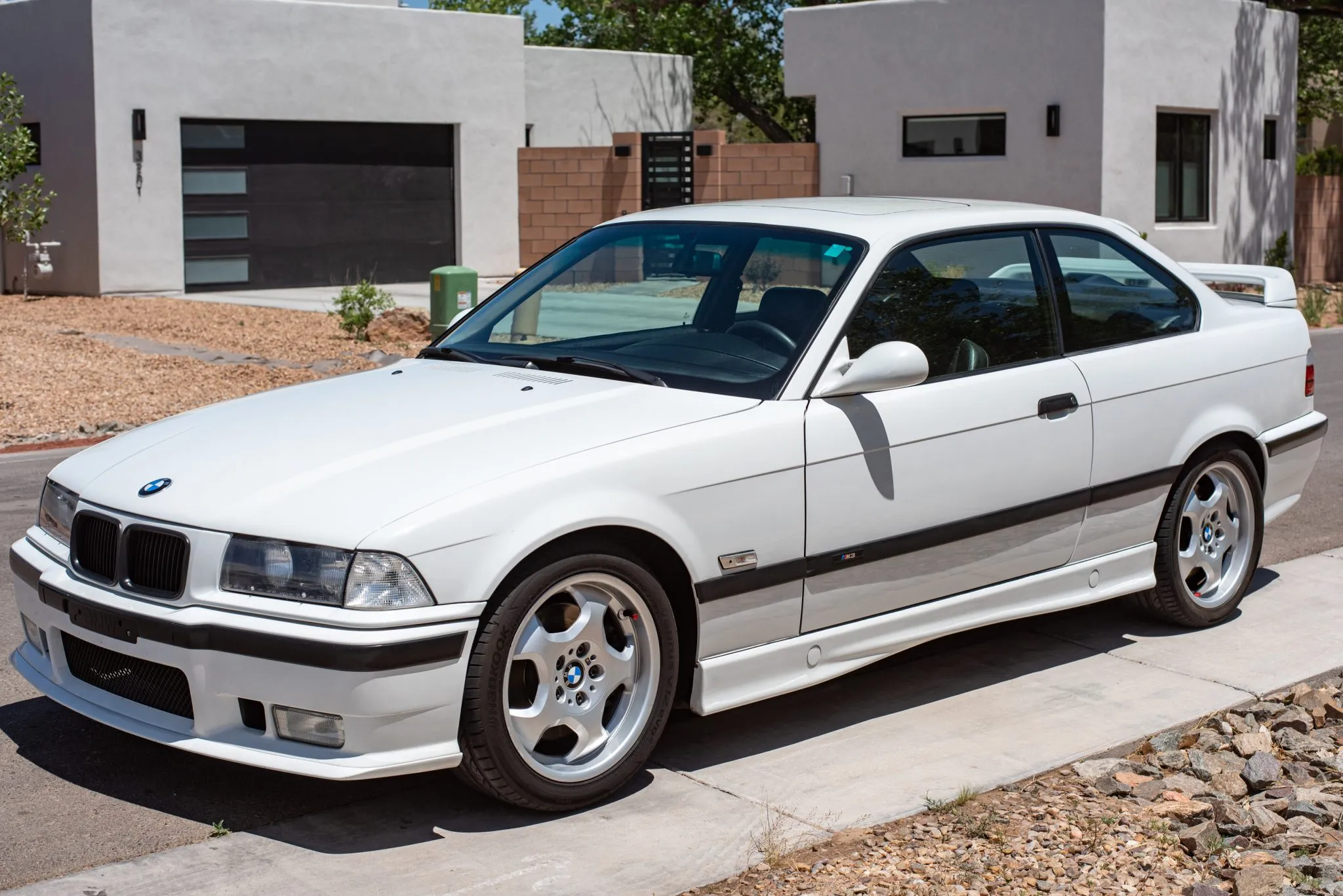
The E36 M3’s chassis represented a masterclass in suspension engineering. BMW’s engineers achieved the seemingly impossible balance between compliant ride quality and precise handling.
The double-wishbone front suspension and multi-link rear setup absorbed road imperfections while maintaining exceptional body control during aggressive driving.
The steering provided detailed feedback through the wheel, communicating what the front tires were doing with clarity that modern electric power steering cannot replicate.
Weight distribution approached 50/50 perfection, contributing to balanced, neutral handling that made the M3 predictable and confidence-inspiring. The E36 M3 exemplifies 90s performance car excellence through balance and completeness rather than extreme specialization.
It proved that performance cars could serve multiple roles without compromise, that sophistication enhanced rather than diluted driving pleasure, and that everyday usability didn’t require sacrificing engagement. For many enthusiasts, it remains the definitive sport sedan, the car against which all others are judged.
10. Acura Integra Type R (1997-2001)
The Acura Integra Type R represented Honda’s performance philosophy distilled to its purest essence lightweight, high-revving naturally aspirated power, and chassis precision prioritized above all else.
When Honda’s performance division brought the Type R to America in 1997, they delivered something unprecedented in the affordable performance segment a front-wheel-drive coupe engineered with the same obsessive attention to detail typically reserved for exotic sports cars.
At the heart of the Integra Type R sat the B18C5 engine, a 1.8-liter inline-four producing 195 horsepower at a stratospheric 8,000 RPM.
This was peak Honda VTEC engineering the engine felt docile below 5,800 RPM, suitable for daily driving, but transformed when VTEC engagement occurred. Above the transition point, the engine screamed to its 8,400 RPM redline with an intensity that felt racing-derived.
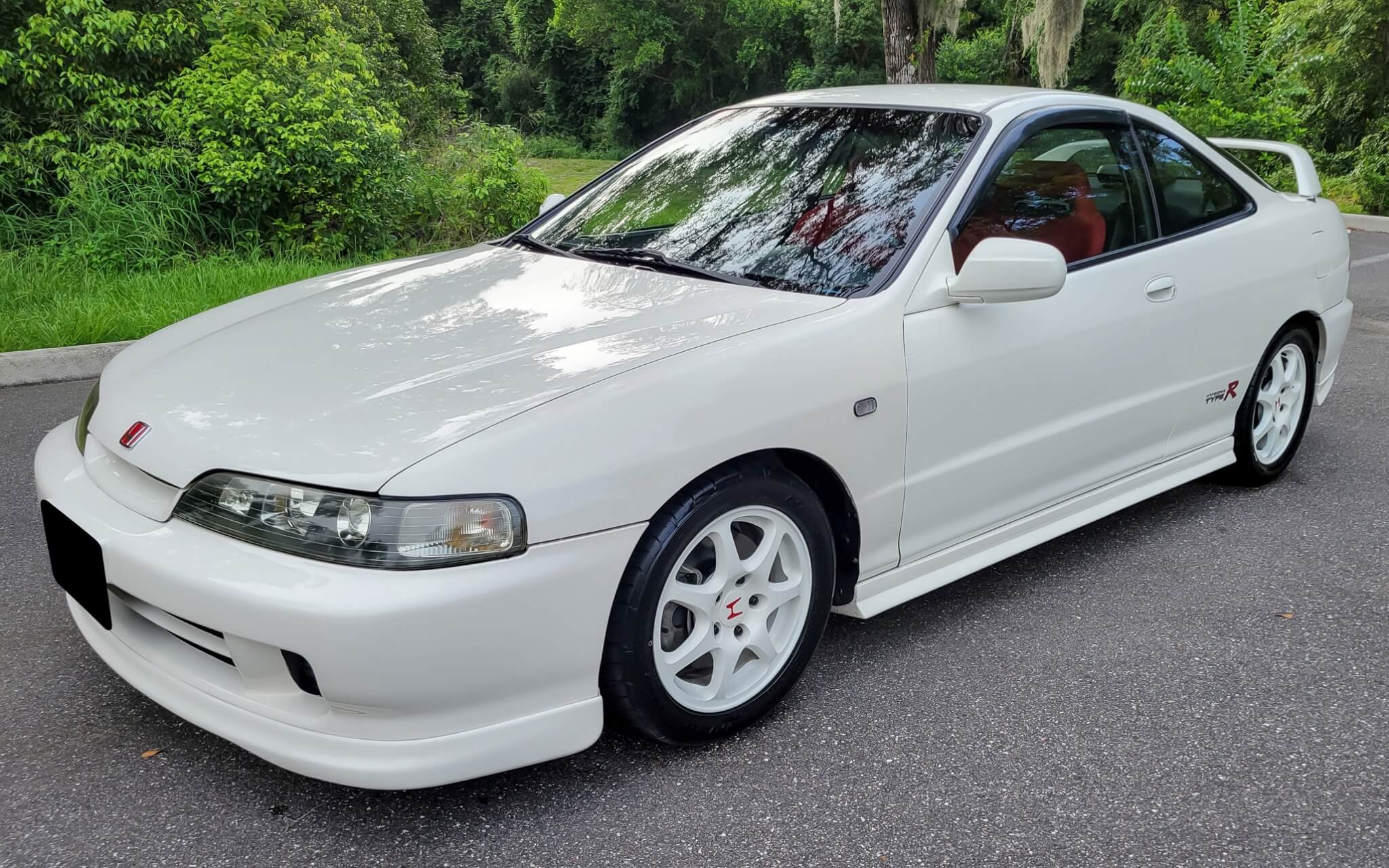
The 108 horsepower-per-liter figure was remarkable for a naturally aspirated production engine in the late 90s, achieved through meticulous internal component selection, aggressive camshaft profiles, and intake/exhaust tuning that prioritized top-end power.
The Integra Type R’s chassis tuning was equally obsessive. Honda stiffened the structure through additional seam welding and reinforcement.
The suspension received firmer springs, revised dampers, and thicker anti-roll bars. The steering rack was quicker than standard Integras.
Weight reduction was pursued fanatically Honda removed sound deadening, installed thinner glass, fitted lighter wheels, and even specified a lighter battery. The result was a curb weight around 2,600 pounds, exceptionally light by late-90s standards.
For enthusiasts who experienced the Integra Type R during its prime, it remains a benchmark the measuring stick against which all affordable performance cars are judged. It exemplified 90s performance car development focused on purity and driver connection rather than specification sheet bragging rights.
11. Chevrolet Corvette C5 (1997-2004)
The C5-generation Chevrolet Corvette represented America’s successful answer to European sports cars, delivering supercar-level performance at attainable prices while maintaining genuine everyday usability.
When Chevrolet introduced the completely redesigned Corvette for 1997, they addressed virtually every criticism leveled at previous generations, creating a sports car that could legitimately compete with vehicles costing twice as much.
At launch, the C5 featured an all-new LS1 aluminum V8 engine displacing 5.7 liters and producing 345 horsepower initially, later increased to 350 horsepower.
This modern pushrod V8 represented the latest evolution of Chevrolet’s small-block legacy, featuring advanced materials and engineering that delivered strong power and torque while maintaining reasonable fuel economy.
The LS1’s 350 lb-ft of torque arrived at just 4,000 RPM, providing effortless acceleration in any gear. The engine note a muscular V8 burble that rose to an aggressive snarl under acceleration reminded drivers this was quintessentially American performance.
The C5’s chassis was entirely new, featuring a revolutionary hydroformed steel structure that provided exceptional rigidity while reducing weight.
This backbone frame incorporated large hydroformed rails that created remarkable torsional stiffness essential for a convertible that needed to match the coupe’s structural integrity.
The sophisticated suspension used short/long-arm double wishbones at all four corners with transverse composite leaf springs, creating an excellent balance between ride comfort and handling precision.
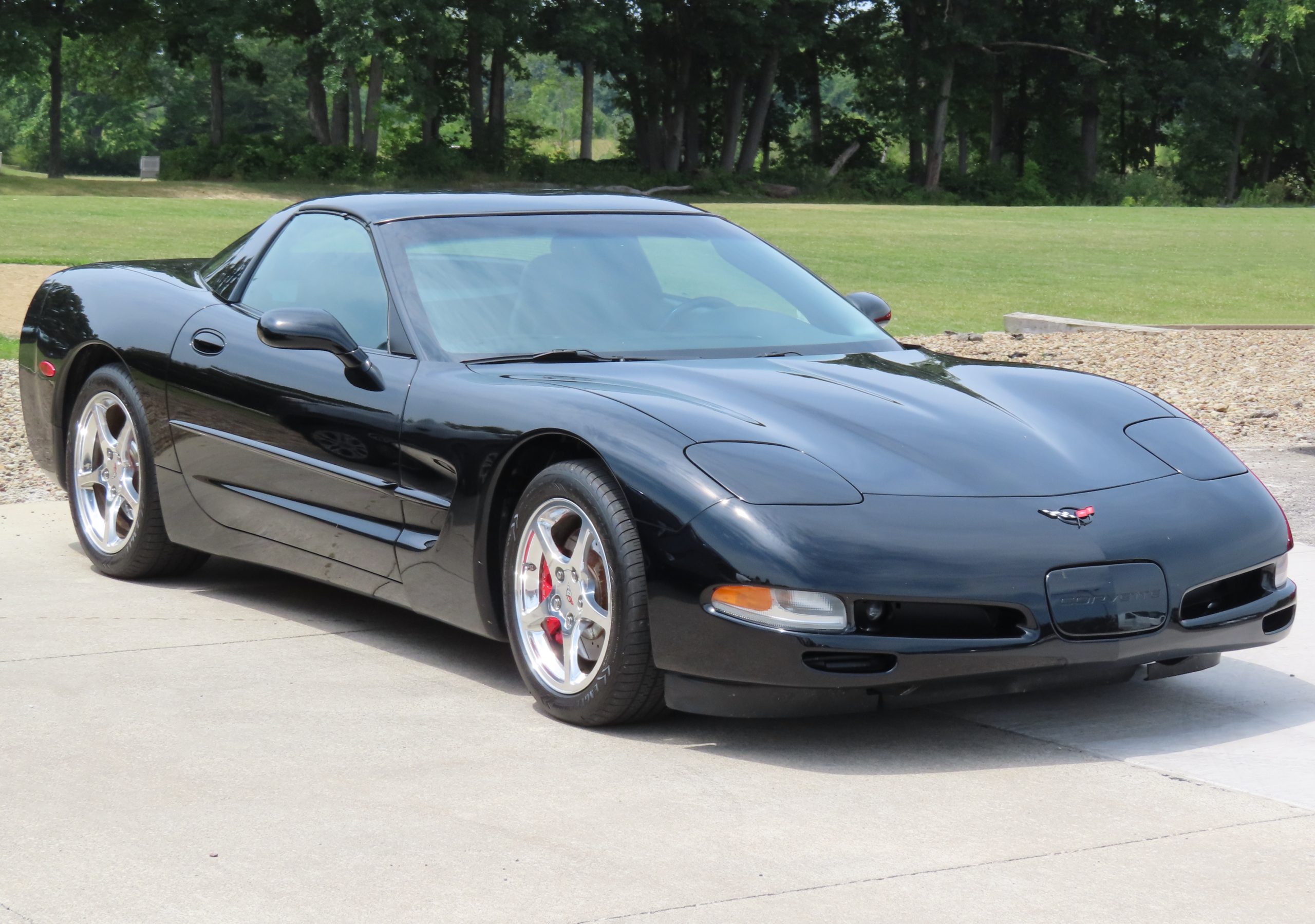
The rear-mounted transmission—connected to the front-mounted engine via a torque tube—created near-perfect 50/50 weight distribution.
This advanced chassis delivered handling that shocked automotive journalists accustomed to Corvettes with compromised dynamics.
The C5 felt balanced and neutral, rotating smoothly into corners without the tail-happy characteristics of older Corvettes. The steering provided good feedback with appropriate weighting.
Massive Goodyear tires 275mm front, 295mm rear provided tremendous grip. The result was handling that rivaled European sports cars, with none of the stereotypical American muscle car clumsiness.
Performance figures were impressive even by modern standards. The C5 could accelerate from 0-60 mph in approximately 4.5 seconds, with quarter-mile times in the low 13-second range.
Top speed exceeded 170 mph. More importantly, the C5 could sustain high-speed cornering with confidence, achieving skidpad numbers approaching 1.0g, genuinely impressive for a front-engine sports car. Professional test drivers consistently praised the C5’s capabilities on track, noting its ability to challenge much more expensive machinery.
The C5 Corvette exemplified 90s American performance car development, reaching maturity world-class handling, strong reliability, genuine everyday usability, and supercar performance at attainable prices.
It proved American manufacturers could engineer sophisticated sports cars matching or exceeding European competitors while maintaining the torque-rich V8 character that defined American performance. The C5 remains one of the best performance values available, delivering thrills that cars costing far more struggle to match.
12. Subaru Impreza WRX STI (1994-2000)
The Subaru Impreza WRX STI brought rally-bred performance technology to public roads, creating an affordable all-weather supercar that redefined practical performance.
When Subaru’s performance division STI (Subaru Tecnica International) developed the WRX STI variant, they created something unique a compact sedan that could embarrass exotic sports cars while going through the snow-covered roads with confidence and transporting families in reasonable comfort.
At the heart of every WRX STI sat Subaru’s legendary EJ20 turbocharged flat-four engine, producing between 250-280 horsepower depending on market and year.
This horizontally-opposed “boxer” engine featured a low center of gravity that benefited handling, while the turbocharger provided explosive power delivery that felt far stronger than specifications suggested.
The STI’s engine management was more aggressive than standard WRX models, with larger turbos, improved breathing, and revised tuning that emphasized top-end power.
The characteristic boxer rumble, an uneven exhaust note resulting from unequal-length headers became one of the most recognizable sounds in automotive culture.
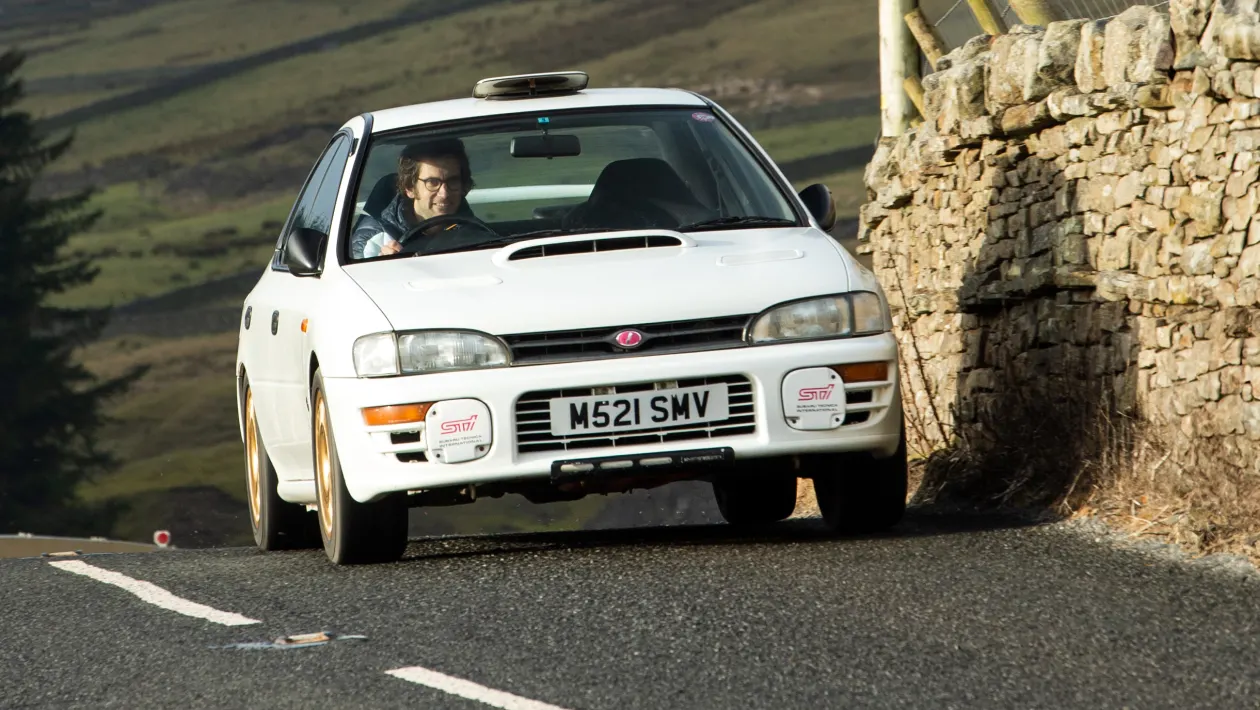
The WRX STI’s symmetrical all-wheel-drive system represented its true genius. Unlike many all-wheel-drive systems that primarily sent power to the front wheels, Subaru’s system provided a more balanced power split, with the driver-controlled center differential allowing customization of front/rear torque distribution.
This enabled the STI to be driven like a rear-wheel-drive car when desired, with controllable power oversteer making it exceptionally fun on twisty roads.
Combined with impressive grip in adverse conditions, the all-wheel-drive system made the STI devastatingly effective in virtually any weather or road conditions.
Today, the 90s-era WRX STI holds legendary status, representing peak Subaru performance before the cars grew larger and heavier. Clean examples, particularly rare variants like the 22B STI, have appreciated dramatically.
The first-generation WRX STI exemplified 90s performance car development focused on capability and engagement rather than luxury and refinement, proving that the most memorable performance cars prioritize driver connection above all else.
Also Read: 5 SUVs That Refuse to Rattle Inside vs 5 That Sound Old Too Soon
