
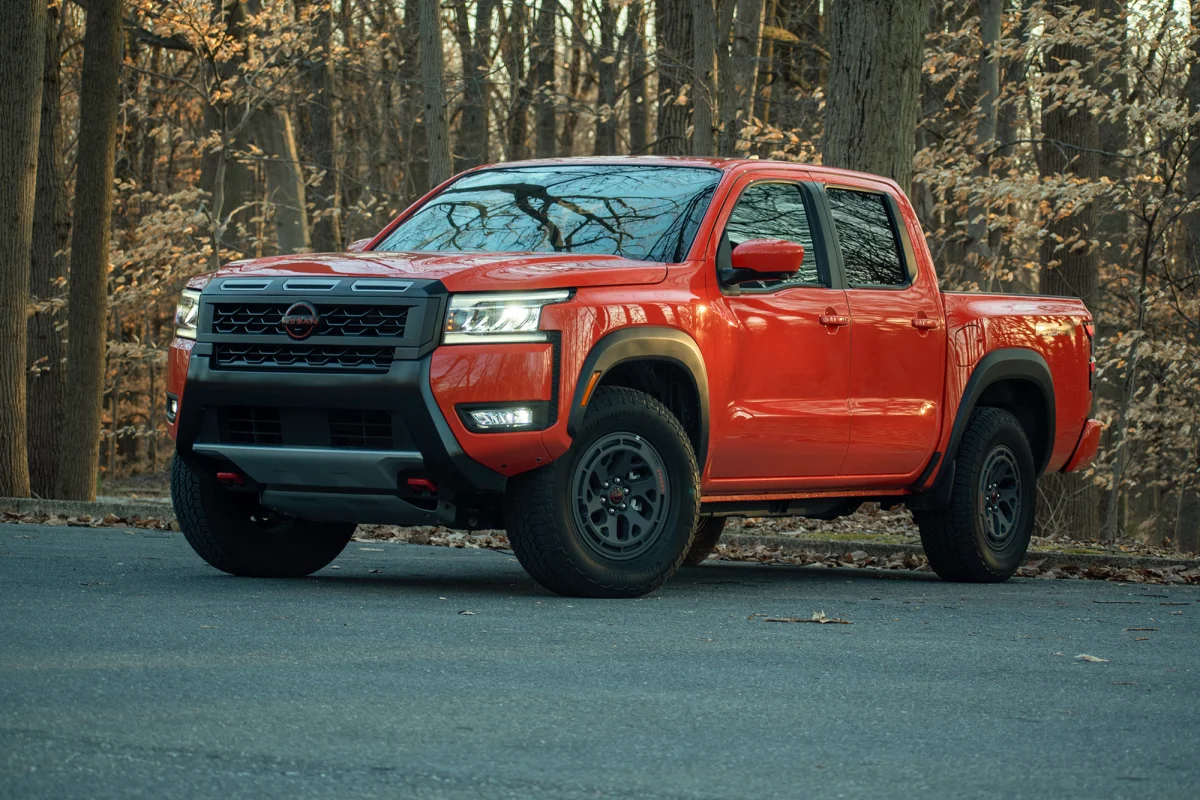
When discussing automotive reliability and longevity, conversations often gravitate toward brands like Toyota, Honda, or Lexus. These manufacturers have built formidable reputations for producing vehicles that seemingly run forever with minimal maintenance.
However, lurking in the shadows of these industry giants is Nissan, a manufacturer whose reliability story remains surprisingly underappreciated despite decades of evidence supporting its durability credentials.
Nissan’s journey as an automaker spans over nine decades, during which the company has consistently produced vehicles that deliver exceptional longevity without the fanfare or premium pricing associated with its more celebrated competitors.
While Nissan may not always top the reliability charts in consumer surveys, a closer examination reveals numerous models that have quietly accumulated hundreds of thousands of miles on odometers across the globe, serving their owners faithfully through years of daily commutes, family road trips, and everything in between.
The Japanese manufacturer’s approach to engineering has always emphasized practical durability over flashy innovation. This philosophy has resulted in powertrains that favor proven technology, transmissions designed for longevity rather than lightning-quick shifts, and build quality that prioritizes substance over style.
Many Nissan owners discover that their vehicles continue performing reliably long after the initial excitement of ownership has faded, transforming into dependable transportation appliances that simply refuse to quit.
In an automotive world increasingly dominated by complex electronics, turbocharged engines, and continuously variable transmissions of questionable durability, these Nissan models stand as testaments to the enduring value of straightforward engineering and time-tested mechanical solutions.
They may not generate headlines or win design awards, but for owners seeking transportation they can depend on year after year, these ten Nissan models have quietly delivered exactly what was promised: long, reliable service that transforms initial purchases into decade-long relationships.
1. Nissan Altima (2007-2012)
The fourth-generation Nissan Altima represents one of the most underrated reliability success stories in the midsize sedan segment.
While competitors like the Toyota Camry and Honda Accord receive most of the accolades for dependability, the 2007-2012 Altima has quietly accumulated impressive longevity credentials, with many examples surpassing 200,000 miles without major mechanical issues.
At the heart of this Altima’s reliability lies the proven QR25DE 2.5-liter four-cylinder engine, producing 175 horsepower. This naturally aspirated powerplant has become legendary among Nissan enthusiasts for its durability and straightforward maintenance requirements.
The engine features a timing chain rather than a belt, eliminating a major maintenance expense and potential failure point. Owners report that with regular oil changes using quality synthetic oil, these engines routinely exceed 300,000 miles with only minor wear.
The engine’s conservative tuning means it never works particularly hard during normal driving, contributing significantly to its longevity.
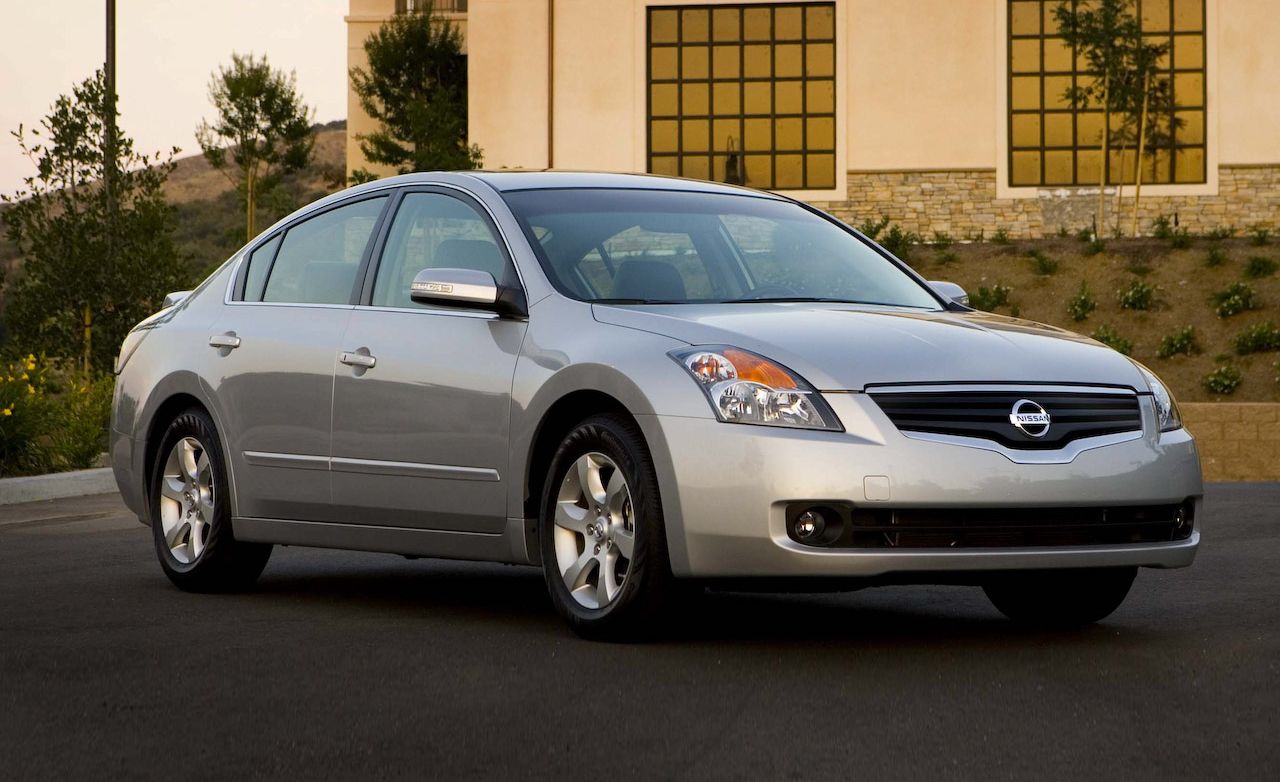
The available VQ35DE 3.5-liter V6 engine, producing 270 horsepower, shares similar reliability credentials. This legendary powerplant has appeared in numerous Nissan and Infiniti products, earning a reputation for smooth operation and exceptional durability.
The V6 Altima models offer significantly more performance without sacrificing reliability, making them excellent choices for buyers seeking both longevity and driving enjoyment.
Transmission options include a six-speed manual, a conventional six-speed automatic, and Nissan’s CVT (Continuously Variable Transmission).
The conventional automatic transmission has proven exceptionally reliable, with many owners reporting trouble-free operation beyond 200,000 miles with only routine fluid changes.
The CVT, while more controversial in later Nissan models, performs adequately in this generation when maintained properly with the correct fluid at recommended intervals.
Common issues with this generation Altima are relatively minor and inexpensive to address. Some owners report exhaust manifold cracks on four-cylinder models, though this rarely leads to catastrophic failure.
The engine mounts may require replacement around 100,000 miles, a relatively inexpensive preventive maintenance item. The 2007-2012 Altima delivers Toyota-level reliability at Nissan pricing, making it an exceptional value for buyers seeking long-term dependability.
2. Nissan Frontier (2005-2021)
The second-generation Nissan Frontier, which remarkably remained in production for seventeen years with only minor updates, stands as perhaps the most underrated reliable midsize pickup truck in the American market.
While the Toyota Tacoma commands premium pricing and develops cult-like followings, the Frontier quietly delivers comparable durability at significantly lower cost, both in initial purchase price and throughout ownership.
The Frontier’s longevity credentials center on its conservative mechanical design, particularly the available VQ40DE 4.0-liter V6 engine producing 261 horsepower.
This naturally aspirated powerplant represents mature, proven technology that Nissan refined over decades of production. The engine features a timing chain, dual overhead cams, and variable valve timing, combining modern efficiency with old-school durability.
Frontier owners routinely report engines exceeding 300,000 miles with only basic maintenance, and the engine’s simple design means repairs, when eventually needed, remain affordable.
The Frontier’s transmission options include a six-speed manual and a five-speed automatic, both of which have earned reputations for exceptional longevity.
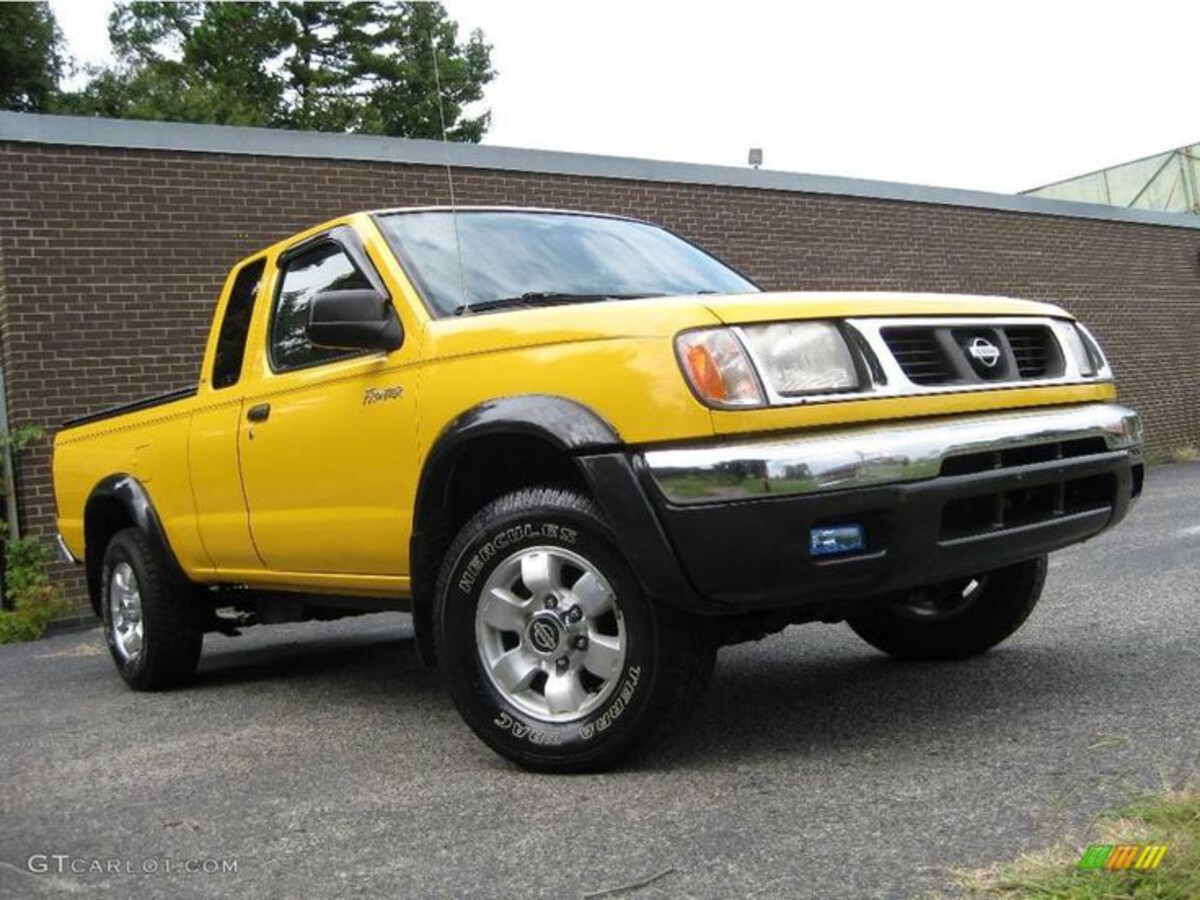
The manual transmission, in particular, features robust synchros and a heavy-duty clutch that handles off-road abuse and heavy towing without premature failure.
The automatic transmission, while not particularly sophisticated by modern standards, delivers smooth shifts and reliable operation well beyond 200,000 miles when fluid changes are performed at recommended intervals.
The truck’s body-on-frame construction contributes significantly to its longevity. The fully boxed frame resists flexing and cracking even under challenging off-road conditions and heavy payload situations.
The suspension components, including the front control arms, ball joints, and rear leaf springs, demonstrate impressive durability. Many owners report original suspension components remaining serviceable beyond 150,000 miles, though replacement parts are inexpensive and readily available when eventually needed.
Rust resistance varies by climate and maintenance, but the Frontier’s frame and body panels generally hold up well compared to competitors.
Owners in snow-belt states report that regular undercarriage washing and cavity wax application help the Frontier resist corrosion effectively.
The truck bed, constructed from steel rather than aluminum or composite materials, proves durable and resists denting, though bed liner installation is recommended to prevent surface rust.
The Frontier’s remarkable production longevity means parts availability is excellent and aftermarket support is comprehensive. Maintenance costs remain low throughout ownership, and the truck’s simple design means many repairs can be performed by moderately skilled DIY mechanics, further reducing ownership costs.
3. Nissan Maxima (2004-2008)
The sixth-generation Nissan Maxima represents the sweet spot in the model’s evolution, combining Nissan’s legendary VQ-series V6 engine with a relatively simple mechanical design that predates the complexity and reliability concerns that plagued later generations.
This Maxima generation has quietly built a reputation among used car buyers as offering near-luxury comfort and performance with exceptional long-term reliability at fraction of the cost of European competitors.
The heart of this Maxima’s reliability story is the VQ35DE 3.5-liter V6 engine, producing between 265 and 280 horsepower depending on the model year.
This powerplant has earned a place on Ward’s 10 Best Engines list multiple times and represents one of Nissan’s greatest engineering achievements.
The engine features aluminum block and head construction, dual overhead cams, variable valve timing, and a timing chain that eliminates belt replacement concerns.
Owners consistently report these engines delivering smooth, powerful performance well beyond 200,000 miles with only routine maintenance.
The engine’s durability stems from its conservative tuning and robust internal components. Despite producing impressive power, the VQ35DE never feels stressed during normal operation, and even spirited driving fails to reveal any mechanical fragility.
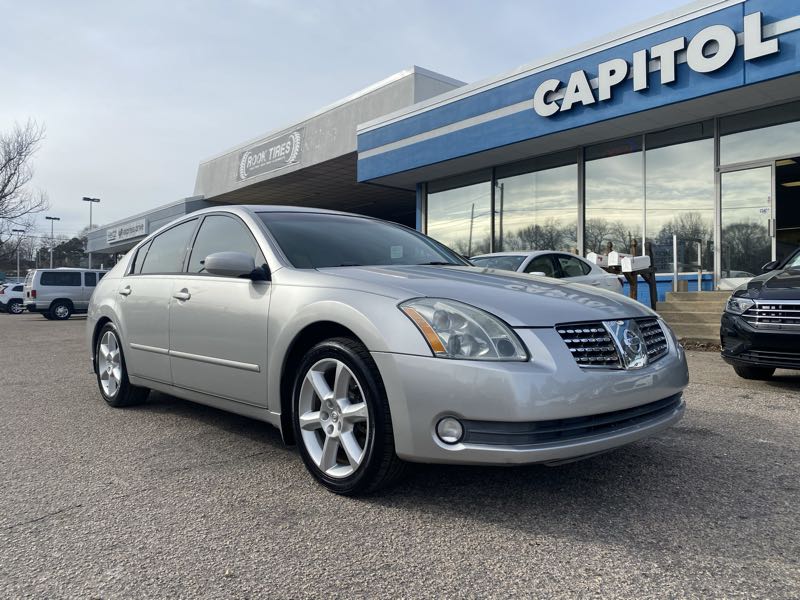
Regular oil changes using quality synthetic oil at 5,000-mile intervals virtually guarantee this engine will outlast the vehicle’s body, with many documented examples exceeding 350,000 miles before requiring major internal work.
The Maxima’s transmission options include a six-speed manual (a rare find in this segment) and a five-speed automatic. The manual transmission delivers engaging shifts and proves virtually bulletproof when paired with the V6’s ample torque.
The automatic transmission, while not as refined as modern eight and nine-speed units, delivers reliable operation through hundreds of thousands of miles. Transmission fluid changes at 60,000-mile intervals ensure longevity, though many owners report trouble-free operation even with neglected maintenance schedules.
Suspension components demonstrate impressive longevity for a front-wheel-drive sport sedan. The front MacPherson struts and rear multi-link independent suspension deliver both engaging handling and long service life.
Struts typically require replacement around 100,000 miles, while control arm bushings and links last significantly longer. The braking system, featuring large ventilated discs at all four corners, proves robust and resists premature wear even under aggressive driving conditions.
Common issues with this generation are minor and well-documented. Some models experience exhaust manifold bolt corrosion, leading to exhaust leaks that are more annoying than problematic.
The engine’s variable valve timing solenoids occasionally require cleaning or replacement, an inexpensive preventive maintenance item. The 2004-2008 Maxima delivers performance and comfort that rival entry-luxury sedans with reliability that surpasses many European competitors, making it an exceptional value proposition.
4. Nissan Xterra (2005-2015)
The second-generation Nissan Xterra stands as one of the last true truck-based SUVs available at affordable prices, combining body-on-frame construction with proven mechanical components to deliver exceptional off-road capability and long-term reliability.
While the automotive market has largely shifted toward car-based crossovers, the Xterra has developed a devoted following among outdoor enthusiasts who value its durability, capability, and straightforward design.
The Xterra’s reliability foundation rests on its shared platform with the Frontier pickup truck, inheriting that vehicle’s proven mechanical components and robust construction.
The standard 4.0-liter VQ40DE V6 engine produces 261 horsepower and 281 lb-ft of torque, providing ample power for both highway cruising and off-road adventures.
This naturally aspirated engine features a timing chain, eliminating a major maintenance concern, and its conservative tuning ensures longevity even under challenging conditions.
Owners consistently report this engine delivering trouble-free operation beyond 200,000 miles with only routine maintenance. The engine’s robust internal components handle the additional stress of off-road driving, towing, and cargo hauling without exhibiting premature wear.
Oil consumption remains minimal even on high-mileage examples, and the engine’s straightforward design means repairs, when eventually needed, remain affordable and accessible to independent mechanics.
The Xterra’s transmission options mirror the Frontier’s, including a six-speed manual and five-speed automatic. Both transmissions have earned reputations for reliability, though the manual transmission particularly appeals to off-road enthusiasts who appreciate the precise control it offers in challenging terrain.
The automatic transmission, while not particularly sophisticated, delivers smooth operation and proves virtually bulletproof when transmission fluid is changed at recommended intervals.
The four-wheel-drive system represents one of the Xterra’s greatest strengths, featuring a two-speed transfer case with a low-range gear that provides exceptional off-road capability.
The transfer case requires periodic fluid changes, but owners who perform this simple maintenance report trouble-free operation even after hundreds of thousands of miles of four-wheel-drive use.
The front differential and CV axles prove similarly robust, handling the additional stress of four-wheel-drive operation without premature failure.
The Xterra’s body-on-frame construction contributes significantly to its longevity and capability. The fully boxed frame resists the flexing and stress cracks that plague unibody crossovers when subjected to serious off-road use or heavy towing.
The suspension system, featuring independent front suspension and leaf springs in the rear, delivers both decent on-road manners and impressive off-road articulation while maintaining durability through years of use.
Common issues with the Xterra are relatively minor and well-documented within the enthusiast community. Some models experience coolant leaks from the radiator, and the transmission cooler can fail, potentially contaminating transmission fluid with coolant.
This issue has led some owners to install external transmission coolers as preventive maintenance. The timing chain tensioner may develop noise on higher-mileage examples, though replacement is straightforward and prevents more serious engine damage.
Also Read: 12 SUVs That Can Handle Both City and Dirt Roads
5. Nissan Sentra (2007-2012)
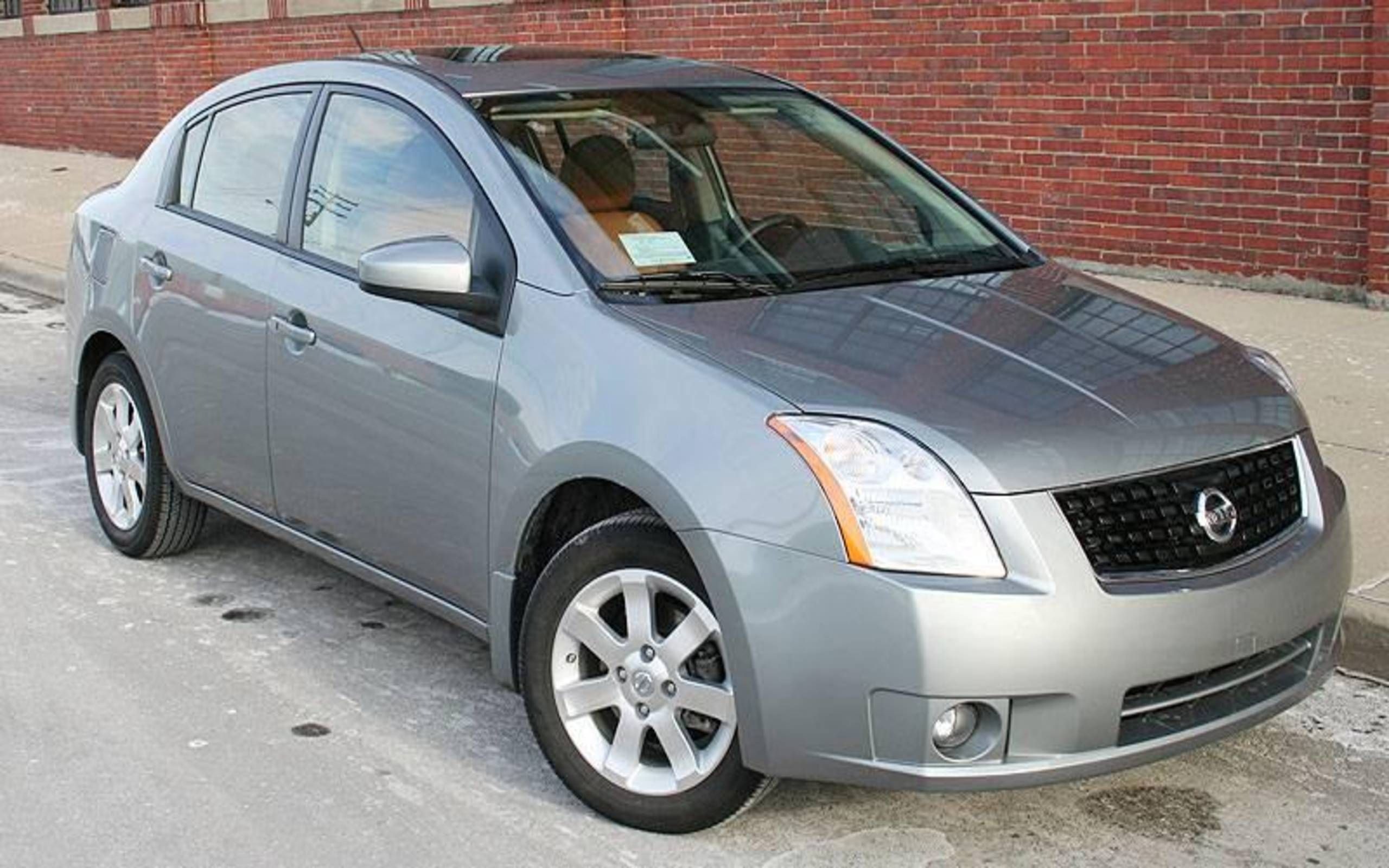
The sixth-generation Nissan Sentra quietly established itself as one of the most reliable compact sedans available, delivering Toyota Corolla-level dependability at lower prices throughout its lifecycle.
While often overlooked by buyers seeking the most exciting driving experience, the 2007-2012 Sentra has proven itself to be an exceptional transportation option for owners prioritizing longevity, fuel efficiency, and minimal ownership costs over sporty handling or luxurious appointments.
The Sentra’s reliability credentials center on its straightforward mechanical design, particularly the MR20DE 2.0-liter four-cylinder engine producing 140 horsepower.
This naturally aspirated engine represents mature technology refined over years of production, featuring aluminum construction, dual overhead cams, and a timing chain that eliminates belt replacement concerns.
The engine’s conservative tuning ensures it never works particularly hard during normal driving, contributing to exceptional longevity.
Owners consistently report these engines exceeding 200,000 miles with only routine maintenance, primarily regular oil changes and spark plug replacements.
The engine’s simple design means it lacks the complex direct injection systems, turbochargers, and variable compression ratios found in modern engines, eliminating numerous potential failure points.
Oil consumption remains minimal even on high-mileage examples, and the engine’s aluminum construction resists corrosion better than older cast-iron designs.
Interior quality, while economical, proves surprisingly durable through years of daily use. The dashboard materials, though hard plastic, resist cracking and fading better than expected.
Seat fabrics hold up well to wear, maintaining their appearance even on high-mileage examples used in taxi and ride-share service. The climate control system proves reliable, and the simple radio and controls maintain their operation through hundreds of thousands of cycles.
The Sentra’s front-wheel-drive layout contributes to its reliability by eliminating complex four-wheel-drive systems and their associated maintenance requirements.
However, the front CV axles and wheel bearings bear all the powertrain torque and vehicle weight, occasionally requiring replacement around 100,000-150,000 miles depending on driving conditions and maintenance practices.
Fuel efficiency represents one of the Sentra’s greatest strengths, with many owners reporting combined fuel economy in the mid-30 mpg range.
This efficiency not only reduces operating costs but also indicates the engine’s conservative tuning and efficient operation, both of which contribute to long-term reliability.
The modest power output means the engine never strains to maintain highway speeds, even when fully loaded with passengers and cargo.
Common issues with this generation Sentra are remarkably few and generally minor. Some owners report brake master cylinder failures, though this typically occurs at higher mileages and represents normal wear rather than a design flaw.
The CVT transmission can develop shuddering or hesitation if maintenance is neglected, though proper fluid changes prevent these issues. Some models experience minor electrical problems with window regulators or door lock actuators, but these repairs are inexpensive and don’t reflect systemic reliability concerns.
6. Nissan Pathfinder (2005-2012)
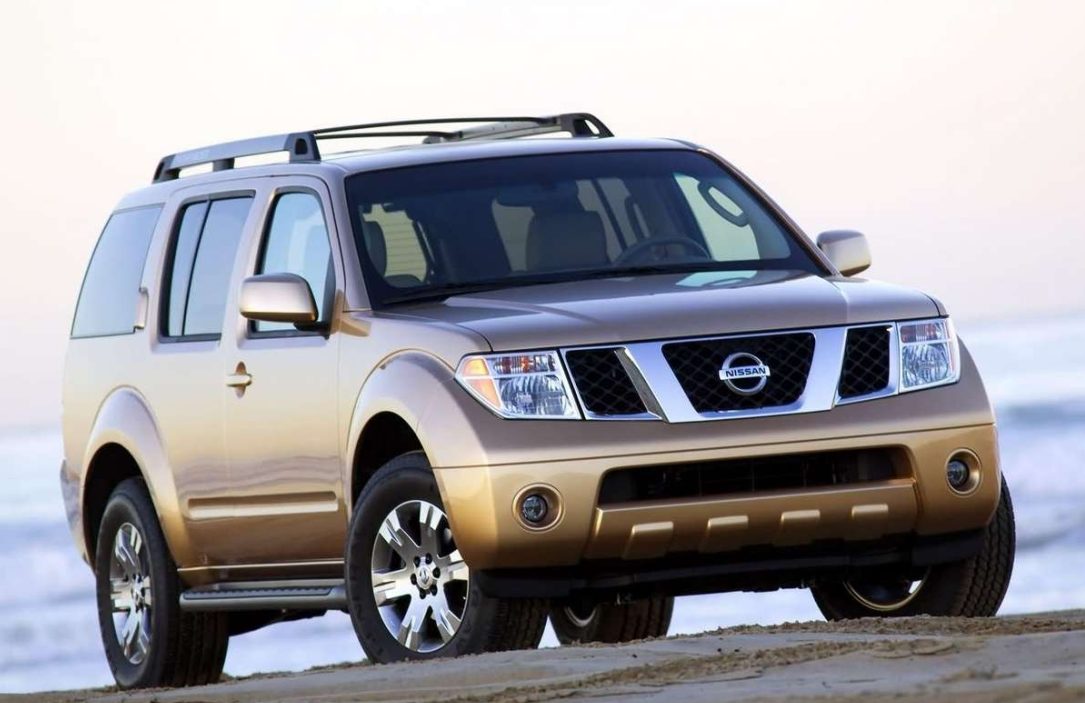
The third-generation Nissan Pathfinder represents the final iteration of the model built on a truck-based platform before the nameplate transitioned to a car-based crossover design.
This generation Pathfinder combines the durability and capability of body-on-frame construction with refined on-road manners and proven mechanical components, creating an SUV that delivers exceptional longevity for families seeking three-row seating and genuine off-road capability.
The Pathfinder’s reliability story centers on the proven VQ40DE 4.0-liter V6 engine, producing 266 horsepower and 288 lb-ft of torque.
This naturally aspirated powerplant shares its basic architecture with the engines found in the Frontier and Xterra, inheriting their reputation for durability and straightforward maintenance requirements.
The engine features a timing chain, dual overhead cams, and variable valve timing, combining modern efficiency with proven reliability.
Owners report these engines delivering smooth, powerful operation well beyond 200,000 miles with only routine maintenance. The engine’s aluminum construction provides excellent heat dissipation while reducing vehicle weight, and its conservative tuning ensures longevity even when regularly loaded with passengers and cargo or when towing trailers up to the Pathfinder’s 6,000-pound capacity.
Oil consumption remains minimal even on high-mileage examples, and the engine’s straightforward design keeps repair costs reasonable.
The Pathfinder’s transmission options include a six-speed manual (rare in three-row SUVs) and a five-speed automatic. The automatic transmission has proven exceptionally reliable, delivering smooth shifts and trouble-free operation through hundreds of thousands of miles when fluid changes are performed at recommended intervals.
The transmission’s robust construction handles the additional stress of towing and fully-loaded highway cruising without exhibiting premature wear or failure.
Interior quality reflects the Pathfinder’s positioning as a family SUV, with durable materials that withstand years of use by children and pets.
The third-row seating, while tight for adults, provides genuine utility for families needing occasional seven-passenger capacity. The dashboard materials resist UV damage and cracking, and the climate control system proves reliable through years of operation.
Some owners report minor issues with the rear liftgate struts weakening over time, an inexpensive repair that doesn’t reflect broader reliability concerns.
Rust resistance varies by climate, with the Pathfinder’s frame and body panels requiring regular maintenance in snow-belt states where road salt accelerates corrosion.
Undercarriage washing and cavity wax application help preserve the frame and suspension components. The body panels themselves hold up reasonably well, though some examples experience corrosion around wheel wells and tailgate areas if maintenance is neglected.
Common issues with this generation Pathfinder are relatively minor. Some models experience exhaust manifold bolt corrosion, leading to exhaust leaks that are annoying but not catastrophic.
The timing chain tensioner may develop noise on higher-mileage examples, though replacement prevents more serious engine damage.
The rear differential requires periodic fluid changes, and neglecting this maintenance can lead to premature wear, though the repair is straightforward when eventually needed.
7. Nissan Versa (2007-2011)
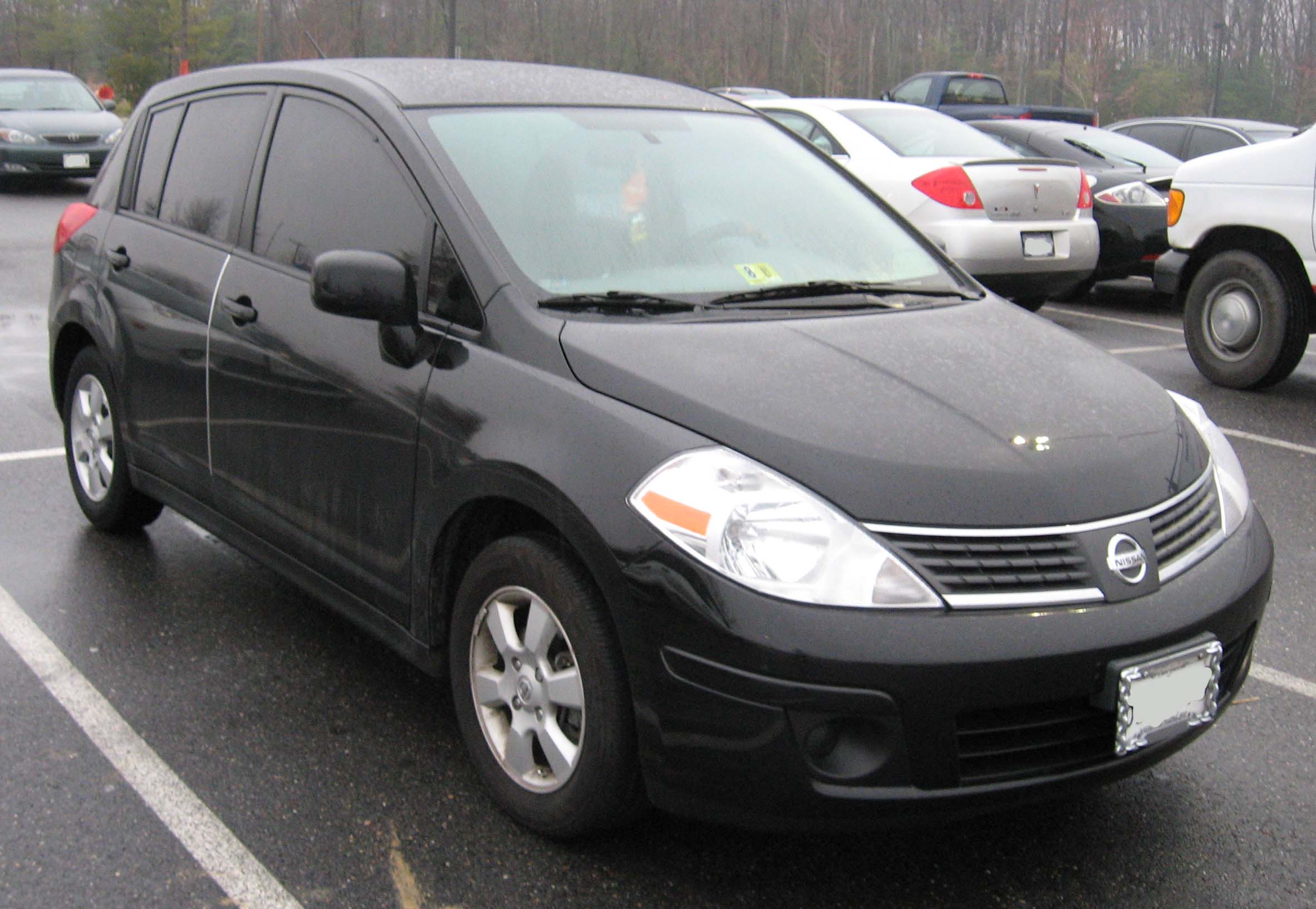
The first-generation Nissan Versa, introduced to replace the aging Sentra as Nissan’s entry-level offering in North America, represents exceptional value in the subcompact segment.
While often dismissed as basic transportation, the 2007-2011 Versa has quietly accumulated impressive reliability credentials, with many examples serving as taxi and ride-share vehicles accumulating well over 300,000 miles before retirement.
The Versa’s reliability foundation rests on its simple, proven mechanical design. The HR16DE 1.8-liter four-cylinder engine produces a modest 122 horsepower, but this conservative output ensures the engine never works particularly hard during normal operation.
The naturally aspirated engine features aluminum construction, dual overhead cams, and a timing chain that eliminates belt replacement concerns. The engine’s straightforward design means it contains fewer components that can fail compared to modern turbocharged and direct-injection alternatives.
Owners report these engines delivering reliable operation beyond 250,000 miles with only basic maintenance, primarily regular oil changes and spark plug replacements at manufacturer-recommended intervals.
The engine’s modest power output means it operates at relatively low stress levels even during highway driving, contributing to exceptional longevity.
Oil consumption remains minimal even on high-mileage examples, and the engine’s simple design makes repairs, when eventually needed, affordable and accessible to budget-conscious owners.
The Versa’s transmission options include a six-speed manual and a four-speed automatic. The manual transmission proves virtually bulletproof, delivering reliable operation well beyond 200,000 miles with only periodic clutch replacements around 100,000-150,000 miles depending on driving style and traffic conditions.
The four-speed automatic, while outdated compared to modern continuously variable and multi-speed automatics, delivers reliable operation when fluid changes are performed at recommended intervals.
Suspension components demonstrate impressive durability despite the Versa’s economy-car positioning. The front MacPherson struts and rear torsion beam suspension deliver a compliant ride quality while maintaining longevity through years of pothole impacts and rough road conditions.
The simplicity of the suspension design means fewer components can fail, and replacement parts remain inexpensive and readily available. Struts typically require replacement around 100,000 miles, while other components last significantly longer.
Interior quality reflects the Versa’s budget positioning, with hard plastics throughout the cabin and simple cloth upholstery. However, these economical materials prove surprisingly durable through years of daily use.
The dashboard resists cracking despite its hard plastic construction, seat fabrics hold up to wear, and simple switchgear maintains functionality through hundreds of thousands of actuations.
The straightforward climate control system and basic radio prove reliable, and the lack of complex electronics means fewer potential failure points.
Common issues are remarkably few for such an affordable vehicle. Some owners report premature wear of front brake rotors, though this often reflects driving style rather than design flaws.
The wheel bearings may develop noise around 100,000-150,000 miles, a normal wear item that doesn’t reflect broader reliability concerns.
Some models experience minor electrical issues with power window motors, but these repairs remain inexpensive due to the vehicle’s simple design and excellent parts availability.
8. Nissan Armada (2004-2015)
The first-generation Nissan Armada, based on the robust Nissan Titan pickup truck platform, represents one of the most underrated full-size SUVs in terms of long-term reliability.
While competitors like the Chevrolet Tahoe and Ford Expedition receive more attention, the Armada quietly delivers comparable capability and significantly better reliability than many domestic alternatives, particularly in its powertrain components.
The Armada’s reliability credentials center on the legendary VK56DE 5.6-liter V8 engine, producing between 305 and 317 horsepower depending on model year.
This naturally aspirated powerplant represents Nissan’s entry into the full-size truck market and has earned a reputation for exceptional durability and impressive power delivery.
The engine features an aluminum block and heads, dual overhead cams on each cylinder bank, variable valve timing, and a timing chain that eliminates belt replacement concerns.
Owners consistently report these engines delivering smooth, powerful operation well beyond 250,000 miles with only routine maintenance.
The engine’s robust construction handles the stress of towing heavy trailers, hauling eight passengers and cargo, and extended highway cruising without exhibiting premature wear.
Oil consumption remains minimal even on high-mileage examples, and the engine’s straightforward design means repairs, when eventually needed, remain more affordable than comparable engines from European manufacturers.
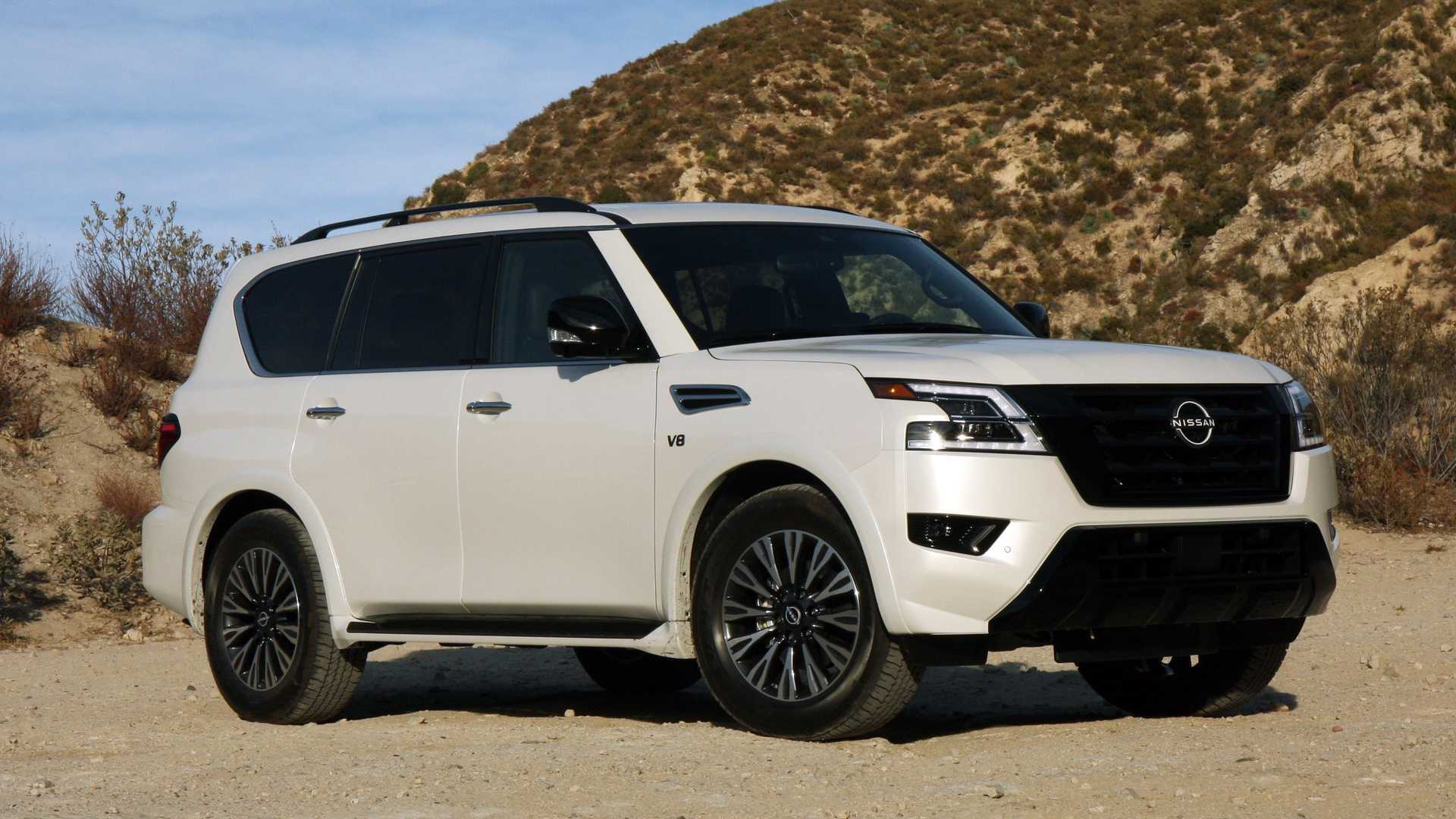
The Armada’s transmission, a five-speed automatic, has proven exceptionally reliable throughout the model’s production run. This transmission delivers smooth shifts under all conditions, from aggressive acceleration to towing heavy trailers, and proves virtually bulletproof when fluid changes are performed at recommended intervals.
The transmission’s robust construction reflects Nissan’s truck-building experience, and many owners report trouble-free operation beyond 200,000 miles.
The four-wheel-drive system features a two-speed transfer case with low-range gearing, providing genuine off-road capability despite the Armada’s size and weight.
The transfer case requires periodic fluid changes, but owners who perform this maintenance report reliable operation even after years of four-wheel-drive use.
The independent front suspension and solid rear axle deliver both acceptable on-road comfort and impressive towing capability, with the Armada rated to tow up to 9,000 pounds when properly equipped.
The Armada’s body-on-frame construction contributes significantly to its longevity and capability. The fully boxed frame, shared with the Titan pickup, resists flexing and stress cracks even under maximum towing loads and challenging off-road conditions.
However, this robust construction also means the Armada weighs over 5,600 pounds, resulting in fuel economy that hovers around 15 mpg in combined driving.
Common issues with the Armada are relatively minor considering the vehicle’s size and complexity. Some models experience rear differential noise, particularly when making tight turns, though this rarely leads to complete failure if addressed promptly with fluid changes or additional friction modifier. The front differential can develop leaks from the axle seals, requiring periodic monitoring and replacement.
The brake master cylinder may develop leaks on higher-mileage examples, a normal wear item rather than a design flaw. Some owners report timing chain noise on higher-mileage examples, though replacement prevents more serious engine damage and is less expensive than belt-driven timing systems would be.
9. Nissan Murano (2003-2007)
The first-generation Nissan Murano introduced a new category of crossover SUV, combining car-like driving dynamics with SUV utility and distinctive styling.
While the Murano’s unconventional design initially generated mixed reactions, the vehicle has proven its worth through exceptional reliability and longevity, with many examples continuing to serve their owners faithfully after two decades of service.
The Murano’s reliability foundation rests on the proven VQ35DE 3.5-liter V6 engine, producing 245 horsepower. This naturally aspirated powerplant represents mature technology that Nissan had refined over years of production across multiple vehicle lines.
The engine features aluminum construction, dual overhead cams, variable valve timing, and a timing chain that eliminates belt replacement concerns. The engine’s conservative tuning ensures longevity even when the Murano is loaded with passengers and cargo.
Owners report these engines delivering smooth, refined operation well beyond 200,000 miles with only routine maintenance. The engine’s robust internal components handle the additional weight of the Murano without exhibiting premature wear, and oil consumption remains minimal even on high-mileage examples.
The engine’s straightforward design means repairs, when eventually needed, remain accessible to independent mechanics and don’t require specialized tools or diagnostic equipment.
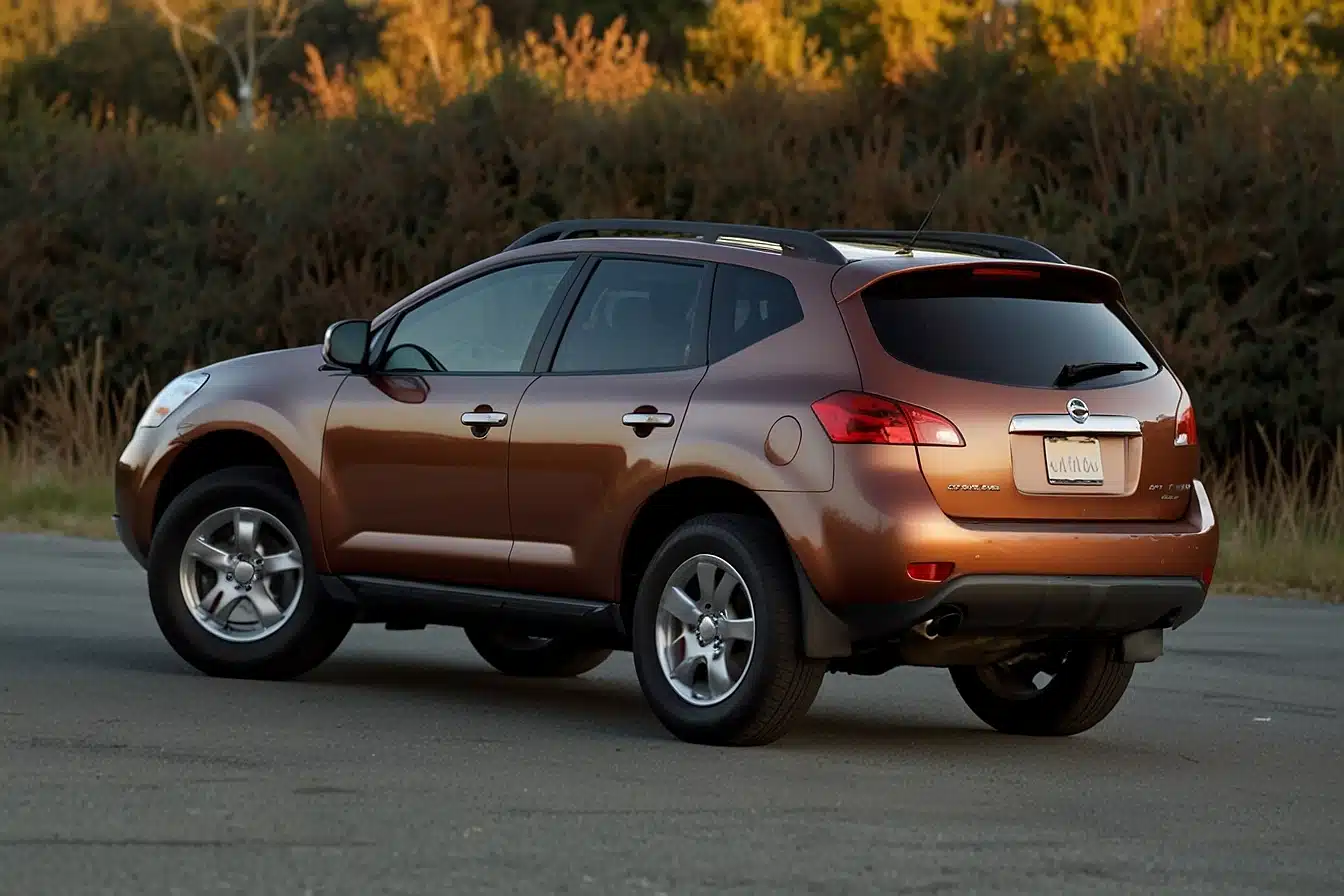
The Murano’s transmission, a CVT (Continuously Variable Transmission), represents one of the early applications of this technology in crossover SUVs.
While CVTs have earned controversial reputations in later Nissan models, the first-generation Murano’s CVT performs adequately when maintained properly.
Regular CVT fluid changes using Nissan’s specified NS-2 fluid at 60,000-mile intervals significantly extend transmission life, with many owners reporting trouble-free operation beyond 150,000 miles.
The Murano’s all-wheel-drive system provides excellent traction in adverse weather conditions while maintaining reliability through years of use.
Unlike traditional transfer-case systems, the Murano uses an electronically controlled coupling that varies power distribution between front and rear wheels.
This system requires minimal maintenance beyond periodic fluid changes and proves reliable even after years of operation in harsh winter climates.
The vehicle’s popularity and long production run mean that independent mechanics have extensive experience servicing these vehicles, keeping maintenance costs reasonable throughout ownership.
The straightforward design and conventional components mean that many routine maintenance tasks can be performed by moderately skilled DIY mechanics, further reducing ownership costs for budget-conscious owners.
10. Nissan Rogue (2008-2013)
The first-generation Nissan Rogue established the template for compact crossover SUVs that would come to dominate the automotive marketplace, combining car-like driving dynamics with practical utility and fuel efficiency.
While later Rogue generations have faced reliability challenges, particularly with CVT transmissions, the 2008-2013 model has proven surprisingly durable, with many examples serving as daily drivers and ride-share vehicles accumulating impressive mileage totals.
The Rogue’s reliability credentials center on the QR25DE 2.5-liter four-cylinder engine, producing 170 horsepower. This naturally aspirated powerplant represents proven technology that Nissan had refined across multiple vehicle lines, including the Altima and Sentra.
The engine features aluminum construction, dual overhead cams, variable valve timing, and a timing chain that eliminates belt replacement concerns. The engine’s conservative tuning ensures adequate power for the Rogue’s modest weight while maintaining longevity.
Owners report these engines delivering reliable operation well beyond 200,000 miles with only routine maintenance, primarily regular oil changes using quality synthetic oil and periodic spark plug replacements.
The engine’s straightforward design means it lacks the complexity of modern turbocharged and direct-injection alternatives, eliminating numerous potential failure points.
Oil consumption remains minimal even on high-mileage examples, and the engine’s aluminum construction provides excellent heat dissipation while resisting corrosion.
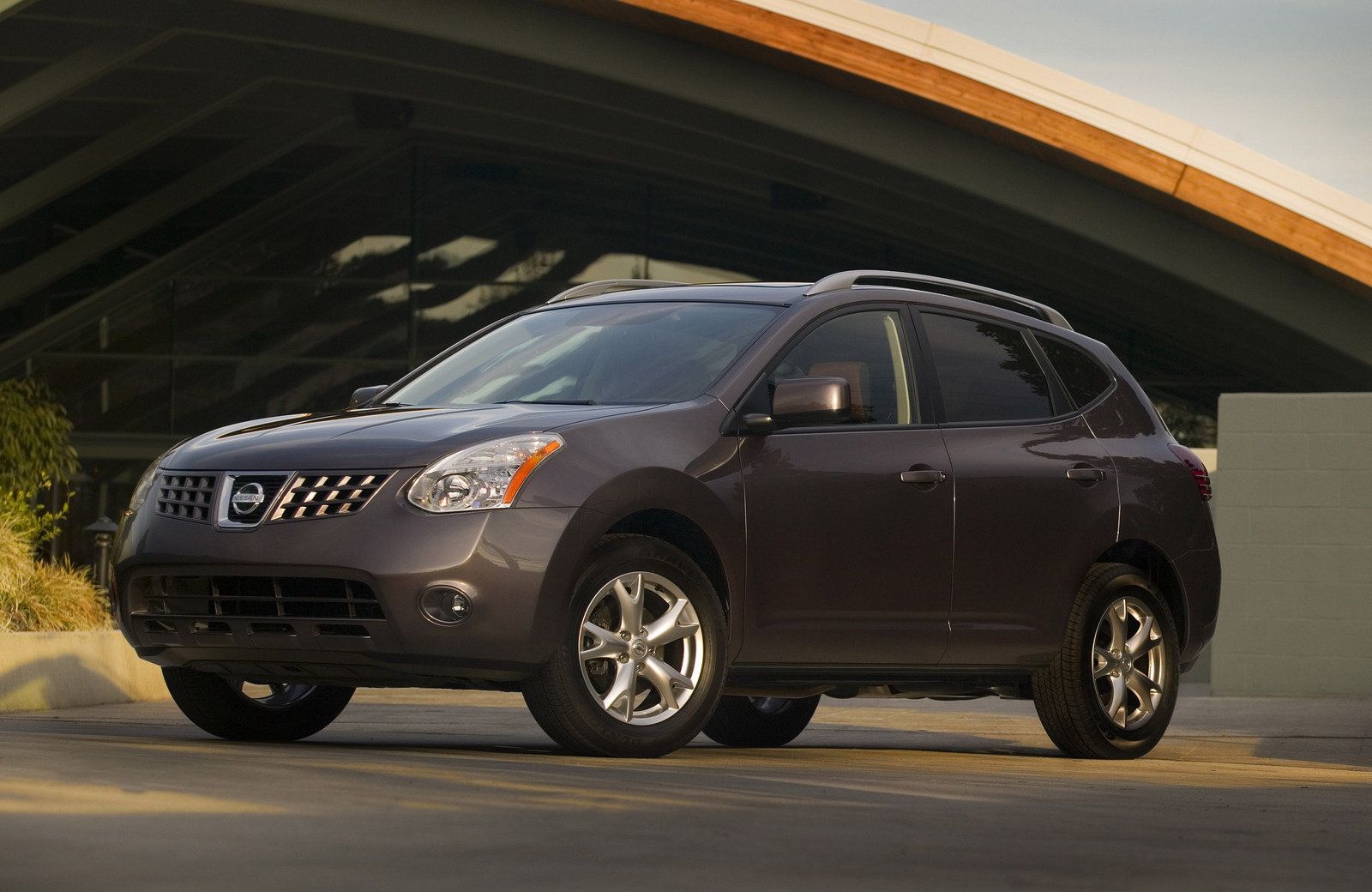
The Rogue’s CVT transmission represents one of the more controversial aspects of the vehicle’s design. While Nissan’s CVT technology has faced criticism in later models, the first-generation Rogue’s CVT performs adequately when maintained properly with regular fluid changes using Nissan’s specified NS-2 or NS-3 fluid at 60,000-mile intervals.
Owners who adhere to these maintenance schedules report significantly better transmission longevity, with many examples exceeding 150,000 miles without major transmission issues.
The all-wheel-drive system, available on higher trim levels, provides excellent traction in adverse weather conditions while maintaining reliability through years of use.
The electronically controlled coupling varies power distribution between front and rear wheels based on driving conditions, and this system requires minimal maintenance beyond periodic fluid changes.
The system proves particularly effective in snow and light off-road conditions, though the Rogue’s car-based platform limits its capability compared to truck-based SUVs.
Some models experience minor electrical issues, including malfunctioning power window switches or door lock actuators, though these repairs remain inexpensive and don’t reflect systemic reliability problems.
The rear hatch struts may weaken over time, requiring replacement to maintain proper hatch support, another minor issue that doesn’t affect the vehicle’s fundamental reliability.
The 2008-2013 Rogue delivers practical crossover utility with better-than-expected reliability when maintained according to manufacturer specifications, making it an excellent value in the used compact crossover market.
Also Read: 9 SUVs That Keep Their Interior Quality for a Decade
