
The automotive industry stands at a revolutionary crossroads, where the dominance of gasoline and diesel engines is being challenged by innovative alternatives that promise cleaner, more sustainable transportation.
For over a century, internal combustion engines powered by petroleum-based fuels have been the backbone of personal mobility, but mounting environmental concerns, volatile fuel prices, and technological breakthroughs are driving a dramatic shift toward alternative fuel vehicles.
This transformation isn’t just about reducing carbon emissions though that remains a critical priority as the world grapples with climate change.
It’s also about energy independence, economic stability, and embracing cutting-edge technology that enhances performance while minimizing environmental impact.
From fully electric vehicles that run on battery power to hydrogen fuel cell cars that emit only water vapor, the modern automotive world offers an impressive array of options for environmentally conscious drivers.
The appeal of alternative fuel vehicles extends beyond environmental benefits. Many of these cars deliver exceptional performance, lower operating costs, and reduced maintenance requirements compared to their traditional counterparts.
Electric vehicles, for instance, provide instant torque and near-silent operation, while hydrogen fuel cell vehicles offer quick refueling times similar to conventional cars. Some alternative fuel options, like compressed natural gas and biodiesel, provide transitional solutions that work with modified versions of existing engine technology.
Whether you’re motivated by environmental stewardship, interested in cutting-edge technology, or simply looking to reduce your fuel costs, understanding these alternative fuel vehicles is essential for making informed decisions about your next car purchase.
The future of transportation is here, and it’s more exciting, diverse, and accessible than ever before. Join us as we explore 14 remarkable cars that are redefining what it means to drive sustainably.
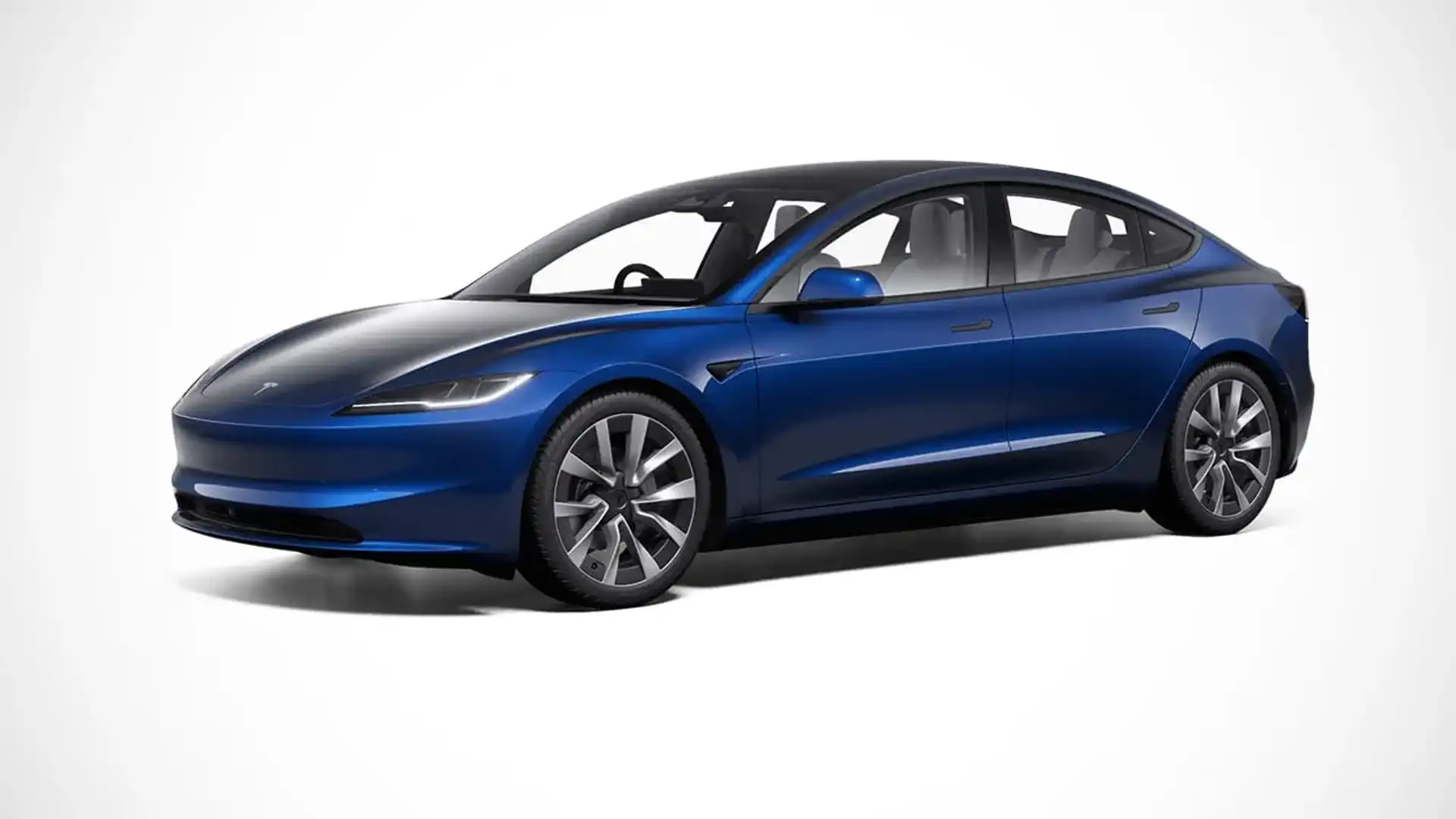
1. Tesla Model 3
The Tesla Model 3 represents a watershed moment in automotive history the point when electric vehicles transitioned from niche luxury items to mainstream transportation.
Since its introduction in 2017, the Model 3 has become the world’s best-selling electric vehicle, proving that sustainable transportation can be practical, affordable, and desirable.
This compact sedan combines cutting-edge battery technology, sophisticated software, and minimalist design philosophy to create a driving experience that has converted countless skeptics into electric vehicle enthusiasts.
At the heart of the Model 3’s appeal is its impressive range capability. Depending on the configuration, the Model 3 can travel between 272 and 358 miles on a single charge, effectively eliminating range anxiety for most daily driving scenarios.
The Long Range variant achieves this through Tesla’s advanced battery management system and aerodynamic design, which boasts a drag coefficient of just 0.23.
This efficiency translates directly into real-world usability, allowing drivers to commute, run errands, and take weekend trips without constantly worrying about finding charging stations.
Performance is another area where the Model 3 shatters expectations about electric vehicles. The base model accelerates from zero to sixty mph in just 5.8 seconds, while the Performance variant rockets to sixty mph in a breathtaking 3.1 seconds, rivaling dedicated sports cars costing twice as much.
This acceleration comes courtesy of electric motors that deliver instant torque all 358 lb-ft available the moment you press the accelerator.
Unlike traditional engines that must build power through rpm ranges, electric motors provide their maximum thrust immediately, creating an exhilarating driving sensation that never gets old.
Operating costs represent one of the Model 3’s most compelling advantages. Electricity costs significantly less than gasoline per mile traveled, and electric motors require minimal maintenance no oil changes, transmission services, or exhaust system repairs.
Regenerative braking extends brake life dramatically by using the electric motors to slow the vehicle, capturing energy and returning it to the battery.
Over the vehicle’s lifetime, these savings can amount to tens of thousands of dollars compared to comparable gasoline-powered sedans.
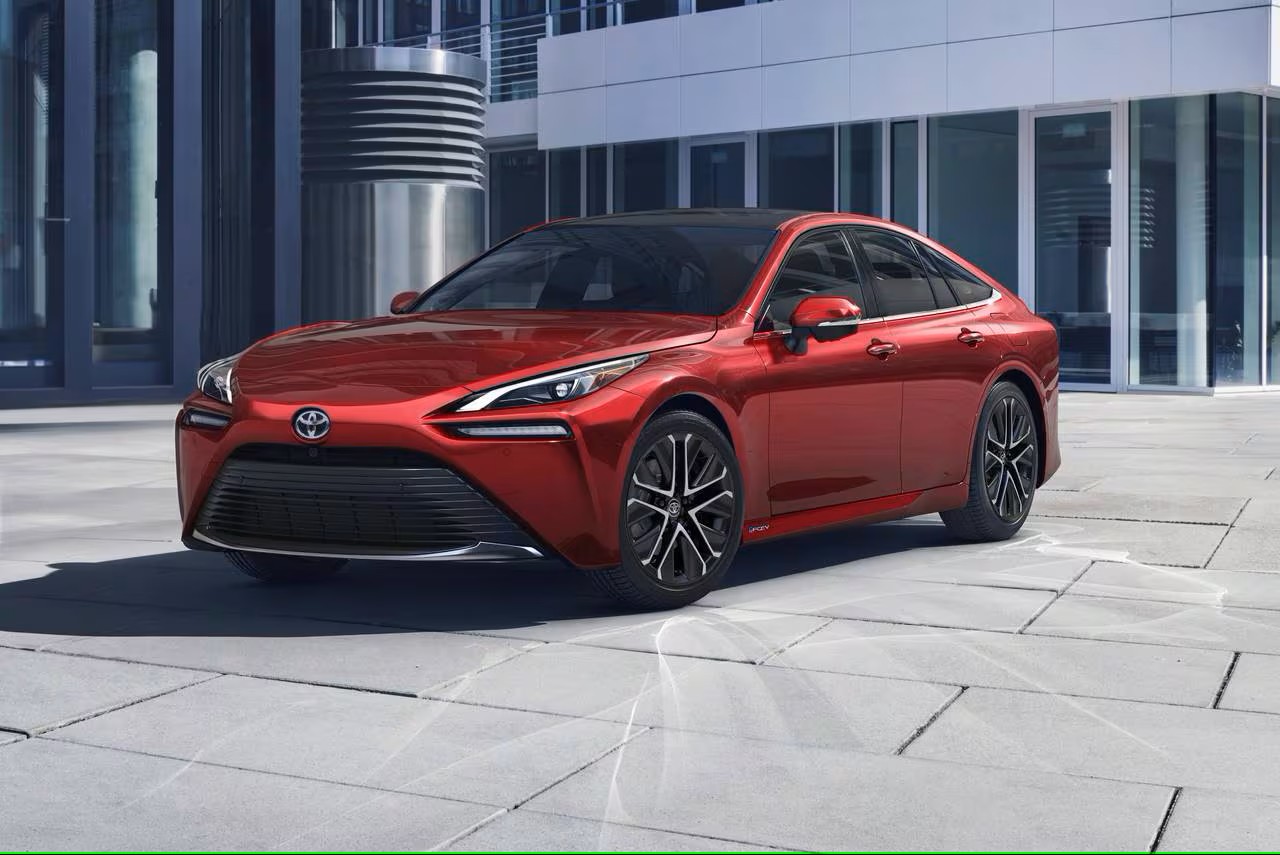
2. Toyota Mirai
The Toyota Mirai stands as a bold statement about hydrogen’s potential as a clean transportation fuel. While most automakers have focused exclusively on battery-electric vehicles, Toyota has maintained its commitment to hydrogen fuel cell technology, and the Mirai represents the culmination of decades of research and development.
This sophisticated sedan generates electricity onboard by combining hydrogen with oxygen in a fuel cell stack, producing only water vapor as emissions while delivering a driving experience remarkably similar to conventional vehicles.
Hydrogen fuel cell technology offers several compelling advantages over battery-electric vehicles, and the Mirai showcases them beautifully. Refueling takes approximately five minutes comparable to filling a gasoline tank rather than the extended charging times required by battery-electric vehicles.
The Mirai’s three high-pressure carbon-fiber tanks hold approximately 5.6 kilograms of hydrogen, providing a range of up to 402 miles on a single fill-up.
This combination of quick refueling and substantial range makes the Mirai particularly appealing for drivers who regularly take long trips or who lack convenient home charging options.
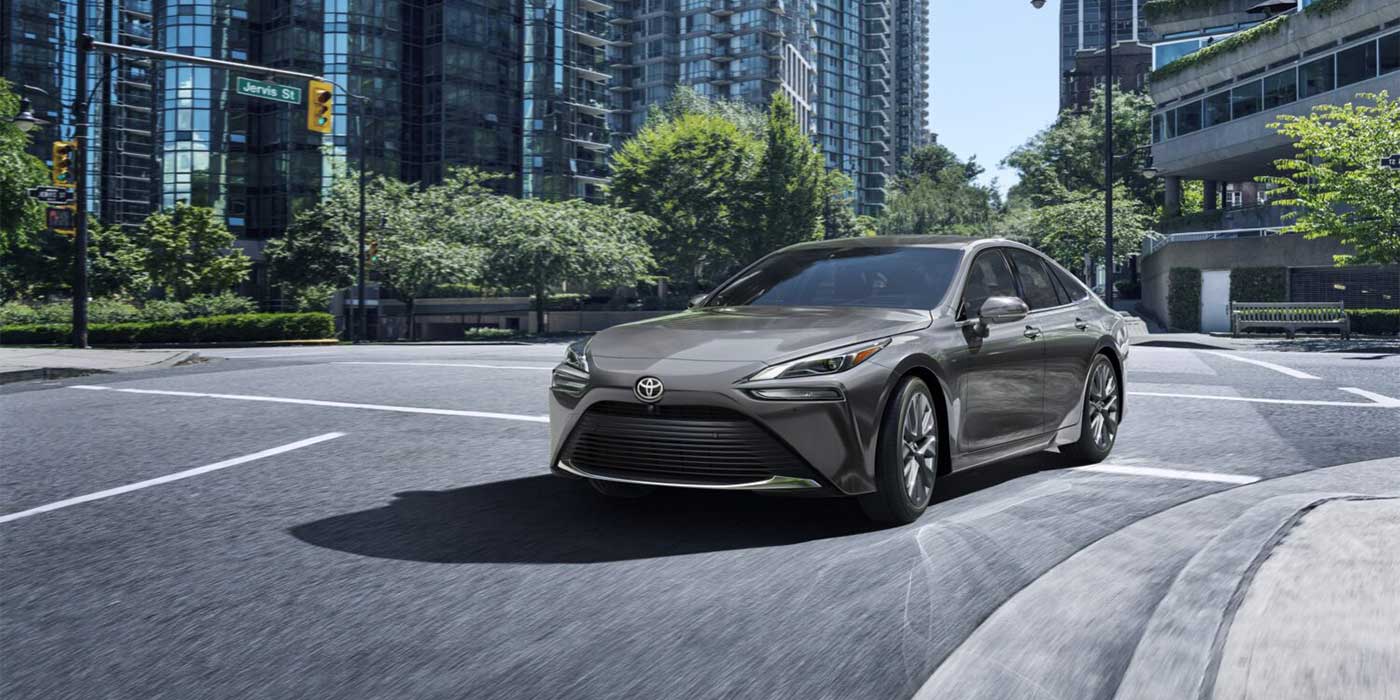
The second-generation Mirai, introduced in 2020, represents a dramatic evolution from its predecessor. Toyota abandoned the first generation’s quirky styling in favor of an elegant, upscale design that positions the car as a premium sedan competing with luxury gasoline vehicles.
The new architecture features a rear-wheel-drive platform a first for Toyota’s hydrogen vehicles delivering improved handling dynamics and a more engaging driving experience.
The transformation raised the Mirai from an interesting technological experiment to a genuinely desirable automobile that happens to run on hydrogen.
The primary challenge facing the Mirai isn’t the technology but the infrastructure. Hydrogen refueling stations remain scarce, concentrated primarily in California, with limited networks in Japan, Korea, and parts of Europe.
This infrastructure gap restricts Mirai’s practicality to specific geographic regions where hydrogen is readily available. However, Toyota remains committed to hydrogen technology, betting that infrastructure will expand as more fuel cell vehicles enter the market and as hydrogen production from renewable sources becomes more economical and widespread.
3. Chevrolet Bolt EV
General Motors’ Chevrolet Bolt EV democratized electric vehicle ownership when it launched in 2016, offering genuinely practical range at a price point accessible to middle-class buyers.
While Tesla captured headlines with its premium offerings, the Bolt EV proved that electric transportation didn’t require luxury pricing.
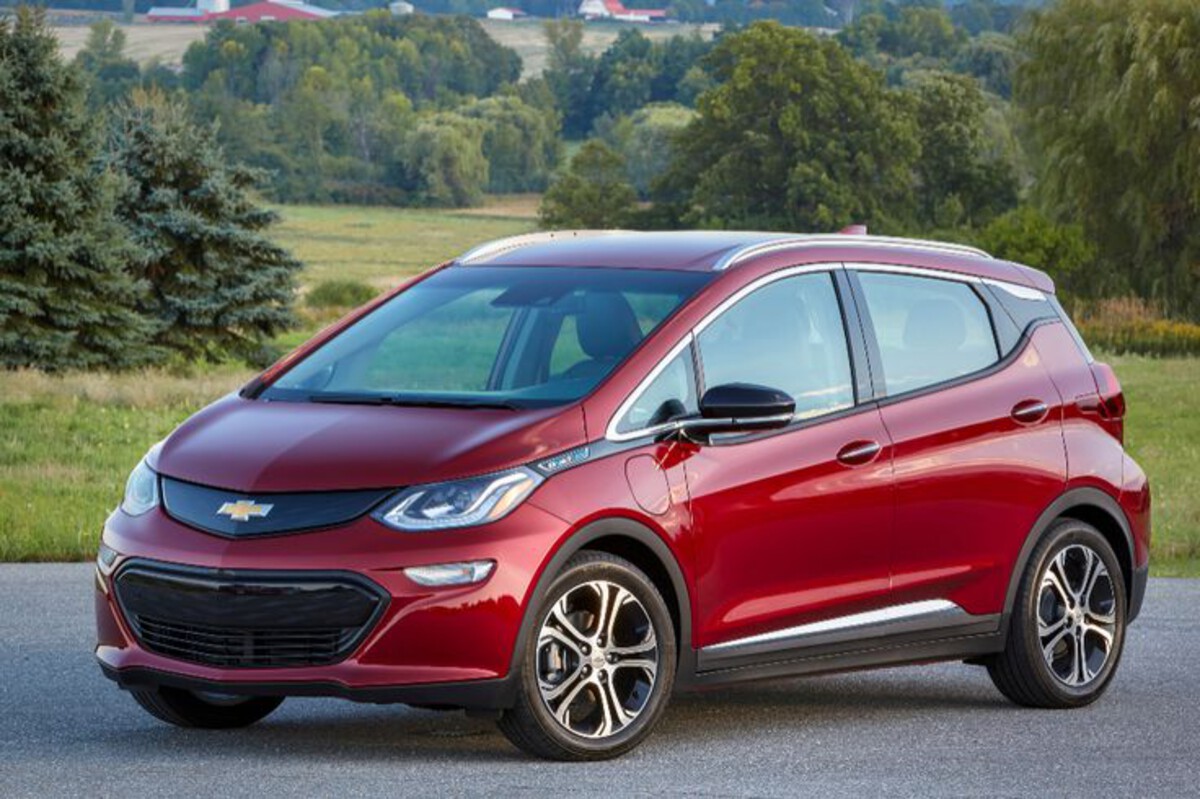
This compact hatchback delivers an EPA-estimated 259 miles of range, spacious interior accommodation, and peppy performance, all wrapped in a package that starts well below $30,000 after federal incentives making it one of the most compelling value propositions in the electric vehicle market.
The Bolt EV’s 66-kilowatt-hour battery pack provides sufficient capacity for real-world driving without adding excessive weight or cost.
Chevrolet’s engineers positioned the battery pack beneath the floor, lowering the center of gravity and improving handling while maximizing interior space.
The result is a surprisingly roomy cabin that comfortably seats five adults, with 16.9 cubic feet of cargo space behind the rear seats expanding to 56.6 cubic feet with the seats folded more than many compact SUVs offer. This practicality makes the Bolt EV an excellent family vehicle or primary car for households looking to go all-electric.
Performance from the Bolt EV’s 200-horsepower electric motor exceeds expectations for a car in this price range. Zero to sixty mph arrives in approximately 6.5 seconds, making the Bolt quicker than most economy cars while providing the instant acceleration characteristic of electric powertrains.
The driving experience feels nimble and responsive, particularly in urban environments where the electric motor’s immediate torque delivery makes going through the traffic a breeze. Sport mode sharpens throttle response for more spirited driving, while Low mode increases regenerative braking for one-pedal driving that minimizes brake use.
General Motors’ commitment to electric vehicles strengthens the Bolt EV’s value proposition. The company has announced ambitious electrification plans, ensuring that Bolt owners won’t be orphaned with unsupported vehicles.
GM’s extensive dealer network provides maintenance and service access across North America, addressing a concern some buyers have about purchasing electric vehicles from manufacturers with limited service infrastructure.
Additionally, Chevrolet’s eight-year, 100,000-mile battery warranty provides peace of mind regarding the most expensive component’s longevity.
4. Hyundai Nexo
The Hyundai Nexo represents South Korea’s ambitious entry into hydrogen fuel cell technology, packaged in a practical crossover SUV format that appeals to mainstream consumers.
As one of the few hydrogen fuel cell vehicles available to retail customers, the Nexo demonstrates that this technology can scale beyond specialty sedans into family-friendly utility vehicles.
With seating for five, generous cargo capacity, and advanced technology features, the Nexo makes a compelling case for hydrogen as a viable alternative to both gasoline and battery-electric powertrains.
Hyundai’s fuel cell technology in the Nexo achieves impressive efficiency and performance metrics. The vehicle’s fuel cell stack generates electricity by combining 6.3 kilograms of stored hydrogen with atmospheric oxygen, producing enough power to travel up to 380 miles on a single tank exceeding the range of many battery-electric vehicles.
The system operates efficiently in temperatures ranging from -22 to 104 degrees Fahrenheit, addressing concerns about hydrogen fuel cell performance in extreme climates. This temperature tolerance makes the Nexo suitable for year-round use across diverse geographic regions.
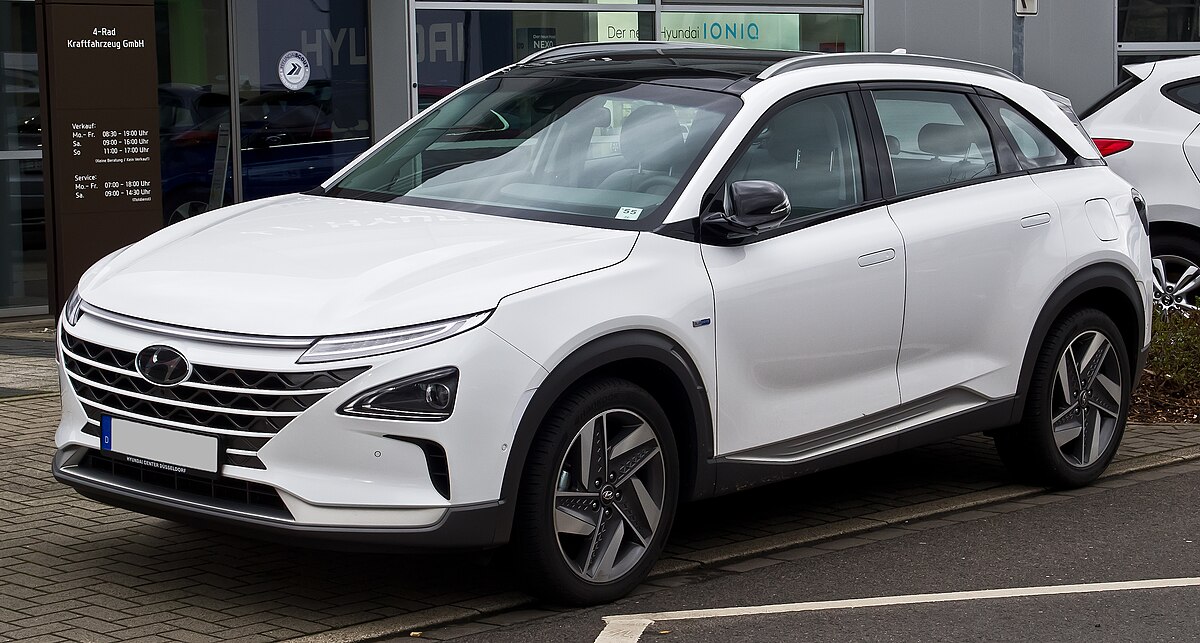
The crossover format gives the Nexo practical advantages over sedan-bodied fuel cell vehicles. The raised seating position provides excellent visibility, while the spacious interior accommodates families comfortably.
Cargo capacity reaches 29.6 cubic feet behind the rear seats, expanding to 56.9 cubic feet with seats folded sufficient for weekend trips, sports equipment, or substantial shopping runs.
The hydrogen storage tanks, integrated beneath the rear seats and cargo floor, don’t significantly compromise interior space, showcasing how effectively Hyundai’s engineers packaged the complex fuel cell system.
Like the Toyota Mirai, the Nexo’s practicality is limited by hydrogen infrastructure availability. The vehicle is primarily available in California, where the state has invested in developing hydrogen refueling stations.
Hyundai provides complimentary hydrogen fueling for three years or $15,000 worth of fuel to Nexo buyers, helping offset the higher purchase price and limited refueling options.
As hydrogen infrastructure expands driven by applications in heavy-duty trucks, buses, and industrial equipment the Nexo’s practicality will increase, potentially making hydrogen fuel cell vehicles viable options for broader markets.
Also Read: 10 Most Expensive SUVs Ever Made – All Time Priciest
5. Nissan Leaf
The Nissan Leaf deserves recognition as the vehicle that brought electric cars to the masses, predating Tesla’s Model 3 by years and proving that major automakers could produce practical, affordable electric vehicles in significant volumes.
Since its introduction in 2010, the Leaf has become the world’s best-selling electric vehicle historically, with over 600,000 units sold globally. This pioneering compact hatchback demonstrated that electric transportation could work for ordinary families, not just early adopters willing to compromise practicality for environmental principles.
The current-generation Leaf, introduced in 2017 and updated regularly, offers two battery options addressing different buyer needs. The standard 40-kilowatt-hour pack provides 149 miles of EPA-estimated range sufficient for most daily driving and local errands.
The optional 60-kilowatt-hour pack extends range to 212 miles, making the Leaf Plus variant suitable for longer commutes and weekend trips. While these figures trail newer competitors, they remain entirely adequate for the vehicle’s intended purpose as an affordable urban runabout and family second car.
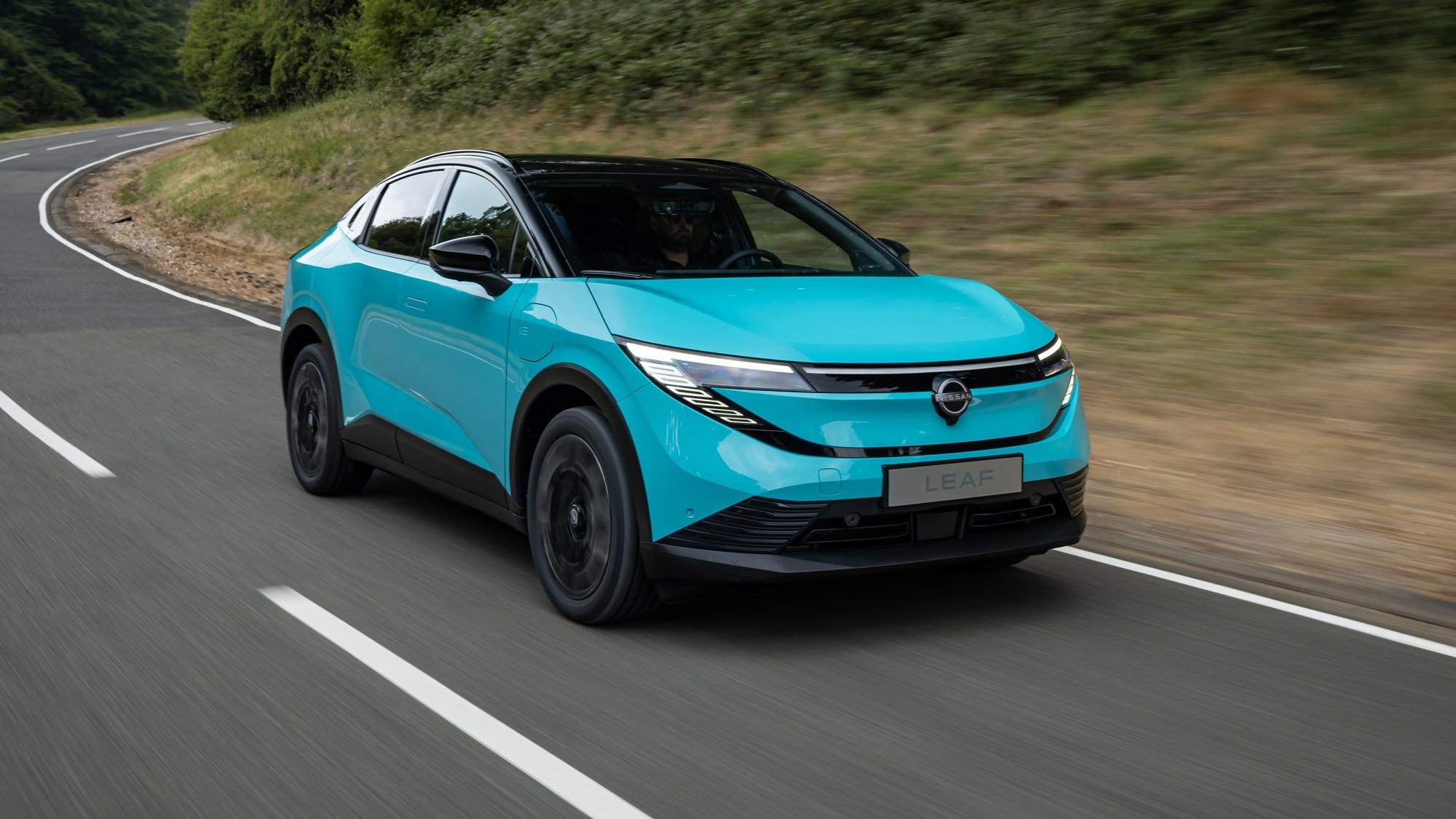
Nissan’s e-Pedal technology transforms the Leaf’s driving experience by enabling true one-pedal operation. When activated, releasing the accelerator triggers aggressive regenerative braking that brings the vehicle to a complete stop and holds it there using the electric motor’s resistance and friction brakes.
This system captures kinetic energy that would otherwise dissipate as heat, returning it to the battery while simultaneously reducing brake wear. Drivers quickly develop muscle memory for this driving style, which proves particularly effective in stop-and-go traffic where it reduces driver fatigue and maximizes efficiency.
Long-term reliability data supports the Leaf’s reputation as a dependable electric vehicle. Early models experienced some battery degradation issues in extreme climates, but Nissan addressed these concerns in later generations with improved thermal management.
The simplicity of electric powertrains with far fewer moving parts than internal combustion engines translates to lower maintenance costs and fewer potential failure points.
Many first-generation Leafs remain in service over a decade later, still providing practical transportation with minimal issues beyond normal battery capacity fade, validating Nissan’s engineering approach.
6. BMW i4
BMW’s i4 demonstrates that electrification and driving pleasure aren’t mutually exclusive, packaging potent electric powertrains in an elegant gran coupe body that maintains the sporting character for which the brand is renowned.
This electric sedan targets luxury buyers who appreciate performance but no longer want the environmental impact or operating costs of traditional gasoline engines.
With range exceeding 300 miles, exhilarating acceleration, and the refinement expected from a premium German automaker, the i4 proves that going electric doesn’t require compromising the driving experience.
The i4 lineup offers two distinct variants addressing different priorities. The i4 eDrive40 focuses on efficiency and range, employing a single rear-mounted motor producing 335 horsepower and achieving up to 301 miles of EPA-estimated range from its 83.9-kilowatt-hour battery.
The i4 M50 prioritizes performance with dual motors generating a combined 536 horsepower and 586 lb-ft of torque, launching the sedan from zero to sixty mph in just 3.7 seconds firmly in sports car territory. Both variants deliver the instant, seamless power delivery that makes electric powertrains so engaging, with the dual-motor M50 adding aggressive all-wheel-drive grip.
BMW’s chassis tuning expertise shines through in the i4’s driving dynamics. Despite carrying substantial battery weight, the sedan handles with the poise and precision BMW enthusiasts expect.
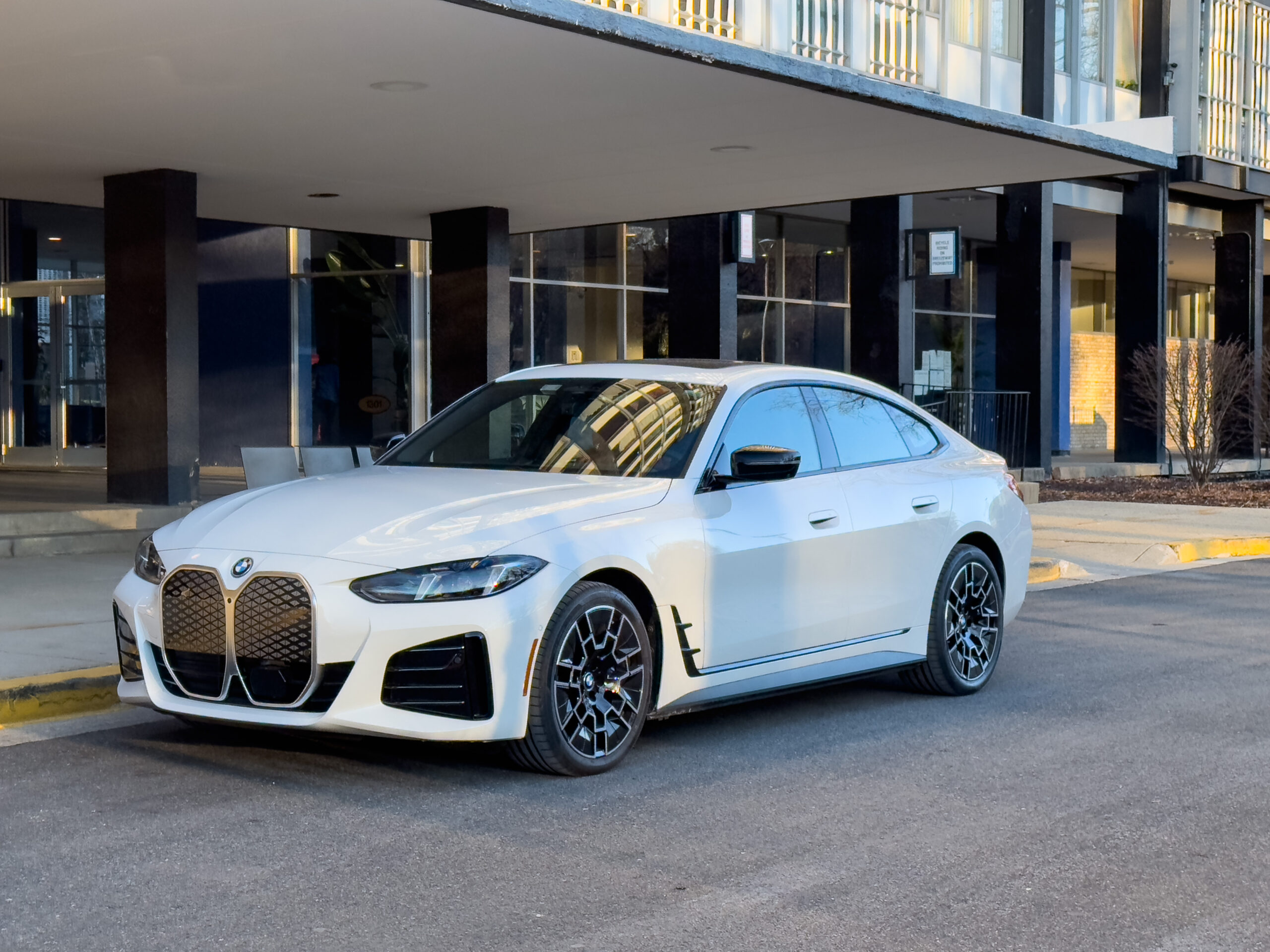
The low-mounted battery pack lowers the center of gravity, reducing body roll and improving cornering stability. Adaptive dampers continuously adjust to road conditions and driving style, maintaining composure over rough pavement while providing the control necessary for spirited driving.
The steering offers excellent feedback and accuracy, maintaining the connected feel that distinguishes BMW from competitors prioritizing comfort over engagement.
The Gran Coupe body style combines sedan practicality with coupe elegance. The sloping roofline creates a dramatic profile while maintaining adequate rear-seat headroom for adults.
The liftback hatch provides versatile cargo access, with 11.6 cubic feet of trunk space supplemented by split-folding rear seats that expand capacity for longer items.
The interior exudes the quality and sophistication expected from a premium German sedan, with available leather upholstery, open-pore wood trim, and meticulous attention to detail.
The seating position is lower and more sporting than crossovers, appealing to drivers who prioritize driving engagement over commanding visibility.
BMW’s commitment to sustainable materials and production processes extends beyond the i4’s zero-emission powertrain. The cabin incorporates recycled materials and responsibly sourced components, while BMW’s manufacturing facilities increasingly rely on renewable energy.
The company offers renewable energy charging plans in some markets, allowing i4 owners to ensure their vehicle’s operation produces zero indirect emissions from electricity generation.
These efforts position the i4 as a genuinely sustainable luxury choice for environmentally conscious buyers who refuse to compromise performance or refinement.
7. Honda Clarity Fuel Cell
Honda’s Clarity Fuel Cell represents another major automaker’s commitment to hydrogen technology, offering a spacious sedan that prioritizes practicality and comfort over flashy design or sports-car performance.
While Honda discontinued production in 2021 to focus on battery-electric vehicles, the Clarity Fuel Cell remains available in California’s used market and continues serving hydrogen-curious drivers who want dependable, roomy transportation with zero tailpipe emissions.
The vehicle demonstrates hydrogen technology’s maturity and Honda’s engineering excellence in packaging complex systems into user-friendly vehicles.
The Clarity’s fuel cell system generates electricity remarkably efficiently, combining 5.46 kilograms of hydrogen with atmospheric oxygen to power a 174-horsepower electric motor.
This configuration provides an EPA-estimated range of 360 miles sufficient for most weekly driving without refueling. The system operates quietly and smoothly, with none of the vibration or noise characteristic of internal combustion engines.
Drivers accustomed to conventional cars adapt immediately to the Clarity, as the driving experience feels remarkably conventional aside from the silent operation and complete absence of exhaust emissions beyond water vapor.
Honda prioritized interior space and comfort in the Clarity’s design, creating a cabin that accommodates five passengers with generous legroom and headroom in both rows.
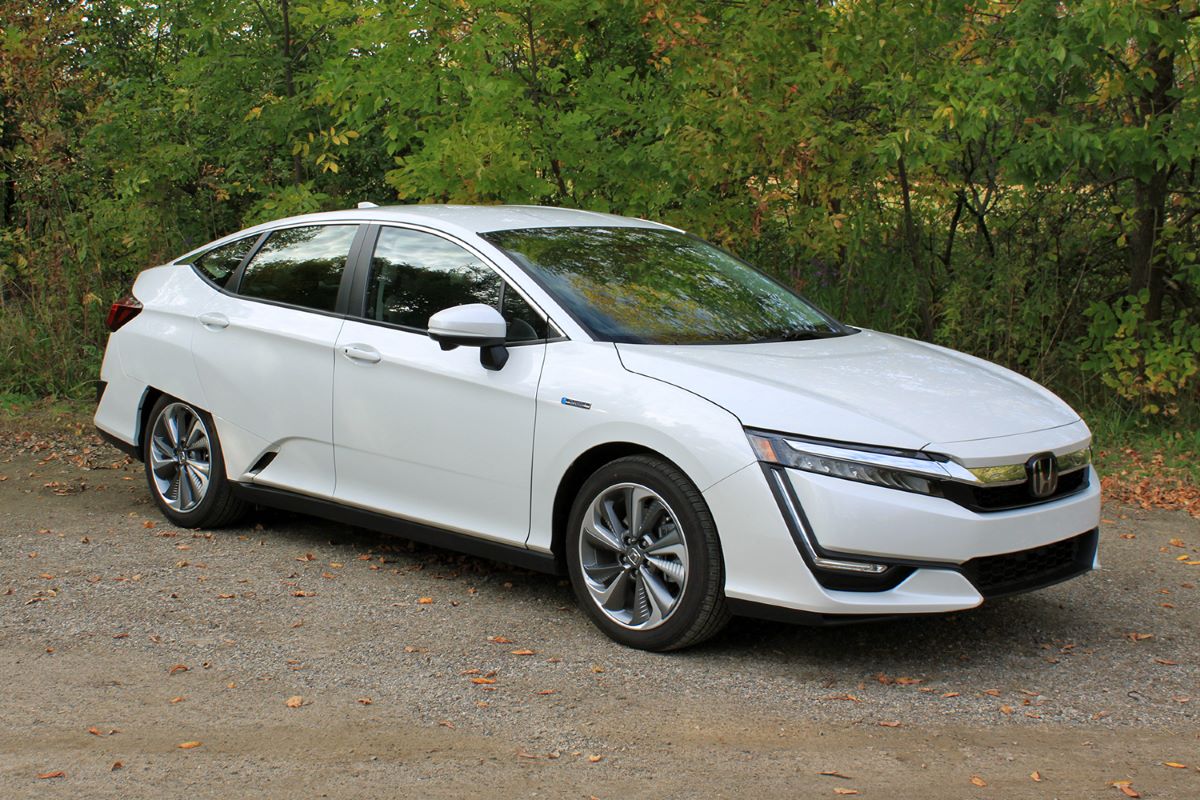
The fuel cell stack fits beneath the hood, while hydrogen tanks integrate under the floor and rear seat, minimizing intrusion into passenger and cargo space. The trunk provides 11.8 cubic feet of capacity smaller than conventional sedans due to hydrogen storage but adequate for luggage and groceries.
The materials quality and fit-and-finish meet Honda’s typical standards, with supportive seats and intuitive controls creating a pleasant environment for daily driving.
Technology features position the Clarity as a well-equipped premium sedan. The standard equipment includes an 8-inch touchscreen infotainment system with Apple CarPlay and Android Auto compatibility, navigation with hydrogen station locations, dual-zone automatic climate control, and an 8-speaker audio system.
Honda’s Sensing suite of driver assistance technologies comes standard, providing adaptive cruise control, lane-keeping assist, automatic emergency braking, and road departure mitigation.
These features reduce driver stress during commutes and longer trips while improving safety through active intervention when necessary.
The Clarity Fuel Cell’s discontinuation reflects the automotive industry’s current prioritization of battery-electric vehicles over hydrogen fuel cells for passenger cars.
While hydrogen technology offers advantages in refueling speed and range, the infrastructure requirements and current costs make battery-electric vehicles more practical for mainstream adoption.
However, Honda continues developing hydrogen technology for commercial vehicles, and the Clarity’s engineering achievements may inform future applications where hydrogen’s benefits particularly quick refueling and long range prove more valuable than in passenger cars where overnight home charging and improving battery technology address most concerns.
8. Audi e-tron GT
The Audi e-tron GT redefines electric vehicle possibilities, combining breathtaking performance with luxurious refinement in a stunning gran turismo body that turns heads everywhere it goes.
Sharing its underlying platform with the Porsche Taycan, the e-tron GT demonstrates Audi’s commitment to electrification while maintaining the sporting character and attention to detail for which the brand is celebrated.
This isn’t an electric vehicle making compromises it’s a world-class performance sedan that happens to be electric, offering driving thrills that rival or exceed conventional supercars.
Two variants offer different performance levels, both extraordinary by any standard. The standard e-tron GT produces 469 horsepower normally, increasing to 522 horsepower during launch control activation, propelling the sedan from zero to sixty mph in 3.9 seconds.
The RS e-tron GT escalates dramatically, generating 590 horsepower in normal driving that surges to 637 horsepower with launch control engaged, dropping the zero-to-sixty sprint to a supercar-rivaling 3.1 seconds.
Both variants deliver their performance with refined composure, combining explosive acceleration with the smooth, silent power delivery characteristic of electric powertrains.
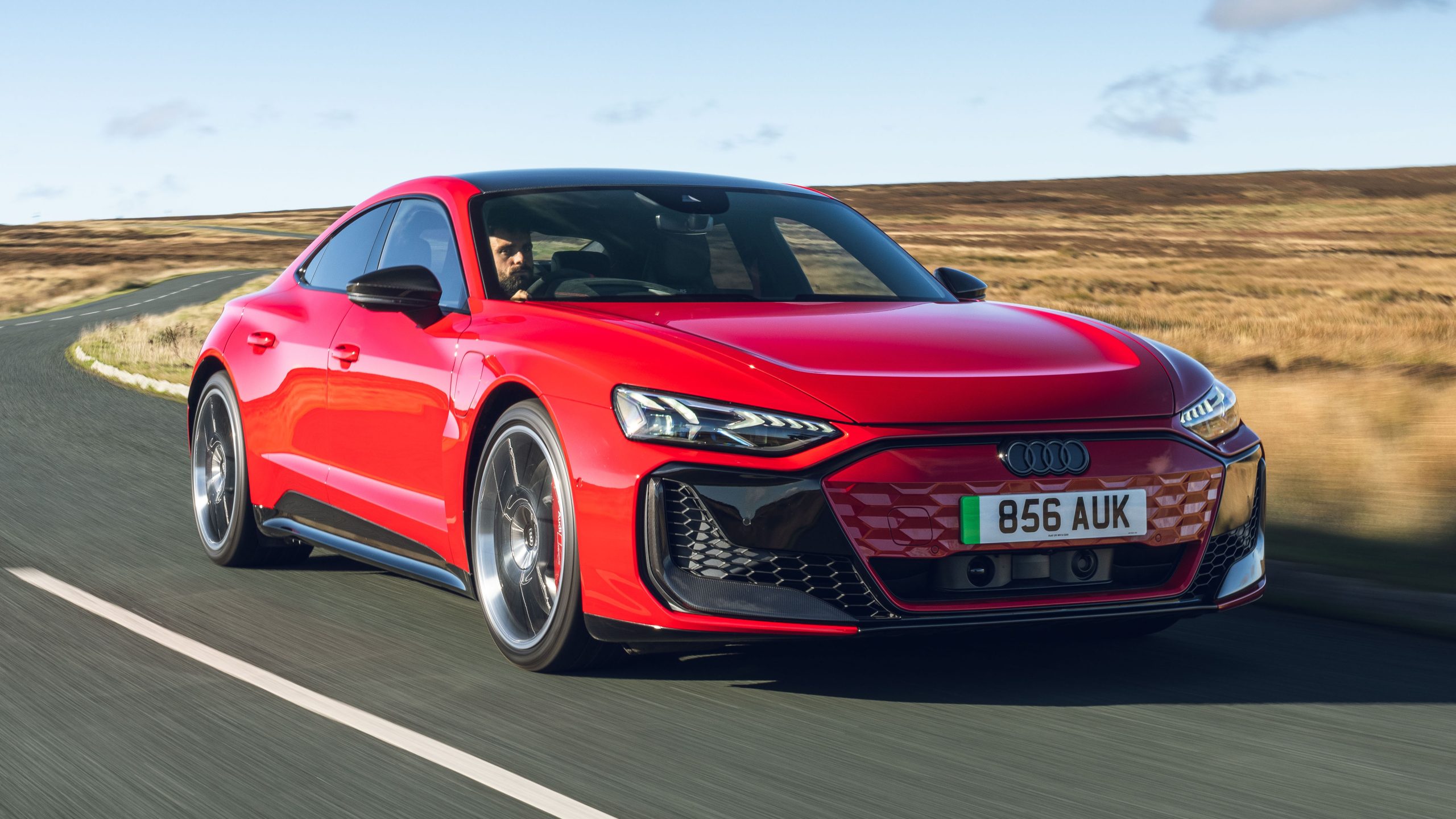
The e-tron GT’s design achieves rare harmony between aesthetic beauty and aerodynamic efficiency. The low, wide stance and sweeping roofline create dramatic proportions, while careful attention to airflow management achieves a drag coefficient of 0.24 impressive for such an aggressive-looking vehicle.
Functional design elements like the front air intakes and rear diffuser serve genuine aerodynamic purposes rather than merely suggesting performance.
The available carbon-fiber roof reduces weight and lowers the center of gravity further, while matrix LED headlights and digital OLED taillights showcase cutting-edge lighting technology.
The e-tron GT’s acoustic engineering creates an engaging sound signature despite the electric powertrain’s inherent silence. Audi developed a synthesized sound that enhances the driving experience, providing auditory feedback that helps drivers sense acceleration and deceleration.
Unlike some artificial sounds that feel gimmicky, Audi’s implementation complements rather than dominates the experience.
Combined with exceptional build quality that eliminates squeaks and rattles, the cabin provides an serene environment for relaxed cruising or an exciting cockpit for spirited driving demonstrating that electric vehicles can deliver emotional engagement without combustion engines.
9. Ford F-150 Lightning
The Ford F-150 Lightning represents a pivotal moment in vehicle electrification taking America’s best-selling vehicle for over four decades and reimagining it with electric power.
This pickup truck proves that electrification can enhance rather than compromise truck capability, offering tremendous torque for towing, innovative features enabled by the electric architecture, and operating costs dramatically lower than gasoline-powered equivalents.
For truck loyalists skeptical about electric vehicles, the Lightning demonstrates that electrification aligns perfectly with truck priorities of capability, utility, and work-readiness.
Two battery options address different range and capability needs. The standard 98-kilowatt-hour pack provides 240 miles of EPA-estimated range for everyday driving and moderate towing.
The extended-range 131-kilowatt-hour battery increases range to 320 miles while boosting maximum payload capacity and towing ratings.
Both configurations deliver performance that shames gasoline-powered trucks the extended-range Lightning produces 580 horsepower and 775 lb-ft of torque, launching the 6,500-pound pickup from zero to sixty mph in approximately 4 seconds.
This brutal acceleration comes courtesy of dual electric motors providing all-wheel drive with instantaneous torque delivery that makes merging, passing, and towing effortless.
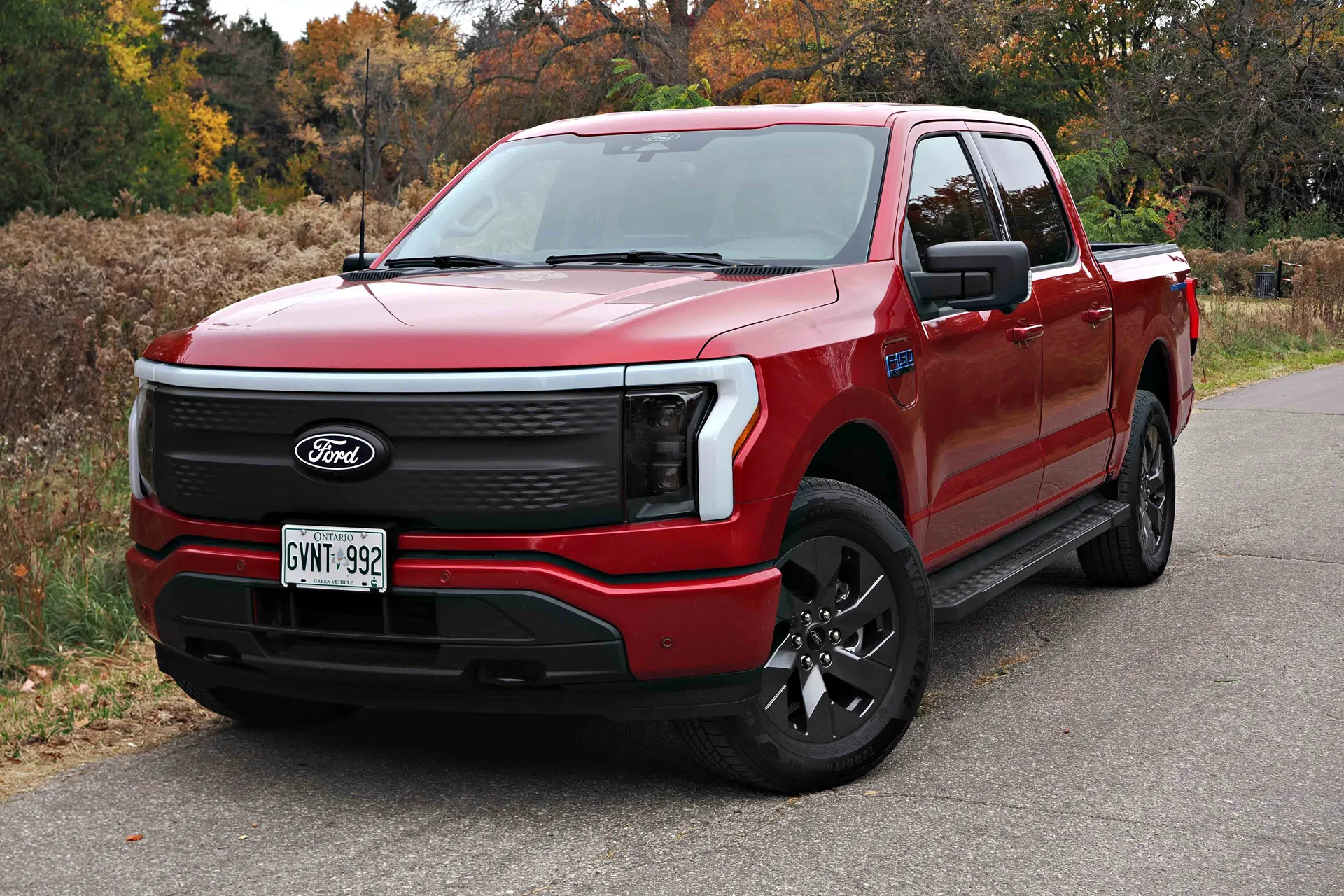
Towing capability matches or exceeds conventional F-150 models, with properly equipped Lightnings rated to pull up to 10,000 pounds sufficient for large travel trailers, boat combinations, or equipment trailers.
The instant torque from electric motors provides exceptional low-speed pulling power, making difficult launches up steep inclines or from slippery surfaces easier than with gasoline engines that must build power through rpm ranges.
However, towing significantly reduces range, as aerodynamic drag and increased weight dramatically impact efficiency.
Ford’s onboard computer predicts range accurately when trailering, helping drivers plan charging stops, though long-distance towing requires more frequent stops than gasoline trucks.
The Lightning’s significance extends beyond its specifications. By electrifying the F-150, Ford signals that trucks historically the last vehicles expected to go electric can embrace new technology while maintaining the capability customers demand.
The Lightning appeals not just to environmental advocates but to practical truck owners who appreciate the lower operating costs, reduced maintenance requirements, and impressive performance.
This mainstream acceptance of electric trucks may prove more important to vehicle electrification’s success than any luxury sedan, demonstrating that sustainable transportation aligns with American truck culture.
10. Rivian R1T
The Rivian R1T reimagines the pickup truck from the ground up for the electric era, combining serious off-road capability with innovative features that leverage electric architecture’s advantages.
As the first production vehicle from the California-based startup, the R1T demonstrates that newcomers can challenge established automakers with fresh perspectives on vehicle design.
This adventure-focused pickup appeals to outdoor enthusiasts who want capability for exploring remote locations while minimizing environmental impact proving that sustainability and serious off-roading aren’t contradictory goals.
Rivian offers multiple battery configurations, with the Large pack providing approximately 314 miles of range and the Max pack extending range to about 400 miles.
Both configurations employ quad-motor all-wheel drive, with independent motors at each wheel enabling torque vectoring that enhances both on-road handling and off-road capability. The system can direct power to individual wheels based on traction availability, providing exceptional control on challenging terrain.
Total system output reaches 835 horsepower and 908 lb-ft of torque in the highest-performance configuration, delivering supercar acceleration zero to sixty mph in just 3 seconds from a 7,000-pound pickup truck.
Off-road capability sets the R1T apart from conventional electric vehicles. Adjustable air suspension provides up to 14.9 inches of ground clearance more than most dedicated off-road vehicles.
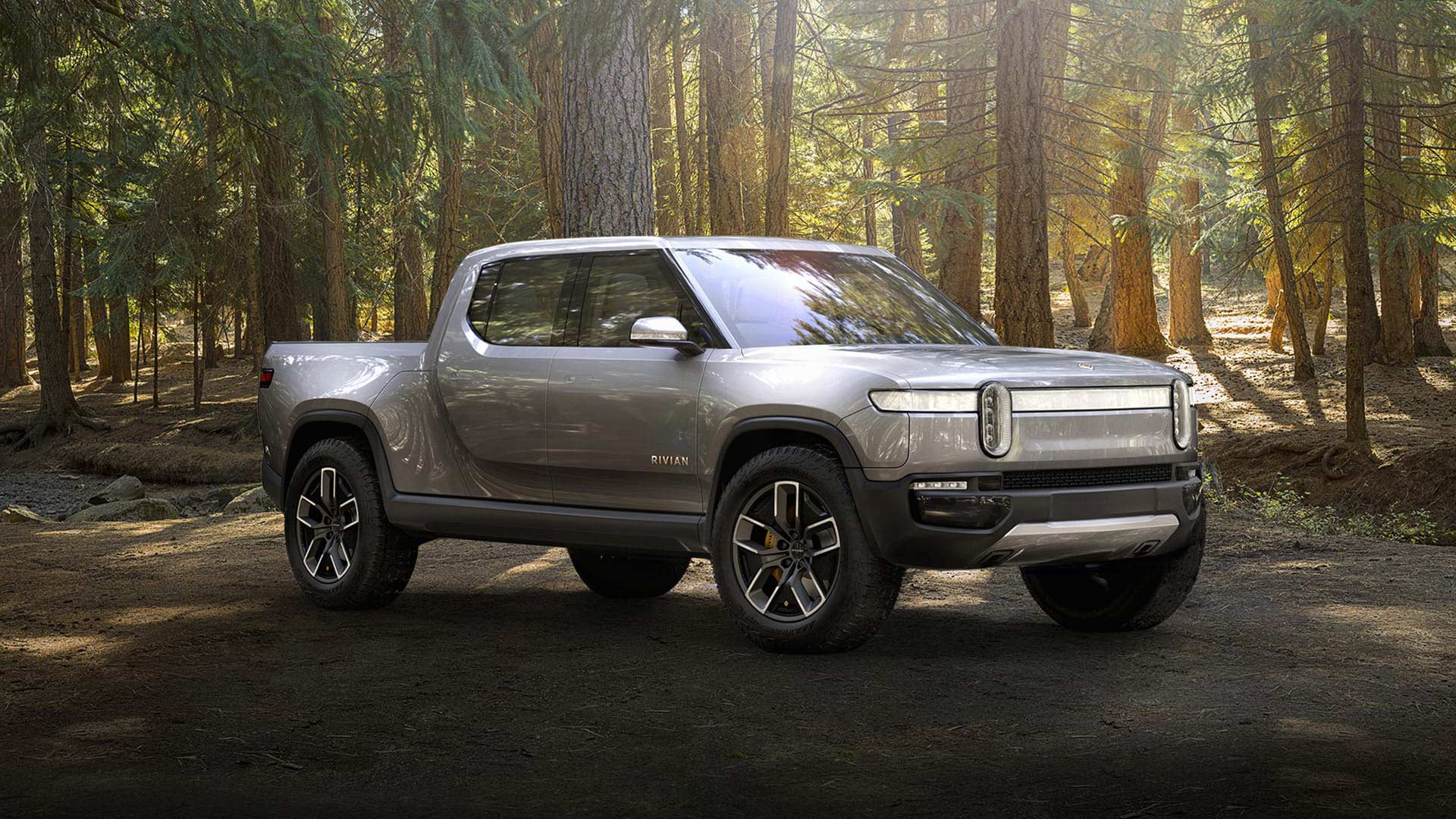
Approach, breakover, and departure angles of 34, 26, and 29 degrees, respectively, allow the R1T to tackle steep obstacles without scraping bodywork.
The quad-motor system’s ability to individually control each wheel provides capabilities that four-wheel-drive systems with mechanical differentials cannot match, maintaining forward progress even when multiple wheels lose traction. Wading depth reaches 43 inches, enabling the R1T to ford streams that would swamp conventional trucks.
Rivian’s driver assistance systems provide convenience and safety on highways and trails. Highway Assist offers adaptive cruise control with lane centering for reduced-stress commuting, while the comprehensive camera system aids in going through the tight trails or parking.
The 360-degree camera view helps place the R1T precisely when rock crawling or maneuvering in confined spaces.
Unlike some driver assistance systems that limit functionality off-pavement, Rivian designed its systems to function on trails, maintaining features like hill descent control and traction management on any surface.
The R1T’s Adventure Network charging infrastructure provides DC fast charging stations at trailheads and recreation areas locations often underserved by traditional charging networks.
These strategically placed chargers ensure R1T owners can access remote destinations without range anxiety, while also serving broader electric vehicle adoption by expanding infrastructure to adventure-focused locations.
This integrated approach to vehicle and infrastructure development demonstrates Rivian’s understanding that electric adventure vehicles require charging solutions beyond urban areas.
11. Porsche Taycan
The Porsche Taycan shattered preconceptions about electric vehicle performance when it debuted in 2019, proving that electrification could enhance rather than compromise the driving dynamics for which Porsche is legendary.
This electric sport sedan delivers blistering acceleration, precise handling, and the build quality expected from the Stuttgart manufacturer, wrapped in distinctive styling that clearly identifies its Porsche DNA.
The Taycan appeals to driving enthusiasts who want cutting-edge technology and environmental responsibility without sacrificing the visceral thrills that make sports cars emotionally engaging.
Porsche offers the Taycan in multiple variants spanning a wide performance spectrum. The base model delivers 402 horsepower with available overboost function, while the flagship Taycan Turbo S produces 750 horsepower with launch control activated.
This top variant rockets from zero to sixty mph in just 2.6 seconds among the quickest production cars regardless of powertrain. All Taycans employ dual-motor all-wheel drive that distributes torque intelligently for maximum traction and stability.
The powertrain’s responsiveness amazes even experienced performance car drivers, with instantaneous throttle response that makes turbocharged gasoline engines feel laggy by comparison.
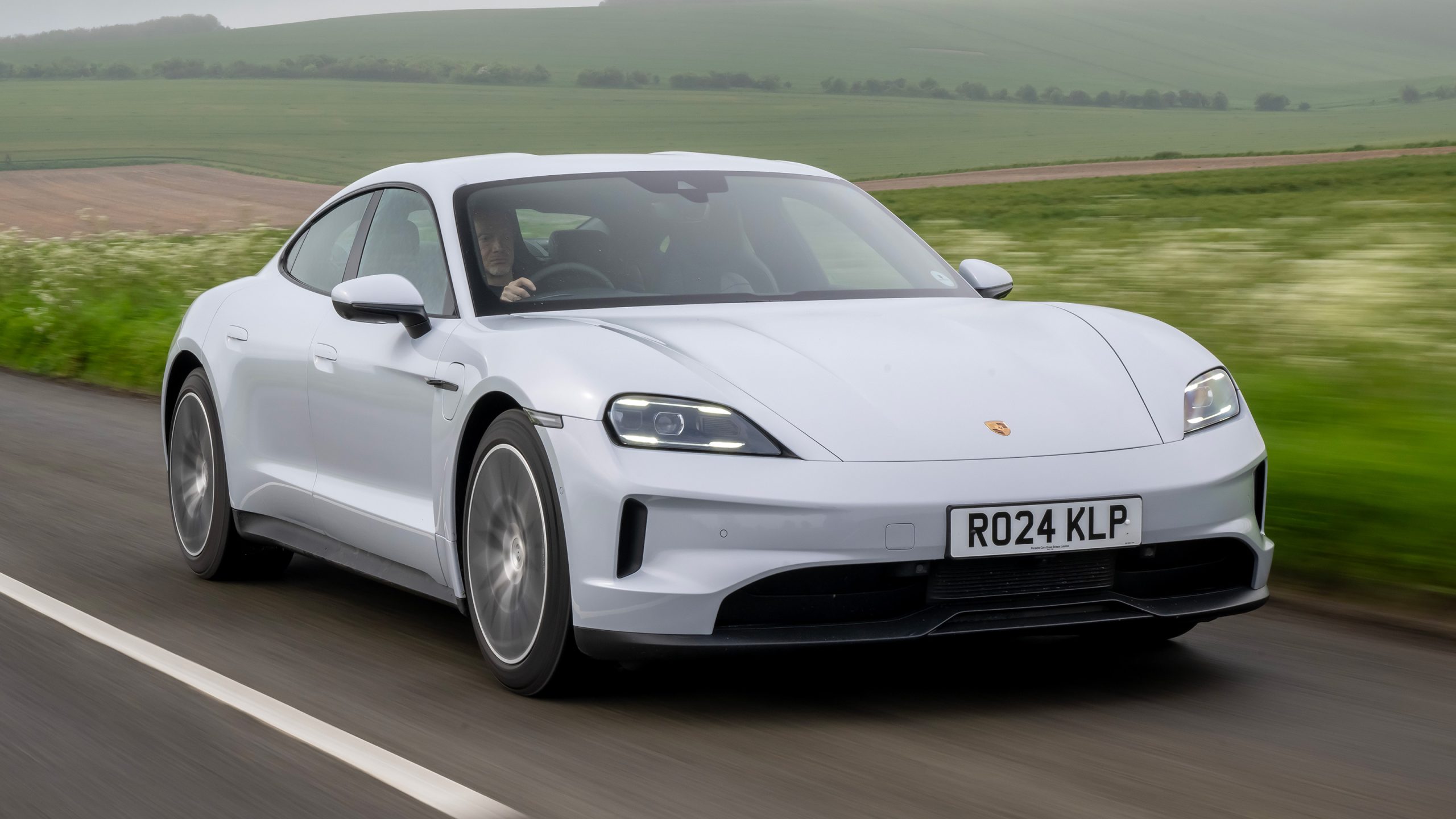
The Taycan’s 800-volt electrical architecture represents a significant technical achievement, enabling exceptionally rapid charging while reducing weight by allowing smaller wiring harnesses.
When connected to 270-kilowatt DC fast chargers, the Taycan can replenish from 5% to 80% capacity in approximately 22.5 minutes dramatically faster than most electric vehicles’ 400-volt systems.
This charging speed transforms long-distance travel, making brief stops sufficient for substantial range restoration. The 93.4-kilowatt-hour Performance Battery Plus provides up to 225 miles of EPA-estimated range modest by efficiency standards but reasonable given the Taycan’s performance focus.
Porsche’s commitment to the Taycan extends beyond the vehicle itself to comprehensive charging infrastructure and customer support. The company has invested in expanding fast-charging networks, partnered with Electrify America for extensive charging access, and offers home charging installation support.
Porsche’s legendary reliability and dealer network provide confidence regarding long-term ownership, addressing concerns about purchasing electric vehicles from manufacturers without established service infrastructure.
The Taycan proves that traditional performance brands can successfully transition to electrification while maintaining the characteristics that made them desirable.
12. Volkswagen ID.4
The Volkswagen ID.4 represents the German automaker’s serious commitment to mass-market electrification, offering practical electric crossover transportation at accessible price points.
Built on Volkswagen’s dedicated MEB electric platform, the ID.4 delivers the space, functionality, and driving range that mainstream buyers demand, wrapped in distinctive styling that clearly identifies it as a modern electric vehicle.
This compact SUV targets families who want to transition to electric transportation without compromising practicality or paying premium prices, making sustainable mobility accessible to broader audiences.
Two battery options provide flexibility for different needs and budgets. The standard 62-kilowatt-hour pack delivers approximately 209 miles of EPA-estimated range, while the optional 82-kilowatt-hour battery extends range to about 275 miles.
Both configurations provide adequate capacity for daily commuting, errands, and weekend trips, though the larger battery reduces charging frequency and provides more flexibility for spontaneous longer journeys.
Rear-wheel-drive models employ a single motor producing 201 horsepower, while all-wheel-drive variants add a front motor for a combined output of 295 horsepower providing confident acceleration and all-weather traction.
The raised crossover seating position provides excellent visibility and easier entry compared to sedans features particularly valued by families and older buyers. The cabin offers generous space for five passengers, with ample rear-seat legroom and headroom despite the sloping roofline.
Cargo capacity reaches 30.3 cubic feet behind the rear seats, expanding to 64.2 cubic feet with seats folded sufficient for weekly groceries, luggage for family trips, or large purchases from home improvement stores. The ID.4’s practical dimensions and versatile interior make it genuinely suitable as a family’s primary vehicle.
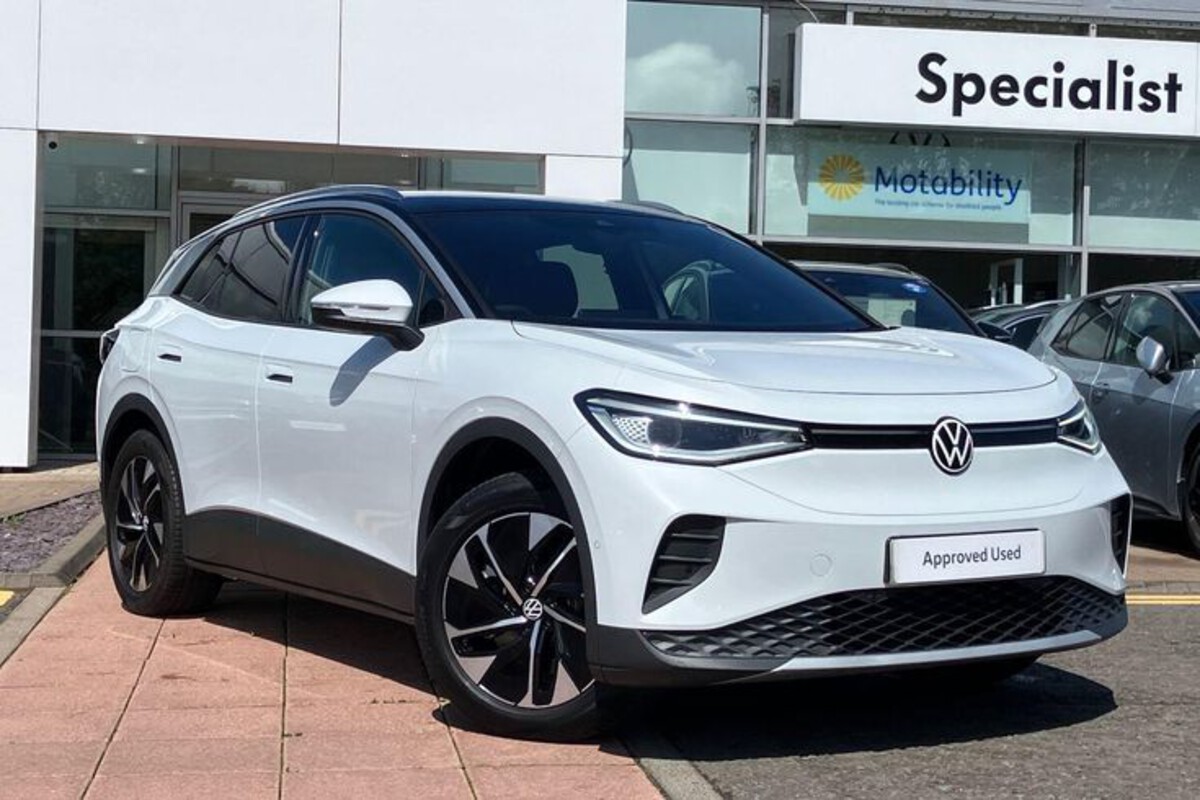
Driving dynamics prioritize comfort and refinement over sporting character appropriate for a family crossover. The ride quality soaks up road imperfections gracefully, maintaining composure over rough pavement.
Handling feels secure and predictable rather than engaging, with light steering that makes maneuvering in parking lots effortless, though providing limited feedback for enthusiastic drivers.
The ID.4 doesn’t pretend to be a sports car, instead delivering the comfortable, quiet, stress-free driving experience most crossover buyers prefer. The instant torque from the electric motor still provides satisfying acceleration when needed.
DC fast charging at up to 125 kilowatts enables relatively quick charging stops during road trips. The larger battery can replenish from 10% to 80% capacity in approximately 36 minutes at capable chargers not class-leading but reasonable for occasional longer journeys.
For daily use, most owners charge overnight at home using Level 2 charging, which fully replenishes the battery in 7-8 hours depending on configuration.
Volkswagen provides three years of complimentary charging at Electrify America stations with the new ID.4 purchases, reducing operating costs during the ownership period when depreciation is steepest.
Available driver assistance features include adaptive cruise control, lane-keeping assist, and automatic emergency braking technologies that significantly enhance safety and reduce driver fatigue.
The Travel Assist system combines these features for semi-autonomous highway driving, though requiring driver attention and periodic steering inputs.
Park Assist Plus can autonomously maneuver the ID.4 into parallel or perpendicular spaces, useful for drivers uncomfortable with parking larger vehicles.
The ID.4’s affordability after federal tax credits and state incentives makes electric crossovers accessible to budget-conscious families who might otherwise purchase gasoline-powered compact SUVs.
Lower operating costs cheaper electricity versus gasoline, minimal maintenance requirements, and reduced brake wear from regenerative braking further improve the value proposition.
For families seeking practical, affordable transportation with lower environmental impact, the ID.4 delivers without requiring lifestyle compromises or premium pricing.
13. Mercedes-Benz EQS
The Mercedes-Benz EQS represents the pinnacle of electric luxury, combining cutting-edge technology, opulent comfort, and serene refinement in a flagship sedan that competes with the world’s finest automobiles.
This isn’t simply an electric version of the S-Class; it’s a dedicated electric vehicle built on Mercedes’ EVA2 platform, allowing packaging and design choices impossible with adapted gasoline platforms.
The EQS demonstrates that electrification enhances rather than compromises luxury, delivering whisper-quiet operation, advanced technology, and impressive efficiency wrapped in unmistakable Mercedes elegance.
Range capabilities lead the luxury electric segment, with the EQS 450+ achieving up to 350 miles of EPA-estimated range from its 107.8-kilowatt-hour battery among the longest-range electric vehicles available.
This exceptional efficiency comes from sophisticated aerodynamics, including a drag coefficient of just 0.20 the slipperiest production car ever measured.
Every surface has been optimized for airflow, from the closed grille and smooth underbody to the streamlined mirrors and carefully managed wheel wells. This obsessive attention to aerodynamics translates directly into extended range and reduced energy consumption.
Multiple powertrain configurations address different priorities. The EQS 450+ employs a single rear motor producing 329 horsepower, optimizing efficiency and range.
The EQS 580 4MATIC adds a front motor for all-wheel drive and a combined output of 516 horsepower, reducing zero-to-sixty time to 4.1 seconds while maintaining over 300 miles of range.
The flagship AMG EQS 53 4MATIC+ escalates to 649 horsepower normally, increasing to 751 horsepower with the AMG Dynamic Plus package delivering supercar acceleration from a luxury limousine while sacrificing some efficiency.
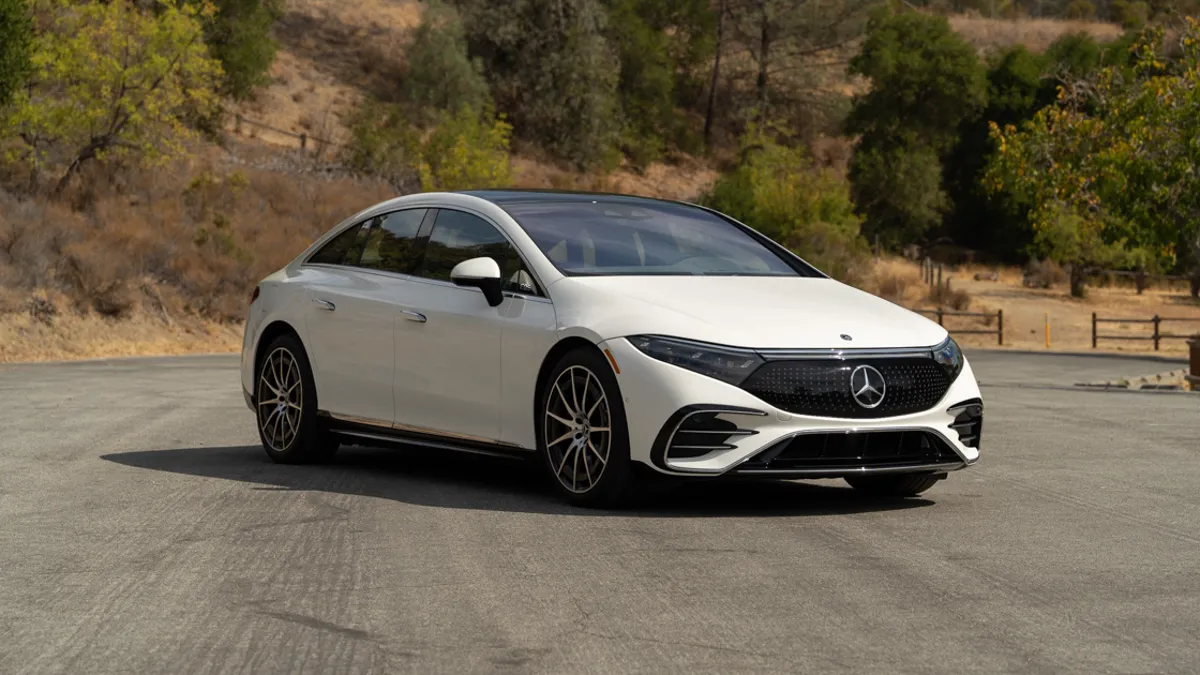
The interior establishes new benchmarks for automotive luxury and technology integration. The available Hyperscreen spans the entire dashboard width with three seamlessly integrated displays: a 12.3-inch instrument cluster, 17.7-inch central screen, and 12.3-inch passenger display.
The system runs Mercedes’ MBUX interface, which learns driver preferences and proactively suggests functions based on usage patterns.
Display quality is exceptional, with crisp graphics and intuitive menus, though the sheer quantity of functions and settings can overwhelm initially. Haptic feedback confirms touchscreen inputs, partially compensating for the lack of physical buttons.
Comfort reaches extraordinary levels throughout the cabin. Available Executive Rear Seat package provides business-class-style accommodations for rear passengers, including massaging seats with heating, ventilation, and multiple adjustment controls.
The air suspension with adaptive damping delivers magic-carpet ride quality, isolating occupants from road imperfections while maintaining composure during spirited driving.
Active Road Noise Compensation uses the Burmester 4D surround sound system to emit sound waves that cancel road noise, creating an eerily quiet cabin even at highway speeds.
Combined with the electric powertrain’s inherent silence, the EQS provides automotive serenity unmatched by combustion-powered vehicles.
The EQS establishes Mercedes-Benz’s electric luxury credentials, demonstrating that the brand can maintain its position in the ultra-luxury segment while embracing electrification.
The combination of cutting-edge technology, uncompromising comfort, and genuinely practical range creates a flagship sedan that doesn’t feel like a compromise compared to gasoline-powered luxury cars.
For buyers seeking the ultimate electric luxury experience, the EQS delivers with the prestige, refinement, and attention to detail expected from Mercedes-Benz’s flagship offerings.
14. Lucid Air
The Lucid Air burst onto the electric vehicle scene with audacious claims about range, efficiency, and performance then backed up every assertion with production vehicles that exceed traditional automakers’ offerings in multiple categories.
This California startup’s first production vehicle demonstrates that newcomers unencumbered by legacy thinking can challenge established players with superior technology.
The Air combines record-breaking range, remarkable efficiency, stunning performance, and luxurious accommodations in a package that redefines what electric sedans can achieve.
Range capabilities lead the entire automotive industry, with the Air Dream Range achieving an EPA-estimated 516 miles on a single charge the first production electric vehicle to exceed 500 miles.
This remarkable achievement comes from multiple innovations: an exceptionally efficient powertrain, advanced aerodynamics with a 0.197 drag coefficient, and a compact 118-kilowatt-hour battery pack that stores more energy than competitors’ larger batteries through superior cell chemistry and packaging.
Even the base Air Pure with the smaller 88-kilowatt-hour pack delivers 419 miles exceeding most competitors’ maximum range.
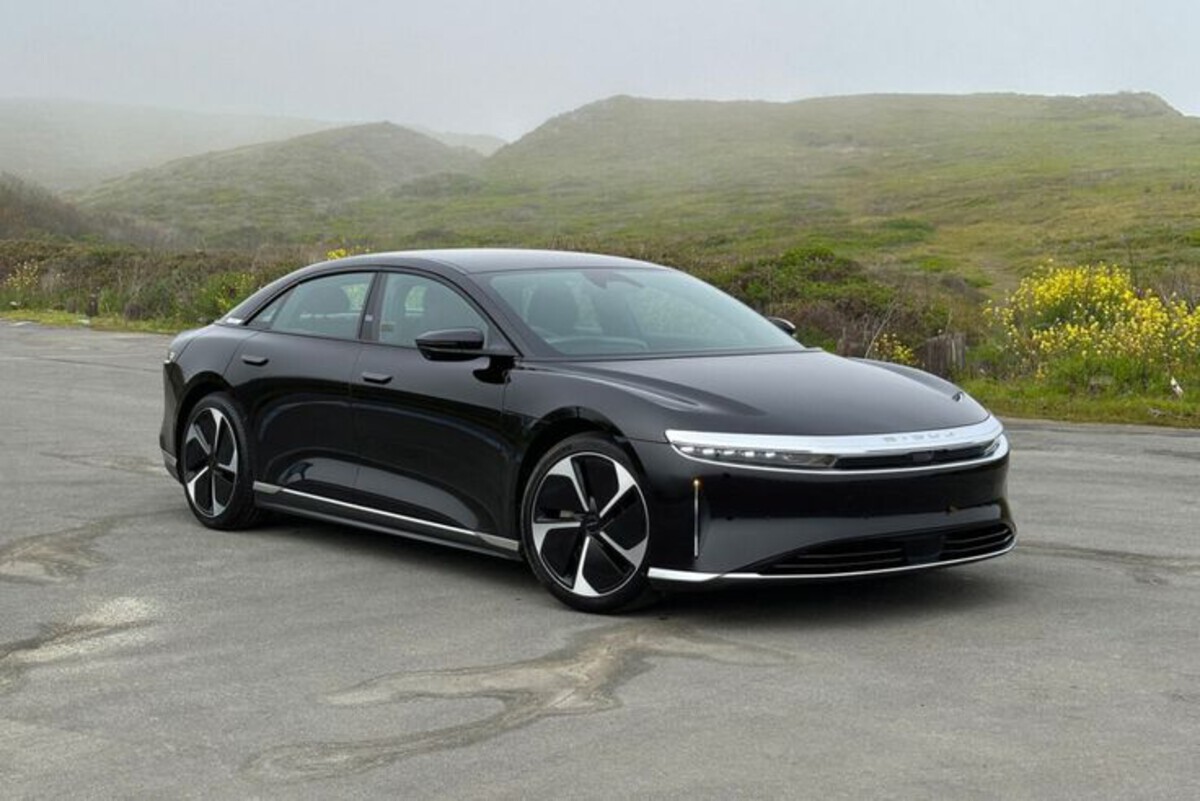
The interior showcases the space efficiency possible with dedicated electric platforms. Despite the Air’s sleek exterior dimensions, the cabin provides more rear legroom than long-wheelbase luxury sedans.
The glass canopy roof creates an airy, open atmosphere while maintaining headroom for tall passengers, front and rear. Lucid’s minimalist design philosophy includes a floating 34-inch 5K Glass Cockpit display that curves across the dashboard, presenting information with exceptional clarity.
The display retracts partially when parked to reduce visual clutter, emerging gradually during startup a theatrical touch befitting a luxury vehicle.
Lucid’s emergence as a credible luxury electric vehicle manufacturer demonstrates that innovation and superior technology can enable new entrants to compete against established brands.
The Air’s combination of record range, exceptional efficiency, stunning performance, and genuine luxury creates a package that even traditional automakers struggle to match. For buyers seeking the most advanced, capable electric sedan available, the Air delivers on its ambitious promises.
Also Read: 5 SUVs That Don’t Warp Rotors on Mountain Passes vs 5 That Do
