
For over a century, BMW has stood at the intersection of luxury and performance, crafting vehicles that don’t just transport you from point A to point B they transform the very notion of what a driving machine can be.
The Bavarian automaker’s famous tagline, “The Ultimate Driving Machine,” isn’t mere marketing hyperbole; it’s a promise etched into every engine block, aerodynamic curve, and precisely tuned suspension component that rolls off their production lines.
BMW’s journey into extreme performance began in earnest with the iconic M division, established in 1972 to push the boundaries of what production cars could achieve.
What started as a motorsport venture has evolved into a legendary performance brand that rivals the world’s most exotic supercar manufacturers. From the tree-lined streets of Munich to racetracks around the globe, BMW has consistently delivered vehicles that blend everyday usability with track-ready performance a duality that remains remarkably rare in the automotive world.
The fastest BMWs represent the pinnacle of German engineering excellence, where turbocharged powertrains, advanced aerodynamics, and cutting-edge technology converge to create acceleration figures that seem to defy physics.
These aren’t just fast cars; they’re precision instruments capable of launching from 0-60 mph in under three seconds while maintaining the refinement and comfort expected from a luxury automobile.
Whether it’s the raw, naturally aspirated scream of earlier M cars or the turbocharged fury of modern hybrid powertrains, each vehicle on this list represents a watershed moment in BMW’s relentless pursuit of speed.
From limited-edition homologation specials to modern hybrid hypercars, this ranking celebrates the ten fastest BMWs ever produced machines that prove speed and sophistication can coexist in perfect harmony.
10. BMW M5 CS (F90) – 190 MPH
The BMW M5 CS represents the ultimate expression of the fifth-generation M5, a vehicle that perfectly embodies the modern super sedan ethos.
Launched in 2021 as a limited-production masterpiece, the M5 CS takes everything exceptional about the standard M5 Competition and amplifies it through meticulous weight reduction, power increases, and aerodynamic enhancements.
This isn’t simply a badge-engineered variant; it’s a comprehensively re-engineered machine designed to be the fastest, most focused M5 ever created.
Under the hood lies BMW’s legendary S63 4.4-liter twin-turbocharged V8 engine, now producing a formidable 627 horsepower and 553 lb-ft of torque.
This represents a 10-horsepower increase over the M5 Competition, but the real magic lies in how BMW extracted 230 pounds from the curb weight through extensive use of carbon fiber reinforced plastic (CFRP) components.
The hood, roof, front splitter, rear diffuser, and even the interior trim pieces are crafted from this lightweight material, demonstrating BMW M’s obsessive attention to the power-to-weight ratio.

The M5 CS dispatches the 0-60 mph sprint in just 2.9 seconds, making it one of the quickest sedans ever produced. The quarter-mile disappears in approximately 11 seconds flat, while the top speed is electronically limited to 190 mph—a figure that would be higher if regulations and tire technology permitted.
The M xDrive all-wheel-drive system, with its rear-biased torque distribution and ability to operate in pure rear-wheel-drive mode, provides the traction necessary to harness this immense power while maintaining the driving engagement BMW enthusiasts demand.
What truly distinguishes the M5 CS from its siblings is the comprehensive chassis tuning. BMW M engineers recalibrated the adaptive suspension, fitted Pirelli P Zero Corsa tires developed specifically for this application, and enhanced the braking system with gold-painted calipers that provide exceptional stopping power.
The steering ratio was quickened, and the entire drivetrain received track-focused calibrations that make this 4,000-pound sedan feel significantly more agile than its weight suggests.
Inside, the cabin features exclusive Merino leather upholstery, carbon fiber bucket seats, and unique CS badging throughout, creating an environment that balances luxury with purposeful sportiness.
The M5 CS stands as proof that BMW can create a family sedan capable of embarrassing dedicated sports cars while maintaining the refinement expected from a six-figure luxury vehicle.
9. BMW M8 Competition Coupe – 190 MPH
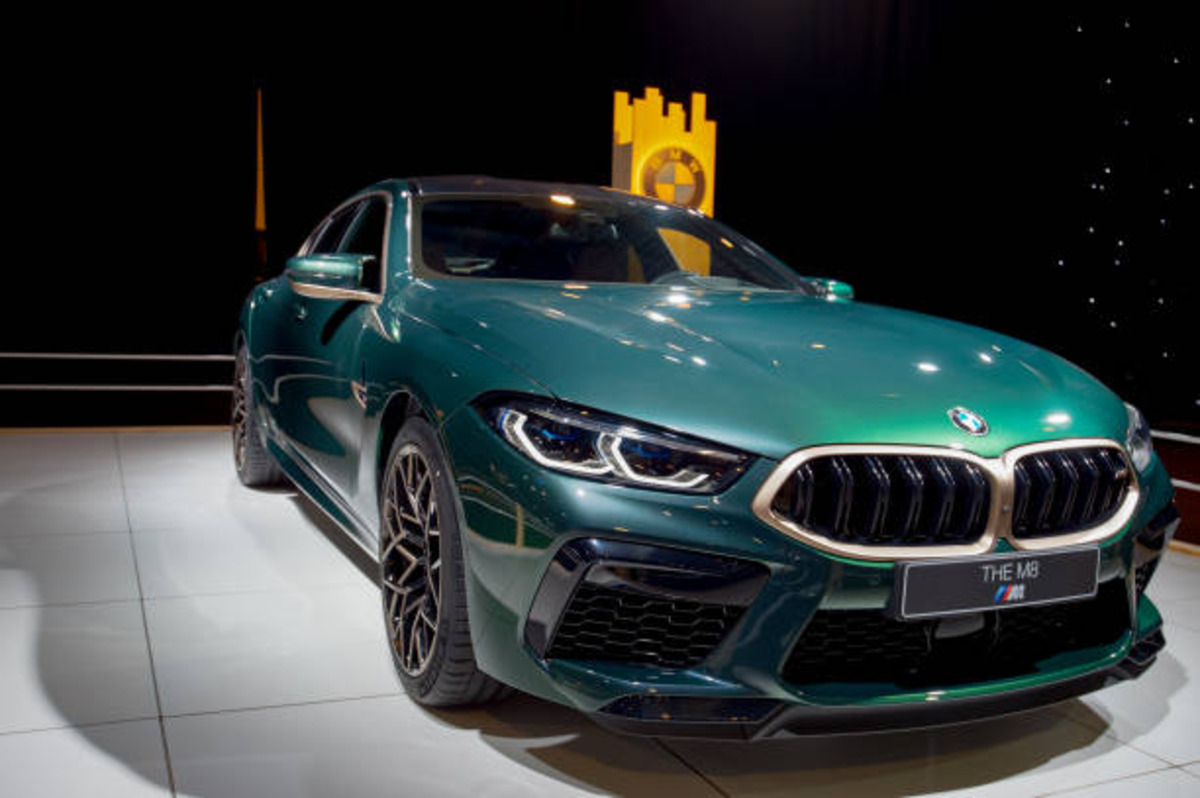
The BMW M8 Competition Coupe represents BMW’s most aggressive grand tourer, a vehicle that challenges the traditional definition of what a luxury coupe should be.
Built on the 8 Series platform, the M8 Competition combines breathtaking performance with opulent refinement, creating a vehicle equally at home devouring continents on the autobahn or carving apex points on a racetrack.
This is BMW’s answer to high-performance grand tourers from Aston Martin, Mercedes-AMG, and Porsche a statement that Bavaria can compete with anyone in the ultra-luxury performance segment.
Propulsion comes from the same S63 4.4-liter twin-turbocharged V8 found in the M5 CS, here producing 617 horsepower and 553 lb-ft of torque. The engine’s character is intoxicating smooth and refined at low RPMs, transforming into a bellowing powerhouse as the tachometer needle sweeps toward redline.
BMW’s engineers employed a cross-bank exhaust manifold design and positioned the turbochargers in the valley between cylinder banks, reducing turbo lag while improving throttle response. The result is an engine that feels naturally aspirated in its immediacy despite the forced induction.
The chassis dynamics are particularly impressive given the M8’s substantial curb weight of approximately 4,200 pounds. Adaptive M suspension with electronically controlled dampers provides multiple driving modes, from comfortable grand touring settings to track-focused firmness.
Carbon-ceramic brakes are available as an option, providing fade-resistant stopping power that matches the vehicle’s prodigious acceleration capabilities. The M8 Competition also benefits from active aerodynamics, including a deployable rear spoiler that adjusts based on speed and driving mode to optimize downforce and stability.
Inside, the cabin is a showcase of BMW’s finest materials and technology, featuring the latest iDrive infotainment system, customizable digital displays, and hand-stitched leather throughout.
The M8 Competition Coupe proves that BMW can build a vehicle that serves multiple masters—providing track-day excitement while maintaining the comfort and luxury necessary for transcontinental journeys.
8. BMW M4 GTS – 190 MPH
The BMW M4 GTS stands as one of the most focused, track-oriented production vehicles BMW has ever created. Introduced in 2016 as an ultra-limited special edition with just 700 units produced globally, the M4 GTS took the already formidable M4 platform and transformed it into a street-legal race car.
This wasn’t subtle evolution; this was a comprehensive reimagining of what a production BMW could be when engineers were given the freedom to prioritize performance above all else.
The heart of the M4 GTS is an enhanced version of the S55 3.0-liter twin-turbocharged inline-six engine, producing 493 horsepower and 442 lb-ft of torque significant increases over the standard M4’s output.
BMW achieved these gains through optimization of the turbochargers, engine software recalibration, and implementation of an innovative water injection system that sprays a fine mist into the intake manifold.
This water injection technology, borrowed from BMW’s motorsport programs, cools the intake charge and prevents detonation, allowing for more aggressive ignition timing and higher boost pressures without requiring premium race fuel.
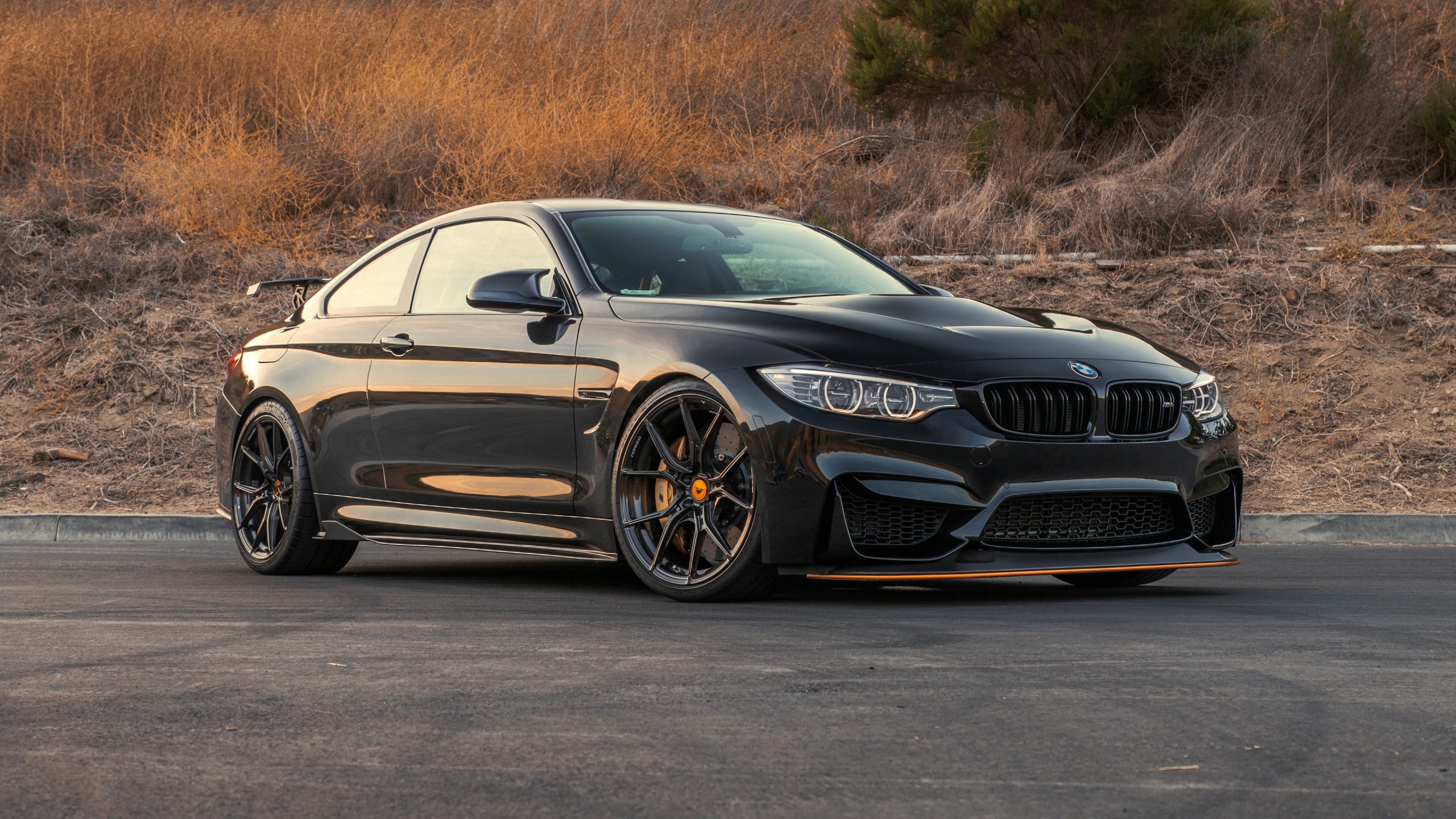
The suspension underwent complete transformation for the GTS variant. BMW fitted adjustable coilover dampers with three-way adjustability, allowing owners to fine-tune compression and rebound separately for ultimate track performance.
The camber settings were aggressive by production car standards, and the entire chassis was lowered substantially compared to the standard M4. Aerodynamic enhancements include a massive adjustable carbon fiber rear wing, front splitter, and rear diffuser that together generate significant downforce at speed.
Inside, the cabin was stripped of luxury amenities in favor of lightweight carbon fiber bucket seats with six-point harness capability, though BMW retained enough comfort features to make the GTS viable for street use.
The instrument cluster featured unique GTS graphics, and the prominent water injection system gauge reminded drivers of the special technology at work. The M4 GTS represents BMW M division at its most uncompromising a limited-production machine that prioritizes lap times and driving engagement over comfort and versatility.
Also Read: 10 Fastest Naturally Aspirated Sports Cars Ever Built
7. BMW M5 (E60) – 155 MPH (Electronically Limited, 200+ MPH Potential)
The E60-generation BMW M5, produced from 2005 to 2010, represents perhaps the most audacious production sedan BMW has ever built. In an era when forced induction was becoming the industry standard, BMW made the bold decision to install a naturally aspirated V10 engine derived directly from their Formula One program into a four-door family sedan.
The result was a vehicle that sounded like a race car, performed like a supercar, yet could comfortably transport five adults in leather-lined luxury. This generation M5 has achieved legendary status among enthusiasts precisely because BMW will likely never build anything quite like it again.
The S85 5.0-liter V10 engine is the star of the show, producing 500 horsepower at a screaming 7,750 RPM and 383 lb-ft of torque at 6,100 RPM. Unlike modern turbocharged engines that deliver their power in a muscular surge, the V10’s power delivery is linear and progressive, building relentlessly as the tachometer sweeps toward its 8,250 RPM redline.
The engine note is simply intoxicating a high-pitched howl that sounds more appropriate emanating from a mid-engine supercar than a practical sedan.
BMW paired this engine with a seven-speed SMG III automated manual transmission, which, despite its occasional clunkiness at low speeds, could execute gear changes in just 65 milliseconds when in its most aggressive setting.
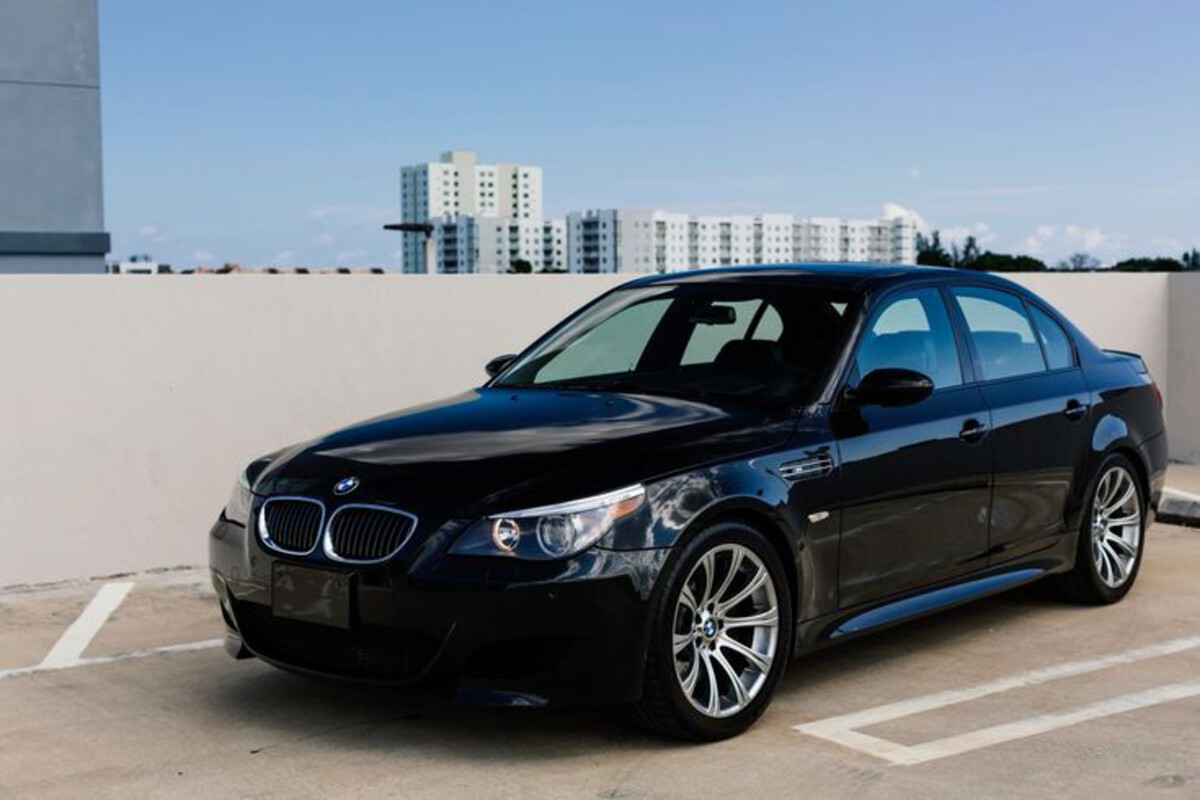
The E60 M5 accelerates from 0-60 mph in approximately 4.1 seconds, with the quarter-mile requiring around 12.5 seconds. Top speed is electronically limited to 155 mph in standard configuration, though BMW offered an M Driver’s Package that raised this limit to 189 mph.
Independent testing has shown that without electronic limitation, the E60 M5 is capable of exceeding 200 mph, a testament to its aerodynamic efficiency and the V10’s high-revving character.
The braking system employed massive vented discs with six-piston calipers up front, providing stopping power commensurate with the vehicle’s performance.
What made the E60 M5 special was how it balanced its extreme capabilities with genuine everyday usability the ride quality in comfort mode was surprisingly compliant, the interior was spacious and beautifully appointed, and trunk space remained practical.
The E60 M5 has become increasingly collectible as enthusiasts recognize it as the end of an era, the last time BMW would install a naturally aspirated high-revving engine in the M5 platform.
Its combination of exotic powertrain, sophisticated technology, and practical luxury sedan packaging created something truly unique in automotive history.
6. BMW M3 CSL (E46) – 155 MPH (Electronically Limited)
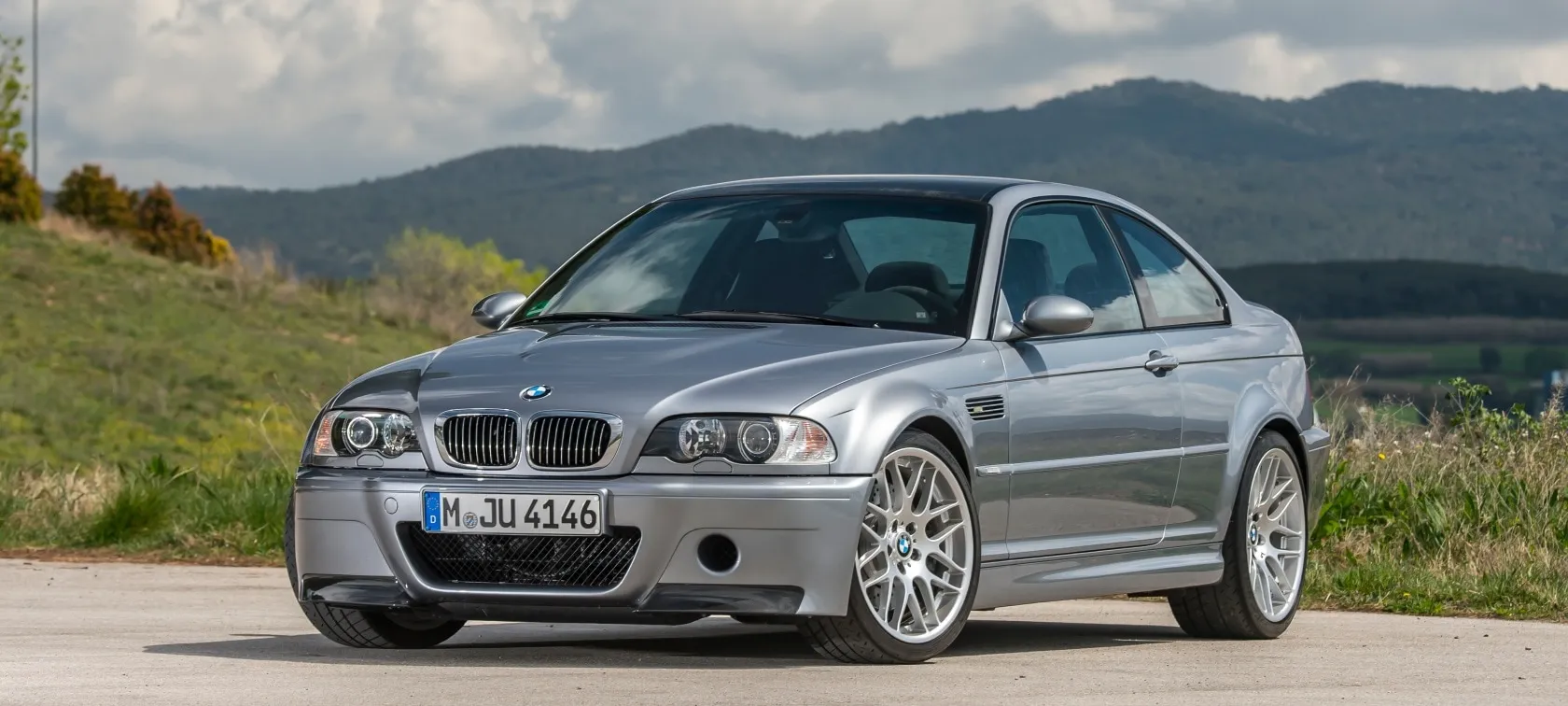
The E46 BMW M3 CSL (Coupe Sport Lightweight) is widely regarded as one of the finest driver’s cars ever produced, not just by BMW but by any manufacturer.
Introduced in 2003 as a homologation special for European motorsport competition, the CSL took the already excellent E46 M3 and transformed it through obsessive weight reduction, power increases, and aerodynamic optimization.
Only 1,383 units were produced, making it exceptionally rare and highly sought-after by collectors today. This is the car that established the CSL nameplate as BMW M’s designation for its most focused, driver-oriented special editions.
The S54 3.2-liter naturally aspirated inline-six engine received numerous enhancements for CSL duty, including revised camshaft profiles, optimized intake system, and recalibrated engine management, resulting in 355 horsepower at 7,900 RPM and 273 lb-ft of torque.
While the power increase over the standard M3 was modest, the real transformation came from the dramatic weight reduction program.
BMW engineers removed approximately 240 pounds through extensive use of carbon fiber reinforced plastic (CFRP) for the roof, trunk lid, front air dam, and rear diffuser.
The rear seats were deleted, thinner glass was fitted throughout, and even the air conditioning system was removed as standard equipment (though it could be optionally reinstalled).
The six-speed manual transmission was the only gearbox option, a decision that purists universally celebrated. Shorter gear ratios optimized acceleration, while the shift action remained precise and mechanical.
The suspension received complete recalibration with stiffer springs and dampers, along with unique CSL-specific alignment settings that prioritized turn-in response and cornering stability.
The braking system featured lightweight two-piece floating discs that reduced unsprung mass while providing exceptional stopping power.
Aerodynamic enhancements included the prominent carbon fiber roof, front splitter, and subtle rear deck spoiler, all working together to improve high-speed stability without creating excessive drag.
Inside, the cabin was purposefully stripped of luxury amenities, featuring lightweight cloth bucket seats, minimal sound deadening, and exposed carbon fiber trim throughout.
The M3 CSL embodied the purist sports car philosophy lightweight, naturally aspirated, manual transmission, rear-wheel drive executed with BMW M’s characteristic precision and attention to detail.
Today, the E46 M3 CSL is considered one of the most collectible modern BMWs, with pristine examples commanding significant premiums over their original purchase prices.
5. BMW M4 CSL (G82) – 191 MPH
The 2023 BMW M4 CSL represents the modern interpretation of BMW M’s legendary CSL (Coupe Sport Lightweight) philosophy, applying 21st-century technology and engineering to the time-honored tradition of weight reduction and performance optimization.
Limited to just 1,000 units globally, this latest CSL takes the already formidable M4 Competition platform and transforms it into BMW’s fastest and most powerful production coupe.
This isn’t merely a special edition with unique paint and badges; the M4 CSL underwent comprehensive re-engineering that touches every aspect of its performance envelope.
Power comes from an enhanced version of the S58 3.0-liter twin-turbocharged inline-six engine, now producing 543 horsepower and 479 lb-ft of torque significant increases that make this the most powerful inline-six engine BMW M has ever installed in a production vehicle.
BMW achieved these gains through revised turbochargers with increased boost pressure, optimized engine management calibration, and enhanced cooling systems.

The engine’s character is aggressive and immediate, with minimal turbo lag and relentless power delivery that pulls hard from 2,500 RPM all the way to the 7,200 RPM redline.
The exhaust system was specifically tuned for the CSL, creating a more aggressive and theatrical soundtrack that announces the car’s special nature.
Inside, the M4 CSL’s cabin blends purposeful minimalism with luxury touches the carbon fiber bucket seats provide exceptional support, while unique CSL badging and exposed carbon fiber trim remind occupants of the car’s special nature. The latest iDrive system with track-focused performance displays ensures drivers have access to critical data during spirited driving.
The M4 CSL represents BMW M’s current state of the art in lightweight performance engineering, combining modern turbocharged power with weight-conscious design to create a coupe that feels dramatically more focused than its already impressive M4 Competition sibling.
4. BMW M5 (F90) – 155 MPH (Electronically Limited, 200+ MPH Potential)
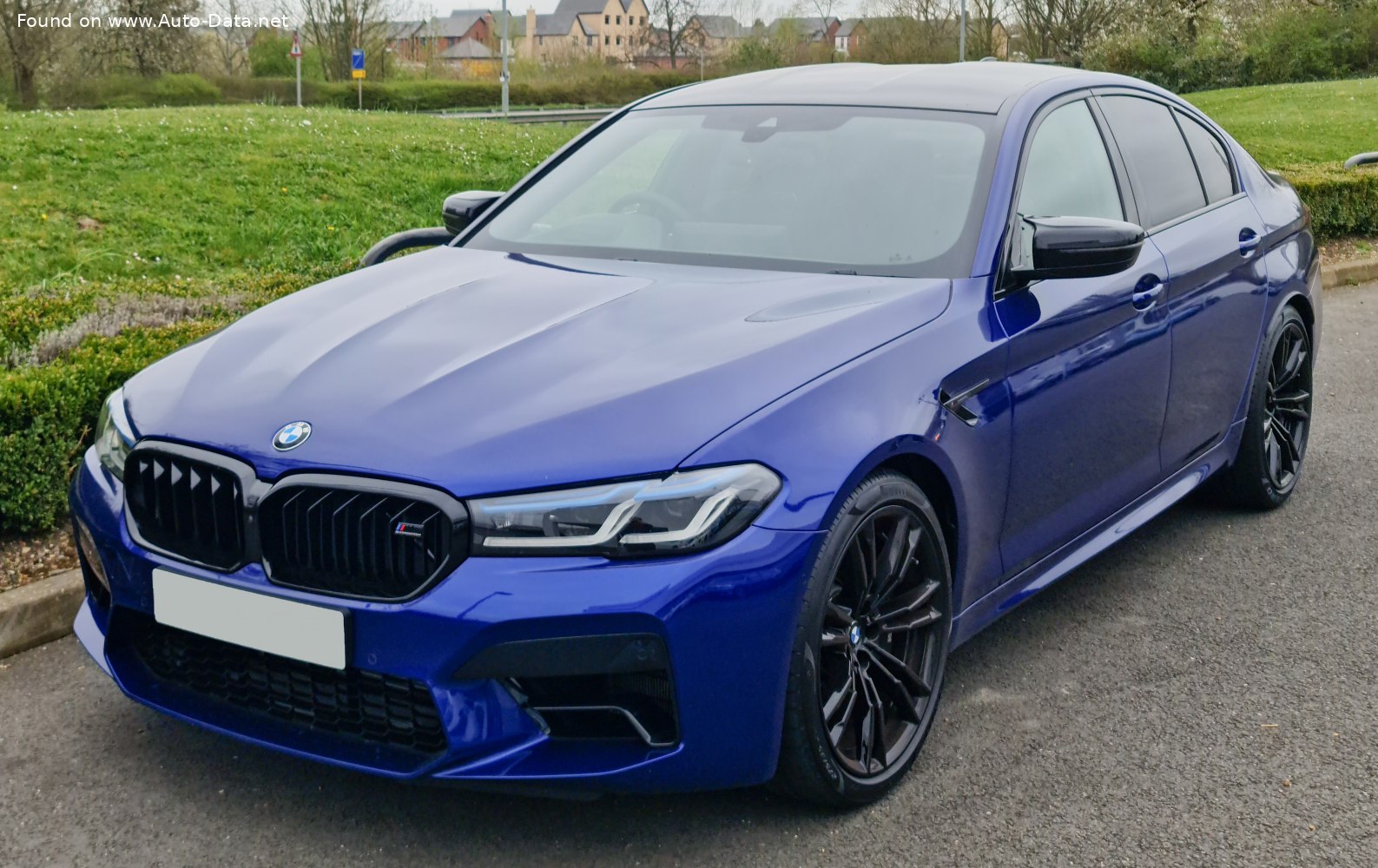
The F90-generation BMW M5, introduced in 2017 and continually refined through various Competition and CS variants, represents BMW’s most technologically advanced performance sedan.
This generation marked a philosophical shift for the M5, introducing all-wheel drive for the first time in the model’s history while maintaining the rear-wheel-drive bias and engagement that enthusiasts demanded.
The result is a vehicle that combines supercar-level acceleration with genuine everyday usability, wrapped in sophisticated luxury sedan packaging that can comfortably transport five adults and their luggage.
The S63 4.4-liter twin-turbocharged V8 engine produces between 600 and 627 horsepower depending on specification, with torque figures reaching 553 lb-ft.
This represents a significant power increase over the previous E60 V10 M5, achieved through modern forced induction technology that delivers muscular low-end torque alongside high-RPM horsepower.
The engine employs a sophisticated cross-bank exhaust manifold design with turbochargers positioned in the hot-vee between cylinder banks, reducing turbo lag and improving throttle response.
Variable valve timing, high-pressure direct fuel injection, and advanced engine management systems ensure the V8 produces its prodigious power reliably and efficiently.
The M xDrive all-wheel-drive system is the key to harnessing this immense power, featuring intelligent torque distribution that can send up to 100 percent of available power to either axle depending on traction conditions.
Crucially, BMW included a 2WD mode that completely disconnects the front axle, allowing skilled drivers to enjoy traditional rear-wheel-drive dynamics when conditions permit.
The Active M differential at the rear axle further optimizes power delivery to individual wheels, providing exceptional traction during acceleration while allowing controlled drift angles in sport mode.
The chassis features adaptive M suspension with electronically controlled dampers offering multiple firmness settings, variable-ratio steering with three adjustability levels, and massive compound brakes with six-piston front calipers.
The F90 M5 represents BMW’s current philosophy perfectly using advanced technology and all-wheel drive not to sanitize the driving experience but to make extreme performance accessible to more drivers in more conditions while preserving the engagement and excitement that defined previous generations.
Also Read: 9 Sports Sedans That Outperform the 2025 BMW M3 Without the Luxury Price Tag
3. BMW M8 Competition Gran Coupe – 190 MPH
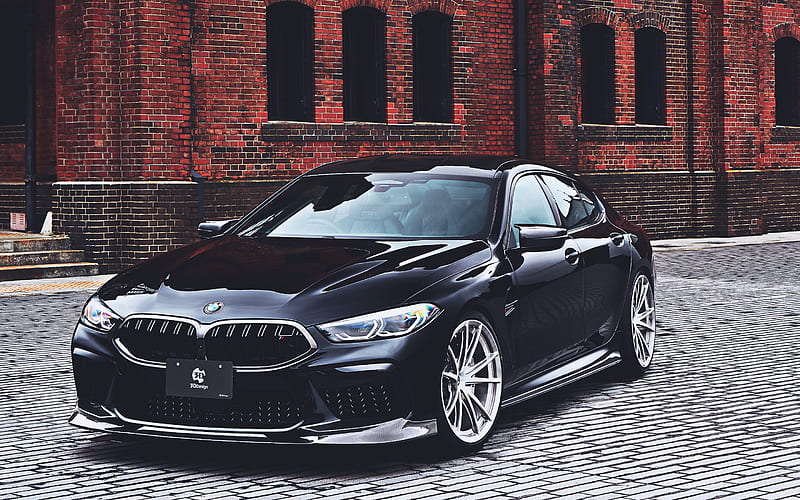
The BMW M8 Competition Gran Coupe represents the pinnacle of BMW’s four-door performance offerings, combining the raw power and performance of the M8 Competition Coupe with the practicality and executive presence of a full-size luxury sedan.
This is BMW’s most expensive, most powerful, and most technologically advanced production sedan, a vehicle designed to compete directly with ultra-luxury performance sedans from Porsche, Mercedes-AMG, and Aston Martin.
The M8 Gran Coupe answers the question: What if BMW created a vehicle with no compromises, prioritizing performance and luxury equally without regard for traditional limitations?
Under the sculpted hood resides the same S63 4.4-liter twin-turbocharged V8 that powers the M8 Competition Coupe, producing 617 horsepower at 6,000 RPM and 553 lb-ft of torque available from 1,800 to 5,860 RPM.
This power band is exceptionally broad, providing muscular acceleration at any engine speed while maintaining the refinement expected from a six-figure luxury sedan.
The engine’s sophisticated engineering includes Valvetronic variable valve lift, Double-VANOS variable camshaft timing, and direct fuel injection that operates at pressures exceeding 200 bar.
The turbochargers are equipped with electronically controlled wastegates that optimize boost pressure across the entire rev range, eliminating lag while maximizing efficiency.
The M8 Competition Gran Coupe’s interior represents BMW’s finest craftsmanship, featuring hand-stitched Merino leather, carbon fiber trim, and the latest generation iDrive infotainment system with multiple customizable displays.
The rear seats provide genuine comfort for adults, with adequate legroom and headroom that make the M8 suitable for executive duty.
Despite its performance credentials, the M8 Gran Coupe maintains impressive refinement wind noise is minimal at highway speeds, the ride quality in comfort mode is surprisingly compliant, and the cabin remains a serene environment even during aggressive driving. This is BMW’s ultimate expression of the performance luxury sedan concept, a vehicle that refuses to compromise in any dimension.
2. BMW M3 GTR (E46) – 200+ MPH
The BMW M3 GTR stands as perhaps the most legendary, most exotic, and most historically significant BMW ever created for production purposes.
Developed specifically to homologate BMW’s racing program for the American Le Mans Series (ALMS) in 2001, the M3 GTR featured an entirely unique powertrain that bore no relationship to the standard production M3.
This is the car that dominated GT racing until rule changes forced its retirement, and the road-going versions of which only approximately six were ever built represent the holy grail for BMW collectors worldwide.
The M3 GTR is the car that solidified BMW M’s motorsport credentials while creating a legend that enthusiasts still discuss with reverence today.
Unlike every other M3 that relied on inline-six engines, the M3 GTR utilized a purpose-built 4.0-liter naturally aspirated V8 engine designated P60B40.
This racing-derived powerplant produced approximately 380 horsepower in street-legal trim (race versions exceeded 450 horsepower) at 8,000 RPM, with torque peaking around 295 lb-ft at 6,500 RPM.
The engine’s character was utterly different from the standard M3’s S54 inline-six more aggressive, more immediate, with a flat-plane crankshaft configuration that produced a high-pitched racing shriek reminiscent of Ferrari V8s.
The engine was paired with a six-speed sequential manual transmission that allowed for lightning-quick gear changes, though this gearbox required significant mechanical sympathy and wasn’t designed for casual street driving.

Performance figures for the street-legal M3 GTR are somewhat speculative given the extreme rarity of the vehicles and limited independent testing, but available data suggests 0-60 mph acceleration in approximately 4.0 seconds with top speeds exceeding 200 mph.
The car’s true performance potential was demonstrated on racetracks where the M3 GTR dominated its competition, winning multiple ALMS races in 2001 before controversial rule changes essentially banned the vehicle from competition.
The racing versions generated substantial downforce through aggressive aerodynamic components including massive rear wings, front splitters, and flat underbody panels that transformed the M3’s bodywork into a functional aerodynamic package.
The chassis received comprehensive modifications, including fully adjustable racing suspension with coilover dampers, aggressive alignment settings that prioritized turn-in response and cornering stability, and lightweight components throughout that reduced curb weight by hundreds of pounds compared to the standard M3.
Carbon fiber body panels, including the doors, hood, and trunk, reduced weight while improving structural rigidity. The interior was completely stripped, featuring racing bucket seats, a roll cage, and minimal sound deadening this was a race car that happened to be street-legal rather than a street car with racing pretensions.
The M3 GTR’s significance extends beyond its performance capabilities; it represents the BMW M division’s willingness to build something truly extraordinary, regardless of cost or practicality, to achieve racing success.
The handful of street-legal examples that exist represent some of the most valuable BMWs ever produced, with collectors willing to pay seven-figure sums for the opportunity to own this piece of motorsport history. The M3 GTR remains the most exotic, most race-focused production BMW ever created.
1. BMW XM Label Red – 197 MPH
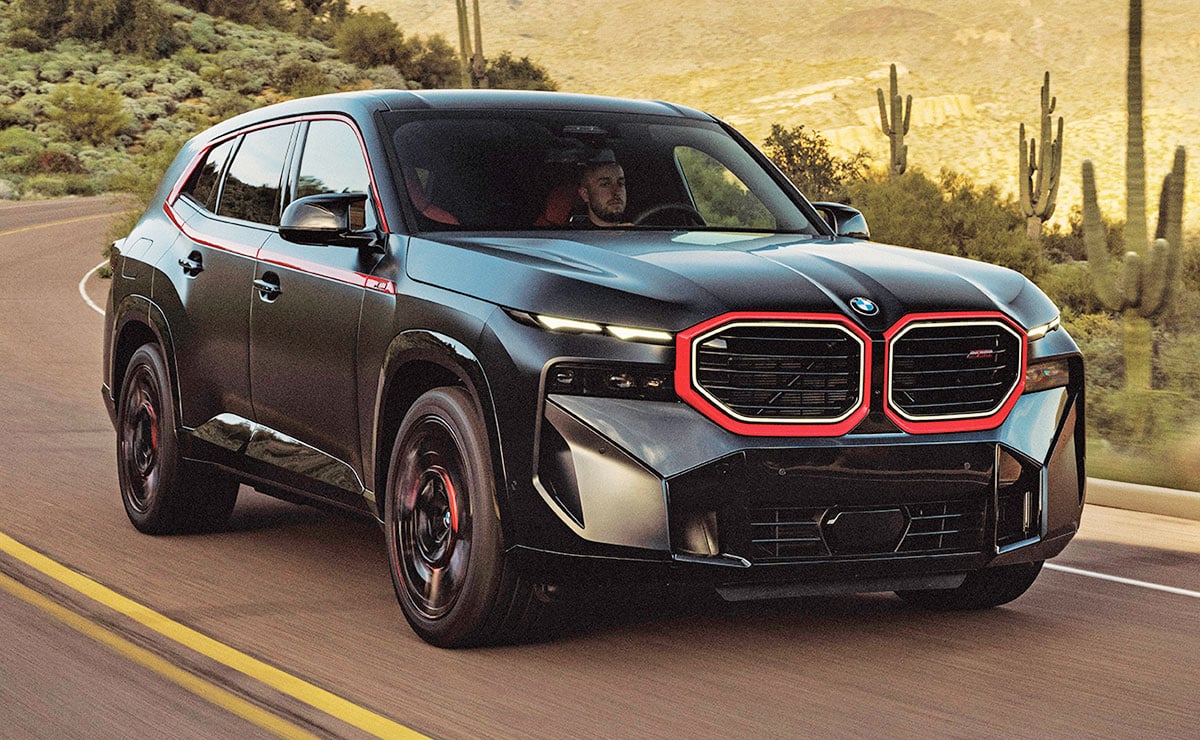
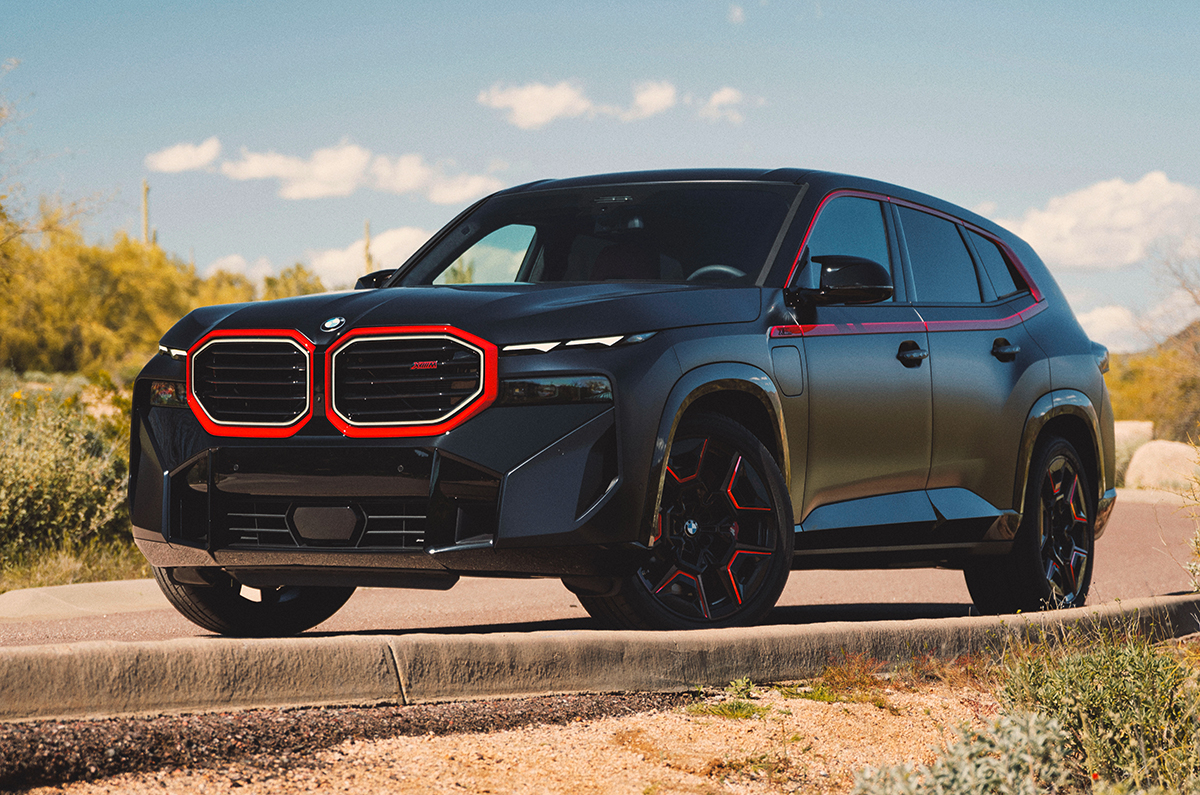
The BMW XM Label Red represents a bold new direction for BMW M, combining plug-in hybrid technology with traditional M division performance philosophy to create the most powerful BMW ever produced.
Introduced in 2023, this ultra-high-performance luxury SUV produces a staggering 738 horsepower and 738 lb-ft of torque, figures that would have been unthinkable in an SUV just a decade ago.
The XM Label Red is controversial its aggressive styling and SUV format divide opinion but its performance credentials are undeniable, making it the fastest and most powerful production BMW in the company’s history.
The powertrain combines BMW’s familiar S68 4.4-liter twin-turbocharged V8 engine with an electric motor integrated into the eight-speed automatic transmission, creating a sophisticated plug-in hybrid system that delivers both explosive performance and the ability to drive purely on electricity for approximately 30 miles.
The V8 alone produces approximately 585 horsepower, with the electric motor contributing an additional 194 horsepower and instant electric torque that fills any gaps in the power delivery.
The combination results in a powerplant that produces maximum torque from idle, with the electric motor providing instantaneous response before the turbocharged V8 delivers its muscular high-RPM punch.
The engineering challenge of cooling this hybrid system while maintaining performance consistency required innovative thermal management solutions, including multiple radiators and sophisticated battery cooling systems.
Aerodynamic development focused on managing airflow around the XM’s substantial frontal area while generating downforce for high-speed stability.
Active aerodynamic elements, including an adjustable rear spoiler, optimize performance based on speed and driving mode. Inside, the XM Label Red’s cabin represents BMW’s most luxurious interior execution, featuring hand-stitched leather throughout, carbon fiber trim, and the latest iDrive system with multiple customizable displays.
The rear seats provide executive-level comfort, while the cargo area remains practical despite the performance orientation. The XM Label Red represents BMW M’s vision for performance in an electrified future using hybrid technology not to reduce performance but to enhance it, creating capabilities impossible with internal combustion alone.
Whether this bold direction resonates with traditional M enthusiasts remains debated, but the XM Label Red’s position as the most powerful and fastest BMW ever produced is indisputable.
Also Read: 8 Pickup Trucks Proven to Reach and Even Surpass the One-Million-Mile Mark
