
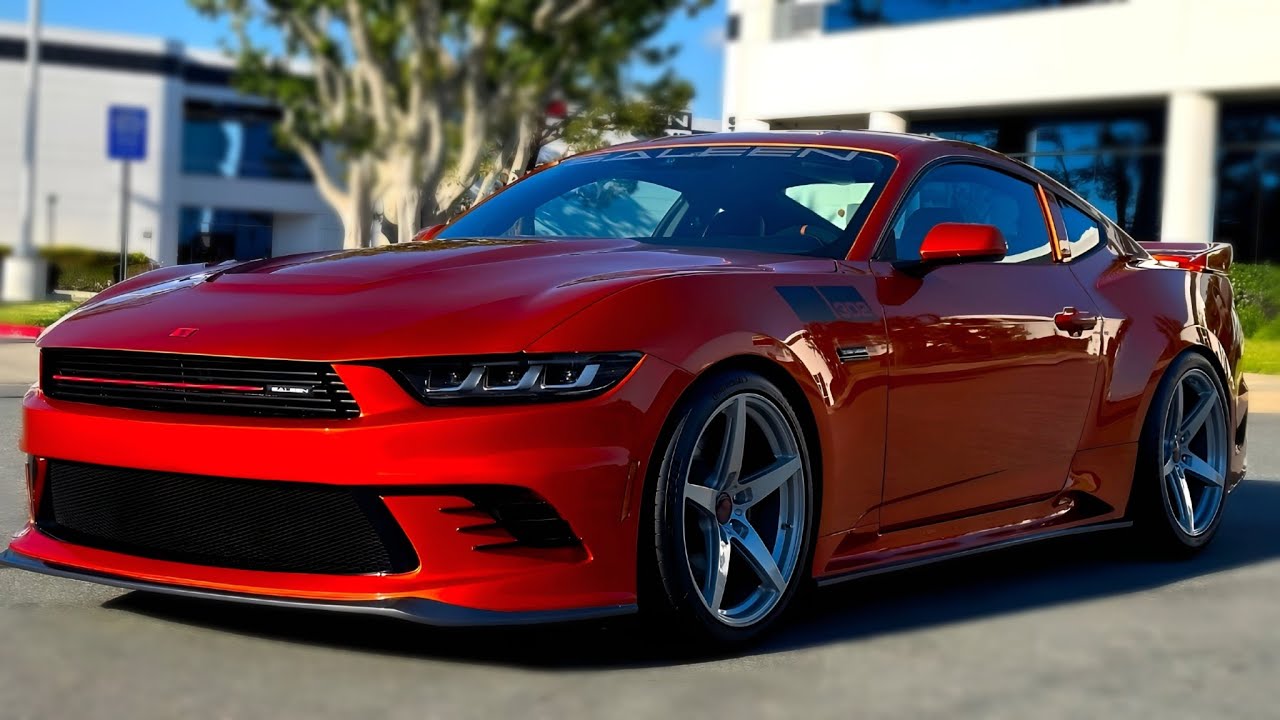
When it comes to American automotive performance, few names command the respect and admiration that Saleen does. Founded by racing driver Steve Saleen in 1983, this California-based manufacturer has carved out a legendary reputation for transforming production vehicles into track-ready monsters and creating entirely original supercars that push the boundaries of speed and engineering excellence.
What began as a tuning company specializing in Ford Mustangs has evolved into a comprehensive automotive powerhouse, producing some of the most extreme and fastest vehicles ever to wear American badges.
Saleen’s philosophy has always been simple yet profound: take already capable platforms and raise them to extraordinary levels of performance through meticulous engineering, aerodynamic refinement, and relentless power upgrades.
Throughout its four-decade history, Saleen has developed an impressive portfolio of high-performance machines that have set speed records, dominated racetracks, and captured the imagination of automotive enthusiasts worldwide.
From supercharged Mustangs that redefined muscle car performance to mid-engined supercars that challenged European exotics, Saleen has consistently demonstrated that American engineering can compete with and often surpass the world’s best.
The company’s commitment to performance extends beyond mere horsepower figures. Each Saleen vehicle represents a holistic approach to speed, incorporating advanced suspension systems, lightweight materials, sophisticated aerodynamics, and precision handling characteristics that transform raw power into usable, controllable velocity.
This dedication to complete performance packages has resulted in some truly exceptional machines that have earned their place in automotive history.
In this comprehensive exploration, we’ll examine the fastest cars Saleen has ever produced, celebrating the engineering achievements, innovative technologies, and pure speed that have made these vehicles icons of American performance automotive manufacturing.
1. Saleen S7 Twin Turbo
The Saleen S7 Twin Turbo represents the absolute pinnacle of American supercar engineering and stands as the fastest production car Saleen has ever created.
Introduced in 2005 as an evolution of the naturally aspirated S7, the Twin Turbo variant transformed an already exceptional supercar into a legitimate hypercar that could compete with anything Europe had to offer.
With a top speed of 248 mph and the ability to sprint from 0-60 mph in just 2.8 seconds, the S7 Twin Turbo became America’s answer to automotive royalty like Ferrari and Lamborghini.
At the heart of this beast lies a mid-mounted 7.0-liter all-aluminum V8 engine equipped with twin turbochargers, producing a staggering 750 horsepower and 700 lb-ft of torque.
This powerplant represented a massive upgrade over the naturally aspirated version’s 550 horsepower, and the forced induction system was carefully engineered to deliver power smoothly across the rev range.
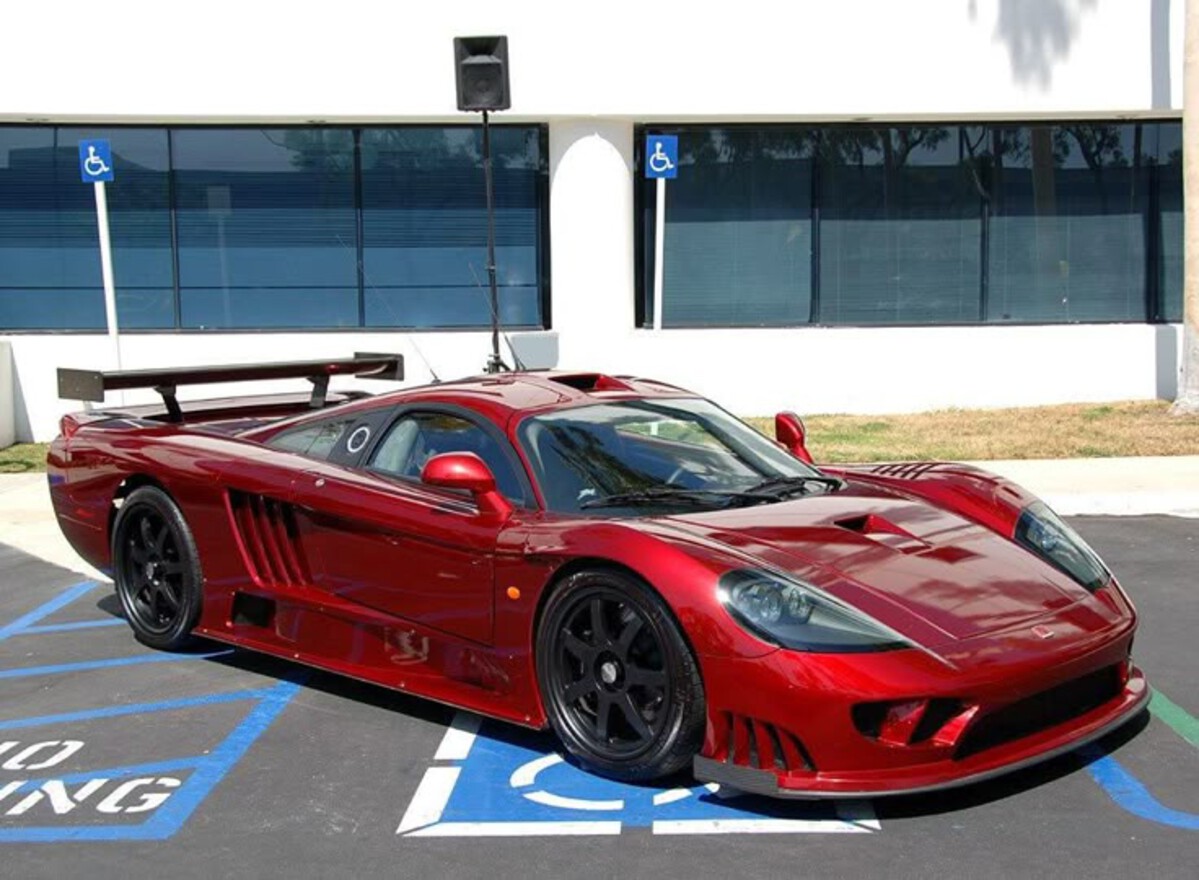
The engine was mated to a six-speed manual transmission that sent power to the rear wheels, providing an engaging driving experience that put the driver firmly in control of this American rocket.
The S7’s construction was nothing short of revolutionary for an American manufacturer. The entire chassis was constructed from a lightweight honeycomb aluminum and steel space frame, while the body panels were crafted from carbon fiber, resulting in a curb weight of just 2,750 pounds.
This exceptional power-to-weight ratio meant that every ounce of the engine’s prodigious output could be felt, creating acceleration figures that were genuinely shocking for the mid-2000s era. Inside, the S7 Twin Turbo offered a surprisingly refined cabin for such an extreme machine.
Despite its race-focused mission, Saleen equipped the car with leather appointments, air conditioning, and even a premium audio system, making it a supercar that could theoretically serve daily driving duties though few owners would dare subject such a rare machine to mundane commuting tasks.
2. Saleen S7
Before the Twin Turbo variant stole headlines, the original naturally aspirated Saleen S7 had already established itself as a groundbreaking achievement in American automotive engineering.
Debuting in 2000, the S7 was America’s first mid-engined production supercar and represented Steve Saleen’s bold vision of creating a vehicle that could stand shoulder-to-shoulder with European exotic manufacturers.
With a top speed of 220 mph and 0-60 mph acceleration in 3.3 seconds, the original S7 proved that American companies could produce world-class supercars without foreign assistance.
The original S7 was powered by a naturally aspirated 7.0-liter V8 engine that produced 550 horsepower and 525 lb-ft of torque. While these figures might seem modest compared to the later Twin Turbo version, they were absolutely extraordinary for a naturally aspirated engine at the turn of the millennium.
The engine’s development showcased Saleen’s commitment to extracting maximum performance through engineering excellence rather than simply bolting on forced induction systems, demonstrating that American V8 technology could deliver supercar-level performance with proper refinement.
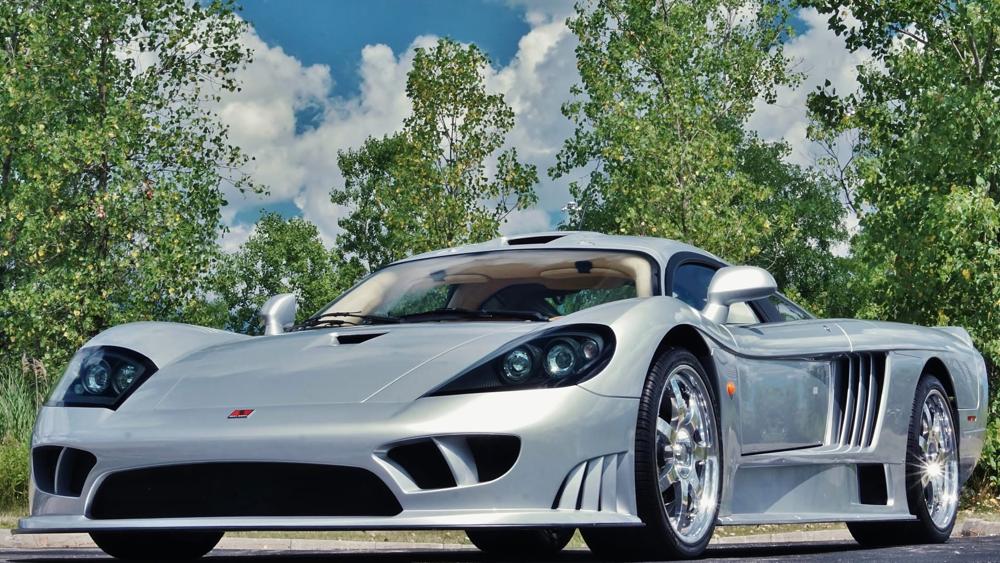
What truly set the S7 apart was its construction methodology and attention to detail. Saleen didn’t simply modify an existing platform; they created an entirely new vehicle from the ground up.
The tubular space frame chassis was designed specifically for rigidity and lightness, while the extensive use of carbon fiber body panels kept weight to an impressingly low 2,950 pounds.
This dedication to weight reduction was revolutionary for an American manufacturer, as the domestic industry had traditionally relied on raw power rather than lightweight construction to achieve performance goals.
The S7’s styling was both beautiful and functional, featuring butterfly doors that opened upward for dramatic effect while also facilitating easier entry and exit.
The aggressive aerodynamic elements weren’t merely for show extensive wind tunnel testing ensured that every vent, scoop, and surface contributed to either downforce generation or cooling efficiency.
The prominent side air intakes fed the mid-mounted engine, while the raised tail section housed an adjustable rear wing that could be configured for maximum downforce or minimum drag depending on driving conditions.
The original S7’s production run was extremely limited, with only about 30 naturally aspirated examples built before production shifted to the Twin Turbo variant.
This rarity, combined with the car’s historical significance as America’s first true mid-engined supercar, has made original S7s highly collectible.
More importantly, the S7 proved that American manufacturers possessed the technical sophistication and engineering prowess to create genuine supercars that could compete on the global stage.
3. Saleen S7 LM
The Saleen S7 LM represented the most extreme iteration of the S7 platform, designed specifically for GT racing competition while maintaining street legality.
Built in extremely limited numbers with only seven examples produced the S7 LM was Saleen’s homologation special, created to meet racing regulations while showcasing the absolute maximum potential of the S7 design.
With approximately 750 horsepower from its twin-turbocharged V8 and race-oriented modifications throughout, the LM variant could achieve similar top speeds to the Twin Turbo while offering even more focused track performance.
The “LM” designation stood for “Le Mans,” paying homage to the legendary 24-hour endurance race where Saleen competed with S7-based race cars.
The LM variant bridged the gap between the road-going Twin Turbo and the full competition race cars, incorporating many racing-derived technologies while retaining the necessary equipment to remain street legal.
This approach created an extraordinarily focused driving machine that sacrificed some daily usability for ultimate performance capability.
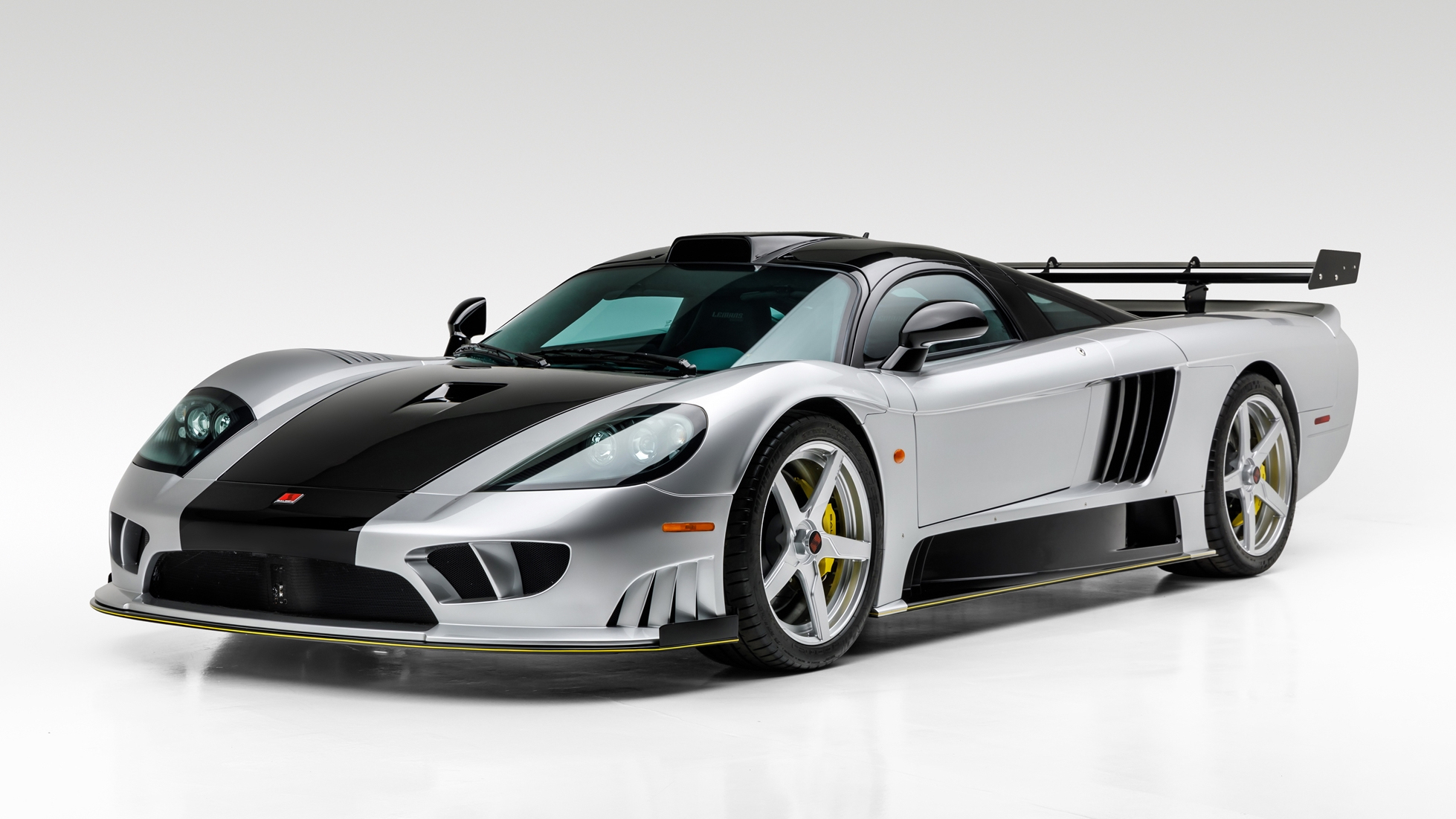
Weight reduction was taken even further in the LM variant compared to standard S7 models. Already-lightweight carbon fiber body panels were made thinner where structural requirements allowed, and interior appointments were stripped to essentials.
Racing-style bucket seats replaced the more comfortable standard chairs, while sound deadening materials were removed entirely.
The result was a vehicle that weighed even less than the already-featherweight Twin Turbo, improving power-to-weight ratio and enhancing handling responsiveness to levels that approached pure race cars.
The aerodynamic package on the S7 LM was significantly more aggressive than standard models. A larger front splitter, more prominent side skirts, and an enhanced rear diffuser worked in concert with an adjustable rear wing to generate substantially more downforce.
These modifications allowed the LM to carry higher cornering speeds and remain stable at maximum velocity, crucial attributes for competitive racing. The increased aerodynamic load also demanded uprated suspension components to handle the additional forces acting on the chassis.
The exclusivity of the S7 LM cannot be overstated. With only seven examples ever built, these vehicles represent some of the rarest American supercars in existence.
Each was essentially custom-built to customer specifications within the LM’s racing-oriented parameters, making every example slightly unique.
Today, S7 LM models are considered holy grail collectibles for Saleen enthusiasts and American supercar collectors, representing the ultimate expression of Steve Saleen’s vision for American high-performance automotive excellence.
4. Saleen S5S Raptor
The Saleen S5S Raptor represented an ambitious attempt to create a more accessible supercar that would bring Saleen’s mid-engined performance philosophy to a broader audience.
Conceived as a successor to the legendary S7, the Raptor was designed to offer similar mid-engined exotic car thrills at a more attainable price point while incorporating modern technologies and design elements.
Though the project faced numerous developmental challenges and production delays, the concept demonstrated remarkable performance potential, with projected top speeds exceeding 200 mph and breathtaking acceleration capabilities.
At the heart of the S5S Raptor concept was a 5.0-liter supercharged V8 engine, substantially smaller than the S7’s massive 7.0-liter unit but incorporating forced induction to produce approximately 650 horsepower.
This approach allowed Saleen to achieve supercar-level performance while improving fuel efficiency and reducing emissions compared to larger-displacement engines.
The powerplant was designed to be mounted mid-ship, maintaining the ideal weight distribution that had made the S7 such a formidable handling machine.
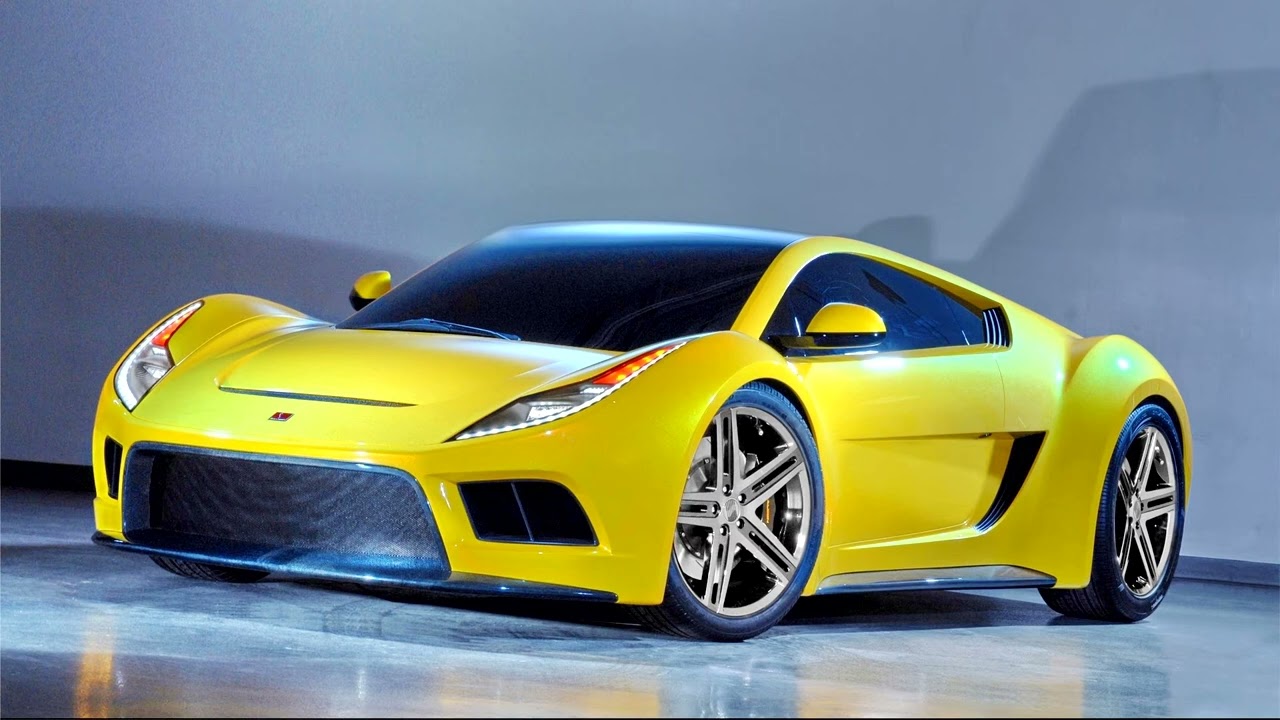
The Raptor’s styling took clear inspiration from the S7 while incorporating more contemporary design language. Sharper lines, more aggressive angles, and modern LED lighting technology gave the Raptor a forward-looking appearance that suggested speed even while standing still.
The signature butterfly doors remained, maintaining visual continuity with Saleen’s supercar heritage while adding the dramatic flair that exotic car enthusiasts demand. The design aimed to be both beautiful and functional, with aerodynamic efficiency playing a key role in the car’s development.
Construction methodology for the Raptor borrowed heavily from lessons learned during S7 production. An aluminum and steel space frame chassis provided structural rigidity while keeping weight reasonable, and extensive use of carbon fiber and other composite materials for body panels helped maintain a favorable power-to-weight ratio.
Saleen’s engineers targeted a curb weight under 3,000 pounds, which combined with the supercharged engine’s output would have created performance figures competitive with supercars costing significantly more.
Unfortunately, the S5S Raptor project encountered significant obstacles that prevented it from reaching full production. Economic challenges, funding difficulties, and various corporate restructuring efforts at Saleen meant that the Raptor remained largely in concept and prototype stages.
While disappointing for enthusiasts eagerly anticipating this new mid-engined Saleen, the Raptor project demonstrated the company’s continued commitment to innovation and pushing American supercar development forward, even when faced with substantial business challenges.
Also Read: 6 Cars for Biloxi Beachside Living vs 6 That Fail in Salt Air
5. Saleen S302 Mustang Extreme
The Saleen S302 Mustang Extreme represented the pinnacle of Saleen’s Mustang tuning expertise, transforming Ford’s popular pony car into a legitimate supercar challenger.
With top speeds approaching 180 mph and acceleration that embarrassed vehicles costing three times as much, the S302 Extreme proved that proper engineering could raise even mass-market platforms to extraordinary performance levels.
This model showcased Saleen’s ability to extract maximum potential from the Mustang platform while maintaining reasonable pricing and superior reliability compared to exotic alternatives.
Under the hood, the S302 Extreme featured Saleen’s signature supercharged 4.6-liter or 5.0-liter V8 engine, depending on the model year, producing anywhere from 550 to over 700 horsepower in its most extreme configurations.
This represented a massive increase over stock Mustang GT output, achieved through Saleen’s proprietary supercharger system, upgraded fuel delivery, enhanced engine internals, and optimized engine management software.
The forced induction system was carefully engineered to provide strong low-end torque while delivering explosive top-end power, creating a powerband that was both tractable for street driving and devastating on racetracks.
The transformation extended far beyond simple engine modifications. Saleen completely reworked the Mustang’s suspension system, incorporating adjustable coilovers, performance-tuned anti-roll bars, upgraded bushings, and strengthened mounting points to handle the increased power and provide superior handling characteristics.
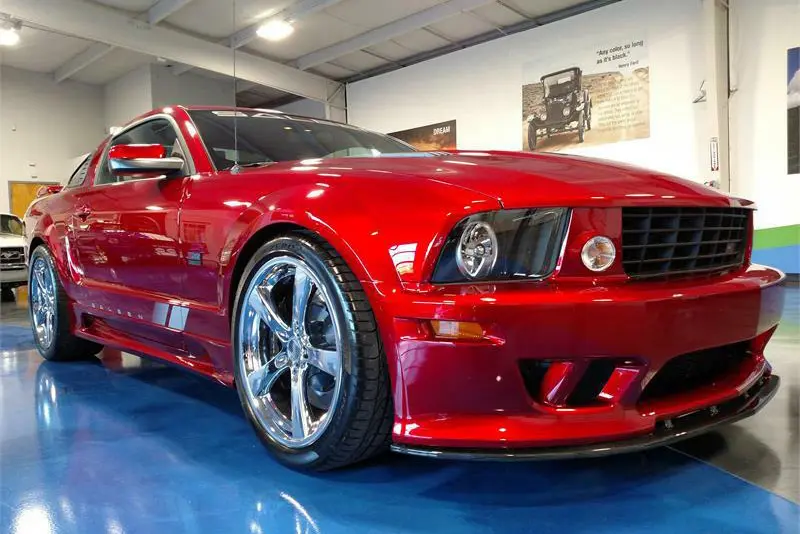
These modifications transformed the Mustang’s sometimes-wayward handling dynamics into precise, predictable responses that inspired confidence when pushing the car hard. The result was a vehicle that could genuinely compete with purpose-built sports cars in canyon carving or track day scenarios.
Aerodynamic enhancements played a crucial role in the S302 Extreme’s performance capabilities. Saleen developed a comprehensive body kit that included a functional hood scoop for improved engine cooling, side skirts that smoothed airflow along the vehicle’s sides, a rear spoiler that generated stability-enhancing downforce, and a front splitter that reduced lift at high speeds.
Unlike many aftermarket body kits that prioritized appearance over function, every Saleen component was wind tunnel tested and proven to enhance performance, ensuring the aggressive styling served genuine aerodynamic purposes.
The S302 Extreme’s interior maintained Saleen’s tradition of improving upon the base Mustang’s cabin. Special Saleen-branded seats provided better support during aggressive driving, while unique trim pieces, upgraded materials, and Saleen badging throughout differentiated the car from standard Mustangs.
Despite the performance focus, Saleen retained all the modern conveniences expected in contemporary vehicles, making the S302 Extreme a genuine everyday supercar that could comfortably handle commuting duties before transforming into a track weapon on weekends.
6. Saleen S281 Extreme Speedster
The Saleen S281 Extreme Speedster combined the mechanical excellence of Saleen’s supercharged Mustang platform with the visceral thrill of open-top motoring, creating one of the fastest convertible muscle cars ever produced.
Based on the Mustang convertible chassis but extensively modified with Saleen’s performance enhancements, the Speedster variant could achieve top speeds near 175 mph while delivering acceleration that rivaled many exotic sports cars.
This model proved that convertible versions need not sacrifice performance for the pleasure of wind-in-the-hair driving. The Speedster’s powerplant mirrored the specifications of its coupe counterpart, with supercharged V8 engines producing between 550 and 700 horsepower depending on specific configuration.
However, engineering a convertible to handle such power presented unique challenges. Removing the fixed roof structure significantly reduces chassis rigidity, which can negatively impact handling precision and dynamics.
Saleen addressed this through extensive chassis reinforcement, including additional bracing, structural adhesives, and carefully engineered mounting points that restored much of the stiffness lost when the roof was removed.
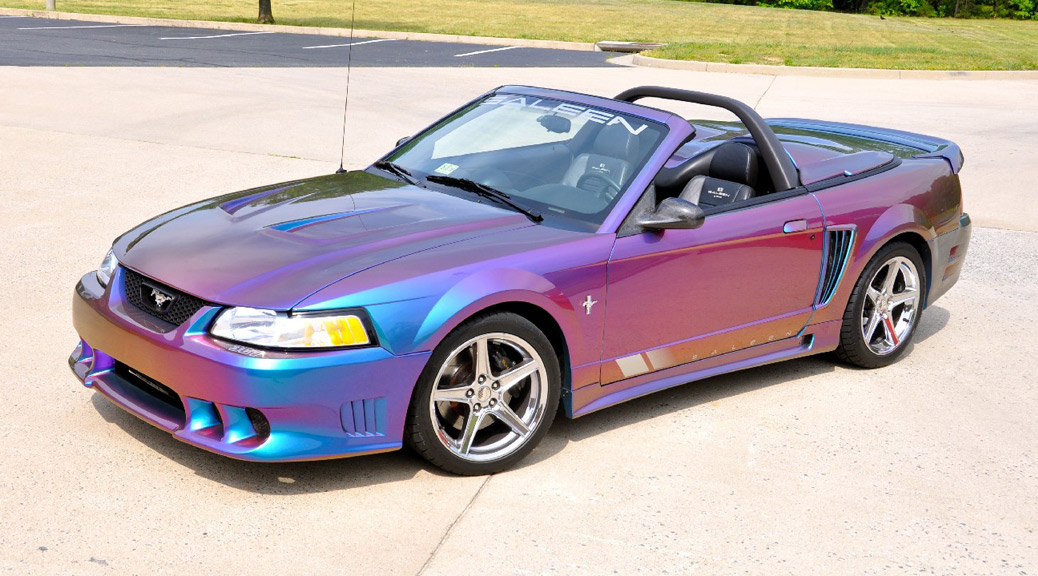
The convertible configuration actually enhanced certain aspects of the driving experience. Engine noise became more immediate and intoxicating without a roof to muffle the supercharged V8’s aggressive snarl, creating a sensory experience that heightened the emotional connection between driver and machine.
The exposed cockpit also provided better awareness of the car’s dynamics, allowing drivers to more easily sense weight transfer and traction limits, paradoxically making the convertible feel more engaging despite its slightly compromised structural rigidity.
Aerodynamic considerations became even more critical in the Speedster variant. Without a fixed roof, airflow management in and around the cabin required careful attention to prevent buffeting and turbulence that could make high-speed driving uncomfortable or even dangerous.
Saleen’s engineers developed a carefully sculpted windshield header and modified the rear deck area to create favorable airflow patterns that minimized wind disruption in the cabin while maintaining the aerodynamic efficiency necessary for achieving the car’s impressive top speed figures.
Production numbers for the S281 Extreme Speedster were relatively limited, as the extensive modifications required to build each car made large-scale production economically challenging. Each Speedster represented dozens of hours of hand-assembly work, with technicians carefully installing supercharger systems, suspension components, body panels, and interior upgrades.
This attention to detail and limited availability has made these vehicles increasingly collectible, representing a unique chapter in Saleen’s history where American muscle car heritage met supercar performance in an open-top package.
7. Saleen S302 Black Label
The Saleen S302 Black Label represented the absolute pinnacle of Saleen’s fourth-generation Mustang modifications, offering the most extreme performance package available on the SN95 platform.
Introduced as Saleen’s flagship Mustang offering, the Black Label featured power outputs exceeding 500 horsepower, upgraded chassis dynamics, and exclusive styling elements that differentiated it from lesser Saleen models.
With top speeds approaching 180 mph and quarter-mile times in the low 12-second range, the Black Label proved that the aging SN95 Mustang platform could still deliver contemporary supercar-challenging performance when properly engineered.
The Black Label’s engine was a masterpiece of forced induction engineering. Saleen’s supercharged and intercooled 4.6-liter DOHC V8 produced between 500 and 550 horsepower, depending on specific tune and customer preferences.
This output was achieved through Saleen’s carefully developed supercharger system, which included a positive-displacement blower, air-to-air intercooler, upgraded fuel injectors, high-flow exhaust system, and custom engine management calibration.
The result was an engine that delivered brutal acceleration while maintaining remarkable reliability a crucial consideration for enthusiasts who planned to actually drive their high-performance machines rather than merely collect them.
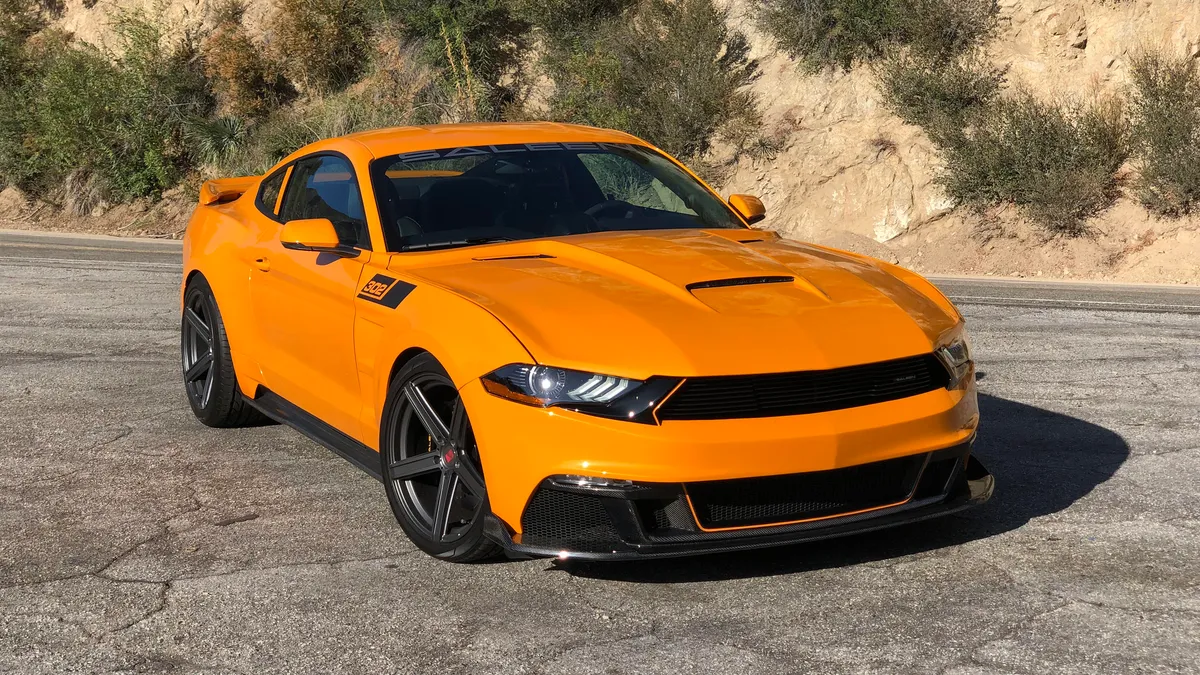
Chassis modifications on the Black Label were comprehensive and transformative. Saleen’s engineers completely revised the Mustang’s suspension geometry, incorporating spherical bearings at critical points, stiffer springs and dampers, larger anti-roll bars, and revised mounting points that optimized suspension kinematics.
These changes addressed the stock Mustang’s sometimes-compromised handling dynamics, creating a car that felt more European in its precision and balance. The live rear axle often criticized as archaic by sports car purists was carefully controlled through specialized locating arms and bushings that minimized unwanted movement while allowing the suspension to work effectively.
The Black Label’s visual identity was established through unique styling elements that set it apart from standard Saleen models. Exclusive Black Label badging, special paint options, distinctive wheel designs, and unique interior trim pieces announced this car’s flagship status.
The exterior modifications maintained Saleen’s functional aerodynamic philosophy, with each component serving genuine performance purposes rather than merely adding visual aggression. The result was a vehicle that looked purposeful and expensive without resorting to the overwrought styling that plagued many modified muscle cars.
The Black Label’s legacy extends beyond its impressive specifications. This model represented the culmination of Saleen’s work on the fourth-generation Mustang platform, incorporating lessons learned from years of development and competition experience.
The Black Label proved that American tuning companies could create vehicles that rivaled factory offerings from performance divisions at other manufacturers, establishing credibility that would serve Saleen well in future endeavors.
Today, well-maintained Black Label examples are highly sought after by collectors who appreciate their historical significance and genuine performance capabilities.
8. Saleen 351 Mustang
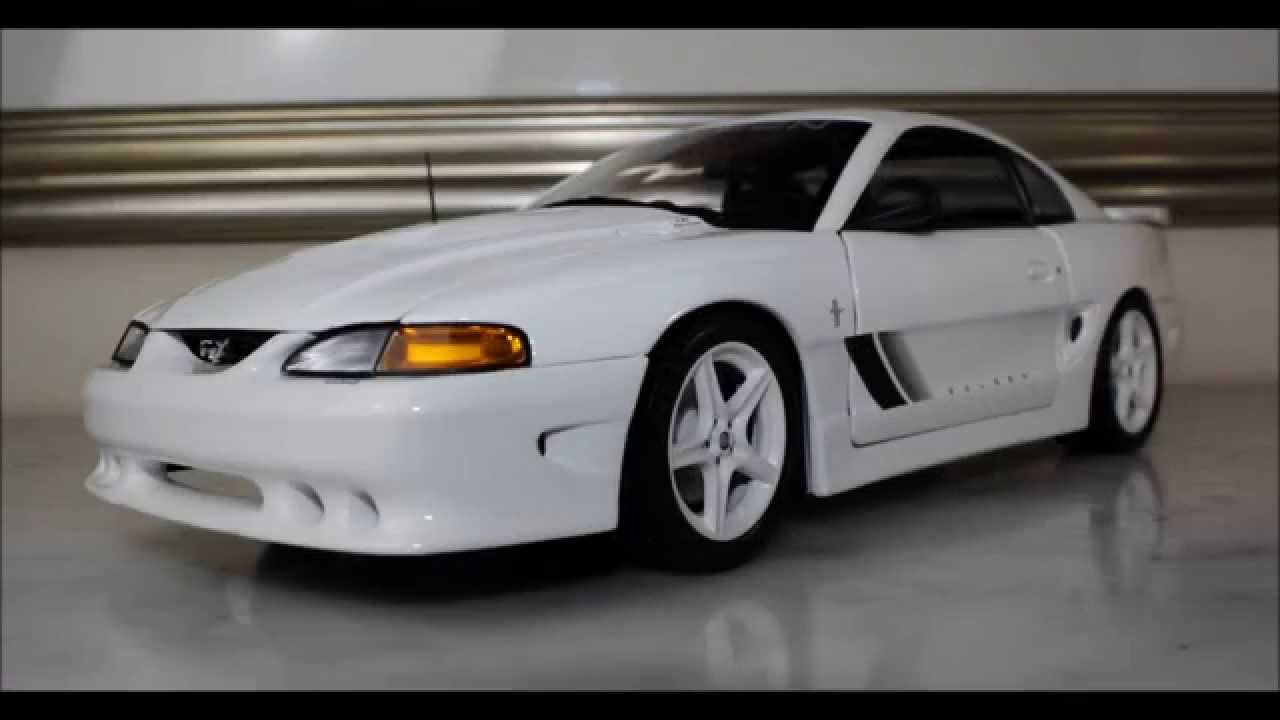
The Saleen 351 Mustang occupies a special place in the company’s history as one of the most powerful naturally aspirated vehicles Saleen ever produced based on the Mustang platform.
By swapping Ford’s 4.6-liter modular V8 for the legendary 5.8-liter (351 cubic inch) Windsor small-block engine, Saleen created a vehicle that combined old-school muscle car character with modern chassis dynamics and reliability.
With power outputs reaching 465 horsepower from natural aspiration alone and top speeds exceeding 170 mph, the 351 Mustang demonstrated that forced induction wasn’t the only path to extreme performance.
The decision to utilize the 351 Windsor engine was both pragmatic and nostalgic. This pushrod V8 represented classic American performance engineering, featuring robust construction, tremendous torque production, and enormous aftermarket support that allowed for virtually unlimited modification potential.
Saleen’s engineers carefully blueprinted each engine, incorporating performance camshafts, ported cylinder heads, high-flow intake and exhaust systems, and precisely calibrated fuel injection systems.
The result was an engine that delivered power across a wide RPM range, creating a driving experience characterized by relentless low-end torque and strong mid-range acceleration.
The naturally aspirated approach offered several advantages over supercharged alternatives. Throttle response was immediate and linear, without the slight lag inherent to forced induction systems. Heat management was simplified, as there were no intercoolers or supercharger systems to plumb and cool.
Maintenance requirements were reduced, and the engine’s inherently simpler design meant fewer potential failure points. For purists who appreciated the organic feel of natural aspiration, the 351 Mustang provided an engaging experience that felt more connected and predictable than turbocharged or supercharged alternatives.
Production of 351-powered Saleen Mustangs was relatively limited, as the engine swap added significant cost and complexity compared to supercharging the stock modular V8.
However, for enthusiasts who valued the unique character of naturally aspirated pushrod V8 power, the 351 represented the ultimate expression of traditional American muscle combined with modern dynamics.
These vehicles have become increasingly collectible, representing a brief period when Saleen offered buyers a choice between cutting-edge forced induction technology and classic displacement-based performance, with both approaches delivering genuinely thrilling results.
Also Read: 12 Classic ’70s Cars Faster Than the Chevy Chevelle SS
