
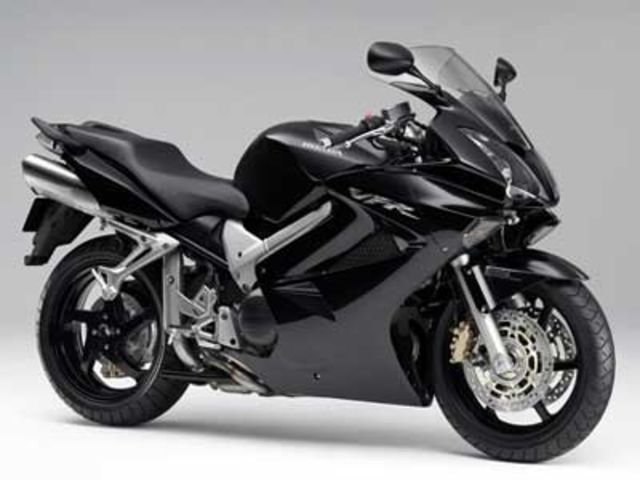
Honda has been at the forefront of motorcycle innovation for over seven decades, and their sports bikes have consistently set benchmarks in performance, reliability, and engineering excellence.
From the racetrack to the open road, Honda’s sport motorcycles have captured the hearts of riders worldwide, combining cutting-edge technology with the brand’s legendary build quality.
The Japanese manufacturer’s journey in the sports bike segment began in earnest during the 1960s, but it was in the following decades that Honda truly revolutionized the industry.
With each new generation, they pushed the boundaries of what was possible, introducing groundbreaking features like electronic fuel injection, advanced aerodynamics, and sophisticated suspension systems that would become industry standards.
What sets Honda sports bikes apart is their unique philosophy of creating machines that are not just fast, but also accessible, reliable, and practical for everyday use.
While some manufacturers prioritize raw power above all else, Honda has consistently delivered bikes that offer a perfect balance between performance and usability. This approach has made their sports bikes favorites among both track-day enthusiasts and daily commuters alike.
From the iconic CBR series that dominated both streets and circuits to the revolutionary Fireblade that redefined the superbike category, Honda’s sports bike lineup reads like a hall of fame of motorcycling history.
These machines have won countless races, set numerous speed records, and most importantly, provided millions of riders with unforgettable experiences.
In this comprehensive look at Honda’s finest sports bikes, we’ll explore ten machines that represent the pinnacle of the company’s engineering prowess. These motorcycles didn’t just meet the standards of their time they set new ones, influencing competitors and inspiring generations of riders.
Whether you’re a seasoned enthusiast or someone curious about Honda’s sporting heritage, these ten bikes represent the very best of what the manufacturer has achieved in the pursuit of two-wheeled performance perfection.
1. Honda CBR1000RR Fireblade
The Honda CBR1000RR Fireblade stands as one of the most significant motorcycles in sports bike history, representing a paradigm shift in superbike design philosophy when it first appeared in 1992.
The original Fireblade, under the guidance of project leader Tadao Baba, challenged the prevailing notion that bigger and more powerful was always better. Instead, Honda created a bike that prioritized total control through optimized weight distribution and handling dynamics, revolutionizing the literbike category in the process.
The Fireblade’s genius lay in its revolutionary approach to power-to-weight ratio. While competitors were building increasingly heavy 750cc bikes with limited usability, Honda took a 900cc engine and placed it in a chassis that was lighter than most 600cc sports bikes of the era.
This resulted in a machine that was devastatingly fast yet remarkably manageable, making superbike performance accessible to a broader range of riders. The original model weighed just 185 kg dry, an astonishing figure that left competitors scrambling to catch up.
Over the years, the Fireblade has evolved through numerous iterations, each bringing refinements and technological advancements. The bike grew to a full 1000cc displacement in 2004, gaining power while maintaining Honda’s commitment to handling excellence.
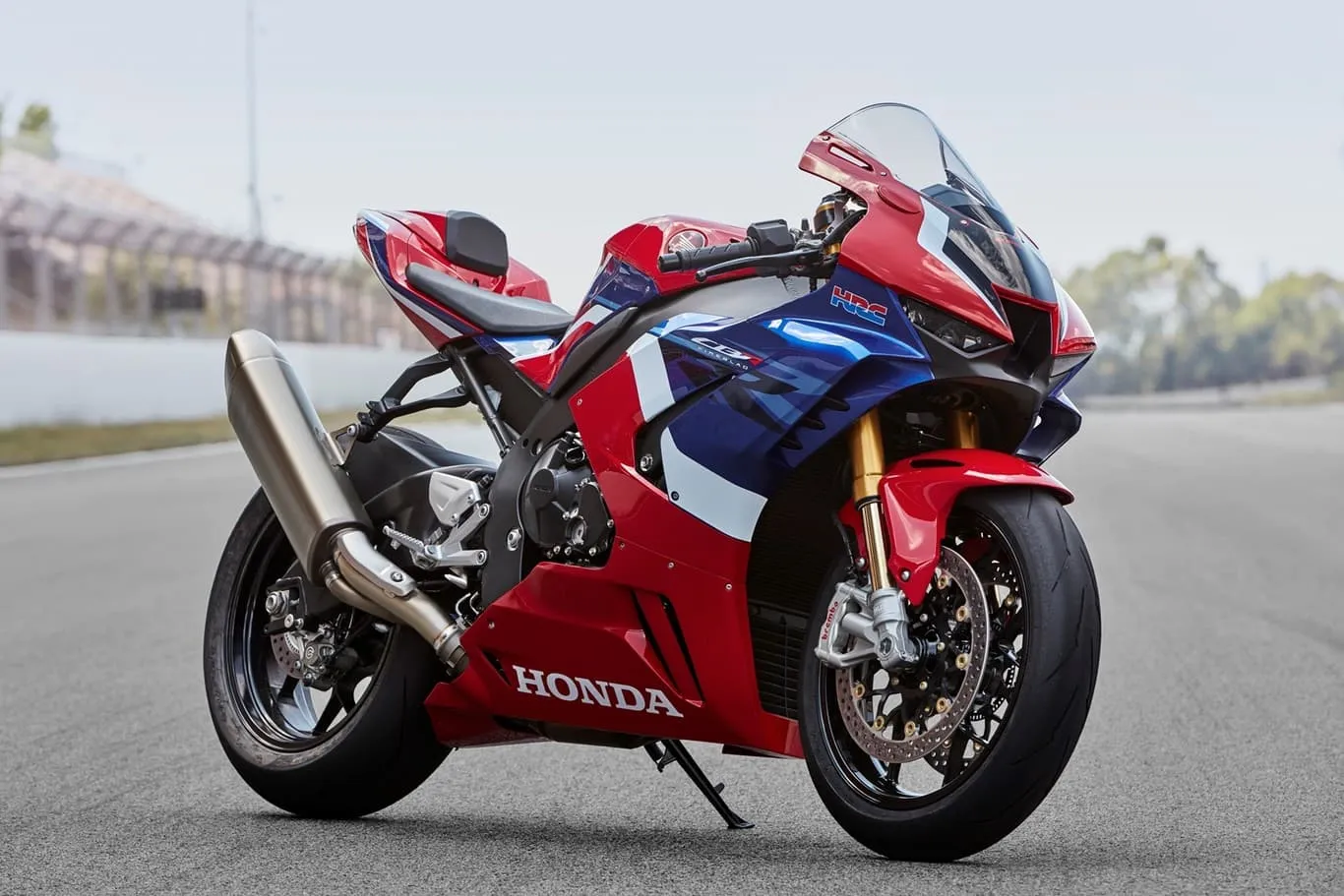
Modern Fireblades feature cutting-edge electronics including traction control, multiple riding modes, cornering ABS, and sophisticated suspension systems that would have seemed like science fiction to riders of the original model.
The current generation Fireblade, particularly the SP and SP2 variants, represents the culmination of decades of refinement. With over 200 horsepower, a full suite of electronic rider aids derived from Honda’s MotoGP program, and Öhlins suspension, these machines are capable of lap times that rival or exceed those of dedicated racing motorcycles from just a few years ago.
The aerodynamic package includes winglets that generate downforce at high speeds, keeping the front wheel planted and improving stability.
What makes the Fireblade truly special is its versatility. Despite being a track-focused machine, it remains surprisingly usable on public roads.
The riding position, while committed, isn’t as extreme as some competitors, and the engine delivers strong power throughout the rev range rather than requiring constant gear changes.
This real-world usability combined with world-class performance has made the Fireblade a favorite among track-day enthusiasts and street riders alike, cementing its place as one of Honda’s greatest achievements in motorcycle design and a true icon of the sports bike world.
2. Honda RC30 (VFR750R)
The Honda RC30, officially known as the VFR750R, is arguably the most legendary and collectible sports bike Honda has ever produced. Built primarily to homologate Honda’s World Superbike racing efforts, the RC30 represented the pinnacle of late 1980s motorcycle technology and remains one of the most desirable motorcycles ever created.
Limited production numbers and race-winning pedigree have made it a holy grail for collectors, with pristine examples commanding astronomical prices in today’s market.
At the heart of the RC30 was a 748cc V4 engine featuring gear-driven camshafts, a configuration chosen for its precision and reliability under racing conditions. This powerplant produced approximately 112 horsepower in stock form, though race-prepared examples could extract significantly more.
The V4 configuration provided a compact engine package with excellent power delivery characteristics, combining the smoothness of a multi-cylinder engine with strong torque production.
The distinctive gear whine from the cam drive became one of the RC30’s signature characteristics, beloved by enthusiasts. The chassis was equally impressive, featuring a lightweight aluminum twin-spar frame that set new standards for rigidity and handling precision.

Every component was carefully selected or specifically designed for the RC30, from the 16-inch front wheel that improved steering response to the single-sided swingarm that facilitated quick wheel changes during racing.
The attention to detail was extraordinary, with features like adjustable steering head angle, titanium connecting rods, and magnesium engine covers demonstrating Honda’s commitment to creating the ultimate production racer.
The RC30’s racing success was immediate and overwhelming. It dominated World Superbike racing, winning championships in the hands of riders like Fred Merkel and Doug Polen.
The bike’s combination of power, handling, and reliability made it nearly unbeatable on tracks around the world. Success in production racing was exactly what Honda had intended when developing the RC30, and the bike delivered beyond expectations, establishing Honda’s reputation as a force in superbike racing.
For street riders, the RC30 offered an unfiltered racing experience rarely found in production motorcycles. The riding position was aggressive, the suspension firm, and the power delivery demanding respect, but for those who appreciated pure performance, nothing came close.
Today, the RC30 is celebrated not just as a great motorcycle but as a masterpiece of engineering and design, representing an era when manufacturers would go to extraordinary lengths to create homologation specials. Its influence on subsequent Honda sports bikes and the broader industry cannot be overstated, making it an essential chapter in motorcycling history.
3. Honda CBR600RR
The Honda CBR600RR has long been considered the benchmark in the 600cc supersport category, combining race-proven performance with the reliability and refinement that Honda is famous for.
Since its introduction in 2003, the CBR600RR has been a dominant force both on racetracks and in showrooms, offering middleweight performance that rivals or exceeds many larger-displacement machines. Its success in production racing classes around the world is testament to its exceptional design and engineering.
Honda designed the CBR600RR with a clear focus on maximizing performance within the constraints of the 600cc displacement limit. The inline four-cylinder engine features race-derived technology including fine-mist fuel injection, titanium valves, and a ram-air intake system that helps the engine produce approximately 120 horsepower.
The engine’s high-revving nature means power delivery is concentrated in the upper RPM range, rewarding skilled riders who can keep the engine singing while punishing those who don’t. This peaky character is typical of the class and makes the bike particularly exciting on track.
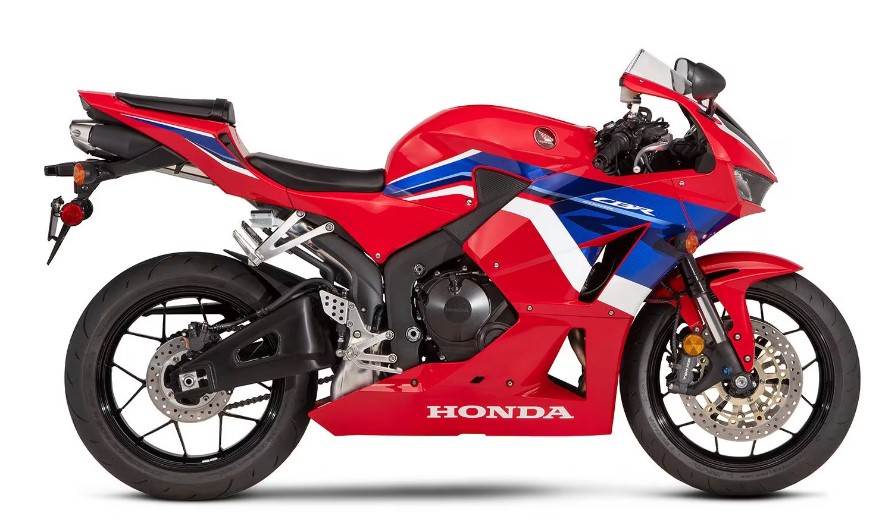
The chassis of the CBR600RR is a masterclass in lightweight construction and rigid design. The aluminum twin-spar frame provides excellent feedback and precision, allowing riders to place the bike exactly where they want with confidence.
Suspension components from Showa provide excellent performance in both street and track applications, with enough adjustability to fine-tune the setup for different conditions. The braking system features dual front discs with radial-mount calipers, delivering powerful and progressive stopping power that inspires confidence at any speed.
The CBR600RR has seen several significant updates over its production run, with major revisions in 2007, 2013, and most recently in 2021. Each generation brought improvements in power, handling, electronics, and aerodynamics.
Modern versions feature ride-by-wire throttle, selectable riding modes, and other electronic aids that make them easier to ride quickly while still rewarding skill development.
For riders seeking a true supersport experience in a middleweight package, the CBR600RR remains an outstanding choice and a worthy successor to Honda’s rich heritage in the 600cc class.
4. Honda NSR500V
The Honda NSR500V occupies a unique place in Honda’s sports bike history as one of the few pure racing machines that also saw limited production for street use.
This two-stroke V4 Grand Prix racer dominated MotoGP’s predecessor, the 500cc World Championship, throughout the 1980s and 1990s, winning numerous constructor and rider championships.
While primarily a race bike, Honda produced a small number of street-legal versions for the Japanese market, making it one of the most exotic and exclusive motorcycles ever offered to the public.
The NSR500V’s engine was a technological marvel, a 499cc V4 two-stroke that produced over 180 horsepower in race trim at stratospheric RPMs.
The V4 configuration was chosen for its compact dimensions and excellent power characteristics, with the engine using sophisticated expansion chamber exhaust systems to maximize power output.
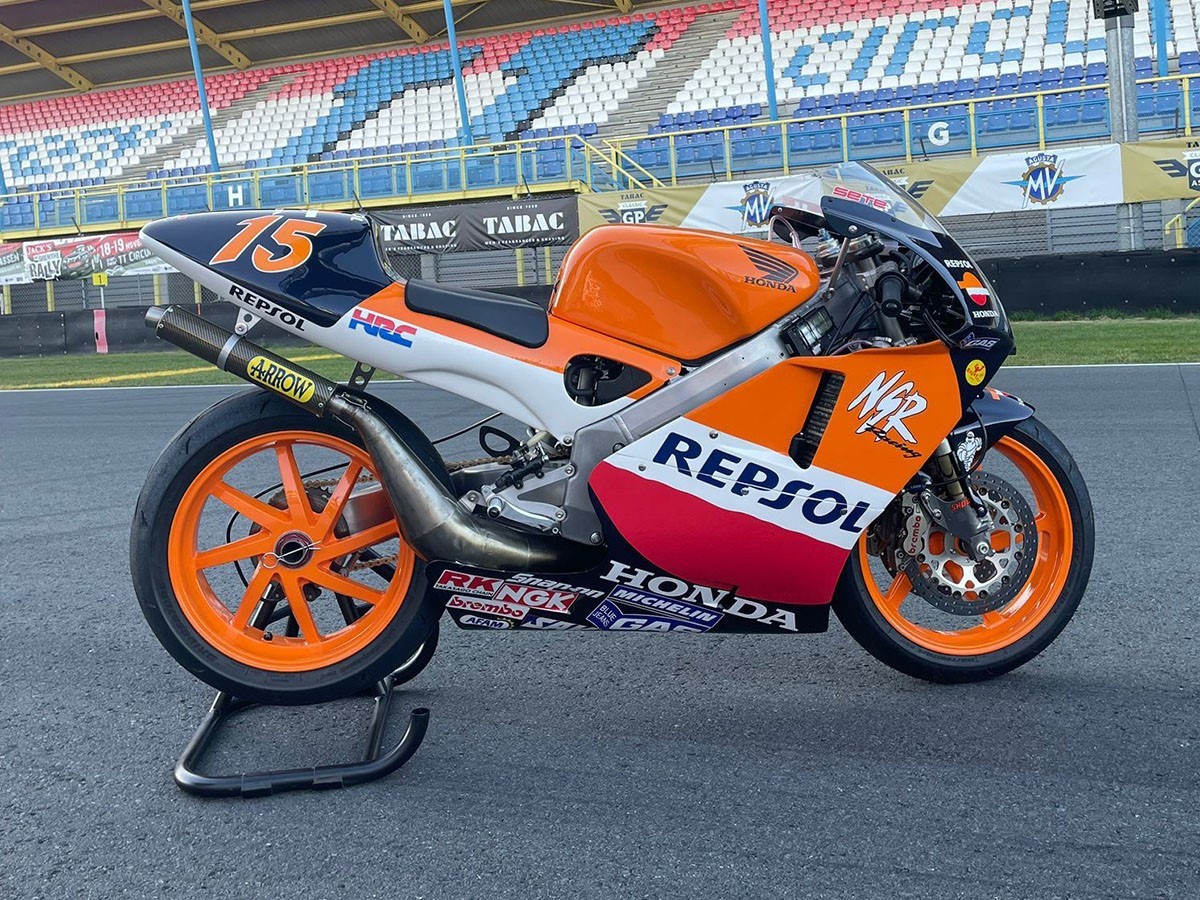
The screaming two-stroke engine note became iconic in Grand Prix racing, and the bike’s brutal power delivery required exceptional skill to manage effectively.
The engine’s lightweight construction and high power output created a power-to-weight ratio that wouldn’t be matched by four-stroke machines for many years.
For the fortunate few who acquired street-legal versions, the NSR500V offered an unmatched racing experience. These bikes were essentially race machines with minimal compromises for street legality, featuring the same explosive power and razor-sharp handling as their Grand Prix counterparts.
Today, NSR500Vs are among the most valuable and sought-after collectible motorcycles, representing the pinnacle of two-stroke racing technology before the switch to four-stroke engines in MotoGP.
The NSR500V’s legacy lives on in Honda’s continued success in prototype racing and in the memories of fans who witnessed its dominance during the golden age of 500cc Grand Prix racing.
Also Read: 5 Cars for Franklin Suburban Commuters and 5 That Lose Value Fast
5. Honda CBR954RR
The Honda CBR954RR represents a brief but significant chapter in Honda’s superbike history, produced only from 2002 to 2003 before being replaced by the CBR1000RR.
Despite its short production run, the 954 earned a devoted following for its exceptional balance of power, handling, and real-world usability.
Many enthusiasts consider it the sweet spot in Honda’s literbike evolution, offering most of the performance of larger bikes without being as intimidating or extreme as later models.
The 954cc inline four-cylinder engine produced approximately 150 horsepower, a significant increase over the CBR929RR it replaced while maintaining excellent throttle response and power delivery throughout the rev range.
Unlike some competitors that focused solely on peak power numbers, Honda engineered the 954’s engine to provide strong, usable power across a broad RPM range.
This made the bike easier to ride quickly on both street and track, as riders didn’t need to constantly keep the engine at maximum revs to access performance. The fuel injection system was sophisticated for its time, providing smooth power delivery in all conditions.
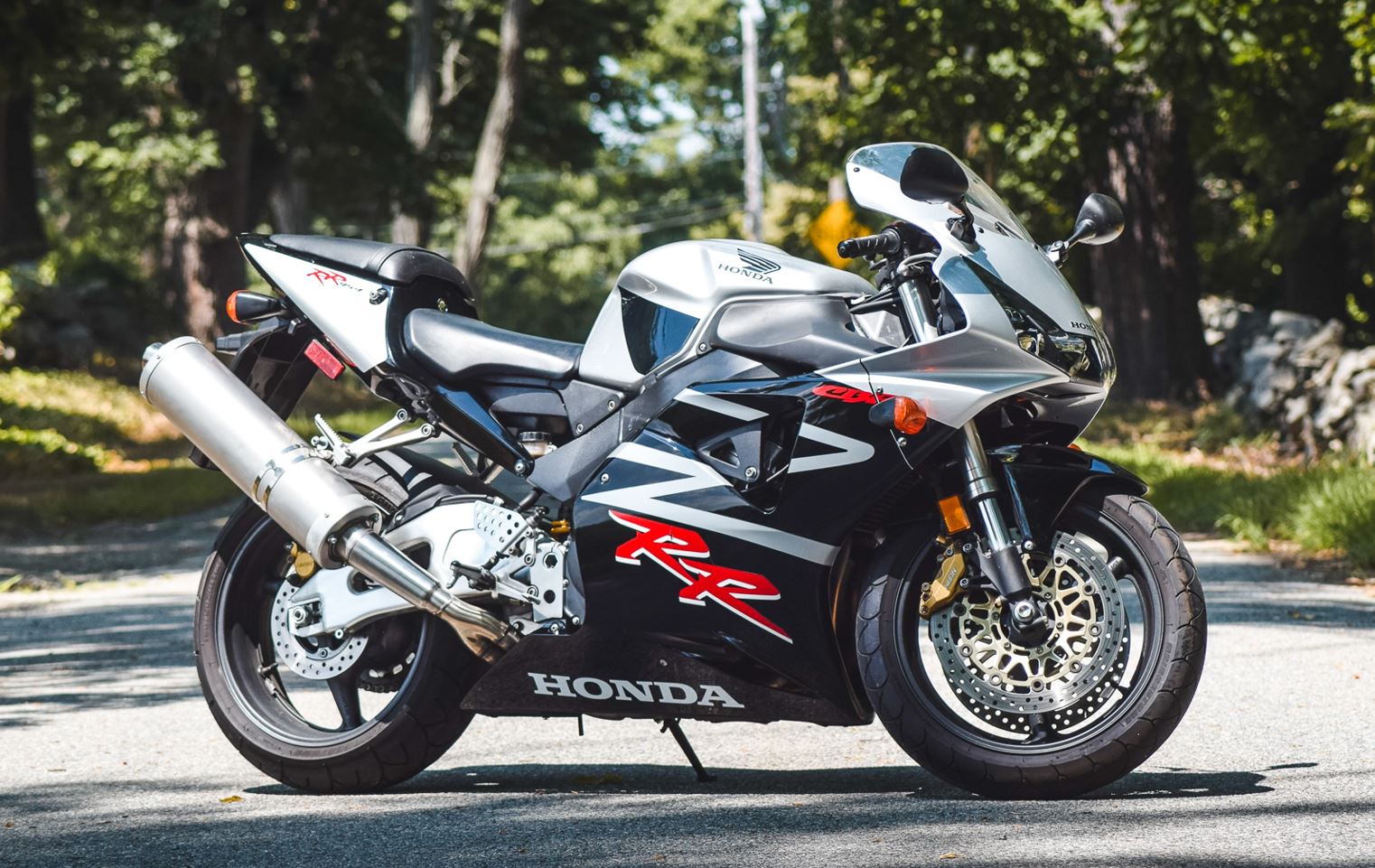
The chassis represented a significant evolution from previous CBR models, with a lighter and more rigid aluminum frame that improved handling precision.
Honda paid particular attention to mass centralization, positioning major components to optimize weight distribution and reduce rotational inertia.
The result was a bike that changed direction with remarkable agility while maintaining excellent stability at high speeds. Suspension components from Showa provided excellent performance, and the braking system featured powerful dual front discs that delivered strong, progressive stopping power.
Today, the CBR954RR has developed a cult following among enthusiasts who appreciate its balanced approach to superbike design. While it lacks the electronic rider aids and extreme power of modern literbikes, many riders prefer its more analog, engaging character.
The bike represents an era before electronics became dominant in motorcycle design, when success depended more on rider skill than software algorithms. Clean, well-maintained examples are increasingly sought after by collectors and riders who remember the 954 as one of Honda’s finest all-around sports bikes.
6. Honda RC213V-S
The Honda RC213V-S represents one of the most ambitious and exotic motorcycles ever offered to the public, essentially a street-legal version of Honda’s MotoGP race bike.
Introduced in 2015 with a limited production run, the RC213V-S was designed to give wealthy enthusiasts the closest possible experience to riding a genuine MotoGP machine on public roads.
With a base price exceeding $180,000 and an optional sports kit pushing costs even higher, this was Honda’s ultimate statement piece, demonstrating their engineering capabilities without concern for mass-market appeal.
At the heart of the RC213V-S was a 999cc V4 engine derived directly from Honda’s MotoGP powerplant. In street-legal trim with catalytic converters and noise restrictions, the engine produced approximately 159 horsepower, impressive but somewhat restrained compared to its racing sibling.

However, Honda offered a sport kit that removed emission restrictions and included race-spec ECU mapping, titanium exhaust, and other components that boosted output to over 215 horsepower, bringing performance much closer to the full MotoGP specification.
The engine’s configuration featured a unique firing order that provided exceptional power delivery characteristics and that distinctive MotoGP scream.
Despite its extraordinary specifications and MotoGP pedigree, the RC213V-S received mixed reviews from the motorcycle press and buyers.
At its astronomical price point, it competed with exotic Italian machines that often offered more power and prestige. The complex maintenance requirements and limited dealer network capable of servicing such an exotic machine also proved challenging.
However, as a technological showcase and collector’s item, the RC213V-S succeeded brilliantly, representing the pinnacle of Honda’s engineering capabilities and offering a select few the chance to experience MotoGP-derived technology on the street. Its rarity and unique position in Honda’s history ensure it will remain a significant and valuable motorcycle for decades to come.
7. Honda CB750F
The Honda CB750F, introduced in the late 1970s, represented Honda’s entry into the emerging supersport category and helped establish the template for modern sports bikes.
While the original CB750 of 1969 had revolutionized motorcycling by introducing the concept of the superbike, the CB750F took that platform and refined it specifically for sporting performance.
With its distinctive angular styling, upswept exhaust, and aggressive stance, the CB750F captured the imagination of riders seeking performance in an era before fully-faired race replicas dominated showrooms.
The engine was an evolution of Honda’s proven 736cc inline four-cylinder air-cooled design, but tuned for better performance through modifications including higher compression, improved breathing, and revised camshaft profiles.
The DOHC engine produced approximately 75 horsepower, impressive for the era, and delivered power smoothly across the rev range.
The distinctive four-into-one exhaust system not only looked sporting but also improved engine breathing and power delivery. This engine became legendary for its reliability and smoothness, characteristics that would define Honda’s approach to motorcycle engines for decades.
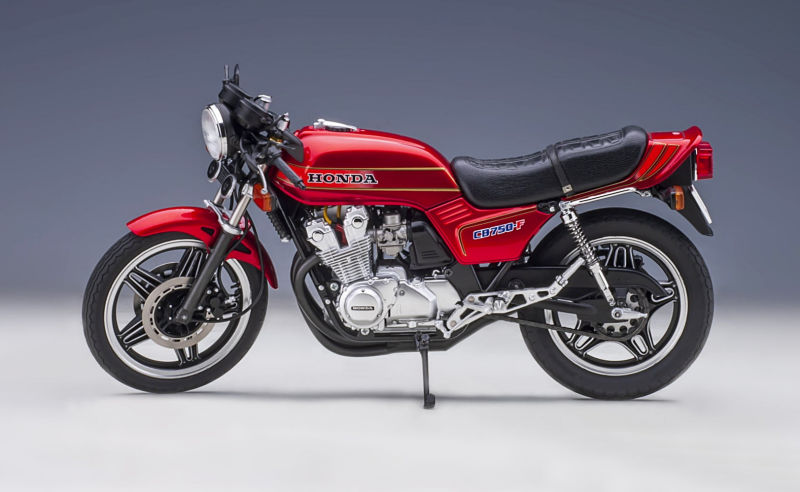
The chassis featured a steel frame designed to provide better handling than the original CB750, with revised geometry that quickened steering response and improved cornering capabilities.
The suspension used conventional forks up front and twin shocks at the rear, typical for the era, but with improved damping and spring rates suitable for spirited riding.
The braking system featured a hydraulic disc brake at the front, providing significantly better stopping power than the drum brakes common on earlier models. The combination of frame, suspension, and brakes created a package that could genuinely be ridden quickly on twisty roads.
The CB750F’s legacy extends far beyond its production years. It demonstrated that sporting motorcycles could be reliable, refined, and practical while still offering engaging performance.
The bike was popular with riders who wanted something more exciting than a standard motorcycle but weren’t quite ready for the extreme commitment required by full-on race replicas.
Many consider the CB750F an important evolutionary step between the original superbikes of the early 1970s and the fully-faired supersport machines that would dominate the 1980s and beyond. For enthusiasts of classic Honda motorcycles, the CB750F represents an important and charismatic chapter in the company’s sporting heritage.
8. Honda VFR800
The Honda VFR800 occupies a unique position in Honda’s sports bike lineup as a sport-touring machine that offers genuine sporting performance combined with long-distance comfort and practicality.
Since its introduction in 1998, the VFR800 has been celebrated for its distinctive V4 engine, excellent build quality, and versatility that makes it suitable for everything from spirited canyon carving to multi-day touring.
While not a pure sports bike, its performance capabilities and sporting heritage earn it a place among Honda’s finest sporting machines.
The heart of the VFR800 is its liquid-cooled 781cc V4 engine, a configuration that has become synonymous with the VFR line. This engine design offers an excellent compromise between the smoothness of an inline four and the character of a V-twin, producing strong torque throughout the rev range while remaining refined and sophisticated.
The V4 produces approximately 105 horsepower, sufficient for spirited riding while maintaining excellent fuel economy and reliability. The distinctive engine note, particularly the unique sound produced by the gear-driven camshafts in earlier models, became one of the VFR’s signature characteristics, beloved by enthusiasts.
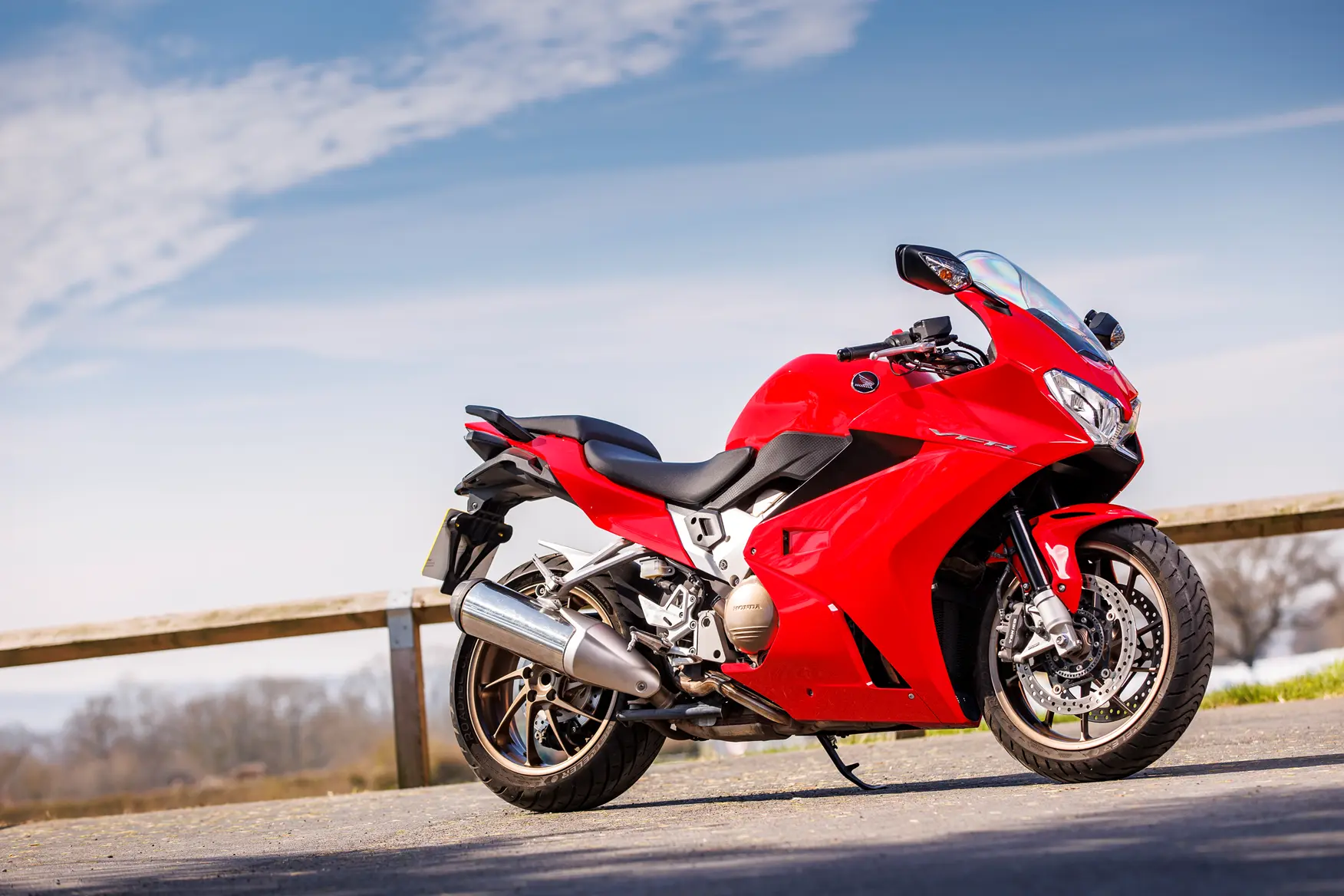
The chassis of the VFR800 represents Honda’s commitment to combining sporting performance with everyday usability. The aluminum frame provides excellent rigidity and handling precision, allowing the bike to be ridden confidently on twisty roads despite its sport-touring classification.
The suspension, while biased toward comfort compared to pure sports bikes, still offers enough performance to satisfy most riders. The riding position strikes an excellent balance between sporty and upright, making the bike comfortable for long days in the saddle while still providing good control for aggressive riding.
The brakes are powerful and progressive, with linked braking systems on most models providing excellent control and confidence. The VFR800 has evolved through several generations, each bringing refinements and updates while maintaining the core character that made it popular.
The introduction of VTEC variable valve timing in 2002 improved power delivery, though some enthusiasts preferred the character of the earlier non-VTEC engine. Styling updates have kept the bike contemporary while respecting its heritage.
For riders seeking a single motorcycle that can handle daily commuting, weekend sport rides, and long-distance touring with equal competence, the VFR800 remains an outstanding choice.
Its combination of performance, reliability, and versatility has made it a favorite among experienced riders who appreciate a well-rounded machine over one-dimensional performance, establishing it as one of Honda’s most successful and enduring sporting designs.
9. Honda CBR250RR
The Honda CBR250RR represents Honda’s commitment to the lightweight sports bike category, offering genuine sporting performance in a small-displacement package that’s accessible to newer riders and those in markets with licensing restrictions.
While smaller-displacement sports bikes are often dismissed by riders focused on power numbers, the CBR250RR demonstrates that excitement and engagement don’t require massive horsepower.
This bike has developed a cult following, particularly in Asian markets where it’s regularly available, for its rev-happy character and sharp handling dynamics.
The engine is a liquid-cooled 249cc parallel twin featuring sophisticated technology rarely seen in the quarter-liter class. Honda equipped this engine with dual overhead cams, four valves per cylinder, and advanced fuel injection that helps extract maximum performance from the small displacement.
The engine produces approximately 40 horsepower at very high RPMs, requiring riders to work the gearbox and keep revs high to access full performance.
This high-revving character creates an engaging riding experience that rewards skill and commitment, teaching riders proper throttle and gear selection techniques that transfer to larger bikes.
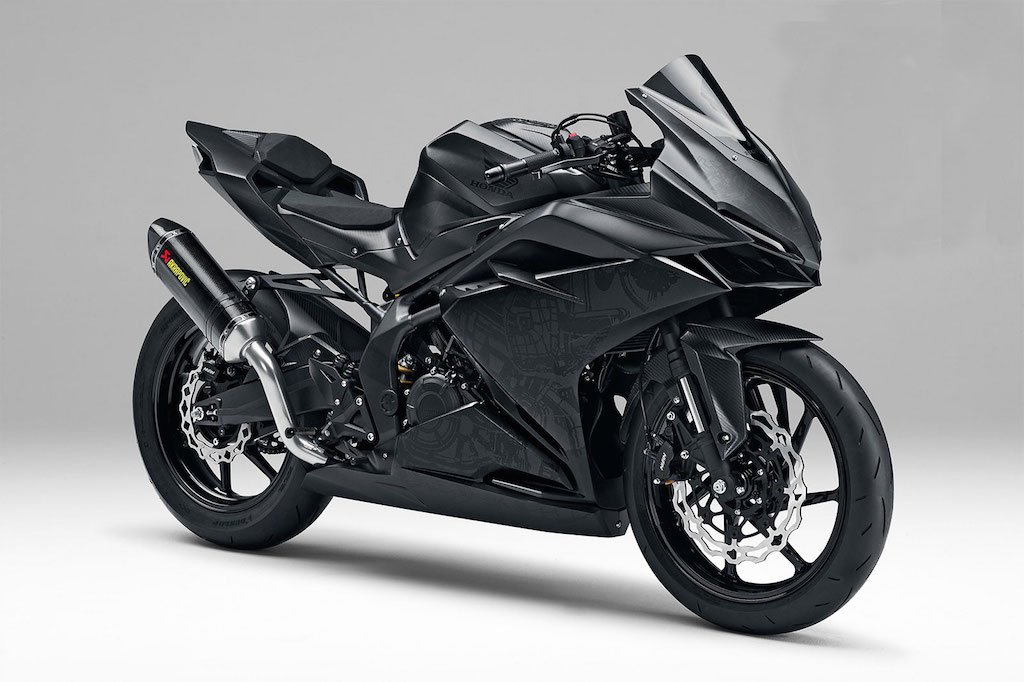
The chassis of the CBR250RR features a steel diamond frame designed specifically for the lightweight bike category, providing excellent rigidity without excessive weight.
The suspension uses quality components with enough adjustability to dial in setup for different riding conditions and preferences. Despite being an entry-level machine, Honda didn’t compromise on handling, and the CBR250RR demonstrates sharp steering response and stability that allows riders to develop their skills confidently.
The riding position is properly sporty, introducing new riders to the committed posture required for aggressive riding while remaining comfortable enough for street use.
The CBR250RR has seen several iterations over the years, with the most recent version introduced in 2017 featuring modern styling, LED lighting, and optional quick shifter equipment typically reserved for much more expensive machines.
Honda’s commitment to the small-displacement sports bike category demonstrates their understanding that not every rider wants or needs 200 horsepower to have fun on two wheels.
For many riders, particularly those in Asian markets where the CBR250RR is most popular, this bike represents an ideal balance of performance, practicality, and affordability.
Its ability to deliver genuine sporting thrills while remaining accessible and manageable makes it an important part of Honda’s sports bike heritage and an excellent choice for riders entering the performance motorcycles.
10. Honda CBR1100XX Super Blackbird
The Honda CBR1100XX Super Blackbird represents Honda’s bold attempt to create the world’s fastest production motorcycle, engaging in a high-speed arms race with competitors during the late 1990s.
Introduced in 1996, the Super Blackbird was designed to reclaim the top speed crown that Honda had previously held with earlier models.
Named after the Lockheed SR-71 Blackbird spy plane, the fastest aircraft ever built, the CBR1100XX was Honda’s statement that they could still build the ultimate high-speed machine combining raw performance with their trademark reliability and refinement.
The engine was a liquid-cooled 1,137cc inline four-cylinder powerplant producing approximately 165 horsepower, making it the most powerful production motorcycle engine Honda had ever created at the time of its launch.
The engine was designed specifically for high-speed cruising, with emphasis on mid-range torque and smooth power delivery rather than peaky top-end performance. This made the Super Blackbird exceptionally fast in real-world conditions, capable of accelerating from highway speeds to well over 150 mph with shocking ease.
The fuel injection system was sophisticated for the era, providing smooth throttle response and excellent fuel economy considering the bike’s performance potential.
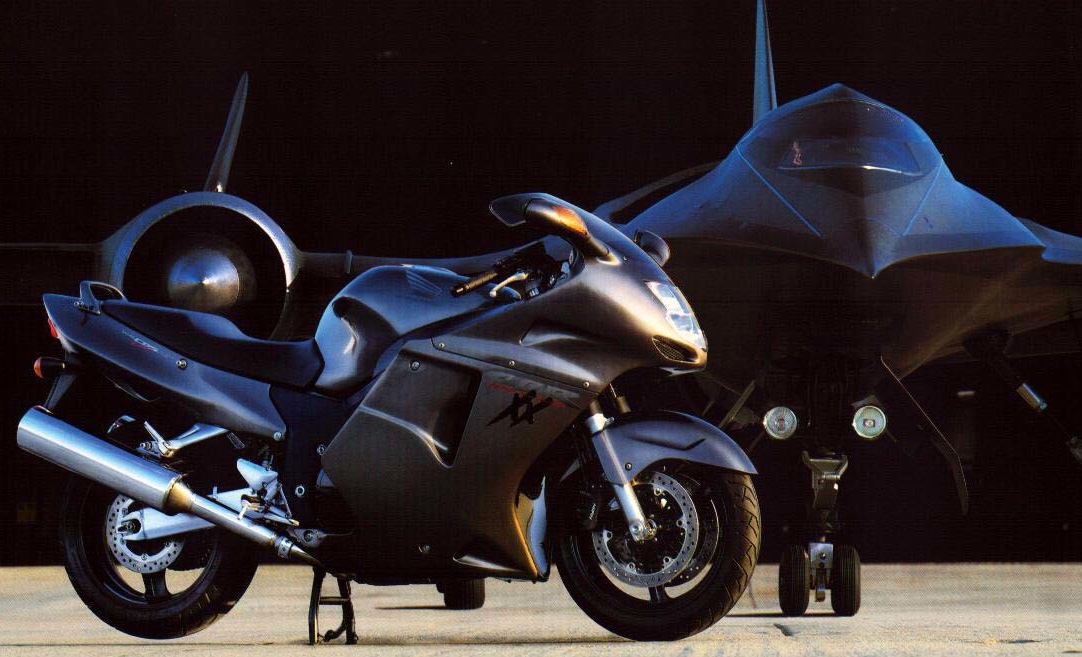
The aerodynamics of the Super Blackbird were critical to achieving its high-speed objectives. Honda’s engineers spent countless hours in wind tunnels perfecting the bodywork, creating a shape that minimized drag while maintaining stability at extreme speeds.
The fairing was large and enveloping, providing excellent wind protection for the rider and allowing the bike to slip through the air with minimal resistance.
The distinctive stacked headlights became a signature styling element while serving a functional purpose in reducing frontal area. Every detail, from the shape of the mirrors to the profile of the windscreen, was optimized for aerodynamic efficiency.
The Super Blackbird ultimately achieved its goal of becoming the world’s fastest production motorcycle, though it held that title only briefly before Suzuki’s Hayabusa claimed the crown.
However, the bike’s legacy extends beyond simple top speed numbers. It demonstrated that Honda could build a machine combining extreme performance with everyday usability and reliability, a combination that defined the sport-touring category for years to come.
The Super Blackbird remained in production until 2007, developing a devoted following among riders who appreciated its unique blend of straight-line performance, long-distance comfort, and Honda build quality.
Today, it’s remembered as one of Honda’s most ambitious and successful sports bikes, representing an era when manufacturers competed openly for the title of fastest production motorcycle without the gentleman’s agreement and electronic restrictions that would later limit such competition.
Also Read: 5 Cars for Juneau Island Life and 5 That Are Hard to Service
