

The dual-sport motorcycles continues to capture riders who refuse to be confined by pavement alone. These versatile machines represent the ultimate freedom in motorcycling, offering the ability to explore both paved highways and rugged backcountry trails with equal confidence.
As we go through 2026, the dual-sport segment has evolved significantly, incorporating advanced technology, improved ergonomics, and enhanced reliability while maintaining the adventurous spirit that defines this category.
Dual-sport motorcycles occupy a unique niche in the motorcycling world, bridging the gap between street-legal transportation and off-road capability.
Unlike their adventure-touring cousins, which tend to be heavier and more road-focused, or pure dirt bikes that lack street legality, dual-sports strike an ideal balance.
They’re lightweight enough to handle technical trails, yet equipped with the necessary components lights, mirrors, and emissions equipment to make them legal for road use.
This versatility makes them perfect for riders who want one bike that can handle their daily commute and weekend trail adventures without compromise.
In 2026, manufacturers have refined their offerings to cater to various rider preferences and skill levels. From lightweight beginner-friendly models to powerful machines capable of serious off-road performance, the current dual-sport lineup offers something for everyone.
Modern dual-sports benefit from fuel injection, improved suspension technology, and better braking systems while retaining the simplicity and low-maintenance characteristics that have always made them appealing.
This guide explores twelve of the best dual-sport motorcycles available in 2026, examining what makes each model special and helping you determine which might be the perfect companion for your two-wheeled adventures.
1. Honda CRF300L
The Honda CRF300L stands as one of the most well-rounded dual-sport motorcycles available in 2026, offering an exceptional blend of reliability, capability, and user-friendliness that appeals to both beginners and experienced riders.
Honda’s reputation for bulletproof engineering is fully evident in this machine, which has earned its place as a perennial favorite in the dual-sport category.
At the heart of the CRF300L is a liquid-cooled, 286cc single-cylinder engine that produces approximately 27 horsepower. While these numbers might seem modest compared to some competitors, the power delivery is incredibly smooth and predictable, making it ideal for learning off-road techniques or going through the technical terrain.
The fuel-injected engine starts reliably in all conditions and provides excellent fuel economy, often exceeding 70 miles per gallon, which translates to impressive range from its 2.0-gallon fuel tank.

The chassis of the CRF300L is where this bike truly shines for dual-sport duty. Weighing in at around 309 pounds with a full tank, it’s light enough to maneuver easily on trails while feeling stable on the highway.
The suspension features 10.2 inches of travel at both ends, providing adequate capability for moderate off-road riding without feeling overwhelmed.
The 35mm inverted fork is a notable upgrade over previous generations, offering improved rigidity and control during aggressive riding.
While the CRF300L isn’t the fastest or most exciting bike in its class, its balanced approach to dual-sport riding makes it extraordinarily capable.
It handles fire roads and moderate single-track with confidence, maintains highway speeds without strain, and does it all with Honda’s legendary reliability backing every mile.
2. Yamaha WR250R
The Yamaha WR250R represents the high-performance end of the lightweight dual-sport spectrum, offering serious off-road capability wrapped in a street-legal package.
Despite being one of the older designs still in production, the WR250R continues to earn respect from riders who prioritize off-road performance and long-term durability above all else.
Yamaha’s approach with the WR250R differs fundamentally from most competitors. Rather than detuning a dirt bike for street use, Yamaha engineered this machine from the ground up as a dual-sport.
The result is a liquid-cooled, 250cc four-valve single-cylinder engine that produces around 30 horsepower while meeting strict emissions standards and delivering excellent reliability.
The engine features sophisticated engineering including DOHC valvetrain, titanium valves, and a wet-sump lubrication system that contributes to exceptional longevity.
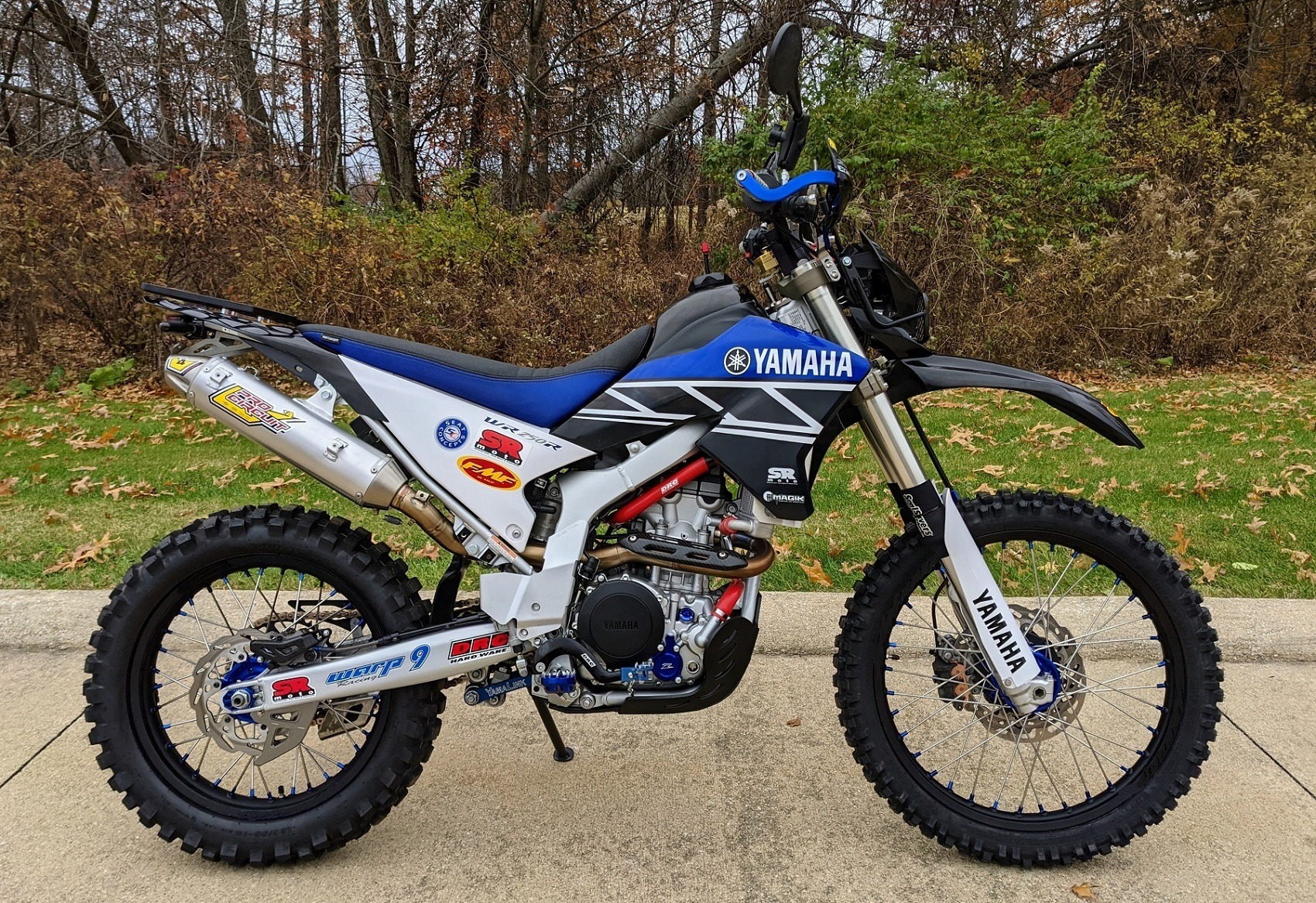
Where the WR250R truly distinguishes itself is in its chassis and suspension components. The fully adjustable suspension with 43mm inverted cartridge fork and linkage-mounted rear shock offers 9.1 inches of travel front and rear.
This suspension quality rivals that of pure dirt bikes and allows serious off-road riders to tune the bike precisely for their weight and riding style. The aluminum frame is remarkably rigid, providing excellent handling characteristics both on and off pavement.
For riders seeking maximum off-road capability in a street-legal package and willing to accept modest highway performance, the WR250R remains an outstanding choice.
Its combination of sophisticated suspension, lightweight chassis, and proven reliability make it particularly appealing for serious trail riders and adventure travelers heading into remote terrain.
3. KTM 500 EXC-F
The KTM 500 EXC-F represents the pinnacle of high-performance dual-sport motorcycles, delivering racing-bred technology and serious power in a surprisingly manageable package.
This Austrian machine is essentially a competition enduro bike with the minimum modifications necessary for street legality, making it the weapon of choice for experienced riders who prioritize off-road performance above all else.
At the core of the 500 EXC-F is a sophisticated 510.9cc SOHC single-cylinder engine producing approximately 58 horsepower. This is substantially more power than most dual-sports offer, yet KTM has achieved remarkable refinement through advanced engineering.
The fuel injection system features twin overhead camshafts and delivers crisp throttle response throughout the rev range. The engine’s strong low-end torque makes technical riding easier while providing exhilarating performance when you open the throttle on open terrain.
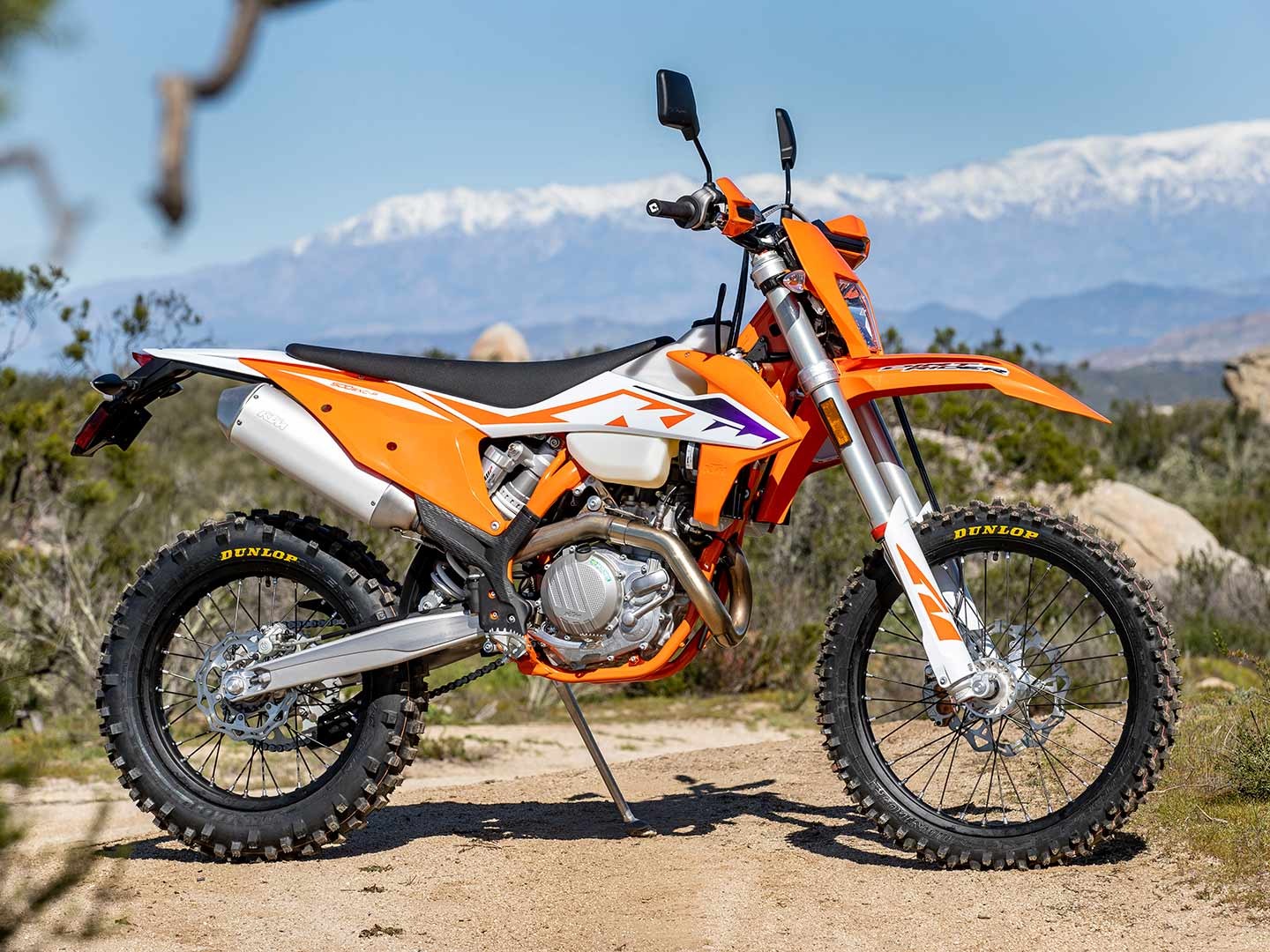
The chassis showcases KTM’s racing heritage with a chrome-moly steel frame that provides an ideal balance of rigidity and flex. The suspension components are truly exceptional WP XPLOR 48mm inverted forks with 11.8 inches of travel up front and a WP XPLOR shock with 11.8 inches of travel at the rear.
Both ends are fully adjustable and offer performance that rivals or exceeds many competition machines. This suspension allows the 500 EXC-F to absorb brutal terrain at speed while maintaining composure.
The 500 EXC-F is not the right choice for everyone. Beginners will find it intimidating, and riders seeking primarily street-focused transportation will be better served elsewhere.
But for experienced off-road riders who want maximum capability on trails while retaining street legality for connecting riding areas, the KTM 500 EXC-F stands alone at the top of the dual-sport performance hierarchy.
4. Suzuki DR-Z400S
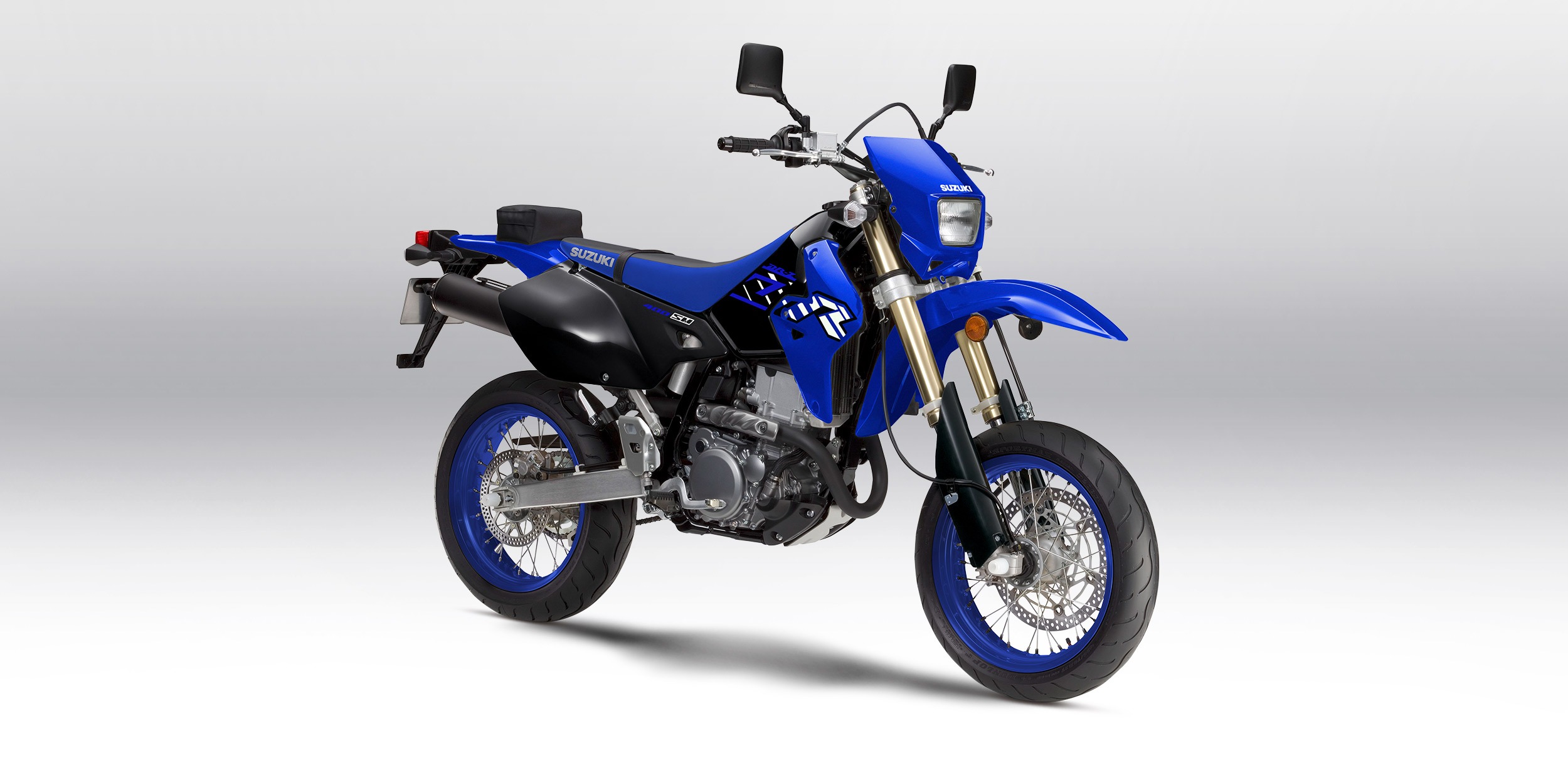
The Suzuki DR-Z400S has remained fundamentally unchanged since its introduction in 2000, yet it continues to be one of the best-selling dual-sport motorcycles in 2026.
This longevity speaks volumes about the soundness of Suzuki’s original design, which prioritized simplicity, reliability, and accessible performance over cutting-edge technology. For many riders, the DR-Z400S represents the sweet spot in dual-sport motorcycling.
The air-cooled, 398cc single-cylinder engine produces approximately 39 horsepower, providing robust performance across a wide range of riding conditions.
The carbureted fuel system might seem outdated compared to fuel-injected competitors, but it offers simplicity and ease of maintenance that many riders appreciate.
The engine runs smoothly, starts readily even in cold weather with proper technique, and has proven capable of accumulating massive mileage with minimal attention beyond regular oil changes.
Suzuki equipped the DR-Z400S with a five-speed transmission that’s well-suited to dual-sport duty, though some riders wish for a sixth gear to reduce highway rpm.
The gear ratios work well for both trail and street riding, with enough spacing to find the right gear for most situations. The chain-driven final drive is durable and easy to maintain, an important consideration for riders who plan to accumulate serious mileage.
The chassis strikes a practical balance between off-road agility and on-road stability. At 317 pounds fully fueled, the DR-Z400S is light enough to handle respectably on trails while feeling substantial enough to remain stable at highway speeds.
The suspension provides 10.9 inches of travel front and rear, with both ends being fully adjustable. While not as sophisticated as high-end competition suspension, it works well for typical dual-sport riding and can be tuned to accommodate different rider weights and preferences.
The DR-Z400S might lack the sophistication and features of newer competitors, but its proven reliability, extensive parts availability, and strong used bike market make it an intelligent choice for riders seeking a dependable, capable dual-sport motorcycle that can handle anything from daily commuting to weekend trail adventures.
Also Read: 5 Cars for Cedar Rapids Reliable Drivers and 5 That Lose Value Fast
5. Kawasaki KLX300
The Kawasaki KLX300 represents a thoroughly modern approach to the lightweight dual-sport category, incorporating fuel injection, contemporary styling, and refined ergonomics while maintaining the simplicity and accessibility that make dual-sports appealing.
Introduced as an update to the long-running KLX250, the KLX300 addresses many of the criticisms leveled at its predecessor while retaining the qualities that made the original popular.
The liquid-cooled, 292cc single-cylinder engine delivers smooth, predictable power throughout its rev range, producing approximately 28 horsepower. The fuel injection system ensures clean running in all conditions and excellent cold starting performance.
While not the most powerful engine in its class, the KLX300 prioritizes tractability and user-friendliness over outright performance, making it particularly well-suited for newer riders or those who prefer relaxed trail riding over aggressive off-road performance.
Kawasaki has equipped the KLX300 with a six-speed transmission that provides good gear spacing for both on-road and off-road use.
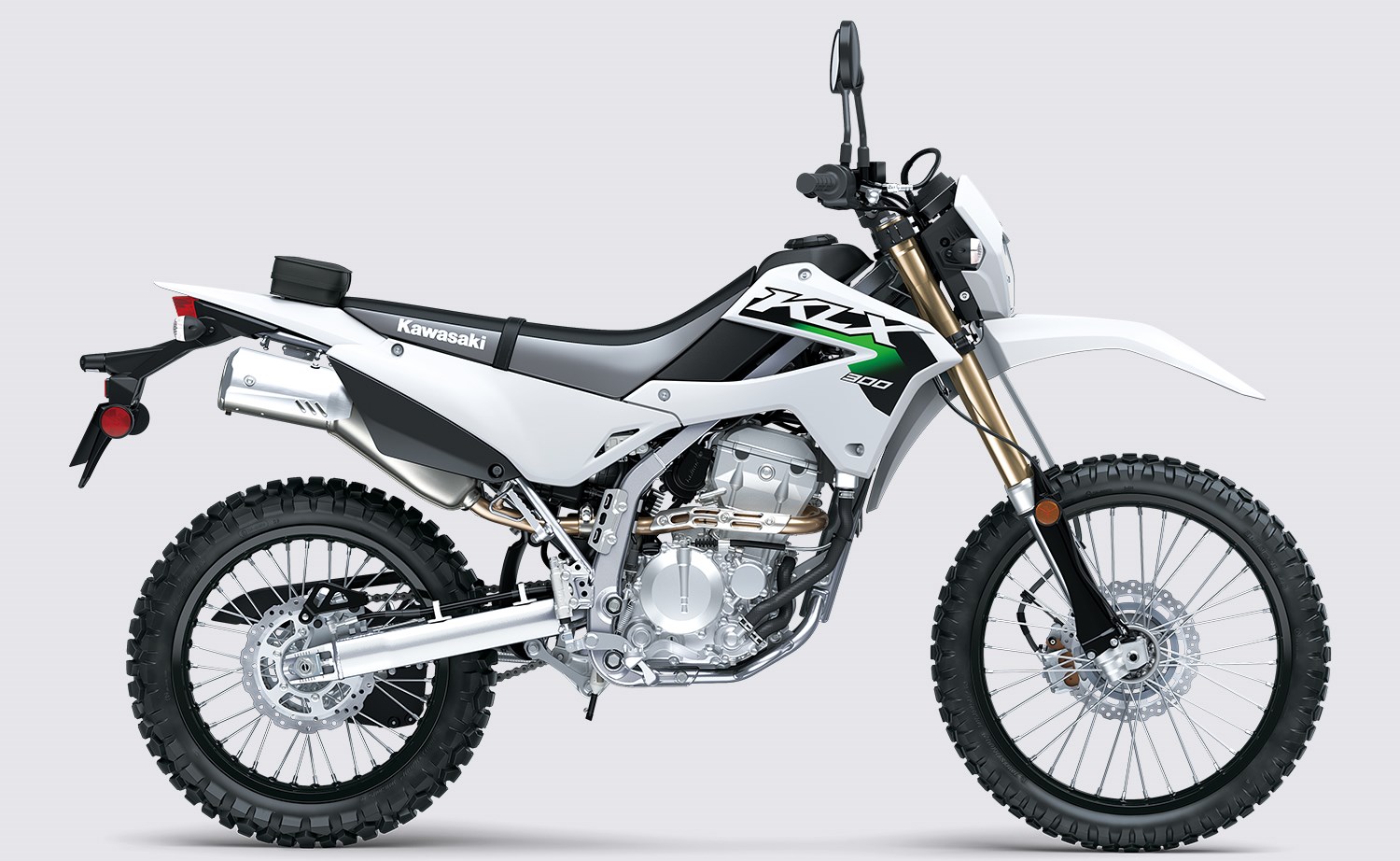
The addition of a sixth gear compared to the five-speed KLX250 improves highway cruising comfort, reducing engine rpm and vibration during extended pavement sections. The clutch is light and progressive, making it easy to modulate in technical terrain or stop-and-go traffic.
The ergonomics of the KLX300 are thoughtfully designed, with a 35.4-inch seat height that’s more accessible than many competitors while still providing adequate ground clearance for off-road use.
The seat is reasonably comfortable, and the riding position encourages standing on the pegs during off-road sections while remaining relaxed during highway cruising. The handlebars are well-positioned, and the controls are logically laid out and easy to reach.
The KLX300 excels as an all-around dual-sport that doesn’t demand high-level skills or aggressive riding to be enjoyable. It handles morning commutes with ease, explores fire roads confidently, and goes through the moderate single-track without complaint.
For riders seeking a modern, reliable dual-sport that balances street and dirt capabilities without overwhelming complexity or intimidating performance, the Kawasaki KLX300 delivers excellent value and satisfaction.
6. Husqvarna FE 501s
The Husqvarna FE 501s shares its DNA with the KTM 500 EXC-F, as both brands are part of the same corporate family. However, Husqvarna distinguishes its offering through unique styling, slightly different suspension tuning, and premium components that appeal to riders seeking exclusivity alongside performance.
The FE 501s delivers competition-level capability in a street-legal package that turns heads wherever it goes. Under the distinctive white and blue bodywork sits the same 510.9cc SOHC single-cylinder engine found in the KTM, producing approximately 58 horsepower with exceptional low-end torque.
The fuel injection system provides crisp throttle response, and the engine pulls strongly from low rpm through the rev range. This broad powerband makes the FE 501s surprisingly tractable despite its substantial output, allowing riders to lug the engine through technical sections or unleash explosive acceleration on open terrain.
The chassis showcases Husqvarna’s competition heritage with a chrome-moly steel frame painted in the brand’s signature cream color.
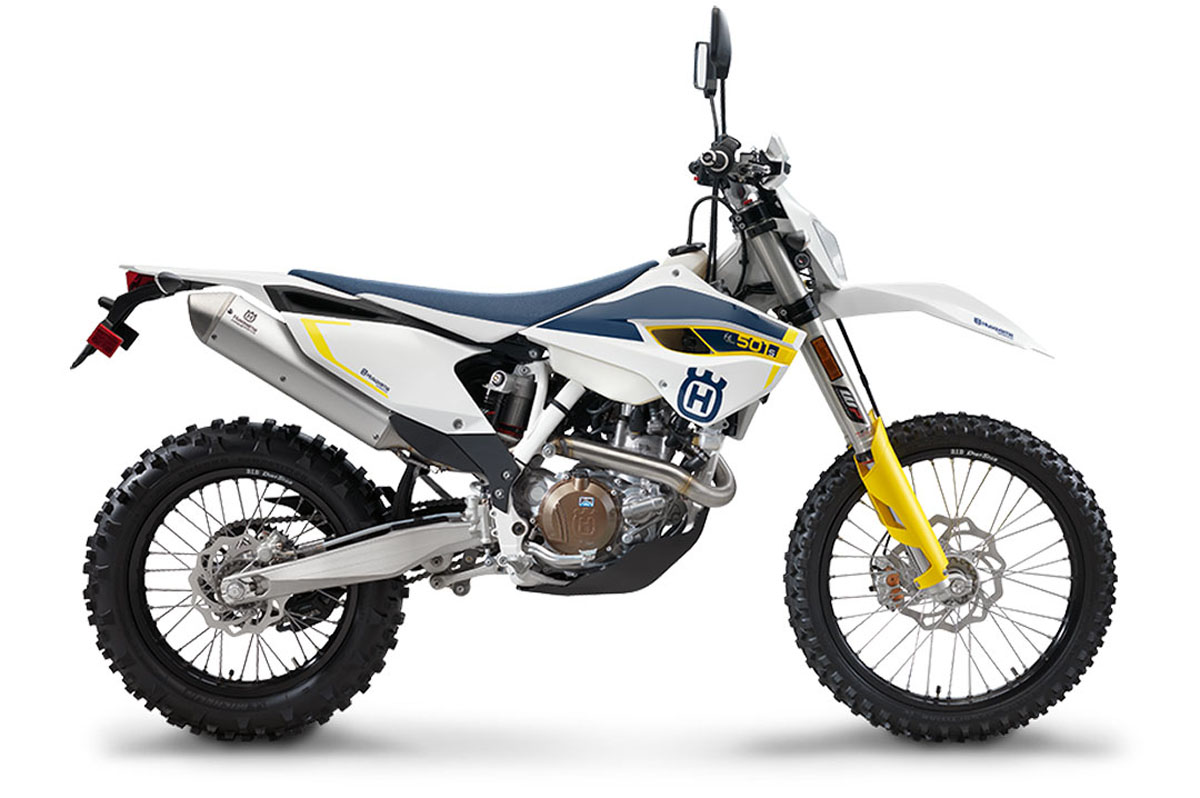
The WP XACT 48mm closed-cartridge forks with 11.8 inches of travel are fully adjustable and deliver exceptional performance across varied terrain.
The rear features a WP XACT shock also providing 11.8 inches of travel with comprehensive adjustability. This suspension is competition-ready out of the box, offering both comfort during casual riding and precision control when pushing hard.
At approximately 242 pounds without fuel, the FE 501s is extraordinarily light given its engine displacement and equipment level. This contributes to nimble handling and impressive acceleration that rewards skilled riding while remaining manageable for experienced riders transitioning from smaller bikes.
The power-to-weight ratio is intoxicating, making the FE 501s feel almost alive beneath you. The FE 501s targets experienced riders who want maximum off-road performance with street legality for connecting trails.
It’s not ideal for beginners or those prioritizing highway comfort, but for serious off-road riders who appreciate premium components and distinctive styling, the Husqvarna FE 501s represents the ultimate expression of dual-sport performance with a unique Scandinavian aesthetic.
7. Beta 390 RR-S
Beta motorcycles remain relatively unknown in North America despite the Italian manufacturer’s long history of producing high-quality off-road machines.
The 390 RR-S represents Beta’s entry in the dual-sport category, offering competition-bred performance with Italian styling and engineering refinement. For riders willing to look beyond mainstream brands, the Beta delivers exceptional capability with unique character.
The liquid-cooled, 385cc single-cylinder engine produces approximately 42 horsepower, positioning it between smaller 300cc machines and larger 500cc models.
This displacement sweet spot provides strong, usable power without being overwhelming, making the 390 RR-S accessible to a wider range of riders while still delivering exciting performance.
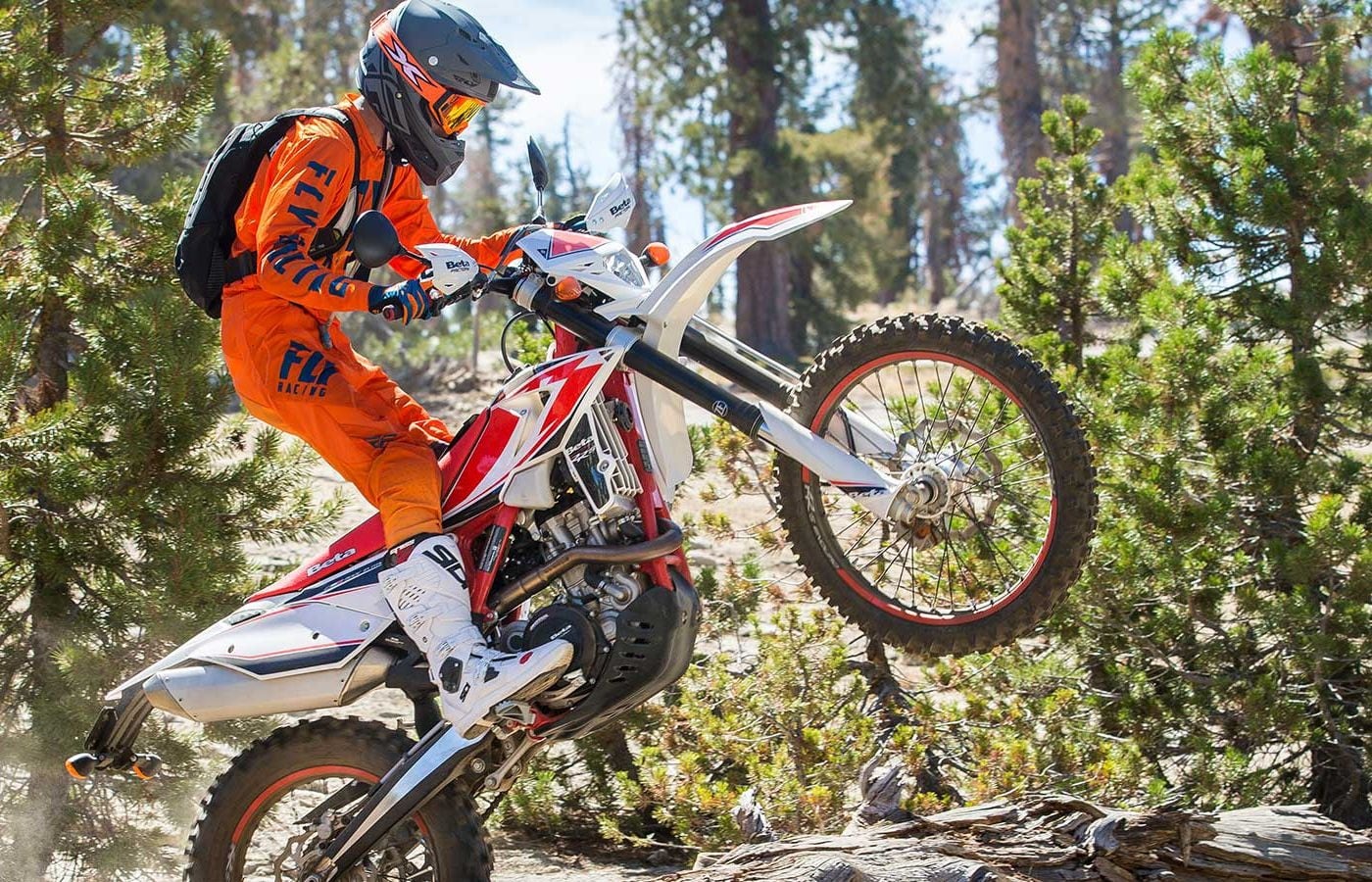
The fuel injection system features electronic engine mapping that can be adjusted through handlebar-mounted switches, allowing riders to select between two power modes for different terrain.
Beta’s approach to the chassis emphasizes light weight and agility, with the 390 RR-S weighing approximately 248 pounds without fuel. The chromoly steel frame provides excellent rigidity, and the geometry is optimized for off-road performance.
The suspension features ZF Sachs components with 47mm inverted forks offering 11.8 inches of travel and a Sachs shock with matching travel at the rear. Both ends are fully adjustable, providing performance that competes with much more expensive competition machines.
For riders seeking something different from mainstream offerings, the Beta 390 RR-S delivers exceptional performance with unique Italian character.
Its combination of manageable power, light weight, sophisticated suspension, and premium components make it an outstanding choice for experienced riders who prioritize off-road capability and appreciate the exclusivity of a less common brand.
8. Yamaha XT250
The Yamaha XT250 represents the lightweight, beginner-friendly end of the dual-sport spectrum, offering air-cooled simplicity, manageable power, and accessible ergonomics that make it ideal for new riders or those seeking uncomplicated motorcycling.
While it lacks the sophistication and performance of more expensive competitors, the XT250 delivers honest, reliable transportation with genuine dual-sport capability at an attractive price point.
The air-cooled, 249cc single-cylinder engine produces modest power approximately 20 horsepower but delivers it in a smooth, predictable manner that’s perfect for learning.
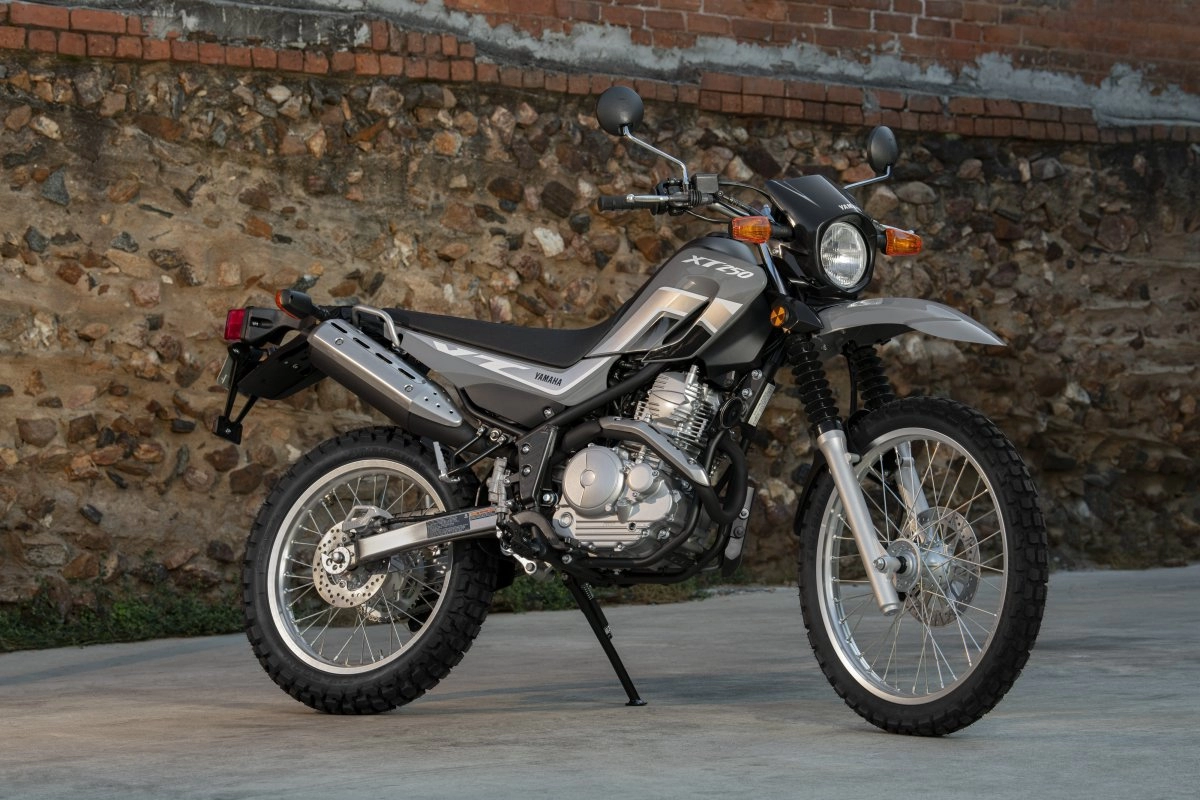
The electric start fires up reliably, and the carburetion (fuel injection was added in recent years) provides adequate performance without complexity.
The engine isn’t powerful enough for extended highway cruising but handles back roads and trails with good-natured competence. The XT250 shines as a first dual-sport motorcycle or lightweight utility bike for experienced riders who appreciate simplicity.
It handles daily commuting with ease, explores unpaved roads confidently, and does it all with Yamaha’s legendary reliability. While more experienced riders will quickly outgrow its limited performance, the XT250 serves as an excellent learning platform that can be confidently passed along to the next new rider when you’re ready to move up.
9. Honda XR650L
The Honda XR650L stands as a testament to the enduring appeal of simple, robust engineering. Remaining fundamentally unchanged since 1993, this air-cooled beast continues to attract riders who prioritize durability, simplicity, and genuine off-road capability over modern features and sophistication.
The XR650L isn’t pretty by contemporary standards, and it’s far from cutting-edge, but it delivers honest, dependable dual-sport performance with legendary Honda reliability.
The air-cooled, 644cc single-cylinder engine produces approximately 37 horsepower through a carbureted fuel system. The engine’s massive flywheel effect and strong low-end torque make it extremely tractable, pulling strongly from minimal rpm and chugging through technical terrain without complaint.
While not particularly exciting on paper, the engine’s character and flexibility make it well-suited to dual-sport riding, especially for heavier riders or those frequently carrying gear.
At 346 pounds with fuel, the XR650L is substantially heavier than most dual-sports, earning it the nickname “Big Pig” among enthusiasts.
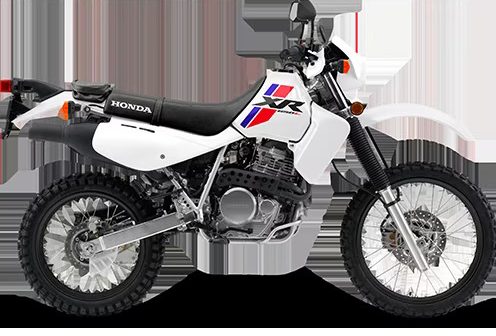
This weight becomes manageable once moving but requires strength and technique during slow-speed maneuvering or when picking the bike up. The 37-inch seat height further challenges shorter riders, though the narrow profile helps somewhat.
The suspension provides 11.3 inches of travel front and rear, with both ends being adjustable. While the components are dated by modern standards, they work reasonably well for the bike’s weight and intended use. Many owners upgrade the suspension as their first modification, significantly improving performance both on and off-road.
The XR650L isn’t for everyone. Beginners will find it heavy and intimidating, and riders prioritizing modern features will be disappointed.
But for those who value proven reliability, simple maintenance, and genuine dual-sport capability with enough power for highway travel, the XR650L continues to deliver satisfaction three decades after its introduction.
10. Kawasaki KLR650
The Kawasaki KLR650 has achieved iconic status in the dual-sport world, having served as reliable transportation for adventure riders, commuters, and military forces around the globe since 1987.
Completely redesigned for 2022, the new KLR650 retains the essential character that made the original legendary while incorporating modern features and improved performance.
This is the Swiss Army knife of motorcycles not excelling at any single task but competently handling everything thrown at it. The liquid-cooled, 652cc single-cylinder engine produces approximately 47 horsepower through a fuel-injected system, providing significantly more power than the previous generation.
The engine pulls strongly from low rpm with substantial torque, making it excellent for carrying loads or riding two-up. The six-speed transmission includes well-spaced ratios suitable for both highway cruising and off-road use, with a tall sixth gear reducing engine rpm during extended pavement sections.
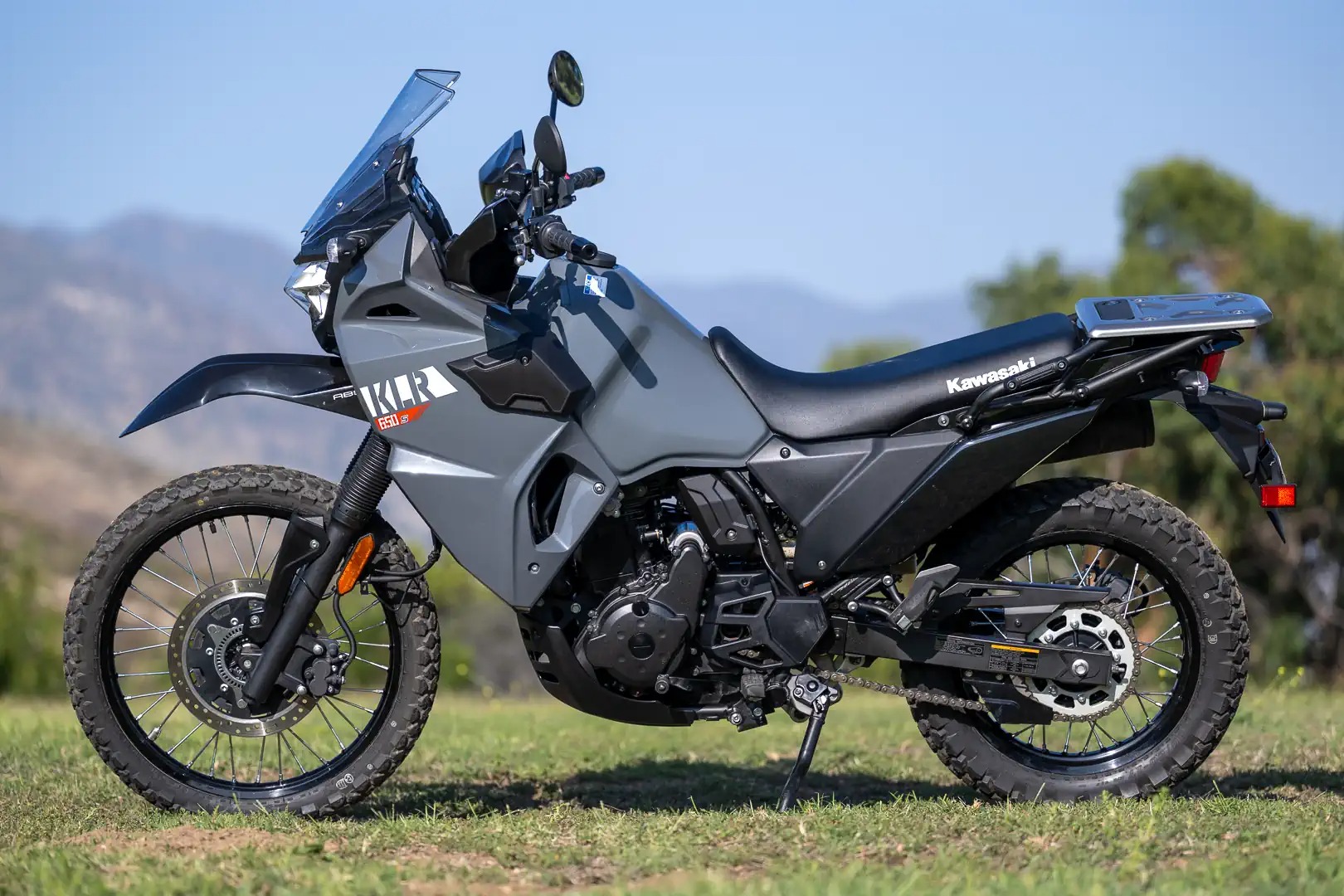
At 456 pounds wet, the KLR650 is one of the heaviest dual-sports available, positioning it closer to adventure-touring bikes than lightweight dual-sports.
This weight limits off-road capability on technical single-track, but the bike handles fire roads and gravel confidently. The substantial mass contributes to excellent highway stability and confident handling in crosswinds or turbulence from passing trucks.
The suspension features 7.9 inches of travel front and rear modest by dual-sport standards but adequate for the bike’s adventure-touring orientation.
Kawasaki has tuned the suspension to favor comfort and loaded carrying capacity over aggressive off-road performance. Both ends are adjustable, allowing riders to dial in the setup for their weight and typical use.
For riders seeking one bike capable of daily commuting, weekend camping trips, and occasional off-road exploration without specializing in any single role, the Kawasaki KLR650 represents exceptional value. Its combination of robust construction, excellent range, modern features, and proven reliability make it one of the most practical motorcycles available regardless of category.
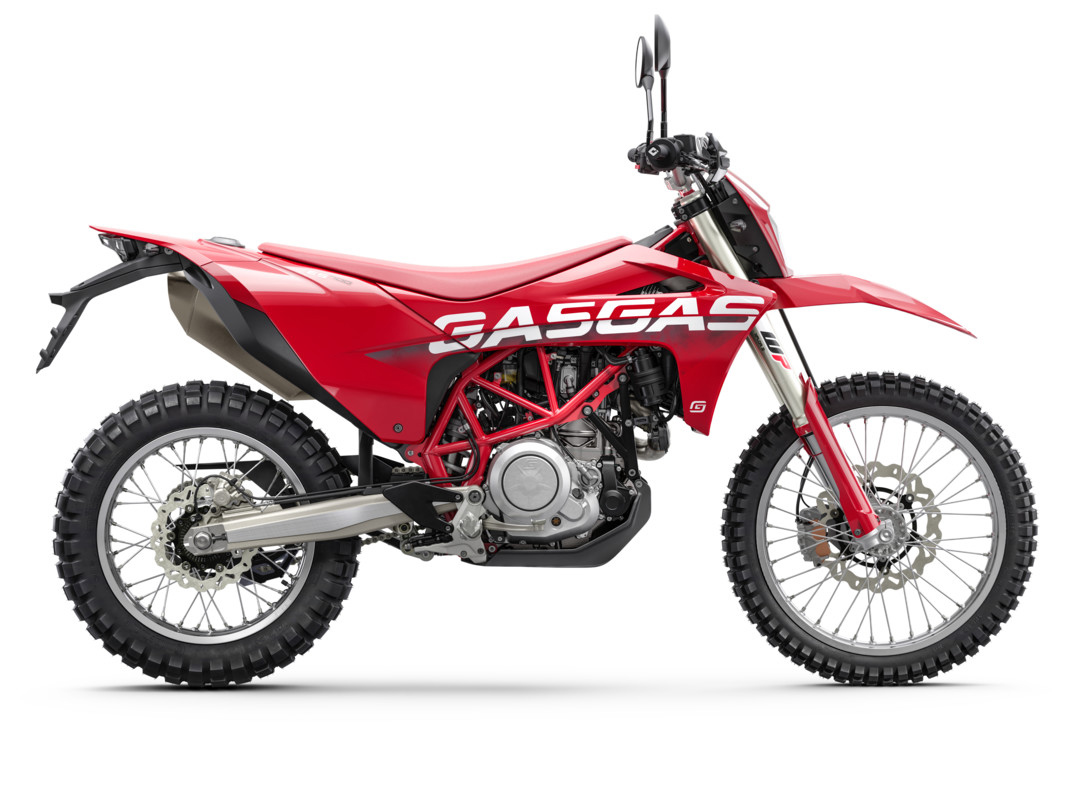
11. Gas Gas ES 700
Gas Gas, the Spanish manufacturer known for trials bikes, entered the dual-sport category with the ES 700, offering the largest-displacement single-cylinder engine available in a street-legal dirt bike.
This ambitious machine targets experienced riders seeking maximum power and torque for serious off-road riding while retaining highway capability. The ES 700 represents an unconventional choice that delivers unique character alongside impressive capability.
The liquid-cooled, 686cc single-cylinder engine produces approximately 75 horsepower substantially more than any competitor in the dual-sport category. The fuel-injected powerplant pulls strongly from low rpm with massive torque, making technical terrain feel easier and acceleration truly exciting.
The six-speed transmission provides well-spaced ratios, though the engine’s broad powerband means riders rarely need to shift constantly searching for the right gear.
Gas Gas has equipped the ES 700 with premium suspension components, featuring 48mm WP XPLOR inverted forks with 11.8 inches of travel and a WP XPLOR rear shock also providing 11.8 inches of travel. Both ends are fully adjustable, offering performance that rivals competition machines.
This sophisticated suspension allows the ES 700 to absorb harsh terrain while maintaining control despite the engine’s substantial weight.
The ES 700 occupies a unique niche, offering substantially more power than conventional dual-sports while remaining focused on off-road capability rather than adventure-touring comfort.
For experienced riders seeking maximum performance in a dual-sport package and willing to accept the compromises that accompany a large-displacement single-cylinder engine, the Gas Gas ES 700 delivers an unmatched combination of power and capability.
12. SWM RS 500 R
SWM represents one of motorcycling’s most interesting comeback stories. The Italian manufacturer, originally known for small-displacement off-road machines in the 1970s and 80s, relaunched in 2014 with a range of modern motorcycles incorporating Italian design and Chinese manufacturing.
The RS 500 R is their flagship dual-sport offering, combining European styling with an affordable price point that undercuts most competitors.
The liquid-cooled, 445cc single-cylinder engine produces approximately 40 horsepower through a fuel-injected system. The power delivery is smooth and usable, with good low-end torque making technical riding manageable.
While not the most powerful engine in its class, it provides adequate performance for both street and off-road use with a broad, flexible powerband that rarely leaves riders searching for the right gear.
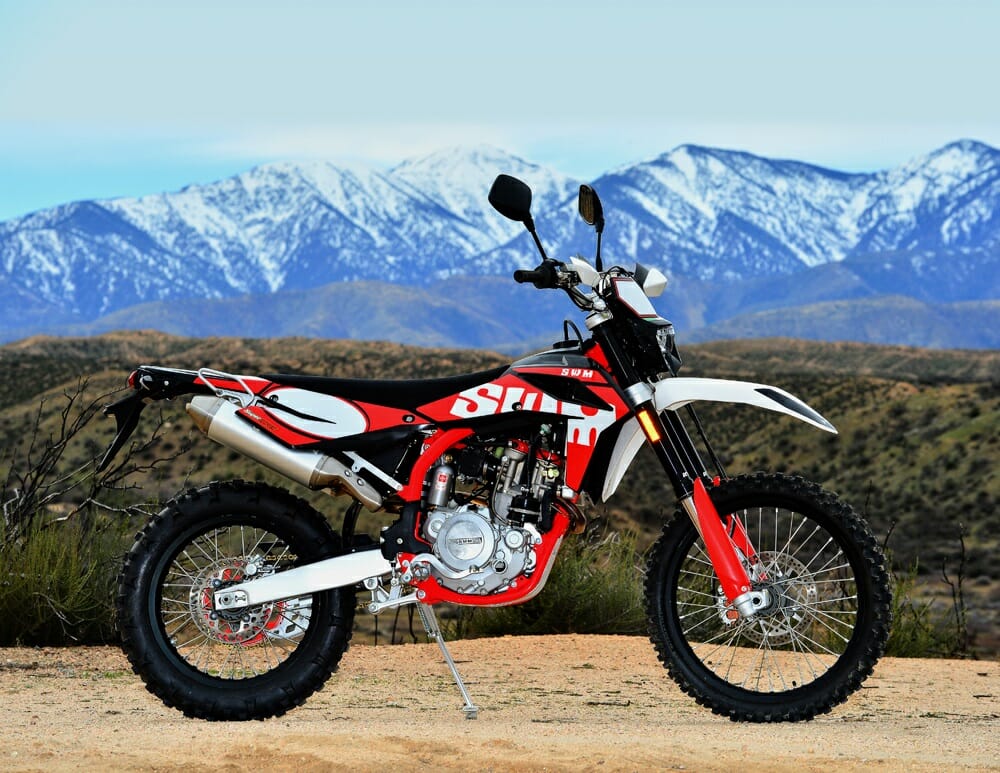
SWM has equipped the RS 500 R with quality suspension components, featuring fully adjustable Kayaba forks with 11.4 inches of travel and a Sachs shock with similar travel at the rear.
The suspension performs well across varied terrain, offering a supple ride that absorbs hits while maintaining control during aggressive riding. The components are serviceable and reliable, though not quite matching the sophistication of premium brands.
However, for riders seeking maximum value in a dual-sport motorcycle and willing to accept the risks associated with a less-established brand, the SWM RS 500 R delivers impressive capability and distinctive style at an attractive price.
Its combination of reasonable power, quality components, Italian design, and affordability make it worth considering for budget-conscious riders who appreciate something different from mainstream offerings. The RS 500 R proves that dual-sport excellence isn’t exclusively the domain of expensive, well-known brands.
Also Read: 5 Cars for Danbury City Commuters and 5 That Need Dealer-Only Repairs
