
The debate between V6 and V8 engines has raged in automotive circles for decades, with V8 enthusiasts often dismissing their six-cylinder counterparts as inferior alternatives.
However, this perspective overlooks some of the most exceptional sports cars ever created. Modern V6 engines have evolved into sophisticated powerplants that deliver exhilarating performance while offering advantages their V8 siblings simply can’t match.
Today’s forced-induction V6 engines produce power figures that would have seemed impossible just a generation ago. Thanks to advanced turbocharging and supercharging technologies, these six-cylinder mills regularly exceed 400, 500, or even 600 horsepower while maintaining better weight distribution, improved fuel efficiency, and lower emissions than their V8 counterparts.
The weight savings of a V6 engine, typically ranging from 50 to 150 pounds compared to a V8, translates directly into sharper handling dynamics and more agile responses through corners.
Beyond raw specifications, V6 sports cars offer a compelling combination of everyday usability and weekend track capability. Their more compact dimensions often mean better packaging, resulting in roomier interiors or more cargo space.
Lower insurance premiums and reduced maintenance costs sweeten the deal further, making these machines practical choices for enthusiasts who refuse to compromise on driving excitement.
The following nine V6 sports cars represent the pinnacle of six-cylinder engineering. Each proves that cylinder count doesn’t determine greatness execution does.
These machines deliver driving experiences so engaging, so rewarding, that they make choosing a V8 feel like settling for unnecessary bulk and complexity.
1. Nissan GT-R
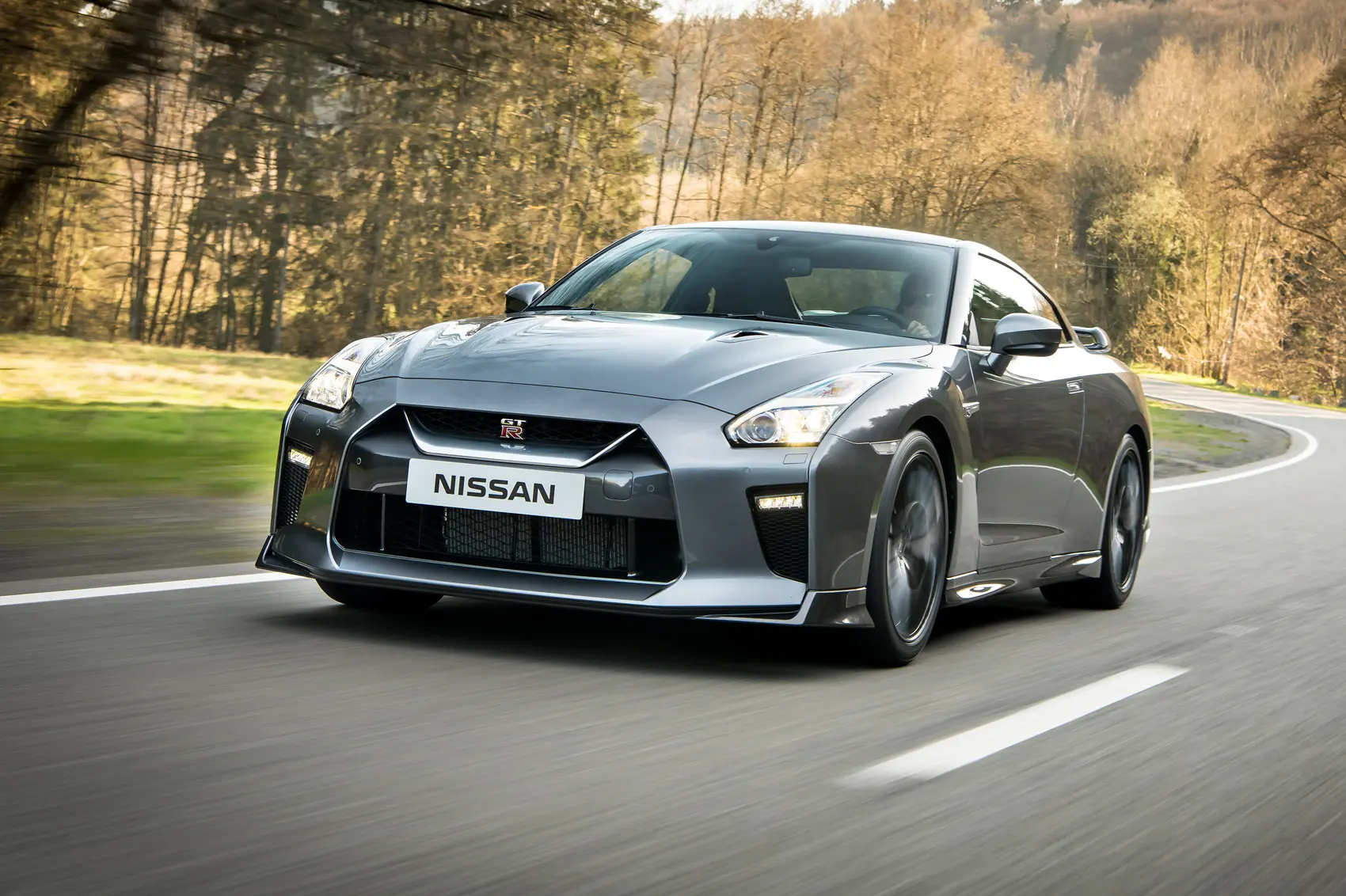
The Nissan GT-R stands as perhaps the most iconic V6 sports car ever created, shattering preconceptions about what a six-cylinder engine could achieve.
When it launched in 2007, “Godzilla” shocked the automotive world by embarrassing supercars costing twice or three times its price on both road and track.
At the heart of this Japanese legend sits the VR38DETT, a hand-built 3.8-liter twin-turbocharged V6 that produces 565 horsepower in current form, with earlier models starting at a still-impressive 480 horsepower.
What makes the GT-R’s V6 superior to most V8 alternatives is its sophisticated engineering and incredible tunability. Each engine is meticulously assembled by a single technician whose signature plate adorns the valve cover, ensuring exceptional build quality.
The twin-turbo setup delivers devastating acceleration, launching the GT-R from 0-60 mph in under three seconds performance that embarrasses many exotic V8 and V12 supercars.
The engine’s computer-controlled boost management and variable valve timing create a powerband that feels relentless, pulling hard from low RPMs straight through to redline.
The GT-R’s all-wheel-drive system, controlled by an advanced ATTESA E-TS computer, transforms this V6’s power into real-world performance that four-wheel burnouts and dramatic V8 theatrics can’t match.
The car’s legendary traction allows it to exploit every horsepower, making it devastatingly quick on both drag strips and road courses. Its sophisticated suspension and aerodynamics were honed at the Nürburgring, where the GT-R has posted lap times that compete with the world’s finest machinery.
Furthermore, the GT-R’s V6 architecture contributes to near-perfect weight distribution and a lower center of gravity than most V8 competitors. This translates into exceptional handling balance and predictability at the limit.
The aftermarket support for the VR38DETT is staggering, with tuners regularly extracting 800, 1,000, or even 1,500+ horsepower from these robust engines with appropriate modifications.
This tunability, combined with the GT-R’s advanced all-wheel-drive and dual-clutch transmission, creates a platform that evolves with its owner’s ambitions.
While modern V8 muscle cars offer visceral soundtrack and tire-shredding dramatics, the GT-R delivers something more valuable: accessible supercar performance with legendary reliability and everyday usability that makes it a genuine alternative to choosing a louder, thirstier V8.
2. Acura NSX (Second Generation)
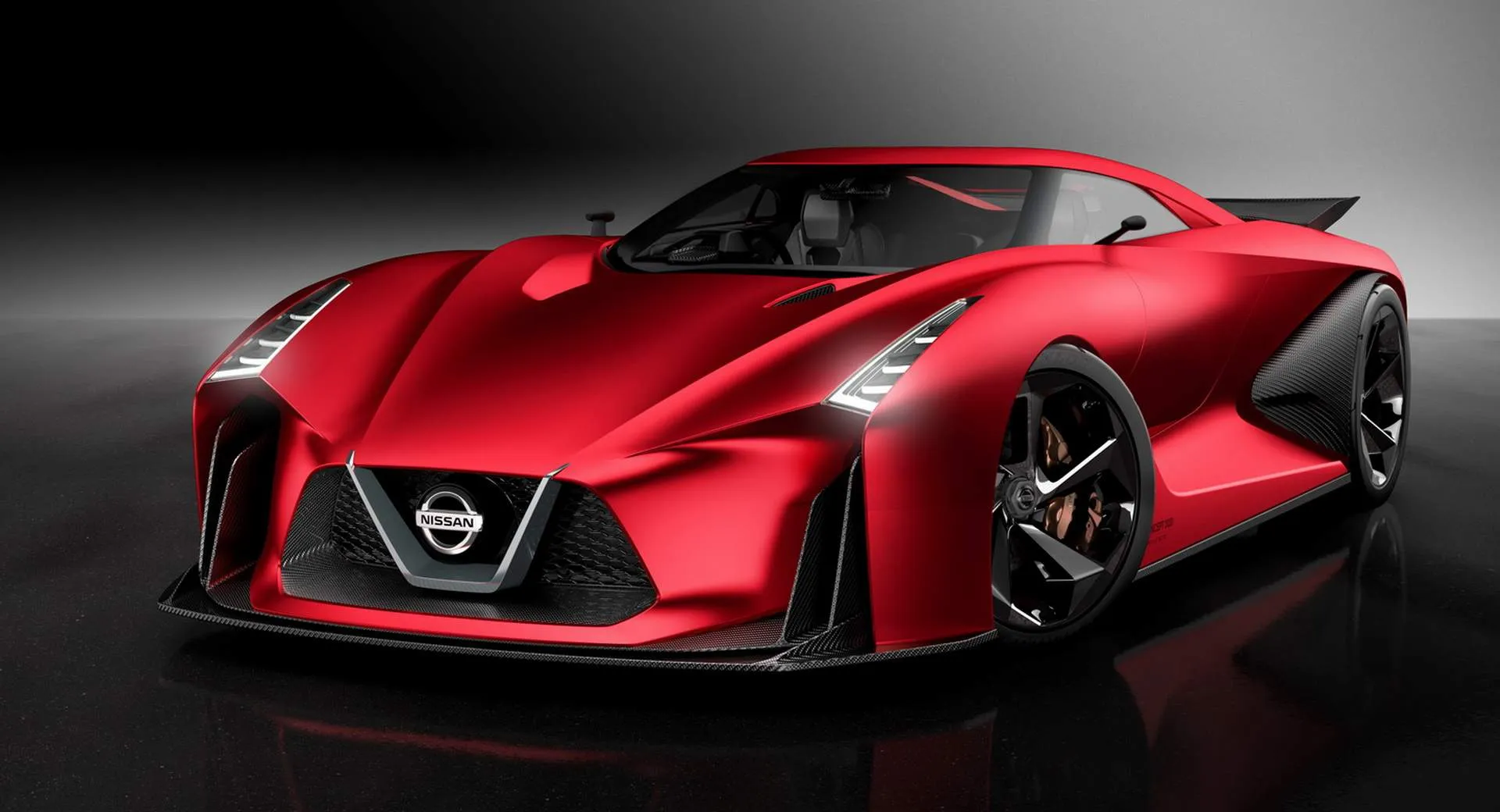
The second-generation Acura NSX represents Honda’s technological tour de force, combining a mid-mounted twin-turbocharged V6 with a sophisticated hybrid system to create one of the most advanced sports cars ever built.
This “New Sports eXperience” deploys a 3.5-liter twin-turbo V6 producing 500 horsepower, supplemented by three electric motors two driving the front wheels independently and one integrated with the dual-clutch transmission for a combined output of 573 horsepower.
This Sport Hybrid Super Handling All-Wheel Drive system delivers performance and dynamics that pure V8 power simply cannot replicate.
What raises the NSX’s V6 above V8 alternatives is its seamless integration of combustion and electric power. The front electric motors provide instantaneous torque vectoring, actively distributing power between the front wheels to eliminate understeer and sharpen turn-in response with millisecond precision.
This creates a driving experience where the car seems to rotate around corners with supernatural agility, something impossible with conventional drivetrains. The rear electric motor fills in turbo lag and provides electrical boost at lower RPMs, creating a powerband that feels naturally aspirated in its linearity despite the forced induction.
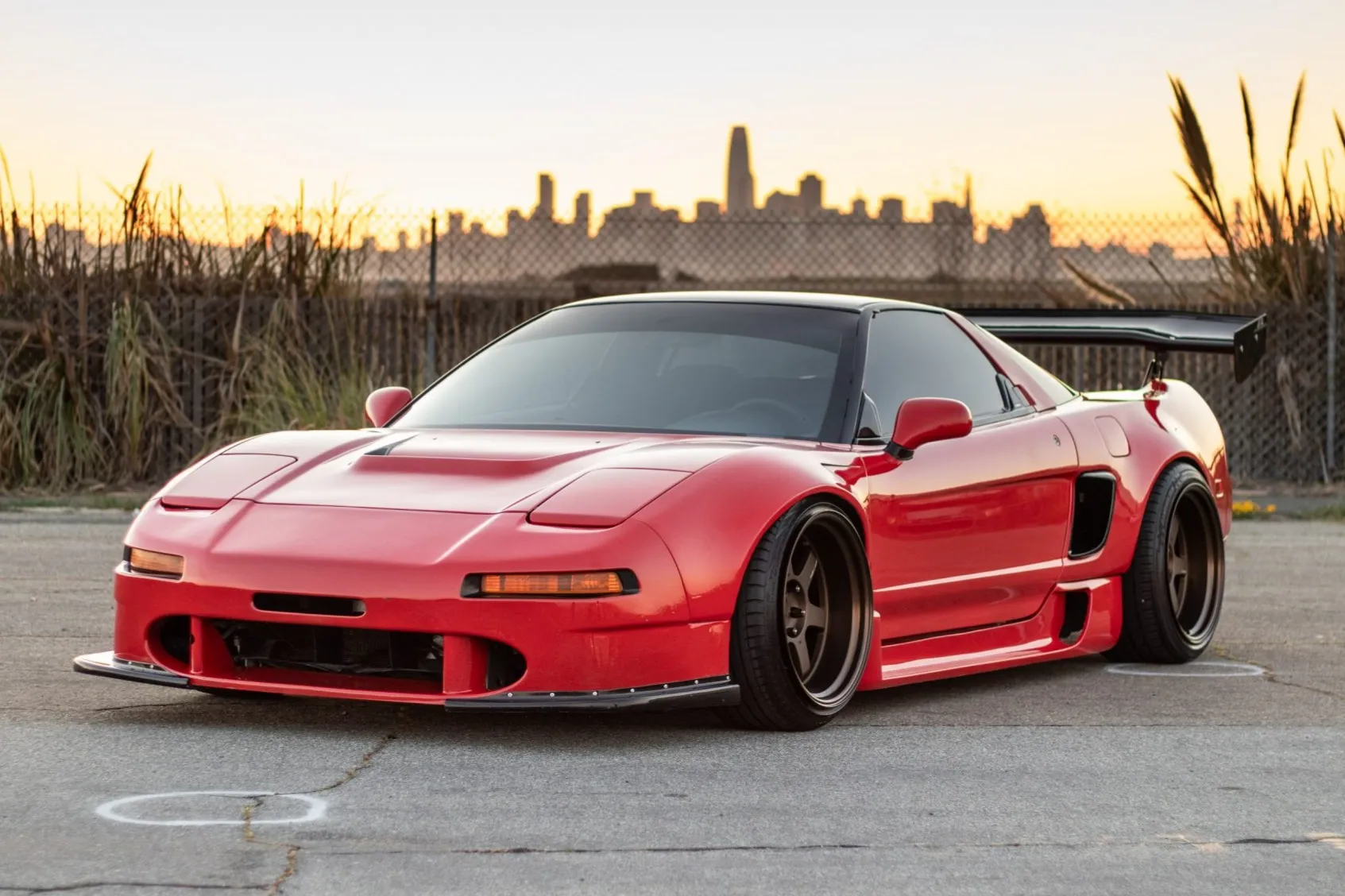
The NSX’s mid-engine layout, possible partly due to the compact V6 configuration, achieves ideal weight distribution while maintaining surprising practicality. The engine sits lower and more centrally than a comparable V8 would, lowering the center of gravity and improving polar moment of inertia for quicker directional changes.
Honda’s engineers designed the V6 specifically for this application, featuring a wide 75-degree angle to keep the height minimal and maintain the car’s low, exotic profile.
Performance figures demonstrate the NSX’s capabilities convincingly: 0-60 mph arrives in 2.9 seconds, with quarter-mile times in the low 11-second range.
More impressively, the NSX laps technical circuits with times that compete with V8-powered exotics, achieving this through corner speed rather than straightline brawn.
The adaptive dampers, electric power steering with variable ratio, and stability control system all communicate with the hybrid drivetrain to create a cohesive, confidence-inspiring package.
The V6 hybrid system also enables operational modes ranging from quiet electric-only running to maximum-attack Track mode, versatility no V8 competitor offers.
In Quiet mode, the NSX can operate on electricity alone for short distances, making it surprisingly civilized for urban driving or early-morning departures.
The technology, refinement, and everyday usability make the NSX’s V6 hybrid powertrain the more intelligent choice than any conventional V8 alternative.
3. Ford GT (Second Generation)
Ford stunned the automotive world when it revealed that the second-generation GT would feature a twin-turbocharged V6 instead of the supercharged V8 from its predecessor.
This decision wasn’t compromise it was calculated engineering brilliance. The 3.5-liter EcoBoost V6 produces 660 horsepower in the road car, making it more powerful than the previous GT’s V8 while weighing significantly less.
This engine traces its lineage directly to Ford’s Le Mans-winning race program, where it defeated Ferrari on the 24 Hours of Le Mans’ 50th anniversary of Ford’s original 1966 victory.
The GT’s V6 architecture delivers advantages critical to its mission as a supercar designed primarily for aerodynamic efficiency and track performance.
The compact engine allowed Ford’s designers to create an exceptionally low, streamlined body with active aerodynamics that would be impossible with a larger V8.
The twin-turbo setup provides immense power while enabling the GT to meet increasingly strict emissions regulations and achieve surprising fuel economy during highway cruising a genuine consideration for a car designed for events like the Rallye Monte-Carlo Historique or Bridgehampton Rallye.
Positioned mid-ship and sitting extremely low in the chassis, the EcoBoost V6 contributes to a center of gravity that helps the GT achieve lateral acceleration figures exceeding 1.0g and lap times that compete with the world’s fastest supercars.

The engine’s torque curve is remarkably flat, delivering 550 lb-ft from 5,900 rpm all the way to redline, creating relentless acceleration through the gears. The seven-speed dual-clutch transmission shifts with lightning precision, keeping the engine in its power sweet spot.
Ford’s racing pedigree shines through in the GT’s execution. The V6 proved itself at the highest level of endurance racing, demonstrating reliability while producing race-spec power outputs exceeding 600 horsepower for 24 hours straight.
This motorsports validation carries more weight than any V8 muscle car’s drag strip credentials. The road car benefits from this racing development, receiving technologies and refinements tested in the competition’s crucible.
The GT’s active aerodynamics, including adjustable ride height and a massive deployable rear wing, work in concert with the efficient V6 to create a car optimized for high-speed stability and cornering performance.
The reduced weight compared to a V8 allows for more aggressive aerodynamic elements without excessive mass, creating a better-balanced package than any V8 alternative could achieve in this application.
4. Alfa Romeo Giulia Quadrifoglio
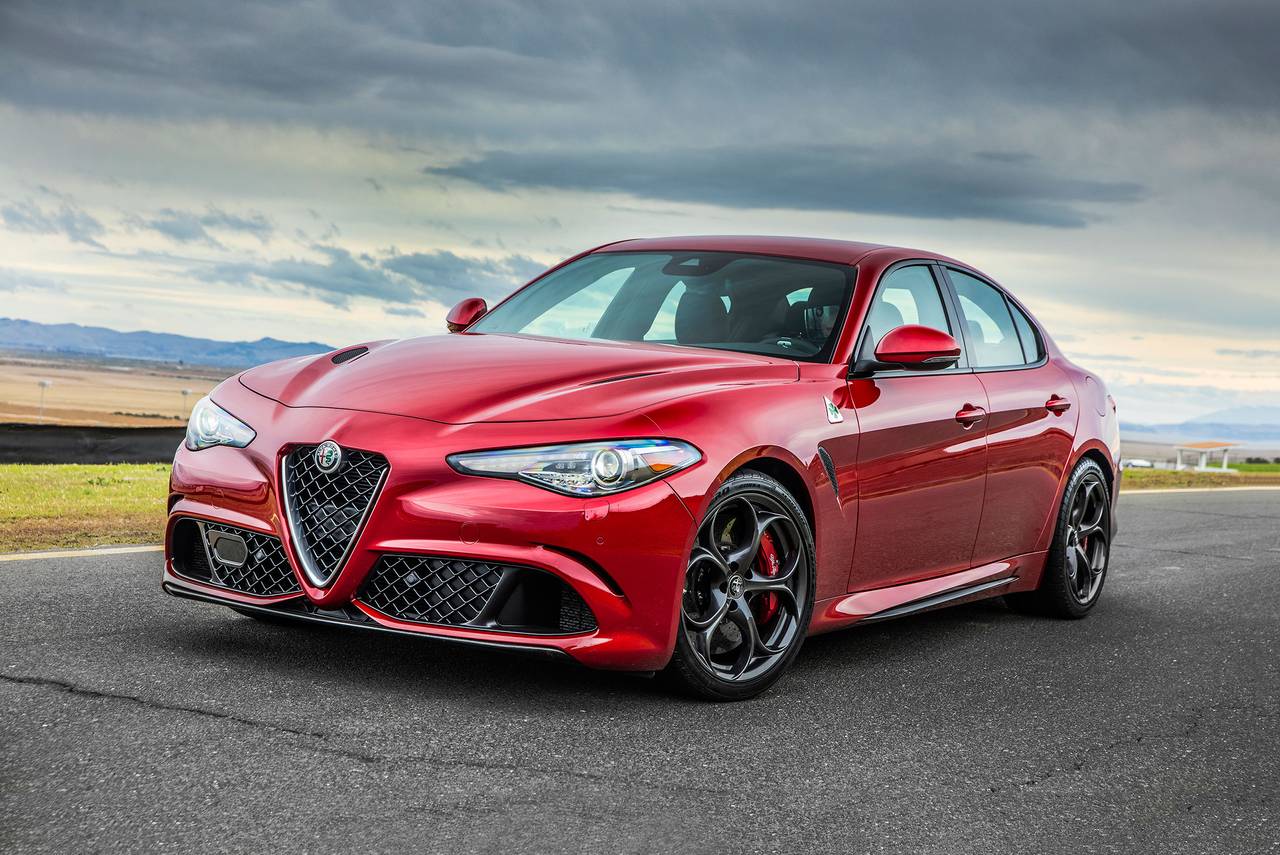
The Alfa Romeo Giulia Quadrifoglio proves that Italian passion and V6 engineering create automotive magic. This sports sedan’s Ferrari-derived 2.9-liter twin-turbocharged V6 produces 505 horsepower, making it the most powerful engine in its segment when launched.
More importantly, this isn’t just any V6 it was developed with input from Ferrari engineers and shares fundamental architecture with the powerplant found in Ferrari’s Portofino and Roma, giving it genuine supercar DNA.
What makes the Giulia Quadrifoglio’s V6 preferable to V8 alternatives is how it transforms this sedan into a true driver’s car. The all-aluminum engine weighs just 409 pounds, contributing to near-perfect 50/50 weight distribution that gives the Giulia handling balance rivaling dedicated sports cars.
This weight advantage over comparable V8 sedans translates into sharper turn-in, better brake feel, and more responsive steering qualities that matter more during spirited driving than extra cylinders. The V6 revs eagerly to its 6,500 rpm redline with a glorious soundtrack that combines Italian passion with purposeful aggression.
Performance credentials speak volumes: the Giulia Quadrifoglio set the Nürburgring Nordschleife lap record for production sedans upon its release, completing the 12.9-mile circuit in 7 minutes 32 seconds.
This achievement required far more than straight-line speed it demanded exceptional chassis balance, braking performance, and cornering ability. The lightweight V6 enabled Alfa’s engineers to optimize weight distribution and dynamics in ways a heavier V8 would have compromised.
The Giulia’s rear-wheel-drive layout, paired with an active differential and adaptive suspension derived from Ferrari technology, creates driving dynamics that prioritize engagement over raw power.
The eight-speed automatic transmission delivers lightning-quick shifts in Race mode while remaining smooth and refined during normal driving.
The carbon fiber driveshaft and active aero elements demonstrate Alfa’s commitment to performance through engineering excellence rather than displacement.
Beyond performance, the V6 offers advantages in daily usability. Better fuel economy than V8 competitors, lower emissions, and reduced insurance costs make the Quadrifoglio more practical without sacrificing excitement.
The engine’s character responsive, high-revving, and aurally satisfying delivers emotional engagement that connects driver to machine in ways many pushrod V8s simply cannot match, regardless of their displacement advantage.
Also Read: 6 Best Small Cars That Feel Confident in Heavy Traffic
5. Lotus Evora GT
The Lotus Evora GT represents the final evolution of Lotus’s supercharged V6 sports car, and it embodies everything that makes choosing a V6 over a V8 the right decision for true driving enthusiasts.
The Toyota-sourced 3.5-liter supercharged V6 produces 416 horsepower in the Evora GT, providing ample power while maintaining the lightweight philosophy that defines Lotus engineering. Weighing just 3,175 pounds, the Evora achieves a power-to-weight ratio that shames many V8 sports cars tipping the scales at 3,800+ pounds.
Colin Chapman’s famous dictum “simplify, then add lightness” guides every aspect of the Evora’s design, and the V6 engine choice exemplifies this philosophy. A V8 would have added unnecessary weight and complexity, compromising the pure driving experience that makes Lotus special.
The supercharged V6 delivers linear, predictable power delivery that rewards smooth inputs and proper technique exactly what Lotus buyers value over brute-force acceleration. The mid-engine placement, possible partly due to the V6’s compact dimensions, creates near-perfect weight distribution and exceptionally communicative handling.
The Evora’s chassis represents the pinnacle of Lotus’s suspension development, featuring double wishbones at all four corners with Bilstein dampers and Eibach springs tuned specifically for this application.
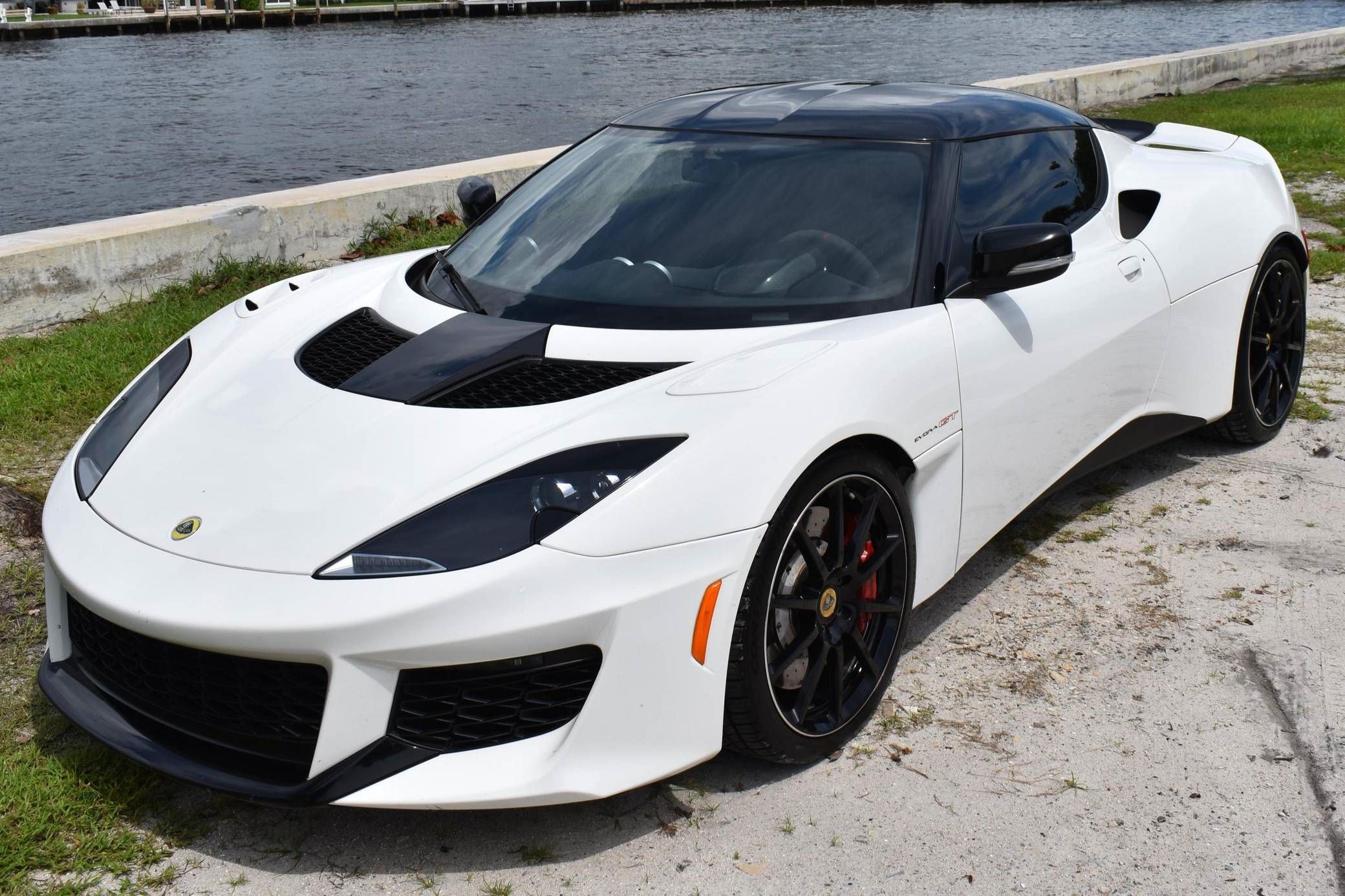
The lightweight V6 allows these suspension components to control the car’s movements with precision, creating feedback and balance that heavier V8 sports cars struggle to match. Through corners, the Evora flows with grace and poise, rewarding skilled drivers with lap times that often surprise V8-powered competitors.
Toyota’s bulletproof reliability means the Evora’s V6 requires minimal maintenance while delivering consistent performance year after year. This contrasts sharply with many exotic V8 alternatives that demand expensive scheduled services and suffer reliability concerns.
The supercharger provides immediate throttle response without turbo lag, creating a connection between accelerator and rear wheels that feels natural and intuitive. Power delivery is strong from 2,000 rpm through 7,000 rpm redline, with the supercharger whine providing an addictive soundtrack during hard acceleration.
The Evora GT also offers genuine practicality, unusual in mid-engine sports cars: rear seats (admittedly small), a decent trunk, and surprisingly comfortable ride quality for daily driving.
The V6’s efficiency means 24+ mpg on highways, making the Evora viable for road trips and touring. For drivers who prioritize handling precision, steering feel, and driving engagement over Instagram-worthy V8 rumble, the Evora’s V6 configuration is not just acceptable it’s preferable and perfectly aligned with what makes sports cars truly special.
6. Infiniti Q60 Red Sport 400
The Infiniti Q60 Red Sport 400 showcases how a well-executed V6 can deliver luxury sports coupe performance that rivals V8 competitors while offering tangible advantages.
Its twin-turbocharged 3.0-liter V6 produces 400 horsepower and 350 lb-ft of torque, providing thrust that competes directly with German V8 luxury coupes while maintaining better efficiency and lower running costs.
This VR30DDTT engine represents Infiniti’s commitment to advanced forced-induction technology, featuring variable valve timing, direct injection, and sophisticated boost control.
What raises the Q60’s V6 above V8 alternatives in its segment is the combination of performance and refinement. The twin-turbo setup delivers power smoothly across the rev range, with maximum torque available from just 1,600 rpm through 5,200 rpm a plateau of pulling power that makes the Q60 feel effortlessly quick in real-world driving.
The engine responds eagerly to throttle inputs while remaining refined and quiet during cruising, embodying the luxury sports coupe mission better than many rougher-sounding V8s.
The Q60’s chassis benefits from the V6’s lighter weight compared to V8 competitors. Infiniti’s engineers developed a sophisticated adaptive suspension system and Direct Adaptive Steering that create handling dynamics sharper and more responsive than the car’s luxury positioning might suggest.
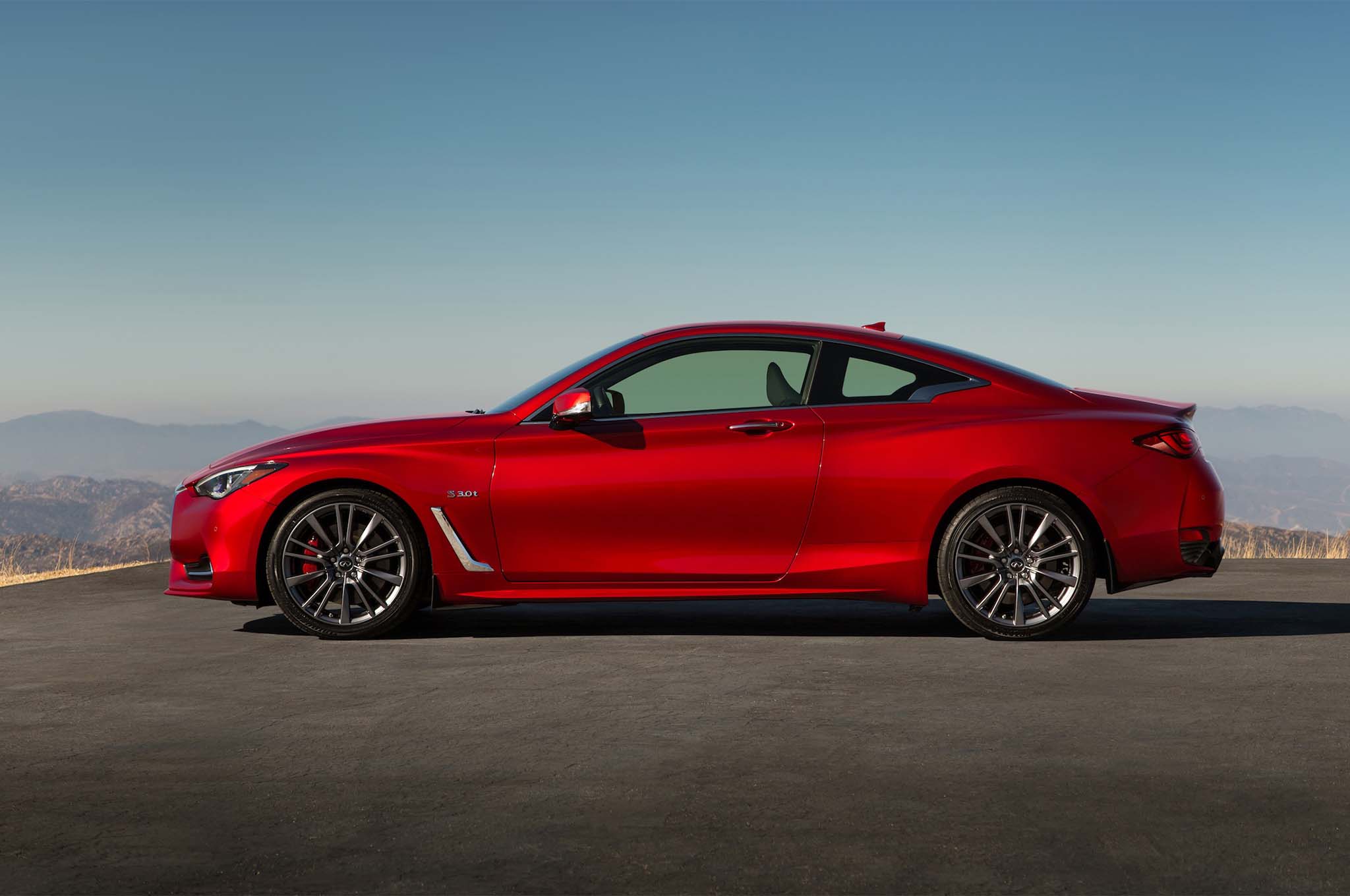
The rear-wheel-drive layout, paired with available all-wheel drive, provides sports car engagement with grand touring comfort. The weight advantage over V8 rivals translates into better fuel economy EPA-rated 20/27 mpg city/highway making the Q60 more practical for daily use.
Technology abounds in the Q60 Red Sport 400, with drive mode selectors that alter throttle response, transmission behavior, steering weight, and suspension settings to match driving conditions and preferences.
The twin-turbo V6 provides enough performance to make spirited driving genuinely rewarding: 0-60 mph arrives in 4.5 seconds, with strong acceleration continuing through triple-digit speeds.
The seven-speed automatic transmission shifts smoothly in automatic mode while responding crisply to paddle inputs when drivers want more control.
The Q60’s value proposition strengthens its case against V8 competitors. Priced thousands below comparable German V8 luxury coupes, the Q60 delivers similar performance, superior fuel economy, and Infiniti’s excellent warranty coverage.
The V6’s proven reliability, lower insurance premiums, and reduced maintenance costs create ownership advantages that make choosing this six-cylinder the financially smarter decision without sacrificing driving enjoyment or luxury amenities.
7. Jaguar F-Type V6 S
The Jaguar F-Type V6 S proves that supercharged six-cylinder engines can deliver the emotional engagement and performance that make sports cars special.
While Jaguar offers the F-Type with V8 power, the supercharged 3.0-liter V6 S producing 380 horsepower (in later versions) represents the sweet spot of the lineup, providing tremendous performance while maintaining better balance and efficiency than its V8 sibling.
This aluminum-intensive V6 features direct injection, variable valve timing, and a Roots-type supercharger that delivers immediate throttle response and intoxicating supercharger whine.
What makes the F-Type V6 S preferable to V8 alternatives is how it captures the sports car experience without excess weight or complexity.
Weighing approximately 200 pounds less than the V8 F-Type, the V6 S achieves better weight distribution and more agile handling characteristics.
This translates into sharper turn-in, more neutral balance at the limit, and steering feedback that’s more communicative and precise. The reduced weight over the front axle means the V6 S changes direction more willingly and feels more playful during enthusiastic driving.
Performance remains exhilarating: the V6 S sprints from 0-60 mph in just 4.8 seconds (with the manual transmission) and continues pulling strongly through the mid-range where real-world driving happens.
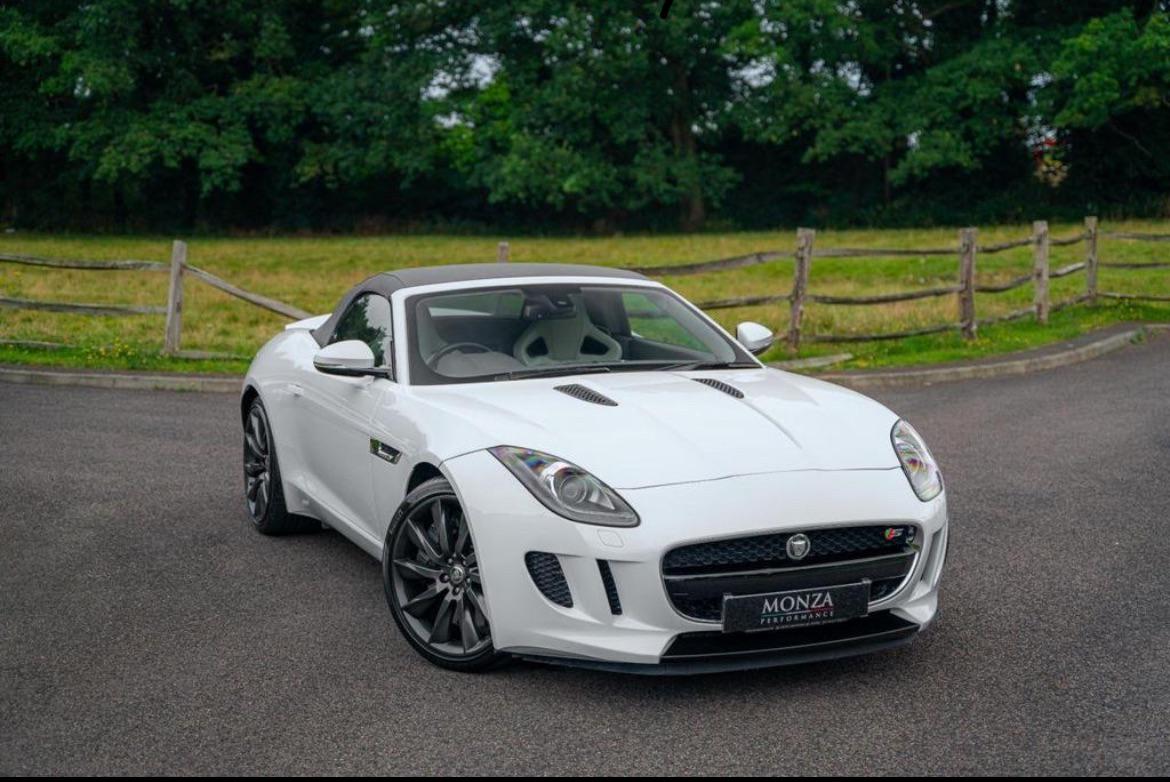
The supercharger provides instant boost with none of the lag associated with turbocharged engines, creating throttle response that feels directly connected to the driver’s right foot.
Maximum torque of 339 lb-ft arrives at just 3,500 rpm and holds strong through 5,000 rpm, providing a wide powerband that makes the V6 feel stronger than its specifications might suggest.
The F-Type’s chassis was engineered from the beginning to accommodate both V6 and V8 powerplants, but many enthusiasts and journalists argue the car feels most balanced with the lighter six-cylinder.
Jaguar’s adaptive dynamics suspension, electric power steering, and torque vectoring by braking work together to create handling that’s both accessible and rewarding.
The available active exhaust system ensures the V6 S sounds appropriately sporty, with burbles, pops, and a purposeful growl during acceleration that satisfies the emotional component of sports car ownership.
Practicality advantages further strengthen the V6 S case: better fuel economy (EPA-rated 20/28 mpg), lower insurance costs, cheaper consumables like brake pads and tires (due to reduced weight), and Jaguar’s excellent warranty coverage.
The V6 S also offers manual transmission availability in certain markets, providing purists with three-pedal engagement impossible with the V8. For drivers who understand that sports car greatness comes from balance, feedback, and engagement rather than maximum cylinder count, the F-Type V6 S represents the smarter, more rewarding choice.
8. Porsche 911 Carrera (991.2 Generation)
The Porsche 911 Carrera from the 991.2 generation (2017-2019) adopted a twin-turbocharged 3.0-liter flat-six producing 370 horsepower, replacing the naturally aspirated 3.4-liter from previous models.
While purists initially mourned the loss of natural aspiration, this turbocharged six-cylinder engine proved itself a masterpiece of engineering that delivers advantages over larger-displacement V8 alternatives.
The flat-six configuration, mounted in Porsche’s traditional rear-engine layout, creates unique characteristics impossible to replicate with a V-configured V8.
What makes the 911’s turbocharged flat-six superior to V8 alternatives is how it embodies Porsche’s evolutionary engineering philosophy while delivering modern performance.
The twin-turbo setup provides 331 lb-ft of torque from just 1,700 rpm through 5,000 rpm a massive, flat torque curve that makes the Carrera feel effortlessly quick at any speed.
This low-end and mid-range grunt transforms daily driving, making the 911 more usable in traffic and more responsive during overtaking maneuvers than previous naturally aspirated models. The turbos are small and spool quickly, minimizing lag and creating throttle response that feels nearly instantaneous.
The flat-six’s horizontally opposed configuration maintains a low center of gravity essential to the 911’s legendary handling balance.
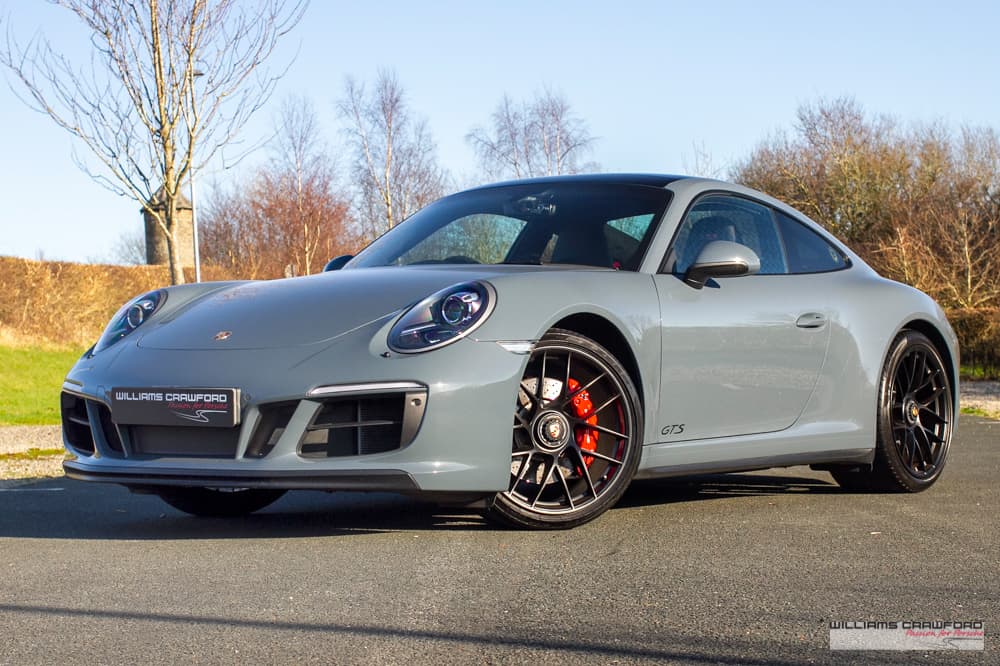
This architecture, combined with the rear-engine placement, creates weight distribution and dynamics that define the 911 experience something no front-engine V8 sports car can replicate.
Porsche’s engineers have spent decades optimizing this layout, developing sophisticated suspension geometry, electronic stability control, and mechanical grip that transform potential liabilities into competitive advantages.
The result is a sports car that accelerates, corners, and brakes with authority that embarrasses many V8 competitors. Performance numbers demonstrate the turbocharged Carrera’s capabilities: 0-60 mph in 4.0 seconds (3.8 with the PDK dual-clutch transmission and Sport Chrono package), quarter-mile times in the low 12-second range, and Nürburgring lap times competing with dedicated track machines.
More impressively, the 911 achieves EPA ratings of 20/28 mpg, making it surprisingly efficient for a performance car. The PDK transmission, one of the finest dual-clutch systems ever created, delivers lightning-quick shifts while remaining smooth in automatic mode.
The 911’s everyday usability further separates it from many V8 sports cars. The rear seats accommodate children or extra cargo, the front trunk provides useful storage, and the ride quality remains comfortable enough for daily driving.
Porsche’s legendary reliability means the turbocharged flat-six should deliver hundreds of thousands of miles with proper maintenance longevity many exotic V8s simply cannot match.
For those who understand that sports car excellence comes from engineering sophistication rather than displacement, the 911 Carrera’s turbocharged flat-six represents the pinnacle of what six-cylinder power can achieve.
9. McLaren Artura
The McLaren Artura represents the British supercar manufacturer’s first series-production hybrid, combining a twin-turbocharged 3.0-liter V6 with an electric motor for a combined output of 671 horsepower
This marks McLaren’s departure from V8 power in their entry-level supercar, and the decision demonstrates how modern V6 hybrid technology can deliver advantages impossible with conventional V8 powertrains.
The compact 120-degree V6, developed specifically for the Artura, weighs just 353 pounds despite its twin-turbo configuration and produces 577 horsepower on its own an impressive 192 horsepower per liter.
What makes Artura’s V6 hybrid system superior to V8 alternatives is its combination of performance, efficiency, and technological sophistication.
The electric motor, integrated with the eight-speed dual-clutch transmission, provides 94 horsepower and instant torque to fill any turbo lag and enable electric-only driving for up to 11 miles.
This creates a powertrain with multiple personalities: silent electric cruising for urban environments, combined combustion and electric power for maximum performance, and pure combustion mode for traditional supercar engagement. No V8 competitor offers this versatility.
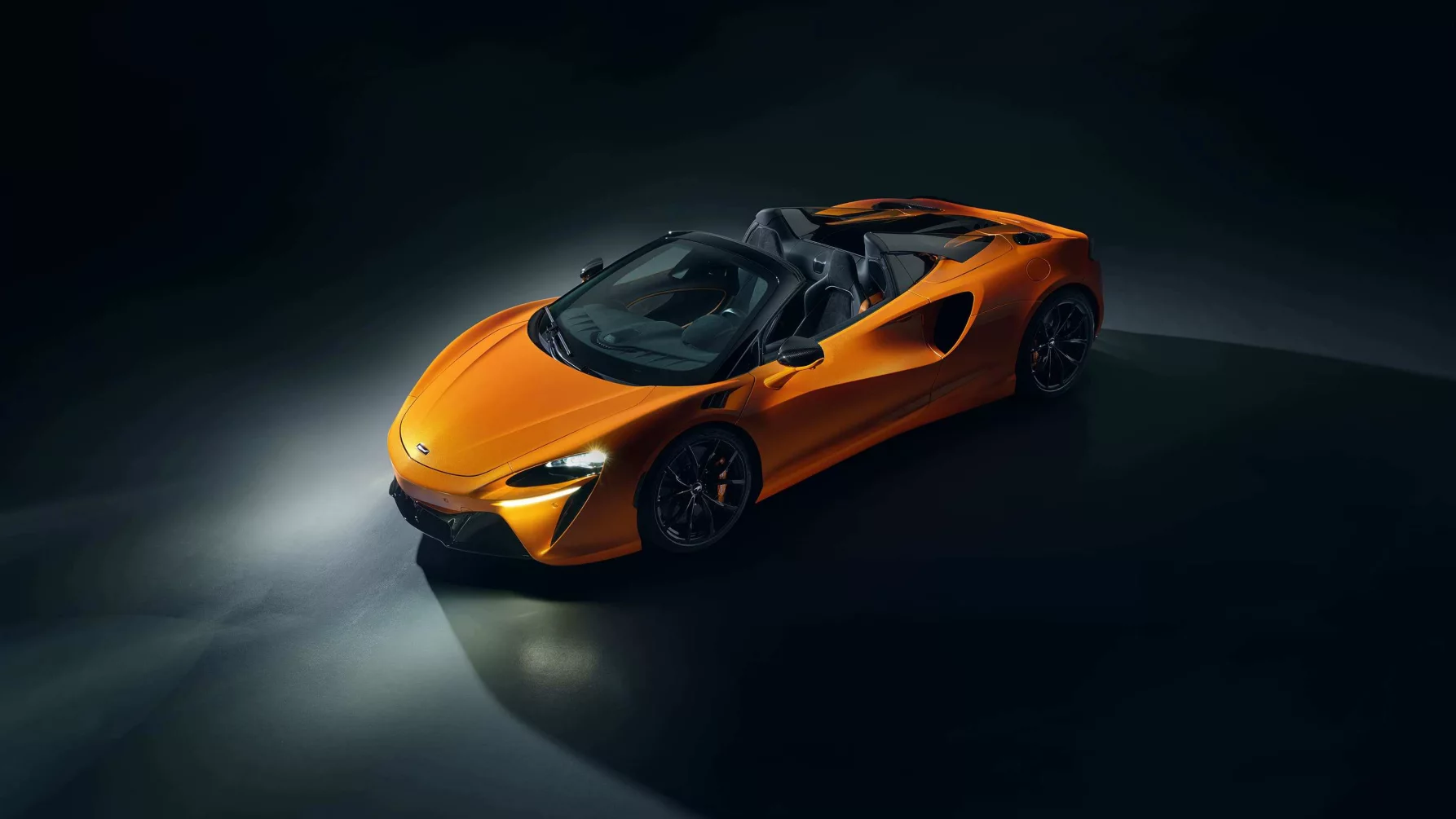
The Artura’s carbon fiber monocoque chassis, developed specifically around the V6 hybrid powertrain, demonstrates how the compact engine enables superior packaging and weight distribution.
Despite the hybrid system’s added complexity, McLaren kept the Artura’s dry weight to just 3,303 pounds lighter than many pure-combustion V8 supercars.
This weight discipline, combined with 671 horsepower, creates a power-to-weight ratio that enables 0-60 mph in 3.0 seconds and a top speed of 205 mph. The mid-engine layout, optimized around the compact V6, achieves ideal weight distribution for exceptional handling balance.
McLaren’s expertise in aerodynamics and active suspension shines in the Artura. The Proactive Damping Control system monitors the road ahead using cameras and adjusts damping before encountering imperfections, creating ride quality that defies the supercar stereotype.
The carbon fiber body features active aerodynamics that adjust based on driving conditions, maximizing downforce for track driving or reducing drag for efficiency. These sophisticated systems work seamlessly with the hybrid powertrain to create a cohesive, cutting-edge package.
The V6 hybrid configuration also enables the Artura to meet increasingly strict emissions regulations while delivering authentic supercar performance a balance traditional V8s struggle to achieve.
The regenerative braking system recovers energy during deceleration, improving efficiency while maintaining the powerful carbon-ceramic brakes necessary for high-performance driving.
For buyers seeking the latest automotive technology, environmental responsibility, and genuine supercar performance, the Artura’s advanced V6 hybrid powertrain represents not just an alternative to V8 power it represents the future of the species.
Also Read: Top 10 V6 Classics That Never Needed Eight Cylinders
