
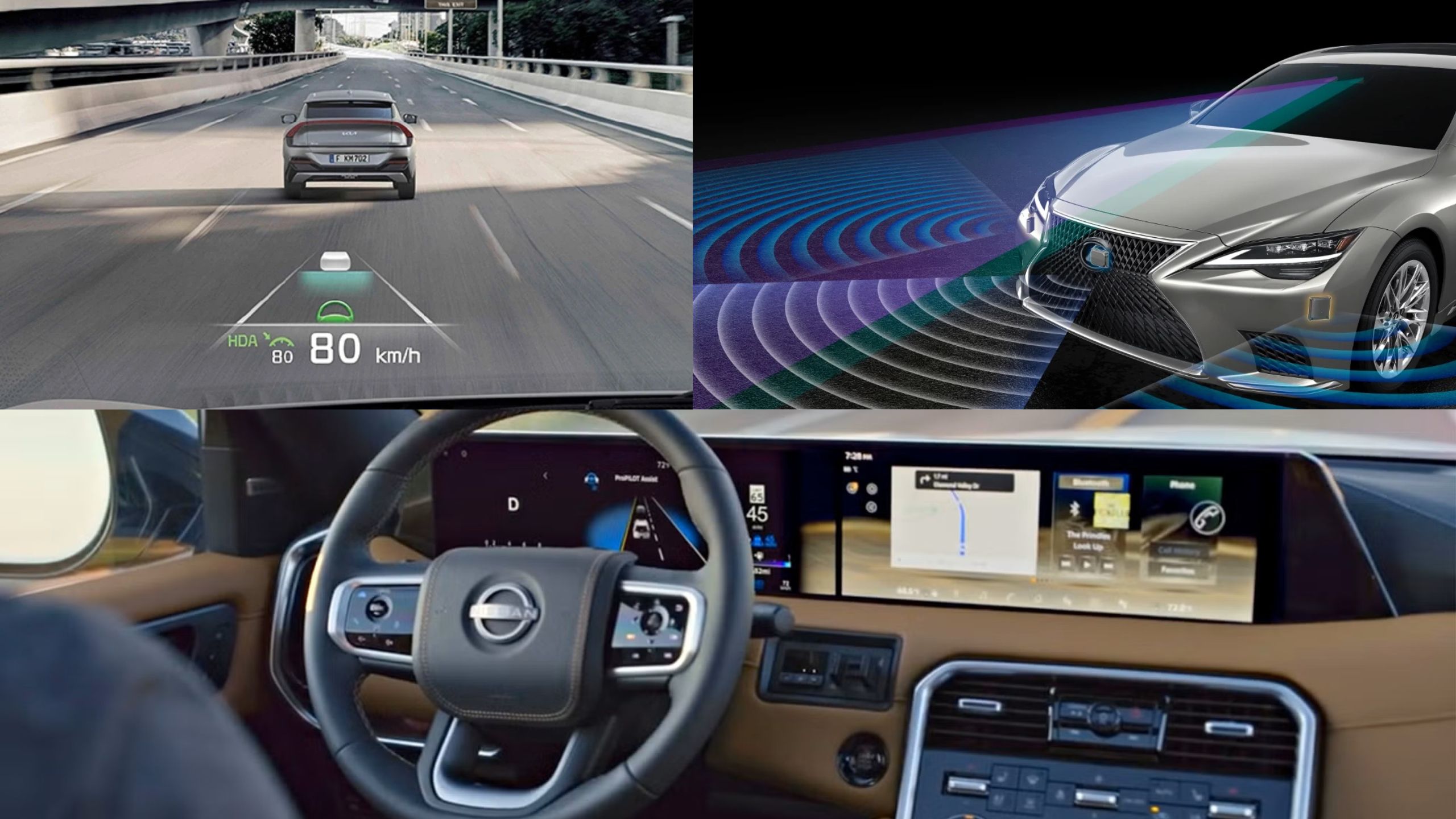
The automotive world is undergoing one of its most profound transformations in history. What once seemed like science fiction, cars going through the highways without human hands on the wheel is now a tangible, commercially available reality.
Hands-free driving technology, broadly categorized under Advanced Driver Assistance Systems (ADAS), has evolved from rudimentary cruise control into sophisticated, AI-powered systems capable of managing speed, steering, lane changes, and hazard detection simultaneously.
Unlike fully autonomous self-driving systems, hands-free driving technology allows drivers to remove their hands from the wheel while the car continues on its way though full concentration is still required, and the driver must be ready to take back control at a moment’s notice.
This nuance is critical: the technology eases the burden of driving, especially on long highway stretches, without removing human responsibility entirely.
As automakers race to outdo one another in this space, consumers face an increasingly competitive world filled with impressive options. From luxury sedans to rugged pickup trucks and electric SUVs, hands-free systems are now appearing across vehicle segments and price points.
This article examines the ten brands leading this revolution, evaluating each based on reliability, coverage, safety innovation, and the real-world driving experience they deliver in 2025 and beyond.
1. General Motors (Super Cruise)
When it comes to hands-free driving technology, General Motors stands in a league of its own. Introduced in 2017 as the first truly hands-free Advanced Driver Assistance System, Super Cruise allows drivers to remove their hands from the wheel and feet from the pedals while maintaining control of the vehicle under proper conditions.
That pioneering spirit has never slowed down if anything, GM has doubled down on its investment in autonomous driving research, making Super Cruise one of the most refined and widely available systems on the market today.
What truly sets Super Cruise apart from the competition is the sheer scale of its mapped highway coverage. Super Cruise uses a combination of cameras, radar, and high-definition maps to enable hands-free cruising on more than 400,000 miles of highways, working on both divided highways and even some two-lane roads.
This is a remarkable figure that far exceeds most competing systems, giving GM drivers more opportunities to activate hands-free mode during everyday commutes and long road trips alike.
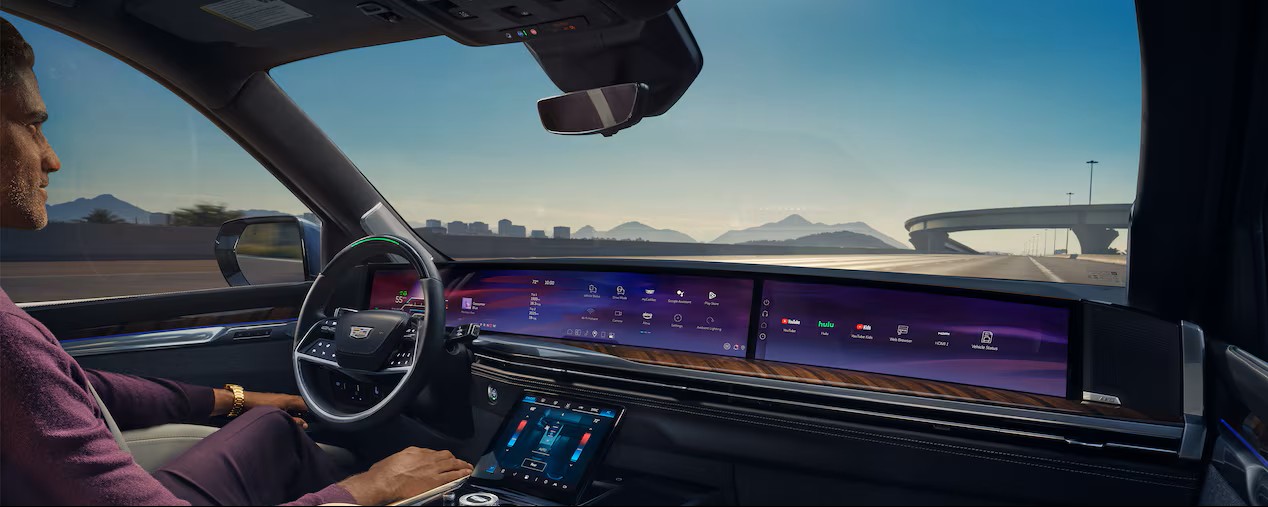
The technology underpinning Super Cruise is equally impressive. Super Cruise packages a variety of technology from suppliers including Intel’s Mobileye platform, Trimble RTX for positioning, forward-facing cameras, side cameras, radar, plus an internal camera from FOVIO for eye tracking.
This multi-layered sensor stack ensures that the system not only controls the vehicle safely but also continuously monitors the driver to confirm they remain alert and capable of resuming control if needed.
Super Cruise is not confined to premium Cadillac models, either. It has been rolled out across GM’s expansive lineup, including Chevrolet, GMC, and Buick vehicles, democratizing hands-free driving technology across a wider range of consumers.
GM reports millions of Super Cruise miles across their fleet, and the system is known for its reliability and confidence on mapped highways, with the 33-inch curved LED display in vehicles like the Cadillac Lyriq providing excellent visualization of Super Cruise operation with clear status indicators.
Looking ahead, GM has ambitious plans. In the near future, GM plans to introduce technology that not only lets drivers take their hands off the wheel when conditions allow but also take their eyes off the road a significant step towards enhanced autonomy that would allow drivers to catch up on email, read a book, or just get time back while on the road.
For anyone seeking the most battle-tested and broadly available hands-free driving system on the market, General Motors remains the gold standard.
2. Tesla (Autopilot / Full Self-Driving)
No conversation about hands-free driving technology is complete without Tesla. The California-based electric vehicle pioneer has been synonymous with autonomous driving ambitions since it first rolled out Autopilot in 2014.
Love it or debate it, Tesla’s approach to self-driving has shaped the entire industry’s direction and forced every other automaker to accelerate their own ADAS roadmaps.
Tesla equips every new vehicle with its base Autopilot suite as standard, which includes lane-departure warning, lane-keep assist, and adaptive cruise control.
Beyond that, the company offers Full Self-Driving (Supervised) an optional, subscription-based upgrade that significantly expands the car’s autonomous capabilities.
FSD enables advanced maneuvers such as automated lane changes, traffic-signal response, and city-street navigation, though it requires constant driver supervision and is available only through a paid subscription.
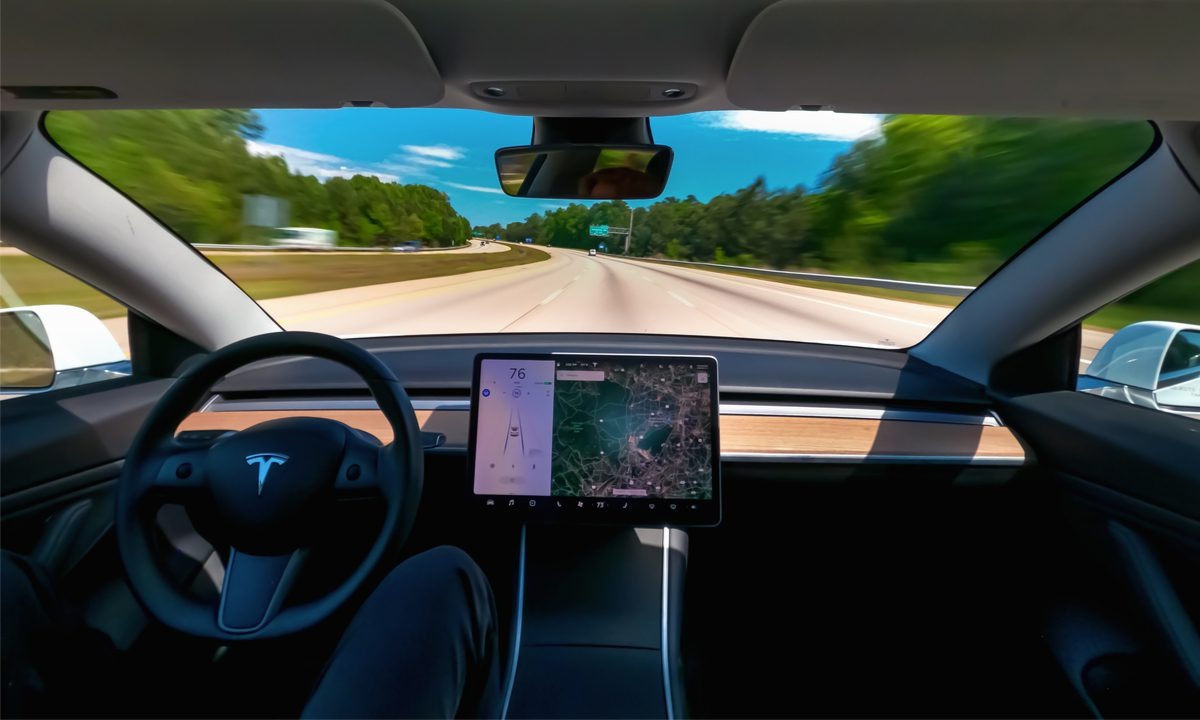
What makes Tesla uniquely controversial and uniquely interesting is its sensor philosophy. Tesla remains the only major automaker relying exclusively on vision-based cameras rather than LiDAR or radar, a decision that contrasts sharply with competitors like Mercedes-Benz, GM, and BMW, which have committed to LiDAR and sensor redundancy to improve reliability in low-visibility conditions such as fog, heavy rain, and darkness.
Tesla’s bet is that a sufficiently trained neural network, powered by a massive real-world dataset drawn from millions of vehicles on the road, can outperform hardware-heavy systems.
The real-world results are polarizing. Tesla’s FSD has demonstrated impressive capabilities in urban environments, going through the complex intersections, roundabouts, and parking scenarios that other systems wouldn’t dare attempt.
Tesla’s Autopilot suite is capable, and the company continues to collect data from its enormous fleet to improve performance through over-the-air updates.
The key limitation is that FSD, despite its name, remains a Level 2 system. Drivers must keep their attention on the road at all times. Tesla has faced regulatory scrutiny over its branding, but continues to push the technology forward aggressively.
With the largest active fleet of vehicles contributing data to its AI training pipeline, Tesla’s long-term potential in this space remains as compelling as ever.
3. Ford (BlueCruise)
Ford’s BlueCruise system has rapidly become one of the most respected hands-free driving platforms in the industry, earning top ratings from consumer and automotive publications alike.
According to Consumer Reports, BlueCruise was rated the top active driving assistance system in 2023, and it is available on models like the Ford F-150 and Mustang Mach-E. For a legacy automaker, Ford’s swift and effective entry into this space has been genuinely impressive.
BlueCruise enables true hands-free driving on over 130,000 miles of mapped highways, combining adaptive cruise control with lane-centering to handle both speed and steering.
These mapped sections, referred to as “Hands-Free Blue Zones,” are constantly being expanded, giving drivers more opportunities to use the system during their daily and long-distance drives. A driver-facing camera monitors alertness throughout, ensuring the system deactivates if the driver becomes inattentive.
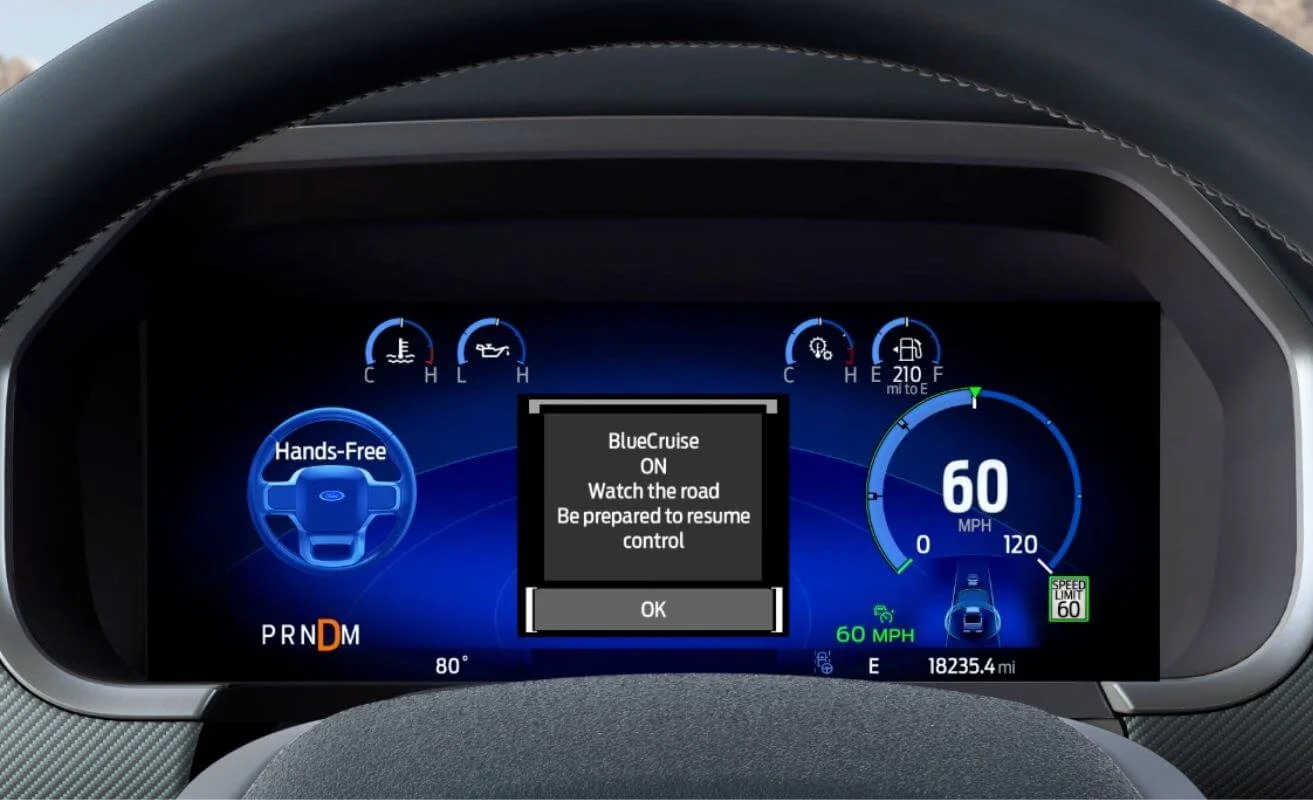
BlueCruise offers reliable performance on mapped highways with regular over-the-air updates expanding capabilities and mapped road coverage. The Mustang Mach-E, for example, has earned the IIHS Top Safety Pick+ award and NHTSA 5-star safety rating.
This commitment to both safety and continuous improvement through software updates makes BlueCruise a system that genuinely gets better over time a crucial advantage in a rapidly evolving technological world.
In its BlueCruise 1.3 update, Ford improved the car’s lane-tracing abilities and added an automatic lane-change feature, showing that the company is actively refining the system based on driver feedback and real-world data.
Ford has also made BlueCruise available on its incredibly popular F-150 pickup truck, meaning that millions of mainstream truck buyers now have access to hands-free highway driving a meaningful step in democratizing this technology beyond luxury vehicles.
For value-conscious drivers who want a proven, award-winning hands-free system without paying luxury car prices, Ford’s BlueCruise represents one of the smartest choices on the market today.
4. Mercedes-Benz (Drive Pilot)
Mercedes-Benz occupies a unique and historically significant position in the hands-free driving world: it is the only automaker to have commercialized a Level 3 autonomous driving system in the United States.
This is not merely a marketing distinction it represents a fundamental leap in what the technology can legally and functionally do. Mercedes-Benz has introduced Drive Pilot, the first SAE Level 3 system approved for U.S. highways. This technology appears in the 2024 Mercedes S-Class and EQS sedans in select states.
Drive Pilot allows the car to take full control in dense highway traffic, but only at speeds up to around 40 mph. The driver can relax and take their hands off the wheel during heavy traffic, and the system relies on a suite of cameras, radar, and even LiDAR for precise sensing.
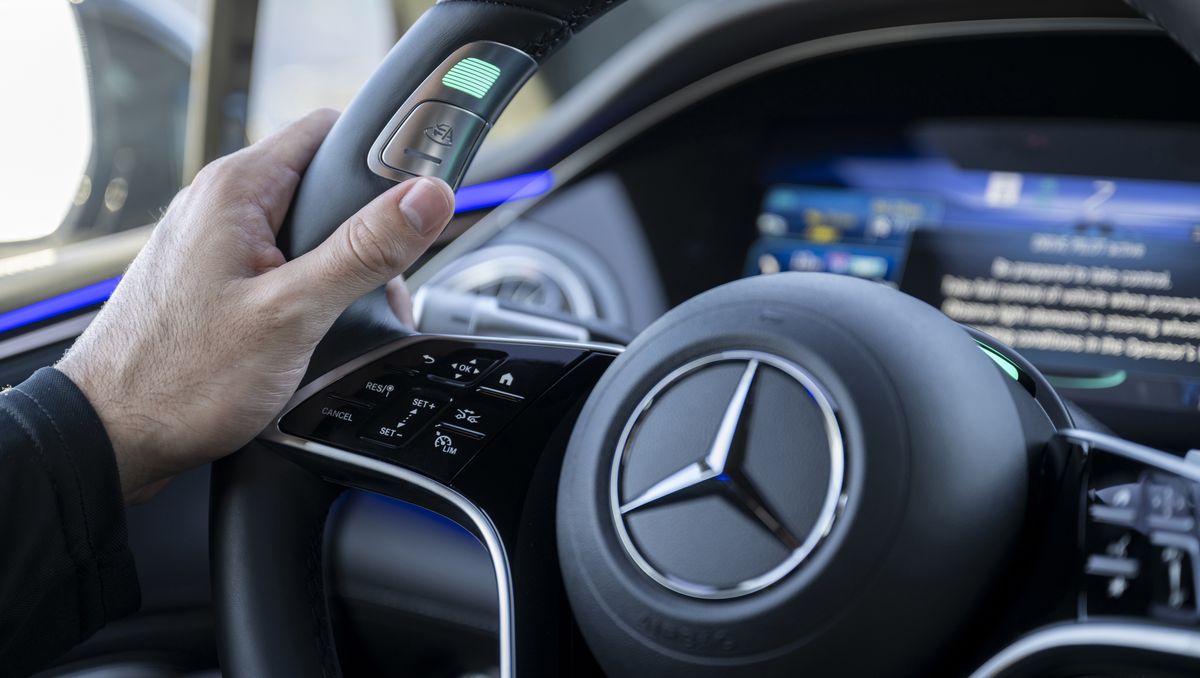
The significance of Level 3 classification cannot be overstated. Under Level 2 systems like Super Cruise or BlueCruise, the driver is always legally responsible for the vehicle, even when the car is steering itself. Under Level 3, legal responsibility shifts to the vehicle manufacturer under specific conditions.
When Drive Pilot is active, drivers are legally permitted to engage in secondary activities while remaining available to resume control if requested. This is a landmark moment in automotive regulation and consumer safety law.
Mercedes has built Drive Pilot on an extraordinarily robust sensor foundation. The system’s reliance on LiDAR a sensor technology that uses laser pulses to map the environment in three dimensions gives it a significant reliability advantage in challenging conditions like low light or adverse weather.
The brand’s long-standing reputation for engineering excellence means Drive Pilot has been developed with the meticulous precision that Mercedes-Benz buyers expect.
While Drive Pilot’s current 40 mph speed restriction limits its applicability to traffic jam scenarios rather than open highway cruising, its technological significance as the world’s first certified Level 3 consumer system makes Mercedes-Benz an essential inclusion on any credible list of hands-free driving leaders.
Also Read: 10 Ways Modern Software Updates Are Extending the Life of Older EVs
5. BMW (Highway Assistant / Driving Assistant Plus)
BMW has consistently been at the forefront of integrating advanced driver assistance technology with the brand’s signature performance-oriented driving philosophy.
The result is a hands-free system that feels as polished and confidence-inspiring as everything else BMW puts its name on. BMW’s hands-free system is available as standard in the XM and Alpina XB7, and as an add-on for the 5-series, 7-series, i5, i7, iX, X5, X6, and X7, working across around 130,000 miles of divided highways.
This wide model availability means that BMW’s hands-free technology is accessible across the brand’s full lineup, from executive sedans to performance SUVs.
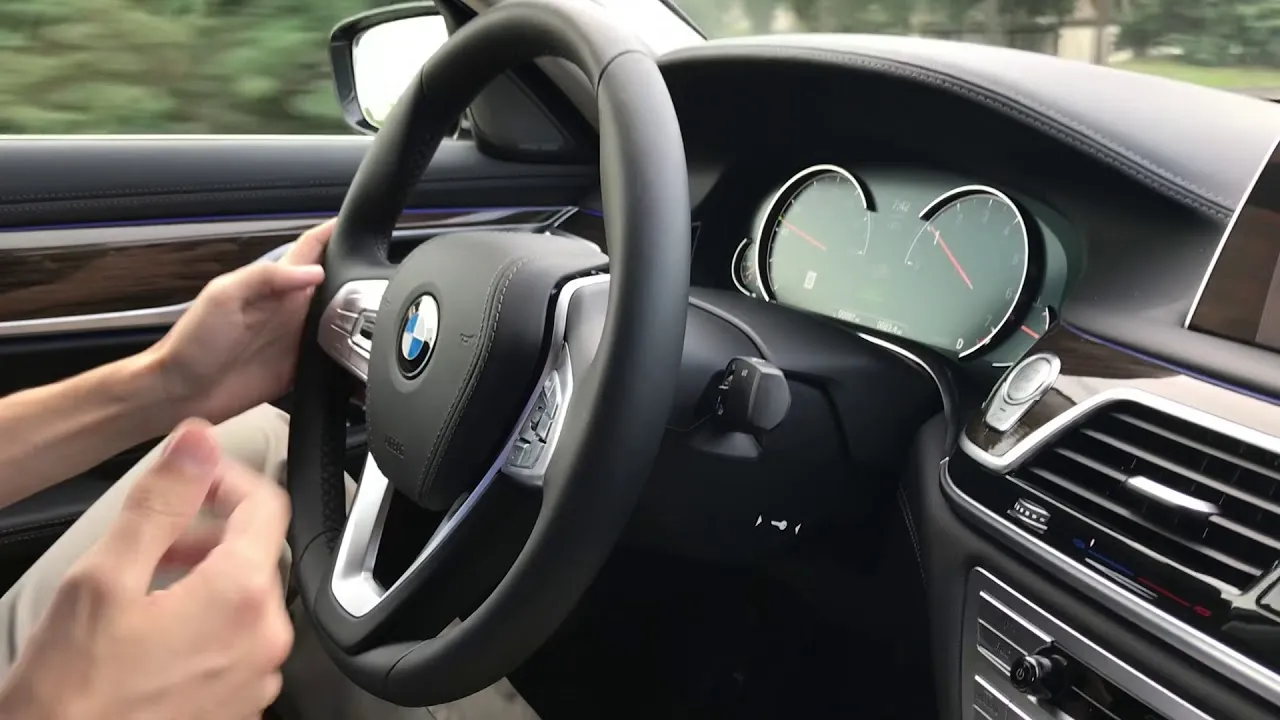
The BMW i7 features the most recent version of Driving Assistant Plus, and the hands-free feature now works up to 70 miles per hour — a significant improvement over the prior version, which only allowed it up to 40 mph.
This increase in operational speed is a major enhancement, making the system usable during normal highway driving rather than only in slow-moving traffic scenarios.
The system allows hands-free driving on compatible highways, along with adaptive cruise control, lane centering, and automatic lane changes. While still requiring driver supervision, BMW’s system emphasizes smoothness and driver confidence.
BMW has put considerable emphasis on how hands-free driving feels the transitions between human and computer control are seamless, the lane centering is precise, and the system’s responses to changing traffic conditions are intuitive rather than mechanical.
For 2025, BMW has introduced active lane-change assist, adding another layer of capability to its already impressive driver assistance package. BMW’s approach represents the ideal marriage of performance heritage and autonomous technology a hands-free system that enhances the driving experience rather than simply automating it.
6. Rivian (Universal Hands-Free / Autonomy Platform+)
Rivian is the most exciting new entrant in the hands-free driving space, bringing a fresh, technology-first perspective to a field long dominated by legacy automakers. The company’s approach combines cutting-edge hardware with a software-driven development model, and the results have been genuinely impressive.
Rivian’s Universal Hands-Free covers 3.5 million miles, leading the hands-free driving domain among newer entrants, and does not rely on pre-mapped highways alone.
Because it uses a sensor suite that includes cameras, radar, and now LiDAR on R2 models, it is incredibly useful for mixed-route commutes, errand running, and the unpredictable realities of daily driving.
This non-reliance on exclusively pre-mapped roads is a critical differentiator it means Rivian drivers can access hands-free features in a broader range of real-world scenarios than many competing systems allow.
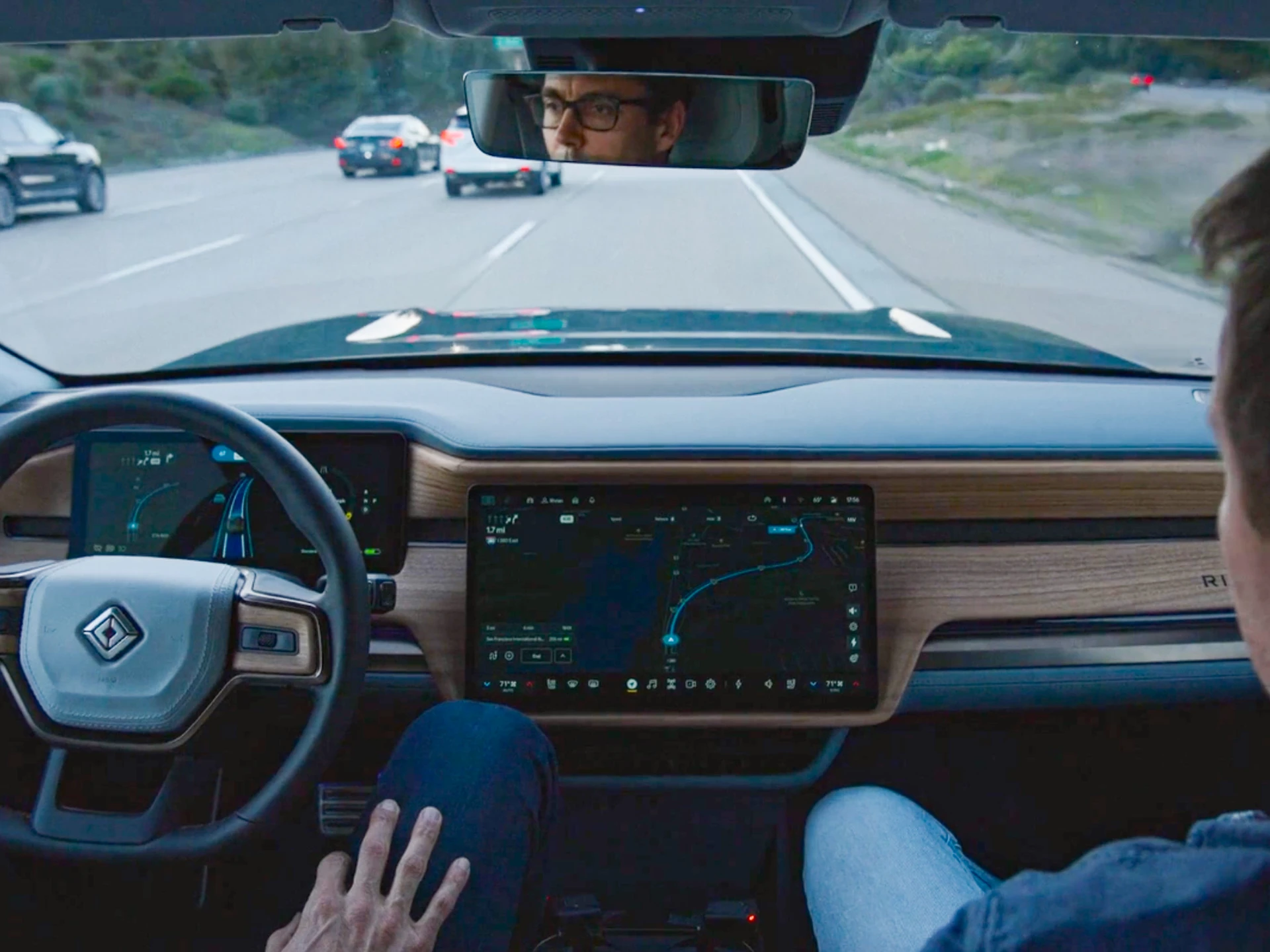
Rivian’s Autonomy Platform+ runs on Gen 2 hardware with 11 cameras, 5 radar, 12 ultrasonic sensors, plus a driver-facing infrared camera for monitoring. Beginning with the 2025 model year, Gen 2 hardware includes the Autonomy Platform+ compatible system.
This sensor suite is among the most comprehensive available in any consumer vehicle today, giving Rivian a strong hardware foundation for continued software improvements.
Rivian has publicly targeted “eyes-off” features in 2026 using new AI technology, and the rollout of hands-free capability in 2025 is a major step in that direction.
For a company that only began delivering vehicles in 2021, the pace of Rivian’s ADAS development has been remarkable, and its trajectory suggests that the brand will be competing at the very top of the hands-free driving rankings in the years ahead.
Rivian’s hands-free technology is also particularly well-suited to the adventure-oriented lifestyles of its customers. The system’s ability to handle varied road types makes it useful on the kinds of mixed highway and rural routes that Rivian owners typically go.
7. Hyundai/Kia (Highway Driving Assist 2)
Hyundai and Kia have rapidly emerged as some of the most impressive value-focused competitors in the ADAS space. Their shared Highway Driving Assist 2 (HDA2) system delivers a level of hands-free functionality that punches well above its price point, making semi-autonomous driving accessible to mainstream consumers who aren’t shopping in the luxury segment.
Kia offers advanced highway driving systems that compete favorably with more expensive options, and Hyundai has partnered with Waymo to add Waymo’s sixth-generation autonomous system into Ioniq 5s for use in the Waymo One fleet.
This partnership with one of the world’s most advanced autonomous driving companies signals the seriousness with which Hyundai is approaching the future of self-driving technology.
Highway Driving Assist 2 combines adaptive cruise control with lane-following assist, enabling the system to steer, accelerate, and brake with minimal driver input on motorways.
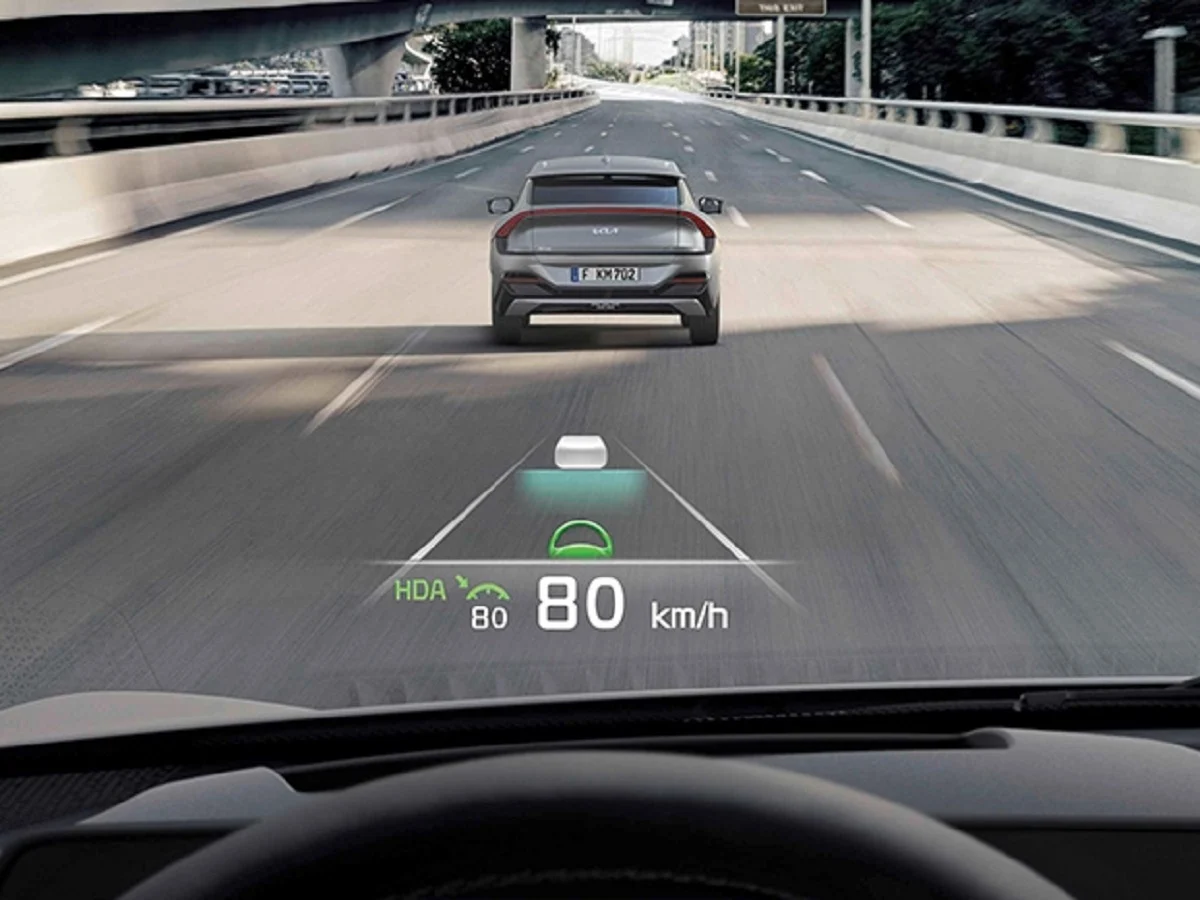
The system also supports lane change assistance when a driver activates the turn signal, HDA2 can execute the lane change automatically after checking surrounding conditions. This feature, once exclusive to luxury brands, is now available at competitive mid-market price points across Hyundai and Kia’s lineup.
What makes the Hyundai/Kia offering particularly compelling is the combination of reliability, affordability, and continuous improvement. The brands have invested heavily in sensor technology and AI processing, and their over-the-air update infrastructure ensures that the system improves over time.
Hyundai’s commitment to electrification also means that its most advanced ADAS features are concentrated in the Ioniq lineup vehicles that are already considered among the best EVs in the market.
For consumers seeking hands-free driving capability without paying a premium, Hyundai and Kia represent one of the smartest choices available a system that delivers real-world reliability at a price that makes it genuinely accessible.
8. Volvo (Pilot Assist)
Volvo has built its entire brand identity around safety, and nowhere is that philosophy more evident than in its Pilot Assist system. While it may not always generate the same headlines as Tesla’s FSD or GM’s Super Cruise, Pilot Assist has earned a reputation for being one of the most smooth, predictable, and trustworthy driver assistance systems on the market qualities that matter enormously when you’re surrendering steering control to a computer.
Volvo’s Pilot Assist combined with LiDAR is an incredibly reliable, responsive, and proactive system. The highway driving assist uses adaptive cruise control paired with steering assist to help with lane centering, speed, maintaining distances, steering, and driver engagement, and will also handle the stopping and going in traffic
The smoothness of Pilot Assist is consistently praised by reviewers the system’s transitions are gentle rather than jarring, and its lane centering is impressively precise even on winding highways.
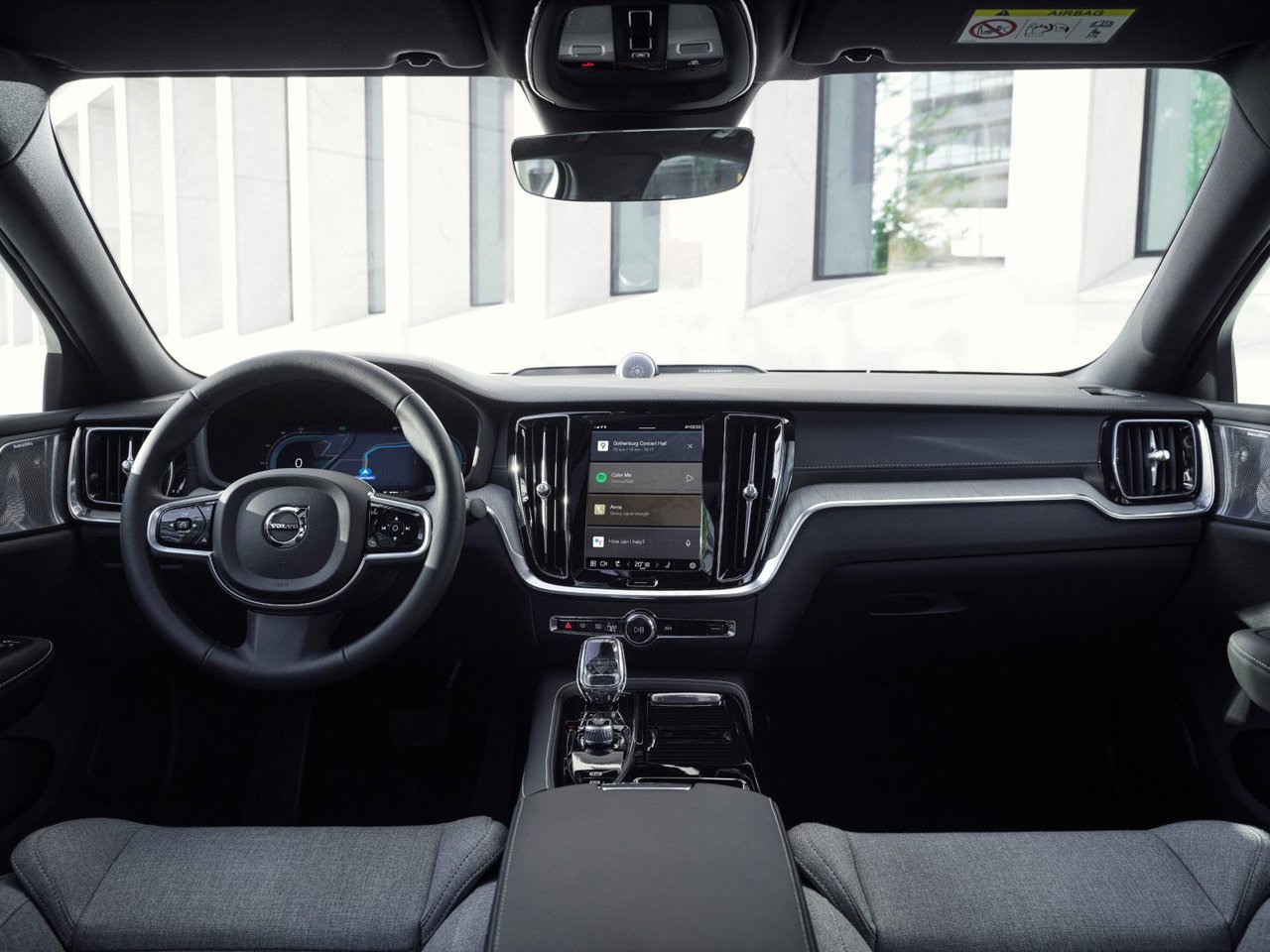
Volvo’s XC90 incorporates the Pilot Assist system, offering adaptive cruise control and lane-keeping assistance, with the brand’s focus on safety being a defining hallmark of the XC90’s family-friendly appeal.
Volvo has extended Pilot Assist across much of its lineup, ensuring that families choosing a Volvo for its safety reputation get access to the brand’s most advanced driver assistance features.
Volvo’s proactive collision prevention is also worth highlighting. Even when Pilot Assist is not actively engaged, Volvo’s ADAS systems are constantly monitoring the environment and are prepared to intervene automatically if a collision risk is detected.
This always-on vigilance gives Volvo drivers an additional layer of protection that complements the hands-free functionality perfectly. For families, safety-conscious buyers, and anyone who values predictability over flashiness in their driver assistance technology, Volvo’s Pilot Assist is among the most trustworthy options available.
9. Toyota/Lexus (Teammate / Advanced Drive)
Toyota and Lexus bring decades of engineering conservatism and quality reputation to the hands-free driving space. Where some brands rush to market with ambitious but occasionally unreliable systems, Toyota takes a methodical approach ensuring that what it releases is thoroughly tested, dependably consistent, and built to last.
Toyota’s hands-free system comes as standard in the Lexus LS500h and was previously available for the Toyota Mirai, working on 145,000 miles of US roads and highways.
The Level 2 system includes an awareness view plus on-demand lane change that requires the driver to have their hands on the steering wheel and turn their head to check blind spots.
This safety-first design philosophy requiring active driver participation even in lane-change maneuvers reflects Toyota’s deeply embedded culture of caution and responsibility.
Toyota’s Teammate system, available on the Lexus LS and certain other models, is one of the most sophisticated implementations of hands-free driving in a production luxury vehicle.
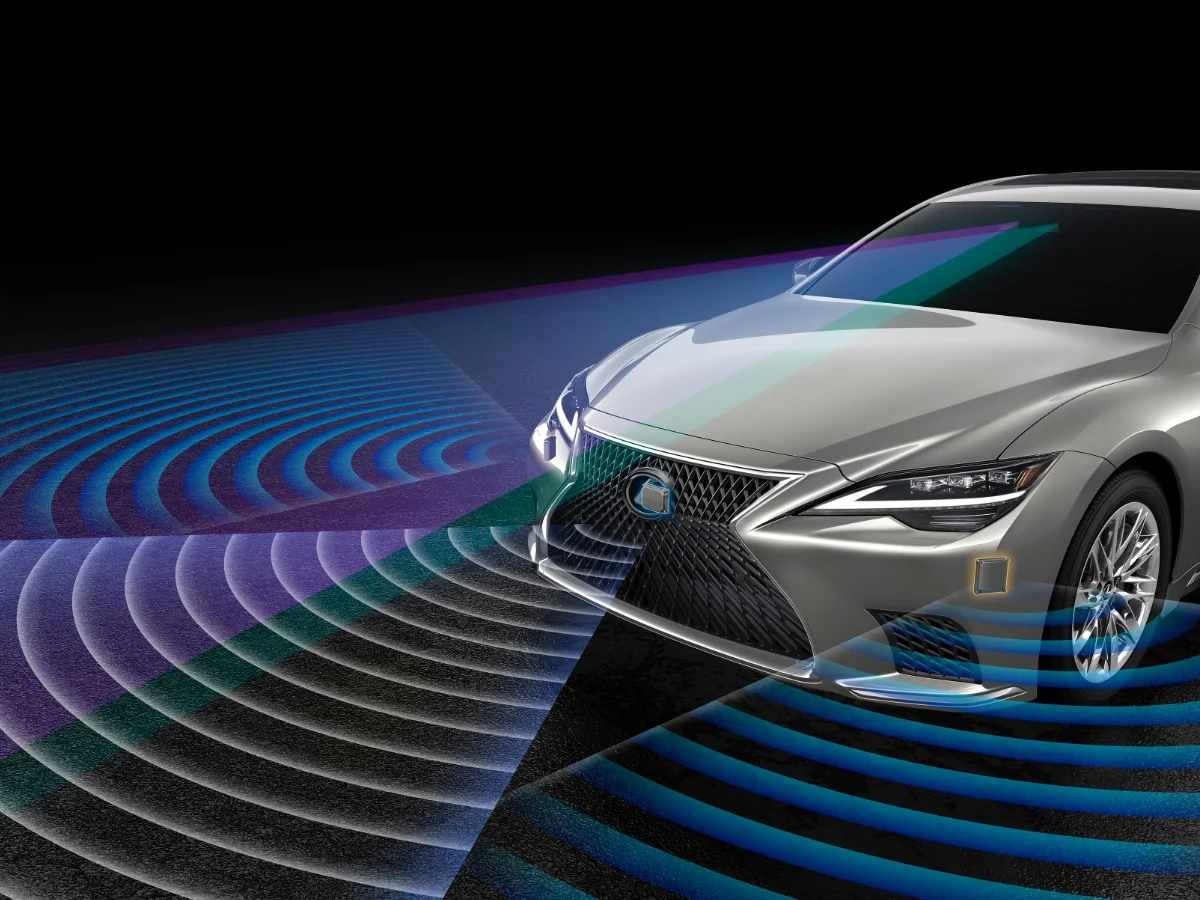
The system handles highway driving with exceptional smoothness, managing lane centering, adaptive cruise, and overtaking assistance with a level of polish that reflects the brand’s premium engineering standards.
The awareness view feature, which provides drivers with a digital display of the car’s sensor interpretation of the surrounding environment, adds an extra layer of transparency that helps drivers understand and trust the system.
Toyota’s sheer global scale also works in its favor. The company has been investing heavily in autonomous driving research through its Toyota Research Institute, accumulating simulation data and real-world driving experience at a rate that few can match.
While Toyota’s consumer-facing hands-free systems may appear more conservative than competitors, they benefit from this enormous behind-the-scenes investment in AI and sensor research.
For buyers who want hands-free technology with maximum reliability and the assurance of Toyota’s legendary long-term dependability, the Lexus lineup represents a thoughtful and trustworthy option.
10. Nissan (ProPILOT Assist 2.0)
Nissan rounds out this list as the brand that has arguably done the most to make hands-free and semi-autonomous driving accessible to everyday consumers at mainstream price points.
ProPILOT Assist 2.0 may not carry the same brand cachet as Super Cruise or Drive Pilot, but it delivers impressive functionality at a price that puts it within reach of a far broader audience.
Nissan’s ProPILOT Assist 2.0 is available on the 2024 Nissan Ariya EV and enables hands-free driving on mapped highways under certain conditions.
Similar to luxury systems, ProPILOT Assist 2.0 uses high-definition mapping and sensors to keep the car centered in its lane and maintain a safe distance from other vehicles.
It can even assist with lane changes when the driver signals approval. The inclusion of HD mapping technology typically associated with premium luxury systems in a mainstream EV is a genuinely notable achievement.
Nissan gets recognition for offering these advanced features at such a competitive price, making it easier for more people to benefit from these systems.
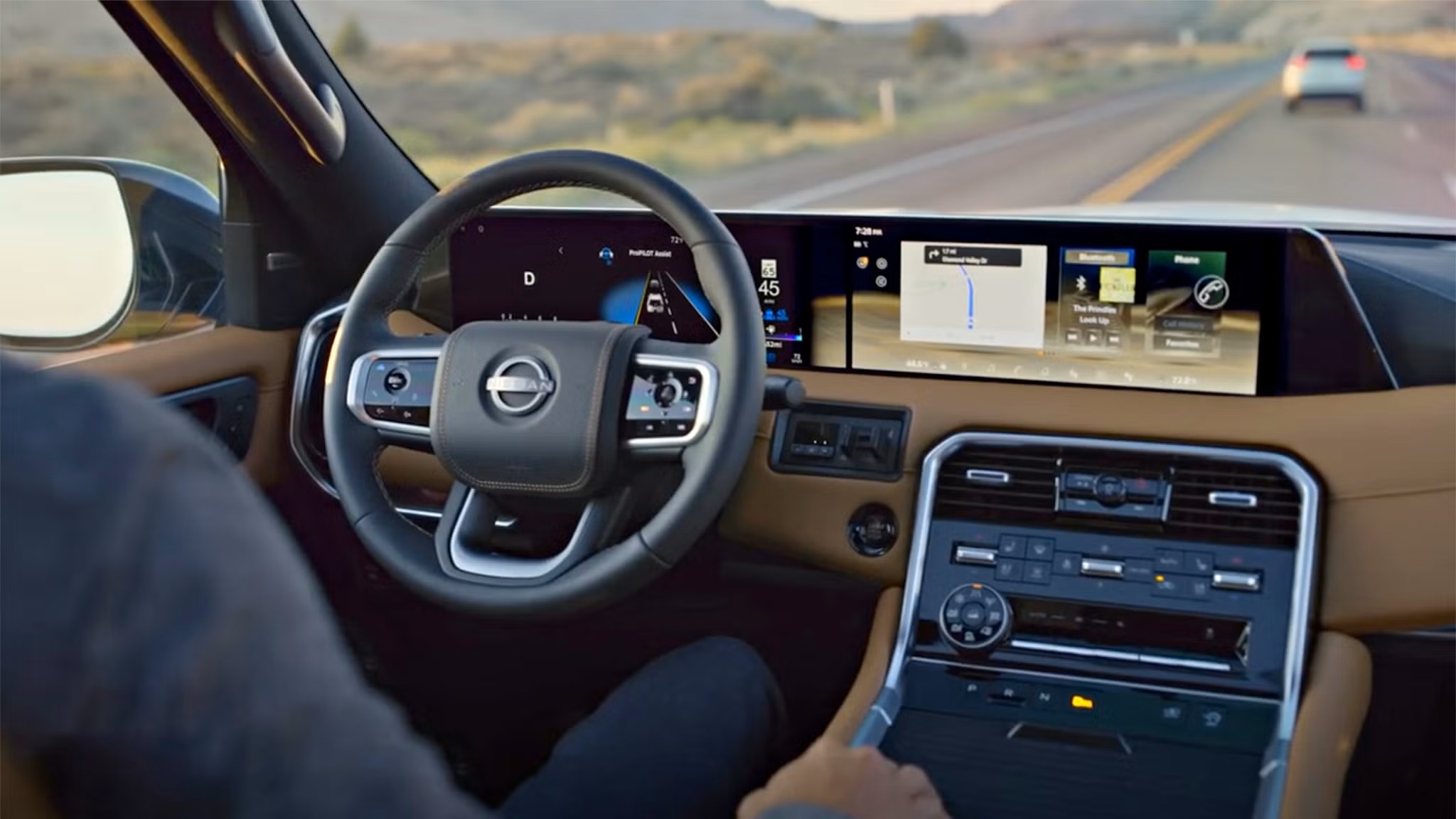
Because most people don’t know how to drive safely, the more accessible these features are, the safer American roads are for everyone — not just the driver.
This point is critically important: the democratization of hands-free driving technology isn’t just a commercial milestone; it’s a public safety advancement.
A driver-attention camera is integrated into ProPILOT Assist 2.0, ensuring that the system monitors the driver’s alertness and readiness to resume control a safety feature that matches the standard set by far more expensive competitors.
Nissan has also been proactive about expanding the system’s mapped highway coverage over time, ensuring that early adopters continue to see tangible improvements through software updates.
For value-driven consumers who want to experience genuine hands-free driving capability without stretching into luxury territory, Nissan’s ProPILOT Assist 2.0 is one of the most compelling propositions in the automotive market today. It represents everything this technology should ultimately aspire to be: reliable, accessible, and genuinely useful for everyday driving.
Also Read: 5 New Engine Technologies That Are Keeping Internal Combustion Alive
