
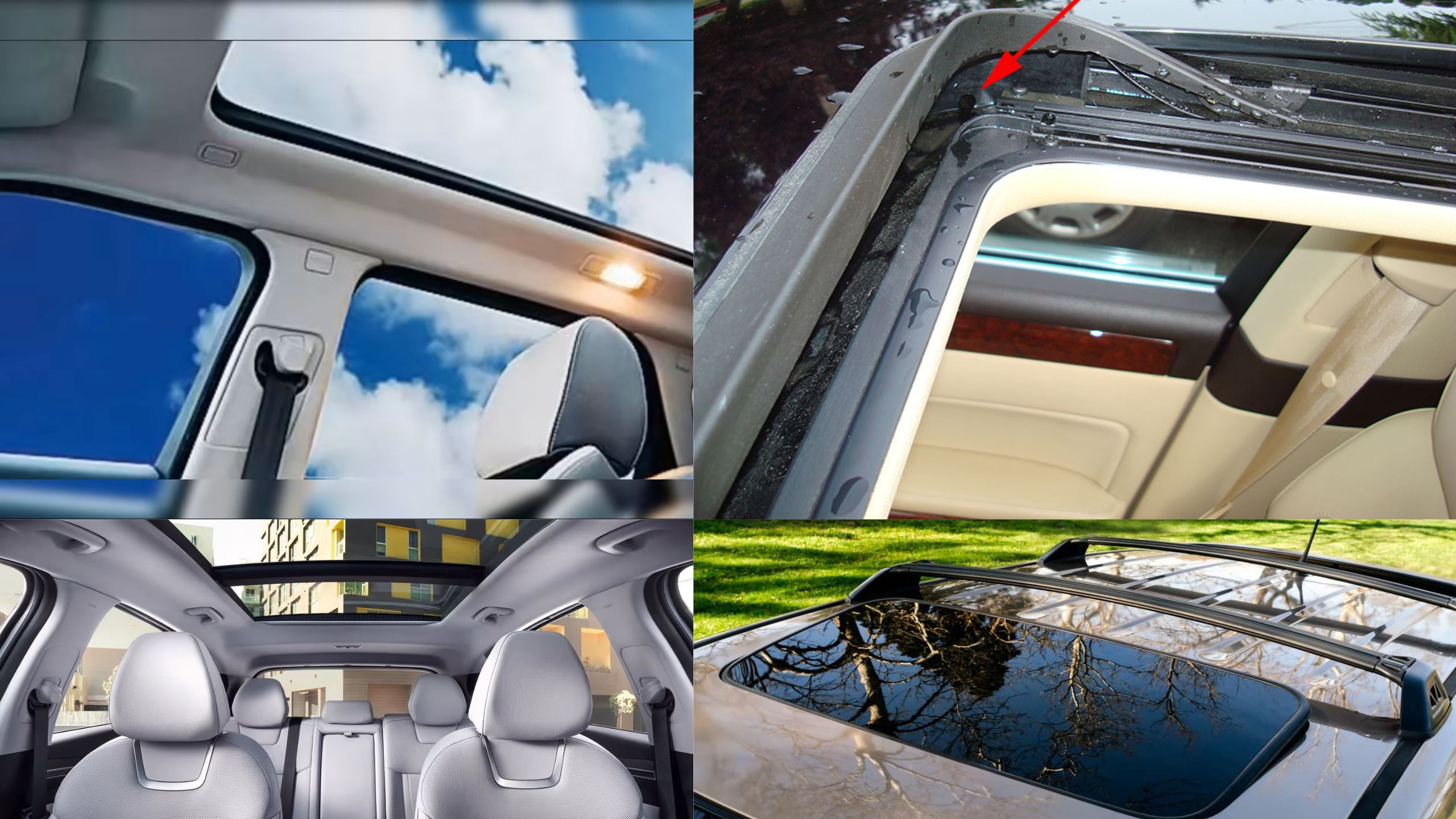
Walk into any car showroom today, and you’ll notice a clear trend sweeping across every segment from compact hatchbacks to full-size SUVs. Panoramic roofs are everywhere.
Automakers have been aggressively marketing them as the ultimate symbol of modernity, luxury, and open-air freedom. The glossy brochures show sunlight flooding through an expanse of glass, happy passengers gazing up at a brilliant blue sky, and a sense of effortless elegance that seems almost impossible to resist. For millions of buyers, ticking the “panoramic roof” box on the options list feels like an obvious upgrade.
But here’s the thing nobody tells you at the dealership that sweeping glass ceiling above your head comes with a surprisingly long list of hidden drawbacks.
Behind all the showroom glamour lies a feature that can make your cabin feel like a greenhouse in summer, quietly drain your fuel economy, reduce your headroom, expose you to annoying rattles, and leave you facing a four-figure repair bill the moment something goes wrong.
This isn’t an argument that panoramic roofs are universally terrible. For the right person, in the right climate, they can genuinely enhance the driving experience.
But far too many buyers are swept up in the aesthetics without fully understanding the long-term trade-offs. Before you hand over your money, here are eight compelling reasons why you should pause and think carefully before buying a car fitted with a panoramic roof.
1. Your Car Will Turn Into an Oven
Of all the drawbacks associated with panoramic roofs, excessive heat buildup is arguably the most universally experienced and the most immediately uncomfortable.
A standard car roof is a solid sheet of steel or aluminium that reflects and absorbs solar radiation, keeping the cabin beneath it relatively protected from direct sunlight.
A panoramic roof, by contrast, replaces much of that protective metal with large panels of glass. Glass, regardless of how darkly tinted it is, allows a significant amount of solar energy to pass straight through into your cabin.
On a typical hot summer day, a vehicle cabin without a sunroof can easily reach around 104 degrees Fahrenheit. Add a panoramic roof to that same car under the same conditions, and interior temperatures can surpass 140 degrees Fahrenheit.
That is not a small difference it is the difference between an uncomfortable car and a potentially dangerous one. Those temperatures can damage your dashboard, cause leather seats to crack prematurely, fade upholstery, and even warp plastic trim components over time.
What makes this problem more frustrating is that the commonly assumed solution tinted glass provides far less protection than most buyers expect.
Even with a darkened panoramic panel, it may take less than 15 minutes for interior temperatures to rise to potentially damaging levels on a hot, sunny day.
The retractable sunshade that comes with most panoramic roofs does block some of the radiant heat, but even with the shade drawn and the air conditioning running at full blast, the thermal load entering through that glass ceiling makes the cabin significantly harder to cool.
The practical consequences go well beyond comfort. When you get into a sun-baked car and crank the air conditioning, your engine has to work significantly harder to pull that cabin temperature down.
This extra load on the AC compressor translates directly into greater fuel consumption on every hot day you drive. In regions like South Asia, the Middle East, or the American Southwest where summer temperatures regularly spike into the high thirties and beyond this is not an occasional inconvenience but a daily reality for potentially six months of the year.
There is also the issue of parking. Finding a shaded spot or a covered parking structure to protect your panoramic-roofed car becomes an almost obsessive concern. You may find yourself spending extra effort locating covered parking spaces near your workplace or home just to keep the car reasonably cool.
That is an ongoing logistical burden that a steel-roofed car simply does not impose on you. For buyers in hot climates, this single drawback alone is worth serious consideration before signing on the dotted line.
2. The Risk of Shattering or Exploding Glass Is Real
It sounds like something out of a dramatic movie scene a car roof suddenly shattering without warning. But this is not fiction. Consumer Reports and major news outlets have issued warnings about the risk of exploding or detaching panoramic sunroof panels, caused by the high degree of stress placed on large spans of tempered glass.
If you have ever heard the phrase “panoramic sunroof explosion,” you may have dismissed it as an exaggeration. Unfortunately, it is a documented and recurring problem that has affected numerous major manufacturers.
Carmakers including Hyundai, Nissan, Kia, Ford, BMW, Mazda, and Toyota have all received consumer complaints about glass shattering suddenly and without apparent cause.
Some of these manufacturers have issued recalls for vehicles with panoramic sunroofs that were identified as having a higher risk of breaking. In 2015, Hyundai recalled thousands of cars specifically because of the risk of panoramic sunroof panels detaching while the vehicle was in motion a frightening scenario for any driver or passenger.
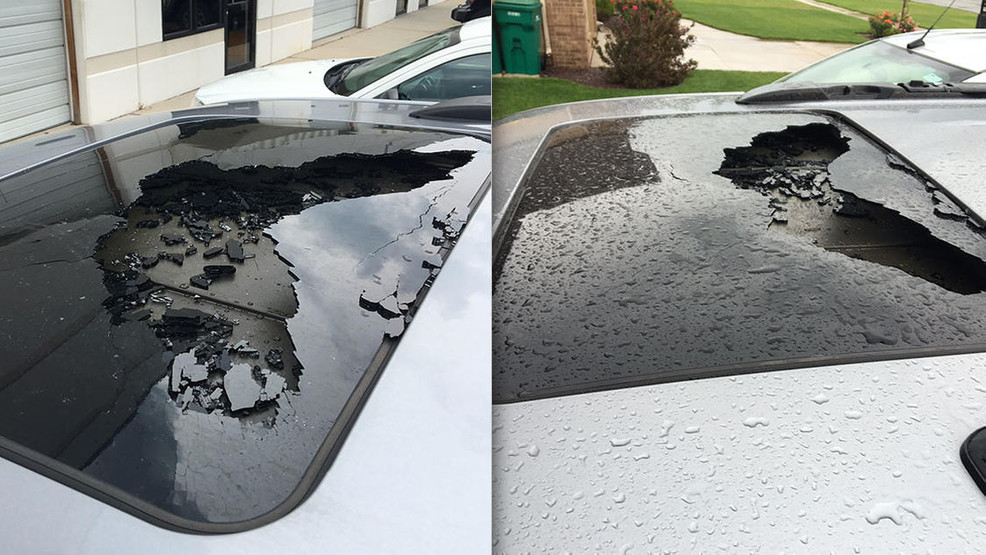
The reason tempered glass is used in these applications is because it is significantly harder and safer than regular glass when it does break, it crumbles into small, relatively blunt pellets rather than sharp shards.
However, tempered glass is also under constant internal stress by its very nature, and a large, unsupported span of it stretched across the roof of a moving vehicle is more susceptible to spontaneous failure than a small, well-supported panel. Road vibrations, temperature fluctuations, minor flexing of the car’s body, and even the stress of closing a door too firmly can all contribute to micro-cracks that eventually cause the panel to give way entirely.
Some owners report hearing a sudden, explosive noise while driving before realising the glass above them had disintegrated. The experience of pulling over on a motorway to discover your roof has caved in is deeply unsettling, even when physical injury is avoided.
The cases of panoramic sunroofs breaking without a collision involved have fortunately not caused widespread serious injuries but the psychological shock of it happening at highway speed is an experience no motorist should have to face.
Beyond the immediate safety fright, there is the financial reality. If that glass is damaged whether through spontaneous failure, a stone chip, or hail it can require the entire roof assembly to be replaced, which is an expensive undertaking.
Depending on the vehicle, a full panoramic roof glass replacement can run anywhere from several hundred to several thousand dollars, often not covered by standard comprehensive insurance without a specific glass endorsement on your policy.
3. It Quietly Kills Your Fuel Economy
Modern car buyers are more conscious of fuel economy than ever before. Whether you are trying to save money at the pump, reduce your environmental footprint, or simply squeeze more range out of every tank, the weight and aerodynamics of your vehicle matter greatly.
A panoramic roof works quietly against you on both fronts, and the impact is more significant than most buyers appreciate at the time of purchase.
Car manufacturers invest enormous effort in reducing the weight of their vehicles, because lighter cars accelerate faster, brake in shorter distances, handle more responsively, and consume less fuel. Every kilogram shaved from the vehicle’s mass pays dividends across the entire ownership period. A panoramic roof adds a substantial amount of mass to the very top of the vehicle arguably the worst possible position from both a weight distribution and a handling standpoint.
When you factor in the weight of two or more heavy glass panels, along with the reinforcing bars built into the roof structure, the motor, the drainage channels, the tracking mechanism, and the sunshade assembly, the total addition can exceed 90 kilograms in some cases.
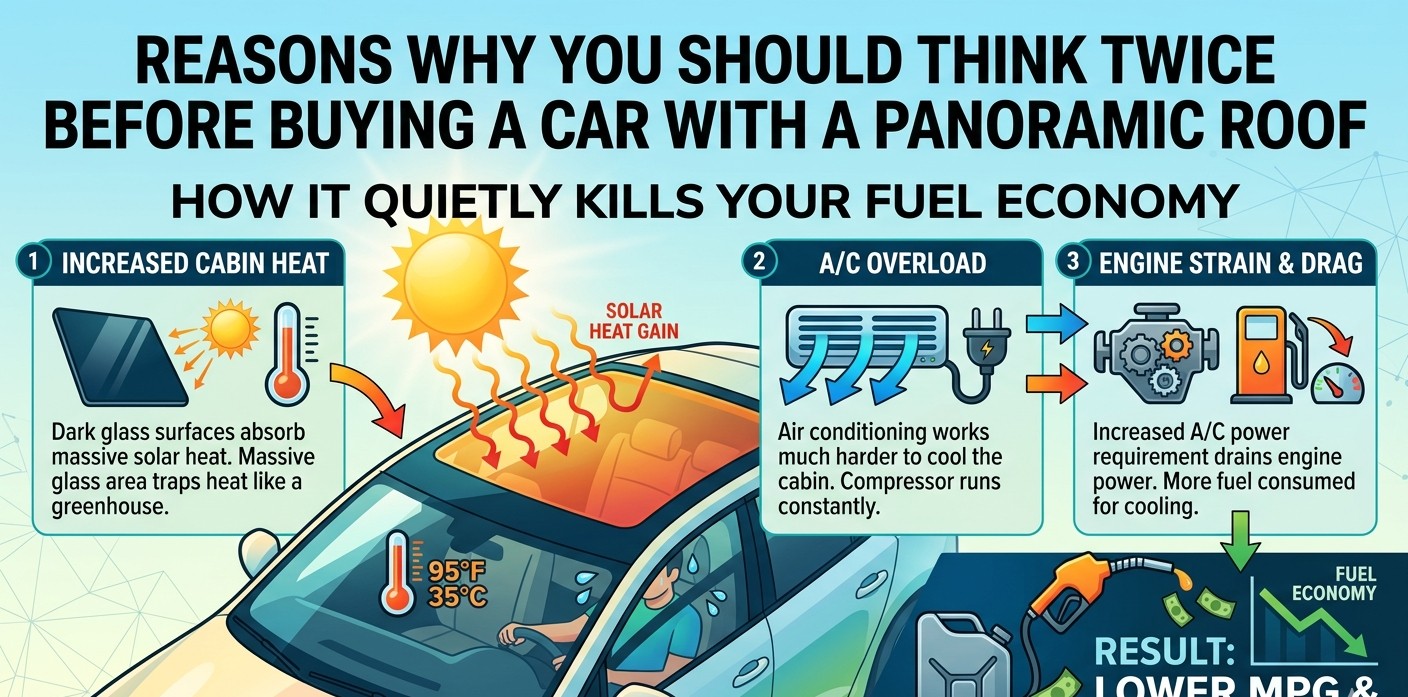
That is roughly the equivalent of an additional adult passenger riding in the car on every single journey you make. You cannot remove it when you do not need it. It is a permanent, non-negotiable weight penalty embedded into the vehicle from the moment it leaves the factory floor.
That raised centre of gravity also influences handling dynamics. A car with a heavy panoramic roof will feel marginally less agile in cornering situations compared to an equivalent model without one, because more of the vehicle’s mass is concentrated high up. This is particularly noticeable in taller SUVs, where the physics of a high centre of gravity already work against dynamic handling.
In addition to raw weight, the altered roof profile changes the aerodynamic characteristics of the vehicle. Air flows differently over and around the glass panels and their frames compared to a smooth, contoured metal roof, and that aerodynamic drag contributes further to fuel consumption at highway speeds.
For buyers who prioritise efficiency particularly those covering high annual mileages this is a meaningful and permanent financial cost that accumulates quietly over the years of ownership.
Also Read: 10 Cars With the Most Unusual Engine Placements in History
4. You Lose More Headroom Than You Think
One of the central paradoxes of panoramic roofs is that a feature specifically designed to make the cabin feel more spacious and airy can actually reduce the physical headroom available to occupants particularly those seated in the rear. It is a trade-off that rarely receives a mention from salespeople but is frequently cited as a frustration by owners after purchase, especially taller ones.
The reason is straightforward engineering. Panoramic roofs are complex electromechanical systems housed within the roof structure of the vehicle.
They contain large glass panels, electric motors, tracking rails, rollers, drainage channels, and a full-width fabric sunshade all of which must fit within the space between the outer surface of the roof glass and the inner headliner that passengers see above their heads. That mechanism requires physical space, and it claims that space directly above where passengers sit.
In many production vehicles, the difference in headroom between a panoramic-roofed version and the standard-roof version of the same car amounts to between one and two inches.
Two inches may not sound alarming in isolation, but when you combine a reduced headroom figure with a sloping roofline, a high seat position, or a tall individual’s stature, it can make a genuine and tangible difference in day-to-day comfort.
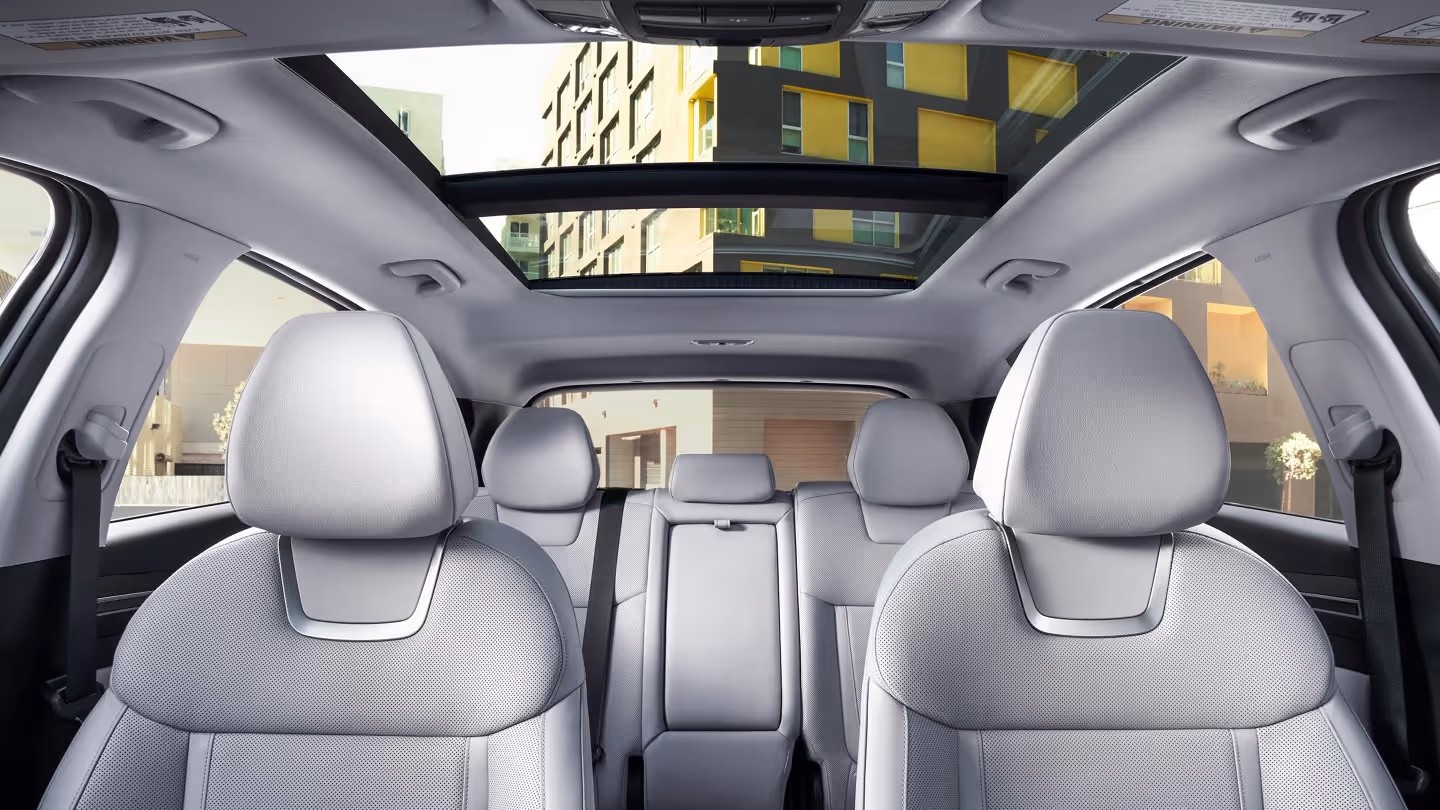
Drivers above six feet in height often find themselves uncomfortably close to the headliner, forced to adopt a slightly hunched posture or to recline the seat further back than is ergonomically ideal.
Rear passengers can suffer even more acutely in certain models. The trailing edge of a panoramic roof often slopes sharply toward the rear of the vehicle, following the roofline, and this can dramatically reduce the vertical space available for rear occupants in an area that is already the tightest part of many cabins.
For family buyers who regularly carry adults in the back particularly on longer journeys this is a real-world comfort issue that deserves careful evaluation.
The lesson here is simple and actionable: never buy a panoramic-roofed car without sitting in every seating position first. Pay particular attention to rear headroom.
What looks generous in the specification sheet or feels comfortable in the showroom with adjusted seats may tell a very different story on a long motorway journey with a full complement of passengers.
5. Leaks and Water Damage Are a Persistent Threat
A car roof is fundamentally supposed to keep water out. It is one of the most basic and non-negotiable functions of a vehicle’s structure. When you replace a large section of that solid, sealed metal roof with glass panels, seals, drainage channels, and moving mechanical components, you introduce multiple potential pathways for water to find its way into the cabin.
Over time, this becomes one of the most common and most dreaded complaints among panoramic roof owners across every brand and price point.
By design, the rubber seals around panoramic roof panels are not entirely waterproof in the way a welded metal roof is. While the seals do a reasonable job of keeping the bulk of rainfall out under normal conditions, panoramic roofs fundamentally rely on an internal drainage channel system within the roof structure to manage any water that bypasses the seals.
These drainage channels route water away from the cabin through small drain tubes that exit at the vehicle’s corners. When those channels are clear and functioning correctly, the system works adequately. When they become blocked, the consequences can be severe.
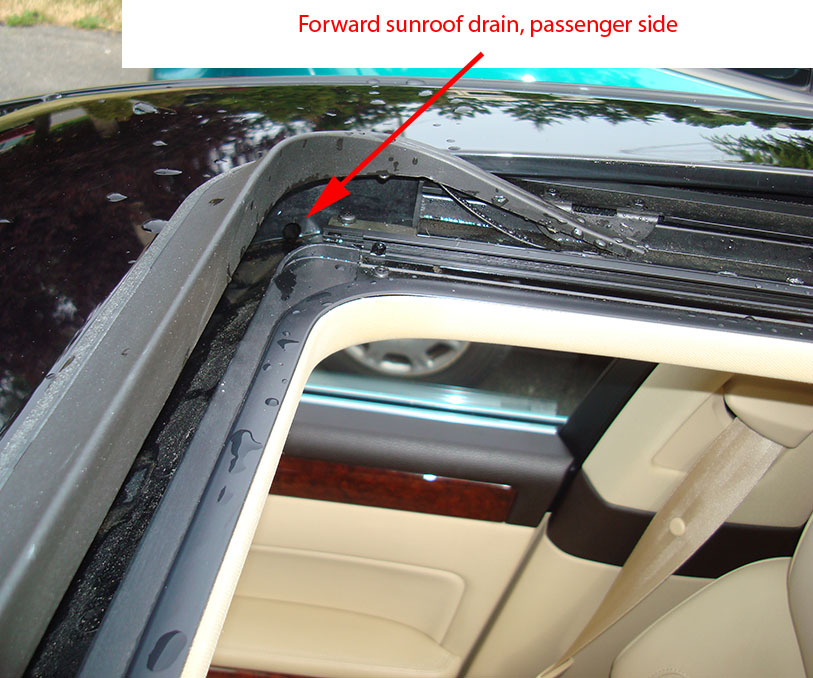
And blockages are not a rare or exceptional event they are an inevitable maintenance reality of panoramic roof ownership. Vehicles are parked under trees that drop leaves, twigs, pine needles, pollen, and seed pods. They are driven through dusty and muddy conditions.
The small drain holes at the base of the roof channels are easily obstructed by accumulated debris, and once blocked, the channels fill with standing water that has nowhere to go but inward. The result is water seeping through the headliner, dripping onto seats, soaking carpets, and reaching electrical components.
Water ingress in a modern car is a serious and expensive problem. Contemporary vehicles are densely packed with electronics control modules, wiring harnesses, sensor clusters much of which is located in or near the roof area.
Even a slow, minor leak sustained over weeks can cause corrosion of electrical contacts, trigger mysterious warning lights, promote mould growth in upholstery, and generate persistent musty odours that are extremely difficult to eliminate completely. In regions with heavy seasonal rainfall including much of India’s monsoon belt this vulnerability is an especially pressing and practical concern.
6. Noise, Rattles, and Wind Problems Will Follow You
There is a certain irony in paying a significant premium for a feature and then spending your drives being quietly irritated by the sounds it generates.
Yet for a meaningful proportion of panoramic roof owners, unwanted noise becomes a recurring frustration one that typically emerges gradually and tends to worsen progressively as the vehicle accumulates age and kilometres.
The sources of panoramic roof noise are varied and numerous. At highway speeds, wind noise is perhaps the most common complaint. The rubber seals surrounding the glass panels must maintain a perfect, gap-free contact with the glass at all speeds and in all temperature conditions.
New seals, freshly fitted at the factory, generally perform this task well. But rubber ages it hardens, loses its elasticity, develops micro-cracks, and begins to pull away from the surfaces it is meant to seal.
As gaps form, wind finds pathways, and the result is a persistent whistling or low-frequency whooshing that becomes particularly noticeable at motorway speeds. It sits just above your head, inescapable and infuriating.
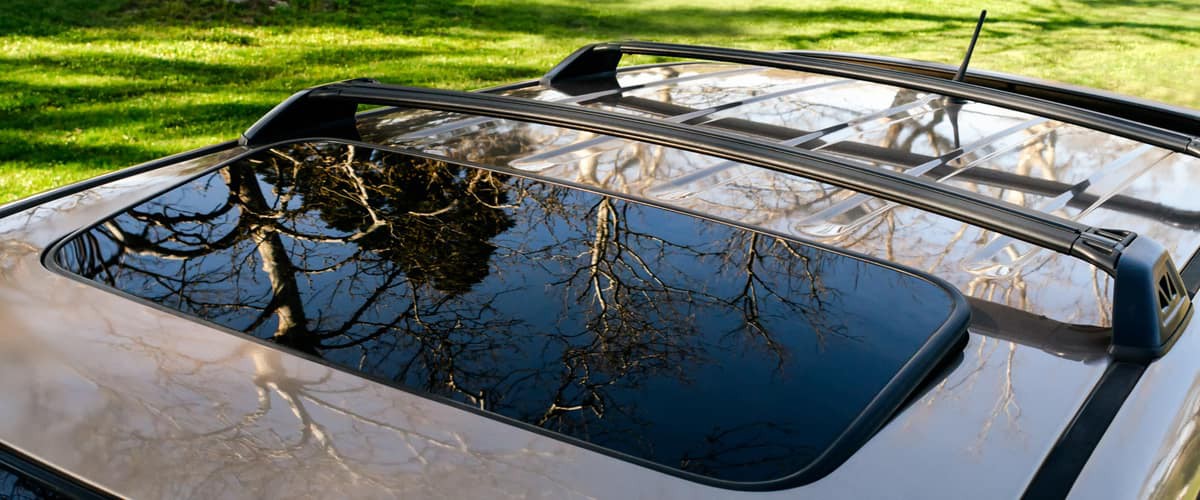
Beyond wind, the glass panels themselves can develop mechanical rattles as the vehicle ages and its body structure accumulates the fatigue of thousands of road miles.
The panoramic roof mechanism contains multiple components tracks, rollers, motor mounts, and frame sections each of which represents a potential rattle point as it loosens fractionally over time.
Road surfaces that would pass entirely unnoticed in a standard-roofed vehicle can trigger a symphony of clicks, ticks, and creaks from the roof assembly of a panoramic-equipped car. Because these noises originate directly above the occupants’ heads, they are psychologically difficult to tune out.
The altered aerodynamic profile of the vehicle also plays a role. Replacing a smooth, continuous metal roof with glass panels and their surrounding frames changes how air flows over the vehicle at speed.
Some panoramic-roofed vehicles develop a characteristic low-frequency booming or buffeting resonance, particularly when one or more windows are partially open an acoustic phenomenon that can cause genuine discomfort on longer journeys.
For drivers who value a serene, well-insulated cabin environment, this is a quality-of-life consideration that compounds noticeably over the life of the vehicle.
7. Repairs and Replacements Are Shockingly Expensive
Every component on a car will eventually need maintenance or replacement that is the universal reality of vehicle ownership. But not all repairs carry the same financial sting, and panoramic roof repairs consistently rank among the most expensive and most unpleasant surprises a car owner can encounter.
The costs involved range from mildly painful to genuinely shocking, depending on what has gone wrong and which vehicle it has gone wrong on.
The glass panels themselves represent the most dramatic potential expense. A full panoramic roof glass replacement whether necessitated by a spreading stone chip, a spontaneous shattering incident, hail damage, or a structural crack caused by body flex is a specialist job requiring model-specific parts.
Unlike a standard windscreen, which is an extremely high-volume replacement item available from multiple aftermarket suppliers at competitive prices, panoramic roof glass panels are complex, curved, often heated, and in many cases require original manufacturer components. This severely limits your options and drives costs upward.
Depending on the make, model, and specification of the vehicle, a full panoramic glass replacement can cost anywhere from the equivalent of one thousand to three thousand dollars or more. That is before labour costs are factored in, which are raised because the job typically requires extensive disassembly of the headliner and surrounding interior trim.
What appears from the outside to be a contained glass replacement job can easily become a full-day workshop undertaking with a bill that leaves owners questioning every decision that led them to choose the panoramic option.
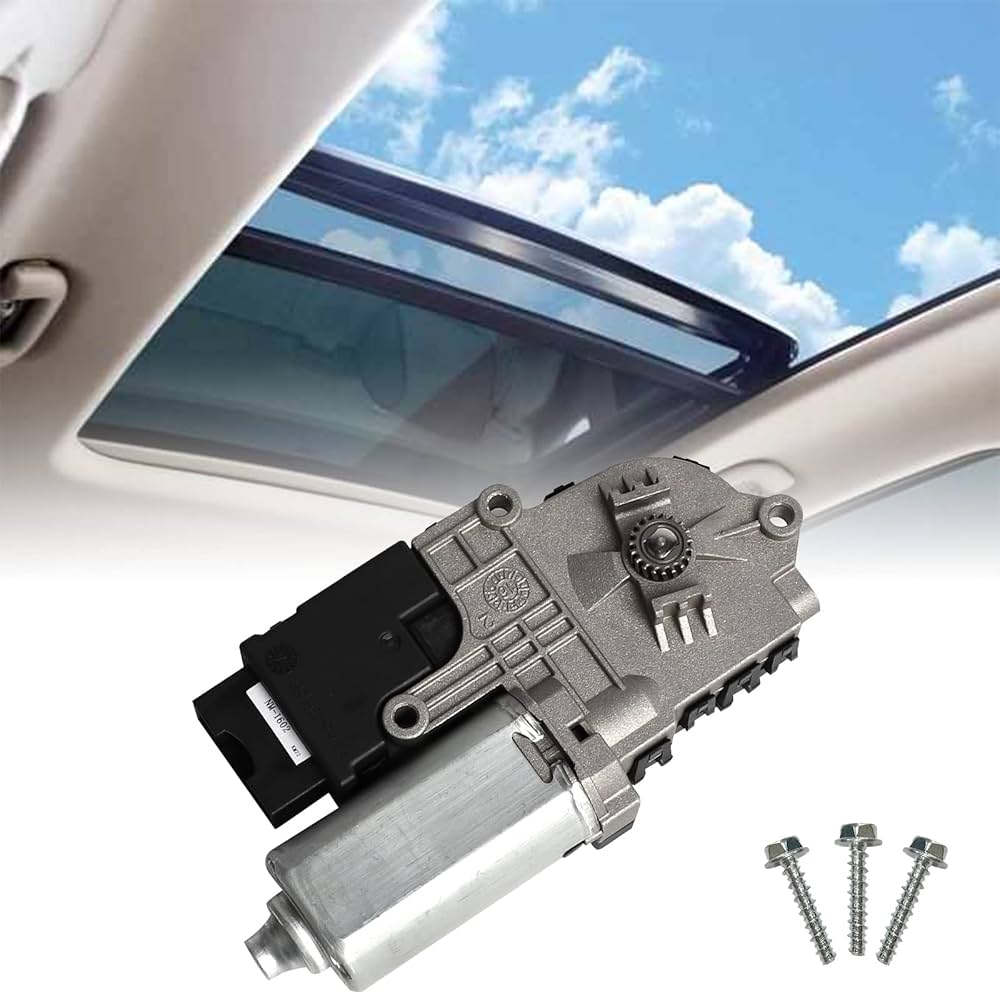
Motor failures add a further layer of expense. The electric motors that operate the glass panels and the sunshade are electromechanical components that operate repeatedly across the life of the vehicle and they do eventually fail.
A panoramic roof stuck in the open position is not a minor inconvenience; it is an urgent problem requiring immediate attention, since driving with large unsecured glass panels or an open cabin is both unsafe and impractical in adverse weather.
Motor replacements, combined with the labour required to access them, are rarely inexpensive. Buyers of used vehicles with panoramic roofs would be wise to factor the potential for this repair explicitly into their cost planning from day one.
8. It Weakens the Structural Integrity of the Vehicle
The roof of a car is far more than an aesthetic feature or a means of keeping rain out it is a fundamental structural component of the vehicle’s safety architecture. In a modern car engineered with passive safety as a priority, the roof plays a critical role during rollover accidents, maintaining the integrity of the passenger cell and preventing the cabin from collapsing inward onto the occupants.
When you remove a large section of that solid metal roof and replace it with glass panels, mechanism housing, and a reinforced frame, you are inevitably altering the structural dynamics of that safety system.
A panoramic sunroof is, in engineering terms, a large hole cut into the roof of the vehicle. Manufacturers do not simply cut that hole and leave it at that they reinforce the surrounding pillars and the frame that borders the panoramic opening to compensate for the removed material.
However, no amount of compensatory reinforcement can fully replicate the structural contribution of a continuous, uninterrupted metal roof. The compromise is built in from the design stage, and the structure will never match the rigidity of a fully sealed metal equivalent.
This matters most in rollover accidents, which, while statistically less frequent than frontal or side-impact collisions, are disproportionately severe in their consequences. During a rollover, the roof must resist the crushing forces exerted by the vehicle’s own weight to maintain the survival space around the occupants.
A structurally weakened roof increases the risk of that space being compromised. For families carrying children who are among the most vulnerable occupants in rollover scenarios this is a sober consideration that deserves honest weight in the purchasing decision, regardless of how unlikely such an event may statistically be.
There is also the matter of body rigidity. A stiffer body structure contributes to sharper handling responses, more precise steering feel, and better isolation of road noise and vibration.
By introducing a large aperture into the roof, manufacturers must work harder elsewhere in the structure to maintain the desired level of chassis stiffness and in some cases, particularly on lower-cost vehicles where engineering budgets are tighter, the result is a body that feels marginally less solid than its steel-roofed sibling.
It is a subtle difference in many modern cars, but it is a real one, and it is yet another hidden cost of that appealing expanse of glass overhead.
Also Read: Top 10 Classic Engines Known for Their Unique Exhaust Notes
