
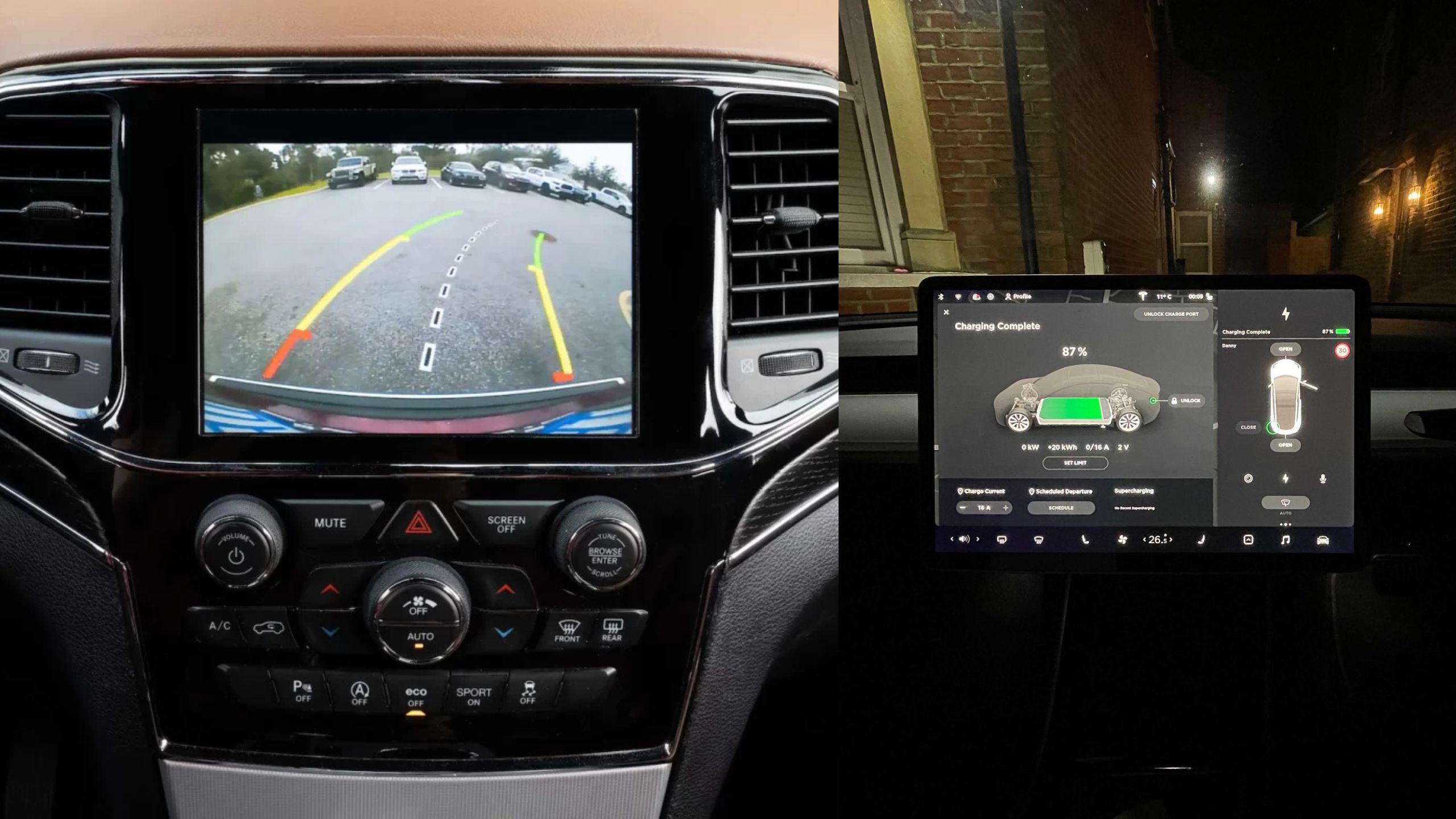
The modern automobile has evolved far beyond a mere mode of transportation. Today, the cockpit of a car is as much a digital workspace and entertainment hub as it is a driving environment.
At the center of this transformation sits the infotainment system the nerve center that connects the driver and passengers to navigation, music, communications, and an ever-expanding ecosystem of smartphone apps.
For years, connecting a smartphone to a car’s infotainment system meant fumbling with a cable every single time you got behind the wheel. That frustrating ritual is now firmly in the past, thanks to the rise of full wireless integration.
Full wireless integration means your iPhone or Android device connects to your car’s display automatically and instantly the moment you start the engine, no cables, no manual pairing, no delays.
Through wireless Apple CarPlay and wireless Android Auto, drivers gain access to turn-by-turn navigation, music streaming, voice assistants like Siri and Google Assistant, hands-free calling, messaging, and much more all projected cleanly onto the car’s screen and controllable through touchscreens, steering wheel buttons, or voice commands.
Both platforms now represent the gold standard for in-car connectivity. The question is no longer whether a system supports wireless integration, but how well it does so. In this guide, we break down the ten best infotainment systems that deliver the most seamless, feature-rich, and reliable wireless integration experience available today.
1. BMW iDrive 8.5
When it comes to blending luxury with cutting-edge technology, BMW’s iDrive system has long been a benchmark for the automotive industry. The latest iteration, iDrive 8.5, represents the pinnacle of what BMW has built over more than two decades of infotainment refinement, and its wireless integration capabilities are nothing short of exceptional.
Every 2025 BMW model from the compact 1 Series to the flagship 7 Series and X7 SUV comes equipped with wireless Apple CarPlay and wireless Android Auto as standard features.
This is not a premium add-on or an optional upgrade; it is built into the core DNA of the iDrive 8.5 platform. The wireless system is engineered to fire up automatically the moment you enter the vehicle.
Your iPhone or Android phone appears on BMW’s crisp display without pressing a single button. This automatic, hands-free connection experience is the kind of seamless interaction that has made iDrive-equipped BMWs among the most praised vehicles in the wireless connectivity space.
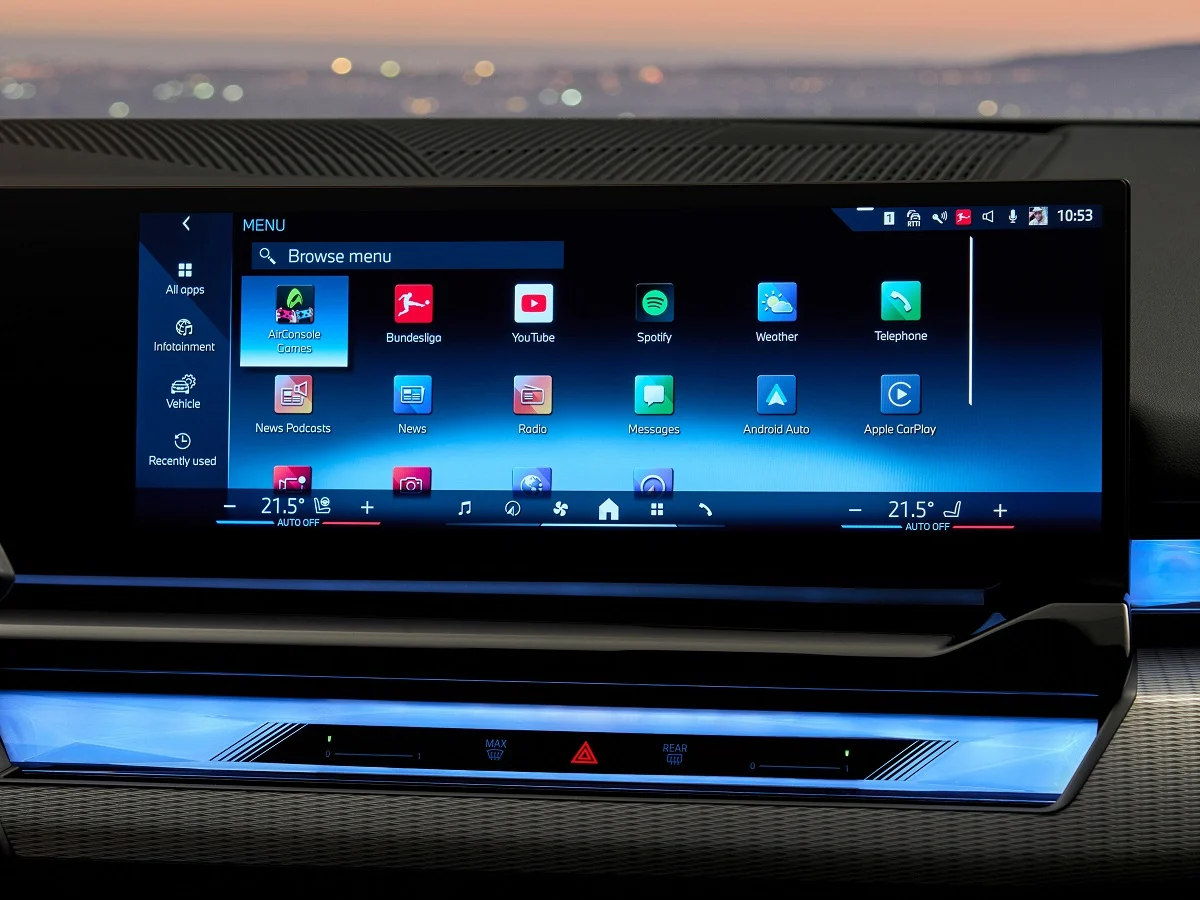
What distinguishes iDrive 8.5 from many rivals is that it does not force you to choose between the car’s native interface and your smartphone’s ecosystem. The two coexist intelligently, with BMW’s own navigation, vehicle controls, and driver settings remaining fully accessible while CarPlay or Android Auto runs simultaneously in split-screen or full-screen mode.
This flexibility allows drivers to use Google Maps through CarPlay while simultaneously monitoring vehicle data through BMW’s native instrument cluster interface.
The display hardware underpinning iDrive 8.5 is equally impressive. BMW pairs the software with a curved, panoramic display unit that integrates a 12.3-inch digital instrument cluster and a 14.9-inch central infotainment touchscreen into a single sweeping visual plane.
The screens are bright, anti-reflective, and highly responsive to touch. Physical controls have been streamlined but not eliminated, striking a balance that many pure touchscreen systems fail to achieve.
Voice recognition through iDrive 8.5 is handled by BMW’s own Intelligent Personal Assistant, triggered by saying “Hey BMW.” This works in tandem with Siri via CarPlay or Google Assistant via Android Auto, giving drivers multiple voice control pathways.
Wireless charging is integrated as standard on most models, and over-the-air software updates keep the system current without requiring dealer visits. For those who want wireless integration done with German precision and luxury craftsmanship, iDrive 8.5 remains the definitive choice.
2. Mercedes-Benz MBUX Generation 2
Mercedes-Benz has always positioned itself as a technology leader in the luxury automotive segment, and its MBUX platform lives up to that reputation convincingly.
The second generation of MBUX, found across most of the current Mercedes lineup from the compact GLA to the flagship S-Class, delivers wireless Apple CarPlay and wireless Android Auto as standard features, wrapped in one of the most sophisticated AI-driven user interfaces in any production vehicle today.
What immediately sets MBUX apart from rivals is its “Hey Mercedes” natural language processing system. Unlike older voice recognition setups that required specific command phrases, MBUX understands genuine conversational speech, allowing drivers to say things like “I’m cold” to have the system automatically adjust the climate control without going through menus.
This contextual intelligence extends across navigation, media, communication, and vehicle settings, making the experience feel remarkably intuitive.
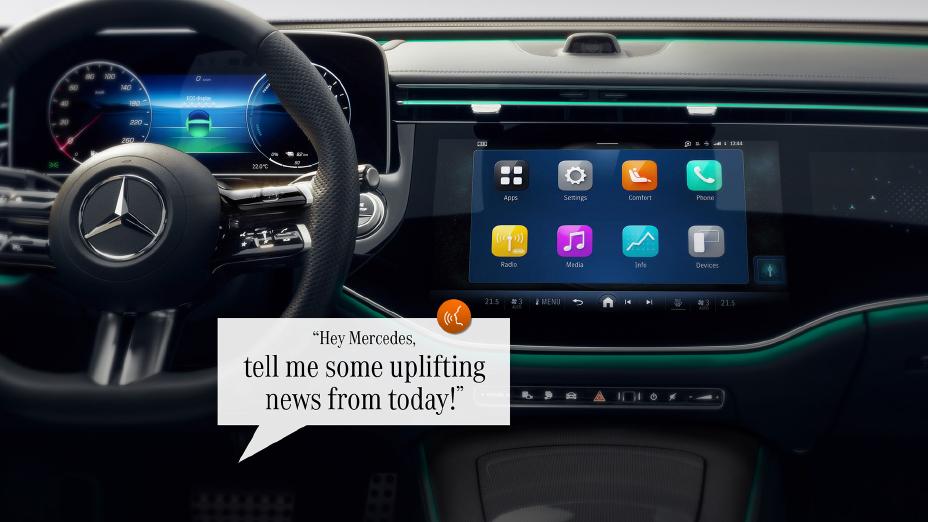
The hardware itself is remarkable. The flagship configuration found in the S-Class features a 12.8-inch OLED central display, a 12.3-inch digital instrument cluster, and an optional 12.3-inch passenger display all operating as a unified system called the Hyperscreen.
The standard MBUX setup across the broader lineup typically features a widescreen cockpit arrangement with high-resolution AMOLED displays that offer deep blacks and vivid colors, giving the interface a premium visual quality that very few rivals can match.
Wireless CarPlay integration within MBUX is handled elegantly. The system automatically detects your iPhone via Bluetooth, then initiates a Wi-Fi Direct connection for high-bandwidth projection.
The CarPlay interface maps cleanly onto the large display, and switching between MBUX’s native features and CarPlay is accomplished with a simple swipe. For Android users, MBUX similarly connects wirelessly and provides full Google Assistant access through the car’s microphone and speaker system.
What truly raises MBUX in the wireless integration context is its learning capability. The system uses machine learning to understand individual driver preferences over time including preferred apps, navigation destinations, seat positions, and media choices and begins making proactive suggestions.
Mercedes has also ensured that wireless charging is standard across most MBUX-equipped models, and the system includes an embedded cellular modem for always-on connectivity, enabling real-time traffic, over-the-air updates, and remote vehicle control. MBUX Generation 2 is not just an infotainment system but a genuinely intelligent co-pilot.
3. Google Built-In on Volvo and Polestar
While Apple CarPlay and Android Auto are smartphone projection systems that mirror your phone’s interface onto the car’s screen, Google’s Android Automotive OS takes an entirely different approach the full Android operating system is built directly into the car, operating independently of any connected phone.
Volvo and Polestar are the most prominent adopters of this Google Built-In platform, and the result is one of the most powerful and seamlessly integrated infotainment experiences available anywhere.
The Polestar 2 and Polestar 3 feature sharp digital displays, a native “Hey Google” voice assistant, Google Maps running directly on the hardware, and access to Google Play apps without needing a phone at all.
Volvo’s current lineup, including the XC60, XC90, and fully electric EX90, runs the same Google Built-In platform. Because Android Automotive runs natively in the car, it does not depend on a connected smartphone for navigation, music apps, or Google Assistant voice commands. This means that even if you leave your phone at home, the car’s infotainment system functions fully and intelligently.
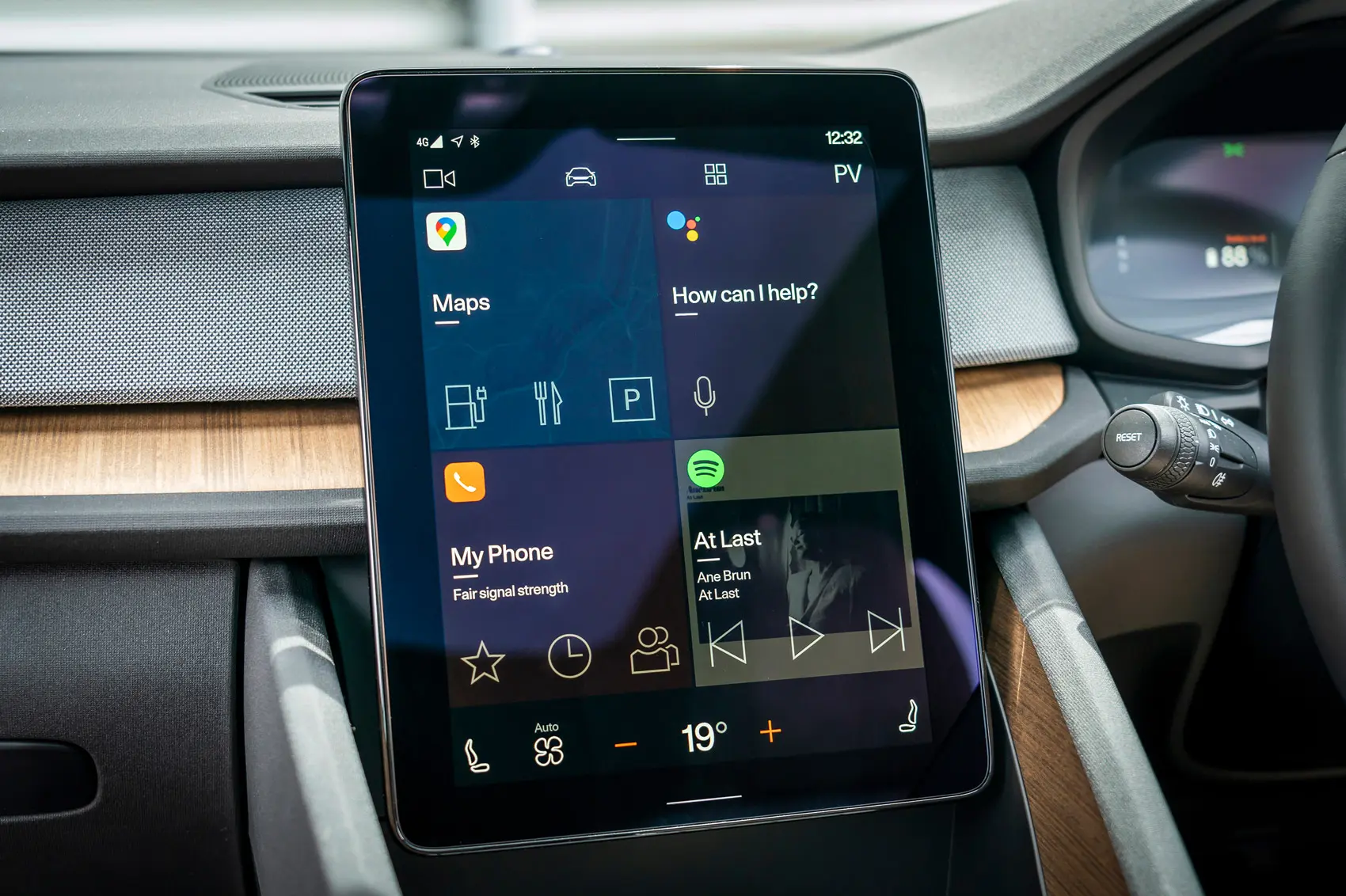
For wireless integration, the Google Built-In system still supports both wireless Apple CarPlay and wireless Android Auto, making it genuinely compatible with both iPhone and Android users.
The difference is that Android users get a uniquely layered experience their Google account is already logged into the car, contacts and preferences are synced, and adding wireless Android Auto on top simply mirrors the phone for any phone-specific apps not available natively. The seamlessness of this integration is unmatched in the Android ecosystem.
The system supports over-the-air updates to both the Google applications and the underlying vehicle software. Google Maps runs natively with real-time traffic data and excellent lane guidance.
Google Assistant can control both smartphone functions and native vehicle features like climate, seat heating, and media selection through natural voice commands.
Volvo’s implementation pairs this powerful software platform with clean, Scandinavian interface design uncluttered menus, a logical information hierarchy, and a portrait-oriented display that prioritizes one function at a time without overwhelming the driver.
For buyers deeply embedded in the Google ecosystem who want a car whose infotainment system feels like a natural extension of their digital life, this platform is genuinely transformative.
4. Ford SYNC 4A
Ford’s SYNC 4A infotainment system represents the American automaker’s most capable and polished infotainment platform to date, and it brings wireless Apple CarPlay and wireless Android Auto to a broad range of vehicles at price points that make the technology accessible to mainstream buyers.
Found in the Ford F-150, Mustang Mach-E, Explorer, Bronco, and Edge among others, SYNC 4A proves that excellent wireless integration does not require a luxury price tag.
The hardware centerpiece of SYNC 4A on flagship models is an enormous 15.5-inch portrait-oriented touchscreen, one of the largest displays offered in any non-luxury vehicle.
A 12-inch world display is also available on select models. Both screens are highly responsive, feature excellent brightness levels, and handle the wireless CarPlay and Android Auto interfaces without any perceptible lag. The sheer screen real estate makes going through the wireless apps a particularly comfortable and driver-friendly experience.
SYNC 4A features over-the-air update capability, meaning Ford can push software improvements, new features, and bug fixes to the vehicle remotely without requiring a dealer visit. This has allowed Ford to meaningfully improve the wireless integration experience post-launch.
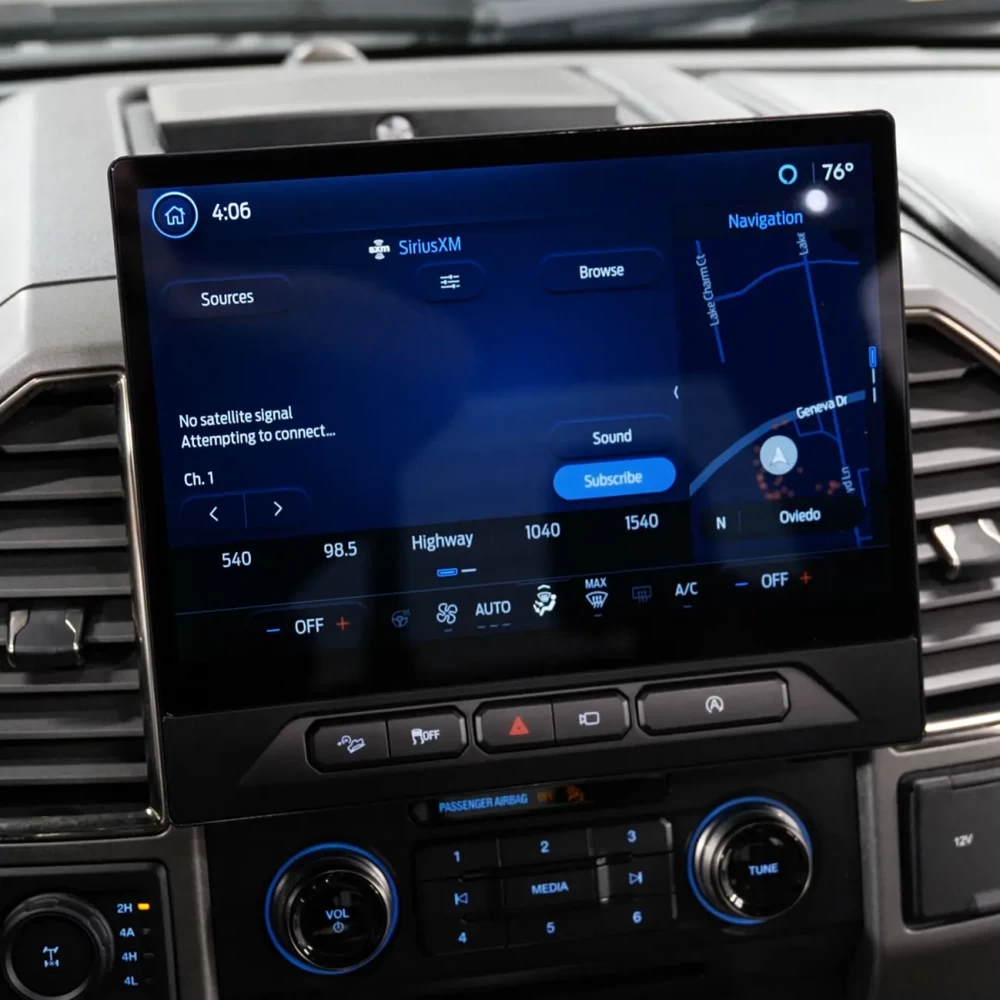
The system also integrates a cloud-based Amazon Alexa voice assistant, which can control smart home devices, check weather, and manage calendar events alongside traditional navigation and media functions.
The wireless connection initiation in SYNC 4A is fast and reliable. Once a phone is initially paired, subsequent connections are automatic and typically complete within 10 to 15 seconds of starting the vehicle.
The system supports multiple phone profiles, making it easy for different drivers to connect their own devices without manual configuration. Split-screen multitasking allows drivers to run the car’s native navigation alongside a CarPlay music app simultaneously.
Ford has also integrated a Wi-Fi hotspot function into SYNC 4A-equipped vehicles, providing up to 10 connected devices with mobile internet access. Wireless charging pads are available across most SYNC 4A vehicles, completing the fully cable-free cockpit experience.
For everyday drivers who want reliable, fast, and feature-rich wireless integration without paying European luxury prices, SYNC 4A is one of the most compelling packages available in any segment.
Also Read: 10 Cars With the Most Unusual Engine Placements in History
5. Stellantis Uconnect 5
The Uconnect 5 infotainment system powers a wide range of vehicles under the Stellantis umbrella, including Jeep, Ram, Dodge, Chrysler, and Alfa Romeo.
As the fifth generation of Stellantis’s in-house infotainment platform, Uconnect 5 brings a dramatically improved experience over its predecessors, with wireless Apple CarPlay and wireless Android Auto now available across a broad swath of the lineup, from the Jeep Grand Cherokee to the Ram 1500.
The Uconnect 5 platform runs on a Qualcomm Snapdragon processor, which provides the computational muscle to handle wireless phone projection, native navigation, media playback, and connected services simultaneously without slowdowns or stuttering.
This hardware upgrade compared to earlier Uconnect generations is one of the most noticeable improvements in real-world daily use. The interface loads quickly, transitions between menus smoothly, and maintains stable wireless connections even on longer drives.
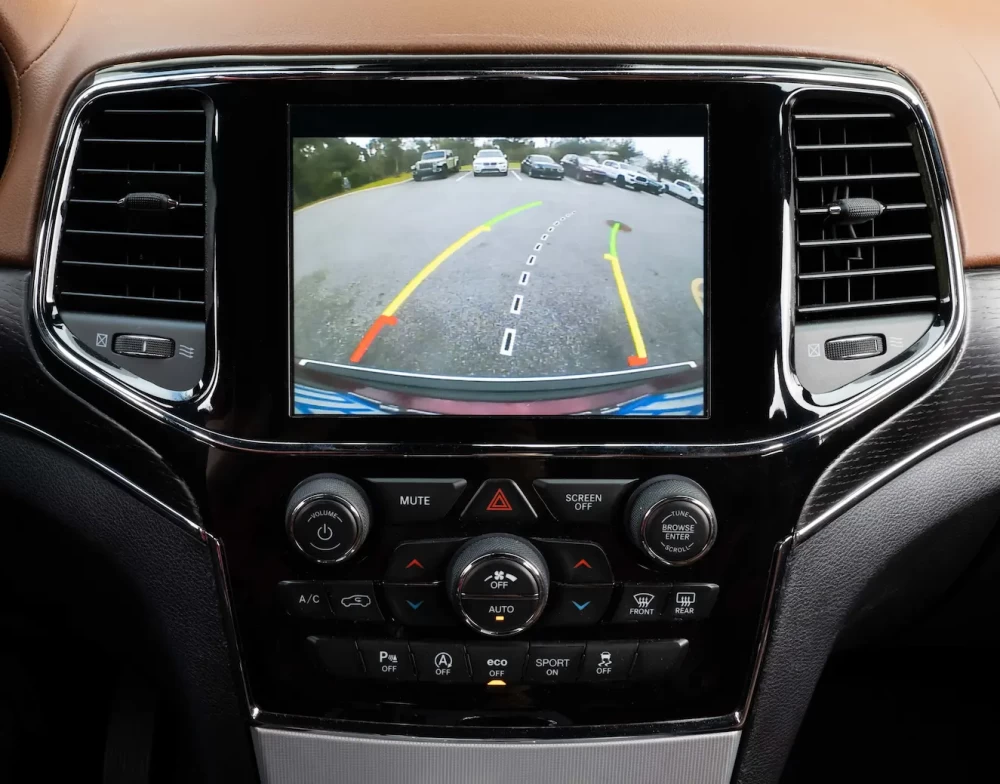
The system is built on a new Android-based operating system, though the interface has been custom-skinned to feel distinctly Uconnect rather than generic Android.
The result is a platform that benefits from the flexibility and app ecosystem of Android while maintaining the brand identity and vehicle-specific control integration that Stellantis demands.
Navigation is handled natively with HERE maps, while wireless CarPlay and Android Auto provide access to Google Maps, Apple Maps, and Waze as alternatives.
Uconnect 5 supports personalized driver profiles that store infotainment preferences, seating positions, mirror settings, and connectivity configurations. Up to three driver profiles can be stored, and the system automatically loads the correct profile based on the connected phone.
This means wireless CarPlay loads with your preferred layout and frequently used apps every time you get in, without any manual setup required whatsoever.
The available display sizes range from 10.1 inches to 12 inches depending on the vehicle, and Jeep Grand Cherokee buyers can specify a McIntosh premium audio system that transforms wireless music streaming into a genuinely audiophile-grade experience.
Amazon Alexa is also integrated natively for smart home and hands-free productivity functions. Uconnect 5 is a well-rounded, dependable, and feature-rich wireless integration platform at competitive price points.
6. General Motors Infotainment 3 Premium with Google Built-In
General Motors has made significant strides in its infotainment offerings, and the Infotainment 3 Premium system now found in the Chevrolet Silverado, Tahoe, Suburban, GMC Sierra, Yukon, and Cadillac Escalade represents a serious effort to bring class-leading connected technology to America’s most popular vehicle segments.
The system combines Google Built-In native apps with full wireless Apple CarPlay and wireless Android Auto support, making it one of the most versatile wireless platforms in any truck or full-size SUV.
Google’s native integration means that Google Maps, Google Assistant, and Google Play apps are built directly into the infotainment hardware and operate without a connected phone.
For drivers who use Google services extensively, this means navigation, music through YouTube Music, podcasts through Google Podcasts, and full voice control are always available even when the phone is in a bag in the back seat or left at home entirely.
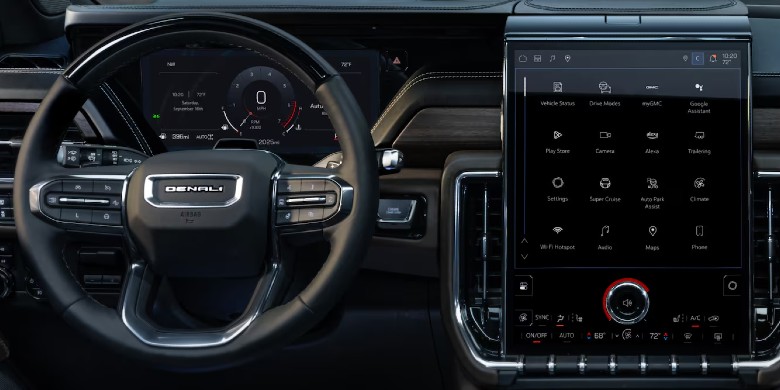
Wireless Apple CarPlay and Android Auto sit on top of this native Google layer, so iPhone users are not left behind. The wireless connection is initiated through Bluetooth and maintained over Wi-Fi Direct, offering stable and responsive projection.
GM’s system also integrates OnStar, the company’s long-running connected services platform that provides automatic crash response, stolen vehicle assistance, real-time navigation updates, and remote vehicle diagnostics through a dedicated cellular connection built into the vehicle.
The display setup varies by model but typically features a large central touchscreen ranging from 13.4 inches in the Silverado to the stunning 16.9-inch screen in the Cadillac Escalade, which is one of the largest infotainment displays available in any production vehicle globally.
The Escalade’s curved OLED display is particularly spectacular, wrapping across the dashboard and integrating the instrument cluster into a single visual unit of extraordinary quality.
Wireless charging and a built-in Wi-Fi hotspot round out the cable-free experience. Over-the-air software updates ensure the system receives regular improvements, and GM’s integration of Google services gives this platform a future-forward feel that positions it well for continued wireless technology evolution. For truck and full-size SUV buyers, this system is the wireless integration benchmark.
7. Rivian Infotainment System
Rivian has emerged as one of the most innovative electric vehicle manufacturers, and its infotainment system reflects that spirit of clean-sheet thinking.
Unlike legacy automakers who have adapted existing infotainment platforms over many generations, Rivian built its entire digital cockpit from scratch with modern wireless integration as a core design principle rather than an afterthought.
The R1T pickup truck and R1S SUV feature a 15.6-inch central touchscreen and a 6.8-inch driver display. Wireless Apple CarPlay and wireless Android Auto are supported natively, connecting automatically each time the driver enters the vehicle.
Because Rivian’s software architecture is modern and built entirely on cloud-connected foundations, the wireless integration experience feels tighter and more cohesive than many systems from established automakers working within older technical frameworks.
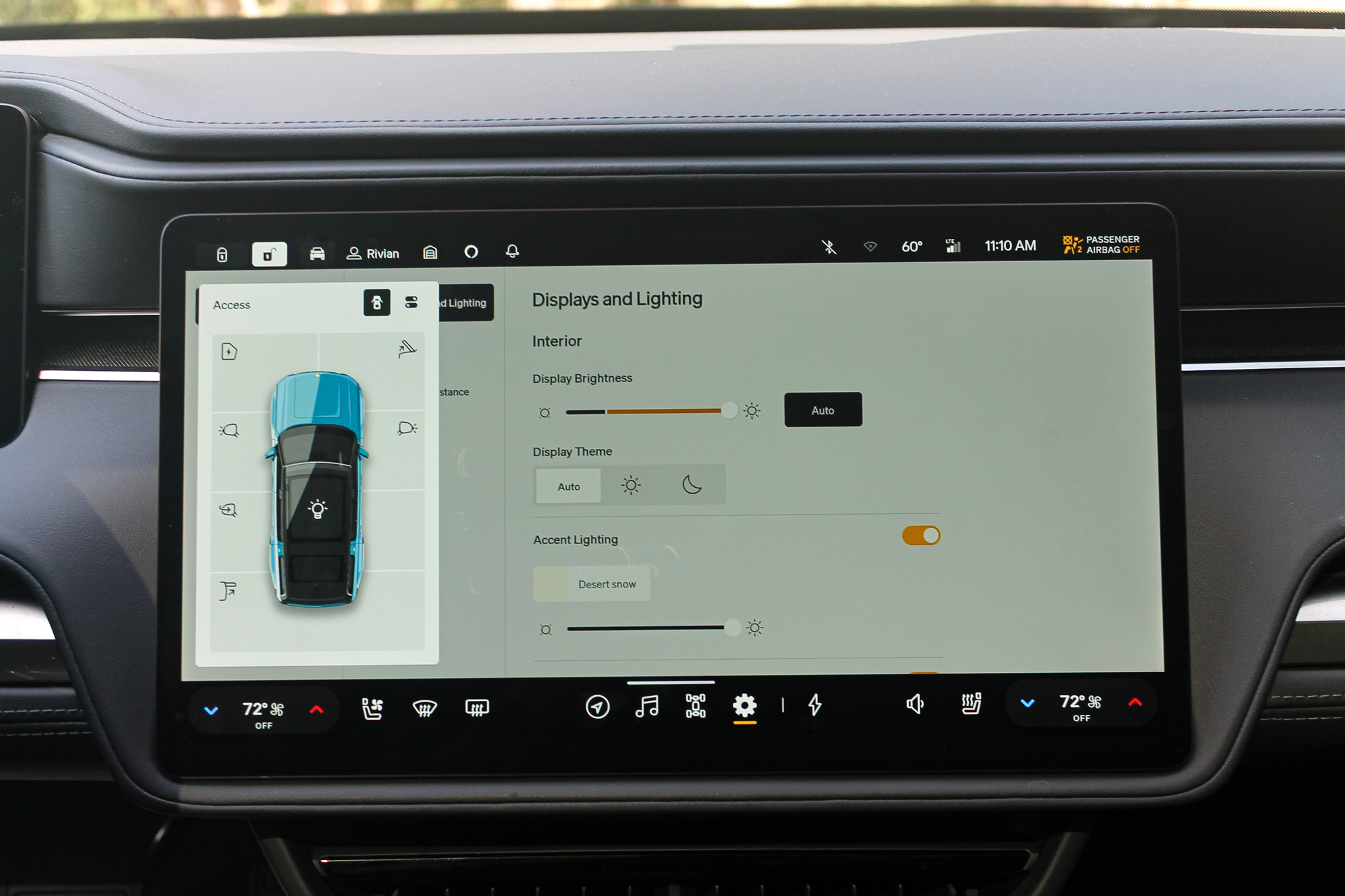
Rivian’s native interface is clean, logical, and well-organized, drawing inspiration from consumer electronics design rather than traditional automotive UI conventions.
Vehicle controls including suspension height, drive mode selection, Camp Mode configuration, and off-road performance metrics are all accessible through the same touchscreen that handles wireless CarPlay and Android Auto. The transition between the native interface and wireless phone projection modes is smooth and intuitive.
Over-the-air software updates are a core pillar of the Rivian ownership experience. The company pushes regular updates that add new features, refine the interface, and improve wireless connectivity performance.
Several updates since the vehicles launched have meaningfully improved the reliability and speed of wireless CarPlay and Android Auto connections, demonstrating a genuine commitment to continuously improving the wireless integration experience over the life of the vehicle.
Wireless charging is built into the center console as standard, keeping the cable-free cockpit concept consistent throughout. The system also integrates Rivian’s own trip planning tools, which account for charging stops along routes and provide integration with Rivian’s own charging network.
For buyers who want wireless integration paired with the most thoughtfully designed electric adventure vehicle on the market, Rivian’s system is a compelling and genuinely fresh option.
8. Tesla Infotainment System
No list of the best infotainment systems would be complete without Tesla, the company that arguably did more than any other to redefine what in-car technology could look and feel like.
Tesla’s infotainment system, centered around a massive central touchscreen, pioneered the always-connected, over-the-air updated, software-defined vehicle concepts that are now industry standards largely because Tesla demonstrated they were possible.
Tesla’s system is unique in that it does not support Apple CarPlay or Android Auto, wireless or otherwise. Instead, Tesla has built a comprehensive native ecosystem of its own music through Spotify, Apple Music, and Tidal; navigation through Tesla’s own mapping system powered by Google Maps data; web browsing; gaming; video streaming; and deep integration with Tesla’s Autopilot and Full Self-Driving systems.
The wireless integration here is device-agnostic but phone-independent, functioning entirely from the car’s own hardware and cellular connection.
What Tesla offers in the wireless space is Bluetooth audio streaming from any smartphone, seamless phone-as-key functionality, and a Wi-Fi connection for home network updates and internet access.
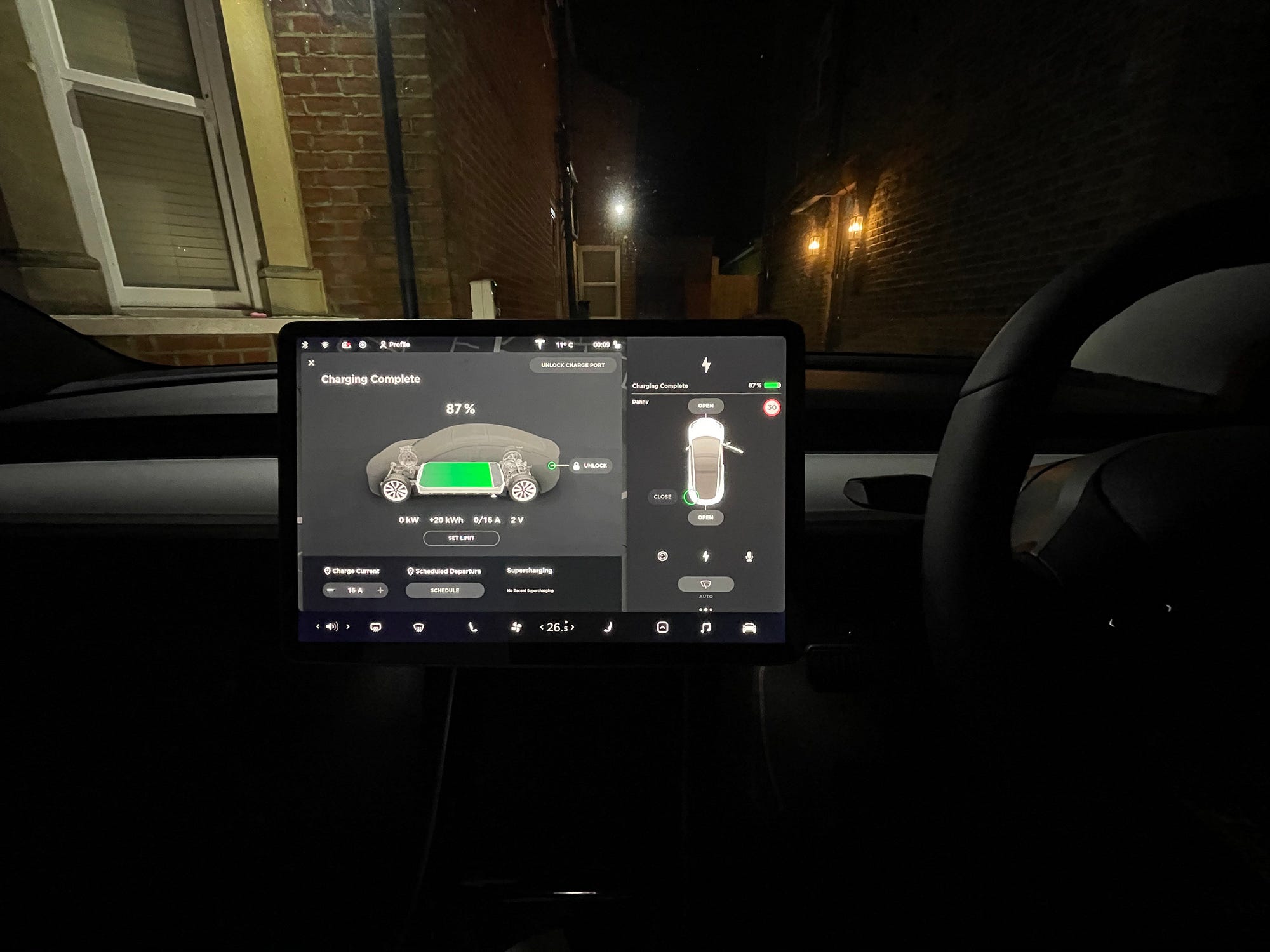
The cabin camera system, integrated controls, and over-the-air updates mean that Tesla’s system is arguably the most complete and self-contained infotainment ecosystem of any production car it simply achieves wireless integration on its own terms rather than through CarPlay or Android Auto.
The display hardware is extraordinary the Model S and Model X feature a 17-inch world touchscreen, while the Model 3 and Model Y use a 15.4-inch central unit.
Response times are fast, graphics are sharp, and the system’s processing power handles simultaneous tasks without hesitation. Tesla continues to add features through over-the-air updates, including gaming titles, streaming services, and interface refinements.
For buyers who are willing to trade the familiarity of CarPlay or Android Auto for a deeply integrated, constantly evolving native ecosystem, Tesla’s infotainment system represents one of the most ambitious and complete wireless integration visions in the automotive world today.
9. Hyundai and Kia ccNC (Connected Car Navigation Cockpit)
Hyundai and Kia have undergone a remarkable transformation over the past decade, evolving from budget-focused automakers into genuine design and technology leaders.
Their shared ccNC infotainment platform, debuted on the Hyundai Ioniq 6, Ioniq 5, Kia EV6, and Kia Sportage among others, delivers wireless Apple CarPlay and wireless Android Auto alongside a native connected navigation system that rivals the best in the industry all at price points that make the technology highly accessible.
The ccNC platform features an innovative curved display setup in flagship models a sweeping 12-inch digital instrument cluster flows seamlessly into a 12-inch central touchscreen, creating a panoramic cockpit that feels genuinely premium.
The interface design is clean and modern, with a logical information hierarchy and smooth animations that give the system a high-quality feel well above what the price point might suggest.
Wireless CarPlay and Android Auto connect quickly and reliably on ccNC-equipped vehicles. The system uses the standard Bluetooth-to-Wi-Fi Direct connection protocol, and once initially paired, subsequent connections are automatic.
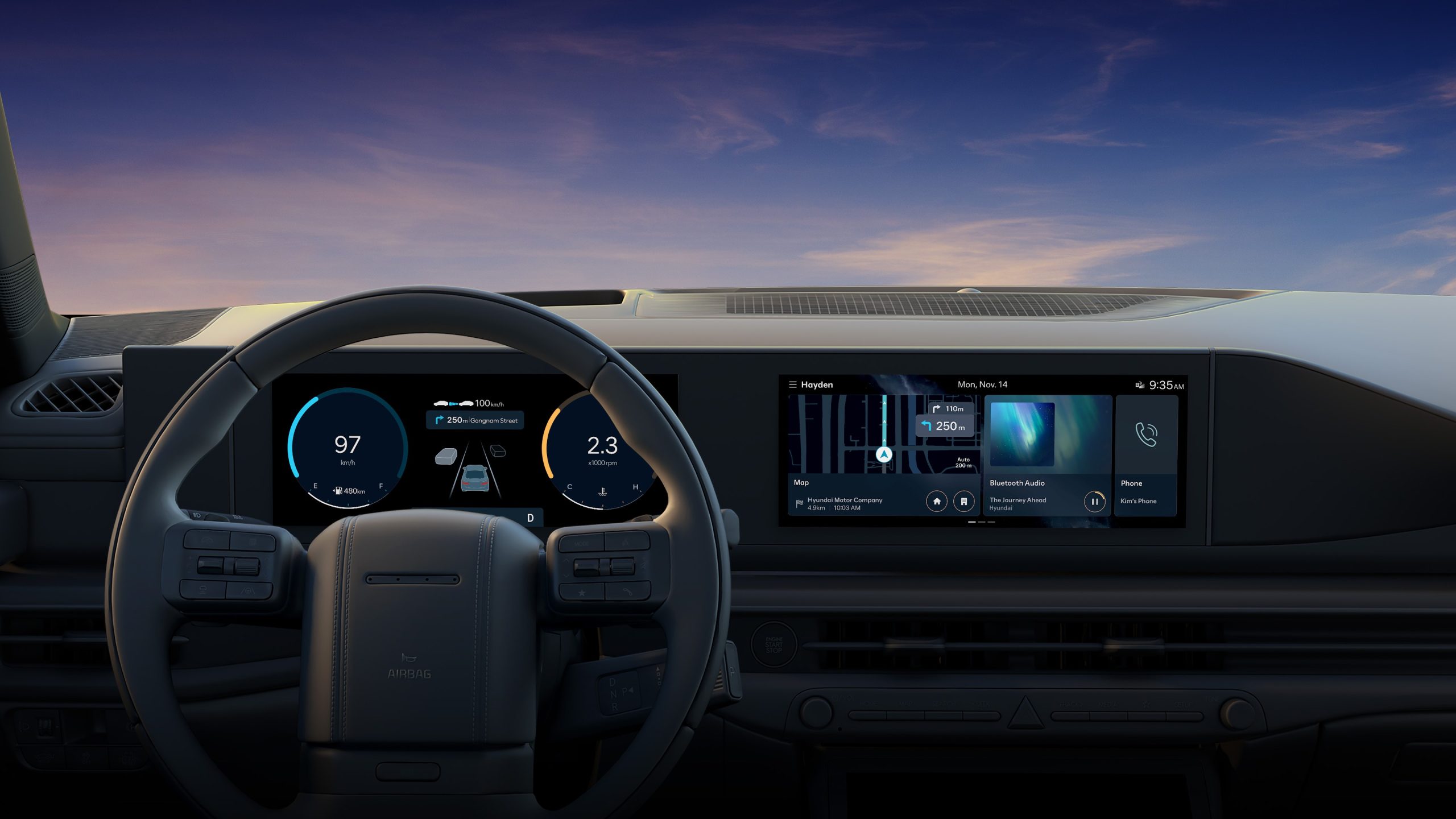
The display quality is excellent, with high resolution and good brightness levels ensuring that CarPlay and Android Auto interfaces are comfortable and readable even in direct sunlight. Navigation maps in both platforms look particularly crisp on the high-quality screens.
The native navigation system built into ccNC is powered by TomTom mapping and includes real-time traffic updates, over-the-air map updates, and for electric vehicle models, integrated charging station routing with range prediction.
This means EV drivers have access to genuinely useful native navigation tools while also having the option to switch to Google Maps or Apple Maps through their wireless connection.
Hyundai and Kia also provide a robust over-the-air update infrastructure, delivering software improvements regularly without dealer visits. Features like remote start, climate pre-conditioning, charging scheduling, and vehicle status monitoring are all available through the Hyundai Bluelink or Kia Connect smartphone apps. For buyers seeking wireless integration excellence at a fair price, the ccNC platform is one of the strongest value propositions anywhere in the market.
10. Cadillac User Experience (CUE) with Google Built-In
Cadillac’s latest User Experience infotainment platform, known as CUE, represents a major generational leap from the system’s earlier versions and stands as one of the most visually striking and technically capable wireless integration platforms in the American luxury segment.
Found in the Cadillac Lyriq, Escalade, CT5, and XT5, the latest CUE system combines Google Built-In native capability with full wireless Apple CarPlay and wireless Android Auto support, delivering a comprehensive wireless ecosystem for both iPhone and Android users.
The flagship showcase of CUE’s hardware ambition is the Cadillac Escalade’s interior technology setup a 38-inch curved OLED display that serves as both the instrument cluster and the central infotainment screen, creating one of the most visually commanding cockpit environments in any production vehicle regardless of price.
The display is curved, vivid, and deeply immersive, and it provides an extraordinary canvas for wireless CarPlay and Android Auto interfaces to operate on.
The Cadillac Lyriq, the brand’s first dedicated electric vehicle, pairs a 33-inch curved LED display with the Google Built-In platform, giving it native Google Maps, Google Assistant, and Google Play app access alongside wireless phone projection.
The electric vehicle’s native navigation integrates charging stop planning and real-time range updates, while wireless CarPlay and Android Auto provide familiar smartphone interfaces for those who prefer them.
Google Assistant in the CUE system can control vehicle functions including climate control, seat adjustments, navigation, and media selection through natural language commands, without requiring the driver to touch the screen at all.
This voice-first capability is particularly well-suited to the wireless integration philosophy the best wireless experience is one where you rarely need to interact with the hardware at all.
Wireless charging, a Wi-Fi hotspot, and OnStar connected services round out the package. Over-the-air updates keep both the Google software layer and Cadillac’s native vehicle systems current.
Super Cruise, GM’s hands-free highway driving assistance system available on multiple Cadillac models, integrates deeply with the CUE navigation system, creating a highly automated and wirelessly connected driving experience that represents the leading edge of what modern automotive technology can offer. Cadillac’s CUE platform proves that American luxury has fully embraced the wireless future.
Also Read: Top 10 Classic Engines Known for Their Unique Exhaust Notes
