
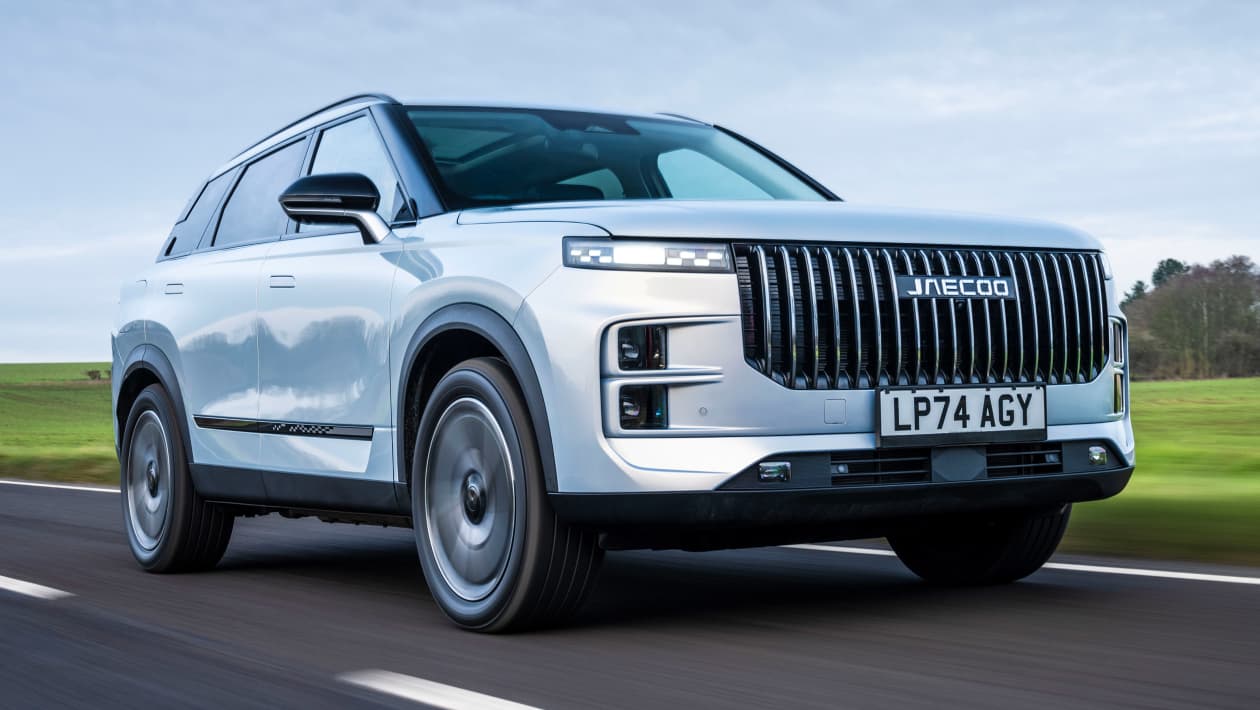
The Treasury’s “easement,” introduced to shield plug-in hybrid drivers from impending company car tax increases, has inadvertently created an opening for some of the highest-emitting and most premium PHEV models.
New Euro 6e-bis emissions regulations took effect across the EU on 1 January, bringing with them a revised method for calculating CO2 output for plug-in hybrids. Under this approach, a PHEV’s electric-only usage is assumed to represent a significantly smaller portion of real-world driving.
As a result, vehicles that are mechanically unchanged will still receive higher CO2 figures as manufacturers retest them to the updated requirements ahead of the 31 December deadline.
This presents a substantial issue in the UK, where published CO2 figures have helped create a PHEV fleet share of around 80%, based on Department for Transport data.
PHEVs producing between 1 and 50g/km of CO2 fall into one of five low company-car tax bands, currently ranging from 2% to 15%, depending on electric-only driving range. These bands are a key reason why drivers enjoy notably reduced benefit-in-kind (BIK) tax bills.
For instance, a 20% income taxpayer pays just £36 in BIK tax for a Volkswagen Golf eHybrid Match, compared with £151 for the equivalent petrol version.
Since Brexit, the UK’s emissions rules have diverged from those in the EU. Here, manufacturers are only required to meet the older Euro 6d-ISC-FCM standard that applied when the UK exited the EU.
However, because Euro 6e compliance does not substantially change CO2 results, most vehicles have been engineered to meet the current EU standards anyway.
Euro 6e-bis, however, would have forced manufacturers either to retest vehicles under the older UK standards or accept reduced tax advantages.
For example, the Vauxhall Astra Sports Tourer GS PHEV jumps from 30g/km to 51g/km of CO2 under Euro 6e-bis with no physical changes. That pushes it from the 13% tax band to 16%, raising a 20% taxpayer’s BIK bill from £5019 to £8532 over three years, a £3522 increase.
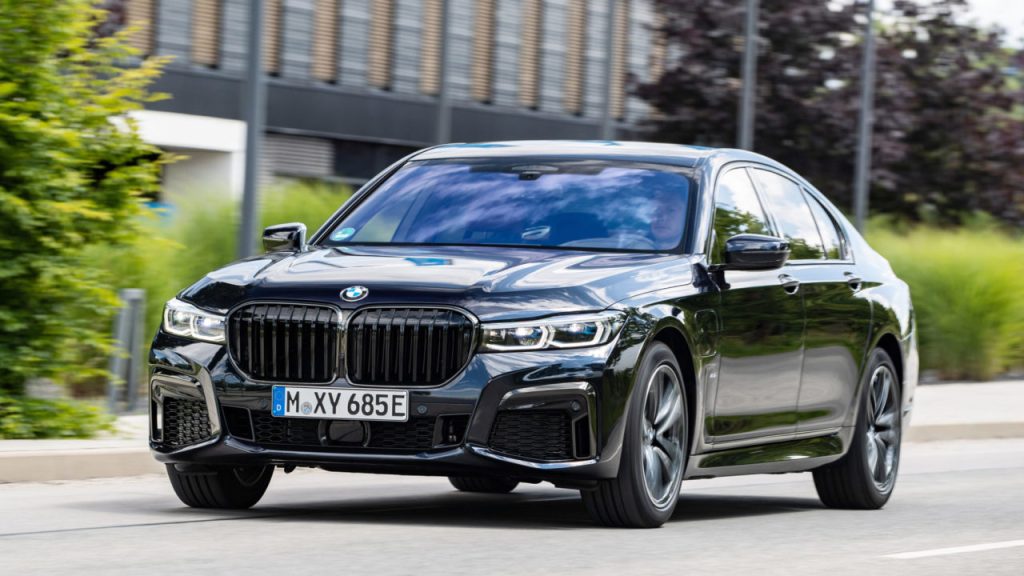
To prevent this, the Treasury introduced an “easement” during the summer, allowing manufacturers either to convert Euro 6e-bis CO2 figures back to older standards or to continue using earlier data. This ensures affected models remain under the 50g/km threshold until 5 April 2028.
More recently, the Budget outlined a slightly different mechanism. Vehicles certified to Euro 6e-bis will receive a notional CO2 figure of just 1g/km if they produce more than 50g/km, offer at least one mile of electric-only range, and have been registered since 1 January 2025.
For most PHEVs, the impact remains unchanged because models emitting between 1 and 50g/km continue to be taxed solely on their electric range rather than on CO2 output. A transitional measure also ensures that any car registered before 5 April 2028 will retain the easement until 5 April 2031.
However, this shift opens a loophole. It excludes only those PHEVs tested under the previous standard, meaning higher-emitting models already above 50g/km could, once retested under Euro 6e-bis, qualify for the easement and receive a nominal 1g/km CO2 rating. This places them in much lower BIK tax bands.
Take the Bentley Bentayga PHEV: it currently emits 82g/km. Under Euro 6e-bis, if its output stays above 51g/km, it would be reassigned to 1g/km and drop from the 22% BIK band to the 15% band. For a 45% taxpayer, that amounts to a £12,000 savings over a three-year lease.
Similarly, the Ford Ranger PHEV emits 68g/km and is currently in the 19% tax band. With the easement applied, it also moves to 15%, saving a 20% taxpayer approximately £1300 in BIK tax over three years.
Matt Walters, head of consultancy services and customer value at leasing company Ayvens, said he doubts manufacturers will immediately try to exploit the loophole, though he acknowledged that the revised testing rules may influence demand across the PHEV market.
“Strategically it won’t drive decision-making,” he said. “The bigger risk is confusion. Any time emissions testing interacts with benefit-in-kind in a way that feels inconsistent, confidence can be shaken, and electrification decisions are susceptible to delay.”
