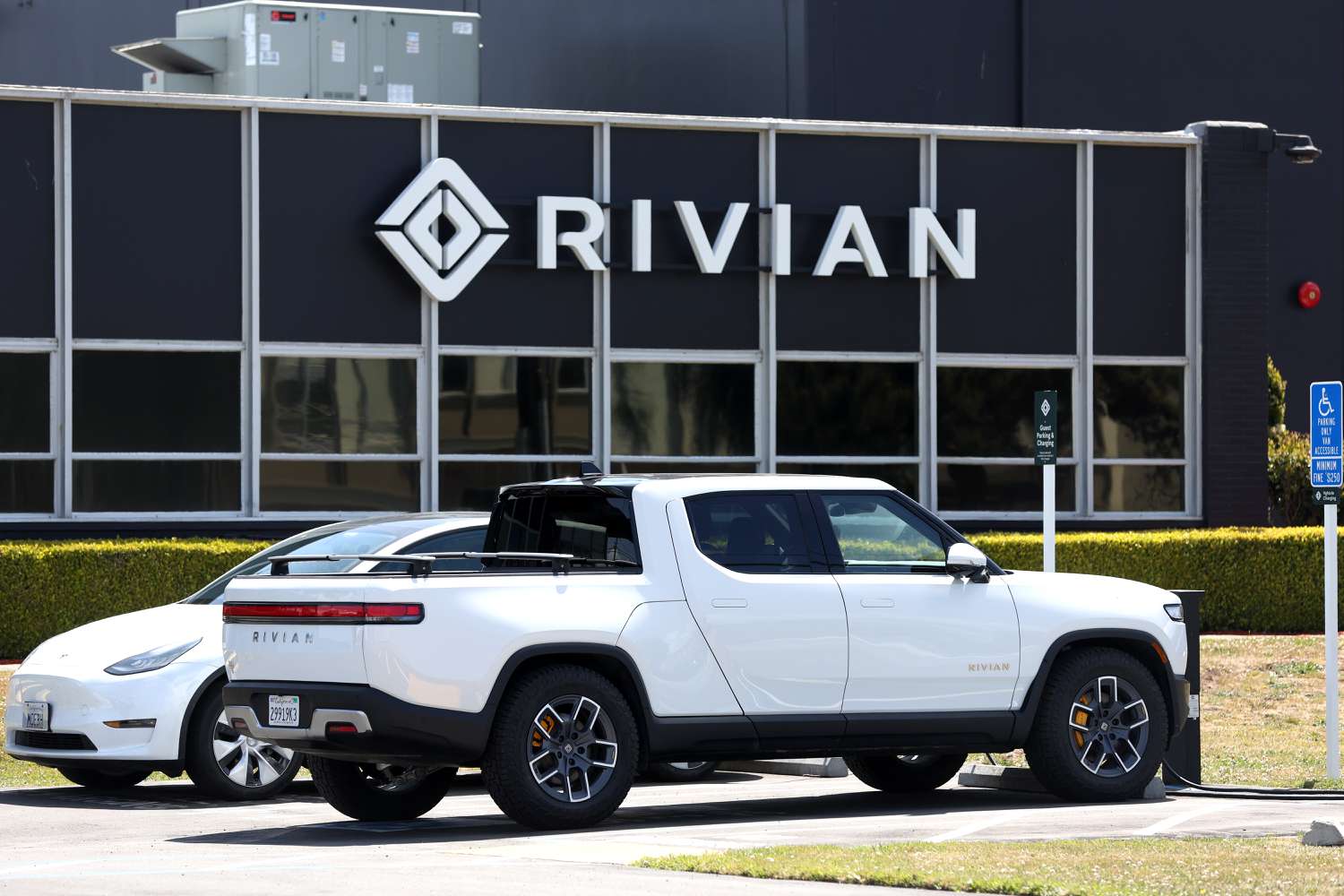
Rivian announced major advancements in vertically integrated automotive technology today during its first Autonomy & AI Day, held at its Palo Alto offices.
During the event, the company revealed its custom-built silicon, detailed its roadmap for next-generation autonomous driving, and introduced an evolved software architecture powered by artificial intelligence (AI).
“I couldn’t be more excited for the work our teams are driving in autonomy and AI. Our updated hardware platform, which includes our in-house 1600 sparse TOPS inference chip, will enable us to achieve dramatic progress in self-driving to ultimately deliver on our goal of delivering L4.
This represents an inflection point for the ownership experience, ultimately being able to give customers their time back when in the car,” said Rivian Founder and CEO RJ Scaringe.
A key component of Rivian’s future technology strategy is its move toward in-house silicon designed specifically for vision-centric physical AI. The first-generation Rivian Autonomy Processor (RAP1) is a custom-built 5nm processor that integrates processing and memory into a single multi-chip module.
This design brings high efficiency, strong performance, and Automotive Safety Integrity Level compliance. RAP1 is the foundation of the company’s third-generation Autonomy computer, the Autonomy Compute Module 3 (ACM3).
The ACM3 delivers 1600 sparse INT8 TOPS, the capability to handle 5 billion pixels per second, and RivLink, a low-latency interconnect technology that enables multiple chips to be linked together and scale processing power.
The processor is further supported by Rivian’s in-house AI compiler and platform software. In addition to ACM3, Rivian plans to add LiDAR to future R2 models, enhancing its multi-modal sensor approach by offering highly detailed 3D spatial mapping, redundant sensing, and better real-time detection in challenging driving scenarios.
Rivian stated that its Gen 3 Autonomy hardware, including ACM3 and LiDAR, is currently undergoing validation and is scheduled to ship on R2 models beginning at the end of 2026.
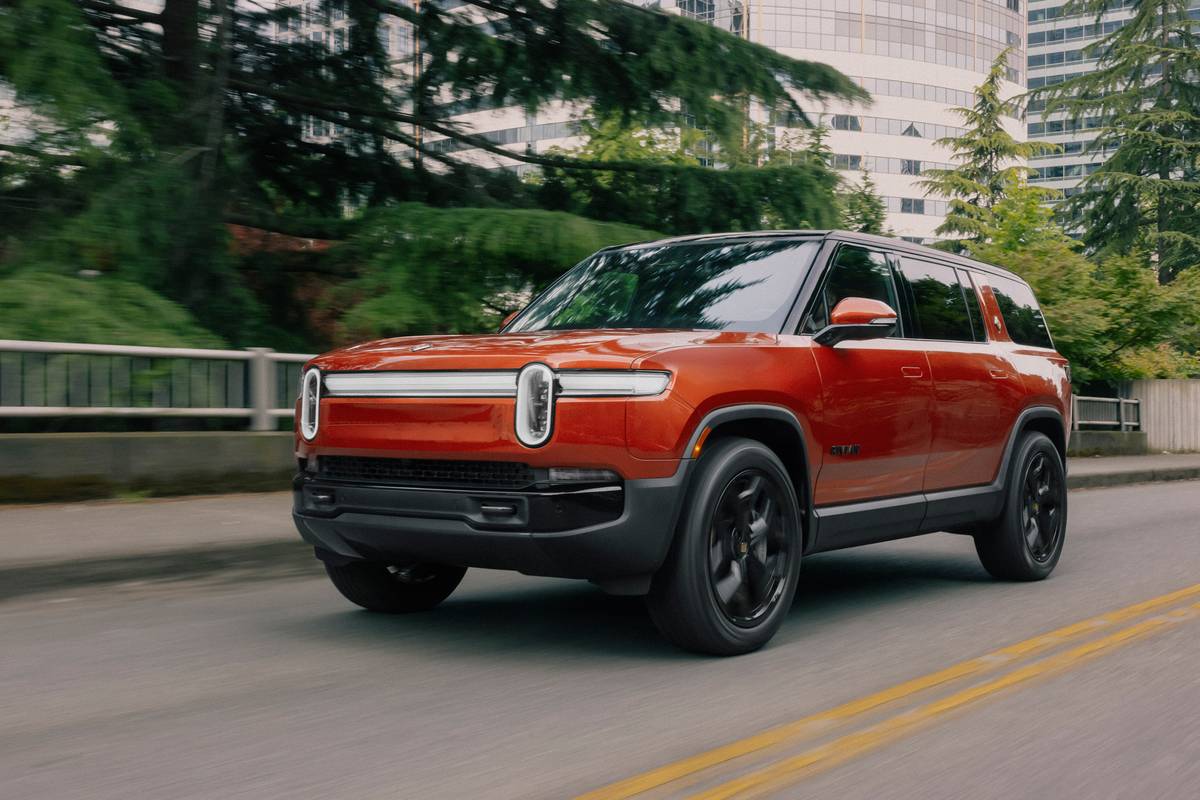
Rivian also outlined its software-first strategy for autonomy, built on the Rivian Autonomy Platform and an end-to-end data loop designed for continuous training.
As part of this, the company introduced its Large Driving Model (LDM), a foundational autonomous system trained similarly to a Large Language Model (LLM). Using Group-Relative Policy Optimization (GRPO), the LDM is intended to convert massive datasets into highly optimized driving strategies.
Near-term software upgrades are coming to second-generation R1 vehicles with the arrival of Universal Hands-Free (UHF), which will allow extended hands-free driving across far more regions. The feature will be available on more than 3.5 million miles of roads in the U.S. and Canada and will work on off-highway roads with clearly painted lines.
Rivian also announced the launch of Autonomy+, its autonomy subscription service arriving in early 2026 at a price of $2,500 as a one-time purchase or $49.99 per month.
The company emphasized that these evolving features have the potential to improve road safety, satisfy customer demand, and serve as meaningful business drivers.
Rivian reiterated its commitment to steadily improving autonomy capabilities for its Gen 2 R1 and upcoming R2 vehicles, with clear progression toward point-to-point travel, eyes-off functionality, and personal Level 4 autonomy.
Beyond autonomous driving, Rivian is implementing AI across its entire business through Rivian Unified Intelligence (RUI), a shared multi-modal and multi-LLM data system that supports new features, enhances service operations, and enables predictive maintenance.
One of the key highlights of this architecture is the Rivian Assistant, a next-generation voice interface launching in early 2026 for both Gen 1 and Gen 2 R1 vehicles. The assistant is built on Rivian’s edge models to understand the vehicle, the user’s digital environment, and the surrounding world.
It connects vehicle systems with third-party apps through an in-house agentic framework, with Google Calendar acting as the first integration. The assistant also leverages frontier large language models to enable grounded information, natural conversation, and advanced reasoning.
RUI will also transform Rivian’s service ecosystem by embedding AI into diagnostics, functioning as an expert assistant that reviews telemetry and service history to identify complex issues. This same intelligence will soon enhance the Rivian mobile app, improving self-service diagnostic capabilities for owners.
Rivian’s vertically integrated strategy remains one of its core strengths, enabling rapid evolution across every layer of the vehicle experience, from customer-facing features to deep foundational technology.
As the company enters its next phase of growth, this integration is expected to accelerate further, bringing its next-generation hardware and software systems to market and marking a significant step forward in Rivian’s long-term vision.
Also Read: Top 10 Budget-Friendly Cars Built for Track-Day Speed