
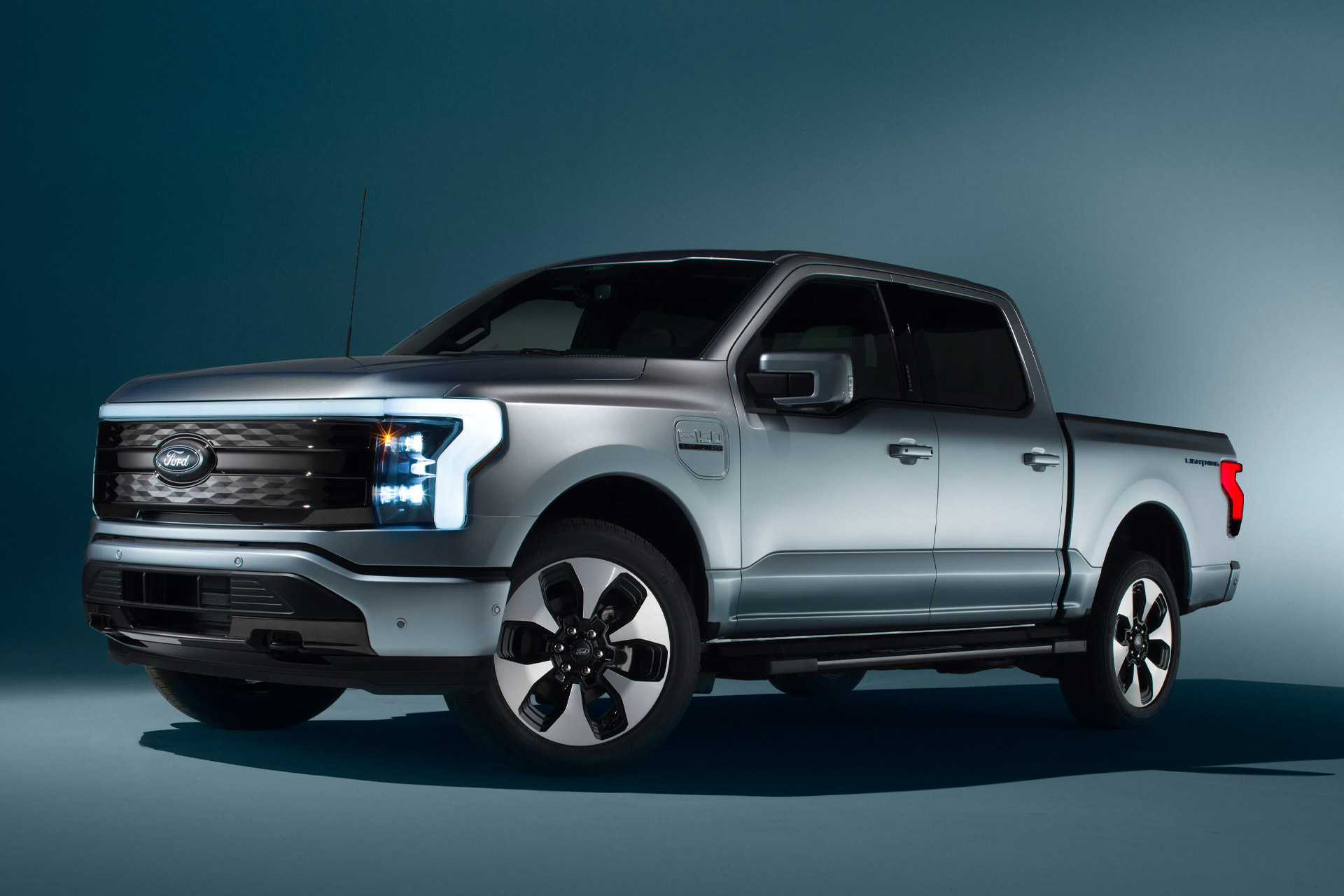
Ford has officially confirmed that the fully electric F-150 Lightning will end production later this year. However, despite shutting down the current model, the Lightning name itself isn’t being retired.
The future of the Ford F-150 Lightning has been uncertain for weeks. Slowing EV demand in the U.S., production pauses, and mounting losses in Ford’s electric vehicle division all hinted that trouble was brewing.
Now, Ford has made it official: production of the current all-electric Lightning will end this year. While the truck debuted with massive fanfare, real-world demand never quite lived up to expectations.
That said, Ford isn’t walking away from the Lightning badge. Instead, the company is pivoting. The next-generation model will be known as the F-150 Lightning EREV, an extended-range electric truck that fundamentally changes how the Lightning fits into Ford’s lineup.
This shift isn’t about abandoning electrification; it’s about rethinking it for customers who want electric driving without fully cutting ties with gasoline.
An extended-range electric vehicle is not just another hybrid. In the Lightning EREV, the wheels are driven exclusively by electric motors. Similar to Nissan’s upcoming e-Power system, there is no mechanical connection between the internal combustion engine and the wheels. Instead, a high-output onboard generator activates when needed to recharge the battery.
It remains unclear whether Ford’s Lightning EREV will offer plug-in capability like some EREVs sold in China or operate without a charging port, similar to the upcoming Nissan Rogue e-Power. Regardless of the final configuration, the intent is clear: range anxiety will no longer be a concern for Lightning buyers.
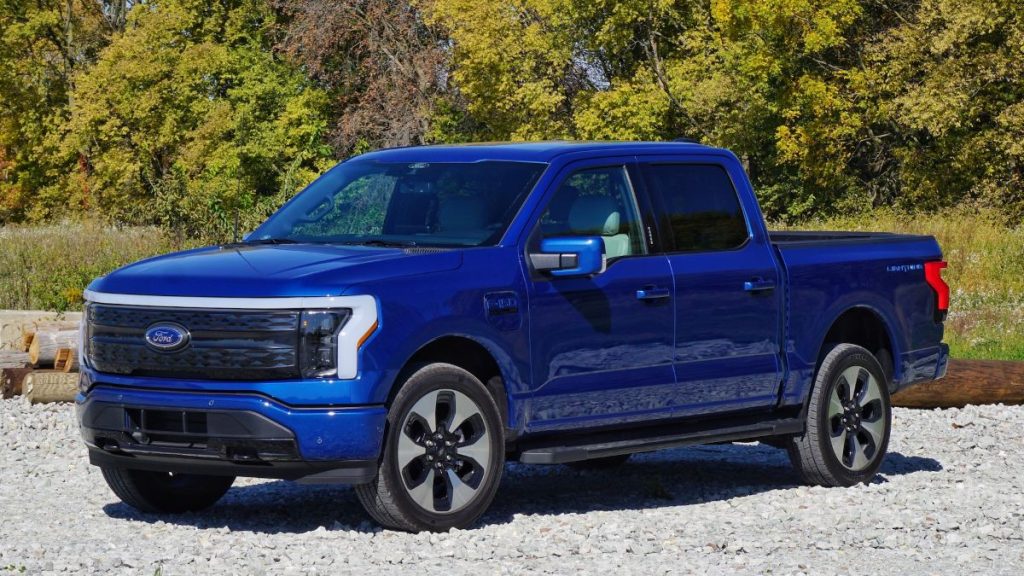
Ford claims the F-150 Lightning EREV will deliver more than 700 miles of total range while preserving the qualities that made the original Lightning appealing. Instant torque, a quiet driving experience, and onboard power capabilities all remain part of the package.
The strategy is to maintain the everyday benefits of electric driving while eliminating stress during long-distance travel or heavy towing. Rather than sticking rigidly to a pure EV approach, Ford says this more flexible solution aligns better with customer expectations.
“The F-150 Lightning is a groundbreaking product that demonstrated an EV pickup can still be a great F-Series. Our next-generation F-150 Lightning EREV will be every bit as revolutionary.
It delivers everything Lightning customers love – near instantaneous torque and pure electric driving. But with a high-power generator enabling an estimated range of 700+ miles, it tows like a locomotive. Heavy-duty towing and cross-country travel will be as effortless as the daily commute.”
Ford isn’t alone in reassessing its electric truck strategy. Stellantis has already scrapped plans for a fully electric Ram 1500, redirecting its efforts toward the range-extended Ram 1500 REV instead.
General Motors continues to sell electric pickups, but sales volumes remain modest. Chevrolet has delivered 9,379 Silverado EVs this year, while GMC has sold 6,147 Sierra EVs.
Those figures trail the F-150 Lightning’s 23,034 units sold during the same period, but the overall segment remains relatively small. Tesla’s Cybertruck sits in between, with 16,097 units sold in Q3 2025, though even that model has seen momentum slow following its initial surge of interest.
The takeaway is clear: electric pickups aren’t disappearing, but the market is recalibrating. Automakers are moving away from all-or-nothing EV strategies and toward solutions that prioritize usability, flexibility, and real-world driving needs. The F-150 Lightning EREV is Ford’s bet that this middle ground is where truck buyers actually live.
Also Read: 10 EVs With the Least Real-World Range Loss in Cold Weather
