
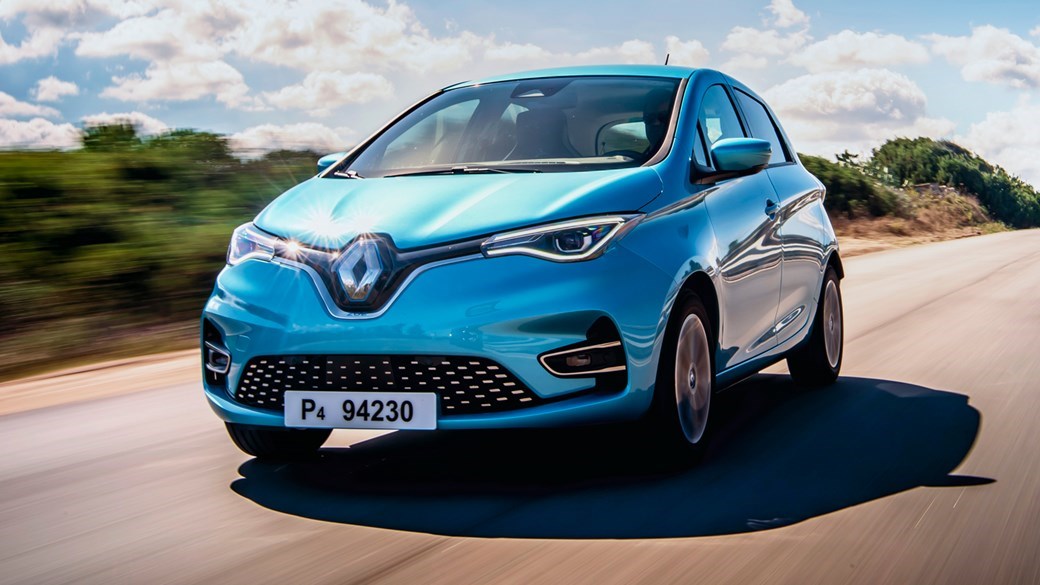
Ford is turning to a long-time rival to tackle one of its biggest challenges in Europe: figuring out how to build electric cars that everyday buyers can realistically afford.
By outsourcing production of its next wave of budget EVs to Renault, Ford is betting that shared factories and shared platforms can succeed where solo efforts have fallen short, namely, making small electric cars profitable in a brutally price-sensitive market.
This move brings a new Franco-American partnership into Ford’s wider European reset. The brand is attempting to transition away from traditional hatchbacks toward a slimmer, EV-focused lineup without abandoning the mass-market customers that built its presence in the region.
Ford has been reshaping its European approach around a tighter product portfolio that leans heavily on electric vehicles and crossovers, while simultaneously pushing for clearer government policy support to make the transition viable.
In its own words, the company has outlined a “Next Phase of European Strategy” that blends a new strategic partnership, a fresh product push, and a demand for regulatory alignment to support EV investment, an initiative it has grouped under the banner of Ford Announces Next Phase of European Strategy. That framing makes it clear Ford does not see affordable EVs as a side hustle, but as central to its long-term survival in Europe.
Within that strategy, Ford has openly acknowledged that it cannot shoulder the full cost of developing and manufacturing low-margin small EVs on its own while also funding larger electric SUVs and commercial vehicles.
The new partnership is positioned as a way to share risk and shorten development timelines, with Ford explicitly linking its “New Strategic Partnership” and “Product Offensive” to the need for stronger industrial economics and supportive regulation, bundled together under “Call for Policy Align.” I read this as Ford conceding that the European EV race is now about alliances and scale, not going it alone.
At its core, the alliance is straightforward. Ford will design a range of compact electric cars, while Renault will manufacture them in its own facilities for European buyers.
Coverage of the agreement describes it as Ford Partners With Renault To Develop Low, Cost, Europe, New Alliance, underscoring both the regional focus and the aggressive pricing goals. This structure allows Ford to focus on design, branding, and driving character, while relying on Renault’s experience with small EV platforms and high-volume European production.
Under the agreement, Ford Motor and Renault Group are entering into a strategic partnership aimed squarely at expanding EV production in Europe without duplicating massive investments.
The deal is framed as a collaboration between Ford Motor and Renault Group rather than a simple contract manufacturing arrangement, signaling that platform sharing, component sourcing, and longer-term planning are all part of the picture.
In practical terms, that means the cars rolling out of Renault plants will wear Ford badges and styling, but their underlying architecture will be unmistakably Franco-American.
Renault’s role goes well beyond engineering assistance. The company will handle assembly in its own European manufacturing network. The agreement specifies that Ford will lead design while Renault will build the vehicles at its factory in northern France, a facility already experienced with compact EVs and flexible production lines capable of supporting multiple variants.
Reporting makes clear that Ford will lead the design and Renault will assemble the vehicles at its factory in northern France, giving the project a concrete industrial base rather than a hypothetical future site.
That location matters for both cost control and political optics. Producing vehicles in France lets Renault leverage its existing workforce and supplier ecosystem, while giving Ford the ability to market these cars as European-built for European customers.
The same coverage notes that the EVs will be built with a strong emphasis on affordability and efficiency, a goal that is far easier to achieve when production is already optimized for small vehicles and suppliers are clustered nearby. In my view, this decision is as much about locking in a competitive cost structure as it is about demonstrating a commitment to European jobs.
The partnership is aimed directly at the segment where European buyers have traditionally shown the strongest loyalty to both brands: small, practical cars suited to narrow streets and modest budgets.
Coverage of the deal repeatedly emphasizes that Ford is teaming up with Renault to build small electric cars, a phrase that neatly captures both the vehicle class and the strategic intent. One report states it plainly, noting that Ford is teaming up with Renault to build small electric cars, precisely the segment now under the greatest pressure from low-cost Chinese imports.
By focusing on compact EVs instead of large crossovers, Ford and Renault are attempting to defend the traditional small-car heartland that has been hollowed out by rising prices and regulatory demands.
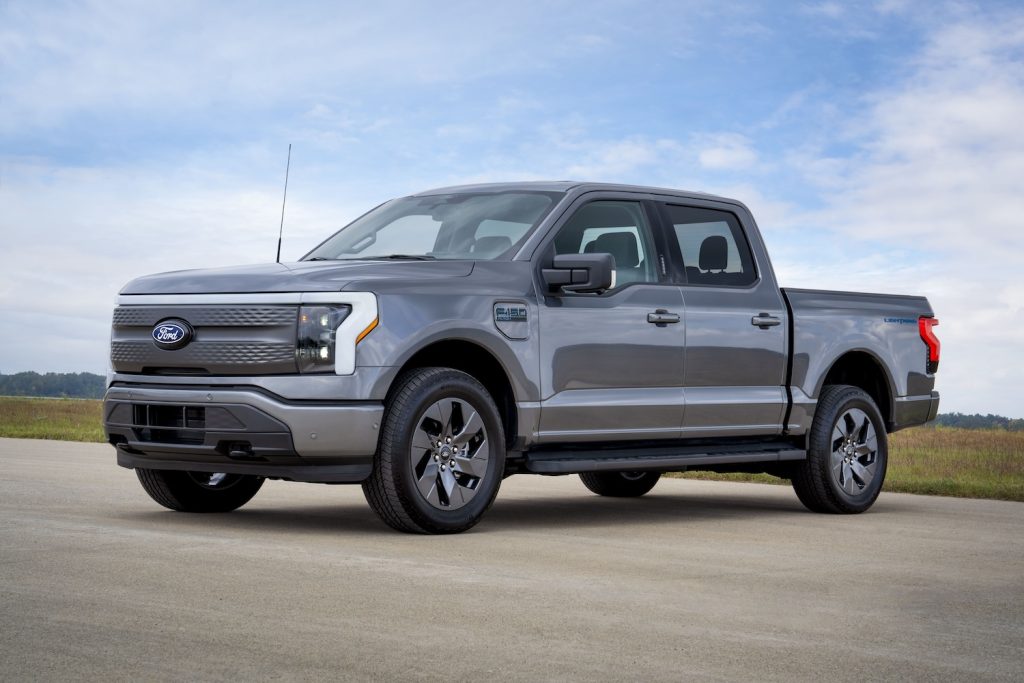
The alliance is positioned as a way to deliver affordable electric replacements for the B- and C-segment models that once dominated European roads, with pricing expected to undercut Ford’s larger electric crossovers. I see this as an effort to rebuild an entry ramp into EV ownership, centered on city-friendly vehicles that can sell in real volume rather than niche halo models.
Ford’s European roadmap depends on a steady flow of new electric products, and the Renault-built small EVs form a critical part of that plan. In its strategic outline, Ford has tied the alliance directly to a broader “Product Offensive” that includes multiple EV launches slated for 2028, highlighting just how long clean-sheet development cycles really are.
The company has bundled this under its New Strategic Partnership, Product Offensive, Call for Policy Align messaging, positioning the Renault collaboration as one component of a multi-year transformation rather than a one-off experiment.
From Ford’s perspective, the logic is simple: a full EV lineup, from small city cars to larger crossovers and vans, is necessary to maintain dealer traffic and spread development costs.
The Renault-built models allow Ford to fill the lower end of that lineup without investing in an all-new small-car platform, freeing resources for higher-margin vehicles and software development. I take Ford’s decision to integrate this alliance into its broader European EV strategy as a signal that these budget models are expected to be core volume sellers, not mere compliance cars.
Renault is entering this partnership with clear self-interest. The company has spent years refining small EV architectures and battery supply chains and now has a chance to monetize that expertise by producing vehicles for a partner with strong brand recognition in markets where Renault’s reach is weaker.
The description of the deal as a New Alliance for affordable EVs reflects a shared understanding that neither company can absorb the full cost of electrification alone, especially in the low-margin small-car space.
By adding Ford’s volume to its northern France factory, Renault can improve utilization and spread fixed costs across more vehicles, a critical factor in keeping prices competitive.
At the same time, collaborating with Ford Motor and Renault Group in a formal strategic partnership, as highlighted in reporting on Ford, Renault, Europe, allows Renault to share technology development and regulatory burdens. From my perspective, Renault is effectively turning its EV know-how into a product it can offer partners, while reinforcing its role in Europe’s EV supply chain.
Both companies are using stark language to describe the alliance because the economics of small EVs are unforgiving. Batteries are still expensive, safety and connectivity requirements keep piling on costs, and buyers in this segment are extremely price sensitive.
For competitors, the deal raises the stakes. Other legacy automakers that have resisted sharing platforms or factories may find themselves under pressure to pursue similar alliances if Ford and Renault succeed in hitting aggressive price points without sacrificing quality.
