
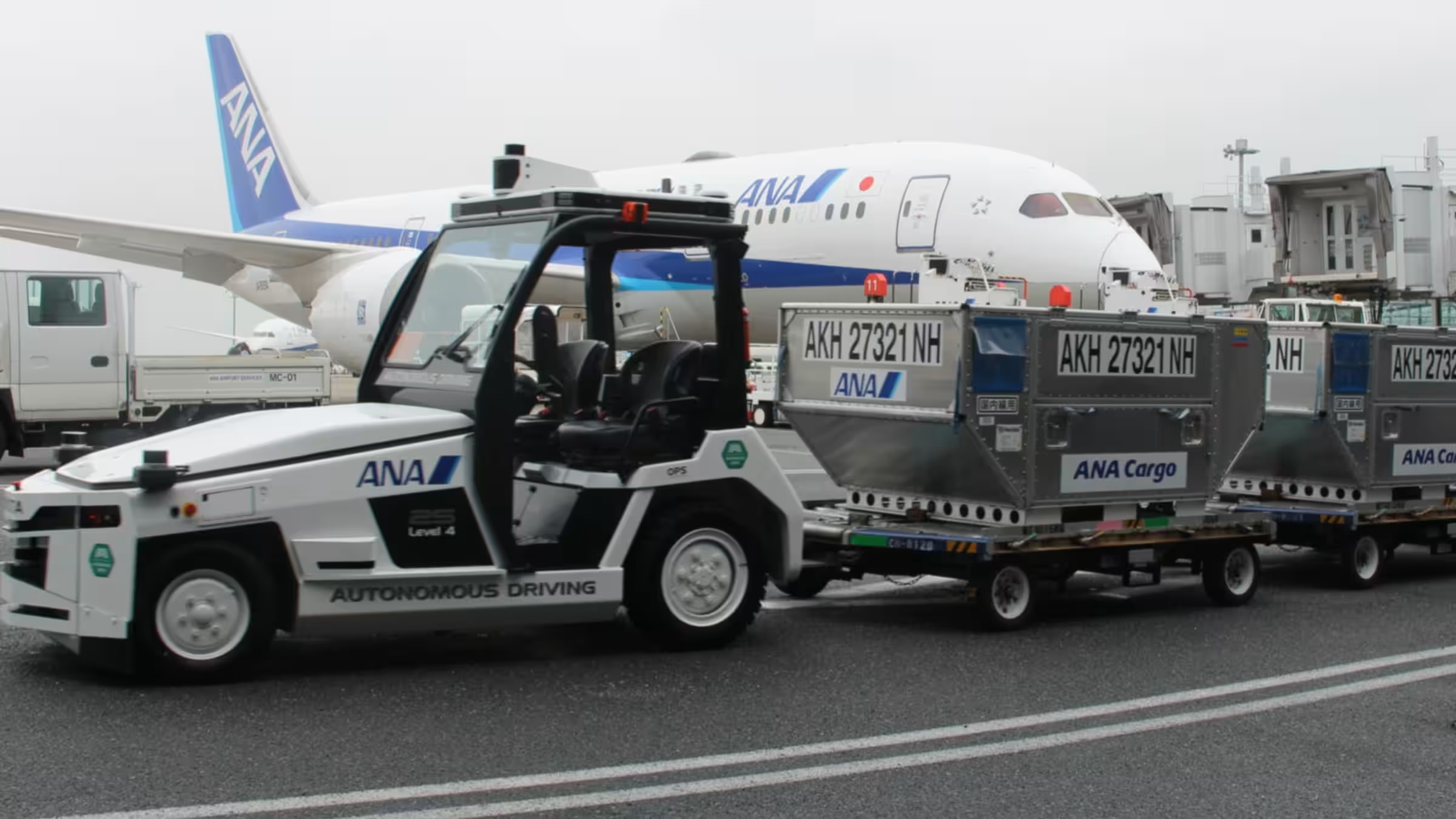
Airport ground vehicles usually have a quirky, old-fashioned appearance, but Toyota’s new towing tractor brings a fresh dose of technology. The driverless model is currently being deployed at Tokyo Haneda Airport in Japan and features Level 4 autonomous driving capabilities.
The project was first announced in March 2021, with trial operations beginning in October of the same year. In 2022, the tractor received the iF Design Award, and development has continued under Toyota Industries Corporation in collaboration with All Nippon Airways (ANA).
Starting in December 2025, three autonomous towing tractors will manage domestic flight operations, with an additional three scheduled for deployment by the end of March 2026.
According to Toyota, this represents the first practical implementation of Level 4 autonomous driving within a Japanese airport’s restricted area. Prior to this, Level 3 demonstrations had taken place at local airports since 2019.
The tractors transport container dollies loaded with baggage and cargo to the aircraft. Autonomous operation depends on self-position estimation and obstacle detection, while a remote monitoring system manages complex situations that may arise near active takeoff and landing zones.
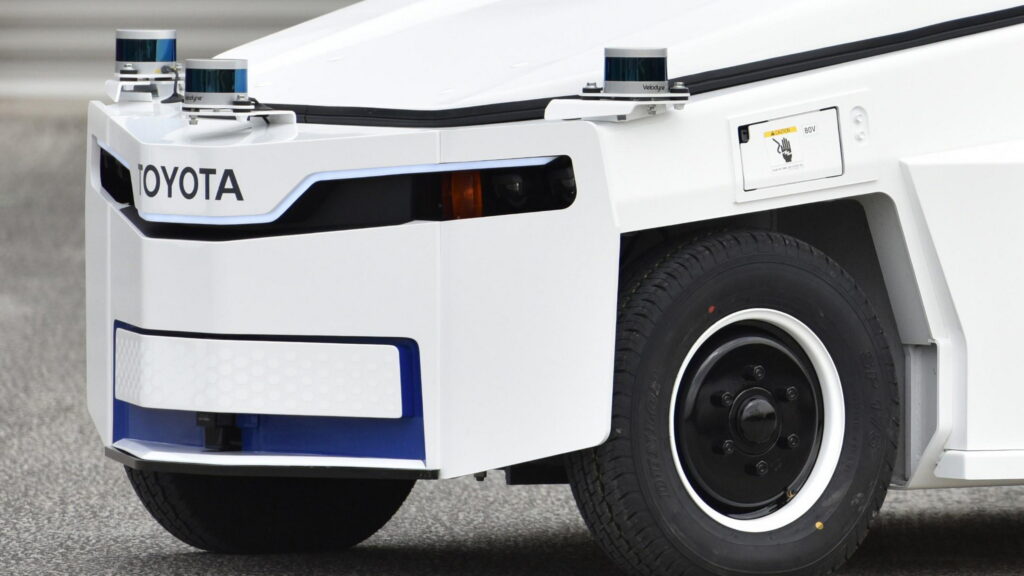
The design largely resembles earlier prototypes, though it features slightly updated front bumpers and side sills. The tractor sports the Toyota emblem on its nose, car-like headlights, and a two-seat cabin. Numerous sensors, including LiDAR units, are mounted on the fenders, nose, and sides, enabling the vehicle to scan its surroundings for obstacles.
Specifications for the fully electric powertrain and battery packs have not been disclosed. During autonomous operation, the tractor’s top speed is limited to 15 km/h (9 mph) with a towing capacity of 13 tons (28,700 pounds).
When operated by a human driver, these limits increase to 25 km/h (16 mph) and 27 tons (59,500 pounds). The main route between terminal locations and the cargo shed spans approximately 1.5 km (1 mile) and includes two traffic lights.
Toyota and ANA have also introduced a new Fleet Management System (FMS) designed to coordinate multiple vehicles. The FMS issues transport instructions, allocates departure and arrival lanes, and integrates with traffic light control to optimize operations.
Also Read: 10 Lightest Vehicles That Toyota Currently Builds
