

A recent study has revealed that the use of touchscreens in vehicles can dramatically reduce driver focus and performance, raising concerns about the growing trend of screen-centric car interiors.
A comprehensive study presented at the 38th Annual ACM Symposium on User Interface Software and Technology has delivered strong evidence confirming what many drivers have long suspected, interacting with a touchscreen while driving is highly distracting and potentially dangerous.
As automakers increasingly replace physical buttons and knobs with large, flat screens devoid of tactile feedback, researchers from the University of Washington and the Toyota Research Institute sought to measure how these changes affect a driver’s cognitive load and overall ability to stay focused.
The study involved tracking pupil dilation and electrodermal activity, reliable indicators of cognitive load, along with precise monitoring of eye and hand movements of 16 volunteers navigating a realistic urban environment in a high-fidelity driving simulator equipped with a 12-inch touchscreen.
Participants were asked to perform typical in-car tasks while simultaneously completing a simple memory test, simulating the multitasking that occurs during real-world driving.
The findings were striking. Drivers veered out of their lane 42 percent more often when completing touchscreen tasks, while their screen glances were 26.3 percent shorter under high cognitive load.
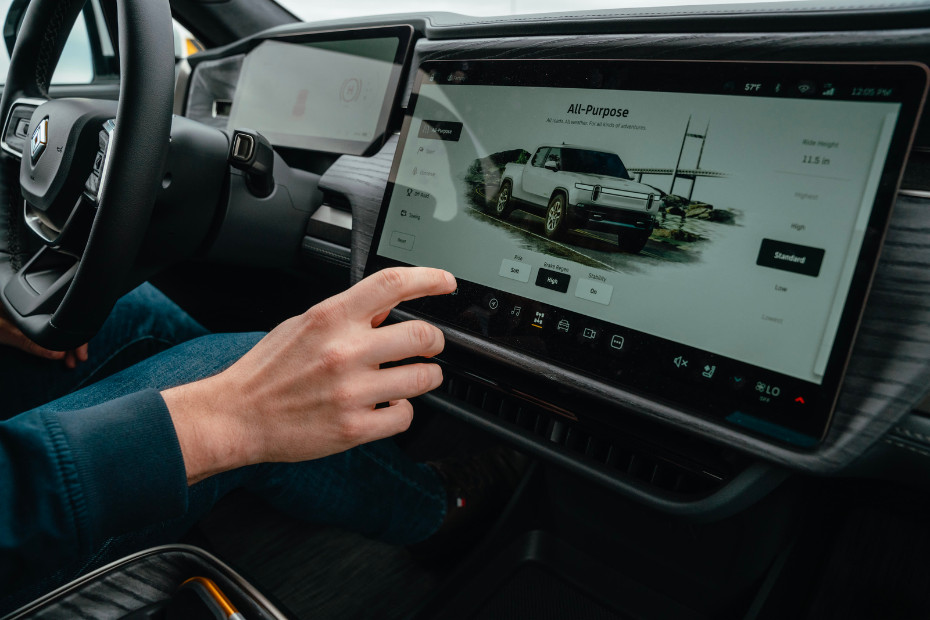
Additionally, touchscreen speed and accuracy dropped by 58 percent during driving, with an extra 17 percent decline under increased cognitive strain.
These results make it clear that attempting to operate a touchscreen behind the wheel not only compromises vehicle control but also reduces the precision of the touchscreen interactions themselves.
Notably, even increasing the size of touchscreen targets did not produce meaningful improvements in performance.
The research underscores that touchscreen interfaces demand significantly more visual and cognitive attention than traditional tactile controls. This presents a substantial challenge for modern automotive interior design, which has embraced the sleek, versatile aesthetics of touchscreen controls over the past decade.
While touchscreens are likely to remain a staple in vehicles, finding a balance that combines technological innovation with real-world safety and usability is increasingly important.
Integrating physical knobs and buttons for commonly used functions could offer a practical solution. Understanding how drivers interact with these new technologies, and the resulting impact on attention and vehicle control, will be critical in developing safer vehicle interiors in the years ahead.
Also Read: 10 True Supercars That Still Offer a Manual Transmission
