
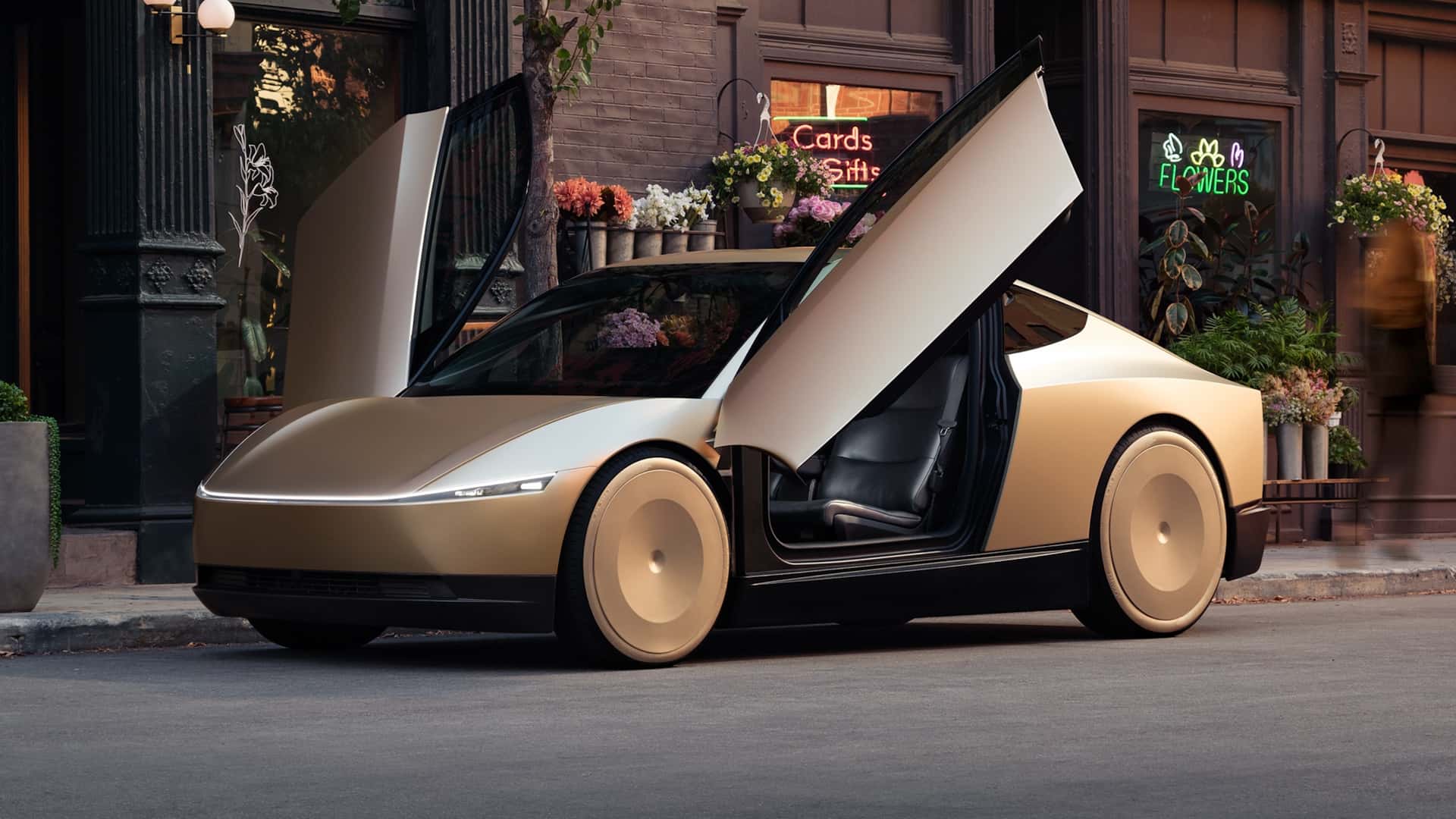
Two Tesla Cybercab vehicles have once again been spotted operating on public streets in Austin, Texas. Despite being billed as a fully autonomous robotaxi, both test vehicles were seen equipped with a steering wheel and carrying a human driver, signaling that Tesla’s autonomous ambitions are still very much a work in progress.
Recent photos and videos shared by users on X show the Tesla Cybercab undergoing public-road testing in Austin. Contrary to expectations for a production-intent robotaxi, these examples retain conventional driver controls and human supervision, elements that differ from Tesla’s long-term vision for the vehicle.
The Cybercabs seen during testing were also fitted with side mirrors, a notable departure from the version revealed at Tesla’s “We, Robot” event last year, where mirrors were absent entirely.
That said, the shape and styling remain faithful to the original concept. The compact footprint clearly reflects the Cybercab’s two-seat design, a layout that restricts capacity but delivers other notable benefits.
By limiting the Cybercab to two seats, Tesla effectively eliminates unnecessary mass, particularly the unused passenger space common in larger robotaxis, such as those deployed by Waymo, when only a single rider is present.
From an efficiency standpoint, reduced weight generally results in improved range and lower energy consumption, aligning closely with Tesla’s objective of keeping Cybercab operations as affordable as possible.
The smaller vehicle size also brings manufacturing advantages. A simpler design allows for faster production, and Tesla has previously stated an ambitious goal of building Cybercabs at a rate of one unit every 10 seconds.
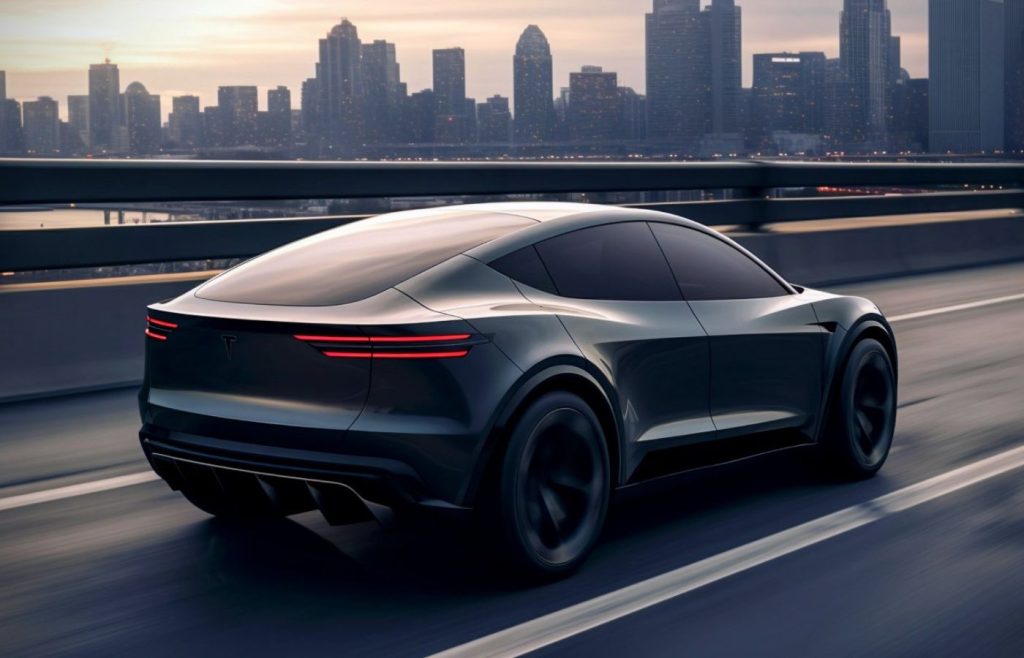
Unsurprisingly, the autonomous driving system itself did not appear to be operating at full capability during these tests, given the presence of traditional controls and a human driver. Even so, footage from the sightings suggests the vehicles navigated public traffic without any obvious issues.
For reference, Tesla’s current production lineup, including the Model 3, relies on SAE Level 2 driver-assistance systems that require constant human attention.
The Cybercab, however, is intended to function without human input, targeting SAE Level 4 autonomy. That places it in the same category as Waymo’s fully driverless vehicles and explains Tesla’s plan to eliminate steering wheels and pedals in the final production version.
The Austin sightings follow the Cybercab’s first confirmed public-road appearance in Los Altos, California, last October. Since then, Tesla has also showcased a production-spec example at its Santana Row showroom in San Jose.
Tesla is currently aiming to begin Cybercab production in April 2026, though that timeline hinges on securing regulatory approval for unsupervised autonomous driving.
Without such approval, the value proposition of a two-seat robotaxi without manual controls becomes significantly less attractive. Until then, Tesla continues to deploy modified Model Y vehicles as part of its early robotaxi testing and development efforts.
Also Read: 5 Tesla Model S Years With Solid Batteries vs 5 With Issues
