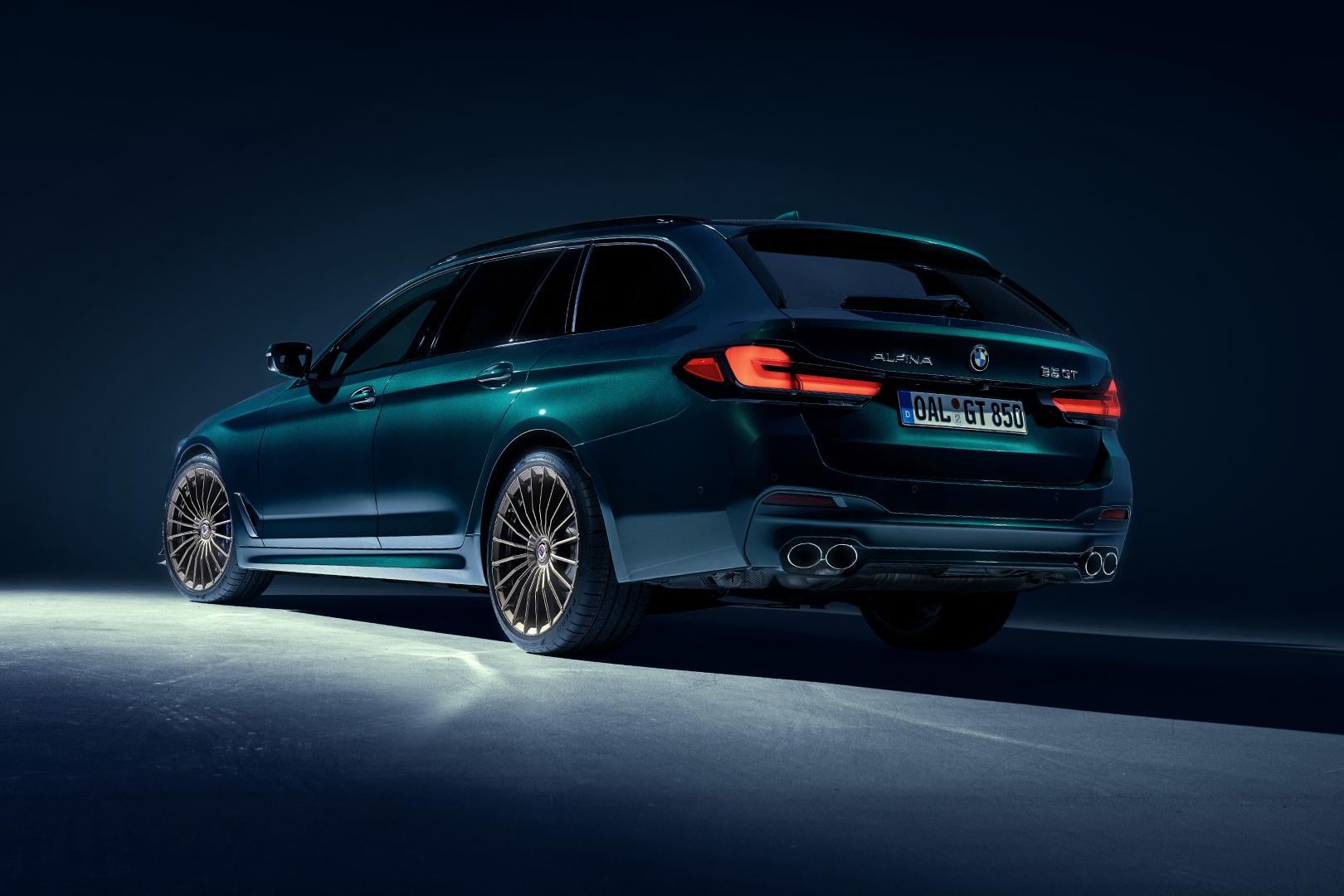
With Alpina now officially under BMW’s wing, it’s a perfect time to look back at the vehicles that defined the brand over its 60-year history.
After six decades of operating independently, Alpina enters a new chapter under BMW. Founded in 1965 by Burkard Bovensiepen, the company became an independent automaker in 1983 while maintaining close ties with Munich. What’s next for Alpina under BMW remains to be seen, but enthusiasts hope the brand’s distinctive essence remains intact.
So, what exactly makes a car “Alpina”? Over the decades, there have been multiple examples that answer that question. Narrowing down the most defining models is no small feat, but one constant is clear: Alpina cars strike a balance between luxury and performance, without venturing as extreme as BMW’s M Division.
Alpina began by enhancing the 1800 models with modified dual Weber carburetors, later creating performance parts for the 02 series and 3.0 CS. The turning point came in 1975 with the A1/3, a standalone model rather than a lightly tuned E21 3 Series, boasting performance upgrades that laid the groundwork for future Alpinas.
Following that were several E21-based models and E12 variants. One standout was the B7 Turbo from the late ’70s. Powered by a 3.0-liter straight-six producing 300 hp, it was among the fastest sedans of its era, hitting 0-60 mph in roughly six seconds. Alpina then applied similar enhancements to the E24 6 Series, creating the B7 Turbo Coupe, and to the E23 7 Series.
By 1983, Alpina had earned recognition as an official automaker from the German Federal Ministry of Transport. Timing was perfect, as the E30 3 Series had just launched the year before.
The first Alpina-fied E30 was the C1/2, based on the 323i, followed by the C2 2.5, C2 2.7, and B3 2.8. Alpina also produced more extreme, but still luxurious, models like the B6 3.5 and 3.5 S, the latter built on the era’s M3.
The 5 Series also received attention, with notable examples including the E28 B7 Turbo and the E34 B10 Biturbo, the latter surpassing BMW’s own M5 in power. The company continued producing high-performance versions of the 6 Series and 7 Series as well.
The 1990s brought redesigned BMWs, and Alpina was quick to work its magic. Starting with the E36 3 Series, the B6 2.8 marked the first step, followed by the B3 3.0 and B3 3.2, both outperforming the American M3. The E36 B8 4.6 pushed boundaries further, fitting an M60 V8 into the slim engine bay, something BMW engineers themselves called impossible. It was even offered as a Touring wagon.
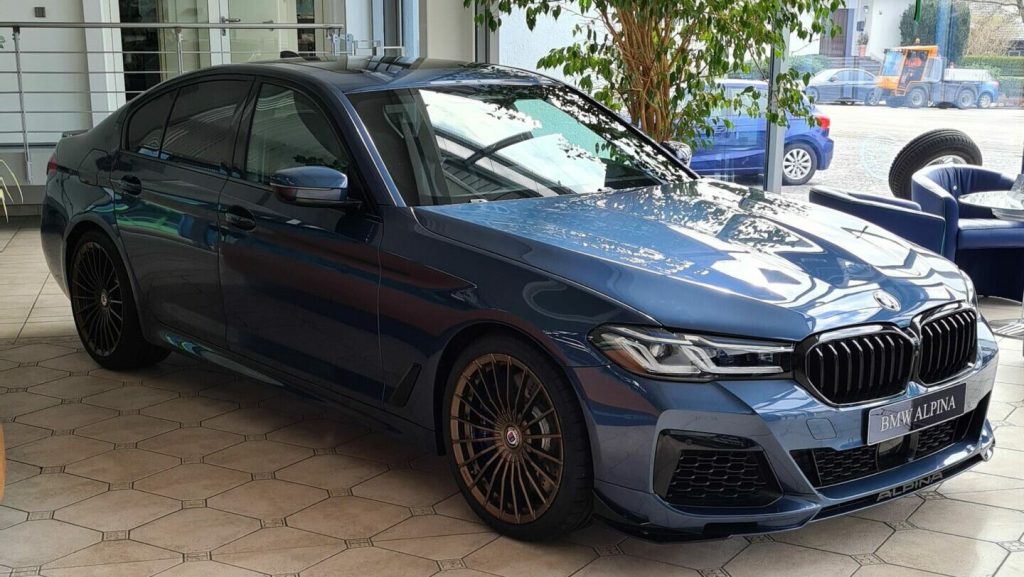
On the E39 5 Series, Alpina elevated the 528i to match the 540i with the B10 3.2 and B10 3.3. The main attraction, however, was the V8 lineup, starting with the B10 V8 and culminating in the B10 V8 S. For the E38 7 Series, Alpina created the B11 for V8-powered 735i/740i models and the B12 for the V12 750i/750iL.
The 6 Series may have disappeared early in the ’90s, but Alpina kept experimenting with the E31 8 Series, starting with the 850i V12 for the B12 5.0 Coupe and later the 850CSi-based B12 5.7 Coupe.
Alpina’s open-top offerings, while limited, are worth noting. The first was the Z1 RLE (Roadster Limited Edition), with just 66 units produced. A decade later came the Z8-based Roadster V8, followed by the E85 Z4 Roadster S, which used the same engine block as the American E36 M3, tuned to about 300 hp.
In the E46 3 Series, Alpina offered the B3 3.3, B3 3.3 Allrad (all-wheel drive), and B3 S, providing near-M3 performance in sedan and wagon forms. Successive 3 Series generations followed the same pattern, with increased performance over time. Similar upgrades extended to 5 Series and 7 Series models.
In the 2000s, Alpina also embraced high-performance diesels, starting with the E39 D10 Biturbo and later the E90/91 D3 and D3 Biturbo, available even as coupes. Diesel-powered Alpinas continued through 2025.
Alpina eventually entered the performance SUV segment with the F25 XD3 Biturbo, later replaced by the G01 XD3. The company never made an X5 derivative but filled the performance SUV gap with the XB7 for the X7.
Under BMW, Alpina may become a bridge between BMW M and Rolls-Royce. Rumors suggest a new 7 Series-based model is coming, and not every BMW will receive Alpina treatment.
The brand’s focus may shift toward larger platforms, with fewer models overall, and bespoke offerings could emerge. Cautious optimism seems the right stance for the future, Alpina will hopefully remain more than just a trim option.
Also Read: 5 Used Luxury Sedans That Last Long vs. 5 That Fall Apart Inside