
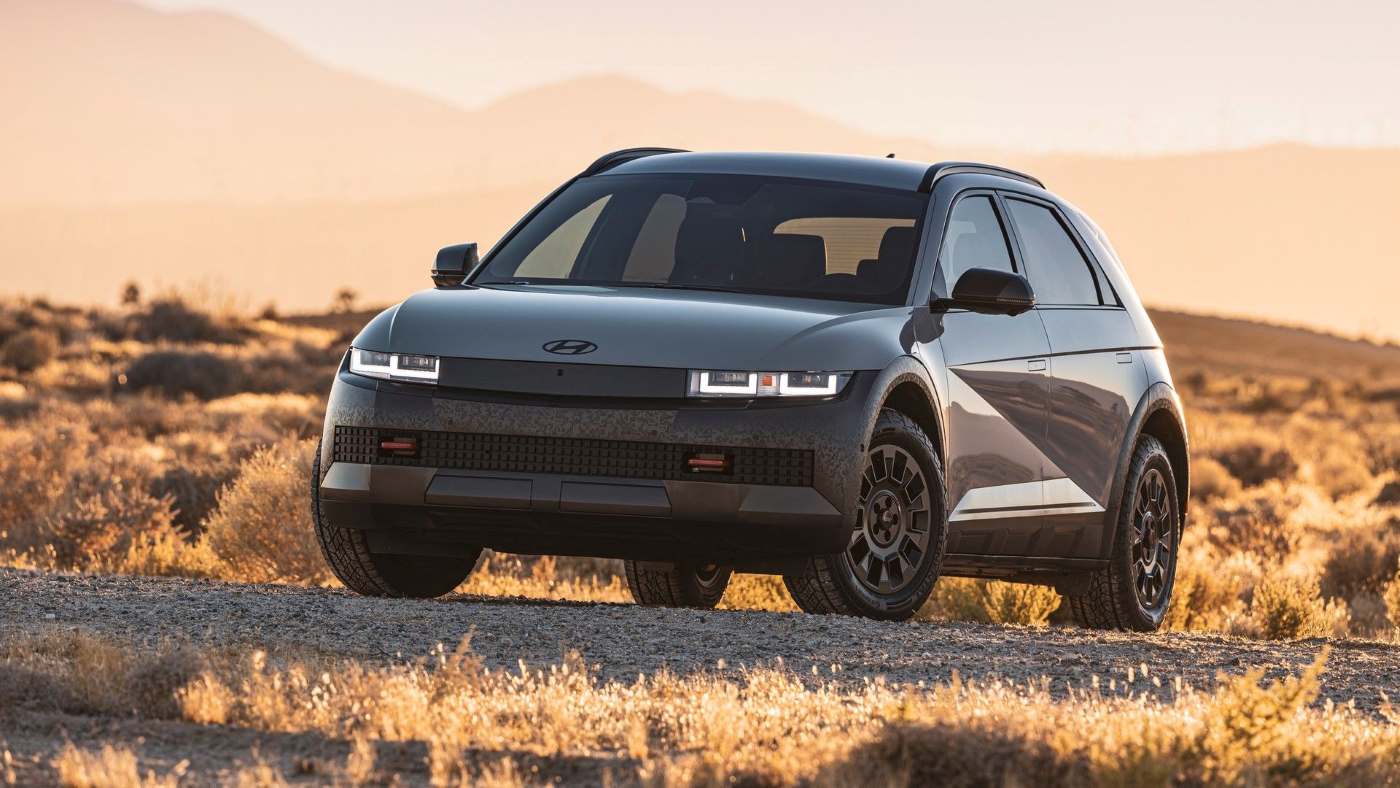
Turns out Americans still love Hyundais, even if their enthusiasm for plugging them in cooled toward the end of the year.
If you only glance at Hyundai’s headline numbers, 2025 looks like a triumph. The automaker posted its best December ever in the U.S., marking a third consecutive year of record total sales and a fifth straight year of record retail volume. Total U.S. sales reached 901,686 vehicles, with December alone contributing 78,930 units.
On the surface, everything seems to be going wonderfully. But look closer, and the picture is more complicated, especially if you’re focused on electric cars.
Hyundai’s EVs faltered dramatically late in the year. Ioniq 5 sales fell 50 percent in December compared to the same month in 2024, while Ioniq 6 dropped an even steeper 62 percent. Across the fourth quarter, both models saw declines approaching 60 percent.
Looking at the full year, the picture is a bit kinder but still uneven. The Ioniq 5 finished 2025 up nearly 6 percent year-over-year, though the Ioniq 6 ended down 15 percent. The newly launched three-row Ioniq 9 added volume during 2025, ensuring that Hyundai’s total electric sales for the year surpassed 2024 totals, when the Ioniq 9 had yet to debut.
Yet in Q4 and December, EV totals still tumbled dramatically, even with the Ioniq 9 contributing to the lineup.
EVs weren’t the only models under pressure. The Sonata fell 13 percent in 2025 (and 32 percent in Q4), while the Santa Cruz light truck dropped 20 percent for the year (and 21 percent in Q4). Kona sales slipped 9 percent from January through December.
So how did Hyundai still achieve record totals? The answer lies in hybrids and SUVs. Hybrid sales jumped 71 percent in December and increased 36 percent across the full year, boosted by electrified versions of the Elantra, Sonata, Tucson, Santa Fe, and Palisade.
Core SUVs also surged, with Santa Fe up 20 percent for the year, Palisade rising 13 percent, and Tucson climbing 14 percent.
Hyundai’s record-setting 2025 wasn’t powered by pure electric vehicles, but by electrified momentum. Consumers didn’t stop buying, they simply shifted their preferences toward more traditional vehicles with familiar powertrains.
Also Read: 8 Production Muscle Cars With the Highest Torque Ever
