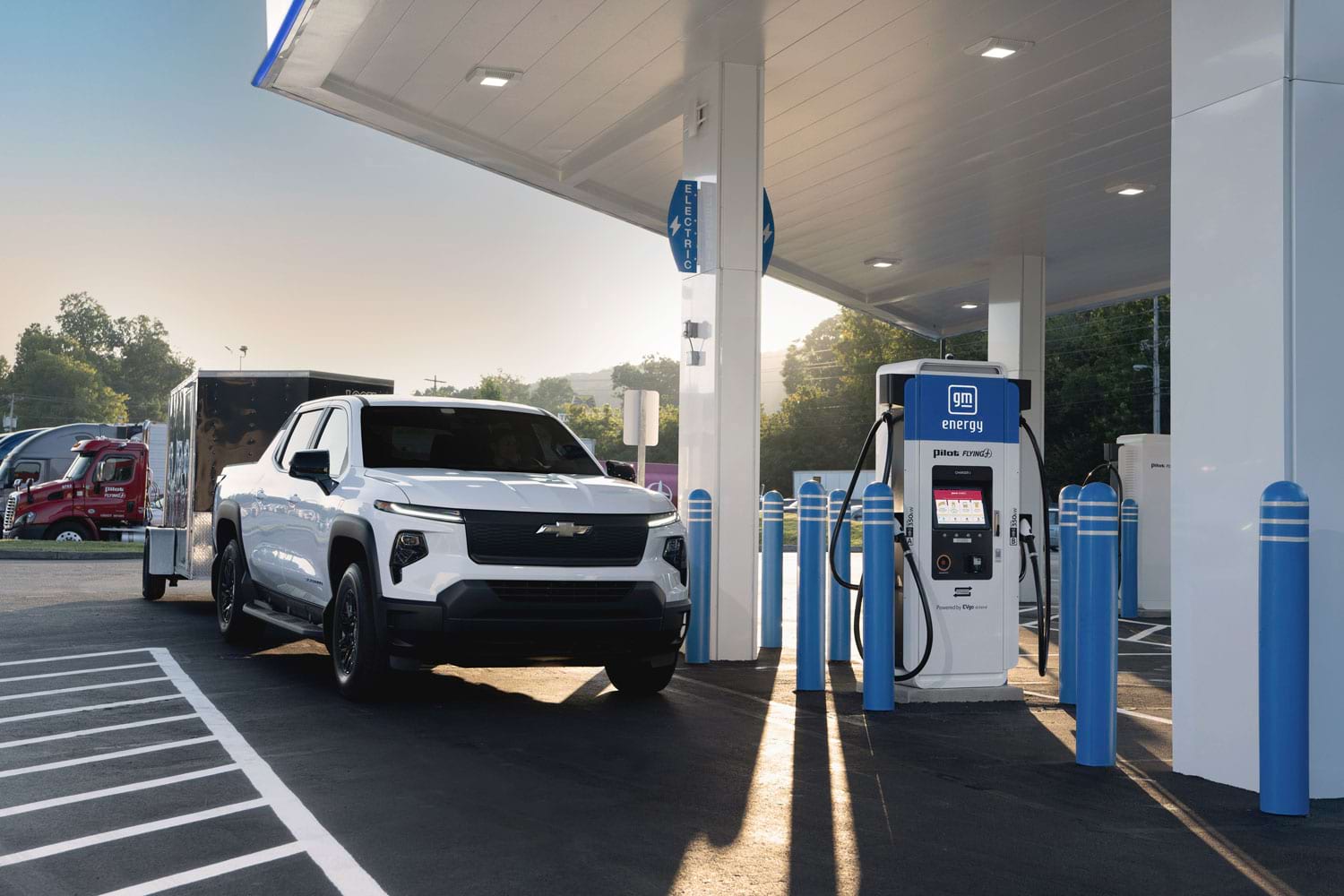
Automakers are discovering, at enormous cost, that the transition to electric vehicles is moving far more slowly than anticipated. Two of Detroit’s Big Three automakers are now confronting the harsh reality that betting heavily on electric vehicles before the market is fully ready can lead to massive financial consequences.
In an effort to get ahead of rivals, both Ford and General Motors poured billions into EV development, only to see demand fail to keep pace. After Ford revealed a $5.1 billion loss from its EV division in 2024, General Motors has now reported even deeper losses.
GM expects to “take a $6 billion hit as a result of its stalled electric vehicle transition.” The disclosure appeared in a regulatory filing released Wednesday and sent GM’s share price down as much as 1.9% in after-hours trading.
Although consumer interest in EVs has remained relatively stable, the rate of growth has slowed significantly over the past five years. That slowdown became even more pronounced after President Trump eliminated the $7,500 federal EV tax credit, shrinking an already limited pool of buyers who could afford new electric vehicles.
The impact on GM was dramatic: its EV sales dropped by a striking 43% between the third and fourth quarters of the year. In total, GM sold 169,887 EVs in the U.S. throughout 2025, a clear indication that incentives played a major role in driving demand.
General Motors acknowledged as much in its regulatory filing, stating, “With the termination of certain consumer tax incentives and the reduction in the stringency of emissions regulations, industry-wide consumer demand for EVs in North America began to slow in 2025.”
The same filing also revealed that GM absorbed a $1.1 billion charge tied to restructuring efforts in China, a market that has become increasingly hostile due to the rapid rise of domestic automakers. .
Competition in China has intensified dramatically over the past year, and the country is now expected to surpass Japan as the world’s largest automotive market for the first time. For GM, this shift has compounded the financial strain created by weaker EV demand at home.
Unfortunately for the automaker, the calendar turning to a new year hasn’t brought relief.
GM’s filing stopped short of directly blaming the loss of the federal EV tax credit for its financial woes and was similarly cautious when addressing the impact of ongoing Trump-era tariffs.
Still, the company made it clear that more losses are likely in the near term. “We expect to recognize additional material cash and non-cash charges in 2026 related to continued commercial negotiations with our supply base, which we believe will be significantly less than the EV-related charges incurred in 2025,” the filing stated.
There remains a glimmer of optimism for GM’s EV ambitions. Chevrolet’s upcoming Bolt EV is expected to start at under $29,000 in base LT trim, potentially putting it within reach of a broader audience.
However, with batteries sourced from China’s CATL, geopolitical and supply-chain uncertainties continue to loom. For now, GM’s experience serves as a stark reminder that the road to electrification is proving far more expensive, and far less predictable, than many automakers anticipated.
Also Read: 5 Cars That Stay Popular for Years vs 5 That Fade Quickly