

A U.S. legislator has proposed the SAFE Exit Act, aiming to mandate manual, intuitive door releases on cars after safety concerns emerged around Tesla-style flush-mounted electric handles.
Rep. Robin Kelly (D-IL) introduced the Securing Accessible Functional Emergency Exit Act (SAFE Exit Act) on January 6 in the House of Representatives.
The bill instructs the National Highway and Traffic Safety Administration (NHTSA) to issue a final rule within two years requiring “a power independent, easy-to-find manual release for each door providing occupant egress, which shall be intuitive to use and readily accessible for the occupant,” as well as labels guiding occupants to the release points and provisions for emergency responders to access the cabin when the vehicle loses power.
Currently, no federal standard governs electric vehicle door mechanisms. Kelly emphasized the need for regulations, stating, “profits and, least of all, style, should not come before people’s lives,” and added, “Elon Musk and his Tesla designs are not safe, nor efficient, and it has cost people their lives.”
“When crashes or power loss leave drivers and passengers trapped inside their own cars, that is not innovation, it’s a safety failure,” Kelly said. “Just like requiring basic safety standards like seatbelts, my SAFE Exit Act will protect consumers. As the auto industry continues to innovate, we must ensure people’s safety.”
The bill marks the first significant congressional move addressing safety risks from electrically powered doors, prompted by incidents in which occupants were unable to exit vehicles.
Tesla is a primary target because of its market leadership and consistent use of flush, electrically operated handles across its lineup, including the Model 3, Model Y, Model S, Model X, and Cybertruck.
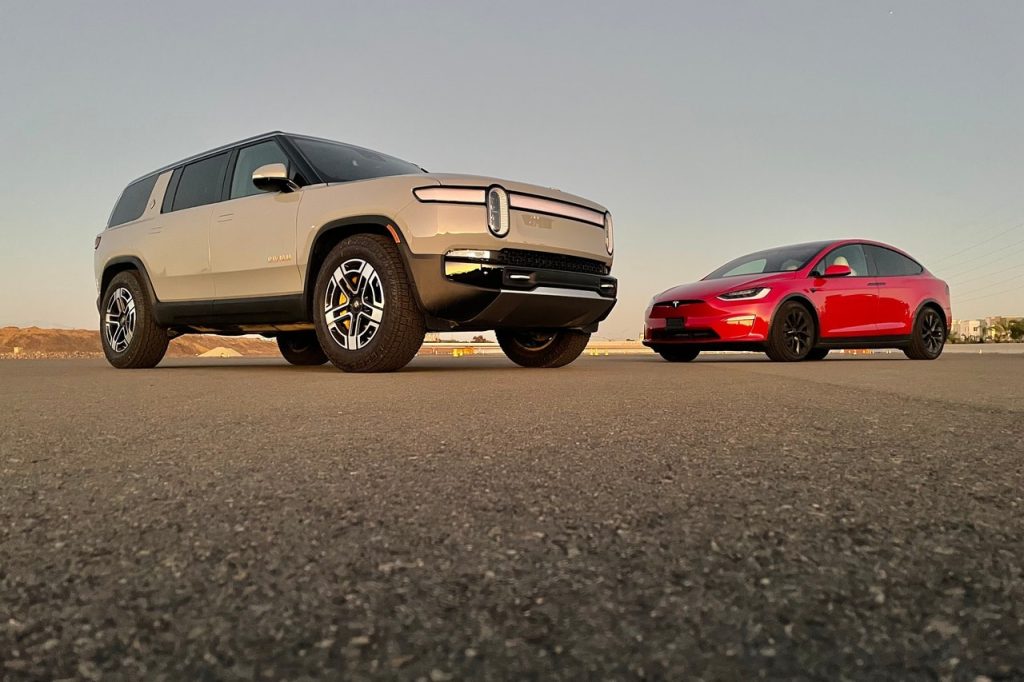
Although visually sleek, these handles have generated complaints from owners worried about failures when the 12V system loses power. At least 15 fatalities have been linked to such failures in Tesla crashes, and the NHTSA is investigating roughly 174,000 2021+ Model Y vehicles following reports of electronic handle malfunctions trapping passengers.
While Tesla is most prominent, the SAFE Exit Act would also impact other EVs with similar designs, such as Rivian’s R1T pickup and R1S SUV, both using flush electronic handles.
In December 2025, a Rivian R1S owner reported that he could not locate the emergency door release while trying to teach his children, noting, “The panel broke and could not be restored without Rivian service center ordering a new part, and I fully failed to even find the cable. There’s no way kids could ever figure this out if they had to.”
Rivian has addressed this in its upcoming R2, moving manual releases closer to powered handles for easier access, though some owners have implemented DIY solutions for current models.
Similar regulations are emerging worldwide. Last month, China’s Ministry of Industry and Information Technology released draft rules banning flush electric handles in vehicles under 3.5 tons, requiring interior and exterior handles with mechanical emergency releases effective January 1, 2027.
Consumer Reports has endorsed the SAFE Exit Act. Cooper Lohr, Senior Policy Analyst of Transportation and Safety, said, “It is critical for people to be able to immediately get out of the car during a vehicle fire or similar emergency. This type of equipment can make it impossible for occupants to exit the vehicle in a life-threatening situation.”
Lohr added, “Fortunately, this problem has a solution: every car should be required to have intuitive, accessible, and easy-to-find manual releases that work even when power fails. We thank Congresswoman Kelly for introducing the SAFE Exit Act, which is a smart, timely response to a very real and growing safety risk.”
Also Read: Top 10 ’90s Hot Hatches Collectors Won’t Shut Up About
