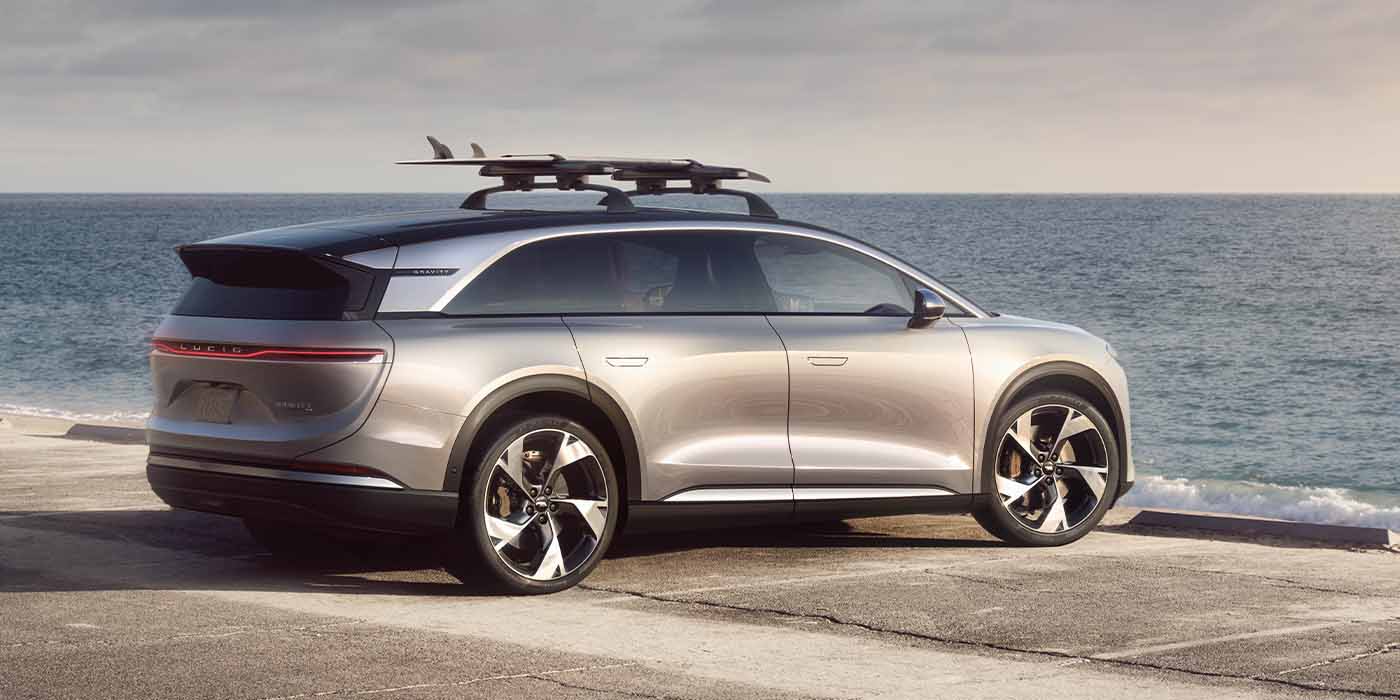
Lucid’s newest upgrade for the Gravity isn’t about autonomy, it’s about pinpointing the SUV’s exact position, even when traditional GPS struggles.
The Lucid Gravity targets buyers who may have never considered the Air. While the Air introduced Lucid as a luxury EV brand, sometimes to an exclusive fault, the Gravity seeks a broader audience.
Positioned as an electric SUV, it appeals to the most popular body style among new car buyers today. It offers the space, utility, and versatility expected of an SUV while skipping some of the extravagant luxury extras that usually drive prices higher.
But the Gravity isn’t just about price and form. Lucid partnered with Trimble, a company recognized for ultra-precise positioning systems in aviation and construction. That same technology is now integrated into the Gravity’s navigation and driver-assist systems, giving the SUV an unprecedented sense of spatial awareness on the road.
Most driver-assist systems rely on conventional GPS, which falters in tunnels, parking garages, or cities with towering buildings. In such scenarios, the system can lose positional accuracy by several meters.
Trimble’s RTX and ProPoint Go technology addresses this by merging satellite data with six-axis sensors, allowing the Gravity to maintain exact positioning even when GPS signals drop out.
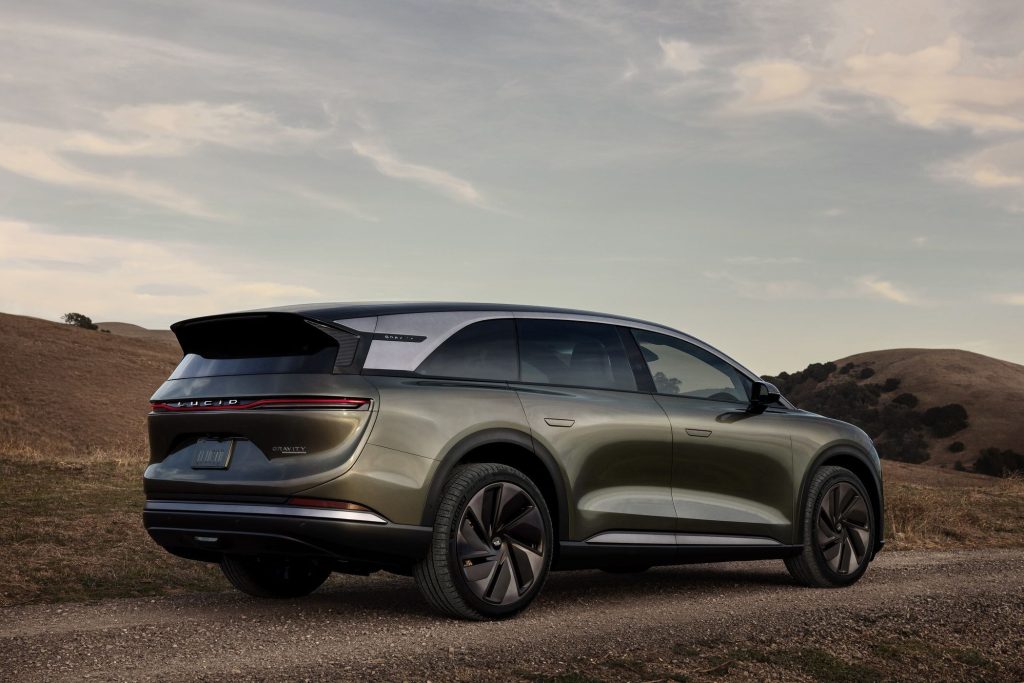
What truly differentiates the Gravity is how Lucid leverages this positioning tech at the heart of the driving experience. The SUV uses Trimble’s system as the primary source for location, speed, and direction, feeding that information directly to its Hands-Free Driving Assist.
In practical terms, this means the Gravity knows precisely which lane it occupies and its exact placement on the highway before allowing the driver to take hands off the wheel.
The system doesn’t require extensive new hardware. Instead, it relies on sensor fusion, combining the SUV’s existing sensors with Trimble’s positioning engine. This allows Lucid to integrate the technology without redesigning the vehicle from the ground up.
Additionally, this enhanced positioning improves range calculations by incorporating real-world altitude data. Hills and elevation changes are factored into driving range estimates, rather than assuming a flat road at all times.
Trimble’s positioning technology will come standard on new Lucid Gravity models beginning late January 2026. Current Gravity owners aren’t left behind, Lucid will deliver the feature through an over-the-air software update, enhancing navigation and driver-assist performance without requiring a service visit.
As for other Lucid vehicles, adoption depends on how compatible their sensors and software are with Trimble’s system. The Gravity is the first Lucid designed from the ground up to use this level of positional accuracy, so rolling it out to other models will likely require similar technical groundwork.
Also Read: Top 12 SUVs Proven to Rack Up 500,000 Miles Without Drama