
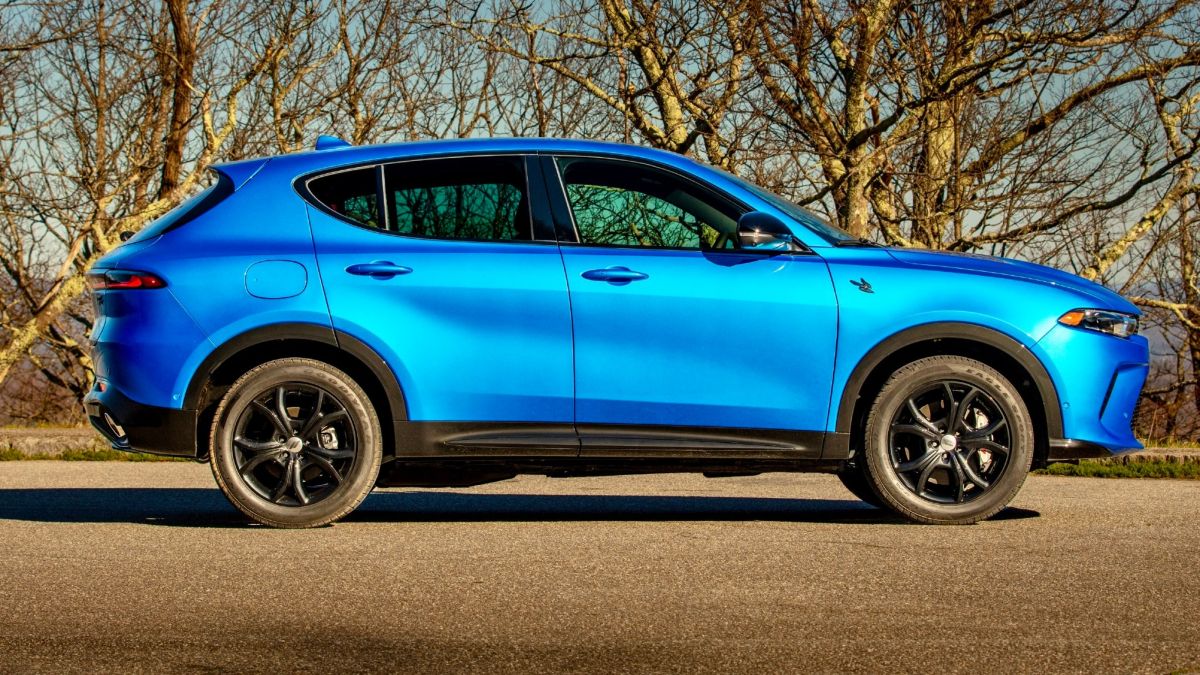
Undone by shifting policy winds and an awkward fit within Dodge’s portfolio, the Hornet has been discontinued after just three model years.
Dodge has ended production of the Hornet crossover after three years, citing changes in the policy landscape. The model suffered a steep sales decline, down 54% year over year and 82% in Q4 of 2025. Dodge is now doubling down on larger, high-horsepower vehicles such as the Charger and Durango.
Just weeks ago, Dodge dealers were still struggling to move 2024 Hornet plug-in hybrid models. At the time, more than 80% of that model year’s electrified inventory remained unsold.
But the issues facing the Hornet went well beyond the PHEV variant. Dodge has now elected to discontinue the entire Hornet lineup, including the standard non-hybrid version. As a result, there will be no 2026 Hornet, bringing the compact crossover’s run to an end after only three model years.
When asked about the Hornet’s cancellation, a Dodge spokesperson offered limited detail but emphasized that current owners would not be left unsupported.
“Production of the Dodge Hornet, built in Italy, has ended due to shifts in the policy environment,” said the spokesperson in a statement. “Dodge is committed to ensuring Dodge Hornet owners continue to receive customer support, service, warranty coverage and sustained parts supply.
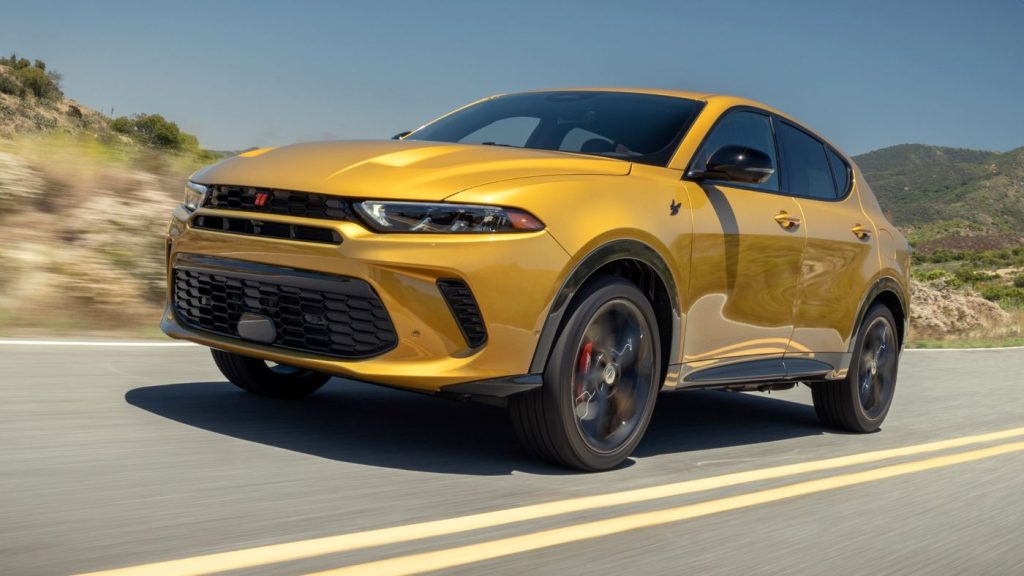
All Dodge Hornet models carry a 3-year/36,000-mile bumper-to-bumper and 5-year/60,000-mile powertrain warranty. Dodge Hornet R/T PHEV upgrades to 8-year/80,000-mile warranty on hybrid components and 8-year/100,000-mile warranty for battery.”
Sales performance in 2025 underscores why Dodge ultimately made the call. Total Hornet deliveries for the year came in at just 9,365 units, representing a 54% drop compared to 2024. The final quarter was particularly bleak, with only 879 units sold, a year-over-year decline of 82%.
Beyond weak demand, the “shifts in policy” referenced by Dodge are widely believed to reflect the impact of tariffs. Those measures hit smaller, price-sensitive vehicles hardest, and the Hornet was especially vulnerable.
Because the model was assembled in Italy, it was directly affected by tariffs implemented under the Trump administration, further complicating its position in the US market.
While the Hornet’s turbocharged 268-horsepower output was respectable, it never fully aligned with Dodge’s core identity. The brand continues to perform best with large, powerful vehicles, a trend reinforced by strong sales of the Durango three-row SUV last year. Offered with robust V6 and V8 engines, the Durango remains a standout in its segment.
That emphasis on traditional muscle also carried over to the new Charger. The recently introduced SixPack variants reaffirmed Dodge’s commitment to internal combustion, debuting a 550-horsepower 3.0-liter inline-six. There is also continued speculation that a V8-powered Charger could eventually return.
The Hornet’s exit is still a letdown, particularly because it stood out as one of the more engaging small crossovers to drive. That said, the vehicle isn’t disappearing entirely.
Buyers can still find much of the Hornet’s DNA in the Alfa Romeo Tonale, which continues into the 2026 model year. Sharing the same platform and powertrains, the Tonale carries on, with arguably sharper styling, where the Hornet leaves off.
Also Read: Top 10 Old-School Car Technologies EVs Can’t Replicate
