
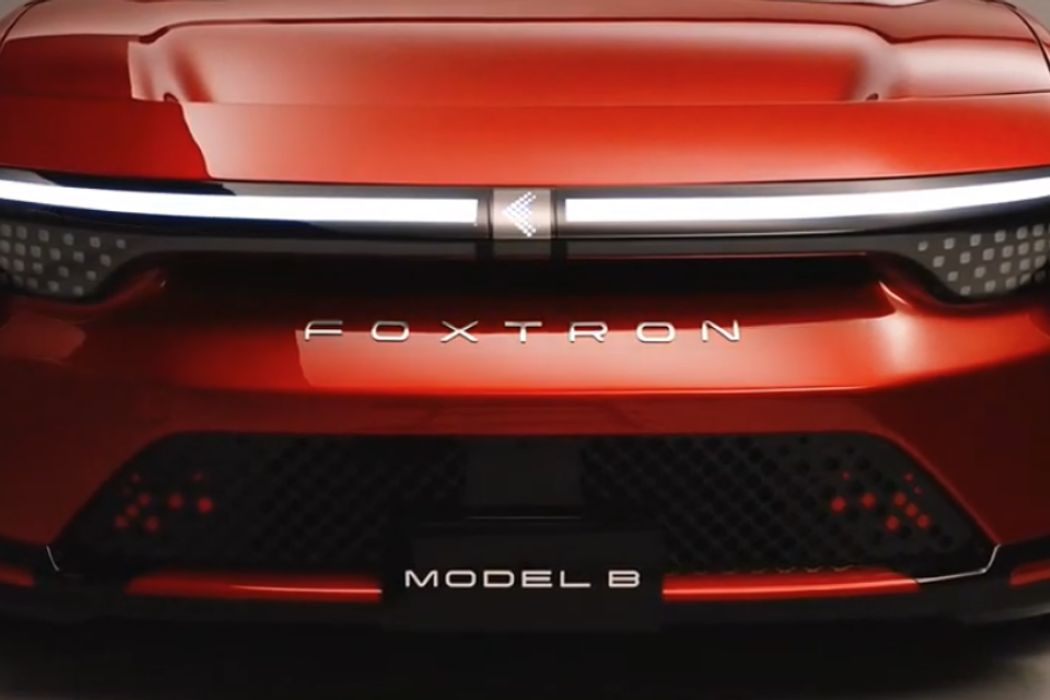
Mitsubishi is preparing a 400-horsepower electric hatchback developed with Foxconn, signaling the automaker’s willingness to pursue unconventional partnerships as it reshapes its EV strategy.
Mitsubishi’s next Australian-market EV is derived from Foxtron hardware rather than Nissan platforms. The Foxtron-based Bria EV delivers up to 400 horsepower and as much as 321 miles of NEDC-rated range. It remains uncertain whether North America will receive this Foxtron-based EV or a Nissan-derived alternative.
When Mitsubishi outlined its electric revival last year, the expectation was clear: future EVs would lean heavily on Nissan and the broader Alliance for platforms and technology. That assumption still appears to hold true for North America. However, the picture looks notably different in Australia.
There, Mitsubishi’s first new electric vehicle in roughly 15 years reportedly will not rely on Nissan engineering at all. Instead, it’s expected to be based on a vehicle developed by Foxtron, the automotive arm of electronics manufacturing giant Foxconn.
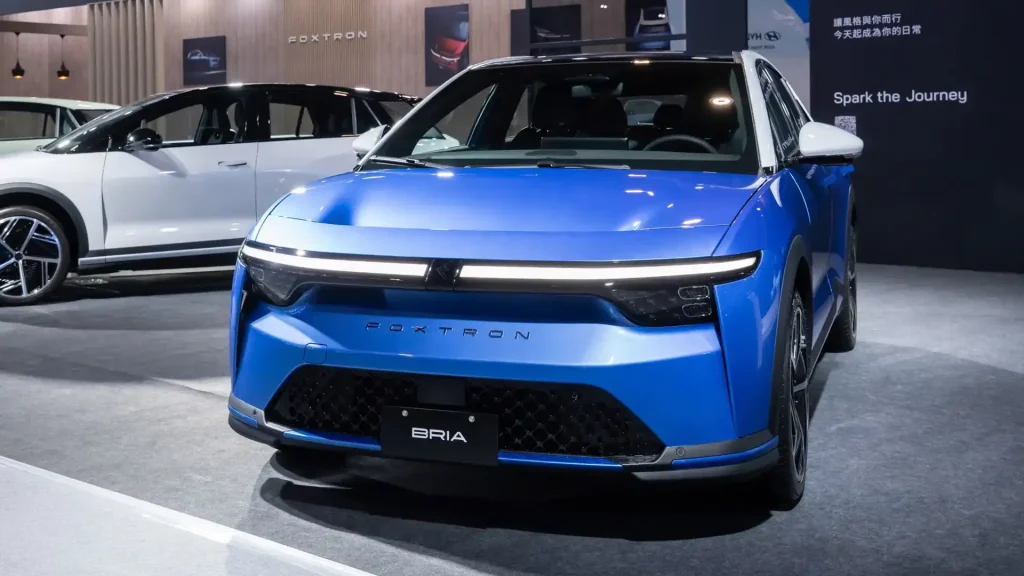
Foxconn, best known globally for assembling Apple’s iPhones, recently introduced the Bria EV in Taiwan. According to Drive, that model will serve as the foundation for Mitsubishi’s upcoming electric hatchback for the Australian market.
What remains unclear is whether this Foxtron-based EV will also be offered in North America or if U.S. and Canadian buyers will instead receive a Nissan-derived electric model. For now, Mitsubishi appears to be tailoring its EV rollout market by market, balancing cost, regulations, and development timelines.
If Mitsubishi carries over most of the Bria’s mechanical package, the performance figures are more than respectable. Entry-level versions use a single rear-mounted electric motor producing roughly 229 horsepower, with a claimed 0–62 mph time of 6.8 seconds. That puts it ahead of many mainstream compact EVs in straight-line acceleration.
The standout configuration is the dual-motor, all-wheel-drive variant. With a combined output of approximately 400 horsepower, it’s said to sprint from 0–62 mph in just 3.9 seconds. That firmly places it in hot-hatch territory, at least from a performance standpoint.
Every version of the vehicle is powered by a 57.5-kWh lithium iron phosphate battery. Foxtron advertises up to 321 miles of driving range on the optimistic NEDC test cycle for rear-wheel-drive models. Translated to EPA standards, that figure would likely land closer to 260–270 miles, with all-wheel-drive versions expected to fall somewhat short of that.
DC fast-charging capability peaks at 134 kW, enabling a 10-to-80 percent charge in roughly 30 minutes. The vehicle’s curb weight, however, is on the heavy side for the segment at around 4,450 pounds, which puts added importance on suspension tuning and steering calibration.
The Bria closely resembles Foxtron’s Model B concept, featuring a clean, modern design with full-width lighting elements, flush door handles, and aero-focused detailing. The exterior was penned by Pininfarina, though Mitsubishi is expected to incorporate its own design touches. How extensive those changes will be remains unclear.
Australia is expected to receive the Foxtron-based Mitsubishi EV in the second half of 2026. As for the U.S. and Canada, Mitsubishi has yet to confirm whether this model will be offered here or if a Nissan-based EV will take its place. For now, the Bria-derived vehicle appears to be just one component of a broader and still-evolving EV roadmap for the brand.
Also Read: 5 Performance Cars That Handle City Streets vs 5 That Are Miserable
