
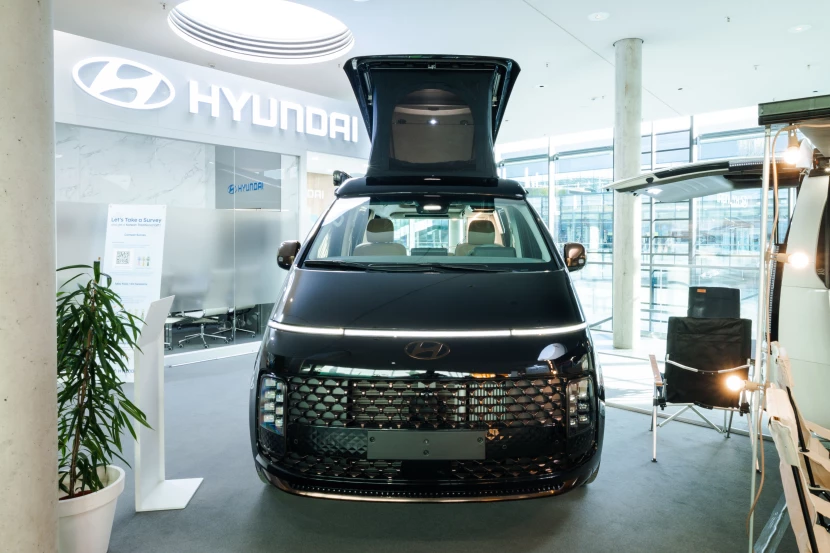
Featuring a pop-up roof and an integrated solar panel to run onboard accessories, Hyundai’s latest electric van concept is designed with family adventures in mind.
Hyundai has revealed the Staria Camper Concept, an electric minivan reimagined as a high-end camper. Highlights include a power-operated pop-up roof, electronically adjustable smart glass, and an onboard solar panel for off-grid capability.
Whether it reaches production will depend on public reaction at a major German trade show.
Just days after introducing the nine-seat Staria electric minivan, Hyundai is already exploring more specialized applications for the platform. The concept showcases how Hyundai’s electric people mover could be transformed into a premium recreational vehicle.
With features such as a lightweight solar panel and a motorized pop-up roof, the Staria Camper Concept presents a compelling vision of an electric camper van, and Hyundai is openly considering building it for production. If it does, it would squarely challenge camper variants of the Volkswagen ID.Buzz.
Like the standard electric Staria, the Camper Concept takes a distinctly modern approach to minivan design. It avoids the boxy, utilitarian look of traditional vans, offering a far sleeker appearance than something like a Honda Odyssey. The exterior is defined by slim daytime running lights, expansive glass surfaces with privacy treatment, and sliding doors that make entry and exit easy.
The real innovation, however, is found inside. The power-operated pop-up roof is central to the camper’s appeal, creating a more open and airy interior when deployed while improving access to the kitchen area.
Integrated into the roof is a 520-watt composite solar panel capable of generating up to 2.6 kWh of electricity per day, assuming around five hours of sunlight. That additional power can be used to run features such as the onboard refrigerator, a portable shower, or the climate control system, an especially useful benefit when traveling far from charging stations or urban areas.
The Staria Camper also features electronically adjustable smart glass in the rear cabin. Controlled via a dedicated touchscreen, the glass allows occupants to fine-tune transparency for comfort and privacy, whether driving or parked.
Given the adaptable interior layout, which can be configured for sleeping, dining, or transporting passengers, the adjustable glass adds another layer of versatility. An exterior awning further extends the usable living space by providing shade outside the vehicle.
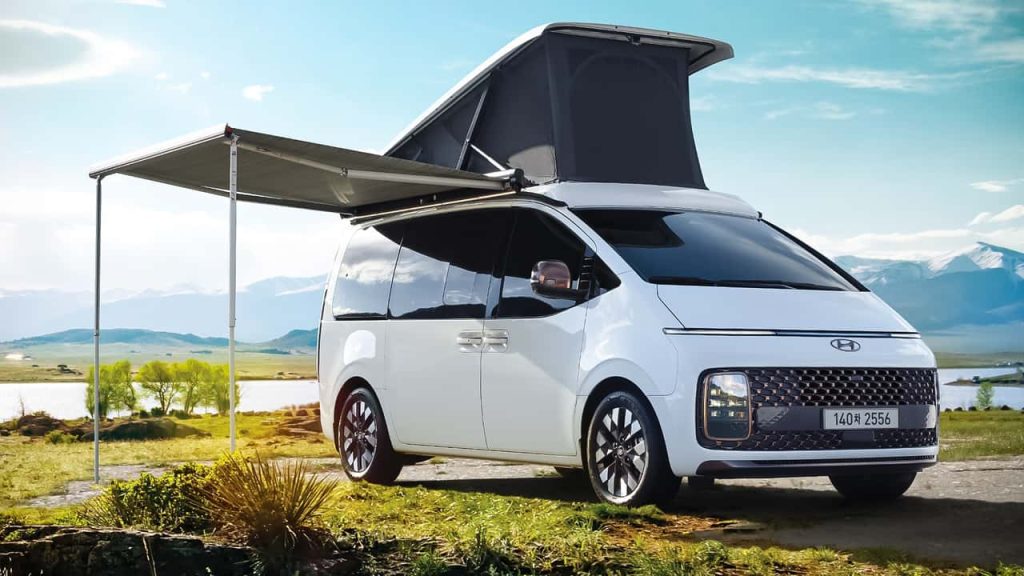
Underneath, the Staria Camper Concept shares its powertrain with the production Staria EV. A single electric motor drives the front wheels and produces 215 horsepower. Performance is not the focus here, but the vehicle benefits from Hyundai’s 800-volt electrical architecture, the same setup used in models like the Ioniq 5 and Ioniq 6.
his enables rapid DC fast charging, with a 10-to-80 percent recharge taking approximately 20 minutes. Total driving range is estimated at around 250 miles on the WLTP cycle, and additional sound insulation has been added to make long-distance travel more comfortable.
Hyundai says the Camper Concept will remain under evaluation at the CMT trade fair through January 25. If the response from attendees is strong, the company will consider moving forward with production, aimed specifically at the European market. That regional focus makes a U.S. launch unlikely.
For many outdoor enthusiasts, camper vans offer a more manageable alternative to traditional RVs. Vehicles like the Staria Camper are easier to drive, more efficient, and far simpler to park, while accessories such as pop-up roofs expand livable space once parked.
In the U.S., camper conversions based on platforms like the Mercedes-Benz Sprinter, Ford Transit, and Ram ProMaster dominate the market. However, electric options like the Staria point toward a quieter, more technologically advanced future. Companies such as Seattle-based Peace Vans already offer camper conversions for Volkswagen’s electric ID.Buzz.
As battery technology improves and charging infrastructure continues to expand, large electric camper vans are likely to become increasingly viable, and appealing, choices for family road trips and outdoor adventures.
Also Read: Top 10 Cars Under $20K That Fool Everyone Into Thinking You’re Rich
