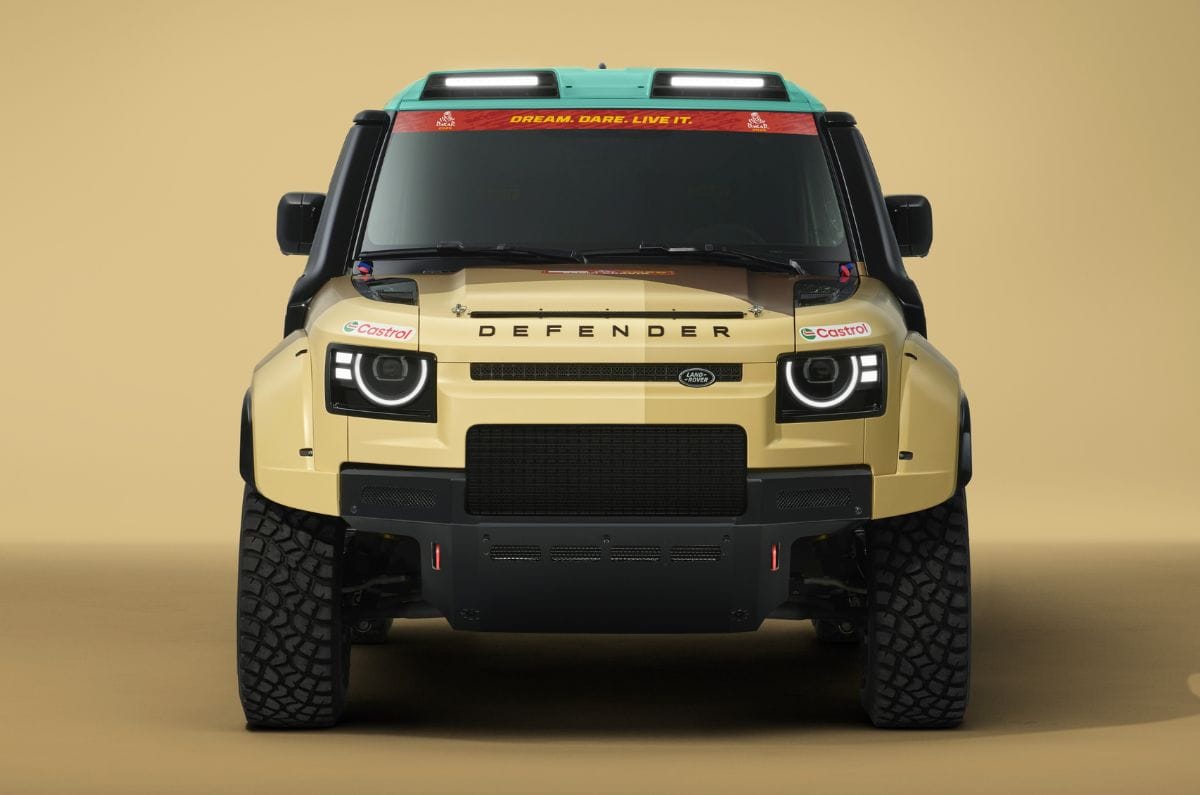
Defender Rally secured a debut Dakar victory in the Stock class, proving its production-based Defender Dakar D7X-R can win in the desert.
Defender Rally won its debut Stock class at the 2026 Dakar Rally. The victory showcased consistent team performance and advanced factory-supported vehicle design. Land Rover uses this win to boost Defender’s credibility and market appeal.
Defender Rally entered the Dakar Rally for the first time and immediately made an impact, taking victory in the production-based Stock category at the 2026 event. This win is significant because the Dakar Rally is one of motorsport’s toughest tests, and production-based vehicles must strike a balance between speed and durability while remaining closely tied to their showroom counterparts.
The winning crew, Rokas Baciuška and co-driver Oriol Vidal, clinched the Stock class title in the Defender Dakar D7X-R by securing a Stage 13 victory on the final day. Their total time was 58 hours, 9 minutes, and 45 seconds, reflecting a consistently strong performance throughout the rally.
Two additional Defender entries also finished near the front of the Stock class, demonstrating that this was not a single lucky run but a coordinated factory-supported campaign.
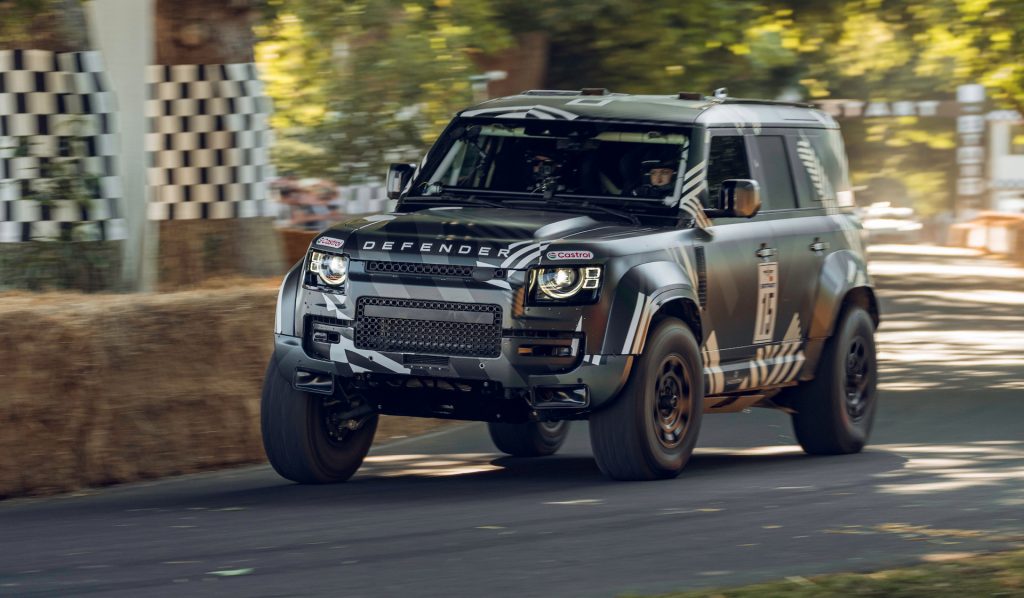
The Stock class contender is built on the Defender OCTA architecture and uses a 4.4-liter twin-turbo V8, modified specifically for rally-raid competition with upgrades emphasizing durability and off-road performance.
While retaining the core structure of roadgoing Defenders, the Dakar D7X-R features a wider track, increased ride height, revised suspension, and enhanced cooling to withstand the rigors of desert racing. The goal is to show that the Defender platform can survive Dakar-level punishment without needing to be converted into a purpose-built prototype.
Land Rover’s participation in Dakar serves both as a return to high-level rally-raid racing and a marketing tool for the Defender brand. The program has already generated interest from buyers drawn to the rally car’s look and rugged character. The project also builds on technical directions signaled by Land Rover’s earlier twin-turbo V8 Dakar Defender with its off-road “Flight Mode.”
Dakar victories, even within specific classes, carry long-term significance because they become part of a brand’s heritage. Other automakers, like Mitsubishi, have leveraged their Dakar past to boost brand appeal. Defender’s debut Stock win establishes a similar narrative, supported by modern factory backing and a clear connection to vehicles that customers can actually purchase.
Also Read: 5 Luxury Cars That Still Work in Cities vs 5 That Feel Wasteful