
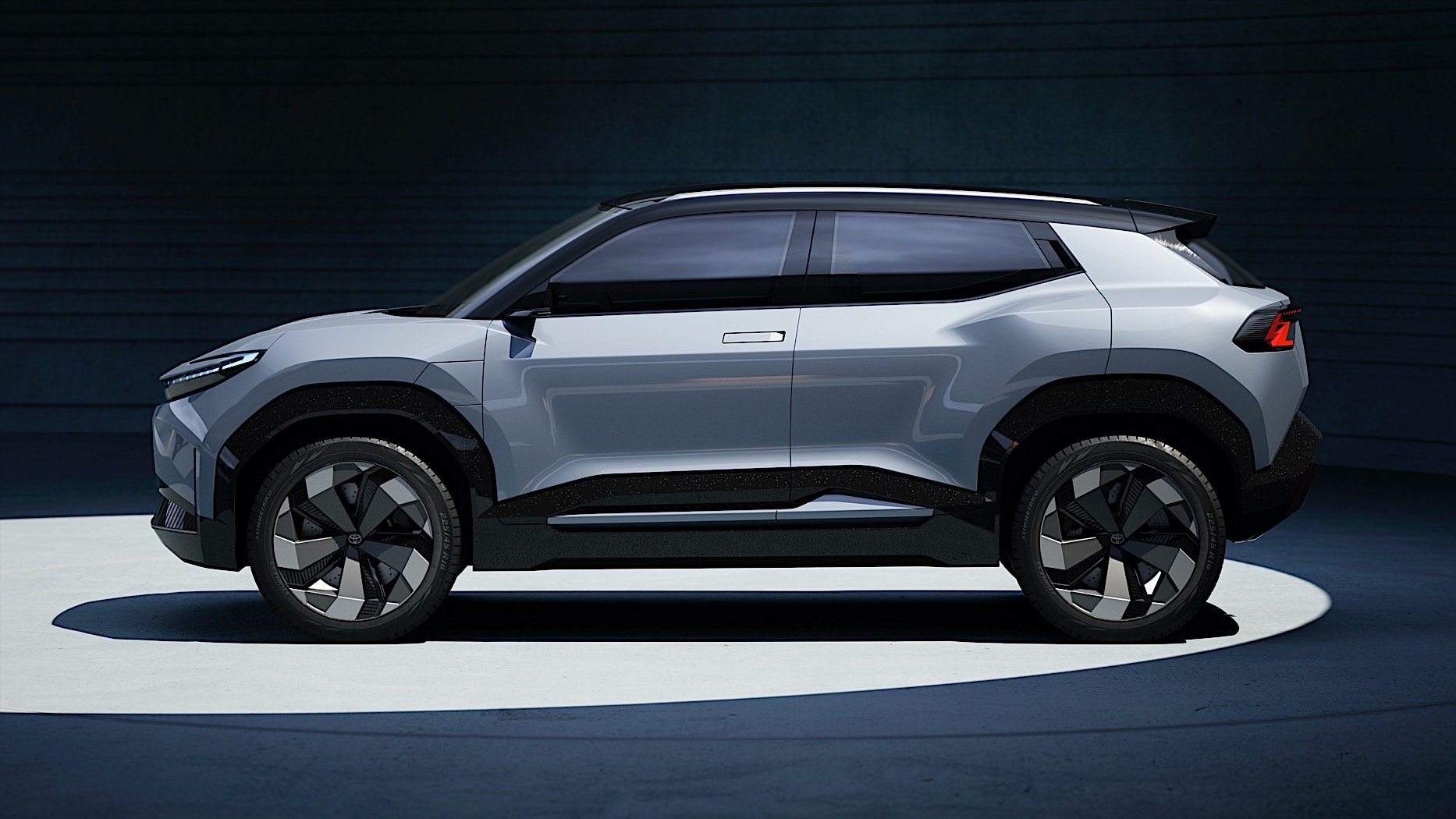
Even as several competitors scale back their electric vehicle ambitions, Toyota is pressing forward, preparing to introduce a new three-row, all-electric SUV next month.
Toyota has long been viewed as one of the more cautious players when it comes to battery-electric vehicles. Yet in a twist of timing, as automakers such as Ford, Stellantis, and Volkswagen dial back their EV strategies, Toyota is picking up the pace with its own rollout.
Alongside upcoming models like the Toyota bZ Woodland and the revived C-HR, the newly released teaser image points to an all-electric three-row SUV scheduled to make its debut on the evening of February 10.
Toyota’s approach to reducing emissions has consistently involved spreading risk across multiple technologies. Former CEO and current Chairman Akio Toyoda has championed a multi-energy strategy that incorporates internal combustion engines, conventional hybrids, plug-in hybrids, hydrogen fuel-cell vehicles, and fully electric models.
In the U.S., nearly every Toyota product line, save for two, now includes a hybrid option. Some vehicles, such as the Tundra, offer both gasoline and hybrid powertrains, while others, including the latest-generation Camry, are sold exclusively as hybrids.
By contrast, Toyota currently markets just two all-electric vehicles stateside: the bZ, previously known as the bZ4X, and the Lexus RZ. Last year, the automaker revealed plans to more than double its EV offerings with the introduction of the Toyota-branded bZ Woodland and C-HR, as well as a second Lexus EV, the next-generation ES.
Toyota is shifting EV SUV production to its Georgetown, Kentucky plant, investing $1.3 billion and phasing out the Lexus ES locally. The move reflects tariff pressures, crowded SUV lineups, and Toyota’s careful approach to electrification.
What one source described as the upcoming “D-SUV,” slated for an early February debut, will further broaden Toyota’s appeal to families in need of a third row of seating.
Notably, the model will also mark a milestone as Toyota’s first electric vehicle built in the United States. Production will take place at the Georgetown, Kentucky facility that currently assembles the Camry hybrid.
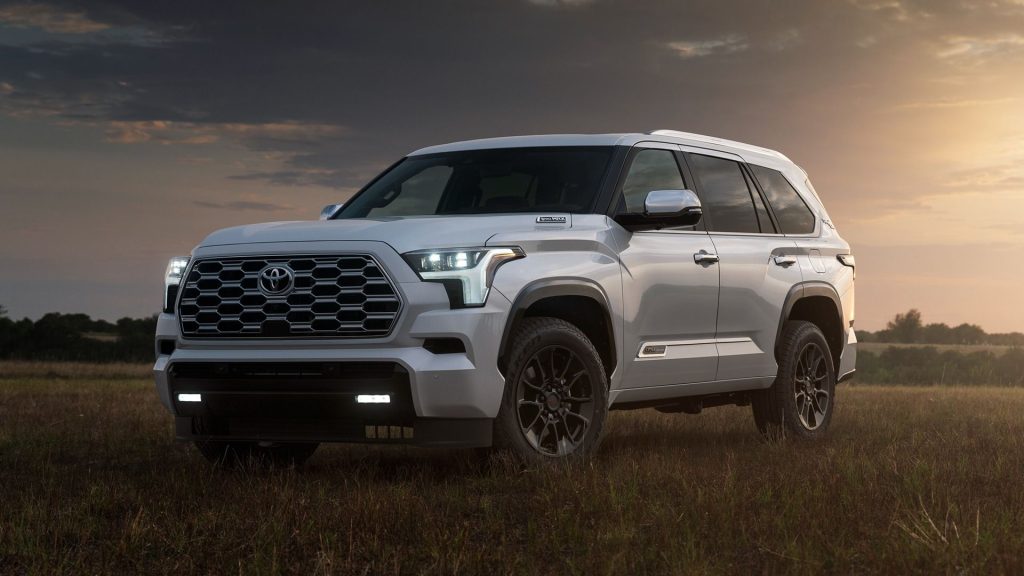
Toyota has remained tight-lipped about specifics, but sources suggest the three-row EV will offer substantially greater driving range than the bZ4X. That would directly address early criticism aimed at Toyota’s first EV, which was hampered by a relatively small battery pack and underwhelming performance.
Given that the new model will compete with highly regarded rivals such as the Hyundai Ioniq 9 and Kia EV9, it is expected to be more generously equipped than either the current bZ or Lexus RZ. Buyers can anticipate a strong focus on family-oriented features, including an enhanced version of Toyota’s cloud-based, voice-activated Intelligent Assistant, along with an array of advanced safety technologies.
According to Fiorani, supplier discussions indicate that two versions of the three-row EV are in development. It remains unclear whether the second variant will wear a Lexus badge or instead be offered through Subaru. Subaru’s first U.S.-market EV, the Solterra, is closely related to the Toyota bZ.
Despite the growing list of EV projects, Toyota continues to tread carefully, maintaining its emphasis on hybrid technologies across the U.S., Europe, and Japan. China stands as the major exception, driven by the government’s New Energy Vehicle mandate.
There, Toyota partnered with Guangzhou Automobile Group to develop the bZ3X, launched last March, and is following up with the bZ7X, both models designed specifically for the Chinese market.
Not long ago, Toyota faced criticism from U.S. environmental groups for what appeared to be a slow response to electrification compared with some competitors. In hindsight, that strategy now appears more calculated, especially following moves by the Trump administration to undo several Biden-era policies.
Among them was persuading Congress to phase out federal EV tax credits as of September 30. Since then, sales of all-electric vehicles have declined.
Even so, Toyota executives emphasize that the company remains flexible and prepared to accelerate EV production if U.S. consumer demand rebounds. A cornerstone of that readiness was the opening of a new battery plant in North Carolina last November, a development Toyota Motor North America President Tetsuo Ogawa described as “a pivotal moment in our company’s history.”
Also Read: 5 Cars for Buckeye Long Commutes and 5 Comfortable Highway Options
