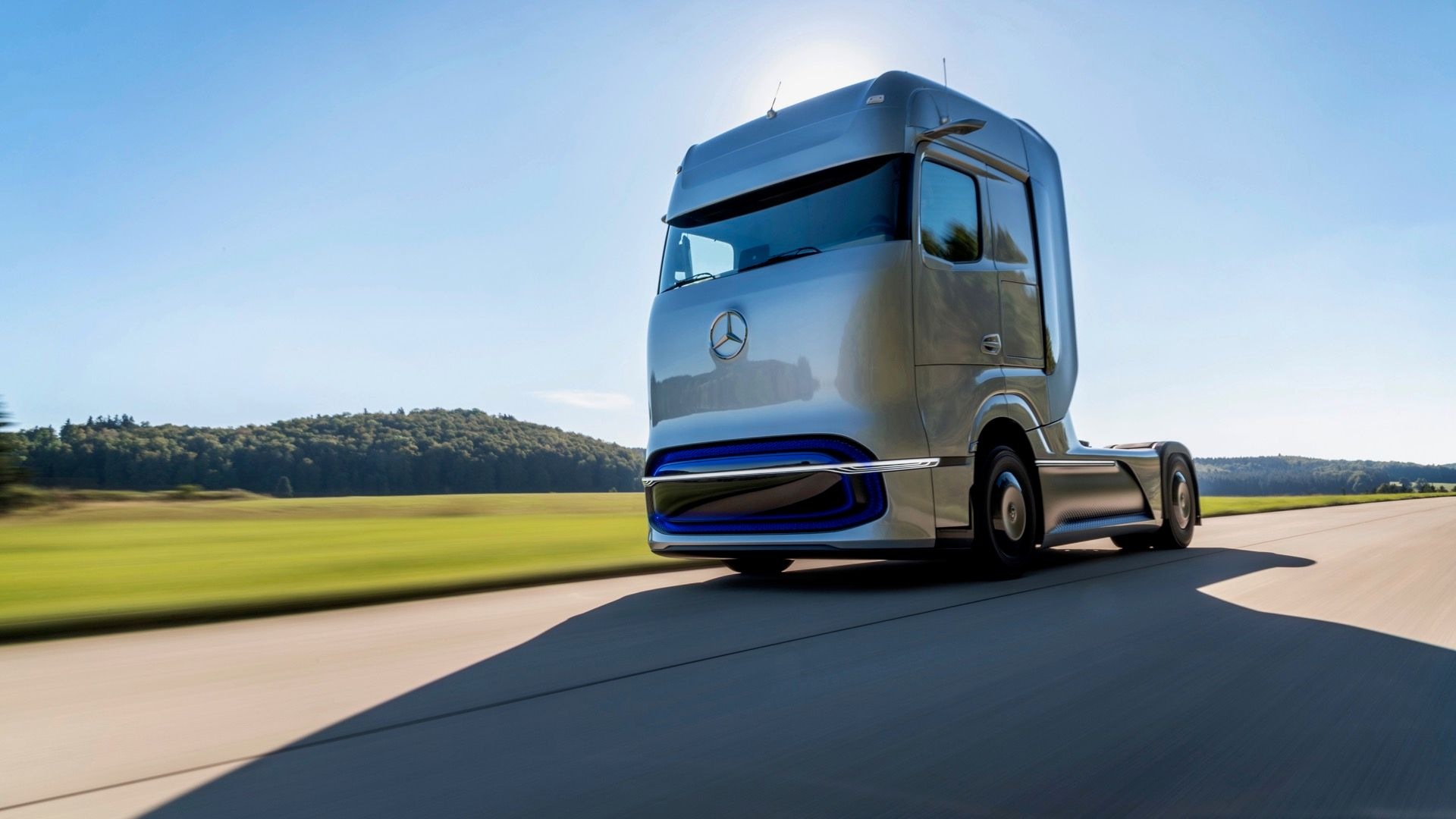
Mercedes-Benz plans to build 100 NextGenH2 hydrogen-powered trucks for customer use beginning at the end of 2026, aiming for a long-haul driving range of more than 1,000 kilometers.
Daimler Truck will produce 100 hydrogen-powered NextGenH2 trucks for customer deployment starting in 2026. The trucks are designed for more than 1,000 kilometers of range, quick refueling, and advanced safety systems.
The limited run will be used to validate durability, hydrogen supply logistics, and the integration of new technologies ahead of full-scale production.
Mercedes-Benz is moving hydrogen-powered long-haul trucking closer to real-world use, shifting beyond test tracks and prototypes. Daimler Truck has confirmed it will build a small batch of 100 Mercedes-Benz NextGenH2 semi-trailer tractors at its Wörth manufacturing facility, with customer operations beginning toward the end of 2026.
The initiative is positioned as a critical step between experimental vehicles and full series production, which is currently targeted for the early 2030s.
This is not yet a mass-market introduction, but it marks a significant transition from isolated prototypes to a controlled production run that will be operated by customers in everyday conditions.
Daimler Truck is using the 100 vehicles to assess long-term durability, refine servicing procedures, and validate hydrogen refueling logistics at scale, while also confirming that the overall vehicle packaging works in real freight operations.
According to the company, the NextGenH2 has been engineered specifically for heavy-duty, long-haul transport. It is targeting “well over” 1,000 kilometers of driving range on a single fill under full load, a benchmark considered necessary to match the operating profiles traditionally handled by diesel trucks.
Daimler Truck is continuing to back liquid hydrogen, arguing that LH2’s higher energy density makes it better suited for long-distance trucking than compressed hydrogen.
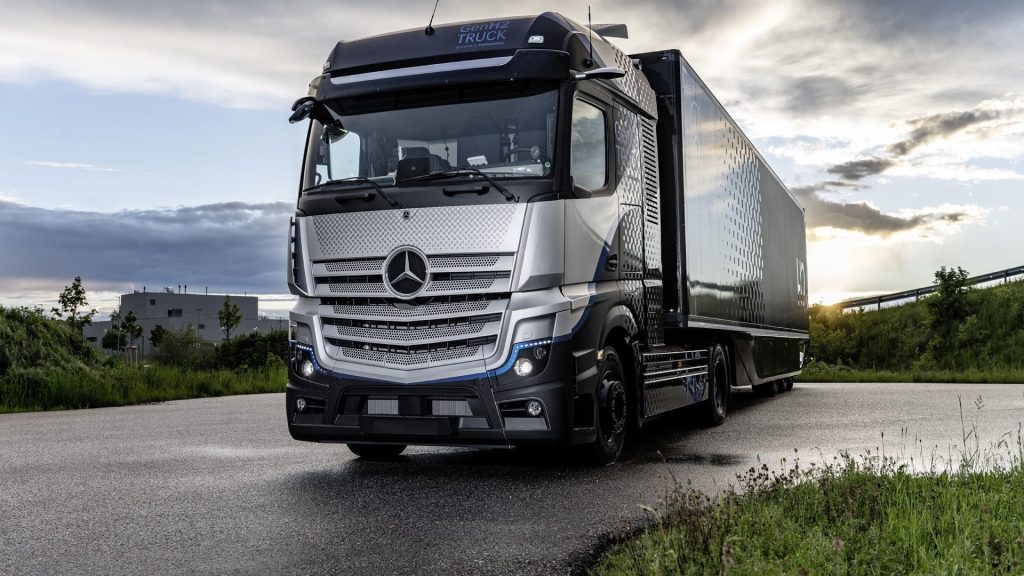
The NextGenH2 stores up to 85 kilograms of liquid hydrogen across two tanks, and the company says refueling can be completed in approximately 10 to 15 minutes using the sLH2 standard developed in collaboration with Linde. This is a critical claim, as refueling time remains one of the biggest operational challenges in long-haul trucking.
Power is supplied by a dual fuel cell system based on the cellcentric BZA150, producing a combined output of 300 kilowatts. This setup is paired with a 101 kilowatt-hour LFP buffer battery that supports energy management and regenerative braking.
Much of the drivetrain hardware is shared with Mercedes’ battery-electric heavy truck, including an in-house e-axle and a four-speed transmission. Daimler Truck says peak output reaches up to 370 kilowatts in its highest configuration.
One notable update compared with earlier GenH2 prototypes is a more compact “Tech Tower” located behind the cab. This redesign is intended to improve trailer compatibility and comply with European length regulations by enabling a shorter wheelbase.
Daimler Truck also points to a new boil-off management system designed to meet hydrogen safety regulations, including requirements for parking in enclosed areas.
Additional sensor systems are intended to allow overnight stays in the cab even in the unlikely event of a hydrogen leak. The truck also features the latest driver assistance technologies, including advanced braking and side-guard systems, along with an updated cybersecurity architecture.
At the same time, the brand continues to refine lighting and safety technologies, reflected in ongoing discussions around headlamp design. Daimler Truck is also maintaining its focus on traditional performance craftsmanship, even as it works to rebuild momentum in battery-electric vehicles.
Also Read: Top 10 Used Mustangs the Market Has Completely Ignored