
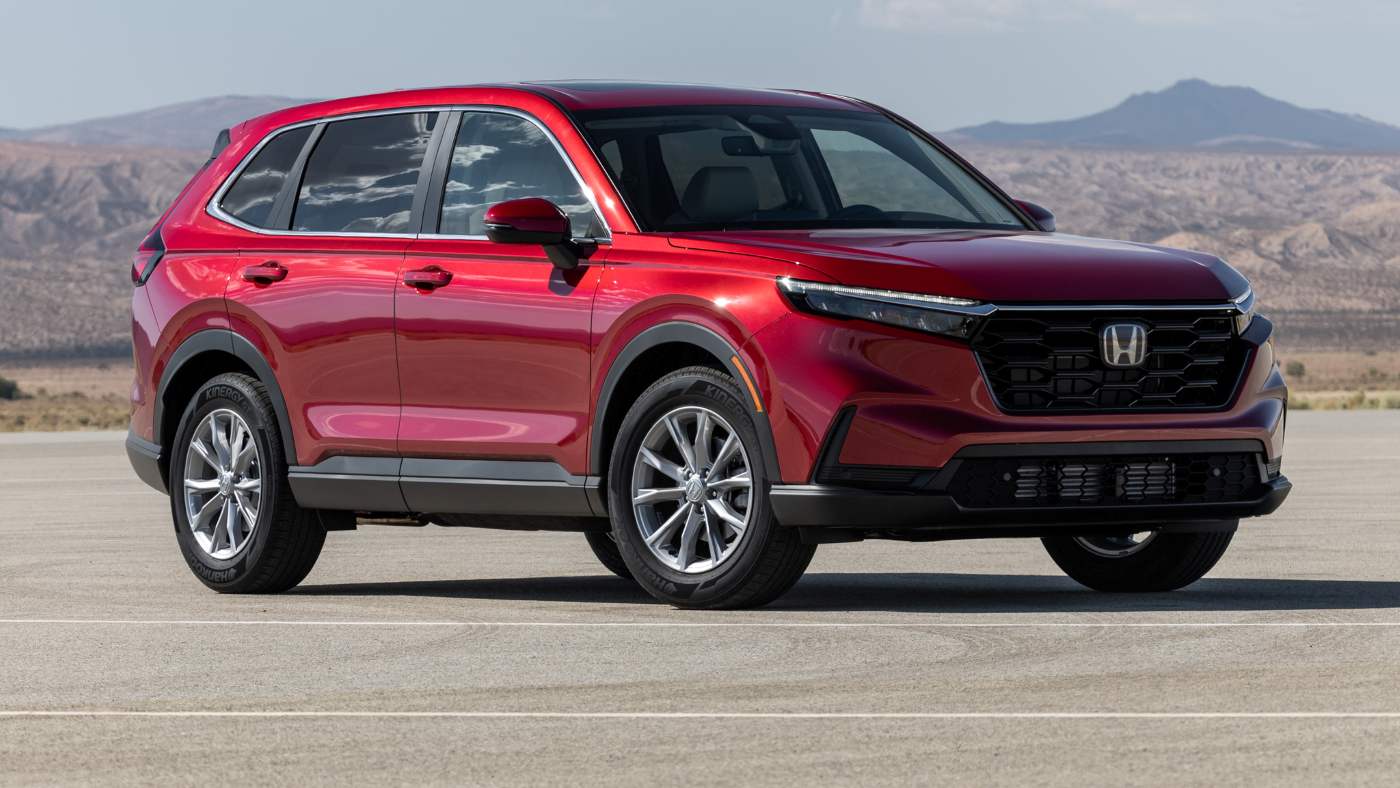
Honda is exploring a new way to make America’s roads safer by using sensors that already exist in modern vehicles to detect potholes and other infrastructure damage before drivers encounter them.
While vision and LiDAR systems have traditionally been focused on improving safety and convenience through driver-assistance features, Honda has demonstrated that the same technology can also play a role in maintaining roadways.
Through a project funded by the Ohio Department of Transportation (ODOT), Honda has shown that vehicle-based sensors can accurately identify road damage and infrastructure issues, potentially saving transportation agencies millions of dollars while improving safety for everyday drivers.
The two-year initiative, known as the Proactive Roadway Maintenance System, was conducted in partnership with i-Probe Inc., Parsons Corporation, and the University of Cincinnati. During the project, Honda test vehicles equipped with vision and LiDAR sensors traveled roughly 3,000 miles across central and southeastern Ohio.
The testing covered both urban and rural environments, took place in a variety of weather conditions, and occurred at different times of day to ensure the system could perform reliably in real-world scenarios.
Over the course of the study, the system successfully identified a wide range of roadway issues. These included worn or obstructed traffic signs, damaged guardrails and cable barriers, potholes with detailed information on their size and location, shoulder drop conditions measured by depth and percentage, poor or faded road striping, and overall rough road quality.
By using Edge AI models, the collected data was transmitted to a Honda cloud platform and then shared with ODOT operators, offering a far more efficient alternative to traditional manual road inspections.
The accuracy of the system proved to be particularly impressive. According to the findings, potholes were detected with an accuracy rate of 89 percent, while damaged guardrails were identified with 93 percent accuracy.
Even more notable was the system’s ability to recognize damaged or obstructed traffic signs, which it flagged correctly 99 percent of the time. These high accuracy rates suggest that sensor-based detection could become a reliable tool for transportation agencies tasked with maintaining large networks of roads.
Based on the project’s results, the research team estimates that implementing a proactive roadway maintenance system like this could save ODOT more than $4.5 million annually. Those savings would come from reducing the need for labor-intensive inspections and allowing maintenance crews to address issues more quickly and efficiently before they worsen or lead to accidents.
For everyday drivers, the implications are significant. Better-maintained roads and infrastructure improve safety, reduce vehicle wear and tear, and help transportation agencies respond faster to emerging problems.
However, the full benefits of the system would only be realized if it were scaled beyond this relatively limited Ohio-based pilot. Future phases of the project will explore how to expand the program, and broader participation from other automakers could dramatically increase the volume of data available, further improving detection accuracy and coverage.
“This pilot of the Honda Proactive Roadway Maintenance System empowers drivers to play an active role in creating safer roadways and communities while helping agencies like ODOT improve maintenance operations,” said Sue Bai, chief engineer for sustainability and business development at American Honda Motor Co., Inc.
Despite its potential, the project also raises familiar concerns around data privacy. As vehicles become increasingly software-driven, many drivers are wary of how much data is being collected and shared.
Recent lawsuits involving other automakers have highlighted fears that vehicle data could be used in ways that negatively affect consumers, such as influencing insurance rates. Honda has addressed these concerns by stating that all data used in this project is anonymized.
The broader context underscores why such technology matters. According to the American Society of Civil Engineers, poor road conditions cost the average American more than $1,400 each year in vehicle operating expenses and lost time. That figure is likely even higher in states with particularly poor infrastructure, such as New Mexico and Mississippi, based on reports from Consumer Affairs.
Honda’s research shows that the technology to improve road conditions already exists inside many vehicles on the road today. The remaining challenge lies in whether transportation authorities across the country have the funding and resources needed to act on the data and carry out the necessary repairs. If they do, systems like this could mark a meaningful step toward safer, smoother roads nationwide.
Also Read: 5 Luxury Sedans That Keep Repair Costs Predictable vs 5 Luxury Sedans That Don’t
