
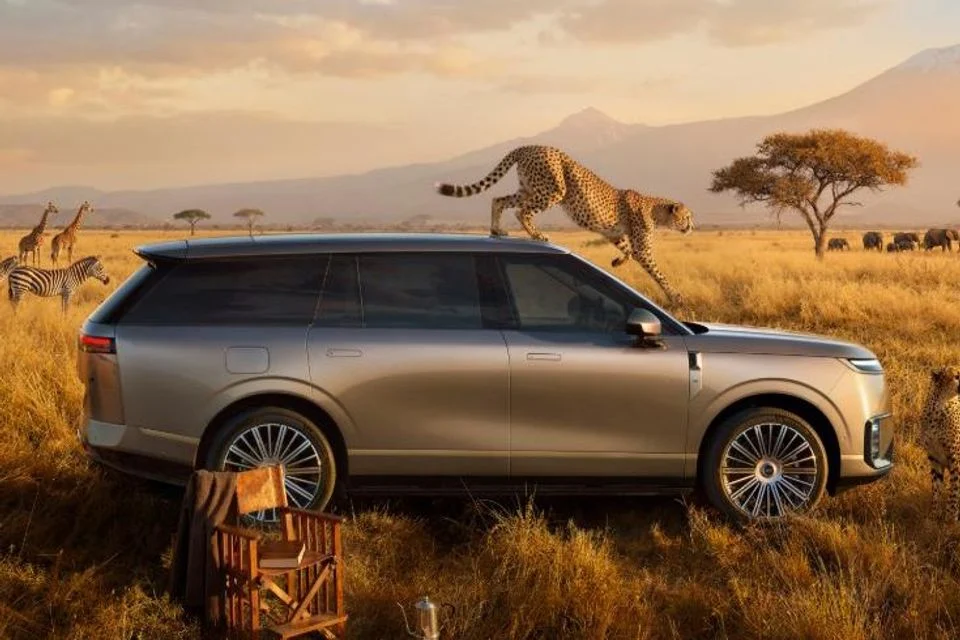
XPeng GX SUV carries unmistakably British design vibes, promises nearly 1,000 miles of range, and dramatically undercuts the Range Rover’s price, almost to a provocative degree
XPeng’s latest flagship SUV borrows heavily from Range Rover design language. The GX offers a six-seat configuration, advanced AI features, and an EREV powertrain. The model is expected to debut at the Beijing Auto Show this April.
Over the past ten years, Chinese automakers have made clear strides in technology and overall build quality. Still, certain habits have proven more difficult to leave behind, chief among them, a tendency to lean a bit too heavily on established brands for design inspiration. The newest example appears to be the XPeng GX, a large six-seat SUV that looks strikingly similar to the Range Rover.
XPeng has shared official images of its new flagship model ahead of its formal debut, likely in an effort to get ahead of the lower-quality photos that typically surface through China’s Ministry of Industry and Information Technology.
While overlapping design elements are nothing new in the industry, the GX’s resemblance to the current Range Rover L460 is particularly difficult to overlook. From the side, the silhouette is nearly identical to that of the British luxury SUV.
The GX mirrors the Range Rover’s overall proportions, straight beltline, blacked-out pillars, and floating roof effect, closely echoing the familiar profile. That said, XPeng has softened some of the more distinctive details. The side gills, for example, are noticeably smaller, and even the LED headlight shape appears only subtly altered, giving the impression of a mild Range Rover refresh.
At the rear, XPeng attempts to differentiate the GX with a full-width horizontal taillight design, contrasting with the Range Rover’s signature vertical layout. The door surfacing also breaks away from the British look, featuring contours that are more reminiscent of Mazda’s styling approach.
Regarding the flush, pop-out door handles, the GX was designed prior to China’s newly announced safety regulations, which will prohibit such handles beginning in 2027.
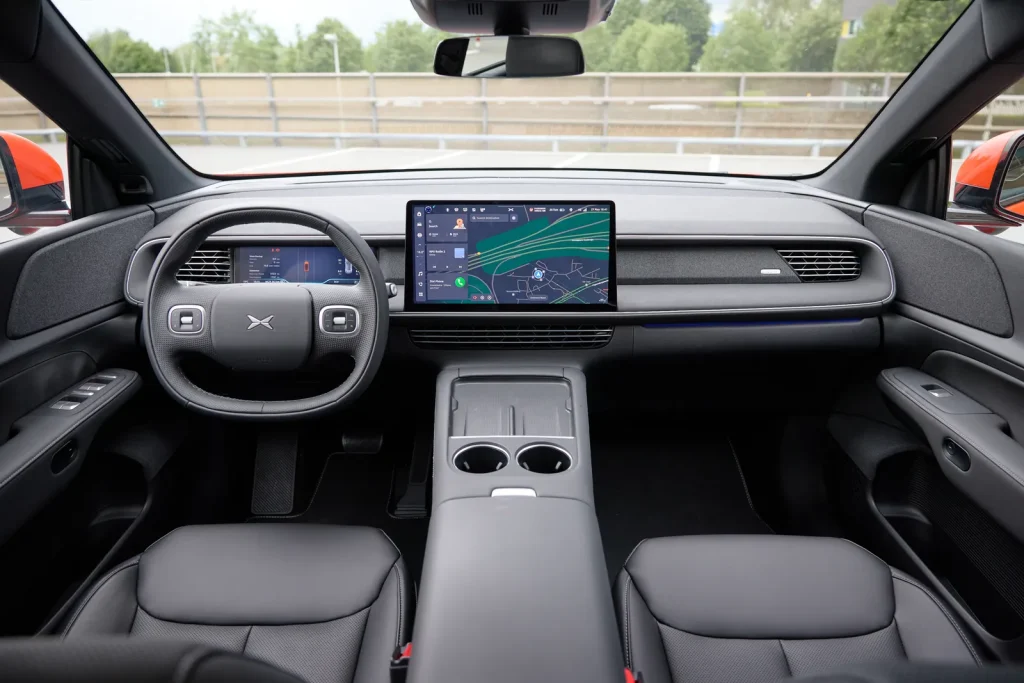
Although interior images have yet to be revealed, XPeng has confirmed that the GX will feature a six-seat layout. CEO He Xiaopeng explained that the vehicle was developed to address what he calls the “impossible triangle of three-row SUVs,” referring to the balance between passenger comfort, cargo capacity, and driving performance.
Every row in the GX will offer reclining functionality, and XPeng claims that even with all six seats occupied, the cargo area will remain “truly practical and extra-large.”
The GX is built on XPeng’s latest SEPA 3.0 physical AI vehicle architecture. It includes steer-by-wire technology along with rear-wheel steering, which should deliver improved stability and agility for a vehicle of this size, while also enhancing ride comfort and safety features.
Beneath the bodywork, the GX is expected to utilize the “Kunpeng” range-extender powertrain. This system is based on an 800V electrical architecture and supports 5C battery technology for ultra-fast charging. While XPeng has yet to release full technical specifications, the projected driving range is expected to rival the 995 miles (1,602 km) achieved by the X9 EREV minivan, which uses a similar setup.
The XPeng GX is scheduled to make its public debut at the Beijing Auto Show in April 2026. Once launched, it will compete directly with other large electrified SUVs in China, including the Li Auto L9, Huawei-backed Aito M9, Geely’s Zeekr 9X, and the Nio ES8.
Official pricing has not yet been announced, but reports from Chinese media suggest a starting price of around ¥400,000 ($57,600). For context, that figure is less than one-third of the entry-level price of a Range Rover in China, which starts at ¥1,412,000 ($203,400).
XPeng’s current lineup includes the Mona M03, P7, and P7+ sedans, along with the G6, G7, G9, and GX SUVs, plus the X9 minivan. The Guangzhou-based automaker is also continuing its expansion into European and Southeast Asian markets.
