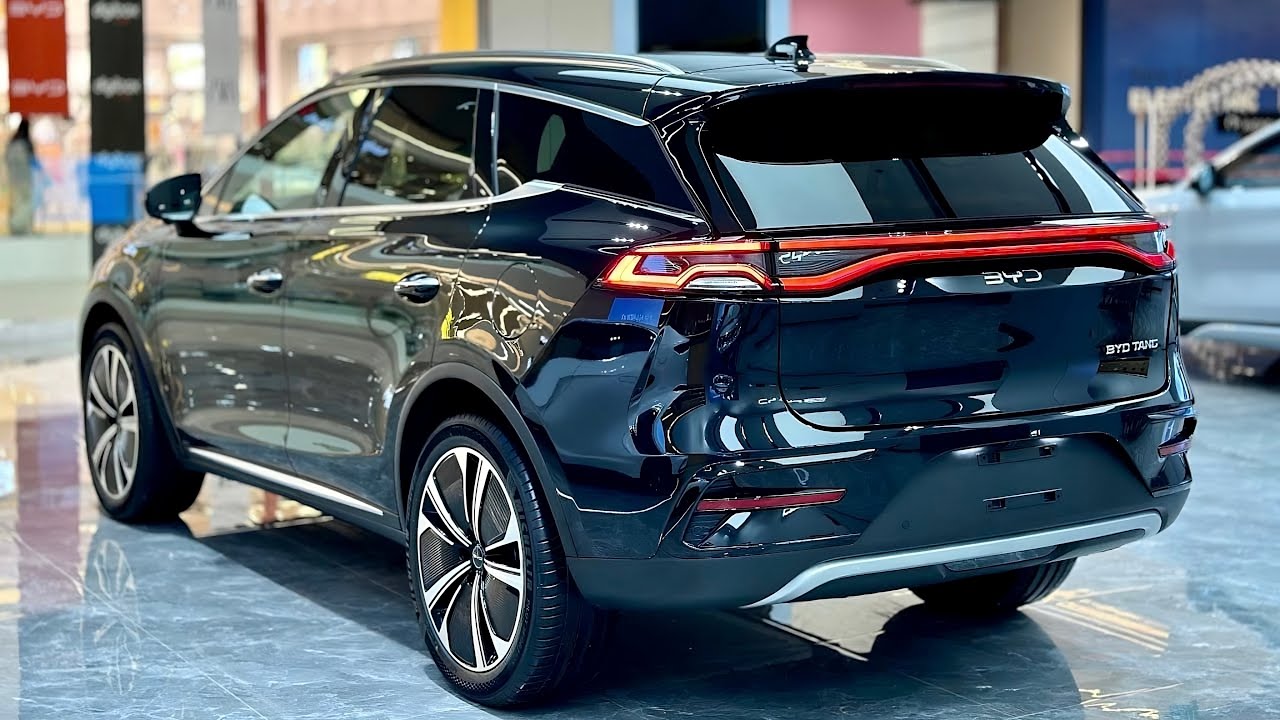
There is little debate that BYD sits at the top of China’s automotive hierarchy.
While the United States continues to keep Chinese brands at arm’s length, BYD has steadily expanded into nearly every other global region, gradually eroding market share from established manufacturers country by country.
Much of that success stems from the brand’s ability to deliver affordable vehicles with solid build quality. At the same time, BYD maintains a more exclusive tier aimed at wealthier buyers.
These higher-end offerings fall under the company’s “Dynasty line,” and the upcoming flagship of that range will be known as the Great Tang.
China’s long-standing reverence for its dynastic past plays directly into BYD’s naming strategy, with historic dynasties used to distinguish its most prestigious models.
Reports circulating online now indicate that the next flagship of the BYD Dynasty series has leaked, with coverage already appearing across multiple Chinese automotive outlets, including Car News China.
According to those reports, the information originates from regulatory filings submitted to the Ministry of Industry and Information Technology.
The leaked details outline the Great Tang as a full-size flagship SUV comparable in class and footprint to the Land Cruiser 300.
For context, the Great Tang is said to measure roughly 207 inches in length and carry a gross vehicle weight of approximately 7,154 pounds.
Powering that considerable mass will be a selection of drivetrains. Buyers can expect either a rear-wheel-drive 400-horsepower setup or a single-motor electric configuration rated at 496 horsepower.
A dual-motor version will also be available, delivering a combined output of 784 horsepower. One of the most notable aspects of the powertrain lineup is its reported compatibility with ultra-fast 1,000 kW charging.
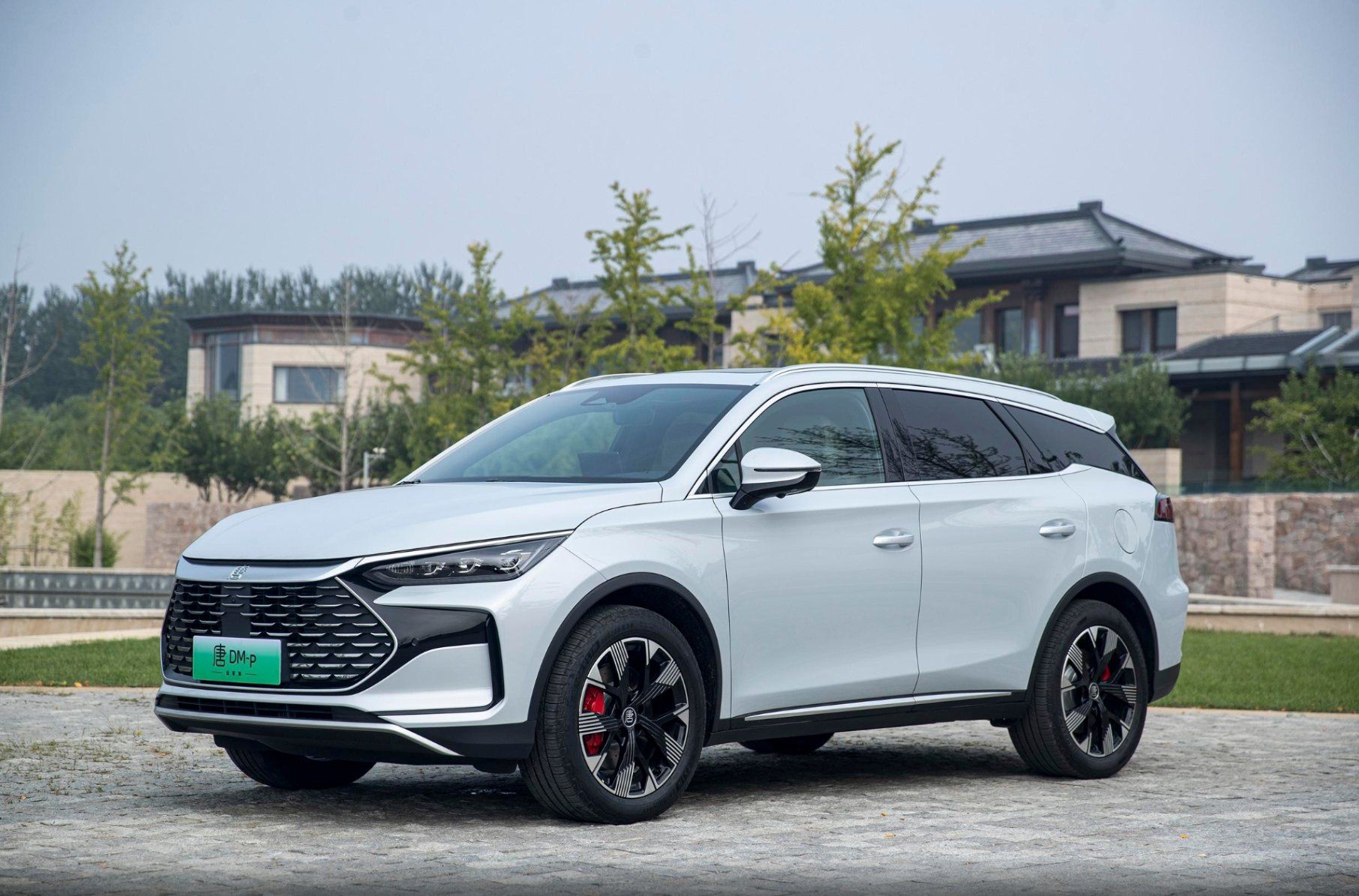
From a styling standpoint, the Great Tang introduces a refreshed design language that modernizes BYD’s current lineup. Familiar elements remain, such as the headlight clusters seen on many of the brand’s pure electric models.
The front grille is now closed off, creating a cleaner fascia that prominently features the Tang logo rendered in Chinese script.
Additional design cues include vertical air ducts integrated into the front bumper, semi-hidden door handles, fully hidden handles having been banned in China, and a full-width taillight assembly at the rear.
With the exception of Tesla, Chinese automakers have become leaders in advanced driver-assistance and autonomous driving technologies. Having experienced several of these systems firsthand, it is clear that they are highly competitive.
Each manufacturer approaches autonomy differently, and BYD’s solution is known as Gods Eye, which is expected to be standard equipment on the Great Tang. It remains unclear how much the system has evolved compared to versions used in current BYD models.
The Great Tang is anticipated to make its official debut within the first half of the year, with pricing projected to land at around $57,000 when converted to U.S. dollars.
Also Read: Top 10 Manual Muscle Cars That Prove Stick Shifts Matter