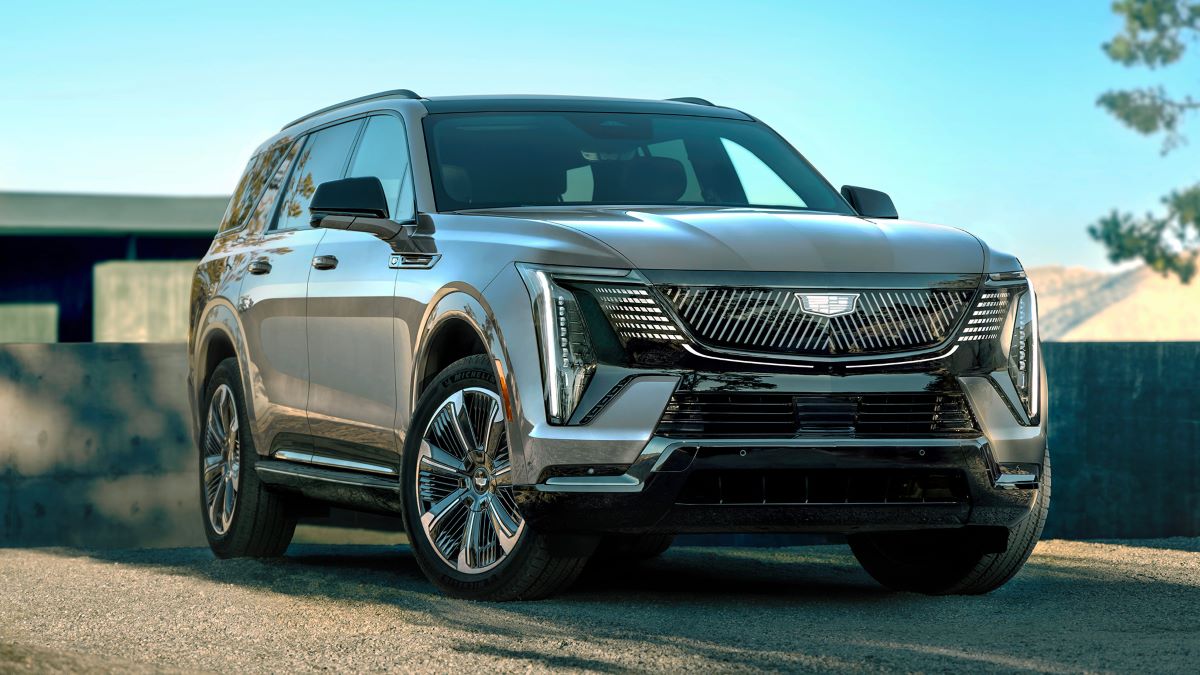
There is a distinctly American impulse behind creating a full-size SUV with extreme straight-line performance and then expecting it to perform with sports car urgency.
The Escalade-V and its mechanically unrelated Escalade IQ electric counterpart rank among the most unapologetically extravagant models in Cadillac’s current portfolio.
Each offers power outputs typically associated with exotic machinery, making a head-to-head comparison almost inevitable.
Seeing these massive SUVs subjected to aggressive launches, abrupt braking, and tight directional changes is both surreal and oddly compelling. The spectacle borders on absurdity, yet remains technically revealing.
On paper, the Escalade-V and Escalade IQ appear evenly matched, despite relying on fundamentally different propulsion systems.
The V employs Cadillac’s supercharged 6.2-liter V8, generating 682 hp and 653 lb-ft (885 Nm) of torque. Power is delivered through a 10-speed automatic transmission to all four wheels.
The Escalade IQ, by contrast, uses dual electric motors paired with a substantial 212 kWh battery pack. In standard configuration, it produces 680 hp and 615 lb-ft (834 Nm) of torque.
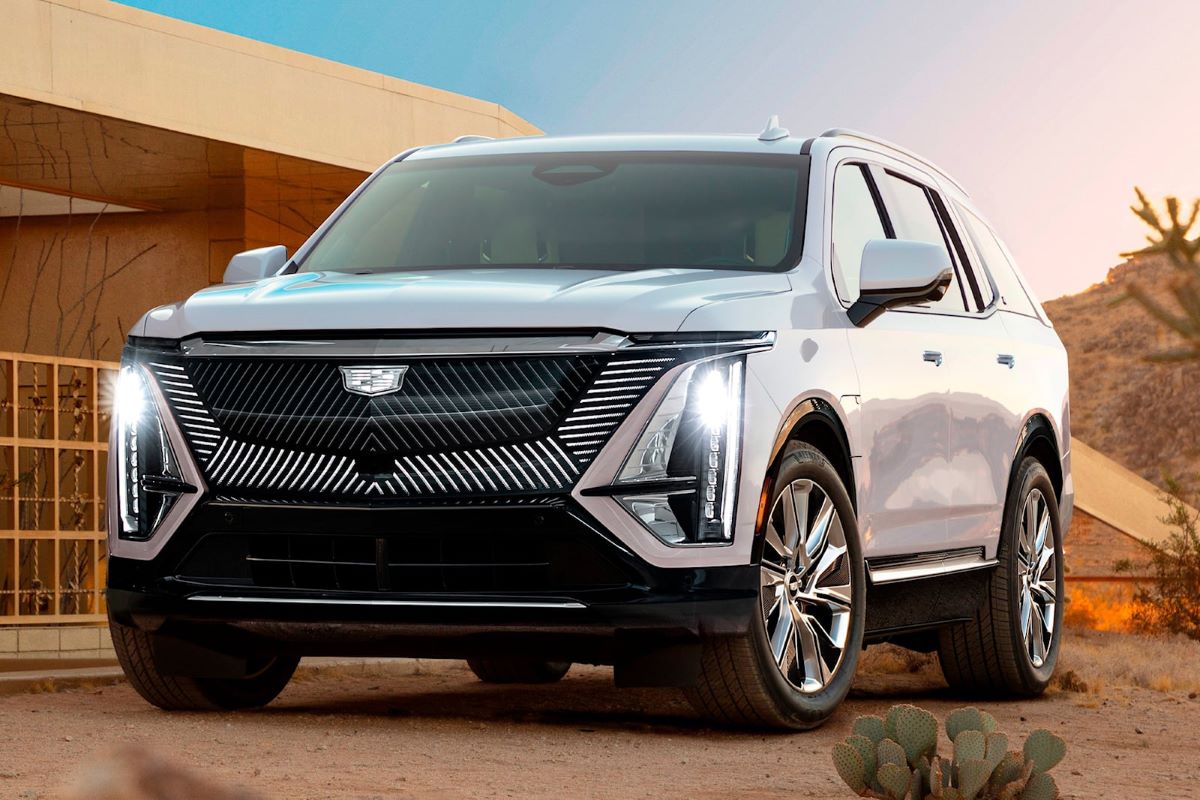
Engaging Velocity Max mode elevates output to 750 hp and 785 lb-ft (1,063 Nm), providing a significant increase in peak performance.
That additional output is necessary to counterbalance the IQ’s extraordinary mass.
While the gasoline-powered Escalade-V weighs approximately 6,300 lbs (2,857 kg), depending on specification, the Escalade IQ tips the scales at roughly 9,100 lbs (4,127 kg). This places it among the heaviest passenger vehicles currently available.
This disparity in weight defines the entire contest. Instant electric torque can momentarily obscure mass in a straight-line sprint, but fundamental physics ultimately governs outcomes.
The U-drag format, combining a hard launch, aggressive braking, a tight U-turn, and a final acceleration run, tests not only peak power but also composure and drivetrain calibration.
In the opening run, the V8-powered Escalade-V secured the better initial launch. However, after completing the U-turn, the transmission hesitated in selecting the optimal gear.
That brief delay cost it momentum and allowed the Escalade IQ to capitalize, accelerating ahead and finishing several vehicle lengths in front.
The second race proved more competitive. This time, the electric Escalade IQ executed the stronger launch, while the Escalade-V regained ground under braking.
As both surged toward the finish line, they remained closely matched. Ultimately, the IQ’s acceleration tapered at higher speeds, enabling the Escalade-V to edge ahead and claim a narrow victory.
Also Read: Top 10 Naturally Aspirated Engines You Should Experience Before They Disappear