
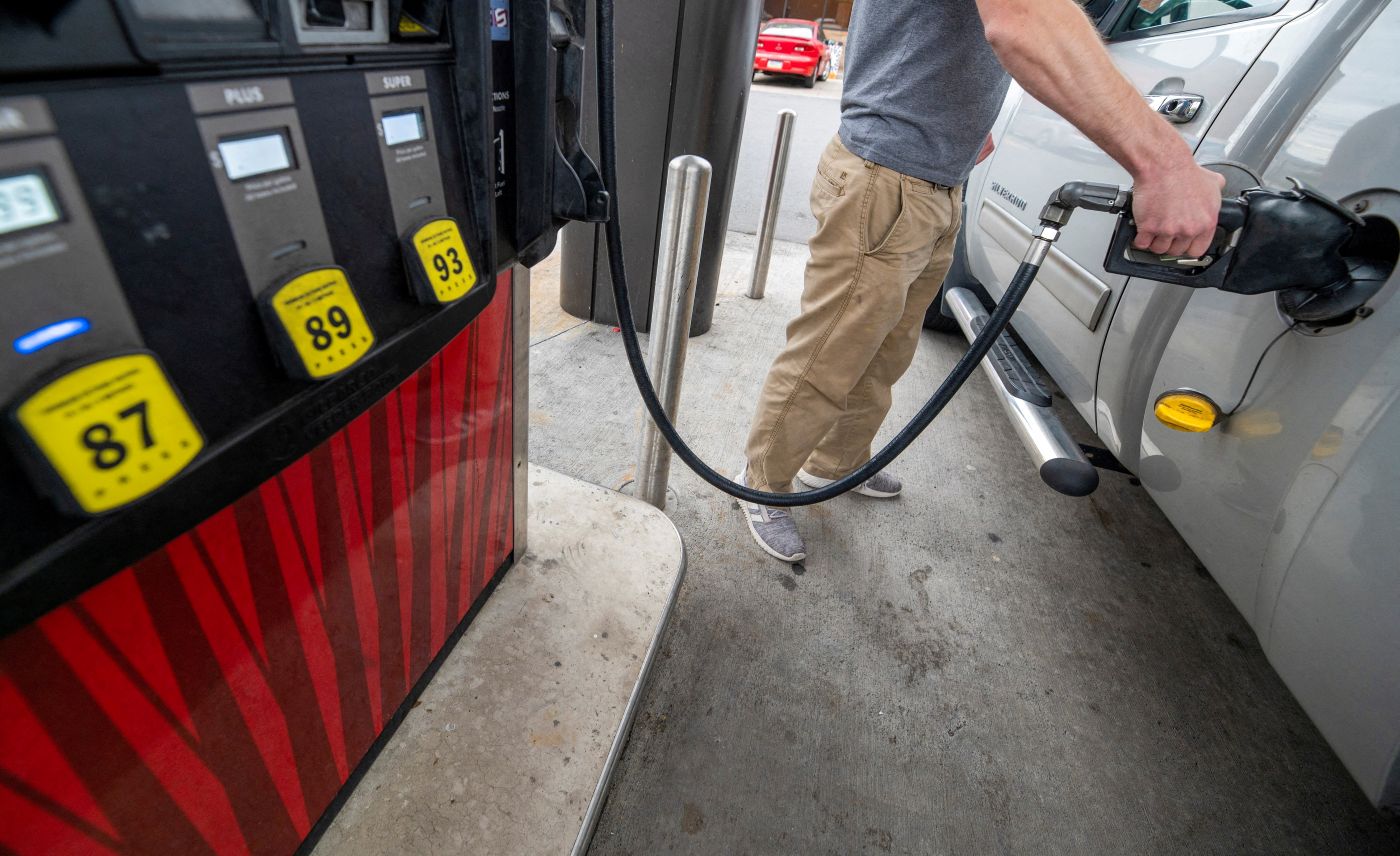
West Coast fuel prices are frequently elevated, but California is experiencing a particularly sharp surge at the moment.
While drivers across much of the United States are benefiting from gasoline prices below $3.00 per gallon, California motorists are not seeing the same relief.
The current national average for regular unleaded fuel stands at approximately $2.94 per gallon, yet California’s statewide average has climbed to $4.54. The disparity is substantial, and not merely statistical noise. Over the past two weeks alone, prices in California have increased by roughly 40 cents, prompting concern among commuters about how long the escalation will continue.
The present spike reflects a convergence of infrastructure strain and regulatory timing. Refining capacity on the West Coast has contracted as companies such as Phillips 66 and Valero scale back or idle portions of their regional operations.
The result is a constrained supply environment that places additional upward pressure on prices. The so-called West Coast “premium” is currently functioning more like a penalty, as multiple structural factors converge.
The shutdown of the Phillips 66 Los Angeles refinery complex in late 2025, combined with the early idling of Valero’s Benicia facility, has removed nearly 18% of California’s refining capacity.
Because the state mandates a specialized gasoline blend to comply with strict air-quality regulations, it cannot easily offset local production shortfalls by importing conventional fuel from other states.
This limited flexibility means that even minor operational disruptions can translate quickly into higher pump prices. Energy analysts caution that California’s transition toward cleaner energy sources is occurring while a large internal combustion fleet remains on the road, creating pressure on a shrinking refining network. At present, supply constraints are the primary factor underpinning the roughly $4.50 baseline price observed statewide.
Although February typically brings reduced driving demand, it also signals the beginning of the transition to summer-blend gasoline in California. The state moves to this formulation earlier than many other regions, and the shift is costly.
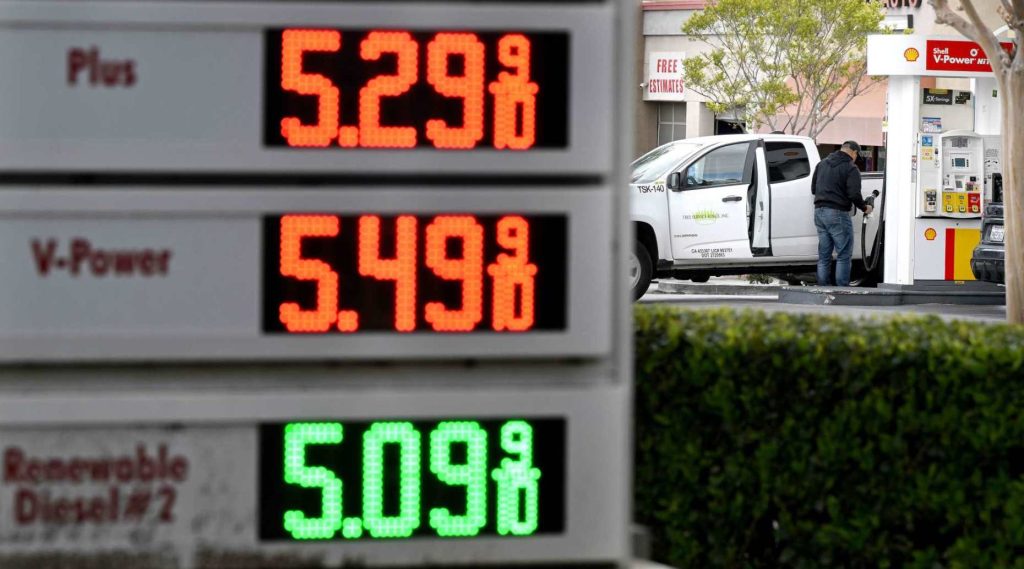
Summer-blend gasoline is engineered to reduce volatility in higher temperatures and limit smog formation, but its more complex refining process and specialized additives increase per-gallon production costs.
The seasonal changeover is further complicated by scheduled refinery maintenance. Many facilities conduct annual servicing during this period. With fewer refineries currently operating, the temporary shutdown of even one processing unit can create localized shortages that ripple through the market.
As a result, drivers are effectively absorbing both the higher cost of the summer formulation and the reduced capacity available to produce it. Some analysts anticipate that these elevated prices could persist well into the spring months.
Conditions on the ground illustrate the extent of the increase. The Chevron station at 700 South Alameda Street in Los Angeles is reportedly charging $4.89 per gallon. Nearby stations offer slightly lower prices, though the difference is marginal. In contrast, surrounding cities such as Torrance report fuel closer to $3.70 per gallon, underscoring how sharply prices can vary by location.
The Los Angeles Chevron location also highlights the urban pricing effect. Situated near the Arts District and major traffic corridors, it often lists prices 20 to 30 cents above the already elevated Los Angeles County average of $4.61.
Higher operating costs in dense metropolitan areas, combined with brand positioning and fuel additives such as Chevron’s “Techron,” can contribute to the premium. However, population density and intense demand also play a role.
In the Bay Area, prices are even higher. A Shell station at 1201 Harrison Street in San Francisco is listing regular fuel at $4.95 per gallon, while a nearby Chevron reports $4.99 per gallon.
The idling of the Benicia refinery, a key supplier for both independent and branded stations in the region, has disproportionately affected Bay Area supply. Over the past two weeks, stations in the SOMA district have recorded some of the steepest increases statewide.
Even lower-cost stations in these metropolitan areas remain above $4.70 per gallon, leaving few alternatives for urban drivers. Until refining operations stabilize or additional fuel can be imported, a process complicated by logistics and regulatory requirements, prices approaching $5 per gallon may remain commonplace.
