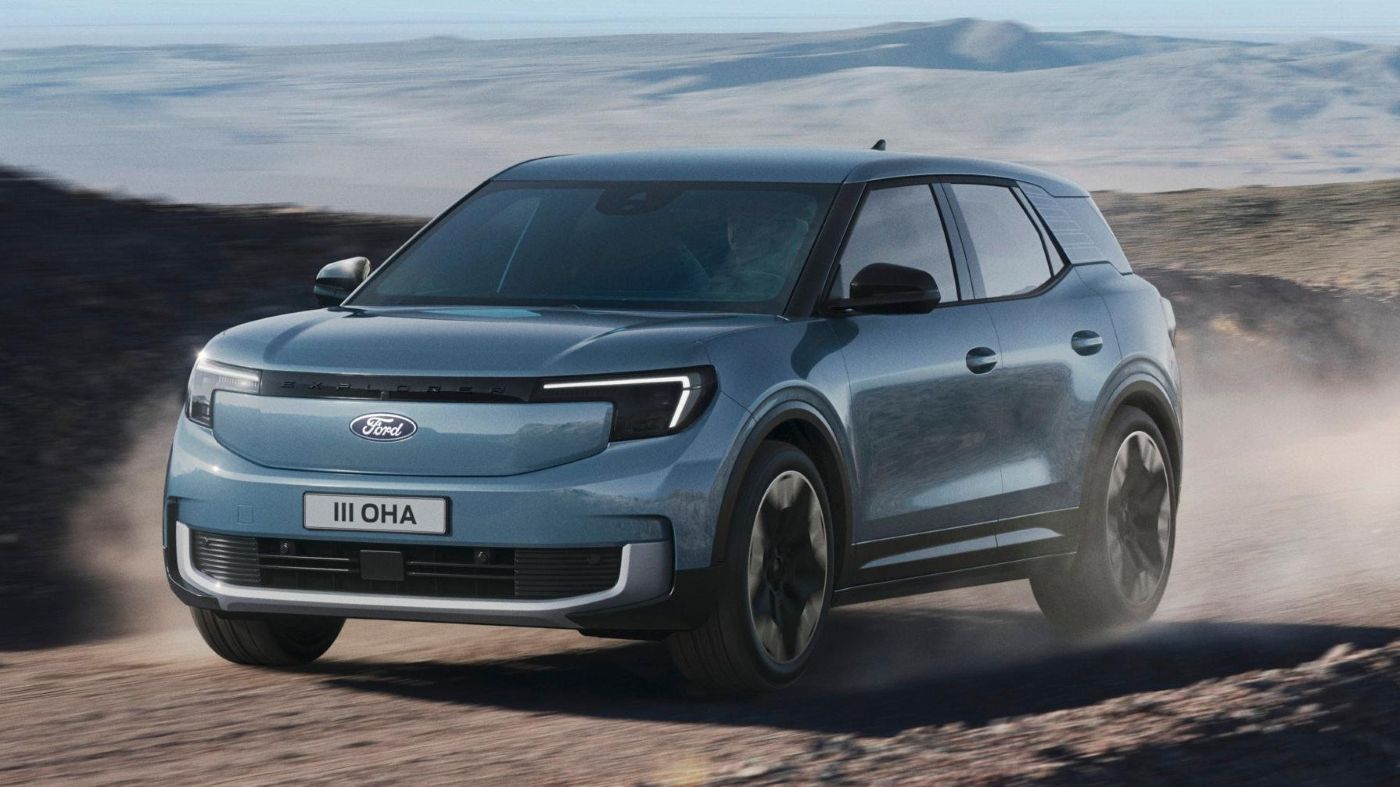
Ford is offering an early look at its upcoming Universal EV platform, a program intended to fundamentally change how the company designs, engineers, and manufactures electric vehicles, and potentially secure a lasting competitive edge.
Ford is seeking a reset. After investing heavily in its first generation of long-range EVs, notably the Mustang Mach-E and F-150 Lightning, the automaker absorbed a $19.5 billion charge last year as it wound down that strategy.
Production of the Lightning has been halted, and work on a costly three-row electric SUV has been discontinued. In its place, Ford is preparing to launch the “Universal EV” program next year. The objective is clear: develop affordable, long-range, engaging EVs capable of competing with rivals such as General Motors, Volkswagen, Toyota, and Tesla.
To achieve this, Ford quietly assembled a skunkworks-style team based in Long Beach, California, separated from its traditional product development operations.
The team was tasked with rethinking nearly every aspect of EV design, engineering, and manufacturing. While the first product, a Maverick-sized all-electric pickup, will not debut until later this year, key project leaders have outlined the strategic changes underway.
When Ford introduced the F-150 Lightning, it electrified an established formula but retained much of the traditional truck architecture. Despite significant production capacity, sales volumes remained modest relative to the broader F-Series lineup. The Universal EV initiative takes a more comprehensive approach.
The first model, a compact electric pickup, is scheduled to enter production in 2027 with a target base price under $30,000. Subsequent models are expected to include two- and three-row SUVs, commercial vans, and potentially a sedan.
Ford’s redesign begins with the battery pack, which can account for roughly 40% of an EV’s total cost. Rather than prioritizing maximum energy density, the Universal EV program adopts lithium-iron-phosphate (LFP) chemistry.
Although LFP batteries offer lower energy density than traditional lithium-ion variants, they are less expensive, more thermally stable, and avoid reliance on costly materials such as nickel and cobalt.
To offset the lower density, Ford engineers are packaging LFP cells more tightly within the pack, treating the design “like a puzzle,” in Clarke’s words. The battery pack will also serve as a structural component of the vehicle platform, improving rigidity while reducing overall mass.
Borrowing from techniques popularized by Tesla, Ford is introducing large-scale aluminum unicastings, comparable to “megacastings.” In the new compact electric pickup, 146 individual steel components in the front and rear chassis structure will be replaced by two large aluminum castings.
These unicastings are 27% lighter than the combined mass of the parts they replace and eliminate approximately 27% of the fasteners otherwise required.
While large castings can complicate repairs after collisions, Ford intends to mitigate this by marking cut lines in the structure to simplify body shop procedures and reduce repair costs.
The Universal EV program also addresses electrical complexity. Modern EVs rely on extensive wiring and numerous distributed processors. Ford is transitioning to a zonal architecture that consolidates electronic functions into five centralized processing systems. A new “E-box” will oversee vehicle operations in real time.
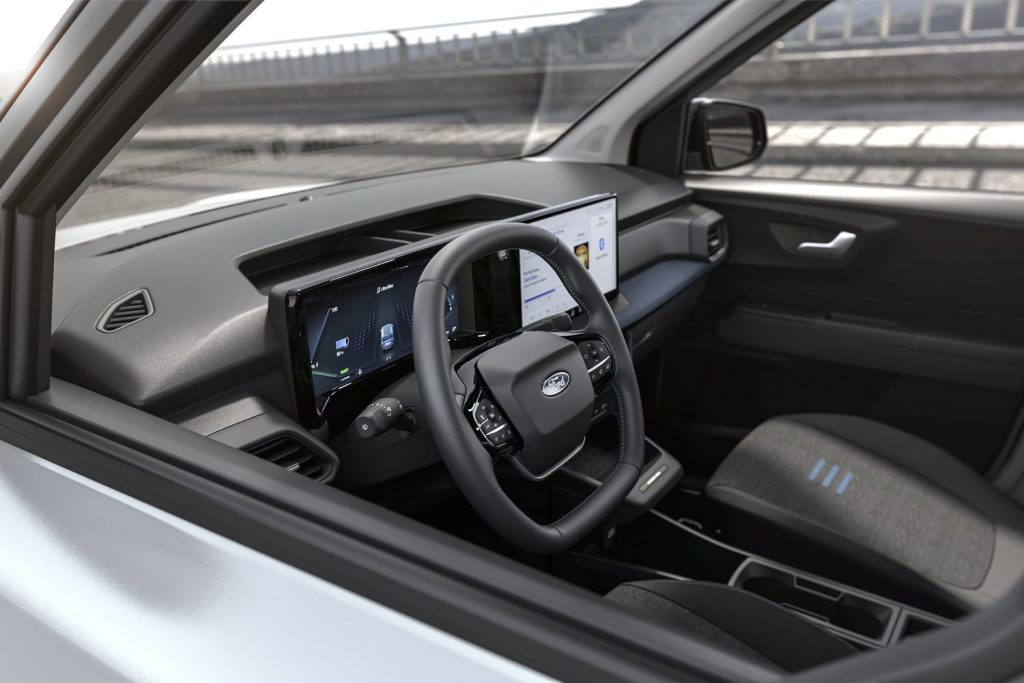
The redesign includes replacing multiple traditional components with consolidated circuit boards and sharing hardware between DC and AC charging systems. Many auxiliary systems are moving from 12-volt to 48-volt architecture. Collectively, these changes reduce wiring by approximately 4,000 feet of copper and eliminate 22 pounds of weight.
Aerodynamics are another focus area. Subtle changes, such as lowering the pickup’s roofline and reshaping airflow around the bed, significantly improve efficiency.
Engineers claim that if paired with the aerodynamics of the most efficient midsize gasoline truck in the U.S., the Universal EV pickup would deliver approximately 50 additional miles of range, about a 15% improvement. At highway speeds, aerodynamic efficiency improves by roughly 30%.
These gains allow Ford to reduce battery size while maintaining a projected range of at least 300 miles, lowering component costs by an estimated $100 per vehicle. Additional refinements include smaller side mirrors and a sealed underbody panel to reduce drag.
Manufacturing methods are also being overhauled. Following a $2 billion transformation of the Louisville Assembly Plant in Kentucky, Ford will implement a new “sandwich-style” assembly system.
Rather than relying solely on a traditional moving line, front, rear, and battery subassemblies will be constructed separately and merged near final assembly. Company officials estimate this approach could enable vehicles to be produced 40% faster than under conventional methods.
This Louisville investment is part of a broader capital commitment. Ford is also investing $3 billion in its Blue Oval Battery Plant in Marshall, Michigan, alongside upgrades to other component facilities.
CEO Jim Farley has indicated that Ford aims to reduce EV losses beginning this year and achieve profitability once Universal EV production reaches scale, targeting 2029.
The Universal EV platform will debut with a compact electric pickup, with additional body styles expected to follow within a year. Early indications suggest two battery options: a primary pack delivering over 300 miles of range and a lower-cost alternative closer to 200 miles. Both two-wheel-drive and all-wheel-drive configurations are anticipated.
Some technologies developed under the Universal EV initiative may also enhance Ford’s hybrid offerings in the future. While detailed performance and range specifications for the pickup remain undisclosed, Ford’s strategy signals a comprehensive shift, not merely a new vehicle, but a redefinition of how the company approaches electric mobility.
Also Read: Top 10 Work Vans That Plumbers and Electricians Swear By